
Health
Wonderful weeknight dining
With school, work and evening activities all spiraling in different directions, most families find that some things have to give. Make sure quality time around the dinner table isn’t one of them with these savvy solutions that can help make weekday meals a cinch.


With school, work and evening activities all spiraling in different directions, most families find that some things have to give. Make sure quality time around the dinner table isn’t one of them with these savvy solutions that can help make weekday meals a cinch.
One-dish wonders
Most busy families are well-versed in the benefits of slow cooker meals, but when you haven’t planned that far ahead there are other options, such as your oven’s broiler, that allow you to capture the convenience of single-dish meals. A cookie sheet filled with your favorite protein, veggies and a sprinkle of seasoning will broil in minutes. Just remember to cut your protein into small pieces that will cook through quickly and line your sheet with foil for easier cleanup. Another quick-fix idea: empty the odds and ends from the pantry and veggie drawer to make a stir-fry in minutes.
Go for the gold
When it comes to mealtime, Sunday dinner is the gold standard. It’s the one day of the week when you’re most likely to go “all out” and prepare a great-tasting meal. But you can achieve similar meals during the week using delicious, time-saving sides such as packaged Idahoan Signature Russets mashed potatoes, which can be made in just 5 minutes. The smooth flavor of Idahoan Signature Russets – like original homemade mashed potatoes with just a hint of butter and cream – makes any day taste like Sunday.
Quick-prep proteins
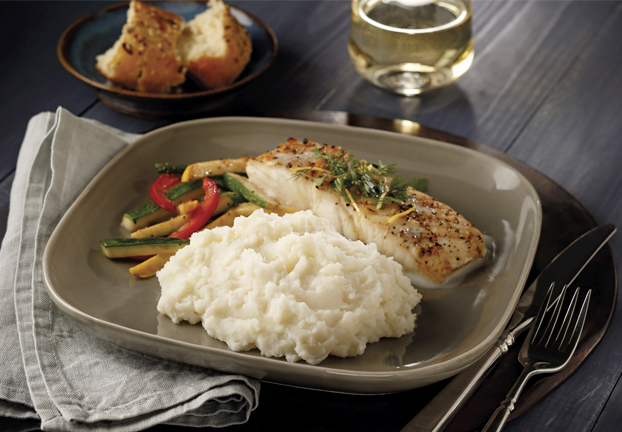
Every family has its favorite go-to meals that stand the test of time. Build your repertoire with a few recipes centered on proteins that take next to no time to prepare. Eggs don’t have to be restricted to the breakfast table, especially in preparations like a frittata or quiche. Or rely on seafood, which can be seared to perfection in minutes. A mild white fish is an ideal foundation for creating diverse, rich flavors, such as this Seared Halibut with Lemon Butter Sauce.
Seared Halibut with Lemon Butter Sauce
Serves: 4
Lemon Butter Sauce
1/2 cup white wine
1/4 cup fresh lemon juice
8 tablespoons whipping cream
3/4 teaspoon fresh garlic, chopped
turmeric, to taste
salt, to taste
white pepper, to taste
8 tablespoons unsalted butter, diced
Halibut
4 teaspoons olive oil
4 halibut filets (6-8 ounces each)
salt
pepper
lemon zest
herbs
Vegetables
2 tablespoons olive oil
2 small zucchini, cut into 1/4-inch strips
2 small yellow squash, cut into 1/4-inch strips
2 small red peppers, washed, seeded and sliced into strips
Potatoes
2 cups Idahoan Signature Russets Mashed Potatoes (from 16.23-ounce package)
For lemon butter sauce, add white wine, lemon juice, cream, garlic, turmeric, salt and pepper to saute pan. Heat on high heat and reduce to half its original volume.
While lemon sauce is reducing, prepare fish and vegetables.
Once reduced, remove from heat and swirl in diced butter.
For halibut, heat non-stick skillet on medium-high heat with olive oil. Season halibut with salt and pepper. Sear until deep golden brown, approximately 5 minutes each side. Remove from heat and cover with foil.
For vegetables, add olive oil to skillet over medium-high heat. Saute zucchini, squash and pepper until crisp-tender, about 2-3 minutes. Keep warm.
For potatoes, prepare mashed potatoes following package instructions.
To serve, plate mashed potatoes, vegetables and halibut. Drizzle halibut with lemon butter sauce and garnish with lemon zest and fresh herbs.
Note: Haddock or striped bass can be substituted for halibut.
Hoisin Roasted Pork with Steamed Greens
Serves: 4
2 tablespoons hoisin sauce
2 tablespoons honey
1 tablespoon soy sauce
1 pork tenderloin filet (16 ounces)
8 ounces fresh sugar snap peas
8 ounces green beans
2 cups Idahoan Signature Russets Mashed Potatoes (from 16.23-ounce package)
Heat oven to 350 F.
In bowl, combine hoisin, honey and soy. In non-metallic bowl, pour marinade over pork and set aside for 15 minutes.
Heat medium nonstick frying pan over medium heat. Add marinated pork and cook each side 1-2 minutes.
Transfer pork to baking tray and cook 15 minutes, or until cooked to desired doneness.
Steam fresh sugar snap peas and green beans together. Set aside.
Prepare mashed potatoes following package instructions.
To serve, plate mashed potatoes, sliced pork and steamed vegetables. Spoon pan juices over pork and enjoy.
Roasted Chicken Provencal
Serves: 4
8 chicken thighs (bone-in, skin-on)
1/2 teaspoon salt
1/4 teaspoon ground black pepper
1 tablespoon olive oil
1/2 cup dry white wine
1/4 cup chicken broth
2 thyme sprigs
2 garlic cloves, crushed
2 cups Idahoan Signature Russets Mashed Potatoes (from 16.23-ounce package)
1 cup sliced cremini mushrooms
1/2 cup cherry tomatoes, halved
1/4 cup pitted black olives, halved
sauteed green beans
Sprinkle chicken thighs with salt and pepper. In 12-inch skillet over medium-high heat, brown chicken thighs on both sides in hot oil. Add white wine, chicken broth, thyme sprigs and garlic.
Over high heat, heat mixture to boiling. Cover and simmer 25 minutes, stirring occasionally.
Meanwhile, prepare mashed potatoes according to package directions.
In skillet, add mushrooms, cherry tomatoes and olives; cover and simmer 5 minutes longer until chicken is tender.
Serve chicken thighs with mashed potatoes and sauteed green beans.
For more tips to increase family time and get quick meals on the weeknight dinner table, visit idahoan.com.




Health
Self-care for sick days
To help navigate this cough, cold and flu season, consider these tips.


Cooler weather inevitably means cough, cold and flu season isn’t far behind. Now is the time to take precautions and set yourself up with healthy habits.
“As much as we try, avoiding viruses, bacteria and germs to prevent getting sick can be a challenge,” Dr. Tim Tiutan, MD, said. “However, being prepared with the right remedies, listening to your body and its symptoms and remaining diligent with a healthy routine is just as important as treating symptoms head on.”
To help navigate this cough, cold and flu season, consider these tips from Tiutan and the experts at Mucinex.
Prepare and Prevent
You won’t find a foolproof way to keep germs away, but you can lessen your chances of getting sick and make sure you’re equipped to weather an illness.
- Practice healthy habits. Keeping your body in prime condition can help ensure you’re in the best condition possible to fight back when germs attack. That means keeping up with exercise and ensuring you’re getting enough vitamins and nutrients through a well-balanced diet.
- Get a flu shot. The flu shot gives your body a head start in fighting back against flu bugs. If you’re exposed to the flu after receiving the shot, your body can immediately go on the offensive against those germs. You may not stay completely symptom-free, but you’re more likely to experience a mild case and be back on your feet quicker.
- Restock the medicine cabinet. The start of cough, cold and flu season is an ideal time to dig through your medicine cabinet. Start by discarding any medications that are out of date and make a list of anything you need to replenish. Be sure to include pain relievers, fever reducers, decongestants, antihistamines and cough syrups to fight symptoms. It’s also a good time to restock items like tissues, cough drops, hand sanitizer and anti-bacterial soap.
Treat Symptoms
Although the flu can hit fast, it’s often hard to tell at first whether your symptoms are due to a simple cough, cold or a case of the flu. Either way, managing symptoms like a cough can bring relief and help you keep comfortable and get plenty of rest.
- Give your body time to heal. Sleep plays an important role in your overall health, especially when you’re under the weather. On average, you need 7-9 hours each night to give your body enough time to fully recharge. When you’re sick, you likely need even more, and it’s a good idea to dial back your activity level, too. Pushing your physical limits often only delays your recovery time.
- Take medications as directed. Nagging symptoms can often keep you from getting the sleep you need. One way to give your body the break it needs is to effectively manage symptoms. A hacking cough is a common symptom that can be painful and disrupt your sleep. Consider an option like Mucinex DM 12-Hour, a cough suppresent which relieves chest congestion and thins and loosens mucus, giving you an extended reprieve. It’s clinically proven to last up to 12 hours, provides relief for chest congestion and makes coughs more productive.
Prevent Spread
Getting sick may be beyond your complete control, but you can take steps to protect others from germs when you’re feeling ill.
- Keep germs to yourself. Washing your hands often, covering your nose and mouth with a tissue when you cough or sneeze and sneezing into your elbow if you don’t have a tissue are simple ways you can limit the spread of germs, especially within your home or workspace. Frequently wiping down high-touch surfaces can also help reduce the spread of germs.
- Skip socializing. If you’re feeling under the weather, stay home. Even a mild cold can easily spread, and an illness that affects you mildly could cause significant distress for someone else. Avoid unnecessary errands and take advantage of services like curbside pickup if you must get out. Also check with your employer about working remotely if you’re up to it.
Cold vs. Flu
There’s a lot of overlap between cold and flu symptoms, so it can be tricky to figure out whether the bug you’re fighting is a cold or influenza and how to tackle it.
While both the common cold and the flu are respiratory illnesses, they are not caused by the same viruses. Although colds are inconvenient, they are far less likely to develop into anything more serious, as the flu can.
What is a Cold?
Generally, colds are milder than the flu, and more likely to cause runny or stuffy noses (while the flu can cause stuffy or runny noses, it’s less likely to do so). You won’t feel good, but you’ll probably be able to do some or all of your daily tasks. The flu typically hits harder, making it difficult to go to work or follow your usual routine.
What is the Flu?
The flu often feels worse than a cold; you might experience the same symptoms but amplified. The flu comes with more pain and fever than a cold. Common flu symptoms include sore throat, chills, fever, runny or stuffy nose, muscle fatigue or aches and headaches. The flu can also develop into more serious conditions and complications, making it more dangerous than the average cold. While the common cold is rarely serious, the flu can be dangerous for young children, the elderly, pregnant women and people with compromised immune systems.
Treating a Cold vs. Flu
You can be vaccinated against the flu. There is no such vaccine for common colds. If your provider recommends it, getting the flu vaccine each year can go a long way toward preventing sickness.
Whether you have a cold or the flu, symptom relief is largely the same. Get plenty of rest, drink plenty of fluids and take over-the-counter medicines to relieve symptoms. Stay home to avoid spreading sickness. Wash your hands frequently and cover your mouth when you cough or sneeze.
Watch for shortness of breath, chest or abdomen pain, confusion, sudden dizziness, severe or persistent vomiting and flu symptoms that improve then return with fever and worse cough. If you experience any of these symptoms, consult a doctor.
Find more ways to stay healthy and limit symptoms by visiting Mucinex.com.
Health
5 Tips For Proper Oral Care
It’s crucial that you practice proper oral care, by following these habits.


They’re incredibly important, yet so many people take them for granted—our teeth. A healthy smile is an important part of your overall health since your teeth are such an important and useful part of your body.
It’s crucial that you practice proper oral care, by following these habits.

Always Brush Before Bed
Dentists recommend brushing your teeth three times a day to ensure you remove harmful buildup. However, not everyone manages to make it to three, which isn’t the end of the world. Yet, if there’s one of these three brushing times that you absolutely can’t get away with skipping, it’s nighttime.
At night, your teeth have all of the food that you ate throughout the day, and also germs that cause bad breath. When you go to bed without brushing you’re allowing all of that to sit on your teeth for the duration of however long you sleep, which is usually about 8 hours. Yuck!

Visit Your Dentist
Brushing your teeth daily is already a great step towards overall tooth health. However, there are some things that a toothbrush simply can’t do. It’s important that you see a dentist regularly to get cleanings and address dental issues.
Sometimes despite our best efforts to brush, we still develop cavities. Unfortunately, this is just the way things are. A dentist can help us identify these cavities, and fill them as soon as possible so they don’t turn into something more serious like a root canal.

Floss
Despite having the best toothbrush on the market, there are crevices and cracks in your mouth that even the best toothbrush can’t touch. In addition to brushing, you should make sure that you floss.
Flossing won’t just reduce your risk of developing cavities, but it can significantly improve your breath. There are all sorts of germs and bacteria lurking in between your teeth, and flossing can get rid of that. If you notice that your breath still isn’t entirely fresh even after brushing, then pull out the floss and you’ll notice a big difference.

Avoid Sugar
There are plenty of things that are less than ideal for your health. However, most health professionals agree that one of the worst things for you is sugar and your dentist feels the same. The less sugar you eat, the healthier your teeth will be, as sugar eats away at your tooth enamel.
If you do eat sugar, make sure that you brush your teeth after. One of the worst things you can do is eat sticky candy which leaves behind residue on your teeth and is the perfect recipe for cavities.

Avoid Acidic Foods
In addition to sugary foods, acidic foods are also your teeth’s worst enemy. From coffee to citrus fruits, limit the number of acidic beverages and foods you consume, and your tooth enamel will greatly thank you for it!
Health
Tips for walking 20,000 steps a day
To walk 20,000 steps a day you’ll need to cover a total of 10 miles. This may seem like a lot, but it’s actually not as difficult as it sounds.

To walk 20,000 steps a day you’ll need to cover a total of 10 miles. This may seem like a lot, but it’s actually not as difficult as it sounds. Here are a few tips to help you reach your goal:
Invest in a Good Pair of Shoes
The first step to walking 20,000 steps a day is to make sure you have the right equipment. Investing in a good pair of walking shoes will help to prevent blisters and injuries, and make the walk more comfortable overall.
Make Walking Part of Your Daily Routine
To reach your 10-mile goal every day, make walking a part of your daily routine. This might mean taking the stairs at work instead of the elevator, or parking farther away from where you’re going so that you have to walk more. You can also try waking up a few minutes earlier each morning to fit in a walk before you start your day.
Join a Walking Group
If you’re having trouble finding time to fit in 10 miles each day, consider joining a walking group or taking part in a local 5k race. This will help keep you motivated and provide social support along the way.
Start Small
Don’t try to walk 20,000 steps all at once. Start with a smaller goal, such as 5,000 steps per day, and gradually increase your mileage as you become more fit. This will help you avoid injury and burnout.
Stay Hydrated
Make sure to stay hydrated while walking by drinking plenty of water throughout the day. This will help you feel more energized and prevent dehydration-related issues, such as muscle cramps or fatigue.
The Bottom Line – BetterMe Can Help You Walk More, Every Day
If you’re looking to improve your overall health, walking 20,000 steps a day can help. This simple form of exercise offers a host of health benefits, from improved sleep and digestion to reduced stress and anxiety. To reach your goal, use the BetterMe Blog as a guide and stay committed every day. With enough dedication, you can achieve your fitness goals and transform your body for the better.

Study links coffee consumption to metabolic health and sex hormones

Manulife Investments Philippines leads UITF rankings across equity and fixed income funds

Scheduling dental care during prenatal visits boosts oral health care during pregnancy

Enjoying the grilling at Mandaue City’s Matias BBQ

Dogs can distinguish between human fear and sadness

Pet dog microbiota may protect young children from respiratory tract infections and reduce the need for antibiotic courses

Walking and weight training alone are not enough for strong bones – football and handball may be more effective

Keeping kitty indoors is not the cat-astrophe that owners fear

Why a UTI hurts — and why that might be a good thing

Pregnancy complications can signal heart disease risk years before traditional screening, study finds

Filipinos prioritize independence as legacy for longer lives

Going Chinese in Pulilan, Bulacan

Eating out in Cebu in one place via Pusô Village
Pregnancy complications can signal heart disease risk years before traditional screening, study finds
Why a UTI hurts — and why that might be a good thing

Posture can influence your mood and behavior, study suggests
Walking and weight training alone are not enough for strong bones – football and handball may be more effective
Scheduling dental care during prenatal visits boosts oral health care during pregnancy
Dogs can distinguish between human fear and sadness
Study links coffee consumption to metabolic health and sex hormones

-
 NewsMakers4 weeks ago
Filipinos prioritize independence as legacy for longer lives
-
 Destinations4 weeks ago
Going Chinese in Pulilan, Bulacan
-
 Destinations3 weeks ago
Eating out in Cebu in one place via Pusô Village
-
 NewsMakers3 weeks ago
Pregnancy complications can signal heart disease risk years before traditional screening, study finds
-
 NewsMakers3 weeks ago
Why a UTI hurts — and why that might be a good thing
-
 NewsMakers3 weeks ago
Posture can influence your mood and behavior, study suggests
-
 Wellness3 weeks ago
Walking and weight training alone are not enough for strong bones – football and handball may be more effective
-
 NewsMakers1 week ago
Scheduling dental care during prenatal visits boosts oral health care during pregnancy