
NewsMakers
Valentine’s Day pressure and dating apps linked to higher depression risk; clinicians explain why
Coupled with the already heightened stresses of Valentine’s Day, caused by unmet expectations and unrequited love, this time of year makes people more susceptible.

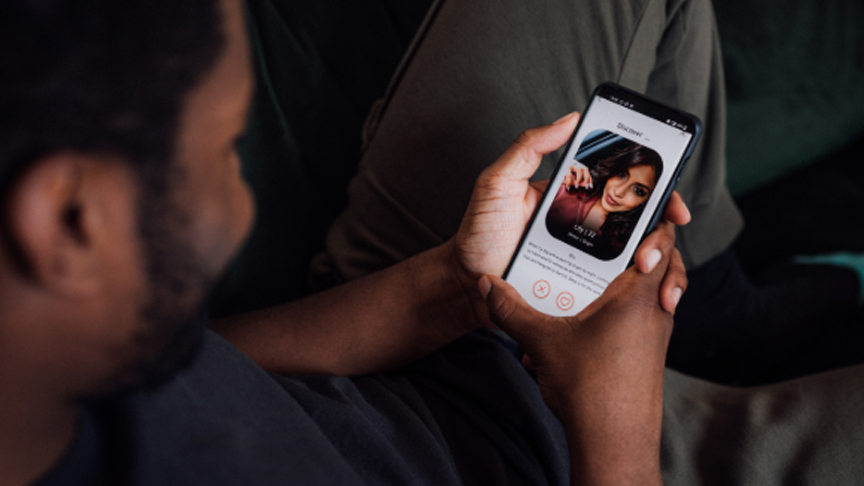
As Valentine’s Day approaches, clinicians warn that the pressure to find a romantic connection is intensifying stress and low mood among singles, particularly those relying on dating apps. According to research from Flinders University, many dating app users report worse mental health and wellbeing outcomes (anxiety and depression) compared to non-users.
Coupled with the already heightened stresses of Valentine’s Day, caused by unmet expectations and unrequited love, this time of year makes people more susceptible.
The research highlights behaviours commonly experienced by dating app users, such as being ‘ghosted,’ which are linked with lower self-esteem and higher depressive symptoms, indicating that negative feedback on these platforms has measurable mental health impacts. Researchers found a pattern of ‘emotional exhaustion’ and reduced enjoyment among frequent users, consistent with the idea of dating app burnout.
“The prevalence of depressive symptoms and emotional burnout as a result of online dating is a clear indicator that we need to deepen our connection with ourselves first,” says Dr. Hannah Nearney, M.D., clinical psychiatrist and UK Medical Director at Flow Neuroscience, a company that develops brain stimulation tools for depression treatment.
“During the Valentine’s Day period, we put additional pressure on ourselves to find connection. In doing so, we can risk finding ourselves in relationships which are not fulfilling just to ‘validate’ ourselves.”
Among young adults, there is growing social pressure to not be alone, and dating apps have become a primary way to meet that expectation. In fact, a study published in the British Medical Journal (BMJ) found that people use dating apps for a mix of reasons, including finding long-term romantic partners and sexual connections.
This social environment can foster ambiguous connections known as “situationships”, wherein those involved continue to explore other options rather than settle into one relationship. According to YouGov data, half of Americans aged 18 to 34 have reported being in a ‘situationship.’
The BMJ study also found signs of obsessive-like app use driven by social expectations: 75% of users reported repeatedly deleting and reinstalling dating apps, with higher problematic use linked to more depressive symptoms and impulsivity, highlighting additional mental health concerns tied to excessive app engagement driven by societal pressures.
“Obsessive app use is not just about how often someone swipes; it shows up as an intrusive, distressing, and repetitive preoccupation which leads to losing control over our behaviour,” says Dr. Nearney. “Repeatedly deleting and reinstalling apps, checking your phone compulsively, and feeling more anxious, low or impulsive the longer you use them is a strong tell. When people feel pressure not to be alone, apps can start to feel less like a tool for connection and more like something they rely on emotionally. This is the point at which our mental health can begin to suffer.”
Expectations around love intensify stress, loneliness and disappointment, and this is especially noticeable around this time of the year. A study on suicide risk around Chinese and Western Valentine’s Days found that days before and after these holidays showed significant changes in risk compared with other days of the year.
Single women showed a 74% higher risk five days before Chinese Valentine’s Day, and married women a 60-86% higher risk around Western Valentine’s Day. The authors suggest these patterns may reflect unmet romantic expectations and distress tied to social narratives about love and connection. For those using dating apps, the holiday can act as a magnifier for already unmet hopes.
“Valentine’s Day can be reframed as a reminder that love doesn’t only come from a partner or a match on an app, but can take the form of self-love and looking after your mental health,” says Dr. Nearney. “This means practising self-compassion, staying connected to people in real life, and remembering that your worth isn’t measured by dating app metrics. Investing in friendships, community, and everyday moments of connection is far more protective for well-being than digital validation alone.”
By encouraging clarity in expectations in different parts of our lives, we can reduce ambiguity and emotional distress. Research consistently shows that stable and supportive relationships, either romantically or with friends, are strongly linked to better mental health and resilience.
Alongside meaningful social connection, maintaining well-being also benefits from regular activities such as exercise, learning new skills, creative pursuits, time away from screens, and even recently approved brain stimulation techniques, all of which support emotional balance and cognitive health.






NewsMakers
The look and feel of your neighborhood may affect your sleep
Those living in neighborhoods rated as having a stronger sense of safety tended to sleep longer, and that this rating appeared to be shaped by the streetscape.

Your neighborhood’s “streetscape”—the physical environment of your street—is something that you have probably never consciously thought about, despite seeing it every day. But what if the streetscape was affecting you on a subconscious level and disrupting your sleep?
This intriguing question is posed by the findings of a study led by Professor Daisuke Matsushita of the Graduate School of Human Life and Ecology at Osaka Metropolitan University. The research team used AI to analyze more than 200,000 Google Street View images to identify visual neighborhood characteristics. They then linked these characteristics to the self-reported sleep of 1,089 working adults living on the lower floors of apartments in Tokyo, who were most likely to be affected by the streetscape.
They found that those living in neighborhoods rated as having a stronger sense of safety tended to sleep longer, and that this rating appeared to be shaped by the streetscape. Generally, people slept longer in areas with lots of greenery, such as leafy trees, on the street. Similarly, high “enclosure”—meaning many tall vertical buildings and few wide-open spaces—was also associated with longer sleep and fewer insomnia symptoms.
However, the study also made a surprising finding. The researchers found that highly walkable streetscapes, such as those with more sidewalks and traffic signs, were associated with a lowered sense of safety and shortened sleep duration.
This suggests that walkability does not always represent a reassuring environment. Instead, a possible explanation is that streets with extensive pedestrian infrastructure are often busier, more crowded, and used by more strangers, which may be perceived as less safe or less relaxing than quieter residential streets.
“This study demonstrates the potential for evaluating streetscape characteristics across large geographic areas in a cost-effective manner,” Dr. Matsushita said. “Based on the technique used in this study, cities could potentially measure perceived safety, beauty, liveliness, and enclosure as well as pollution and noise.”
“We hope that opening up this new perspective creates further possibilities for designing healthier neighborhoods,” he concludes.
The findings were published in Building and Environment.
NewsMakers
Workout or nap? Either can help your sleepless brain, study finds
People who either completed 20 minutes of moderate-to-vigorous exercise or took a 90-minute nap performed about 22 per cent better on memory tests after 30 hours without sleep than those who did neither.

A short workout or a nap can help protect memory after a sleepless night, a McGill University-led study has found.
Researchers found people who either completed 20 minutes of moderate-to-vigorous exercise or took a 90-minute nap performed about 22 per cent better on memory tests after 30 hours without sleep than those who did neither. The findings, published in Proceedings of the National Academy of Sciences (PNAS), point to practical ways to counter the effects of sleep deprivation.
“Sleep loss affects nearly every aspect of how we think and function, but many people can’t simply stop what they’re doing and get more sleep,” said senior author Marc Roig, Professor in McGill’s School of Physical and Occupational Therapy. “Our findings show that even a brief bout of exercise may help preserve one of our most important cognitive abilities.”
The study involved 54 healthy young adults who stayed awake for 30 consecutive hours under lab supervision. Participants were then assigned to one of three groups: a 20-minute cycling session, a 90-minute nap or a control condition. Three days later, researchers tested their memory for images they had viewed immediately after the intervention. Those who exercised or napped remembered significantly more images than participants who did neither.
Same result, different pathways
While the memory benefits were nearly identical, brain recordings revealed that exercise and napping helped in different ways.
Napping appeared to help the brain recharge, making it easier to take in and remember new information. Exercise, by contrast, helped the brain use its remaining resources more efficiently, without making participants feel more tired.
The findings could eventually inform fatigue-management strategies in workplaces where sleep loss is common and mistakes can have serious consequences, such as health care, transportation and emergency response.
“A nap isn’t always possible in the middle of a shift,” said first author Madhura Lotlikar, a doctoral candidate in McGill’s Department of Neurology and Neurosurgery. “Exercise is accessible, inexpensive and easy to implement. That makes it a promising tool to help people stay cognitively sharp when sleep is limited.”
The researchers emphasize that exercise cannot replace sleep, but it may help people function better when getting enough rest isn’t possible.
About the study
“Protecting episodic memory after sleep loss: Similar benefits of exercise and naps via distinct neural contributions” by Madhura Lotlikar and Marc Roig et al., was published in Proceedings of the National Academy of Sciences of the United States of America.
NewsMakers
Study links coffee consumption to metabolic health and sex hormones
Despite having a similar body mass index (BMI), individuals with higher coffee consumption had lower total and visceral fat and greater skeletal muscle mass than those who consumed less coffee.
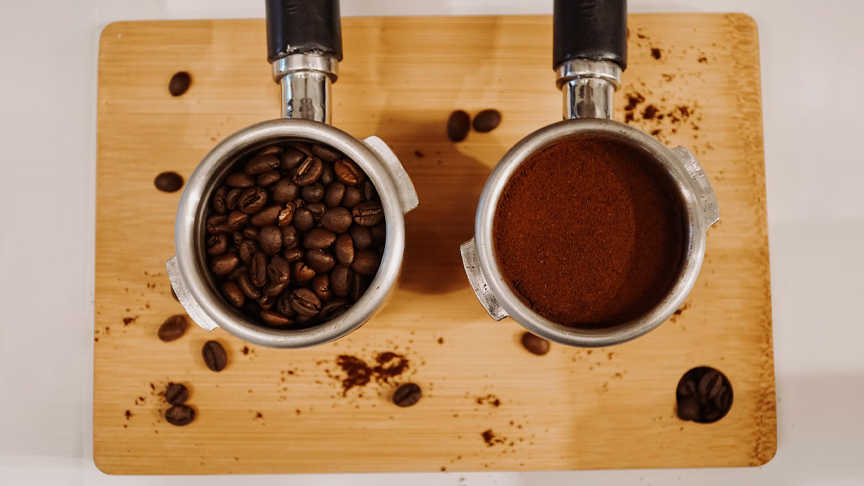
Coffee is one of the world’s most widely consumed beverages, and previous research has linked its consumption to a lower risk of conditions such as type 2 diabetes and cardiovascular disease. However, the biological mechanisms behind these benefits remain unclear. A new Finnish study links habitual coffee consumption to healthier body composition and metabolic markers, while revealing distinct associations with sex hormones in men and women.
The study, conducted at the University of Oulu, analysed data from 2,264 participants aged 46 in the Northern Finland Birth Cohort 1966. Researchers examined how habitual coffee consumption was associated with circulating metabolites, cardiometabolic risk markers and sex hormones.
Despite having a similar body mass index (BMI), individuals with higher coffee consumption had lower total and visceral fat and greater skeletal muscle mass than those who consumed less coffee.
In both men and women, higher coffee consumption was correlated with lower circulating levels of branched-chain amino acids, biomarkers that have previously been linked to insulin resistance and an increased risk of type 2 diabetes when chronically elevated.
The strongest sex-specific associations were observed in men. Higher coffee consumption was linked to a more favourable glucose–insulin profile, higher concentrations of total and bioavailable testosterone, and increased levels of sex hormone-binding globulin (SHBG). At the same time, free testosterone and the free androgen index were modestly lower. In women, hormonal associations were more limited and were primarily characterised by higher SHBG and lower measures of free androgens.
“Coffee is consumed by millions of people every day, yet we still know surprisingly little about how it relates to our metabolism and hormones. What stood out in our findings was a distinct hormonal signature that didn’t disappear even after we took into account BMI and lifestyle factors, with several of these associations differing between men and women,” says Luca Verroest, lead author of the study and Doctoral Researcher at the University of Oulu.
The results suggest that hormonal pathways may partly explain the relationship between coffee consumption and metabolic health. However, as this was an observational study, the findings demonstrate associations rather than cause-and-effect relationships.
The study is particularly relevant in Finland, one of the world’s highest coffee-consuming countries, where annual consumption averages around 11.8 kilograms per person.
The researchers say the findings provide a foundation for future studies aimed at determining whether coffee itself drives these biological changes and identifying the compounds responsible. These questions are currently being investigated in animal models, with the long-term goal of progressing to human intervention studies. Further research will be needed before the findings could inform dietary recommendations.
The study, Associations of habitual coffee intake with testosterone and cardiometabolic markers: the Northern Finland Birth Cohort 1966 study, has been published in the European Journal of Nutrition.

Pasalubong shopping in Davao via Aldevinco

The look and feel of your neighborhood may affect your sleep

Workout or nap? Either can help your sleepless brain, study finds

Study links coffee consumption to metabolic health and sex hormones

Manulife Investments Philippines leads UITF rankings across equity and fixed income funds

Scheduling dental care during prenatal visits boosts oral health care during pregnancy

Enjoying the grilling at Mandaue City’s Matias BBQ

Dogs can distinguish between human fear and sadness

Pet dog microbiota may protect young children from respiratory tract infections and reduce the need for antibiotic courses

Walking and weight training alone are not enough for strong bones – football and handball may be more effective
Scheduling dental care during prenatal visits boosts oral health care during pregnancy
Enjoying the grilling at Mandaue City’s Matias BBQ
Study links coffee consumption to metabolic health and sex hormones
Dogs can distinguish between human fear and sadness
Manulife Investments Philippines leads UITF rankings across equity and fixed income funds
The look and feel of your neighborhood may affect your sleep
Pasalubong shopping in Davao via Aldevinco
Workout or nap? Either can help your sleepless brain, study finds

-
 NewsMakers3 weeks ago
Scheduling dental care during prenatal visits boosts oral health care during pregnancy
-
 Destinations3 weeks ago
Enjoying the grilling at Mandaue City’s Matias BBQ
-
 NewsMakers3 weeks ago
Study links coffee consumption to metabolic health and sex hormones
-
 Pet Care3 weeks ago
Dogs can distinguish between human fear and sadness
-
 Product Showcase3 weeks ago
Manulife Investments Philippines leads UITF rankings across equity and fixed income funds
-
 NewsMakers1 week ago
The look and feel of your neighborhood may affect your sleep
-
 Destinations4 days ago
Pasalubong shopping in Davao via Aldevinco
-
 NewsMakers1 week ago
Workout or nap? Either can help your sleepless brain, study finds