
NewsMakers
Monitoring blood pressure at home can help reduce risk of brain stroke
Various international trials on blood pressure lowering and stroke prevention state that for every 5 mm Hg decrease in SBP, the expected risk reduction of stroke and heart attack incidence and mortality was 18% (95% confidence interval [CI], 12-24%) in individuals younger than 55 years, 9% (5-12%) in those aged 55-74 years, 9% (4-13%) in those aged 75-84 years, and 1% (-13; +12) in those aged 85 years and older.


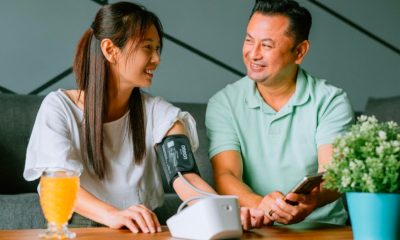
A new data review, conducted by OMRON Healthcare Singapore, has revealed that monitoring blood pressure at home can help in reducing risk of brain stroke. According to the review, people who monitor their blood pressure at home are more likely to detect and manage hypertension – one of the leading causes of stroke.
The review is based on an active user base of around 340 people, and more than 43,000 blood pressure readings across Singapore, Indonesia, Thailand, Philippines and Vietnam over the period from November 2021 to October 2022. This base consists of users who are regularly using OMRON Bluetooth-connected digital BP monitoring device and tracking their blood pressure with the OMRON connect app, as well as OMRON’s Health Gift program within the app.
The monitoring and analysis of their readings over the pre- and post-registration period (3 months before, and the 1st, 3rd, 6th, and 12th month) reveals average Systolic Blood Pressure (SBP) improvement of 10mmHg among hypertensive people with a baseline SBP of 135mmHg and above, within 12 months. The study also shows that 80% of this group of users were able to control their blood pressure, with 55% achieving normal SBP by the 12th month of tracking.
Various international trials on blood pressure lowering and stroke prevention state that for every 5 mm Hg decrease in SBP, the expected risk reduction of stroke and heart attack incidence and mortality was 18% (95% confidence interval [CI], 12-24%) in individuals younger than 55 years, 9% (5-12%) in those aged 55-74 years, 9% (4-13%) in those aged 75-84 years, and 1% (-13; +12) in those aged 85 years and older.
Thus, the data review reiterates that home blood pressure monitoring and tracking with the help of an app help in identifying abnormal changes in blood pressure. If the changes are addressed and managed with the help of physicians, before they become severe, it can be an effective support for stroke prevention, especially among people who have a family history of hypertension or stroke.
“I believe that monitoring of blood pressure at home is an essential aspect of controlling hypertension and managing co-morbidities like stroke, heart attack, and dementia. Regular monitoring aided by accurate digital devices allows for early detection of potential health issues and empowers patients to take control of their own health by making informed decisions under the guidance of their physicians. It’s important to incorporate monitoring in your daily regime to achieve optimal health and prevent potential complications in the long run,” said Valery Feigin, Professor of Neurology & Epidemiology and Director of NISAN.
OMRON Healthcare, one of the leading players in home healthcare monitoring, has been at the forefront of promoting the importance of home blood pressure monitoring. The company has been developing innovative, connected, and affordable digital blood pressure monitoring devices that are being used by people across Asia Pacific to monitor their blood pressure at home. This year, the company celebrated the 50th anniversary of the launch of blood pressure monitors, and will continue to work towards its vision of contributing towards “zero cerebrovascular and cardiovascular disease (zero events)” around the world.
“Digital home blood pressure monitoring is a game-changer in the fight against stroke. It starts with managing hypertension — stroke’s biggest risk factor,” says Yusuke Kato, General Manager, OMRON Healthcare Philippines. “Our devices are connected, accurate, and user-friendly, making it easy for people to monitor their blood pressure regularly and also keep their physicians and caregivers easily informed with the help of the OMRON connect app. This enables them to take more effective and timely decisions, rendering better management of their health and leading to fewer unexpected health events. Thus, helping us to drive our vision of “Going for Zero” events,” he added.
The added rewards to users via OMRON Health Gift program are recognized by the company as an effective tool to motivate users in building and keeping up a healthy habit of regular blood pressure monitoring.
Reports highlight that hypertension is the most powerful modifiable risk factors for stroke, heart attack, and dementia; lowering blood pressure substantially reduces the risk of morbidity and mortality. However, it continues to pose a significant burden in Asia, with poor awareness and undertreatment reported in many Asian countries and regions. It is estimated to cause nearly 3.7 million deaths each year in Southeast Asia, East Asia, and Oceania. Considering the asymptomatic nature of hypertension and the significant disease burden, it is essential to measure blood pressure regularly. Home blood pressure monitoring (HBPM) is recognized as a valuable tool to monitor blood pressure and facilitate effective detection of hypertension. Combined with the right drugs treatment, it can play a significant role in preventing stroke, heart attacks, and dementia.
To this end, OMRON has joined the mission to promote blood pressure screening through device donations via the May Measurement Month program. Since 2017, OMRON has donated approximately 23,000 units of blood pressure monitors to various medical associations of hypertension globally, to support screening and diagnosis.




NewsMakers
The look and feel of your neighborhood may affect your sleep
Those living in neighborhoods rated as having a stronger sense of safety tended to sleep longer, and that this rating appeared to be shaped by the streetscape.

Your neighborhood’s “streetscape”—the physical environment of your street—is something that you have probably never consciously thought about, despite seeing it every day. But what if the streetscape was affecting you on a subconscious level and disrupting your sleep?
This intriguing question is posed by the findings of a study led by Professor Daisuke Matsushita of the Graduate School of Human Life and Ecology at Osaka Metropolitan University. The research team used AI to analyze more than 200,000 Google Street View images to identify visual neighborhood characteristics. They then linked these characteristics to the self-reported sleep of 1,089 working adults living on the lower floors of apartments in Tokyo, who were most likely to be affected by the streetscape.
They found that those living in neighborhoods rated as having a stronger sense of safety tended to sleep longer, and that this rating appeared to be shaped by the streetscape. Generally, people slept longer in areas with lots of greenery, such as leafy trees, on the street. Similarly, high “enclosure”—meaning many tall vertical buildings and few wide-open spaces—was also associated with longer sleep and fewer insomnia symptoms.
However, the study also made a surprising finding. The researchers found that highly walkable streetscapes, such as those with more sidewalks and traffic signs, were associated with a lowered sense of safety and shortened sleep duration.
This suggests that walkability does not always represent a reassuring environment. Instead, a possible explanation is that streets with extensive pedestrian infrastructure are often busier, more crowded, and used by more strangers, which may be perceived as less safe or less relaxing than quieter residential streets.
“This study demonstrates the potential for evaluating streetscape characteristics across large geographic areas in a cost-effective manner,” Dr. Matsushita said. “Based on the technique used in this study, cities could potentially measure perceived safety, beauty, liveliness, and enclosure as well as pollution and noise.”
“We hope that opening up this new perspective creates further possibilities for designing healthier neighborhoods,” he concludes.
The findings were published in Building and Environment.
NewsMakers
Workout or nap? Either can help your sleepless brain, study finds
People who either completed 20 minutes of moderate-to-vigorous exercise or took a 90-minute nap performed about 22 per cent better on memory tests after 30 hours without sleep than those who did neither.

A short workout or a nap can help protect memory after a sleepless night, a McGill University-led study has found.
Researchers found people who either completed 20 minutes of moderate-to-vigorous exercise or took a 90-minute nap performed about 22 per cent better on memory tests after 30 hours without sleep than those who did neither. The findings, published in Proceedings of the National Academy of Sciences (PNAS), point to practical ways to counter the effects of sleep deprivation.
“Sleep loss affects nearly every aspect of how we think and function, but many people can’t simply stop what they’re doing and get more sleep,” said senior author Marc Roig, Professor in McGill’s School of Physical and Occupational Therapy. “Our findings show that even a brief bout of exercise may help preserve one of our most important cognitive abilities.”
The study involved 54 healthy young adults who stayed awake for 30 consecutive hours under lab supervision. Participants were then assigned to one of three groups: a 20-minute cycling session, a 90-minute nap or a control condition. Three days later, researchers tested their memory for images they had viewed immediately after the intervention. Those who exercised or napped remembered significantly more images than participants who did neither.
Same result, different pathways
While the memory benefits were nearly identical, brain recordings revealed that exercise and napping helped in different ways.
Napping appeared to help the brain recharge, making it easier to take in and remember new information. Exercise, by contrast, helped the brain use its remaining resources more efficiently, without making participants feel more tired.
The findings could eventually inform fatigue-management strategies in workplaces where sleep loss is common and mistakes can have serious consequences, such as health care, transportation and emergency response.
“A nap isn’t always possible in the middle of a shift,” said first author Madhura Lotlikar, a doctoral candidate in McGill’s Department of Neurology and Neurosurgery. “Exercise is accessible, inexpensive and easy to implement. That makes it a promising tool to help people stay cognitively sharp when sleep is limited.”
The researchers emphasize that exercise cannot replace sleep, but it may help people function better when getting enough rest isn’t possible.
About the study
“Protecting episodic memory after sleep loss: Similar benefits of exercise and naps via distinct neural contributions” by Madhura Lotlikar and Marc Roig et al., was published in Proceedings of the National Academy of Sciences of the United States of America.
NewsMakers
Study links coffee consumption to metabolic health and sex hormones
Despite having a similar body mass index (BMI), individuals with higher coffee consumption had lower total and visceral fat and greater skeletal muscle mass than those who consumed less coffee.

Coffee is one of the world’s most widely consumed beverages, and previous research has linked its consumption to a lower risk of conditions such as type 2 diabetes and cardiovascular disease. However, the biological mechanisms behind these benefits remain unclear. A new Finnish study links habitual coffee consumption to healthier body composition and metabolic markers, while revealing distinct associations with sex hormones in men and women.
The study, conducted at the University of Oulu, analysed data from 2,264 participants aged 46 in the Northern Finland Birth Cohort 1966. Researchers examined how habitual coffee consumption was associated with circulating metabolites, cardiometabolic risk markers and sex hormones.
Despite having a similar body mass index (BMI), individuals with higher coffee consumption had lower total and visceral fat and greater skeletal muscle mass than those who consumed less coffee.
In both men and women, higher coffee consumption was correlated with lower circulating levels of branched-chain amino acids, biomarkers that have previously been linked to insulin resistance and an increased risk of type 2 diabetes when chronically elevated.
The strongest sex-specific associations were observed in men. Higher coffee consumption was linked to a more favourable glucose–insulin profile, higher concentrations of total and bioavailable testosterone, and increased levels of sex hormone-binding globulin (SHBG). At the same time, free testosterone and the free androgen index were modestly lower. In women, hormonal associations were more limited and were primarily characterised by higher SHBG and lower measures of free androgens.
“Coffee is consumed by millions of people every day, yet we still know surprisingly little about how it relates to our metabolism and hormones. What stood out in our findings was a distinct hormonal signature that didn’t disappear even after we took into account BMI and lifestyle factors, with several of these associations differing between men and women,” says Luca Verroest, lead author of the study and Doctoral Researcher at the University of Oulu.
The results suggest that hormonal pathways may partly explain the relationship between coffee consumption and metabolic health. However, as this was an observational study, the findings demonstrate associations rather than cause-and-effect relationships.
The study is particularly relevant in Finland, one of the world’s highest coffee-consuming countries, where annual consumption averages around 11.8 kilograms per person.
The researchers say the findings provide a foundation for future studies aimed at determining whether coffee itself drives these biological changes and identifying the compounds responsible. These questions are currently being investigated in animal models, with the long-term goal of progressing to human intervention studies. Further research will be needed before the findings could inform dietary recommendations.
The study, Associations of habitual coffee intake with testosterone and cardiometabolic markers: the Northern Finland Birth Cohort 1966 study, has been published in the European Journal of Nutrition.

The look and feel of your neighborhood may affect your sleep

Workout or nap? Either can help your sleepless brain, study finds

Study links coffee consumption to metabolic health and sex hormones

Manulife Investments Philippines leads UITF rankings across equity and fixed income funds

Scheduling dental care during prenatal visits boosts oral health care during pregnancy

Enjoying the grilling at Mandaue City’s Matias BBQ

Dogs can distinguish between human fear and sadness

Pet dog microbiota may protect young children from respiratory tract infections and reduce the need for antibiotic courses

Walking and weight training alone are not enough for strong bones – football and handball may be more effective

Keeping kitty indoors is not the cat-astrophe that owners fear

Filipinos prioritize independence as legacy for longer lives

Going Chinese in Pulilan, Bulacan

Eating out in Cebu in one place via Pusô Village

Pregnancy complications can signal heart disease risk years before traditional screening, study finds

Why a UTI hurts — and why that might be a good thing

Posture can influence your mood and behavior, study suggests
Walking and weight training alone are not enough for strong bones – football and handball may be more effective
Scheduling dental care during prenatal visits boosts oral health care during pregnancy
Dogs can distinguish between human fear and sadness
Study links coffee consumption to metabolic health and sex hormones

-
 NewsMakers4 weeks ago
Filipinos prioritize independence as legacy for longer lives
-
 Destinations4 weeks ago
Going Chinese in Pulilan, Bulacan
-
 Destinations3 weeks ago
Eating out in Cebu in one place via Pusô Village
-
 NewsMakers3 weeks ago
Pregnancy complications can signal heart disease risk years before traditional screening, study finds
-
 NewsMakers3 weeks ago
Why a UTI hurts — and why that might be a good thing
-
 NewsMakers3 weeks ago
Posture can influence your mood and behavior, study suggests
-
 Wellness3 weeks ago
Walking and weight training alone are not enough for strong bones – football and handball may be more effective
-
 NewsMakers2 weeks ago
Scheduling dental care during prenatal visits boosts oral health care during pregnancy