
Wellness
5-minute workout lowers blood pressure as much as exercise, drugs
The ultra-time-efficient maneuver known as High-Resistance Inspiratory Muscle Strength Training (IMST) could play a key role in helping aging adults fend off cardiovascular disease.


Working out just five minutes daily via a practice described as “strength training for your breathing muscles” lowers blood pressure and improves some measures of vascular health as well as, or even more than, aerobic exercise or medication, new CU Boulder research shows.
The study, published in the Journal of the American Heart Association, provides the strongest evidence yet that the ultra-time-efficient maneuver known as High-Resistance Inspiratory Muscle Strength Training (IMST) could play a key role in helping aging adults fend off cardiovascular disease.
In the United States alone, 65% of adults over age 50 have above-normal blood pressure – putting them at greater risk of heart attack or stroke. Yet fewer than 40% meet recommended aerobic exercise guidelines.
“There are a lot of lifestyle strategies that we know can help people maintain cardiovascular health as they age. But the reality is, they take a lot of time and effort and can be expensive and hard for some people to access,” said lead author Daniel Craighead, an assistant research professor in the Department of Integrative Physiology. “IMST can be done in five minutes in your own home while you watch TV.”
Developed in the 1980s as a way to help critically ill respiratory disease patients strengthen their diaphragm and other inspiratory (breathing) muscles, IMST involves inhaling vigorously through a hand-held device which provides resistance. Imagine sucking hard through a tube that sucks back.
Initially, when prescribing it for breathing disorders, doctors recommended a 30-minute-per-day regimen at low resistance. But in recent years, Craighead and colleagues have been testing whether a more time-efficient protocol–30 inhalations per day at high resistance, six days per week–could also reap cardiovascular, cognitive and sports performance improvements.
For the new study, they recruited 36 otherwise healthy adults ages 50 to 79 with above normal systolic blood pressure (120 millimeters of mercury or higher). Half did High-Resistance IMST for six weeks and half did a placebo protocol in which the resistance was much lower.
After six weeks, the IMST group saw their systolic blood pressure (the top number) dip nine points on average, a reduction which generally exceeds that achieved by walking 30 minutes a day five days a week. That decline is also equal to the effects of some blood pressure-lowering drug regimens.
Even six weeks after they quit doing IMST, the IMST group maintained most of that improvement.
“We found that not only is it more time-efficient than traditional exercise programs, the benefits may be longer lasting,” Craighead said.
The treatment group also saw a 45% improvement in vascular endothelial function, or the ability for arteries to expand upon stimulation, and a significant increase in levels of nitric oxide, a molecule key for dilating arteries and preventing plaque buildup. Nitric oxide levels naturally decline with age.
Markers of inflammation and oxidative stress, which can also boost heart attack risk, were significantly lower after people did IMST.
And, remarkably, those in the IMST group completed 95% of the sessions.
“We have identified a novel form of therapy that lowers blood pressure without giving people pharmacological compounds and with much higher adherence than aerobic exercise,” said senior author Doug Seals, a Distinguished Professor of Integrative Physiology. “That’s noteworthy.”
The practice may be particularly helpful for postmenopausal women.
In previous research, Seals’ lab showed that postmenopausal women who are not taking supplemental estrogen don’t reap as much benefit from aerobic exercise programs as men do when it comes to vascular endothelial function. IMST, the new study showed, improved it just as much in these women as in men.
“If aerobic exercise won’t improve this key measure of cardiovascular health for postmenopausal women, they need another lifestyle intervention that will,” said Craighead. “This could be it.”
Preliminary results suggest MST also improved some measures of brain function and physical fitness. And previous studies from other researchers have shown it can be useful for improving sports performance.
“If you’re running a marathon, your respiratory muscles get tired and begin to steal blood from your skeletal muscles,” said Craighead, who uses IMST in his own marathon training. “The idea is that if you build up endurance of those respiratory muscles, that won’t happen and your legs won’t get as fatigued.”
Seals said they’re uncertain exactly how a maneuver to strengthen breathing muscles ends up lowering blood pressure, but they suspect it prompts the cells lining blood vessels to produce more nitric oxide, enabling them to relax.
The National Institutes of Health recently awarded Seals $4 million to launch a larger follow-up study of about 100 people, comparing a 12-week IMST protocol head-to-head with an aerobic exercise program.
Meanwhile, the research group is developing a smartphone app to enable people to do the protocol at home using already commercially available devices.
Those considering IMST should consult with their doctor first. But thus far, IMST has proven remarkably safe, they said.
“It’s easy to do, it doesn’t take long, and we think it has a lot of potential to help a lot of people,” said Craighead.





NewsMakers
Move to quit: Exercise boosts smoking quit rates
Researchers found that people taking part in exercise programs were 15% more likely to achieve continuous abstinence and 21% more likely to report not smoking over a seven-day period, compared with control groups.

A pack-a-day smoker can spend around $14,000 a year on cigarettes, yet despite the financial and health costs, quitting remains one of the most difficult changes many people will ever attempt.
Now, new research from Adelaide University shows that exercise can help people quit smoking by reducing cigarette consumption, easing cravings and improving their chances of quitting.
Researchers found that people taking part in exercise programs were 15% more likely to achieve continuous abstinence and 21% more likely to report not smoking over a seven-day period, compared with control groups.
They also found that exercise could reduce cigarette consumption by two cigarettes per day, and that a single bout of exercise immediately reduced cigarette cravings for up to 30 minutes after exercise.
The systematic review and meta-analysis examined 59 randomised controlled trials involving more than 9000 participants, exploring the effects of both single bouts of exercise and long-term exercise programs on smoking cessation, cravings, withdrawal symptoms and mood.
Globally, tobacco smoking remains the leading preventable cause of premature morbidity and mortality, accounting for about 7 million deaths, including an estimated 1.6 million non-smokers who are exposed to second-hand smoke.
Around the world, e-cigarette use has now reached more than 100 million people.
The researchers say exercise should be viewed as an additional tool that can be used alongside established smoking cessation support.
Lead researcher, Dr Ben Singh said the findings provide smokers with a practical, low-cost tool that can support their quitting journey.
“Quitting smoking is one of the best things a person can do for their health, but it’s also one of the hardest,” Dr Singh said.
“Many smokers want to quit, but the current approaches don’t work for everyone. That’s why we need more strategies that people can incorporate into their daily lives at little or no cost.
“Something as simple as regular exercise can make a meaningful difference to people trying to quit, helping them manage cravings, smoke less and improve their chances of quitting.”
While smoking rates have reduced over the past two decades, demand for e-cigarettes and heated-tobacco products have risen, targeting the younger generation.
Today, 80% of the 1.3 billion tobacco users worldwide live in low- and middle-income countries, yet in contrast, vaping has risen across many OECD countries.
Senior researcher Adelaide University’s Professor Carol Maher said exercise could be used strategically to ward off tobacco cravings.
“Quitting smoking does not have to begin and end with willpower alone,” Prof Maher said.
“Cravings can be difficult to manage, but they often pass. Our review found that even a single bout of exercise can reduce cravings for up to 30 minutes, which may help people get through some of the hardest moments of a quit attempt.
“Exercise should not replace evidence-based quit supports such as counselling and smoking cessation medication, but it may be a practical, low-cost strategy that people can use alongside them.”
The researchers say the next step is to test how exercise can be built into real-world quit programs, including digital, community and clinical services, and to examine whether it can also support people trying to quit vaping, where evidence is currently lacking.
Wellness
Midlife fitness linked to longer, healthier lives
Researchers note that improving fitness during midlife may be a key strategy for promoting healthy aging and preserving quality of life later on, even with modest increases in physical activity.

How fit you are in midlife may help determine not just how long you live, but how many of those years are spent in good health, according to a study published in the JACC, the flagship journal of the American College of Cardiology.
The study found that adults with higher levels of cardiorespiratory fitness in midlife lived longer lives, developed fewer chronic diseases and spent more years free from serious illness compared with those who were less fit.
Cardiorespiratory fitness—how well the heart and lungs supply oxygen during physical activity—is known to reduce the risk of heart disease and early death. This study extends prior research by showing that fitness also plays a meaningful role in healthy aging, defined as years lived without major chronic disease.
The findings indicate that higher fitness in midlife is strongly associated with later onset of chronic disease, lower overall disease burden and longer life expectancy. These benefits were observed in both men and women.
Researchers followed more than 24,500 men and women who were healthy through age 65 and tracked their health outcomes later in life using Medicare data. Fitness was measured earlier in adulthood using a treadmill test, and researchers examined the development of 11 major chronic conditions, including heart disease, diabetes, kidney disease and cancer.
Compared with people who had low fitness levels, those with high fitness in midlife experienced clear benefits later in life. On average, they developed chronic diseases at least 1.5 years later, had fewer total conditions and lived longer overall. These patterns were seen in both men and women and across different ages, body weights and smoking histories.
Importantly, the study emphasizes health span—not just lifespan—highlighting that fitness helps people live more of their lives in good health, not simply live longer with disease.
The findings also underscore the public health value of physical activity, as cardiorespiratory fitness can be improved through regular movement such as brisk walking, cycling or other aerobic exercise.
Researchers note that improving fitness during midlife may be a key strategy for promoting healthy aging and preserving quality of life later on, even with modest increases in physical activity.
Wellness
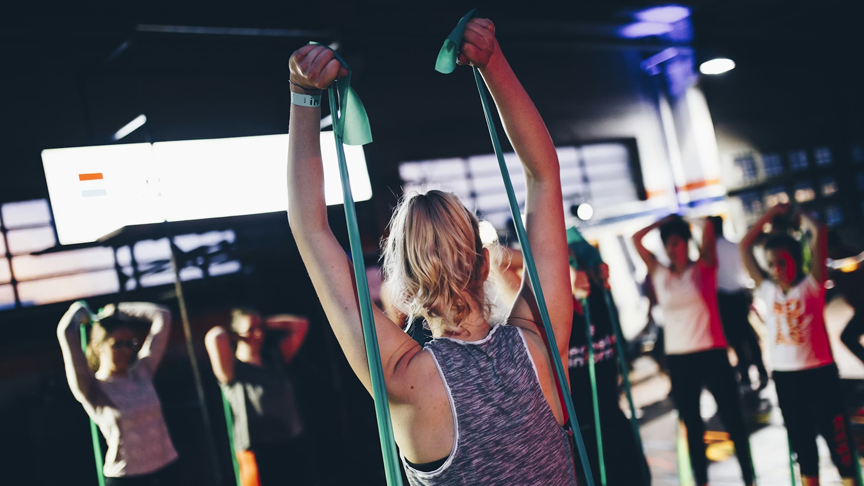
Adding resistance training improves strength and aerobic fitness, better for heart health
Aerobic training and resistance training independently improve aerobic fitness, walking distance, muscle strength, and HRQoL.
Heart failure affects more than 64 million people worldwide (1%–3% in the general adult population) and its prevalence is projected to increase. This condition is commonly categorized into 2 main types: heart failure with reduced ejection fraction (HFrEF; where the heart is too weak to pump enough blood to meet the body’s needs) and heart failure with preserved ejection fraction (HFpEF; where the heart becomes stiff and cannot relax sufficiently to fill with enough blood).
Regardless of type, heart failure is a life-threatening condition characterized by low exercise tolerance, progressive functional decline, reduced health-related quality of life (HRQoL), and a high risk of hospitalizations, morbidity, and mortality. The study led by Tasuku Terada was published in the Journal of Sport and Health Science.
Previous studies have shown that aerobic training and resistance training independently improve aerobic fitness, walking distance, muscle strength, and HRQoL. Some studies have also demonstrated superior benefits of high-intensity interval training (HIIT) on aerobic fitness and cardiac function in patients with heart failure when compared to traditionally used moderate-intensity continuous training.
However, despite the well-established benefits of each exercise modality, the effects of combining aerobic training and muscle strength training (i.e., combined training) compared to the routinely recommended aerobic training alone were not clear in patients with heart failure. In this study, the researchers compared the effects of combined training and aerobic training alone on aerobic fitness, muscle strength, and HRQoL in patients with heart failure. These comparisons were made while accounting for heart failure classifications (i.e., HFrEF or HFpEF), total exercise duration (i.e., matched or unmatched exercise session duration between combined and aerobic training alone), and exercise type (e.g., HIIT).
The researchers systematically searched databases for studies directly comparing the effects of combined training and aerobic training alone on aerobic fitness, walk test distance, muscle strength, and HRQoL in patients with heart failure. Of 13,965 studies they screened, 15 studies were included (466 patients with HFrEF (89%) and 60 with HFpEF (11%); 17% female).
Pooled analyses showed that, in HFrEF, combined training increased aerobic fitness, walk test distance, and upper body muscle strength more than aerobic training alone. The superior effects of combined training on aerobic fitness and walking distance were retained when exercise session duration was matched between the two exercise modalities, indicating that combined training has a greater impact on these measures independent of total exercise duration. HIIT combined with muscle strength training also increased aerobic fitness more than HIIT alone.
No differences were found between combined and aerobic training alone in lower body muscle strength or HRQoL. Overall adherence to combined training was high or comparable to that of aerobic training alone.
Similarly, dropout rates in the combined training group were comparable to those in aerobic training alone, and no notable differences in the risk of adverse events were observed.
To summarise, in predominantly male patients with HFrEF, combined training yielded greater improvements in aerobic fitness, walking distance, and upper body muscle strength than aerobic training alone. These results highlight that, when prescribing exercise for a fixed time frame, allocating time to both aerobic training and muscle strength training may be a more effective strategy for improving aerobic fitness in patients with HFrEF.
Additionally, because HIIT may improve aerobic fitness more effectively while requiring less time than moderate-intensity continuous training, combining HIIT with muscle strength training may offer a time-efficient approach to improve aerobic fitness in patients with HFrEF.
Considering the absence of notable differences in adherence or adverse events, these findings support that replacing part of aerobic training with muscle strength training may be an effective strategy for patients with HFrEF to increase aerobic fitness, walking distance, and muscle strength, all of which are important predictors of better prognosis in patients with heart failure. Further evidence is needed to clarify the effects of combined training in HFpEF.

Filipinos prioritize independence as legacy for longer lives

Going Chinese in Pulilan, Bulacan

Coffee and heart health: How many cups of caffeinated coffee are safe to drink each day?

Loneliness strongly linked to poorer mental health and wellbeing, study finds

Weight loss drugs could help with binge eating disorder

How to prepare and protect homes from costly storm-related electrical damage

Fullerton Health celebrates two years of advancing preventive healthcare in PH

New IKEA PS Collection brings playful functionality into your home

Manulife China Bank Life expands access to cancer care solutions

Tips for smooth travel with pets

Superbod Movement goes beyond the stage
Loneliness strongly linked to poorer mental health and wellbeing, study finds

Poor-quality sleep involves different parts of the brain, depending on age
Weight loss drugs could help with binge eating disorder
New IKEA PS Collection brings playful functionality into your home
Fullerton Health celebrates two years of advancing preventive healthcare in PH

Century Tuna Superbods 2026 announces ‘Superbod Era’ finalists
Filipinos prioritize independence as legacy for longer lives
Coffee and heart health: How many cups of caffeinated coffee are safe to drink each day?
Manulife China Bank Life expands access to cancer care solutions

-
 Product Showcase3 weeks ago
Superbod Movement goes beyond the stage
-
 NewsMakers3 weeks ago
Loneliness strongly linked to poorer mental health and wellbeing, study finds
-
 NewsMakers3 weeks ago
Poor-quality sleep involves different parts of the brain, depending on age
-
 NewsMakers3 weeks ago
Weight loss drugs could help with binge eating disorder
-
 Product Showcase3 weeks ago
New IKEA PS Collection brings playful functionality into your home
-
 Product Showcase3 weeks ago
Fullerton Health celebrates two years of advancing preventive healthcare in PH
-
 Product Showcase3 weeks ago
Century Tuna Superbods 2026 announces ‘Superbod Era’ finalists
-
 NewsMakers5 days ago
Filipinos prioritize independence as legacy for longer lives