
Spotlight
Starting your smart home transformation
Converting to a smart home may seem like an intimidating task at first, but if you break the process into manageable steps you’ll find it’s not so hard to choose and install the best smart devices for your home and lifestyle. You can begin turning your house into a smart home by following these three simple steps.

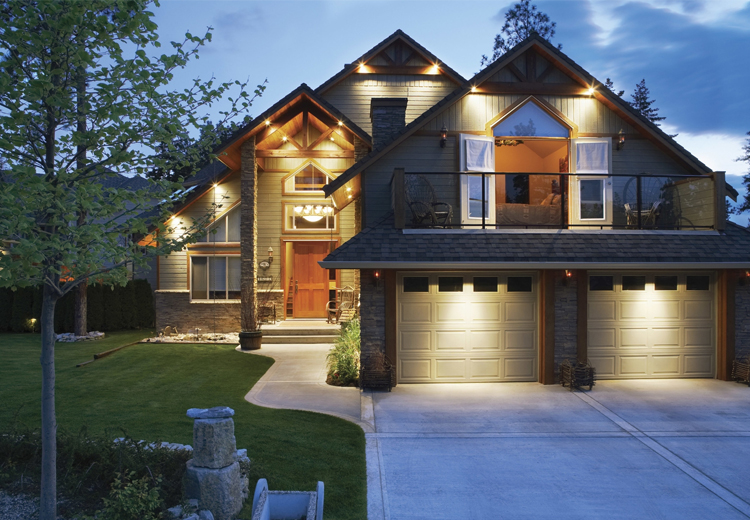
With the aid of modern technology, it’s now possible to convert virtually any ordinary house into a smart home filled with features that make daily tasks more convenient. These technologies allow for greener living, customization of your living space to personal tastes and the peace of mind that you can control key home systems with your smartphone.
Photo courtesy of Getty Images House
Converting to a smart home may seem like an intimidating task at first, but if you break the process into manageable steps you’ll find it’s not so hard to choose and install the best smart devices for your home and lifestyle. You can begin turning your house into a smart home by following these three simple steps.
Set a budget.
All of the technology and gadgetry that comprise today’s smart homes were once viewed as luxury, reserved for the rich and famous and those whose lives played out on the big screen. What once seemed impractical for the average homeowner is now quite attainable. When you consider that some smart devices, such as light bulbs, have a life span of up to 25 years, in the end you may end up even saving money.
How much money you’ll ultimately spend to create your smart home depends on numerous factors: the size of your home, number of systems and appliances you wish to automate and the level of integration you desire are significant considerations. Assuming that your home is already wired for a high-performance broadband connection, you can get into the smart home game for under $100 with a thermostat that you can manage remotely. On the other hand, adding smart-home technology throughout the whole house will likely cost in the thousands.
Pay attention to the levels of integration various products offer. Purchasing products from brands that partner with many other smart-home device makers will help ensure the products you add in the future will work with those you install now. Selecting highly integrated products will save you time during the installation process, help you avoid unnecessary expenses down the road and improve your overall smart-home experience.
Brainstorm ideas for each room.
Once you’re past the nuts and bolts of practical considerations, it’s time to start imagining. The key about designing the perfect smart home for you is to remember that the very essence of smart devices is their ability to make your life more convenient. Choosing the products and how you connect them is all about you and your lifestyle – there’s more than just one way to build your smart home.
Go room to room in your home and think about the activities that occur in each space. Consider which of these can become easier or more enjoyable with the support of smart technology. The living room, where you likely have a host of entertainment and audio equipment, offers plenty of obvious benefits, but also look at the kitchen, for example. Did you forget to start the dishwasher on your way out the door? Initiating a wash cycle remotely will let you come home to dishes clean and ready for dinner.
Prioritize what you install.
When it’s time to begin the actual transition to a smart home, it’s a good idea to start with the most important products first. For most homeowners, those are the devices that you use every day.
Opening and closing the garage door is so much a part of your daily routine that it is often hard to remember if you closed it on the way out. Products such as the Chamberlain MyQ Garage upgrade kit, or Chamberlain garage door openers with built-in MyQ technology, put peace of mind in the palm of your hand. This technology allows you to control and check the status of your garage door from anywhere, at any time, so you know if your garage was left open or if it’s being opened while you’re not there.
With the all-important lead-in to your home covered, you can turn attention to devices that help manage your home’s operation and efficiency. Thermostats that auto adjust to designated climate settings are a popular option for many homeowners because they bring immediate returns in reducing your overall energy usage. Irrigation systems and power management products are also wise investments when it comes to optimizing your home’s use of natural resources.
Stepping across the threshold to a smart home may feel like a big step, but once you get settled and experience the convenience and control, you’ll likely find yourself exploring ways to incorporate smart technology every place you can.
Smart Devices for Every Room
The number of devices that can be integrated into a smart home is growing at an accelerated rate, but not all are complex gadgets and gizmos. Some of the simpler options for every room in your home include:
Living Room: Outlet Adapters
Walk into your home late at night and flip on the lights, the TV or both without searching in the dark for a switch or remote. After your smart outlet adapter is plugged into the wall, appliances can be plugged into the adapter and controlled from a smartphone.
Bedroom: Motorized Drapes
Adding motorized drapes to your bedroom allows for an easy way to adjust lighting and privacy – all without leaving the comfort of your bed. Properly adjusting drapes, which is easy to do with smartphone control, can also help manage energy consumption by regulating solar heat.
Kitchen: Coffee Maker
Wake up to your favorite morning beverage without drowsily scooping and pouring. A smart coffee maker can make the right amount of coffee at just the right time through simple settings on your smartphone.
Garage: Remote Garage Door Access
With remote access to one of the main entry points to your home, you can ensure the garage door is shut when you’re out or ready to open when you return.






NewsMakers
Forget materialism, a simple life is happier: research
The commitment to simple living, or ‘voluntary simplicity’ as it is formally known, leads to wellbeing through providing more opportunities for personal interaction and social connection than conventional contexts of exchange, such as community gardens, sharing resources, and peer-to-peer lending platforms.

In an age where billionaires and conspicuous consumption are increasingly on display, new Otago-led research shows a simple life really is a happier life.
The study led by University of Otago – Ōtākou Whakaihu Waka Department of Marketing researchers has recently been published in the Journal of Macromarketing.
After setting out to understand the relationship between consumption and wellbeing, the researchers found people are happier and more satisfied when adopting sustainable lifestyles and resisting the temptations of consumerism.
They analysed data from a representative sample of more than 1000 New Zealanders, made up of 51 per cent men and 49 per cent women, with a median age of 45 and a median annual household income of $50,000.
They found the commitment to simple living, or ‘voluntary simplicity’ as it is formally known, leads to wellbeing through providing more opportunities for personal interaction and social connection than conventional contexts of exchange, such as community gardens, sharing resources, and peer-to-peer lending platforms.
Women are more likely to adopt a simple life than men, although more research is needed to understand why.
Co-author Associate Professor Leah Watkins says consumer culture promotes happiness as being typically associated with high levels of income and the capability it affords to acquire and accumulate material possessions.
“However, research is clear that attitudes to, and experiences of, materialistic approaches to life do not lead to increases in happiness or wellbeing. Nor do they lead to sustainable consumption necessary for planetary health.”
Between 2000 and 2019, global domestic material consumption increased by 66 per cent, tripling since the 1970s to reach 95.1 billion metric tons.
Growing consumer affluence and higher living standards have resulted in warnings of alarming trends of environmental degradation from human consumption.
This, coupled with global warming and post-pandemic health and financial anxieties, has led researchers and policymakers to call for a better understanding of the links between simple consumer lifestyles and wellbeing.
But co-author Professor Rob Aitken says this isn’t a case of just throwing out all your worldly possessions.
“It’s not directly the commitment to material simplicity that leads to wellbeing, but the psychological and emotional need fulfilment that derives from relationships, social connection, community involvement and a sense of living a purposeful and meaningful life.
“In a world where billionaire weddings are treated like state occasions and private yachts are the new status symbols, voluntary simplicity offers a quiet, powerful counter-narrative — one that values enough over excess, connection over consumption, and meaning over materialism.”
NewsMakers
Too much for some, just right for me – The truth about dating while plus-size
What is dating like for a plus-size woman? We don’t get the fairytale, the montage-worthy meet-cute in the bookstore, or the sweet swipe-rights with guys who use words like “connection” and “vibes.” What we get is a mixed bag of awkward encounters, accidental comedy, the occasional ghosting, and sometimes, someone who sees us as the whole damn package.

By: A Curvy Queen Who’s Seen It All
Let me be real with you: dating as a plus-size woman isn’t for the faint of heart. We don’t get the fairytale, the montage-worthy meet-cute in the bookstore, or the sweet swipe-rights with guys who use words like “connection” and “vibes.” What we get is a mixed bag of awkward encounters, accidental comedy, the occasional ghosting, and sometimes, someone who sees us as the whole damn package—not just the size of it.

I’m 33, a size 20, and I live in a city where everyone seems to be on a green juice cleanse or training for a marathon. My idea of a perfect day includes a cheese board, a crime documentary, and wearing something soft and oversized. I’ve been dating online for years now—Tinder, Bumble, Hinge, OkCupid, even a brief stint on Bigger Lover (don’t judge). I’ve had first dates that turned into second dates, and others that ended before the appetizer even came. But through it all, I’ve learned some hard truths about dating while plus-size.
The Fetish Factor
Let’s start with the obvious: there are guys out there who fetishize plus-size women. They love our bodies—but only in private. They send you those thirsty DMs like, “I’ve always had a thing for thick girls.”
I used to think that was a compliment. But it’s not, not when it’s the first thing they lead with, not when you realize they don’t care about your name, your career, or your sense of humor. Just your body.
I once met a guy off Tinder who spent our entire date talking about how much he “loved curves” and how he’d “never dated a big girl before.” He kept asking if I was into feederism (I had to Google it when I got home). I never heard from him again, which was fine—I didn’t need to be someone’s body experiment.
The Grateful Gambit
Then there’s this weird idea that plus-size women are supposed to be grateful for attention, as if someone choosing to date us is some charitable act. It’s subtle sometimes, but oh, it’s there.
I had a guy once tell me, over drinks, “I like girls who are a little bigger. They try harder, you know? They’re just more appreciative.”
I blinked. Tried harder at what? Breathing through my rage?
I wanted to ask him if he’d ever considered that maybe I’m not grateful to be on a date with him either. But instead, I left.
Online Dating – A Love-Hate Situation
The apps are their own beast. My profile is cute, funny, and unapologetically me. I mention that I love bookstores, brunch, and body positivity. I always include full-body pics, because I refuse to trick anyone—but I also refuse to hide.
And still, I get messages like: “You’re actually really pretty for a big girl.”
Sir, would you be willing to grow a personality for someone you really liked?
But it’s not all trash. I’ve had some sweet, genuine conversations and some fun dates. Not every guy is clueless. Some are kind, open, and emotionally intelligent.
The good, the bad, and the big truth
Dating while fat is exhausting. You have to weed through people who want to fix you, people who want to hide you, people who only want to sleep with you, and people who see you as their emotional support girlfriend.
But I’ve also never been more sure of who I am. I’ve learned to ask better questions, to take up space, and to walk away when someone doesn’t see my worth.
I’ve cried after bad dates, yes. I’ve called friends from bathroom stalls and whispered, “Why is this so hard?” But I’ve also danced in my kitchen with someone who made me feel radiant, kissed under streetlights, and been told, with complete sincerity, “You’re the most beautiful woman I’ve ever met.”
The truth is, being plus-size in the dating world means you see people for who they really are, faster. It forces you to develop an inner filter. You learn to walk away without guilt. And when you do meet someone who loves you not in spite of your size but as a part of your magic? It’s that much sweeter.
So to every plus-size woman out there who’s ever felt invisible, unworthy, or too much: you’re not too much. You might just be too real for the wrong person.
Keep showing up. Keep swiping. And keep loving yourself like you deserve to be loved—because trust me, you absolutely do.
NewsMakers
Research suggests drinking coffee may reduce the risk of frailty
Habitual coffee consumption of 4-6 cups and over* (with one cup measuring at 125ml) per day is associated with a reduced risk of frailty.

A new study published in the European Journal of Nutrition has suggested that habitual coffee consumption of 4-6 cups and over* (with one cup measuring at 125ml) per day is associated with a reduced risk of frailty.
The study, funded by the Institute for Scientific Information on Coffee (ISIC) is the first to analyze the relationship between coffee consumption and the underlying components of frailty.
Coffee consumption has previously been linked to reducing the risk of some of the natural symptoms of ageing, such as improving cognitive function2 and mitigating against inflammatory related diseases. This latest research adds to the growing knowledge base within this area, exploring the benefits of regular coffee consumption over an extended period of time.
For this study, researchers conducted a detailed analysis over a long seven-year follow-up period, surveying 1,161 adults aged 55+ years through the Longitudinal Aging Study Amsterdam (LASA).
The relationship between coffee consumption and the presence and incidence of frailty was investigated. Frailty status was evaluated using Fried’s five-component frailty phenotype4,which is defined by the presence of three or more of the following symptoms: weight loss, weakness, exhaustion, slow gait (walking) speed, and low physical activity.
The results of this study indicate that higher habitual coffee consumption is associated with lower overall odds of frailty. These findings can be considered alongside the European Food Safety Authority’s (EFSA) scientific opinion that up to 400mg of caffeine (3-5 cups of coffee) per day is a moderate and safe amount5.
The researchers explain that coffee’s effect on reducing frailty can partly be attributed to the role of antioxidants in coffee, which may help to reduce inflammation, sarcopenia (muscle loss), and prevention of muscle damage. Coffee may also help to improve regulating insulin sensitivity and glucose uptake in older people.
The study’s lead author, Margreet R. Olthof, Associate Professor at the Amsterdam Public Health Research Institute, Vrije Universiteit Amsterdam, commented: “Drinking coffee is a key part of many people’s daily routine, and as people age they are constantly looking for ways to maintain their health. Our findings highlight the possible beneficial association between daily coffee consumption and reduced risk of frailty in later life in the older population. Coffee consumption may thus enhance healthy aging, but it is important we also explore further dietary interventions, to ensure older adults can continue to live fulfilling lives.”
* Moderate coffee consumption can be defined as 3–5 cups per day, based on the European Food Safety Authority’s review of caffeine safety.

Common drug class may increase risk of heart disease

Mindfulness practices found to significantly reduce depression symptoms, especially for those with early-life adversity

Exercise to treat depression yields similar results to therapy

Aerobic exercise may be most effective for relieving depression/anxiety symptoms

High-fiber diet linked to reduced risk of heart disease in night shift workers

Two types of underconfidence linked to anxiety and gender

Checking the charm of Baguio City’s Café by the Ruins

Sleeping in on weekends may help boost teens’ mental health

Breastfeeding may lower mums’ later life depression/anxiety risks for up to 10 years after pregnancy

Creativity feels great — until tomorrow
Creativity feels great — until tomorrow
High-fiber diet linked to reduced risk of heart disease in night shift workers
Sleeping in on weekends may help boost teens’ mental health
Exercise to treat depression yields similar results to therapy
Checking the charm of Baguio City’s Café by the Ruins
Two types of underconfidence linked to anxiety and gender
Aerobic exercise may be most effective for relieving depression/anxiety symptoms
Breastfeeding may lower mums’ later life depression/anxiety risks for up to 10 years after pregnancy
Mindfulness practices found to significantly reduce depression symptoms, especially for those with early-life adversity
Common drug class may increase risk of heart disease

-
 NewsMakers3 weeks ago
Creativity feels great — until tomorrow
-
 NewsMakers3 weeks ago
High-fiber diet linked to reduced risk of heart disease in night shift workers
-
 NewsMakers3 weeks ago
Sleeping in on weekends may help boost teens’ mental health
-
 Wellness3 weeks ago
Exercise to treat depression yields similar results to therapy
-
 Destinations3 weeks ago
Checking the charm of Baguio City’s Café by the Ruins
-
 NewsMakers3 weeks ago
Two types of underconfidence linked to anxiety and gender
-
 Wellness3 weeks ago
Aerobic exercise may be most effective for relieving depression/anxiety symptoms
-
 NewsMakers3 weeks ago
Breastfeeding may lower mums’ later life depression/anxiety risks for up to 10 years after pregnancy