
NewsMakers
The winners against asthma


Christian Lacza, a student from Navotas City, has been suffering from asthma since he was a child. His asthma attacks were so severe that his mother would have to bring him to the hospital almost weekly.
“This made me realize that if I cannot excel in physical activities, I have to discover and focus on my other strengths,” said Lacza. “Instead of letting asthma stop me, I stopped asthma from interfering with my life as I pushed myself as a holistic learner excelling in academics, student leadership and in various competitions.”
Lacza is one of the 2014 Kabayan Ten Outstanding Public School Students, and 2014 Ten Outstanding Youth Leaders of Navotas City. He was an awardee of the 2010 Gawad Huwarang Kabataan of the Antolin Oreta Sr. Foundation and Gawad Modelong Kabataan: Galing at Dangal ng Malabon of the Arnold Vicencio Foundation.
He is also the youngest recipient of the Orator of the Year Award in Navotas National High School.
‘A challenge that adds more meaning’
Twenty-three-year old incoming third year medical student Teesha Banta also has asthma. For Banta, asthma is not a hindrance in pursuing and achieving one’s dreams.
“It’s a challenge that adds more meaning to each of our achievements, an opportunity to push harder, aim higher, and be better persons and citizens of our country. We can defeat asthma and we can conquer our dreams.”
Banta was a full scholar in her first two years of medicine at the St. Luke’s College of Medicine, and graduated Cum Laude from the University of the Philippines Los Banos with the degree of Biology major in Wildlife Biology.
Aside from being a lifetime member in two international honor societies, Banta is also actively involved in community service. As an active Girl Scout, she received two of the highest awards given by the organization – the Chief Girl Scout Medal and is one of the 75 GSP National Young Awardees.
She had represented the country in national and international events, specifically as an advocate and a National Peer Educator on Adolescent Female Health. Despite being afflicted with asthma, Banta plans to become an OB-GYN or specialize in Pediatric Pulmonology so she could treat asthmatic children.
Winners against asthma
It is their passion for life that made Lacza and Banta the grand prize winners in GSK’s Search for Winners Against Asthma (SWAA). Lacza won in the youth category while Banta bagged the top award in the adult category.
The SWAA is a nationwide search for young asthmatic achievers aged 30 years and younger who excel in their respective fields despite having asthma, and inspire asthma sufferers that they, too, can win against the illness.
“We decided to target this particular age group because asthma is a common chronic disease of childhood leading to reduced activity, school absences, ER visits and hospitalizations,” said Dr. Gio Barangan, Medical Director at GlaxoSmithKline Philippines.
“It is also during this stage that young people are in the process of developing the necessary knowledge and skills that will enable them to achieve their goals in life, and as such we want to let them know that asthma should not deter them from realizing their full potentials,” Barangan added.
At the awarding ceremonies, Barangan revealed that there is an estimated 300-million persons afflicted with this chronic illness around the globe. Of this, about 10.7-million are Filipinos which represents 12% of the entire Philippine population. Males have a higher prevalence compared with females.
Of the total number of asthmatics in the Philippines, 49% have uncontrolled asthma while only two percent have controlled asthma. It is regarded as a major healthcare problem as it can be a cause of premature death.
Criteria and categories
The SWAA winners are grouped into two categories: the youth category or those who are 19 years old and below; and adult for 20 years old and above. From almost 2,000 entries, a grand prize winner and runners-up for each category were chosen.
Runners-up in the youth category are 15-year old student and dancer Christine Chua; twins Andre Rafael and Anton Joachim Montero who are taekwondo players; consistent student scholar Kenneth Angelo Bagay and another taekwondo medalist Dave Andre Labaton.
Runners-up in the adult category include UP student leader Ianna Engano who is also an athlete, musician, artist and social activist; Yasmin Versoza, a firefighter and member of the Marikina City Fire Truck crew; triathlete Christianne de Vera; and Yllah Nina Bosch, a registered nurse and works at the Ninoy International Airport as an Emergency Nurse Responder.
Launched in February 2015, the search is open to all Filipino citizens or foreigners with a permanent Philippine address that have been diagnosed as asthmatic by a qualified physician.
Applicants can choose to share how they have won against asthma through various fields including Arts, Academics, Career, and Sports. They were also required to answer the question: How did you win against asthma?
The criteria used by the screening committee for each entry are Excellence in their Field of Category (50%); Evidence of winning over asthma (30%); and Online Votes (20%).
The following are included as part of the judging committee: Dr. Eileen Aniceto from Philippine College of Chest Physicians; Dr. Therese Leopando from Philippine Academy of Pediatric Pulmonologists; and Dr. Carmela Kasala from Philippine Society of Allergy, Asthma and Immunology, Inc.







NewsMakers
The look and feel of your neighborhood may affect your sleep
Those living in neighborhoods rated as having a stronger sense of safety tended to sleep longer, and that this rating appeared to be shaped by the streetscape.


Your neighborhood’s “streetscape”—the physical environment of your street—is something that you have probably never consciously thought about, despite seeing it every day. But what if the streetscape was affecting you on a subconscious level and disrupting your sleep?
This intriguing question is posed by the findings of a study led by Professor Daisuke Matsushita of the Graduate School of Human Life and Ecology at Osaka Metropolitan University. The research team used AI to analyze more than 200,000 Google Street View images to identify visual neighborhood characteristics. They then linked these characteristics to the self-reported sleep of 1,089 working adults living on the lower floors of apartments in Tokyo, who were most likely to be affected by the streetscape.
They found that those living in neighborhoods rated as having a stronger sense of safety tended to sleep longer, and that this rating appeared to be shaped by the streetscape. Generally, people slept longer in areas with lots of greenery, such as leafy trees, on the street. Similarly, high “enclosure”—meaning many tall vertical buildings and few wide-open spaces—was also associated with longer sleep and fewer insomnia symptoms.
However, the study also made a surprising finding. The researchers found that highly walkable streetscapes, such as those with more sidewalks and traffic signs, were associated with a lowered sense of safety and shortened sleep duration.
This suggests that walkability does not always represent a reassuring environment. Instead, a possible explanation is that streets with extensive pedestrian infrastructure are often busier, more crowded, and used by more strangers, which may be perceived as less safe or less relaxing than quieter residential streets.
“This study demonstrates the potential for evaluating streetscape characteristics across large geographic areas in a cost-effective manner,” Dr. Matsushita said. “Based on the technique used in this study, cities could potentially measure perceived safety, beauty, liveliness, and enclosure as well as pollution and noise.”
“We hope that opening up this new perspective creates further possibilities for designing healthier neighborhoods,” he concludes.
The findings were published in Building and Environment.
NewsMakers
Workout or nap? Either can help your sleepless brain, study finds
People who either completed 20 minutes of moderate-to-vigorous exercise or took a 90-minute nap performed about 22 per cent better on memory tests after 30 hours without sleep than those who did neither.

A short workout or a nap can help protect memory after a sleepless night, a McGill University-led study has found.
Researchers found people who either completed 20 minutes of moderate-to-vigorous exercise or took a 90-minute nap performed about 22 per cent better on memory tests after 30 hours without sleep than those who did neither. The findings, published in Proceedings of the National Academy of Sciences (PNAS), point to practical ways to counter the effects of sleep deprivation.
“Sleep loss affects nearly every aspect of how we think and function, but many people can’t simply stop what they’re doing and get more sleep,” said senior author Marc Roig, Professor in McGill’s School of Physical and Occupational Therapy. “Our findings show that even a brief bout of exercise may help preserve one of our most important cognitive abilities.”
The study involved 54 healthy young adults who stayed awake for 30 consecutive hours under lab supervision. Participants were then assigned to one of three groups: a 20-minute cycling session, a 90-minute nap or a control condition. Three days later, researchers tested their memory for images they had viewed immediately after the intervention. Those who exercised or napped remembered significantly more images than participants who did neither.
Same result, different pathways
While the memory benefits were nearly identical, brain recordings revealed that exercise and napping helped in different ways.
Napping appeared to help the brain recharge, making it easier to take in and remember new information. Exercise, by contrast, helped the brain use its remaining resources more efficiently, without making participants feel more tired.
The findings could eventually inform fatigue-management strategies in workplaces where sleep loss is common and mistakes can have serious consequences, such as health care, transportation and emergency response.
“A nap isn’t always possible in the middle of a shift,” said first author Madhura Lotlikar, a doctoral candidate in McGill’s Department of Neurology and Neurosurgery. “Exercise is accessible, inexpensive and easy to implement. That makes it a promising tool to help people stay cognitively sharp when sleep is limited.”
The researchers emphasize that exercise cannot replace sleep, but it may help people function better when getting enough rest isn’t possible.
About the study
“Protecting episodic memory after sleep loss: Similar benefits of exercise and naps via distinct neural contributions” by Madhura Lotlikar and Marc Roig et al., was published in Proceedings of the National Academy of Sciences of the United States of America.
NewsMakers
Study links coffee consumption to metabolic health and sex hormones
Despite having a similar body mass index (BMI), individuals with higher coffee consumption had lower total and visceral fat and greater skeletal muscle mass than those who consumed less coffee.
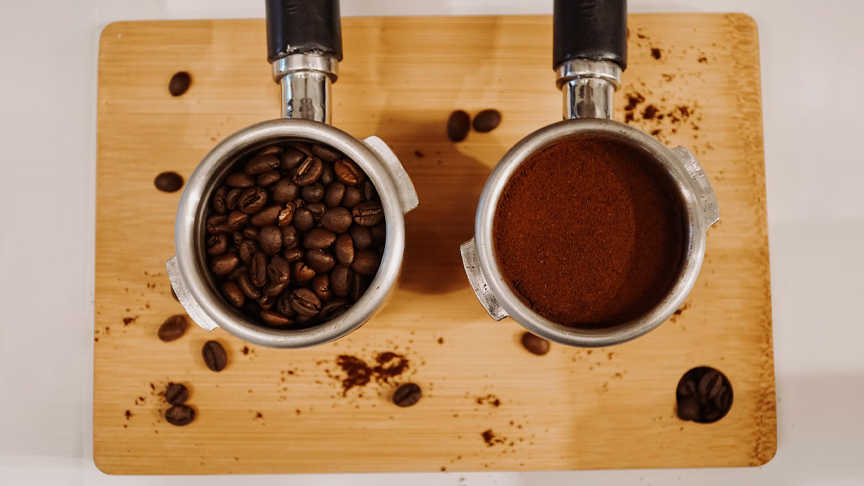
Coffee is one of the world’s most widely consumed beverages, and previous research has linked its consumption to a lower risk of conditions such as type 2 diabetes and cardiovascular disease. However, the biological mechanisms behind these benefits remain unclear. A new Finnish study links habitual coffee consumption to healthier body composition and metabolic markers, while revealing distinct associations with sex hormones in men and women.
The study, conducted at the University of Oulu, analysed data from 2,264 participants aged 46 in the Northern Finland Birth Cohort 1966. Researchers examined how habitual coffee consumption was associated with circulating metabolites, cardiometabolic risk markers and sex hormones.
Despite having a similar body mass index (BMI), individuals with higher coffee consumption had lower total and visceral fat and greater skeletal muscle mass than those who consumed less coffee.
In both men and women, higher coffee consumption was correlated with lower circulating levels of branched-chain amino acids, biomarkers that have previously been linked to insulin resistance and an increased risk of type 2 diabetes when chronically elevated.
The strongest sex-specific associations were observed in men. Higher coffee consumption was linked to a more favourable glucose–insulin profile, higher concentrations of total and bioavailable testosterone, and increased levels of sex hormone-binding globulin (SHBG). At the same time, free testosterone and the free androgen index were modestly lower. In women, hormonal associations were more limited and were primarily characterised by higher SHBG and lower measures of free androgens.
“Coffee is consumed by millions of people every day, yet we still know surprisingly little about how it relates to our metabolism and hormones. What stood out in our findings was a distinct hormonal signature that didn’t disappear even after we took into account BMI and lifestyle factors, with several of these associations differing between men and women,” says Luca Verroest, lead author of the study and Doctoral Researcher at the University of Oulu.
The results suggest that hormonal pathways may partly explain the relationship between coffee consumption and metabolic health. However, as this was an observational study, the findings demonstrate associations rather than cause-and-effect relationships.
The study is particularly relevant in Finland, one of the world’s highest coffee-consuming countries, where annual consumption averages around 11.8 kilograms per person.
The researchers say the findings provide a foundation for future studies aimed at determining whether coffee itself drives these biological changes and identifying the compounds responsible. These questions are currently being investigated in animal models, with the long-term goal of progressing to human intervention studies. Further research will be needed before the findings could inform dietary recommendations.
The study, Associations of habitual coffee intake with testosterone and cardiometabolic markers: the Northern Finland Birth Cohort 1966 study, has been published in the European Journal of Nutrition.

Heading to Pila, Laguna? Check out La Cosina Antonio

Pasalubong shopping in Davao via Aldevinco

The look and feel of your neighborhood may affect your sleep

Workout or nap? Either can help your sleepless brain, study finds

Study links coffee consumption to metabolic health and sex hormones

Manulife Investments Philippines leads UITF rankings across equity and fixed income funds

Scheduling dental care during prenatal visits boosts oral health care during pregnancy

Enjoying the grilling at Mandaue City’s Matias BBQ

Dogs can distinguish between human fear and sadness

Pet dog microbiota may protect young children from respiratory tract infections and reduce the need for antibiotic courses
Scheduling dental care during prenatal visits boosts oral health care during pregnancy
Study links coffee consumption to metabolic health and sex hormones
Enjoying the grilling at Mandaue City’s Matias BBQ
Dogs can distinguish between human fear and sadness
The look and feel of your neighborhood may affect your sleep
Manulife Investments Philippines leads UITF rankings across equity and fixed income funds
Pasalubong shopping in Davao via Aldevinco
Workout or nap? Either can help your sleepless brain, study finds
Heading to Pila, Laguna? Check out La Cosina Antonio

-
 NewsMakers3 weeks ago
Scheduling dental care during prenatal visits boosts oral health care during pregnancy
-
 NewsMakers3 weeks ago
Study links coffee consumption to metabolic health and sex hormones
-
 Destinations4 weeks ago
Enjoying the grilling at Mandaue City’s Matias BBQ
-
 Pet Care4 weeks ago
Dogs can distinguish between human fear and sadness
-
 NewsMakers2 weeks ago
The look and feel of your neighborhood may affect your sleep
-
 Product Showcase3 weeks ago
Manulife Investments Philippines leads UITF rankings across equity and fixed income funds
-
 Destinations7 days ago
Pasalubong shopping in Davao via Aldevinco
-
 NewsMakers2 weeks ago
Workout or nap? Either can help your sleepless brain, study finds