
Product Showcase
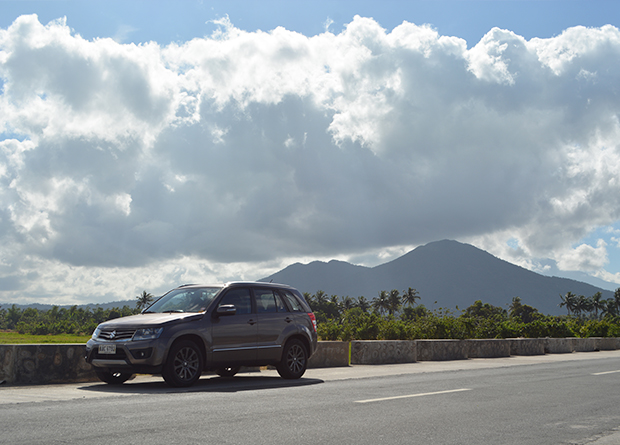
Defining ‘tough’ with Suzuki’s Grand Vitara
Zest Magazine takes a closer look at Suzuki’s Grand Vitara 2.4L A/T.


And to think I already thought Suzuki’s Jimny was (somewhat) rugged (in a nice kind of way). But then came along the Grand Vitara, a somewhat mean-looking/performing vehicle, and, well… I’ll have to do some reconsidering.
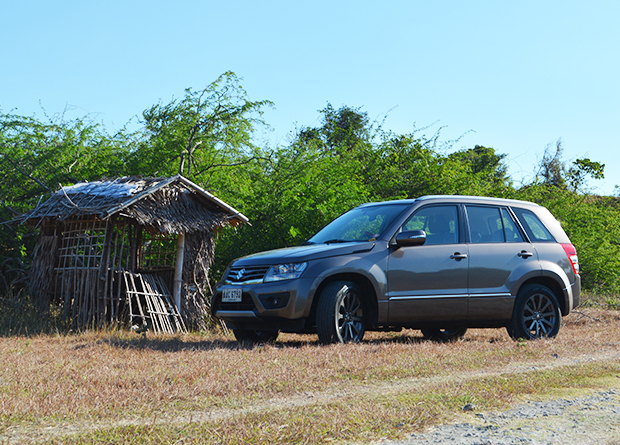



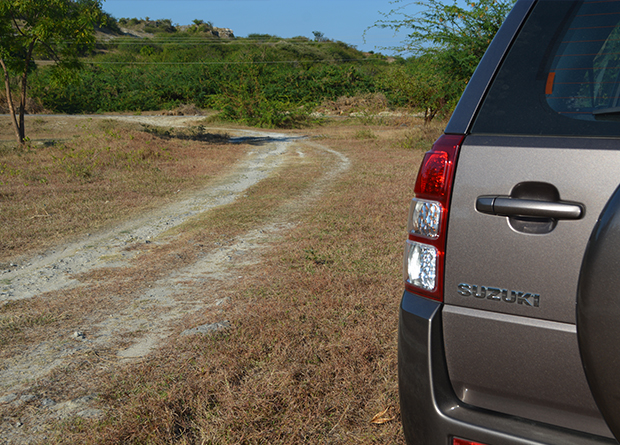

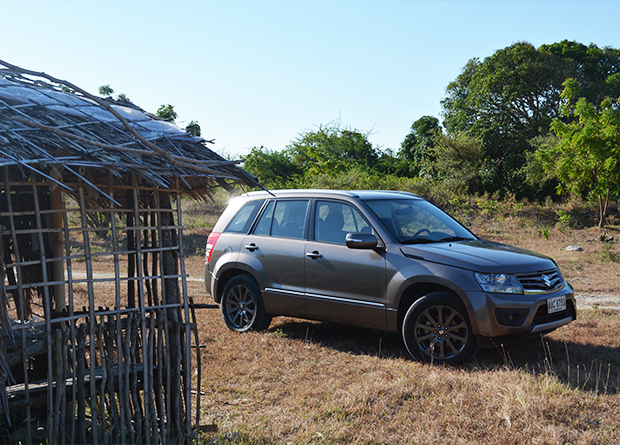
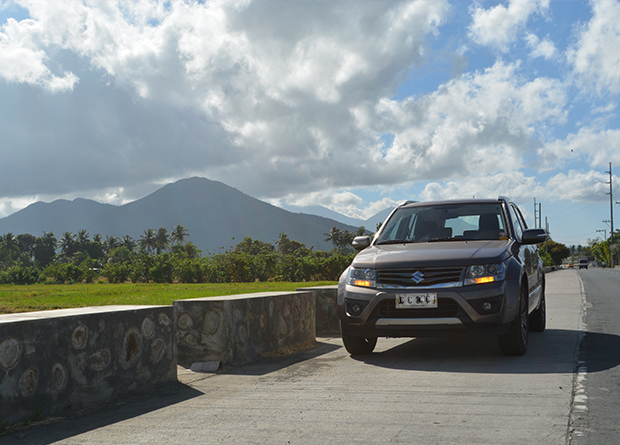
On the outside, the car actually looks… Spartan (if not – to be very blunt – common).
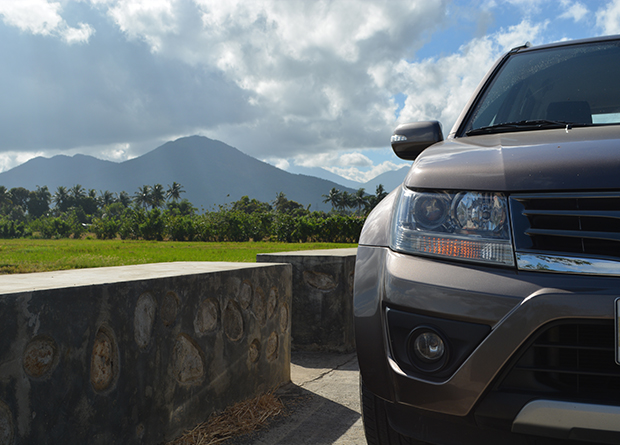
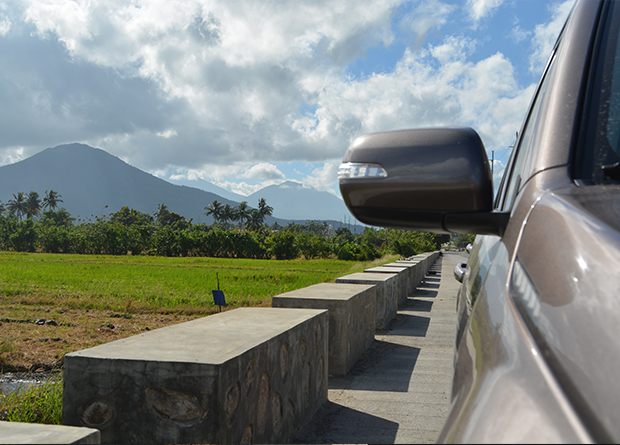
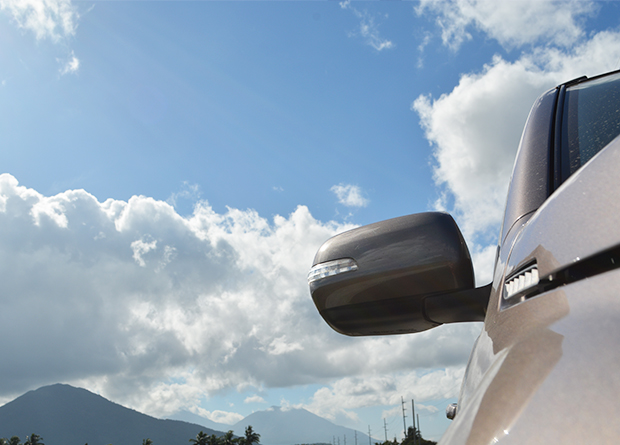
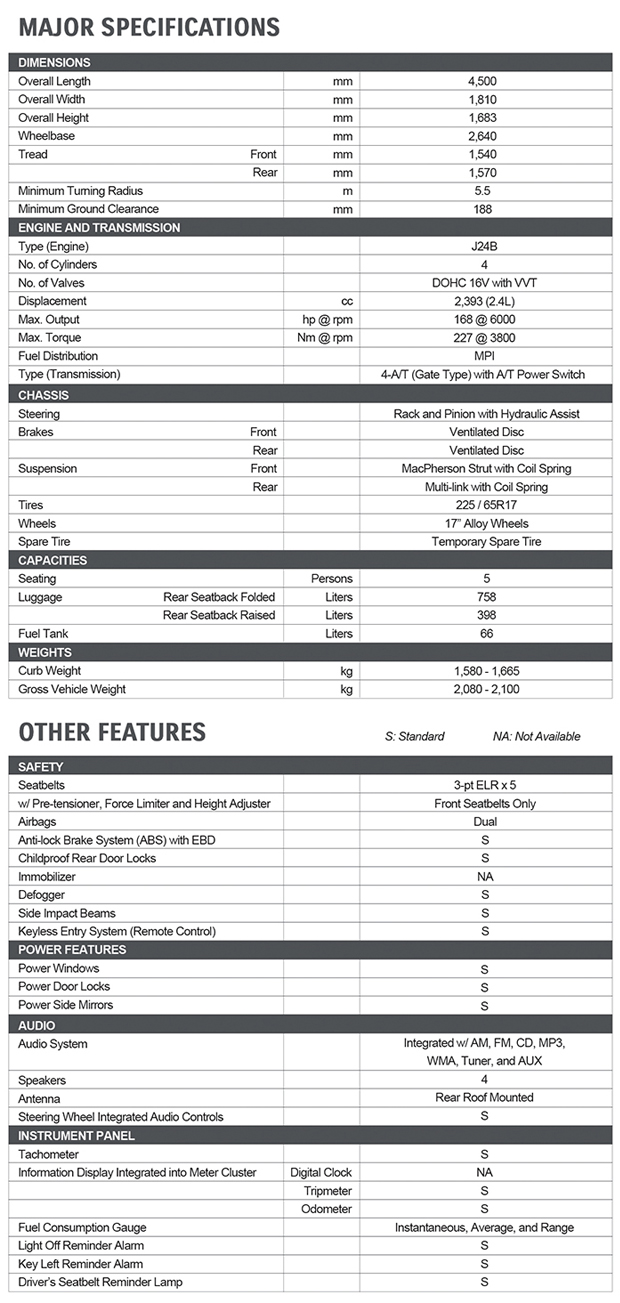
Yes, I’d say that just as expected from Suzuki, this one is also not boxy, and its curves give it a sporty appearance. This is “helped” by the car’s 188mm ground clearance (thank you 17-inch alloy wheels!) that give one that (driver’s) feeling of being an overlord (i.e. that “I’m taller than you all!” feeling). But there’s nothing… memorable on the outside of the Grand Vitara for me, even if it has an extra pair of fog lamps, third break light, silver accents to the car’s side and up top for the roof rails, signal repeaters installed on the side mirrors, and (at the rear) a coy pair of tail lights on the opposite sides of the 5th door (where the cover for the spare tire and door handle have the same shade as the body).
Some say it’s “minimalist”; and that it’s not “calling attention to itself” (unlike, say, Jeep’s Wrangler, or even Suzuki’s Swift). I’d still say… “usual”.
It is in the inside where, for me, the Grand Vitara starts to become somewhat more… ostentatious.


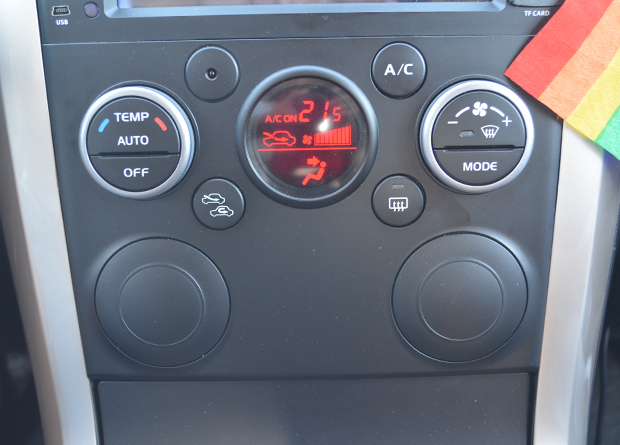





The seats are fabric upholstered; but unlike, say, Ertiga, this one (from the get go) seems to say it’s okay being messed with, with its dark-colored everything (dark seats, and black leather with pale trimmings on the doors). Akin to Ciaz, the stereo controls are embedded on the tilting/telescoping steering wheel. The (I have to say somewhat big, particularly when you first see it) dashboard is segmented into three “parts” to show the tachometer, speedometer and fuel/temperature gauges. There are also stats for real-time fuel mileage, average fuel consumption, and distance showing an estimate of how many kms the car can still cover before you run out of juice. There’s a touchscreen Android-run player (again, similar to Ciaz), connectivity ports stuffed inside the glove compartment (these don’t work, though, if that radio’s turned off), and dual 12V sockets.
The legroom was great for both front and back; but the headroom’s not that great at the back (surprising considering the car IS big inside).
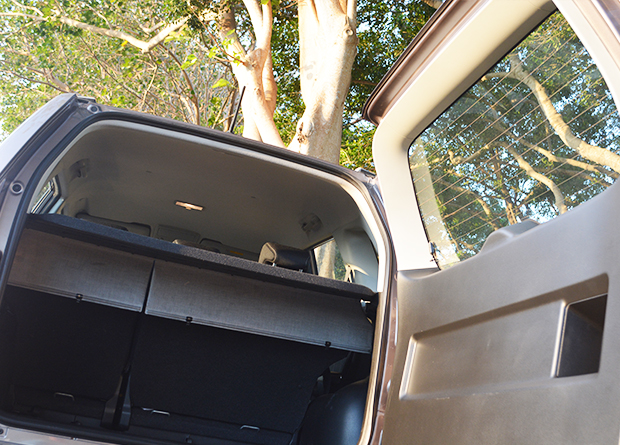
The fifth door at the back reveals the luggage space. This isn’t big; but it suffices…
BTW, from the driver’s seat, I have one “issue”. The overall feel of the car is “sturdy”, with everything seemingly constructed firmly/thickly. This is – generally speaking – A-OK for me; but while driving, this “thickness” was also troublesome for me as it had that tendency to cover up my line of vision, particularly as far as approaching vehicles at my left are concerned…


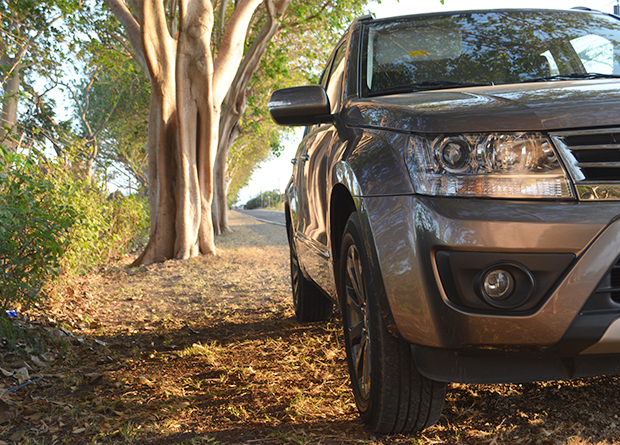
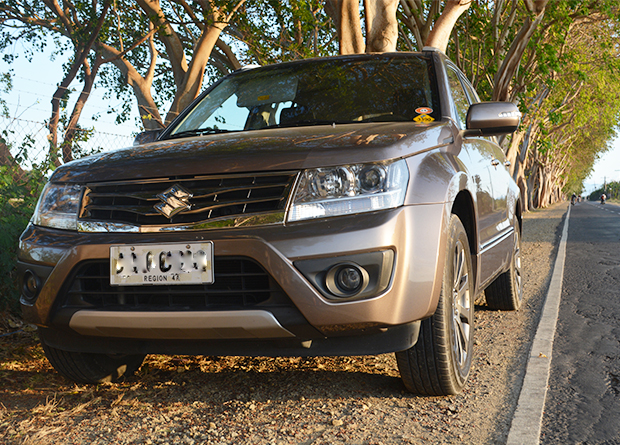

Performance-wise, the Grand Vitara more than sufficed for me, thanks I should say to its 2.4-liter engine (the 16-valve DOHC engine also comes with variable valve timing or VVT).
For instance, I drove the car to:
- Cape Santiago in Batangas, where – while heading there – one wrong turn means needing to brave rocky roads. Though the car felt “big”, it fit even tight spots (e.g. that “bridge” from the main road going to Cape Santiago’s lighthouse). It was also able to tackle unpaved roads there…
- Lake Pandin in San Pablo, Laguna, a somewhat new tourist attraction that doesn’t have the best roads (yet). Similar to the Cape Santiago experience, the Grand Vitara survived the trip.
- Lucena City from Tagaytay via Talisay-Tanauan Road. If you’re familiar with this route, you’d know that driving here means braving very STEEP and very NARROW roads. Grand Vitara didn’t choke (not even once) climbing or going downhill…
- Luisiana, Laguna (to buy the famed bibingka), where the car was able to survive numerous turns, twists and bumps.
There are two issues I encountered re Grand Vitara that are worth mentioning.
On the one hand, it’s a bit of greedy with fuel consumption (in my experience, just 325kms from full tank to nil), averaging around 8km/L fuel consumption (for combined city and out-of-town driving).
On the other hand, while the Grand Vitara had no issues accelerating (even when climbing steep slopes), it did have issues with turning corners. If you’re familiar with the way many roads are expanded in smaller towns/provinces, you’d know that some of these expansions are done STUPIDLY – i.e. the roads are widened, but the electric poles, giant trees, et cetera are retained right in the middle of the expanded parts. When in these roads, therefore, overtaking may mean hitting a pole in the middle of the road. And with the Grand Vitara’s issue re cornering, this (for me) proved challenging…
All in all, for those looking for a “sturdy” car sans any of the dramas (e.g. “sexy”, “butch”, and so on), then the Grand Vitara is definitely worth considering. This one can make one confident while being on the road…
The Suzuki Grand Vitara comes in: Superior White, Silky Silver Metallic, Quasar Grey Metallic, Bluish Black Pearl and Bison Brown Pearl Metallic. It is available in two variants: Grand Vitara 2.4L – A/T, which sells for P1,160,000; and Special Edition 2.4L – A/T, which sells for P1,210,000.





Product Showcase
Manulife Investments Philippines leads UITF rankings across equity and fixed income funds
Manulife Investments Philippines delivered its strongest showing in the equity feeder fund category, where three of its funds secured the top three spots based on year-to-date returns:


Manulife Investment Management and Trust Corporation (Manulife Investments Philippines), the local asset management arm of leading international financial services provider Manulife, topped the latest Philippine unit investment trust fund (UITF) rankings across growth-oriented equity and equity feeder funds and steadier fixed income funds for the period January 1 to June 30, 2026.
Manulife Investments Philippines delivered its strongest showing in the equity feeder fund category, where three of its funds secured the top three spots based on year-to-date returns:
- Introduced in November 2025, Manulife Global Semiconductor Opportunities Equity Feeder Fund delivered a 105.71% return, investing in leading semiconductor companies that power artificial intelligence, data centers, and everyday devices.
- Manulife Global Clean Energy Equity Feeder Fund posted a 40.67% return, investing across renewable power, electric vehicles, and the technology and infrastructure supporting the clean energy transition. This fund ranked no. 5 in the second half of 2025 with 20.53% year-to-date returns.
- Manulife Global Technology Equity Feeder Fund recorded a 37.06% return, investing in diverse technology subsectors positioned to benefit from the continued growth and everyday use of technology. This fund ranked no. 12 in the second half of 2025 with 15.49% year-to-date returns.
The results underscore the strength of Manulife’s globally diversified, theme-based investment approach, with funds focused on long-term structural trends such as artificial intelligence, clean energy, and technology adoption.
Manulife Investments Philippines also led the equity fund category. Manulife Asia Best Select Equity Fund secured the top spot, with its PHP Unhedged Class A ranking second with a 37.31% return.
Manulife’s strong performance extended to fixed income. In the fixed income feeder fund category, which is designed for investors seeking steadier returns and lower risk, the Manulife Asia Short Duration Bond Feeder Fund took the top spot, with two more Manulife funds also ranking among the category leaders.
These categories serve different investor needs. Equity funds, such as Manulife’s Global Semiconductor, Global Clean Energy, Global Technology and Asia Best Select, provide access to fast-moving global sectors with higher growth potential. Fixed income funds are designed for investors who prefer greater stability and a smoother investment journey. Together, these funds give Filipinos more choices aligned with their goals, risk appetite, and investment horizon.
“Investing is not one-size fits all. Some investors seek long-term growth, while others prioritize income or stability.That is why we offer a diverse range of UITFs designed to help investors pursue their financial goals based on their unique objectives and risk preferences. As Filipinos live longer, disciplined investing becomes even more important. According to the United Nations World Population Prospects, life expectancy at birth in the Philippines is projected to rise to around 73 years by 2050, making long-term financial planning and investing essential for building lasting financial security,” said Aira Gaspar, President and Chief Executive Officer, Manulife Investments Philippines.
Gaspar added, “Through our UITFs, investors gain convenient access to powerful long-term themes shaping the future, includingartificial intelligence, technology, and clean energy. These strong results reflect the strength of our research-driven investment approach, global investment capabilities, and local market expertise, helping investors navigate changing markets with confidence and achieve better financial outcomes.”
These funds are part of Manulife’s growing suite of UITFs, designed to match different goals and levels of risk tolerance. Investors can open an account online through Manulife iFUNDS, a secure digital platform for managing UITF investments.
For more information, contact a Manulife Wealth Specialist or visit manulife.com/ph.
NewsMakers
Filipinos prioritize independence as legacy for longer lives
Independence and financial freedom are viewed as the inheritance they want to leave their families, according to 88% of respondents. It rises to 95% among Filipinos aged 25 to 34, highlighting a growing shift toward self-sufficiency and long-term financial planning.


Filipinos are shifting how they view legacy, prioritizing independence, financial freedom, and self-reliance as they plan for longer lifespans.
This is according to the Manulife Asia Care Survey 2026: Independence as the New Legacy, which gathered insights from more than 9,000 respondents across Asia, including 1,000 in the Philippines. The study explores shifting attitudes toward longevity, health, caregiving, retirement preparedness, and overall financial well-being.
It was found out in the survey that independence and financial freedom are viewed as the inheritance they want to leave their families, according to 88% of respondents. It rises to 95% among Filipinos aged 25 to 34, highlighting a growing shift toward self-sufficiency and long-term financial planning.
It was also revealed in the survey that Filipinos are increasingly associating independence with maintaining good health to avoid becoming a burden to loved ones, and having access to quality healthcare. Fifty six percent of those who prioritize independence as a legacy cited health and quality of life as their key concerns, while 53% identified unexpected expenses later in life as a major challenge.
To stay independent as you age, you need good physical and mental health, as 92% of respondents agree that preventive care and self-care habits can help extend years of self-reliance. Popular wellness practices include spending time with family and friends (52%), maintaining a balanced diet (50%), and exercising regularly (48%). However, fewer Filipinos are taking proactive steps such as preventive health screenings (26%) or building social networks to combat isolation (29%).
Pressures faced by the country’s “sandwich generation,” or individuals supporting both parents and children, were also highlighted in the survey results. Sixty seven percent of respondents provide care to a family member, averaging 32 hours per week, while 68% offer financial support to relatives, allocating nearly half of their monthly income to these responsibilities.
These caregiving and financial commitments are affecting long-term planning. Among respondents, 74% said family obligations hinder their ability to build self-reliance, while 71% reported delaying their own medical care due to caregiving and financial pressures.
With increasing spending remains a concern, 82% of Filipinos are worried about the cost of future care, significantly higher than the regional average of 66%. It was estimated that respondents would need approximately PhP34,485 per month to cover future care-related expenses. Most plan to rely on personal savings (87%) and investments (59%), while only 21% expect financial support from their children.
The survey relayed that Fiipinos are becoming more proactive in preparing for longevity, with many planning to shift toward income-generating investments, diversify their portfolios, and seek professional financial advice to strengthen retirement readiness and long-term financial security.
As more Filipino professionals navigate increasingly demanding careers and lifestyles, preventive healthcare is becoming less of an afterthought and more of a necessity.
From routine executive health screenings to proactive wellness programs, a growing number of business leaders, entrepreneurs, and working professionals are prioritizing early detection and long-term health management as part of their everyday lives. The shift reflects a broader understanding that staying productive, achieving personal goals, and maintaining overall well-being require more than treating illnesses when they arise—they require preventing them in the first place.
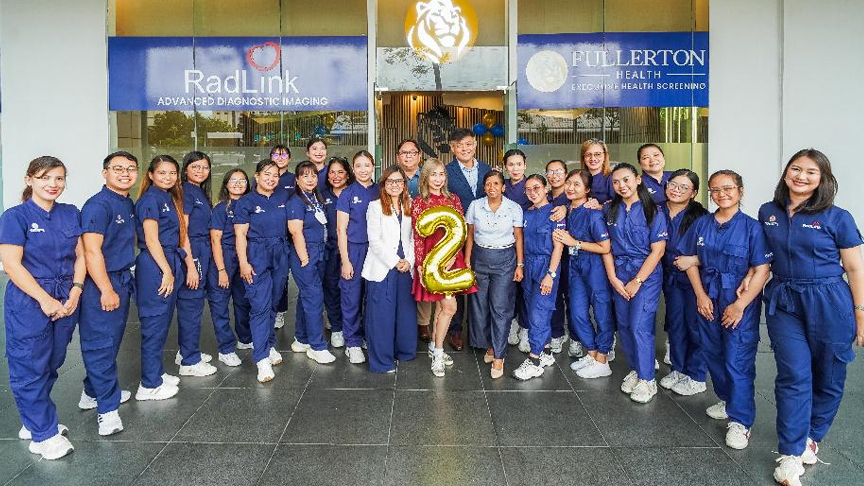
This evolving mindset is something Fullerton Health Philippines has witnessed firsthand.
Now celebrating their second anniversary, the organization continues to champion preventive healthcare as an essential part of modern living, helping more Filipinos take proactive steps toward better health through executive health screening, advanced diagnostics, and personalized wellness solutions.
“Our mission has always been to empower individuals to take control of their health before illnesses develop or progress. As we celebrate this milestone, we remain focused on helping more people live fuller, healthier lives through preventive care,” said Carmie de Leon, Country General Manager of Fullerton Health Philippines.
The growing emphasis on prevention has fueled Fullerton Health Philippines’ growth over the past two years. Since opening its doors, the organization has established itself as a trusted partner in executive health by combining advanced diagnostic capabilities, efficient patient experiences, and comprehensive health screening programs designed to offer efficient, fast, and seamless preventive healthcare experience.
A significant highlight in Fullerton Health Philippines’ journey this year was the recognition received at the Healthcare Asia Awards 2026, where they were honored as Specialty Clinic of the Year (Executive Health) – Philippines. The award recognizes the organization’s excellence in executive health screening, mainly in offering advanced diagnostic imaging technologies, evidence-based healthcare practices, and patient-centered care designed to support early detection and better health outcomes.
Fullerton Health Philippines has also expanded access through strategic partnerships with major HMO providers, healthcare organizations, and digital health platforms, making executive health screening more convenient for more Filipinos.
The company has also broadened its preventive health offerings through initiatives such as packages bundled with wellness perks that is also attractive for medical tourism, reflecting its belief that long-term well-being is supported by both preventive healthcare and holistic wellness experiences, as well as offering discounts in partnership with major payment networks to provide a more affordable option for Filipinos.
With this, Fullerton Health Philippines continues to receive consistent five-star reviews from clients. The strong satisfaction ratings reinforce the company’s position as a trusted partner in
preventive healthcare.
For Founder and Chairman of COL Financial Group, Inc., Edward K. Lee, preventive healthcare is an essential investment in maintaining both personal well-being and the ability to lead with confidence.
“Running a business means making decisions that prepare you for the future, and I believe the same mindset should apply to your health. Undergoing regular executive health screenings means I’m taking proactive steps to stay healthy for myself, my family, and the people who depend on me,” said Lee.
Similarly, President of Upgrade Energy Philippines Inc., Ruth Yu-Owen, who balances leadership responsibilities in the renewable energy sector while championing initiatives that create opportunities for Filipino women, sees preventive healthcare as an important part of sustaining both her personal well-being and professional pursuits.
“Being able to undergo a thorough health check-up provides me with the opportunity to improve my diet and make necessary lifestyle changes. Most importantly, it gives me peace of mind,” she shared.
These personal experiences reflect a broader shift toward proactive healthcare, where prevention becomes a cornerstone of long-term wellness rather than a response to illness.
Guided by its advocacy to help individuals to Live Fuller, Fullerton Health Philippines continues to champion a future where preventive healthcare is not just an option, but an integral part of everyday life.

Redefining aesthetics: From anti-aging to healthy aging

Visiting San Pablo City’s Pho Viet Nam

Four to six servings of wholegrain per day lowers risk factors for heart disease

Structured exercise linked to longer cancer survival and time free of disease

Heading to Pila, Laguna? Check out La Cosina Antonio

Pasalubong shopping in Davao via Aldevinco

The look and feel of your neighborhood may affect your sleep

Workout or nap? Either can help your sleepless brain, study finds

Study links coffee consumption to metabolic health and sex hormones

Manulife Investments Philippines leads UITF rankings across equity and fixed income funds
Structured exercise linked to longer cancer survival and time free of disease
Four to six servings of wholegrain per day lowers risk factors for heart disease
Visiting San Pablo City’s Pho Viet Nam
Redefining aesthetics: From anti-aging to healthy aging

-
 Wellness3 weeks ago
Structured exercise linked to longer cancer survival and time free of disease
-
 Nutrition3 weeks ago
Four to six servings of wholegrain per day lowers risk factors for heart disease
-
 Destinations3 weeks ago
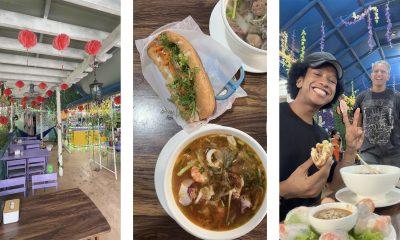
Visiting San Pablo City’s Pho Viet Nam
-
 Beauty & Fashion2 weeks ago
Redefining aesthetics: From anti-aging to healthy aging