
Destinations
Hundred Islands: Pieces of Atlantis
The Hundred Islands off fishing town Pangasinan are constant sources of wonder – home to swimming monkey, playground of largely unseen sirena, and haven of some of the Philippines’ best faith healers. M.D. dela Cruz Tan discovers that these islands are actually believed to be parts of Atlantis.


“Welcome to Atlantis,” Manang Auring, a local manggagamot, said as her oily hands enveloped my proffered hand. Like many in her field, she believes that the numerous islands off the bay of Pangasinan, more popularly known as the Hundred Islands, are “pieces of the beauteous island, which drifted until they found their way here,” she said, all purplish gum when she smiled. “This is where we source our powers.”
PHOTO BY GEORGE TAPAN, COURTESY OF THE DEPARTMENT OF TOURISM
And then she started massaging the side of the tummy of an old man lying on a mat, slowly pushing deeper until blood started trickling from an invisible wound. There was a deafening silence, ironically emphasized by the strong blowing of the wind that rocked the wooden windows, and was finally broken by a sigh from Manang Auring as she produced what looked like pebbles, which were supposedly stones from the kidney of her patient. Not a moment too soon, the old man sat straight, expressed his gratitude for the help, and then left.
While the experience was new to me, it was common in the area – we were in Pangasinan, after all, where many of the Filipino faith healers (no matter where they may be in the Philippines or overseas) are said to have originated. No wonder the flocking of those in search of the miraculous in the area – for healing of incurable illnesses, for the creation of love where there is none, or for the simple finding of peace of mind. Local legend has it that this is where the pieces of the famed Atlantis drifted when the mysterious island sunk eons ago, supposedly bringing with it its magic. The claim sounds implausible somehow, until one visits the islands.
NATURAL WONDER
Only a few minutes by motorized bangka are the first few of the islands that, in truth, total over 100 (though so-called Hundred Islands only because it has a poetic rhyme to it). Many of these have high rocky cliffs thickly covered by vegetation and are thus often seemingly inaccessible – though many are attracted to the islands exactly because of this. Over the years, more and more visit to bravely climb the cliffs that seem to endlessly continue under the blue waters, or to make new treks from one side to another of one of the largely undiscovered islands, or to spelunk for the first time its enigmatic caves. Closely passing by the islands, however, never fails to bring about strange, even spine tingling, feelings, as if someone you cannot see is staring at you intently, waiting for your next step before they decide to act.
“Those are the spirits,” Mang Ambo, our guide, said in a hushed voice (so as not to disturb them). As if on cue, we passed through what seemed like a tunnel, though really a meeting of two cliffs overhead, forming what looked like a darkened cathedral – a rare formation since the islands are often separated. And yet, many snorkel around the islands, which are seemingly attached underwater by coral formations supporting a rich marine life (like the rare giant clam shells). When the seas are calm, the few who have dived around some of the islands mentioned the peculiar rock formations underwater that hide peculiar sea creatures, seemingly reflecting the eerie atmosphere evoked by the islands. Because when there, it doesn’t seem implausible seeing merpeople peeking through rock formations before diving in the deep seas when spotted. The place just has that feel, hardly explainable.
EVERY ISLAND, A WORLD
Amazingly, the seeming awe inspired by the group of islands as a whole is the one things that is similar in all the islands, which differ from each other – both by nature’s designs, and by man’s manipulations.
At one, you can follow paths leading to the peak to get a 360˚ view of the whole place – not that there’s much to see, but the blue waters broken by islands that seemed to have been dropped from the sky like big rocks. In another, the white sanded shore stretches then curves to stretch and then curve once more to form a semi-circle, the middle only sparsely vegetated so that it looks more like an underwater rock exposed during low tide than an actual island – just perfect for swimming. Still in another are small communities that have fishnets surrounding islands to breed fish – perfect for meals in yet another island that now has nipa huts for such activities.
While snorkeling, trying to make out what the deep gulfs between islands hide by clinging on to a rope attached from one island to another , the silence is occasionally broken by gunshots, immediately followed by the flocking of wild ducks trying to escape hunters that venture the islands where they nest. For a while, the sky darkened as the fathered creatures sought refuge in the other islands, feathers fluttering on the waters that, suddenly (and even more interestingly), gave way to monkeys that started to swim. It was weird, looking at creatures deemed afraid of water as their heads protruded while trying to stay afloat. Then, when on dry land, they shook themselves before disappearing in the woods, like miniature Bigfoots.
Truly, here, wonders never cease.
MYSTICISM (UN)EXPLAINED
After a luscious meal of freshly-caught tilapia, coupled by salted egg sharing a bowl full of freshly sliced ripe tomatoes, with grilled pusit and shrimps thrown, a quick dive in the water stirs the consciousness, though also adding to the mystery, as one swims with jellyfish that seasonally abound in the area, floating like torn fabrics.
These are playthings of mermaids who hide in the islands, Mang Ambo said. And I almost believed him, trying not to swim too far from the islands in case the mysterious stories were true.
In the end, though, whether one believes or not does not matter. Back on the mainland, Manang Auring said, “Maniwala ka o hindi, andiyan ‘yan.” And maybe, just maybe, she’s telling the truth, since you won’t escape the mystical when in the Hundred Islands of Pangasinan.
HOW TO GET THERE:
Along EDSA, catch a bus going to Alaminos via Kamiling. From there, catch a pedicab to Lucap, where the motorized bangkas to take you to the islands are docked.
*First published in Outrage Magazine in December 2007; reprinted with permission.


Destinations
Visiting San Pablo City’s Pho Viet Nam
When we came across Facebook posts on Pho Viet Nam in San Pablo City in Laguna, we expected to encounter what was experienced in Vietnam (i.e. good food over so-so venue). We expected too much…
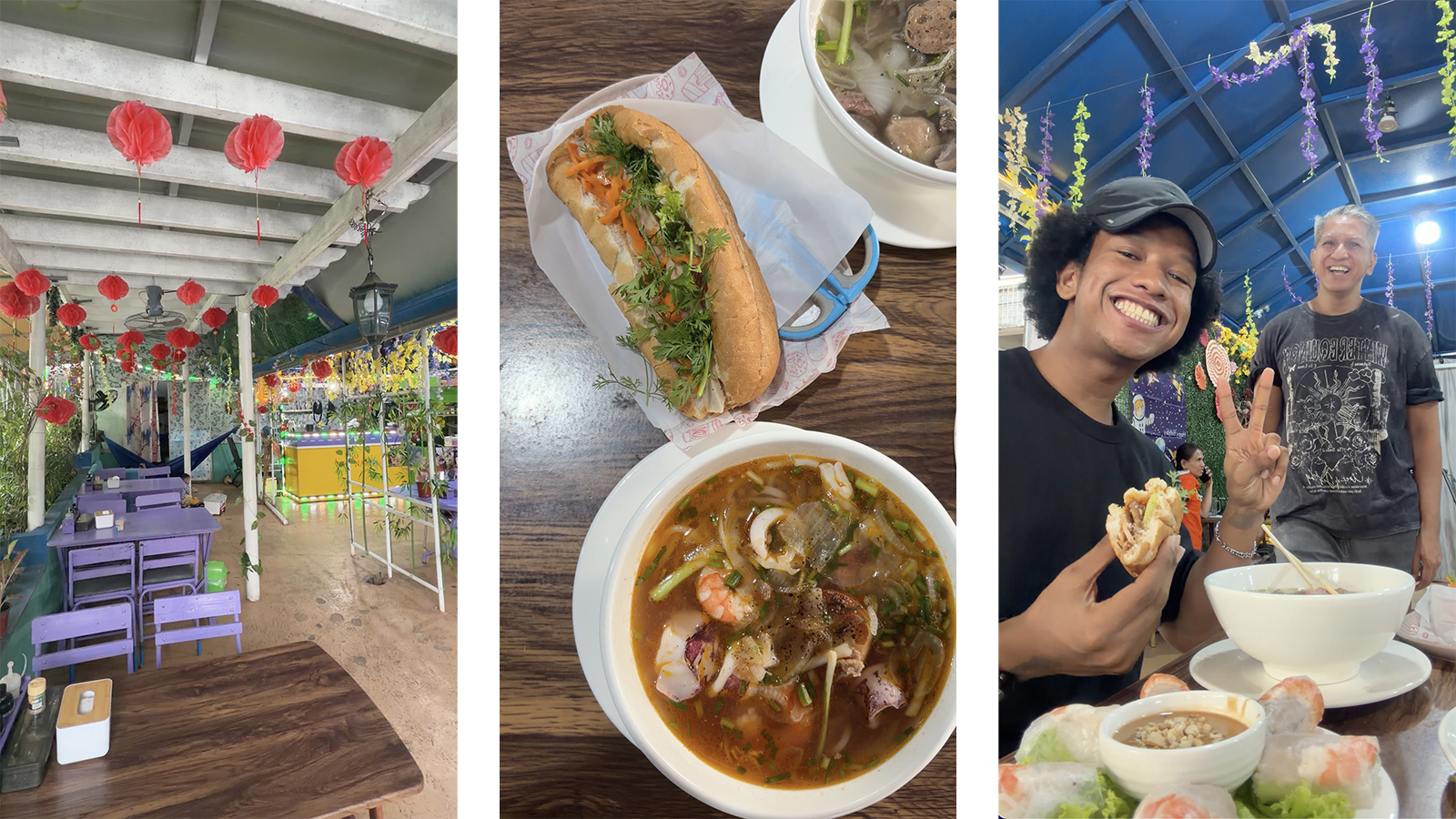
If you’ve been to Vietnam, you’d know that some of the best places to eat at are in those neighborhood eateries; their versions of karinderya, in a manner of speaking, where locals prep good lutong-bahay Vietnamese offerings sans the classy places of expensive restos. Here, the focus is always the food, never the blings.
So when we came across Facebook posts on Pho Viet Nam, located somewhere in San Pablo City in the Province of Laguna, we sort of expected to encounter what was experienced in Vietnam.
@outragemag Looking for #Vietnam food while in #SanPabloCity in #Laguna? We #LGBT checked #PhoVietNam ♬ original sound – Outrage Magazine
Una, this is not the most accessible place even for those with vehicles from Metro Manila. This is because you still have to travel for over an hour (if you’re lucky traffic-wise), and spend on your gas and the toll and so on.
Note that when you’re also along Apolinario Mabini Street, the resto isn’t apparent. It is located at the back of another resto (Joy), so it is very easy to miss. There is, BTW, a small entry at the side of the resto, which leads to an outdoor parking space.
Ikalawa, the actual resto is cheap-looking – e.g. plastic décor, running lights here and there, and so on. Very karinderya; cheap karinderya, for that matter.
Ikatlo, the servers were okay naman; they knew what was on the menu, and – after making quick recommendations – kept you undisturbed to enjoy what you ordered. The orders took some time to be prepped, however; I was even able to order bad-tasting fries from the other resto due to the waiting time.
Ika-apat, how was the food?
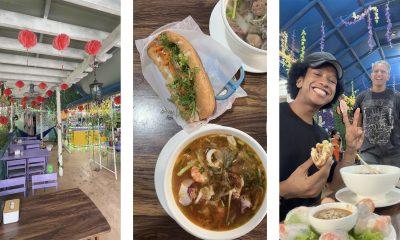
Both the ₱245 Beef Noodle Soup and the ₱245 Seafood Noodle Soup weren’t bad naman; but they weren’t good either. You get enough properly-cooked meats, the noodles are sufficient, and so on. Taste-wise, though, they were bland, and no amount of the prepared condiments helped in changing the flavor.
The ₱190 Rice Paper Roll sufficed even if, by and large, it was tasteless. The saving grace: the satay dip since it was rich and nutty and all that.
The ₱160 Meatloaf and Egg Sandwich (the banh mi kep thit va trung) had enough meat naman… and yet was also bland.
Considering the asking prices of this place, you sort of expect a lot, too. Add to that the popularity of the place – e.g. look at all those who dine there, kinukuyog. Alas, the realities when already there are harsher.
Heading to San Pablo to check this place led us to the nearby Dagatan Blvd. surrounding Sampaloc Lake, a must-check place in these parts. So we sort of do not regret heading to San Pablo.
But buod: No, Pho Viet Nam is not worth the dayo; not worth for you to intentionally seek this place out. The food wasn’t bad. But it’s not great, or even good either. It just suffices. And so, particularly for non-locals, the additional expenses for the gas, toll, et cetera make going there not worth it… sorry.
But off we go for more LGBTQIA+ rampa…
Pho Viet Nam is located at 130 Apolinario Mabini Street, San Pablo City, 4000 Laguna.
Destinations
Heading to Pila, Laguna? Check out La Cosina Antonio
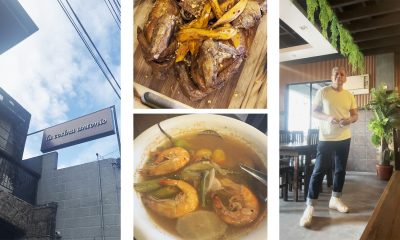
We found our #LGBT selves in #Pila, #Laguna, where we ended up checking La Cosina Antonio.
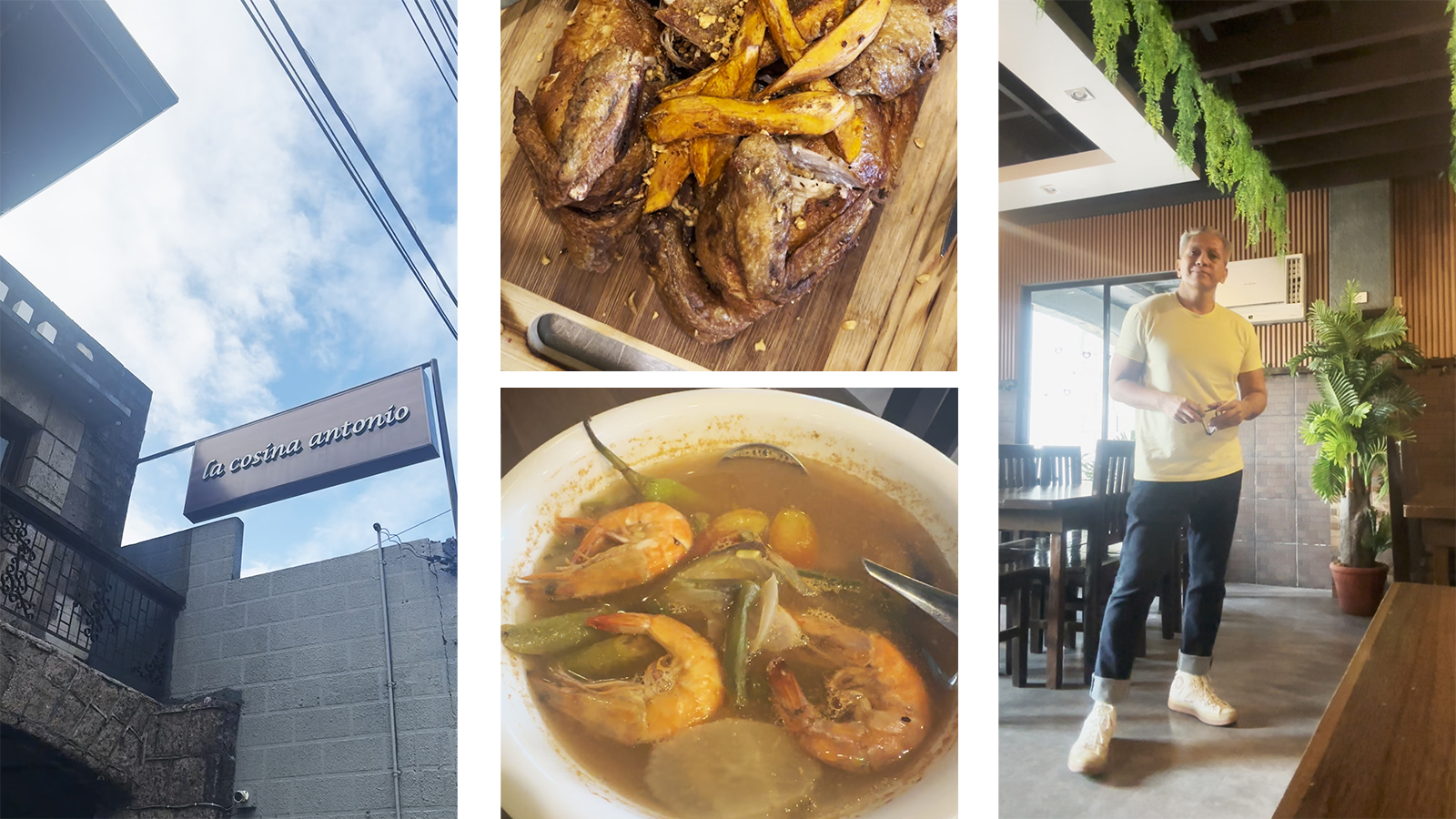
While traveling from Batangas City on the way to Paete, Laguna after an Intersex 101 training workshop, intersex activist Jeff Cagandahan worried where he’d feed us. And then, after a quick discussion with his wife, he suggested La Cosina Antonio, which is apparently a must-check resto in the Municipality of Pila in the province of Laguna.
So we went there, and… how was it for us?
@outragemag #LGBT wandering in #Pila, #Laguna? You may as well try #LaCosinaAntonio ♬ original sound – Outrage Magazine
Una, this is really only convenient to access by locals, or those with private vehicles. Pila, if you must know, is one of the oldest settlements in the Philippines. It is, nonetheless, still largely provincial. And so this place is dadayuhin; you need to intentionally go there as it’s not on the way to major destinations.
Ikalawa, the actual venue is BIG. This one’s an old house converted into a resto with different parts – e.g. for dining, for drinking complete with a performance space for a band, venue spaces, and so on. La Cosina Antonio is, thankfully, well-kept, so that it’s clean, has updated furniture, and so on.
Ikatlo, the staff was okay naman when we were there, able to discuss what’s on the menu, make recommendations… and then prepare the orders and deliver them fast. Very home-y approach, actually, treating guests as regulars.
Ika-apat, how was the food?
The ₱375 Dinakdakan was actually good, the pork belly crispy, the chopped onions and green chilies fresh, and the calamansi-mayo dressing not overpowering.
The ₱390 Sinigang na Hipon was… so-so, not bad though not good either. Pampainit-tiyan. Though, this has to be said, at least di tinipid in the number of shrimps served.
The ₱560 Garlic Pepper Whole Chicken was good; the meat stayed juicy even if the skin was crunchy.
The ₱770 Crispy Pata was also good; crunchy skin and, yes, malamang pata. There are times when you get Crispy Pata that’s basically just skin and bone, no meat at all. Here, we got meat… thankfully.
This place is popular, true (check their Facebook page, LOL). I can be dismissive and say that because, if in Pila, it’s not like you have lots of choices. But truth be told, it’s also because La Cosina Antonio actually has not-bad stuffs to offer… including the okay venue, okay service, and okay food. So check out if you can… or just join us as we look for more LGBTQIA+ lafangan venues…
La Cosina Antonio is located along JP Rizal St., Barangay Sta. Clara Norte, Pila, Laguna.
Destinations
Pasalubong shopping in Davao via Aldevinco
#Pasalubong hunting in #Davao? Consider the new, pinasosyal #Aldevinco that may not have the grimy character of the old location but still is worth #LGBT visiting.
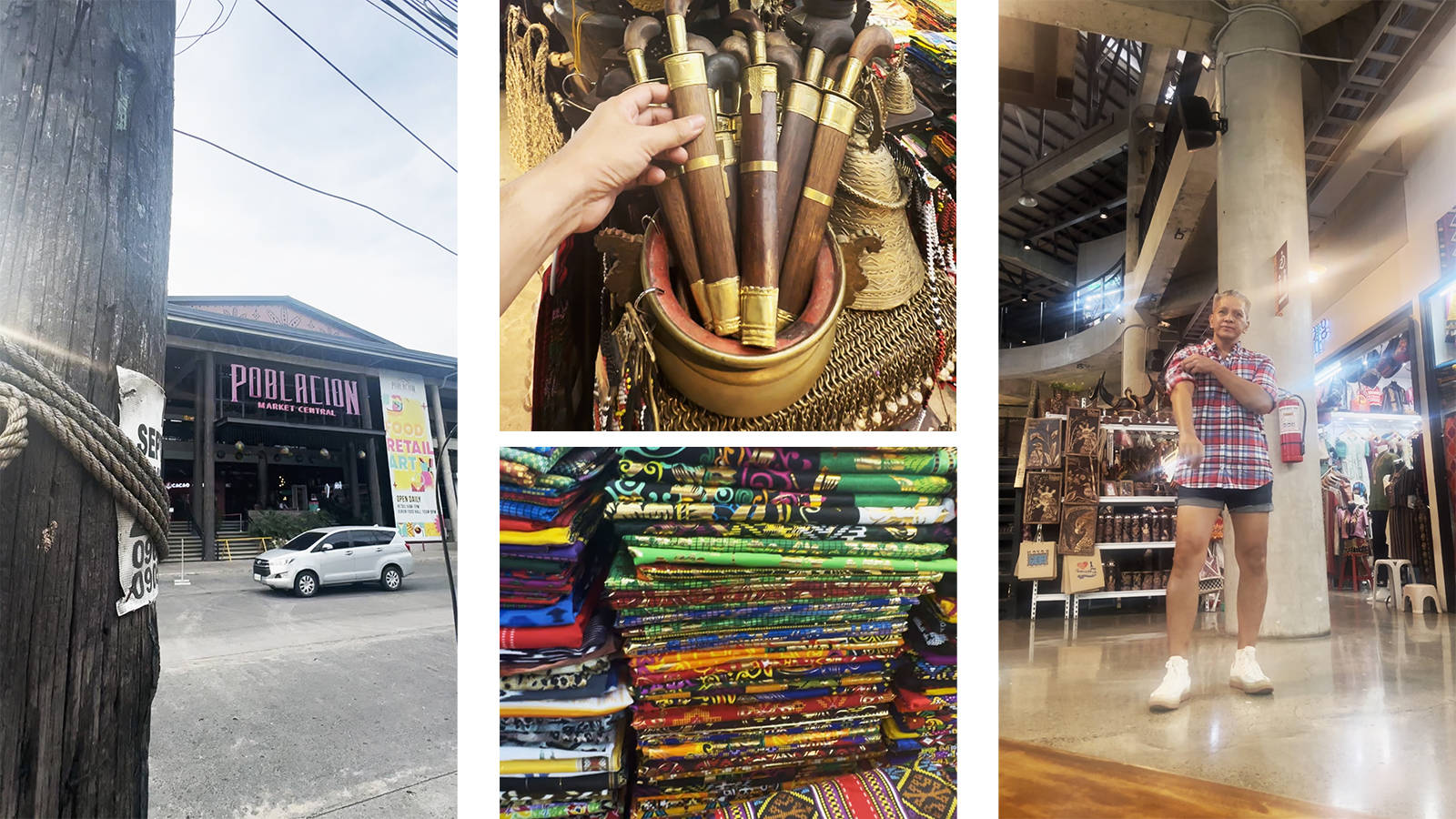
Davao-bound tourists know – or should know – of Aldevinco Shopping Center, the city’s one-stop-hub for everything Mindanao-related. You need malong or patadyong as pasalubong? You need a kulintang not just as a musical instrument, but as décor? You need batik, or T’boli ethnic apparel? You can find them all… and even more, in Aldevinco.
But here’s the thing, particularly for those who do not know yet: the old Aldevinco, which was located along C.M. Recto Street and Roxas Avenue in Davao City, is no more.
Now… enter the new Aldevinco, this time located at Poblacion Market Central on C. Bangoy Street (former Madrazo Fruit Stand)… which isn’t that far from the old place, actually.
We checked, and here are some things worth noting.
@outragemag #Pasalubong hunting in #Davao? Consider the new, pinasosyal #Aldevinco that may not have the grimy character of the old location but still is worth #LGBT ♬ original sound – Outrage Magazine
Una, this place looks and feels new. The old Aldevinco had a palengke feel, but this one has a mall feel. So you have a high-ceilinged venue with better-arranged stores that are air-conditioned, and so on. Pina-sosyal, in a manner of speaking.
Ikalawa, when there, the rules remain the same: haggle. The prices first quoted to you are not the actual prices the goods go for… unless you’re too moneyed and you don’t want to ask for discounts, though in that case, you shouldn’t even be in Aldevinco at all. The more you buy (i.e. bulk buying), the lower the prices, obviously. But always haggle… even if only for the fun of doing it.
Ikatlo, if you have time to spare, don’t auto-buy from the first store you check. Tour the area and compare prices. Often, the goods sold in one store will also be offered in a different store. So move around before making a final decision.
And ika-apat, Aldevinco may be popular as the go-to place for pasalubong, but in truth this isn’t the only one. Halimbawa, right across the old Aldevinco is a series of shops, some of them from the old Aldevinco. Because, at times, Aldevinco can feel like a tourist trap, and understandably, not everyone likes going into one. So consider your other options.
All the same, when in Davao, this is a place worth checking… if not for the shopping, then the food… or at least to check what happened to the tenants of the 60-year-old Aldevinco that was closed in December 2021, and is now being redeveloped into who-knows-what.
All part of rediscovery as we continue the LGBTQIA+ rampa wherever and everywhere…
Open from 9AM to 7PM (with the Kūkūñ Food Hall open from 10AM to 9 PM), Aldevinco Shopping Center is located at Poblacion Market Central, C. Bangoy Street, Davao City.

Redefining aesthetics: From anti-aging to healthy aging

Visiting San Pablo City’s Pho Viet Nam

Four to six servings of wholegrain per day lowers risk factors for heart disease

Structured exercise linked to longer cancer survival and time free of disease

Heading to Pila, Laguna? Check out La Cosina Antonio

Pasalubong shopping in Davao via Aldevinco

The look and feel of your neighborhood may affect your sleep

Workout or nap? Either can help your sleepless brain, study finds

Study links coffee consumption to metabolic health and sex hormones

Manulife Investments Philippines leads UITF rankings across equity and fixed income funds
Pasalubong shopping in Davao via Aldevinco
Structured exercise linked to longer cancer survival and time free of disease
Heading to Pila, Laguna? Check out La Cosina Antonio
Four to six servings of wholegrain per day lowers risk factors for heart disease
Visiting San Pablo City’s Pho Viet Nam
Redefining aesthetics: From anti-aging to healthy aging

-
 Destinations4 weeks ago
Pasalubong shopping in Davao via Aldevinco
-
 Wellness1 week ago
Structured exercise linked to longer cancer survival and time free of disease
-
 Destinations3 weeks ago
Heading to Pila, Laguna? Check out La Cosina Antonio
-
 Nutrition1 week ago
Four to six servings of wholegrain per day lowers risk factors for heart disease
-
 Destinations1 week ago
Visiting San Pablo City’s Pho Viet Nam
-
 Beauty & Fashion3 days ago
Redefining aesthetics: From anti-aging to healthy aging