Destinations
El Nido, Palawan: Postcard Perfect
The appeal of the province of Palawan may be mainly its being a largely untouched place. But as M.D. dela Cruz Tan discovers, there’s more to this place than meets the eye.


PHOTO BY O. ROMERO, COURTESY OF JINGJING ROMERO
The first time Australian D.J.M. Winters stepped on the shores of Miniloc Island, in El Nido, north of Palawan, to visit the country’s “Last Environmental Frontier,” as well as “check out what business ventures may be there,” he noted that “it was like stepping on a photograph come to life,” he says. “Everything seemed too good to be true. Palawan is almost surreal for its beauty.”
Winters’ amazement is understandable, what with Palawan long considered a land of clichés, at least as far as the image of a stereotypical tropical paradise is concerned. Sandy white beaches stretching for miles, incessantly kissed by the crystal clear waters that mirror the blue sky, or reflect rolling clouds as they pass, seemingly lovingly blown by the whistling wind, just as they make the tall palm trees by the beaches bend, dancing to a tune only they can hear – all of them are in Palawan. And so much more, actually.
“It most certainly is full of surprises,” Winters says.
RICH HISTORY
Not largely known is the province’s rich history, best exemplified by the antiquities that abound there. Underwater or on the ground, however, Palawan has something to offer everyone.
Named after the nests of swiftlets (the main ingredient in the world-famous Nido Soup), El Nido (Spanish for the nest) is a 50,000 hectare-town of 18 barangays populated by some 27,000 people “very overprotective about their settlement,” notes Winters. “Rightly so, though, what with the place’s ecological treasures – all deserving of superlatives, but all fragile, and seemingly always in threat.”
Among Winters’ “favorite occurrences that are bound to be reminisced time and again” include kayaking from island to island, “my concentration broken only by the flapping wings of sea hawks, sighting unseen preys as they circle limestone cliffs formed millions of years ago;” bird watching, especially since El Nido’s forests are home to over 100 species of birds, many of them endemic to Palawan; stargazing, “realizing how small we are in the scheme of things;” island hopping to “see that here, seeing beauty never stops;” and simply admiring nature, such as “observing the peculiar looking pitcher plants that, to better their chances of survival, evolved to hang ever so low, almost touching the waters as they dangle from the rocky cliffs, waiting for whatever it is that will get trapped in their cavernous carafes to sustain them,” Winters says. “Nature 101.”
Amazement is, indeed, everywhere in Palawan.
In Miniloc Island, right off the pier is a rich marine world teeming with life, so that those snorkeling are literally inundated by swimming groupers, fusiliers, parrot fish, and other fish species that are normally only seen in, say, Animal Planet. In Lagen Island, mangrove tours, especially before at the break of dawn, right before the sun starts bathing with golden color everything under it, wild birds, many of them migratory, fly from their nests, their graceful motions mirrored by the waters under them.
In Matinloc Island, there’s the not-so-secret Secret Beach, worth visiting for a “glimpse of the sense of total seclusion,” Winters says, even if it is only accessible by snorkeling through a small crack in the limestone walls that envelope it.
And then there are the Big and Small Lagoons, both welcome retreats, with their pristine waters seemingly contradicting the roughness of their source, the “unruly sea” right outside their confines. There, it’s a different world altogether, filled with rock formations that resemble elephant tusks, a praying Virgin Mary, the caped crusader Batman hiding behind some rocks, phallic idols – “whatever,” Winters says. “It’s more like a cloud, actually, wherein you see them as what you want them to be. Like a fantasy, you can tailor-fit it to suit what you want. El Nido’s cliffs are like that, too. A hark back to the times when nature was magical.”
LAND OF BOUNTY
No wonder, thus, that “I’m looking at staying here for good,” Winters says with a laugh. The same appeal has actually already made ”regular inhabitants out of many who visited Palawan,” says Mickey Castaño of Belcas Realty Corp., which “recognizes the place’s great potential.”
Enterprise Magazine earlier reported (Paradise Found, March 2006) that there are opportunities to buy beachfront properties, or even entire islands, in the various towns of Palawan – and all at very affordable prices. In El Nido, for example, lots sell for about P1,500 per square meter, while small islands can be bought for as low as P200 to P300 per square meter. Adds the online publication Offshore and Real Estate Quarterly (escapeartist.com), beachfront properties with a frontage of approximately 300 feet (90 meters), and a total area of under two hectares cost less than P175 per square foot – roughly equal to 20 US cents, or less than $2.25 per square meter.
“This makes it an ideal time to invest,” says Castaño, who stressed that there is, however, “an urgency in investing since local officials (recognize) that in order to preserve Palawan’s beauty, over-development should be avoided, (and so) only a limited number of developments are allowed.”
Again in El Nido, only 32 resort developments are allowed, “making it good for those who invest in the place, what with less competition, but, more importantly, preserving the place’s appeal, which is its largely untouched beauty,” Castaño says.
On the bangka (dinghy) that carried him from Miniloc Island to the pier right by the local airport, where some brightly-clad locals were singing farewell songs in the local Cuyunin language, Winters was already “in a nostalgic mood,” he says. “You just want the experience to last.”
As if catching himself from turning mawkish, he laughs. Palawan, Winters says with a hearty laugh, is cliché personified. “It’s almost poetic, I tell you. And even that (claim) is admittedly cliché, too. Just as I tell you you’ll keep coming back here once you’ve already been here.”
*First published in Outrage Magazine in January 2009; reprinted with permission.





Destinations
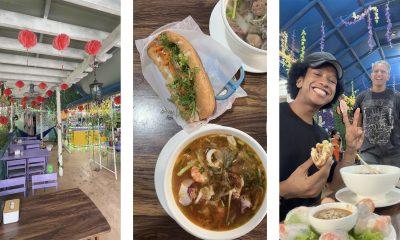
Visiting San Pablo City’s Pho Viet Nam
When we came across Facebook posts on Pho Viet Nam in San Pablo City in Laguna, we expected to encounter what was experienced in Vietnam (i.e. good food over so-so venue). We expected too much…
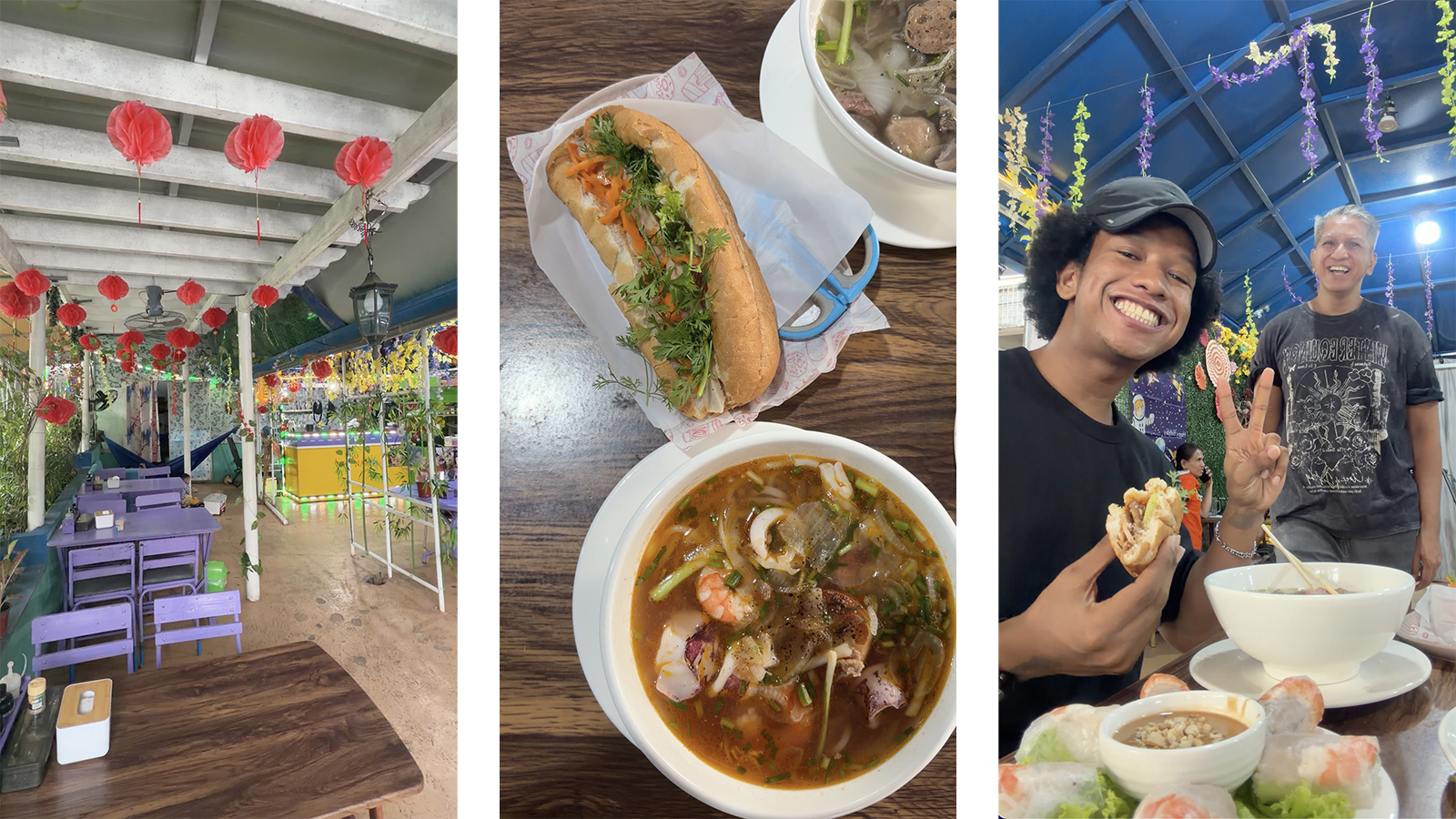
If you’ve been to Vietnam, you’d know that some of the best places to eat at are in those neighborhood eateries; their versions of karinderya, in a manner of speaking, where locals prep good lutong-bahay Vietnamese offerings sans the classy places of expensive restos. Here, the focus is always the food, never the blings.
So when we came across Facebook posts on Pho Viet Nam, located somewhere in San Pablo City in the Province of Laguna, we sort of expected to encounter what was experienced in Vietnam.
@outragemag Looking for #Vietnam food while in #SanPabloCity in #Laguna? We #LGBT checked #PhoVietNam ♬ original sound – Outrage Magazine
Una, this is not the most accessible place even for those with vehicles from Metro Manila. This is because you still have to travel for over an hour (if you’re lucky traffic-wise), and spend on your gas and the toll and so on.
Note that when you’re also along Apolinario Mabini Street, the resto isn’t apparent. It is located at the back of another resto (Joy), so it is very easy to miss. There is, BTW, a small entry at the side of the resto, which leads to an outdoor parking space.
Ikalawa, the actual resto is cheap-looking – e.g. plastic décor, running lights here and there, and so on. Very karinderya; cheap karinderya, for that matter.
Ikatlo, the servers were okay naman; they knew what was on the menu, and – after making quick recommendations – kept you undisturbed to enjoy what you ordered. The orders took some time to be prepped, however; I was even able to order bad-tasting fries from the other resto due to the waiting time.
Ika-apat, how was the food?
Both the ₱245 Beef Noodle Soup and the ₱245 Seafood Noodle Soup weren’t bad naman; but they weren’t good either. You get enough properly-cooked meats, the noodles are sufficient, and so on. Taste-wise, though, they were bland, and no amount of the prepared condiments helped in changing the flavor.
The ₱190 Rice Paper Roll sufficed even if, by and large, it was tasteless. The saving grace: the satay dip since it was rich and nutty and all that.
The ₱160 Meatloaf and Egg Sandwich (the banh mi kep thit va trung) had enough meat naman… and yet was also bland.
Considering the asking prices of this place, you sort of expect a lot, too. Add to that the popularity of the place – e.g. look at all those who dine there, kinukuyog. Alas, the realities when already there are harsher.
Heading to San Pablo to check this place led us to the nearby Dagatan Blvd. surrounding Sampaloc Lake, a must-check place in these parts. So we sort of do not regret heading to San Pablo.
But buod: No, Pho Viet Nam is not worth the dayo; not worth for you to intentionally seek this place out. The food wasn’t bad. But it’s not great, or even good either. It just suffices. And so, particularly for non-locals, the additional expenses for the gas, toll, et cetera make going there not worth it… sorry.
But off we go for more LGBTQIA+ rampa…
Pho Viet Nam is located at 130 Apolinario Mabini Street, San Pablo City, 4000 Laguna.
Destinations
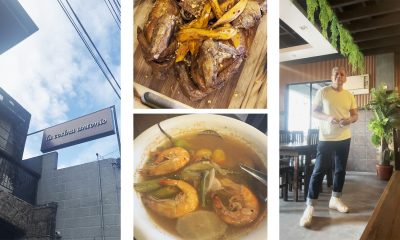
Heading to Pila, Laguna? Check out La Cosina Antonio
We found our #LGBT selves in #Pila, #Laguna, where we ended up checking La Cosina Antonio.
While traveling from Batangas City on the way to Paete, Laguna after an Intersex 101 training workshop, intersex activist Jeff Cagandahan worried where he’d feed us. And then, after a quick discussion with his wife, he suggested La Cosina Antonio, which is apparently a must-check resto in the Municipality of Pila in the province of Laguna.
So we went there, and… how was it for us?
@outragemag #LGBT wandering in #Pila, #Laguna? You may as well try #LaCosinaAntonio ♬ original sound – Outrage Magazine
Una, this is really only convenient to access by locals, or those with private vehicles. Pila, if you must know, is one of the oldest settlements in the Philippines. It is, nonetheless, still largely provincial. And so this place is dadayuhin; you need to intentionally go there as it’s not on the way to major destinations.
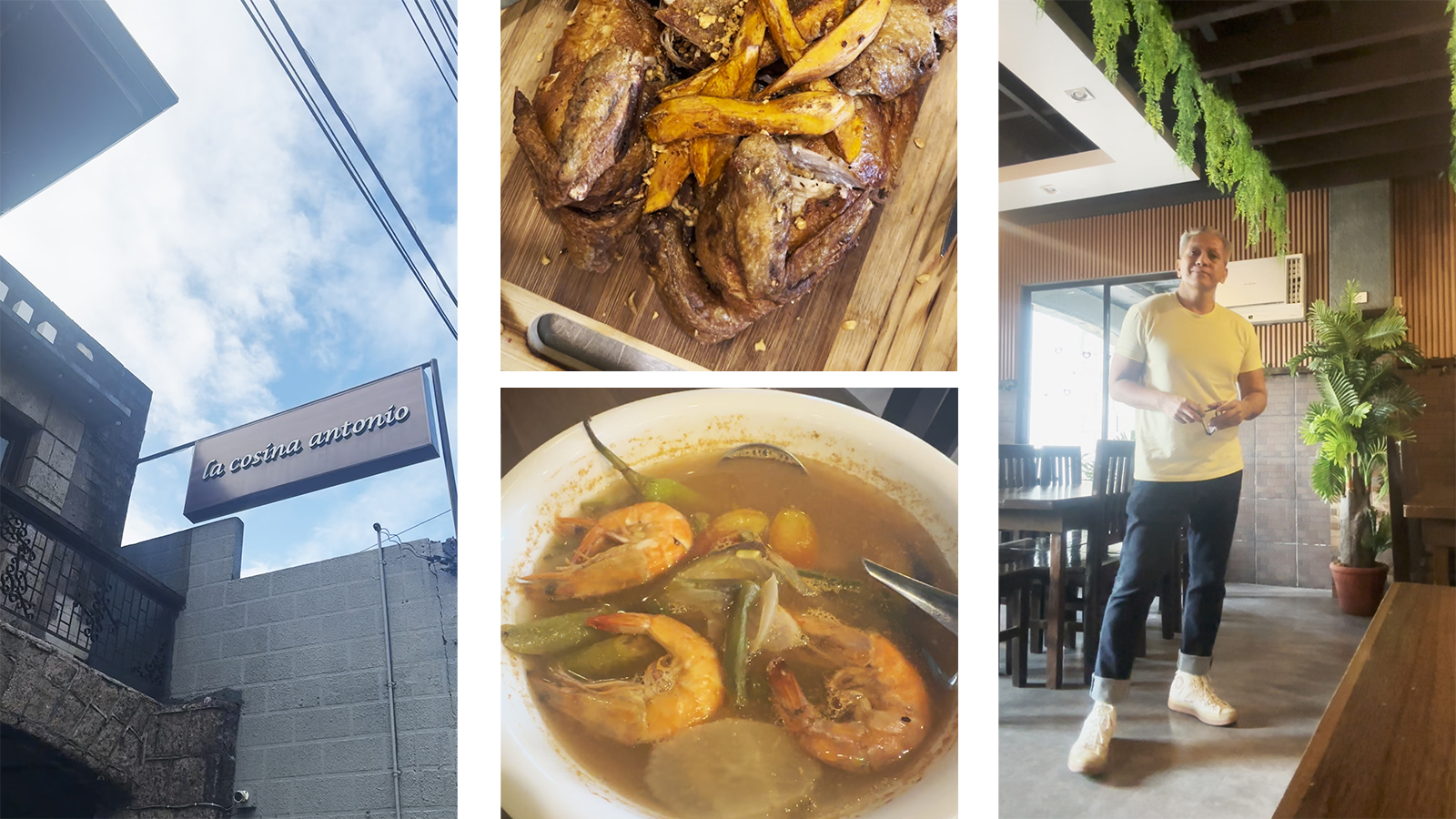
Ikalawa, the actual venue is BIG. This one’s an old house converted into a resto with different parts – e.g. for dining, for drinking complete with a performance space for a band, venue spaces, and so on. La Cosina Antonio is, thankfully, well-kept, so that it’s clean, has updated furniture, and so on.
Ikatlo, the staff was okay naman when we were there, able to discuss what’s on the menu, make recommendations… and then prepare the orders and deliver them fast. Very home-y approach, actually, treating guests as regulars.
Ika-apat, how was the food?
The ₱375 Dinakdakan was actually good, the pork belly crispy, the chopped onions and green chilies fresh, and the calamansi-mayo dressing not overpowering.
The ₱390 Sinigang na Hipon was… so-so, not bad though not good either. Pampainit-tiyan. Though, this has to be said, at least di tinipid in the number of shrimps served.
The ₱560 Garlic Pepper Whole Chicken was good; the meat stayed juicy even if the skin was crunchy.
The ₱770 Crispy Pata was also good; crunchy skin and, yes, malamang pata. There are times when you get Crispy Pata that’s basically just skin and bone, no meat at all. Here, we got meat… thankfully.
This place is popular, true (check their Facebook page, LOL). I can be dismissive and say that because, if in Pila, it’s not like you have lots of choices. But truth be told, it’s also because La Cosina Antonio actually has not-bad stuffs to offer… including the okay venue, okay service, and okay food. So check out if you can… or just join us as we look for more LGBTQIA+ lafangan venues…
La Cosina Antonio is located along JP Rizal St., Barangay Sta. Clara Norte, Pila, Laguna.
Destinations
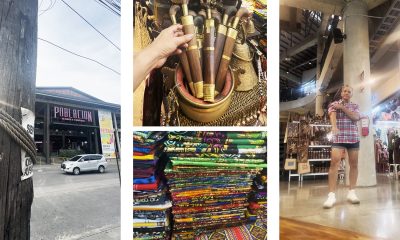
Pasalubong shopping in Davao via Aldevinco
#Pasalubong hunting in #Davao? Consider the new, pinasosyal #Aldevinco that may not have the grimy character of the old location but still is worth #LGBT visiting.
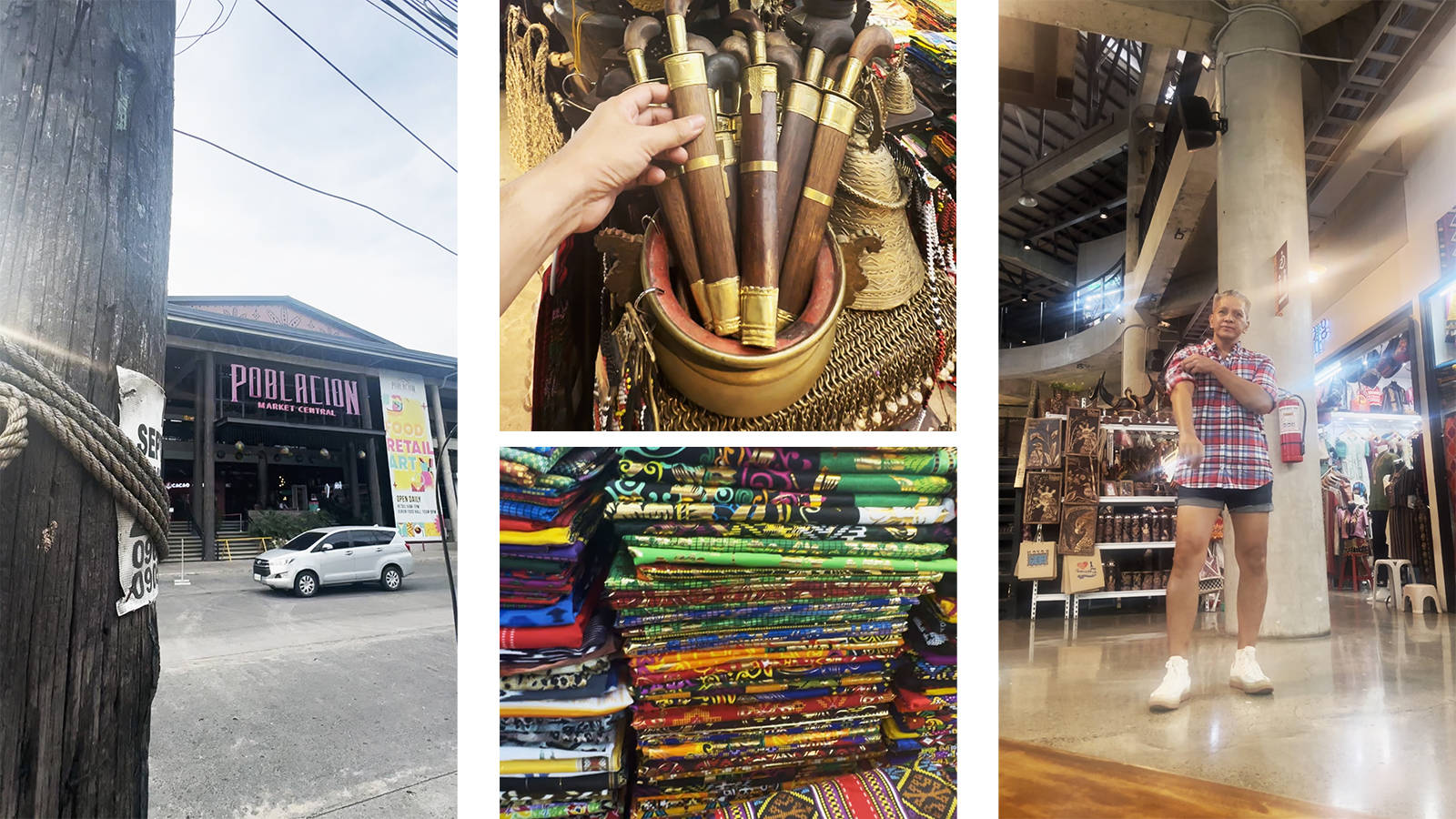
Davao-bound tourists know – or should know – of Aldevinco Shopping Center, the city’s one-stop-hub for everything Mindanao-related. You need malong or patadyong as pasalubong? You need a kulintang not just as a musical instrument, but as décor? You need batik, or T’boli ethnic apparel? You can find them all… and even more, in Aldevinco.
But here’s the thing, particularly for those who do not know yet: the old Aldevinco, which was located along C.M. Recto Street and Roxas Avenue in Davao City, is no more.
Now… enter the new Aldevinco, this time located at Poblacion Market Central on C. Bangoy Street (former Madrazo Fruit Stand)… which isn’t that far from the old place, actually.
We checked, and here are some things worth noting.
@outragemag #Pasalubong hunting in #Davao? Consider the new, pinasosyal #Aldevinco that may not have the grimy character of the old location but still is worth #LGBT ♬ original sound – Outrage Magazine
Una, this place looks and feels new. The old Aldevinco had a palengke feel, but this one has a mall feel. So you have a high-ceilinged venue with better-arranged stores that are air-conditioned, and so on. Pina-sosyal, in a manner of speaking.
Ikalawa, when there, the rules remain the same: haggle. The prices first quoted to you are not the actual prices the goods go for… unless you’re too moneyed and you don’t want to ask for discounts, though in that case, you shouldn’t even be in Aldevinco at all. The more you buy (i.e. bulk buying), the lower the prices, obviously. But always haggle… even if only for the fun of doing it.
Ikatlo, if you have time to spare, don’t auto-buy from the first store you check. Tour the area and compare prices. Often, the goods sold in one store will also be offered in a different store. So move around before making a final decision.
And ika-apat, Aldevinco may be popular as the go-to place for pasalubong, but in truth this isn’t the only one. Halimbawa, right across the old Aldevinco is a series of shops, some of them from the old Aldevinco. Because, at times, Aldevinco can feel like a tourist trap, and understandably, not everyone likes going into one. So consider your other options.
All the same, when in Davao, this is a place worth checking… if not for the shopping, then the food… or at least to check what happened to the tenants of the 60-year-old Aldevinco that was closed in December 2021, and is now being redeveloped into who-knows-what.
All part of rediscovery as we continue the LGBTQIA+ rampa wherever and everywhere…
Open from 9AM to 7PM (with the Kūkūñ Food Hall open from 10AM to 9 PM), Aldevinco Shopping Center is located at Poblacion Market Central, C. Bangoy Street, Davao City.

Men’s health expert issues warning to fans copying Mark Wahlberg’s early starts

Manulife broadens financial literacy, clean water programs in PH

Redefining aesthetics: From anti-aging to healthy aging

Visiting San Pablo City’s Pho Viet Nam

Four to six servings of wholegrain per day lowers risk factors for heart disease

Structured exercise linked to longer cancer survival and time free of disease

Heading to Pila, Laguna? Check out La Cosina Antonio

Pasalubong shopping in Davao via Aldevinco

The look and feel of your neighborhood may affect your sleep

Workout or nap? Either can help your sleepless brain, study finds
Redefining aesthetics: From anti-aging to healthy aging
Manulife broadens financial literacy, clean water programs in PH
Men’s health expert issues warning to fans copying Mark Wahlberg’s early starts