
Destinations
Freshwater appreciation via Lake Pandin
Zest Magazine heads to Lake Pandin in San Pablo, Laguna.


Yeah, whenever we think of going swimming, we almost always think of going to the beach. In the Philippines, this is not at all surprising, considering that we have – as Charlene Gonzales once (in)famously stated – 7,108 islands (during low tide), less one if it’s high tide. But not as emphasized (though definitely high time that we should) is the abundance of other bodies of water in the Philippines, aside from saltwater. I’d say that for every El Nido (in Palawan) is a Lake Agco (at the foot of Mt. Apo, the country’s highest peak)…
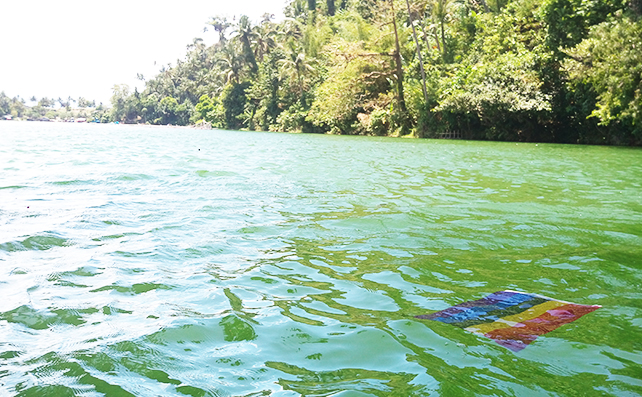
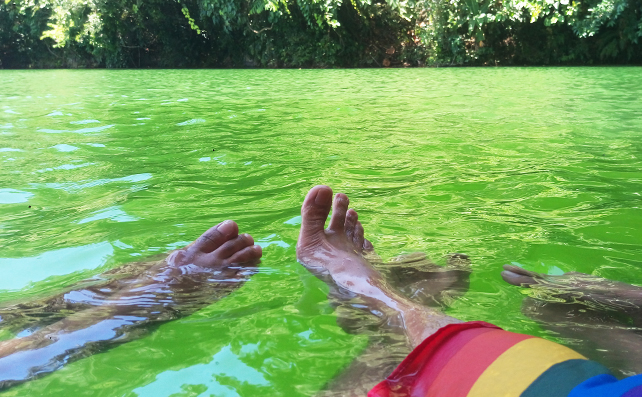
At least this was the very thought running through our heads when we raced to Lake Pandin, a body of water somewhat trapped somewhere in San Pablo in Laguna. Rustic comes to mind when here, with everything seemingly slowing down, as people (okay, tourists!) are paddled into the midst of the lake. And while there, everything becomes… poetic, particularly when the sun hits the waters, when just about everything turns green – mossy sans the reflection (as if something is lurking underneath) and then somewhat neon-ish when reflecting the sun’s rays (reminiscent of… Flubber, or merpeople, or the radioactive goo that turns mortal beings into superheroes/villains).
And with Lake Pandin, yes, there are (other, non-saltwater) bodies of water, indeed, that deserve to be discovered…





Lake Pandin is a somewhat “new” tourist destination that (get this) an all-woman organization started to tap after they realized it can help them make a living to help with the expenses in financing their families. In 2005, a total of 18 local women formed the Samahan ng mga Kababaihang Mangingisda at Bangkera sa Lawa ng Pandin because – as their prexy Cristina Abgrego said – “naisip naming maghanap ng kabuhayan para tulungan ang mga naghahanapbuhay sa mga bahay namin (we thought of finding a way to earn to help those who make a living for our homes).”
These women were, incidentally, already making some form of living catching fish from Lake Pandin, since most of them live in the area anyway. The formation of the association was, instead, a “leveling up” of that “making a living”, Abgrego said.
And so using the balsa (bamboo rafts) that they had, they started “touring” people into Lake Pandin.
The “tour” is simple:
- When you reach the bank of Lake Pandin, there’s a waiting area where you do the transacting for the tour (e.g. pay the fees, choose the type of tour).
- The bamboo rafts have bangkero/bangkera (man/woman who does the paddling) assigned to them.
- After agreeing on the payment/actual payment of fees, you are then queued. It’s a “first come, first served” arrangement, so tourists who arrived early will board a balsa You don’t get to choose the bangkero/bangkera (normally); instead, you’d board the available balsa that’s there (and have its accompanying guide/s) when it’s your turn.
- A “waiting period” happens when stuff need to be put onboard – e.g. food that you paid for.
- The guides do not paddle; instead, they just pull a rope (tied from one end of the lake to the other), which then brings the bamboo raft into the lake. There are “stops” – e.g. where the swing is (at the opposite end of the lake, coming from the take-off point), in the middle of the lake (where you can do some swimming), and so on.
- No swimming is allowed without a life vest. As per Abgrego, at least two tourists drowned in a different lake near Lake Pandin, so the local government told them (sounded to me like “threatened”) that their local effort will be forcibly closed if something like that happened there. There is, however, this awareness that it somehow seemed like a veiled threat that their effort to be sustainable – because it proved successful – will be taken from them so that the earnings will then go directly to the local government…
- While in the lake, you can eat the stuff you paid for (part of the package); go swimming; sunbathe; fish; or… do nothing.
- After two hours, the “tour” ends. You’d be taken back to the bank where it all started, and… so long/until next time.
The association now has 12 bamboo rafts – more than enough to tour the tourists who flock to the place particularly during summer; and more than enough to help support the now 22 members of the association.
And – by the way – they don’t just have all women members now; there is also a transman (there used to be two, but the other one moved overseas already), as well as four men (since they still consider the transman as “one of the girls”) who “do things women won’t do,” Abgrego said, “like replace the bamboos in the rafts.”
Truth be told, there’s not much in Lake Pandin (and so not much to do there).
That is, you don’t come here to – say – go swimming the entire day, picnic with the entire family (again for the entire day), or have water activities (e.g. wakeboarding or kiteboarding or whatever). The trip there will be very specific – i.e. go out in the water to swim for a few hours, grab some chow, then head back home. Now, if this isn’t your idea of “fun”, then Lake Pandin is obviously not for you.
But if the intention is to experience something largely undeveloped; to be in a still-rustic place; to be able to help (empower) a group of women who prove that adage that “if you teach a woman to fend for herself, she’d fend for her entire family”; to mingle with #KaraniwangTAO (and they even have a #KaraniwangLGBT, well-respected, as per the women we spoke with); or to be in a body of water that CAN charm, give Lake Pandin a chance to be experienced.
p.s.
We “lost” a rainbow flag in (the waters of) Lake Pandin. The wind blew so hard, one of Outrage Magazine’s rainbow flags fell in the water. No chance to retrieve it, so it’s there somewhere…
If you happen to find it, you may want to hand it over to the LGBT member of the association overseeing the tour (as Abgrego said: “We’re happy we have them here”). Else, give us a call/yell. Or… just enjoy how a rainbow is not part of the green waters of Lake Pandin…

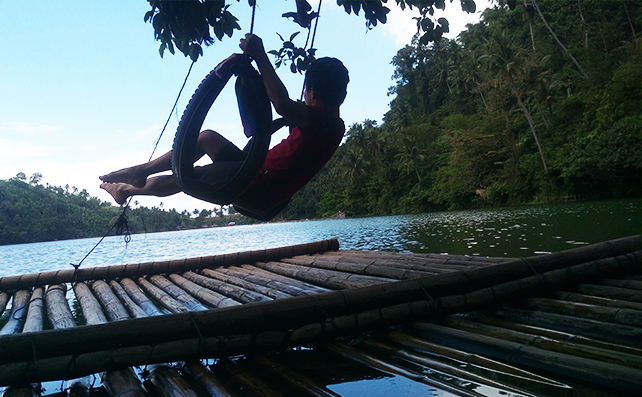



Lake Pandin is located in San Pablo, Laguna. As soon as you reach San Pablo, there are tourist guides who will offer (for a minimal fee, of course) to bring you to the take-off area of Lake Pandin. At that take-off area is where the paying of the actual fees happen – usually from P350 per person per trip, or (if there aren’t many people) from P400 per person per trip. The payment often includes a meal (usually rice plus three kinds of viands, bananas, and bottled water).


Destinations
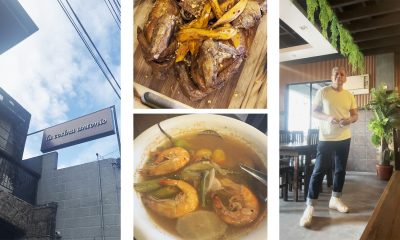
Heading to Pila, Laguna? Check out La Cosina Antonio
We found our #LGBT selves in #Pila, #Laguna, where we ended up checking La Cosina Antonio.
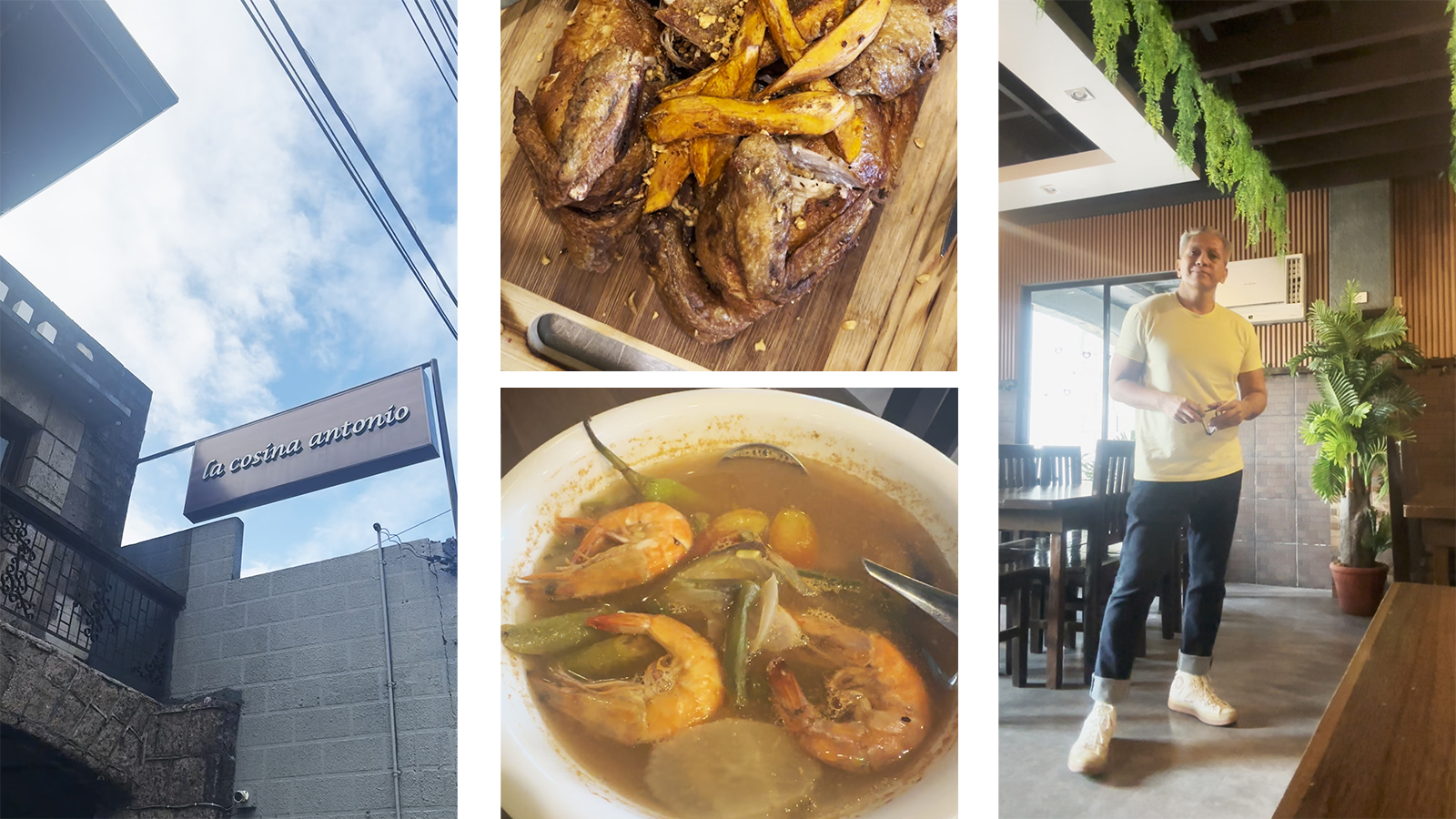
While traveling from Batangas City on the way to Paete, Laguna after an Intersex 101 training workshop, intersex activist Jeff Cagandahan worried where he’d feed us. And then, after a quick discussion with his wife, he suggested La Cosina Antonio, which is apparently a must-check resto in the Municipality of Pila in the province of Laguna.
So we went there, and… how was it for us?
@outragemag #LGBT wandering in #Pila, #Laguna? You may as well try #LaCosinaAntonio ♬ original sound – Outrage Magazine
Una, this is really only convenient to access by locals, or those with private vehicles. Pila, if you must know, is one of the oldest settlements in the Philippines. It is, nonetheless, still largely provincial. And so this place is dadayuhin; you need to intentionally go there as it’s not on the way to major destinations.
Ikalawa, the actual venue is BIG. This one’s an old house converted into a resto with different parts – e.g. for dining, for drinking complete with a performance space for a band, venue spaces, and so on. La Cosina Antonio is, thankfully, well-kept, so that it’s clean, has updated furniture, and so on.
Ikatlo, the staff was okay naman when we were there, able to discuss what’s on the menu, make recommendations… and then prepare the orders and deliver them fast. Very home-y approach, actually, treating guests as regulars.
Ika-apat, how was the food?
The ₱375 Dinakdakan was actually good, the pork belly crispy, the chopped onions and green chilies fresh, and the calamansi-mayo dressing not overpowering.
The ₱390 Sinigang na Hipon was… so-so, not bad though not good either. Pampainit-tiyan. Though, this has to be said, at least di tinipid in the number of shrimps served.
The ₱560 Garlic Pepper Whole Chicken was good; the meat stayed juicy even if the skin was crunchy.
The ₱770 Crispy Pata was also good; crunchy skin and, yes, malamang pata. There are times when you get Crispy Pata that’s basically just skin and bone, no meat at all. Here, we got meat… thankfully.
This place is popular, true (check their Facebook page, LOL). I can be dismissive and say that because, if in Pila, it’s not like you have lots of choices. But truth be told, it’s also because La Cosina Antonio actually has not-bad stuffs to offer… including the okay venue, okay service, and okay food. So check out if you can… or just join us as we look for more LGBTQIA+ lafangan venues…
La Cosina Antonio is located along JP Rizal St., Barangay Sta. Clara Norte, Pila, Laguna.
Destinations
Pasalubong shopping in Davao via Aldevinco
#Pasalubong hunting in #Davao? Consider the new, pinasosyal #Aldevinco that may not have the grimy character of the old location but still is worth #LGBT visiting.
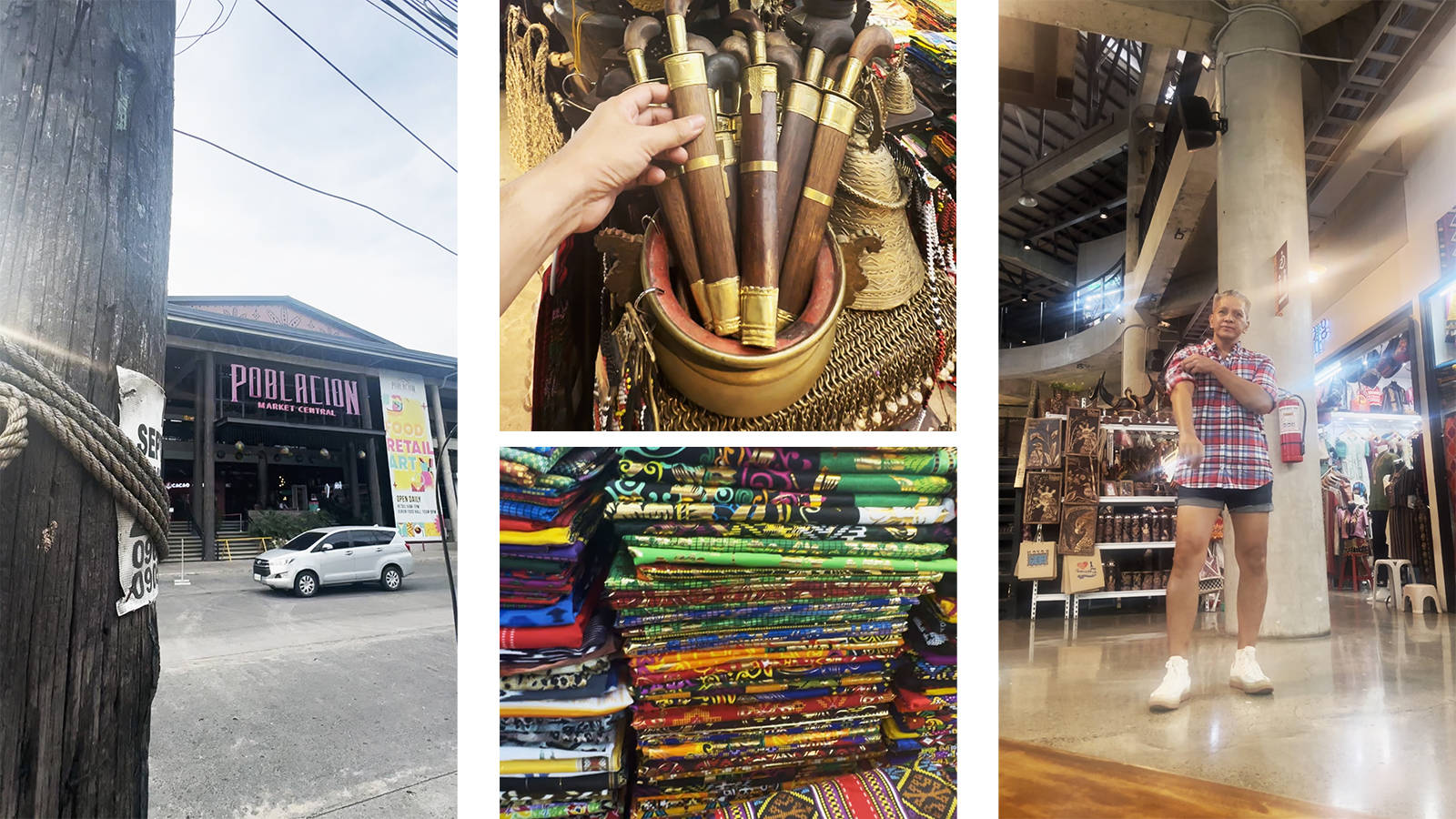
Davao-bound tourists know – or should know – of Aldevinco Shopping Center, the city’s one-stop-hub for everything Mindanao-related. You need malong or patadyong as pasalubong? You need a kulintang not just as a musical instrument, but as décor? You need batik, or T’boli ethnic apparel? You can find them all… and even more, in Aldevinco.
But here’s the thing, particularly for those who do not know yet: the old Aldevinco, which was located along C.M. Recto Street and Roxas Avenue in Davao City, is no more.
Now… enter the new Aldevinco, this time located at Poblacion Market Central on C. Bangoy Street (former Madrazo Fruit Stand)… which isn’t that far from the old place, actually.
We checked, and here are some things worth noting.
@outragemag #Pasalubong hunting in #Davao? Consider the new, pinasosyal #Aldevinco that may not have the grimy character of the old location but still is worth #LGBT ♬ original sound – Outrage Magazine
Una, this place looks and feels new. The old Aldevinco had a palengke feel, but this one has a mall feel. So you have a high-ceilinged venue with better-arranged stores that are air-conditioned, and so on. Pina-sosyal, in a manner of speaking.
Ikalawa, when there, the rules remain the same: haggle. The prices first quoted to you are not the actual prices the goods go for… unless you’re too moneyed and you don’t want to ask for discounts, though in that case, you shouldn’t even be in Aldevinco at all. The more you buy (i.e. bulk buying), the lower the prices, obviously. But always haggle… even if only for the fun of doing it.
Ikatlo, if you have time to spare, don’t auto-buy from the first store you check. Tour the area and compare prices. Often, the goods sold in one store will also be offered in a different store. So move around before making a final decision.
And ika-apat, Aldevinco may be popular as the go-to place for pasalubong, but in truth this isn’t the only one. Halimbawa, right across the old Aldevinco is a series of shops, some of them from the old Aldevinco. Because, at times, Aldevinco can feel like a tourist trap, and understandably, not everyone likes going into one. So consider your other options.
All the same, when in Davao, this is a place worth checking… if not for the shopping, then the food… or at least to check what happened to the tenants of the 60-year-old Aldevinco that was closed in December 2021, and is now being redeveloped into who-knows-what.
All part of rediscovery as we continue the LGBTQIA+ rampa wherever and everywhere…
Open from 9AM to 7PM (with the Kūkūñ Food Hall open from 10AM to 9 PM), Aldevinco Shopping Center is located at Poblacion Market Central, C. Bangoy Street, Davao City.
Destinations
Enjoying the grilling at Mandaue City’s Matias BBQ
#Mandaue City’s #MatiasBBQ is worth checking as your #LGBT alternative to dining in the open in #Cebu.
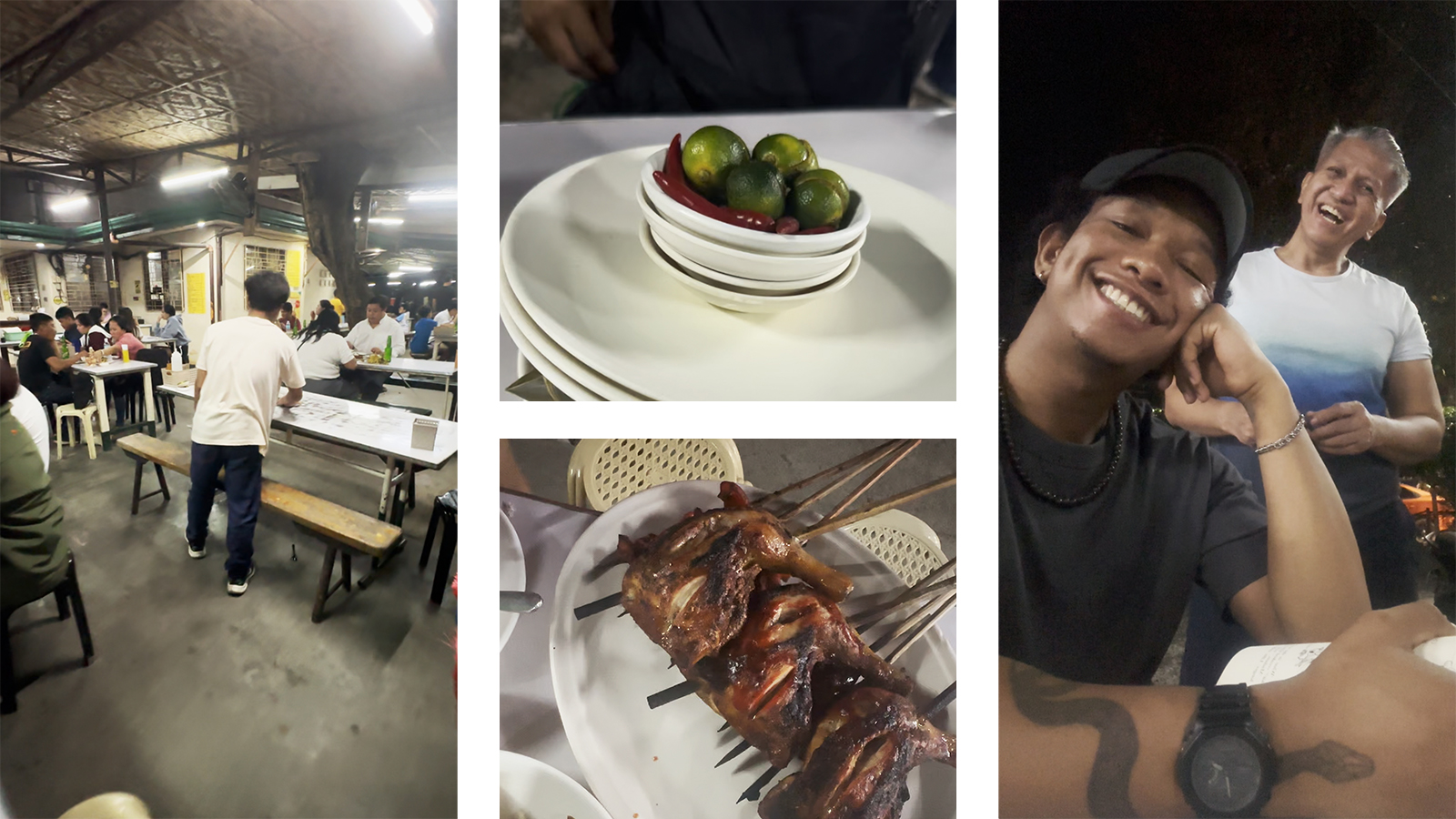
Seriously considering Larsian to try grilled goods in Cebu City, a friend recommended for us to try, instead, Matias BBQ. “It’s cleaner,” she said, adding: “And yummier, of course.”
So we checked… and how was the visit to Matias BBQ for us?
@outragemag #Mandaue City’s #MatiasBBQ is worth checking as your #LGBT alternative to dining in the open in #Cebu ♬ original sound – Outrage Magazine
Una, the place is NOT in Cebu City. It’s in nearby Mandaue City. We didn’t check where the BBQ place is, exactly; we just took a Grab and pinned the address. We just noted that the travel took a while, and yes, the fare wasn’t cheap (LOL).
Ikalawa, this is an open-air venue, similar to Larsian, though the difference is, here, there’s just one vendor (Matias BBQ). Maarte people beware: this isn’t for you.
Ikatlo, the servers were friendly… a pleasant surprise considering the number of people they had to serve. They knew what to recommend, and quickly dealt with some concerns (e.g. replace what was deemed stale rice).
Ika-apat, how was the food naman?
- The chicken – including the ₱85 pecho and ₱95 paa – were well-seasoned and well-cooked, remaining moist and not dry. Lasa-wise, they were smoky and sweetish.
- The ₱16 chorizos were actually good, properly cooked so that we were still able to taste the meat and accompanying sahog of garlic and the likes. This made us realize that when deciding to cook longganisa from Cebu, consider grilling instead of frying in oil. It just tastes better that way.
- The ₱165 balbacua (beef rind and oxtail soup) served to us was already cold, so was already greasy. The collagen-rich cuts were soft, and there were okay-tasting veggies, but the broth was already slimy from being oily.
- The ₱12 pusô was inconsistent; some were already stale (perhaps old stocks), and the others fresh. It’s hard to ascertain which is which since you’d be served with a lot. Order freshly-cooked rice if apprehensive… though this takes away from the overall experience of eating in a place like this.
Here’s the thing: our total bill was cheaper than the fare we paid to Grab to go there.
And so, for us, if this is accessible to you, consider this an alternative to, say, the likes of Larsian. That the food is good has to be emphasized, done in an outdoor setting that’d remind you of eating in the probinsiya.
But off we go again, in search of more LGBTQIA+ lagangan venues…
Open from 11.30AM to 8.00PM, Matias BBQ is located along A.S. Fortuna St., Banilad, Mandaue City.

Heading to Pila, Laguna? Check out La Cosina Antonio

Pasalubong shopping in Davao via Aldevinco

The look and feel of your neighborhood may affect your sleep

Workout or nap? Either can help your sleepless brain, study finds

Study links coffee consumption to metabolic health and sex hormones

Manulife Investments Philippines leads UITF rankings across equity and fixed income funds

Scheduling dental care during prenatal visits boosts oral health care during pregnancy

Enjoying the grilling at Mandaue City’s Matias BBQ

Dogs can distinguish between human fear and sadness

Pet dog microbiota may protect young children from respiratory tract infections and reduce the need for antibiotic courses
Scheduling dental care during prenatal visits boosts oral health care during pregnancy
Pasalubong shopping in Davao via Aldevinco
Study links coffee consumption to metabolic health and sex hormones
Manulife Investments Philippines leads UITF rankings across equity and fixed income funds
The look and feel of your neighborhood may affect your sleep
Workout or nap? Either can help your sleepless brain, study finds
Heading to Pila, Laguna? Check out La Cosina Antonio

-
 NewsMakers4 weeks ago
Scheduling dental care during prenatal visits boosts oral health care during pregnancy
-
 Destinations2 weeks ago
Pasalubong shopping in Davao via Aldevinco
-
 NewsMakers4 weeks ago
Study links coffee consumption to metabolic health and sex hormones
-
 Product Showcase4 weeks ago
Manulife Investments Philippines leads UITF rankings across equity and fixed income funds
-
 NewsMakers3 weeks ago
The look and feel of your neighborhood may affect your sleep
-
 NewsMakers3 weeks ago
Workout or nap? Either can help your sleepless brain, study finds
-
 Destinations1 week ago
Heading to Pila, Laguna? Check out La Cosina Antonio