
Spotlight
Natural soy candles buying guide
How to choose the perfect soy candle?

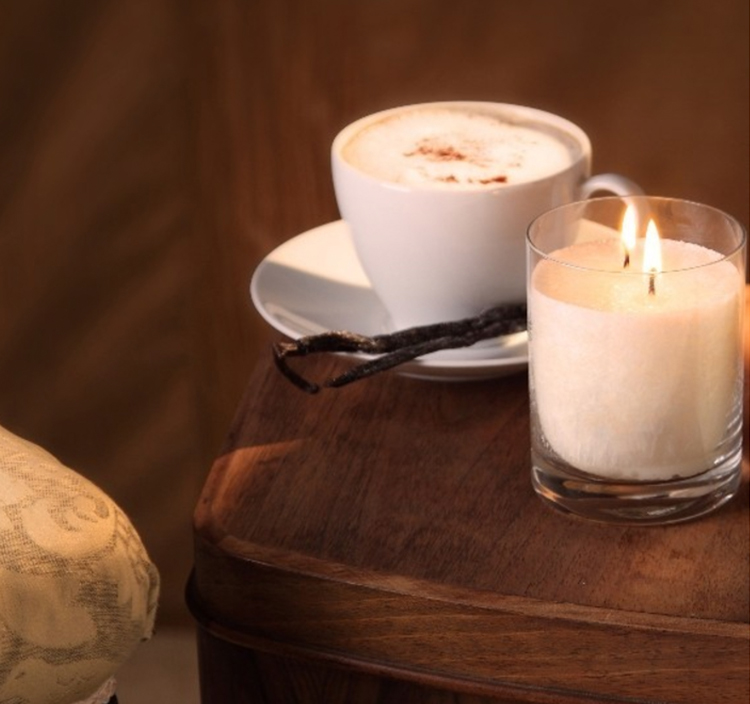
How to choose the perfect soy candle?
Photo courtesy of Pairfum
When buying one of the best scented soy candles you should expect the following:
Clean Burn
This is one of the strong points of any good soy candle over paraffin candles.
It should be burning cleanly for you without soot or smoke and it should not be tunneling, i.e. the should be no wax residue left on side of the glass.
When a soy candle is nearly burnt down, you will notice that the good ones still do not smoke or soot but the lesser ones will and you may notice some soot appearing along the top of the glass.
A further sign of a high quality perfumed soy candle is that the wick does not develop a glowing ‘mushroom’ head. In the past, you may have noticed that some candles develop red glowing bubble or head that eventually drops off into the wax to create an unsightly mess in the wax. This happens usually because something in the engineering of the candle is not quite right (the wick, the fragrance, some additives, etc.).
Every candle should burn down cleanly and completely, will not soot or smoke nor will it leave soot marks on the glass or tin.
100% Natural & Eco Friendly
The best soy candles are made from 100% natural soy wax without any synthetic or petroleum derived additives. These additives are not necessary and yet many candle companies blend soy wax into a paraffin wax candle.
This is for the benefit of being able to claim ‘natural’ or ‘soy candle’ but also to keep the price of the candle competitive. Hence, if you see a soy candle that is very cheap, the chances increase that it will contain paraffin or another synthetic wax.
Healthy Burn
This is the strongest point of a high quality soy candle.
With soy being natural, it does not contain toxins that are carcinogenic!
Paraffin contains toxins such as toluene and benzene, which are known carcinogens. It has been scientifically proven that a candle flame does not burn hot enough to destroy these ingredients before they are passed into the air, which makes paraffin candles air pollutants or harmful to the quality of the air in your home.
Another key element you should expect of superior soya candles is that they only use natural cotton wick, free from metal filaments. These metal filaments are woven tinto wicks to keep them upright while the candle burns. Zinc and lead are typical examples of these but burning them in a candle can lead to lead or zinc poisoning.
Today other solutions exist to keep a wick upright while the candle burns.
It is easy to verify whether a candle contains a wick with metal core. Just look at the top of the wick and if you see a black dot in the middle, then it contains most likely metal in its core.
Strong Perfume
Whenever there is a valid criticism of soy candles then it is the lack of ‘fragrance bloom’, in other words, many people find that the fragrance from a soy candle is not particularly strong.
The reasons are easily explained: soy wax has a lower melt-point than paraffin and the cooler the molten wax, the less perfume evaporates.
The melt-point of soy wax is around 35-55 degrees celsium whereas paraffin wax’s is at 55-70 deg C. This difference does not seem much but it become most significant when you consider that for every 10 degrees celsius you double the amount of perfume which evaporate.
Here is an example: a typical perfumed soy wax candle will have a meltpoint of about 45 deg C and a fragranced paraffin candle will be at about 65 deg C. This is 20 deg C in the difference and it means that the paraffin candle releases 4 x times as much perfume into the room as the soy candle. It is no wonder that the paraffin candle seems stronger!
The first solution to this is to only use strong and highly concentrated perfumes or essential oils in the candle. With essential oils and high quality fragrance oils being expensive, many perfumers dilute them. It then seems like a lot of odorous compounds are being added to the candle when in fact it is mainly diluents. This is what typically happens with budget priced scented candles.
A further solution is to deeply and highly scent the wax. Cheap paraffin candles only fragrance the upper most layer of the candle. When you look at the side of a cheap scented candle and you notice a thin line running around the glass, then there is a high probability that only the top is scented. The best perfumed soy candles are all fragranced from top to bottom contain a large amount of fragrance.
The single most effective solution is to raise the melt-point of the soy wax used. We achieve this first by starting with a grade of soy wax which naturally has a high melt-point and then we further increase it by adding other 100% natural waxes that melt only at high temperatures. This lifts the temperature of the molten soy wax and boost the fragrance intensity to levels similar to paraffin candles.
Other companies believe they enhance their soy candle by adding coconut wax. Unfortunately, this is another low temperature wax and we find it merely reduces the cost of the candle rather than improve the burn quality or more importantly increase the fragrance strength.
Longer Burn
Due to the fact that soy wax has a lower meltpoint, it has been found that on average they burn about 30% longer than a comparative paraffin candle.
Eco-Friendly
With soy wax being made from soya beans, it is a natural and sustainable resource that can be used for many generations to come.
Equally, it is a biodegradable wax that can go back into the ground and break-down harmlessly.
Craftsmanship
Most of the best scented soy candles are hand poured.
This does not increase the measurable quality of how the candle burns or smells but it does improve how the candle looks and presents itself. With soy wax being natural, every candle behaves slightly different when it is being made. This in turn, requires hand finishing and hand pouring to ensure that a soy candle is beautifully finished.
Soy candles that are produced by skilled artisans do exude a certain personality, character and finesse that candles which are mass-manufactured on factory production lines and machines cannot match.
Envelop your family and friends only with the healthy atmosphere of soy candles candles and will infuse your rooms with evocative and beautifully natural couture perfume.
Choosing The Right Fragrance In Soy Candles?
Be creative and set a different fragrance tone in every room of your home.
Our soy waxes are infused with natural and pure perfume oils. When lit, PAIRFUM candles will slowly release their fragrance to permeate your home with a sophisticated fragrance, a warming atmosphere for many pleasurable hours.
Here are general fragrance families that offer some guidance. Enjoy the journey of discovery.
Flowers
Floral fragrances shine with their romantic and feminine character but also their natural beauty.
Generally speaking, floral fragrances fall into one of two categories (but these obviously overlap):
Red Flowers
These are the rich, sensuous and heady fragrances.
The most prominent types are centered around rose, also known as the ‘queen of flowers’. But this group also includes violet, peony, orchid, mimosa, camellia, champaca, freesia, hyacinth, lilac and heliotrope.
White Flowers
This fragrance type is personified by jasmine with other members being orange blossom, tuberose, gardenia, honeysuckle, lilac, magnolia, osmanthus, ylang ylang, iris, lily of the valley, narcissus and many other blooms with pale petals.
White flower notes are generally light and fresh with more of an outdoor feeling.
Aromatic & Aquatic
Freshness is the overriding sensation of these fragrances.
The breaking waves of the ocean, the freshness of the wind or a clear blue lagoon. These are the images conjured up by the scents in the aquatic olfactive group. The notes tend to be transparent, fresh, natural, radiant and lasting.
Lavender, rosemary and artemesia are aromatic notes. The lend virility and energy to a fragrance. To reinforce their freshness, aromatic fragrances are often combined with citrus or spicy notes.
Wood & Moss
This olfactive heading summarises scents based on woods such as sandalwood, patchouli, vetiver or cedar. Woods are typically at the base of a fragrance giving it richness and warmth. Today woody notes can be both masculine and very feminine in character, whereas in the past they were predominantly used in men’s perfumery.
Woods have many different olfactive profiles:
- cedarwood reminds us pencils
- sandalwood is milky, powdery and creamy
- agarwood or oud has a campherous, musty and woody nature
- pine trees are fresh and we all associate Christmas or forests with them
- guiacwood can come across a little phenolic or woody, tar-like
- pure patchouli smell very different from note we associate with the ‘hippies’. It is woody but sweeter, lighter and a little earthy. Patchouli is the leaf of bush.
- vetiver (although it is a grass) is a dry, musty and woody scent with facets of chocolate and incense
Mosses are a sub-group, as they grow as lichen on or around tree, such as oakmoss and tree moss. Oakmoss has a rich, earthy and woody aroma whereas tree moss is slightly fresher, reminiscent of pine bark. Mosses lend a dark sensuality and a retro feeling to fragrances.
Mosses are the key ingredient in chypre notes. The term ‘chypre’ is pure perfumery language and not familiar to many. Chypre is not actually an ingredient but describes an accord that always consists of these three elements:
- a woody, leathery or mossy base note
- a floral heart, and
- a fresh top with hesperidics
Chypre perfumes are both fresh and warm with a lingering richness. Armani’s Aramis is a typical example.
Fougère (French for ‘fern’) is not an ingredient but another accord: lavender, oakmoss and coumarin. It recreates a green, woody, moist/damp and cool forest. Archetypical fougères as masculine fragrances.
Resins & Balms
Some of the most ancient aroma compounds below to this class of ingredients and they form the backbone of many Oriental accords.
Balsams include materials such as vanilla, benzoin, Peru balsam, Tolu balsam but also some waxes and they tend to be soft and warm in nature with many of them also having fixative properties, i.e. they make other ingredients last longer.
Amongst the resins are frankincense, opoponax, myrrh, styrax and elemi. Resins are crystallised sap from the bark of trees. Their odour profile is woodier and has a smokey nature when compared with balsams.
Green & Herbaceous
The sensation of these olfactive notes is one being outdoor: amongst the ferns of a forest, barefoot on grass, meandering through a meadow, fresh harvest time. Their olfactive profile remind us of spring and summer. It is a distinctively natural scent with the aroma grasses, herbs, moss, ferns but also bamboo and green tea.
The term ‘green’ refers to the scent of snapped leaves and freshly-cut grass.
Fig leaf is unique in its character as being both green and sweet. Tomato leaf has more of herbal leaf tone and violet leaf is reminiscent of fresh cut cucumber. Tea leaves are a further sub-category with their distinct aroma: green, red, white, black, Oolong, etc.
Herbs give a fresh, clean and uplifting feeling. A typical accord contains one or more of the following herbs: sage, thyme, bay leaf, mint, anise, tarragon, marjoram, fennel or basil. Basil is unusual in this group due to its spicy profile.
There are other ingredients with an herbaceous odor but which are not herbs: artemisia, calamus, angelica and spikenard.
Citrus
The name describes it perfectly: oranges, lemons, limes and bergamot. Others in this group with a more herbal profile are verbena, petitgrain and lemongrass. Modern citrus variations are pomelo, yuzu and grapefruit.
Citrus oils are also known in perfumery as ‘hesperidics’ and are a key component of all fresh fragrances with their effervescent and sparkling nature. They lend a sunny and optimistic feeling. Their cleanliness and elegant nature comes to fore in all classic ‘eau de colognes’. They are a typical example of a ‘top note’ in perfumery.
Spicy
These fragrances all share that they literally radiate ‘heat’ or ‘cold’:
- Hot spices (intense but short burning sensation) are black & pink pepper, cinnamon, clove, ginger, saffron, pimento, tamarind and nutmeg.
- Cool spices are coriander, caraway and cardamom. Their sensation is longer-lasting but cooling rather than hot.
It is easy to replicate these experiences when tasting them neat.
Fruity
Oh, the wonderfully sweet, fresh and juicy fruit notes are enticing to anybody.
Think of strawberries, peaches, pears, blackcurrant, figs, mango, papaya, plum. The list is literally endlessly appetising.
These notes are wonderful in the kitchen and irresistible to the younger generation, particularly in candles.
Fruity notes beyond citrus (which form a class of its own) have become so popular in recent years that they deserve a category of their own.
Fruits especially have become very popular in combination with floral notes and driven the floral fruity trend.
Oriental & Gourmand
Oriental spices, woods and vanilla create rich, intense but sophisticated fragrances. These fragrances share an certain oriental magic and ‘warmth’ meets ‘sensuality’!
Gourmand notes are reminiscent of foody smells and offer a mouth-watering sensation with their delectable aromas of vanilla, coffee, syrup, dried fruits, coconut, cream, chocolate, crème brulée, cupcakes, nougat, macaroons (the list is endless). They are relatively recent group started by Thierry Mugler’s fragrance Angel in 1992. Through their nature these tend to be very playful aromas, show new facettes of perfumery and tend to be genderless. Gourmand notes have been particulary popular in scented candles and home fragrance in general.
Musk, Amber & Animal Notes
Since Neolithic times, Amber (a fossilised tree resin) has been much loved for its colour, beauty and scent, which is warm, sweet and very deep.
“Animal” notes refer to scents that remind us of animals. Perfumers use animal notes to add depth and warm to a fragrance. Historically, they originated from ambergris (wales), deer musk, civet cats, hyrax and castoreum, but have since been completed replaced with synthetic alternatives.
Angelica and Ambrette Seeds, two plants, also produce a scent which is reminiscent of musk.
Fragrance Journey
Scented soy candles are ideal for creating a multi-sensorial experience within your home to the delight visitors and friends. With their clean burn they are perfectly suited for a pure perfume experience.
Why not create a fragrance journey that evolves from room to room or season to season?
Fragrance is magical and has the ability to transform your home into a haven of boutique luxury!
Fragrance And Mood?
With fragrance we have the power to time travel! We have all noticed how certain scents trigger memories and allow us to go back in time to specific moments of our lives. It is surprising how scents trigger strong emotions and feelings of happiness, coziness, relaxation or a even a sense of calm.
This is commonly known as Aromachology. It is an amalgamation of the words ‘aroma’ and ‘psychology’.
Any one of us can use it in our homes to create and improve the atmosphere. Here are some suggestions for you to try and enjoy.
Calming/Comforting
Herbal or aromatic notes such as lavender, sage or tea have the power to create a calming and relaxing emotion.
Vanilla, heliotrope and sandalwood are giving a warm and comforting sensation.
All of these are ideal for some wonderful restorative ‘me time’ after coming home from work.
Relaxing
Scents built around ingredients such bergamot, camomile but also white floral notes (ylang ylang, jasmin) can have a profound effect on our sense of wellbeing. They can instantly make us feel more relaxed through being soothing.
Use these before going to bed for a restful night’s sleep.
Energizing/Invigorating
Citrus notes are ideal to kick-start the day or when a little pick-me-up is needed.
Try fragrances with strong nuances of lemon, orange, lime and grapefruit.
Another secret is mint! It is excellent for re-energizing and giving an extra boost to your concentration. A real wake-me-up!
Happiness
Fruit notes radiate happiness and sunshine. They are excellent for lifting the mood of your home.
Romantic/Sensuality
Fragrances with rose and tuberose but equally ones with oriental aromas (chocolate, amber and some soft spices) are perfect at creating a romantic setting ideal for a candle-light dinner.
The Science Of Aromachology
It is a relatively new science that was started by the Fragrance Foundation but has a solid basis in neurobiology.
An olfactory stimulus travels directly to the limbic system of the brain. This is where ‘memory’, our basic instincts (for example: hunger, thirst, sexual drives, survival) and our sense of smell are located.
These relatively primitive parts of our brain have subconsciously a very strong influence on our behavior and can directly affect our emotions: relaxation, happiness, sensuality, energy, comfort.
Aromachology takes a holistic approach to the sensorial experience of fragrance and demonstrates that we react differently a fragrance depending on our personal memories, our geographical location or culture, the seasons of the year, the time of the day and many other factors.
In many ways, Aromachology is an evolution of Aromatherapy which has a much more simplistic approach.
Fragrance And Rooms?
Some fragrances are better suited than others to certain rooms of your home.
Here are a few suggestions.
Living room/Dining room
We recommend comforting fragrances with strong nuances of red flowers but also warming woods or vanilla.
Floriental perfumes are ideally suited.
Kitchen
The kitchen is made for green and herbal notes but also spices and citruses.
Nothing should clash with aroma of your cooking.
Bedroom
While a kids bedroom might prefer fruity fragrances an elegant master bedroom suite lends itself to white flower or lavender notes.
Irrespectively, it should be the domain of your calming and relaxing fragrances.
Bathroom
Aquatic (marine) or aromatic notes are perfectly suited here.
Having said this, complex and sophisticated citrus note can be very energising in the morning.
Hallway
This is the first room your family and friends enter. It should radiate happiness, sunshine and be welcoming.
We believe sophisticated fruity notes will send this signal to all entering your abode.
Orangerie/Conservatory
You may already grow lemon or fig trees here and a similar fragrance would be most suitable in these circumstances.
Otherwise orange blossom, honeysuckle and generally white floral notes lend themselves ideally to this room.
For more information, visit http://www.pairfum.com.





NewsMakers
Forget materialism, a simple life is happier: research
The commitment to simple living, or ‘voluntary simplicity’ as it is formally known, leads to wellbeing through providing more opportunities for personal interaction and social connection than conventional contexts of exchange, such as community gardens, sharing resources, and peer-to-peer lending platforms.

In an age where billionaires and conspicuous consumption are increasingly on display, new Otago-led research shows a simple life really is a happier life.
The study led by University of Otago – Ōtākou Whakaihu Waka Department of Marketing researchers has recently been published in the Journal of Macromarketing.
After setting out to understand the relationship between consumption and wellbeing, the researchers found people are happier and more satisfied when adopting sustainable lifestyles and resisting the temptations of consumerism.
They analysed data from a representative sample of more than 1000 New Zealanders, made up of 51 per cent men and 49 per cent women, with a median age of 45 and a median annual household income of $50,000.
They found the commitment to simple living, or ‘voluntary simplicity’ as it is formally known, leads to wellbeing through providing more opportunities for personal interaction and social connection than conventional contexts of exchange, such as community gardens, sharing resources, and peer-to-peer lending platforms.
Women are more likely to adopt a simple life than men, although more research is needed to understand why.
Co-author Associate Professor Leah Watkins says consumer culture promotes happiness as being typically associated with high levels of income and the capability it affords to acquire and accumulate material possessions.
“However, research is clear that attitudes to, and experiences of, materialistic approaches to life do not lead to increases in happiness or wellbeing. Nor do they lead to sustainable consumption necessary for planetary health.”
Between 2000 and 2019, global domestic material consumption increased by 66 per cent, tripling since the 1970s to reach 95.1 billion metric tons.
Growing consumer affluence and higher living standards have resulted in warnings of alarming trends of environmental degradation from human consumption.
This, coupled with global warming and post-pandemic health and financial anxieties, has led researchers and policymakers to call for a better understanding of the links between simple consumer lifestyles and wellbeing.
But co-author Professor Rob Aitken says this isn’t a case of just throwing out all your worldly possessions.
“It’s not directly the commitment to material simplicity that leads to wellbeing, but the psychological and emotional need fulfilment that derives from relationships, social connection, community involvement and a sense of living a purposeful and meaningful life.
“In a world where billionaire weddings are treated like state occasions and private yachts are the new status symbols, voluntary simplicity offers a quiet, powerful counter-narrative — one that values enough over excess, connection over consumption, and meaning over materialism.”
NewsMakers
Too much for some, just right for me – The truth about dating while plus-size
What is dating like for a plus-size woman? We don’t get the fairytale, the montage-worthy meet-cute in the bookstore, or the sweet swipe-rights with guys who use words like “connection” and “vibes.” What we get is a mixed bag of awkward encounters, accidental comedy, the occasional ghosting, and sometimes, someone who sees us as the whole damn package.

By: A Curvy Queen Who’s Seen It All
Let me be real with you: dating as a plus-size woman isn’t for the faint of heart. We don’t get the fairytale, the montage-worthy meet-cute in the bookstore, or the sweet swipe-rights with guys who use words like “connection” and “vibes.” What we get is a mixed bag of awkward encounters, accidental comedy, the occasional ghosting, and sometimes, someone who sees us as the whole damn package—not just the size of it.

I’m 33, a size 20, and I live in a city where everyone seems to be on a green juice cleanse or training for a marathon. My idea of a perfect day includes a cheese board, a crime documentary, and wearing something soft and oversized. I’ve been dating online for years now—Tinder, Bumble, Hinge, OkCupid, even a brief stint on Bigger Lover (don’t judge). I’ve had first dates that turned into second dates, and others that ended before the appetizer even came. But through it all, I’ve learned some hard truths about dating while plus-size.
The Fetish Factor
Let’s start with the obvious: there are guys out there who fetishize plus-size women. They love our bodies—but only in private. They send you those thirsty DMs like, “I’ve always had a thing for thick girls.”
I used to think that was a compliment. But it’s not, not when it’s the first thing they lead with, not when you realize they don’t care about your name, your career, or your sense of humor. Just your body.
I once met a guy off Tinder who spent our entire date talking about how much he “loved curves” and how he’d “never dated a big girl before.” He kept asking if I was into feederism (I had to Google it when I got home). I never heard from him again, which was fine—I didn’t need to be someone’s body experiment.
The Grateful Gambit
Then there’s this weird idea that plus-size women are supposed to be grateful for attention, as if someone choosing to date us is some charitable act. It’s subtle sometimes, but oh, it’s there.
I had a guy once tell me, over drinks, “I like girls who are a little bigger. They try harder, you know? They’re just more appreciative.”
I blinked. Tried harder at what? Breathing through my rage?
I wanted to ask him if he’d ever considered that maybe I’m not grateful to be on a date with him either. But instead, I left.
Online Dating – A Love-Hate Situation
The apps are their own beast. My profile is cute, funny, and unapologetically me. I mention that I love bookstores, brunch, and body positivity. I always include full-body pics, because I refuse to trick anyone—but I also refuse to hide.
And still, I get messages like: “You’re actually really pretty for a big girl.”
Sir, would you be willing to grow a personality for someone you really liked?
But it’s not all trash. I’ve had some sweet, genuine conversations and some fun dates. Not every guy is clueless. Some are kind, open, and emotionally intelligent.
The good, the bad, and the big truth
Dating while fat is exhausting. You have to weed through people who want to fix you, people who want to hide you, people who only want to sleep with you, and people who see you as their emotional support girlfriend.
But I’ve also never been more sure of who I am. I’ve learned to ask better questions, to take up space, and to walk away when someone doesn’t see my worth.
I’ve cried after bad dates, yes. I’ve called friends from bathroom stalls and whispered, “Why is this so hard?” But I’ve also danced in my kitchen with someone who made me feel radiant, kissed under streetlights, and been told, with complete sincerity, “You’re the most beautiful woman I’ve ever met.”
The truth is, being plus-size in the dating world means you see people for who they really are, faster. It forces you to develop an inner filter. You learn to walk away without guilt. And when you do meet someone who loves you not in spite of your size but as a part of your magic? It’s that much sweeter.
So to every plus-size woman out there who’s ever felt invisible, unworthy, or too much: you’re not too much. You might just be too real for the wrong person.
Keep showing up. Keep swiping. And keep loving yourself like you deserve to be loved—because trust me, you absolutely do.
NewsMakers
Research suggests drinking coffee may reduce the risk of frailty
Habitual coffee consumption of 4-6 cups and over* (with one cup measuring at 125ml) per day is associated with a reduced risk of frailty.

A new study published in the European Journal of Nutrition has suggested that habitual coffee consumption of 4-6 cups and over* (with one cup measuring at 125ml) per day is associated with a reduced risk of frailty.
The study, funded by the Institute for Scientific Information on Coffee (ISIC) is the first to analyze the relationship between coffee consumption and the underlying components of frailty.
Coffee consumption has previously been linked to reducing the risk of some of the natural symptoms of ageing, such as improving cognitive function2 and mitigating against inflammatory related diseases. This latest research adds to the growing knowledge base within this area, exploring the benefits of regular coffee consumption over an extended period of time.
For this study, researchers conducted a detailed analysis over a long seven-year follow-up period, surveying 1,161 adults aged 55+ years through the Longitudinal Aging Study Amsterdam (LASA).
The relationship between coffee consumption and the presence and incidence of frailty was investigated. Frailty status was evaluated using Fried’s five-component frailty phenotype4,which is defined by the presence of three or more of the following symptoms: weight loss, weakness, exhaustion, slow gait (walking) speed, and low physical activity.
The results of this study indicate that higher habitual coffee consumption is associated with lower overall odds of frailty. These findings can be considered alongside the European Food Safety Authority’s (EFSA) scientific opinion that up to 400mg of caffeine (3-5 cups of coffee) per day is a moderate and safe amount5.
The researchers explain that coffee’s effect on reducing frailty can partly be attributed to the role of antioxidants in coffee, which may help to reduce inflammation, sarcopenia (muscle loss), and prevention of muscle damage. Coffee may also help to improve regulating insulin sensitivity and glucose uptake in older people.
The study’s lead author, Margreet R. Olthof, Associate Professor at the Amsterdam Public Health Research Institute, Vrije Universiteit Amsterdam, commented: “Drinking coffee is a key part of many people’s daily routine, and as people age they are constantly looking for ways to maintain their health. Our findings highlight the possible beneficial association between daily coffee consumption and reduced risk of frailty in later life in the older population. Coffee consumption may thus enhance healthy aging, but it is important we also explore further dietary interventions, to ensure older adults can continue to live fulfilling lives.”
* Moderate coffee consumption can be defined as 3–5 cups per day, based on the European Food Safety Authority’s review of caffeine safety.

Filipinos prioritize independence as legacy for longer lives

Going Chinese in Pulilan, Bulacan

Coffee and heart health: How many cups of caffeinated coffee are safe to drink each day?

Loneliness strongly linked to poorer mental health and wellbeing, study finds

Weight loss drugs could help with binge eating disorder

How to prepare and protect homes from costly storm-related electrical damage

Fullerton Health celebrates two years of advancing preventive healthcare in PH

New IKEA PS Collection brings playful functionality into your home

Manulife China Bank Life expands access to cancer care solutions

Tips for smooth travel with pets

Superbod Movement goes beyond the stage
Loneliness strongly linked to poorer mental health and wellbeing, study finds

Poor-quality sleep involves different parts of the brain, depending on age
Weight loss drugs could help with binge eating disorder
New IKEA PS Collection brings playful functionality into your home
Fullerton Health celebrates two years of advancing preventive healthcare in PH

Century Tuna Superbods 2026 announces ‘Superbod Era’ finalists
Filipinos prioritize independence as legacy for longer lives
Coffee and heart health: How many cups of caffeinated coffee are safe to drink each day?
Manulife China Bank Life expands access to cancer care solutions

-
 Product Showcase3 weeks ago
Superbod Movement goes beyond the stage
-
 NewsMakers3 weeks ago
Loneliness strongly linked to poorer mental health and wellbeing, study finds
-
 NewsMakers3 weeks ago
Poor-quality sleep involves different parts of the brain, depending on age
-
 NewsMakers3 weeks ago
Weight loss drugs could help with binge eating disorder
-
 Product Showcase3 weeks ago
New IKEA PS Collection brings playful functionality into your home
-
 Product Showcase3 weeks ago
Fullerton Health celebrates two years of advancing preventive healthcare in PH
-
 Product Showcase3 weeks ago
Century Tuna Superbods 2026 announces ‘Superbod Era’ finalists
-
 NewsMakers5 days ago
Filipinos prioritize independence as legacy for longer lives