
Destinations
Discovering the whale sharks of Oslob, Cebu
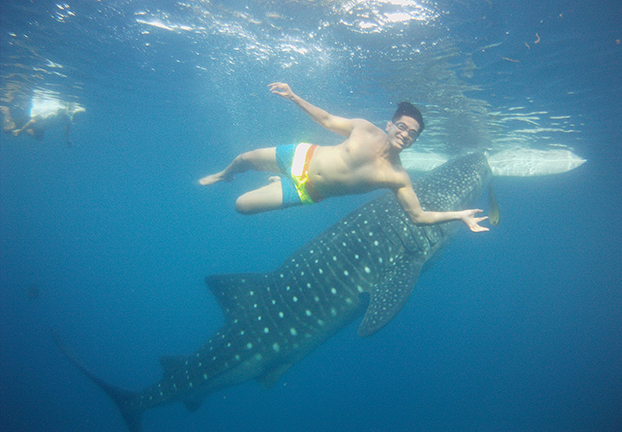
Swimming with sea creatures like the butanding can be… magical. It can give you various insights – e.g. how “small” we all are, even inconsequential in the scheme of things; how beautiful nature can be, perhaps especially if left untouched; and how we continue to be in dire need of education re nature and how we can use it without necessarily destroying it.


There are two sites in the Philippines that are popularly known to provide people (i.e. tourists) the chance to “interact” with the famed gentle giants of the seas, the whale sharks (i.e. “butanding”) – Donsol, Sorsogon and Oslob, Cebu. And based on personal experience in visits to both sites, there are pros and cons worth considering. These pros and cons, not incidentally, are largely driven by profiteering from a natural wonder…


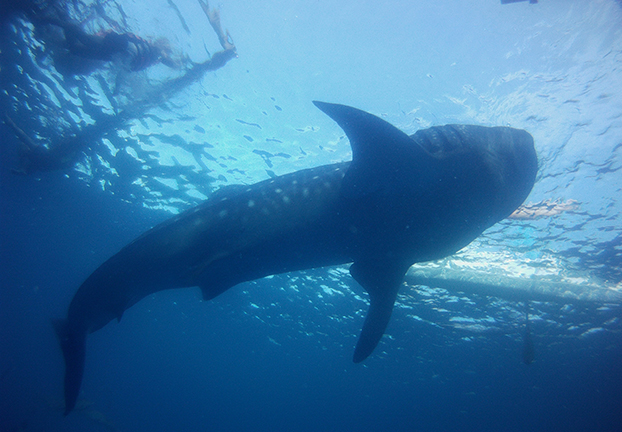
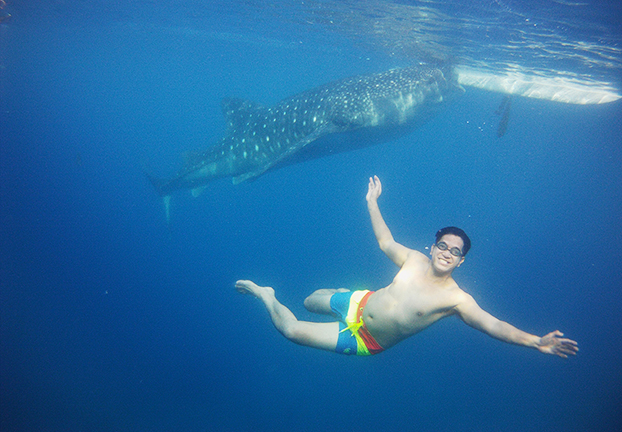
In Donsol – as we’ve written in the past – profiteering can be seen in treachery (for the lack of a better word). That is, the butanding only visit the small fishing village a few months in a year; but even off-peak, the locals (who have become the tourist guides) will still claim that they can “look” for the giants of the sea with you. This means paying them X amount of money (for the “professional” fees, rent of the bangka, rent of equipment, et cetera) as you basically waste your time looking for what’s not there. If you’re really, really eager to look for the butanding, they ask for more money so you can search again the next days – again, even if they already know that the butanding has long gone.
In Oslob, profiteering can be seen in the “conversion” of the butanding. This place can be likened to an aquarium (or even a “natural” zoo); and the butanding, mere “pets” on leash. Yes, you will see the butanding here for sure, since they hardly ever leave the place. The locals have “tamed” them by incessantly feeding them; this “easy” life sort of forced them to just stay here.
It is, therefore, hard to support – or even promote – this form of eco-tourism.
This is, I suppose, the “tricky” part.
We recognize various facets of the promotion of Oslob as an eco-destination to interact with the butanding.
There’s the providing of employment to the locals (who would otherwise kill the fish for their meat, a source of livelihood for many in the past). Nowadays, it is not uncommon to hear these fishermen-turned-tourist guides as staunch caretakers of the seas’ bounties (butanding included); and hearing them claim that protecting the seas IS a way of protecting the fishermen and their families is (admittedly) heartening…
There’s the issue of the “taming” of the butanding, with animal rights activists right in claiming that this approach is basically ruining natural order. The butanding are wild animals; and with this “arrangement”, they are now turned into “pets” that seem to solely exist for the benefit of those who want to earn from them (and yes, those who pay to see them).
Alas, no, Oslob shows how we have yet to find a “common ground” (if it can be called that). That is, we have yet to really find comprehensive solutions to the issues besetting the fishermen and their families (helmed by their lack of consistent sources of earnings) so that they continue “taming” the butanding (in the guise of giving people the chance to learn more about the need to protect these giants).
A discussion is, indeed, needed for the “solutions” regarding this to be comprehensive.
In the meantime, for those in Cebu City who are keen to encounter the butanding, here are some must-know points:
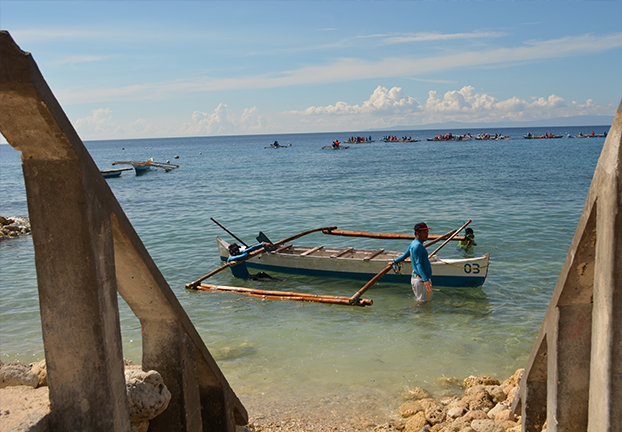
- To go to Oslob, head to South Terminal in Cebu City. There, there are buses heading to Oslob (even as early as 1:00AM), taking from three to four hours (depending on the traffic conditions). Airconditioned bus fare is P165. Note that the “feeding” of the butanding (more on that in a bit) only happens from 6:00AM to 12:30PM, so the earlier you go there, the better it will be for you. We left Cebu City at 2:30AM, and when we arrived in Oslob just after 6:00AM, there were already lots of tourists.
- Tell the konduktor (in the Philippines, the person who gives the tickets and collects the fare) that you are getting off at BCD’s Resort, which is right beside the registration area for the butanding
- When you get off the bus, there is a registration area (the two resorts there can also help here). You go inside and then pay the fees – i.e. P500 for locals (Filipinos) who want to swim with the butanding/P300 for those who will only watch from the bangka and P1,000 for foreigners who want to swim with the whale sharks (the fee includes the bangka ride, flippers and the goggles). You can pay an additional P550 for the bangkero to take your pics while you swim with the whale sharks (the files can be saved into your Android phone, and saved in a CD).
- You will then be taken to the take-off area, where some educating happens (e.g. that every swim lasts only for 30 minutes, that you to keep your distance from the butanding, not to use chemical-laden sunblock, no splashing in the waters, not to panic when the shark seems to head your way, and so on). As a side note, you can get scratchies while in the waters; so if you’re allergic to bites of se creatures, bring anti-histamine with you…
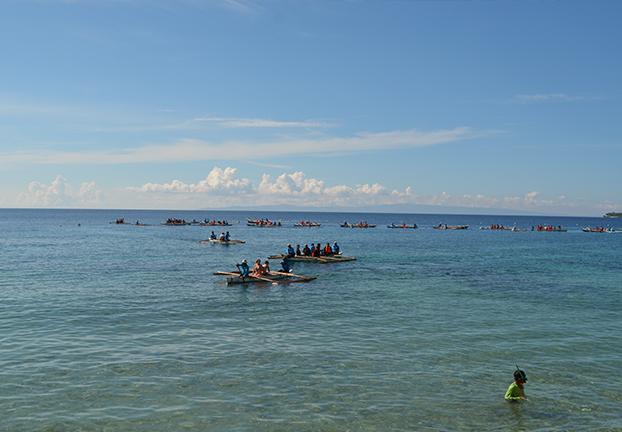
- You will then be given your vests, hauled into a bangka, and then the bangkero-cum-photographer paddles only a few meters from the shore. Here, all the bangka loaded with tourists line up. Another bangka passes by all the tourists, with this one’s bangkero incessantly feeding a butanding. It is when this butanding passes by your own bangka that the “interaction” happens, making it – basically – a displaying of an animal on a leash (the “leash” here the food it is given).
- After 30 minutes, you are told that the interaction is done, told to return to your bangka, and then head back to the shore. THE. SWIM. WITH. THE. BUTANDING. IS. DONE.


Swimming with sea creatures like the butanding can be… magical. It can give you various insights – e.g. how “small” we all are, even inconsequential in the scheme of things; how beautiful nature can be, perhaps especially if left untouched; and how we continue to be in dire need of education re nature and how we can use it without necessarily destroying it.
And I suppose these insights need to be constantly communicated to us (hammered, even, into our consciousness) everytime we deal with nature; in this case, while bringing out the ‘sirena’ in us. Because if not, then our supposedly “win-win” approach to eco-tourism is in dire need of being reconsidered…







Destinations
Enjoying the grilling at Mandaue City’s Matias BBQ
#Mandaue City’s #MatiasBBQ is worth checking as your #LGBT alternative to dining in the open in #Cebu.
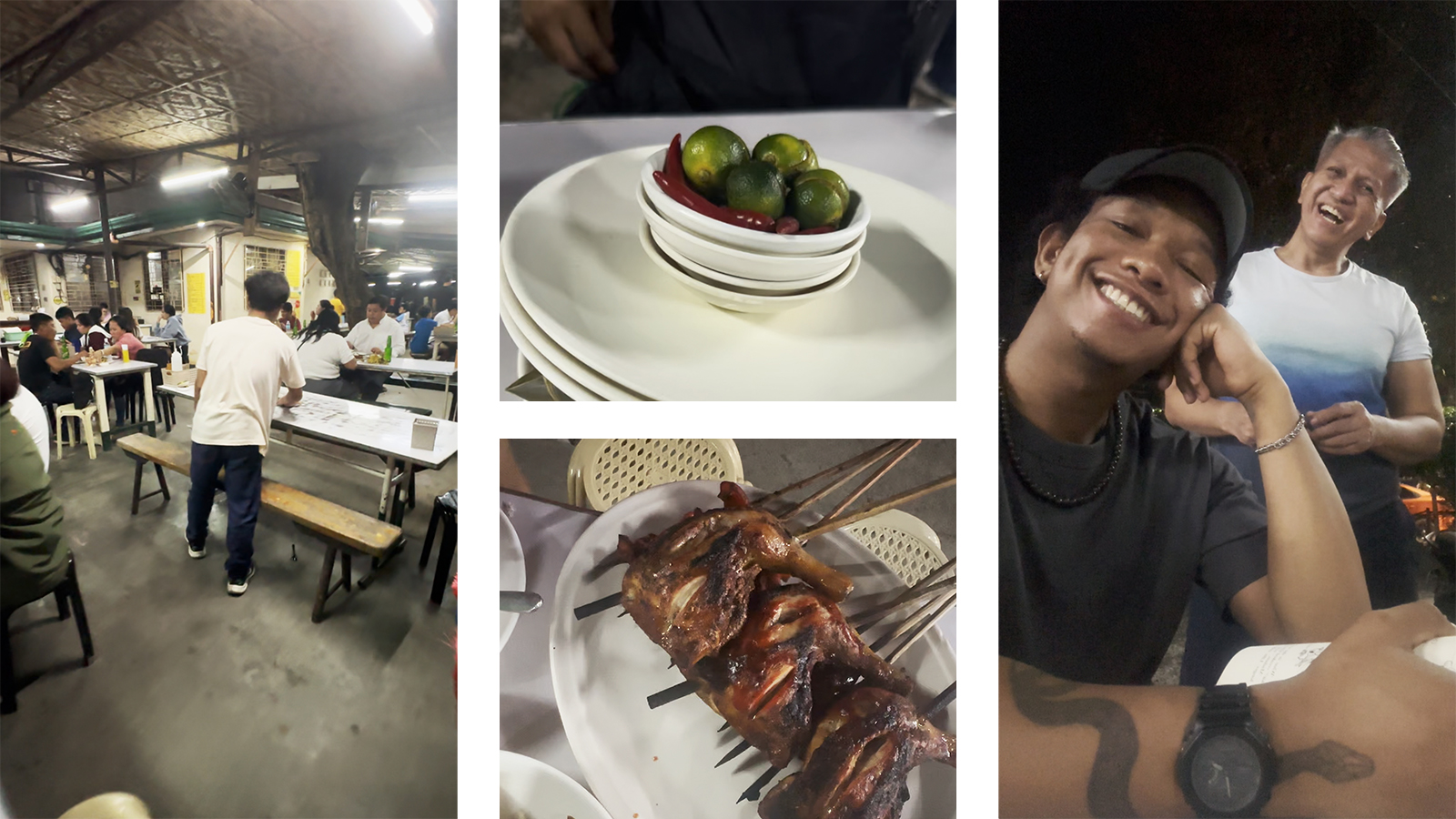
Seriously considering Larsian to try grilled goods in Cebu City, a friend recommended for us to try, instead, Matias BBQ. “It’s cleaner,” she said, adding: “And yummier, of course.”
So we checked… and how was the visit to Matias BBQ for us?
@outragemag #Mandaue City’s #MatiasBBQ is worth checking as your #LGBT alternative to dining in the open in #Cebu ♬ original sound – Outrage Magazine
Una, the place is NOT in Cebu City. It’s in nearby Mandaue City. We didn’t check where the BBQ place is, exactly; we just took a Grab and pinned the address. We just noted that the travel took a while, and yes, the fare wasn’t cheap (LOL).
Ikalawa, this is an open-air venue, similar to Larsian, though the difference is, here, there’s just one vendor (Matias BBQ). Maarte people beware: this isn’t for you.
Ikatlo, the servers were friendly… a pleasant surprise considering the number of people they had to serve. They knew what to recommend, and quickly dealt with some concerns (e.g. replace what was deemed stale rice).
Ika-apat, how was the food naman?
- The chicken – including the ₱85 pecho and ₱95 paa – were well-seasoned and well-cooked, remaining moist and not dry. Lasa-wise, they were smoky and sweetish.
- The ₱16 chorizos were actually good, properly cooked so that we were still able to taste the meat and accompanying sahog of garlic and the likes. This made us realize that when deciding to cook longganisa from Cebu, consider grilling instead of frying in oil. It just tastes better that way.
- The ₱165 balbacua (beef rind and oxtail soup) served to us was already cold, so was already greasy. The collagen-rich cuts were soft, and there were okay-tasting veggies, but the broth was already slimy from being oily.
- The ₱12 pusô was inconsistent; some were already stale (perhaps old stocks), and the others fresh. It’s hard to ascertain which is which since you’d be served with a lot. Order freshly-cooked rice if apprehensive… though this takes away from the overall experience of eating in a place like this.
Here’s the thing: our total bill was cheaper than the fare we paid to Grab to go there.
And so, for us, if this is accessible to you, consider this an alternative to, say, the likes of Larsian. That the food is good has to be emphasized, done in an outdoor setting that’d remind you of eating in the probinsiya.
But off we go again, in search of more LGBTQIA+ lagangan venues…
Open from 11.30AM to 8.00PM, Matias BBQ is located along A.S. Fortuna St., Banilad, Mandaue City.
Destinations
Eating out in Cebu in one place via Pusô Village
Checking out #Cebu’s all-in-one dining location, the Pusô Village that may simplify eating out but seems to forget our desire to see diverse #foodie hubs.
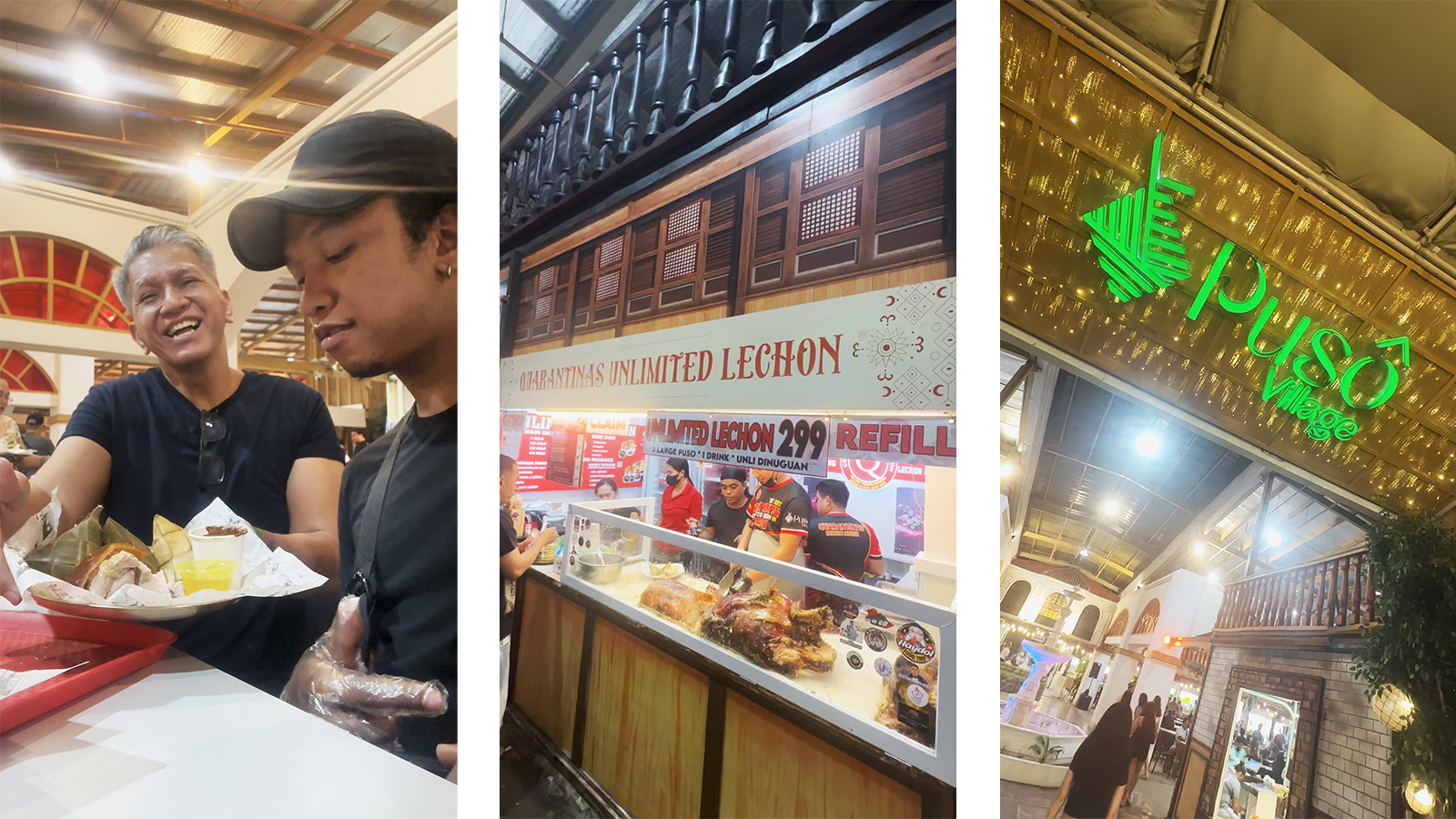
In the past, if you wanted to grab some of the food associated with Cebu, you headed to – among others – Larsian, this place not too far from Fuente Osmeña Circle. It wasn’t necessarily popular with the locals who saw (and still see) it as unhygienic, but it’s this easy-to-access BBQ place that’s open 24/7.
Starting 2025, however, a new place was opened to serve as the one-stop culinary and cultural hub of Cebu City: the Pusô Village.
@outragemag Checking out #Cebu's all-in-one dining location, the Pusô Village (#pusovillage) that may simplify eating out but seems to forget our desire to see diverse #foodie ♬ original sound – Outrage Magazine
Una, developed by Cebu2World/Megawide as part of the Carbon Market modernization, this place’s name drew inspiration from the pusô rice cake that’s served when you have meals in Cebu. There are, therefore, design elements that’d remind you of the pusô – e.g. those octahedral shapes on the entrance. Inside, there are attempts to beautify by borrowing elements from Bahay na bato Philippine architectural style; most are fake, though, such as those painted-on verandahs you’d see when you look up.
Ikalawa, there are over 100 food stalls and retail outlets here… though more of the former than the latter. They’ve been “properly” structured, so that the lechon vendors are on one side, seafood sellers on another side, and so on.
Ikatlo, we tried some of the offerings to ascertain how good they are.
The unlimited lechon is popular, providing an opportunity particularly for non-locals to cheaply enjoy this Cebuano treat. Taste-wise, the lechons vary little, some saltier than the others. The “approach” in serving is similar, though. You get an okay portion when first served, and the portion gets smaller the more you return. Noticeably, by the third refill, the vendors become grumpier when serving you, some even ignoring you, or stuffing fatty parts on your plate. Business greed in action.
Though cooked the same way (i.e. buttered), the seafood platters are inconsistent. You could get some shrimps or crabs now and then, though most times, you’d just get mussels.
Then there’s the tuslob-buwa, pig’s brain cooked under maximum heat to then become dip for pusô. We’d say this is acquired taste… but there’s not much to taste. So this is a costly to-try food.
Only open until 10.00PM, Pusô Village offers those in Cebu a venue to try as many of the local goods as possible. For that, alone, this is a must-check. You are sure to find a few stuffs you’d like.
But the city still has a lot of venues offering local culinary and cultural goods, and they deserve to be also checked. And so off we go for more LGBTQIA+ rampa…
Pusô Village is located at M.L Quezon Blvd., Sto. Nino, Cebu City.
Destinations
Going Chinese in Pulilan, Bulacan
Craving for #chinesefood in #Bulacan? We tried the offerings of Lee Foo Panciteria #Pulilan, and we’re on the fence here (yes if no choice, no if you can go elsewhere).
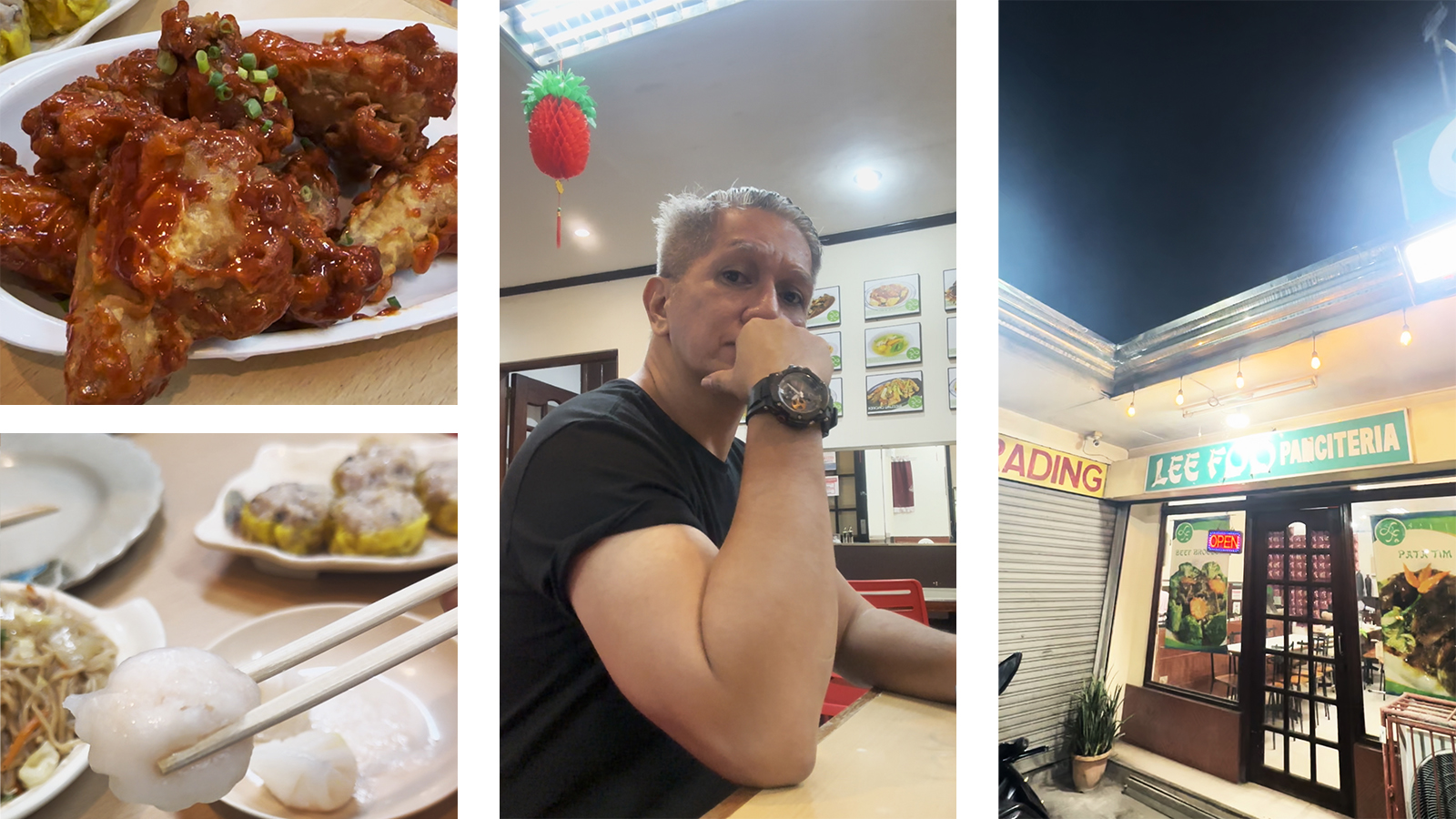
We happened to be in Pulilan in Bulacan, and I had pancit craving. As if on cue, we passed by Lee Foo Panciteria Pulilan, which – after we Google-checked – is supposedly one of the more frequently-visited Chinese restos in these parts of the province, so… of course we checked.
@outragemag Craving for #chinesefood in #Bulacan? We tried the offerings of Lee Foo Panciteria #Pulilan ♬ original sound – Outrage Magazine
Una, this place is really, REALLY easy to find. Located along the Pulilan Regional Road in Barangay Cut-cot in Pulilan, this is right in the middle of the municipality.
Ikalawa, the resto is actually divided into three parts: one side is for those with reservations, another part is for walk-in diners, and another part is for events. If/when the resto isn’t full, only the main part (middle one) is kept open.
No, this isn’t some fancy resto. More like an airconditioned karinderya, complete with wooden tables and plastic chairs. Look-wise, it wasn’t dirty naman when we were there, so that’s a plus.
Ikatlo, the workers were friendly naman… and they moved fast – e.g. while waiting for our orders, we were given must-check peanuts, and since we finished what we got fast, our waitress was more than happy to accommodate us.
Ika-apat, now… how was the food?
The house specialty, the Lee Foo Chicken (₱265 for half, ₱495 for whole), looked like fried chicken with ketchup. Okay… the breading was okay since it didn’t overpower the meat. The chicken, too, was properly cooked, and it wasn’t dry. But it was tasteless overall; so the ketchup taste is what stays with you.
The Pancit Canton Bihon (₱255) had thin pancit noodles, almost as thin as the bihon. It didn’t have lots of sahog; instead, you’d notice the extenders (like kikiam, and so on). I like good pancit, I swear… but this isn’t one of them, sorry.
The weirdly-wrapped Hakaw (₱155) was small, so it was bitin.
And then there’s the Siomai Steam (₱155), which was, in a word, weird. The size was good, similar to those ₱10 siomais. But the way this was prepared was weird for us – e.g. like the meat was overwatered, and having a hard time staying solid, so that it was smudgy, and disintegrated in the mouth even without chewing. I suppose that, at least, it wasn’t disgusting taste-wise.
Lee Foo Panciteria Pulilan is, we believe, popular. Like President in Chinatown, or a branch of David’s in some mall. To each his or her own nga naman. But for us, we’re off to look for other Chinese restos na muna as we head out in search of more lafangan venues.
Lee Foo Panciteria Pulilan is located at 159 Barangay Cut-cot, Pulilan, 3005 Bulacan Province. For more information, contact 0925 800 0168, or email leefoopanciteria@yahoo.com.

Manulife Investments Philippines leads UITF rankings across equity and fixed income funds

Scheduling dental care during prenatal visits boosts oral health care during pregnancy

Enjoying the grilling at Mandaue City’s Matias BBQ

Dogs can distinguish between human fear and sadness

Pet dog microbiota may protect young children from respiratory tract infections and reduce the need for antibiotic courses

Walking and weight training alone are not enough for strong bones – football and handball may be more effective

Keeping kitty indoors is not the cat-astrophe that owners fear

Why a UTI hurts — and why that might be a good thing

Pregnancy complications can signal heart disease risk years before traditional screening, study finds

Posture can influence your mood and behavior, study suggests

Filipinos prioritize independence as legacy for longer lives

Loneliness strongly linked to poorer mental health and wellbeing, study finds

Weight loss drugs could help with binge eating disorder

Coffee and heart health: How many cups of caffeinated coffee are safe to drink each day?

Going Chinese in Pulilan, Bulacan

How to prepare and protect homes from costly storm-related electrical damage

Eating out in Cebu in one place via Pusô Village
Pregnancy complications can signal heart disease risk years before traditional screening, study finds
Why a UTI hurts — and why that might be a good thing
Posture can influence your mood and behavior, study suggests

-
 NewsMakers2 weeks ago
Filipinos prioritize independence as legacy for longer lives
-
 NewsMakers4 weeks ago
Loneliness strongly linked to poorer mental health and wellbeing, study finds
-
 NewsMakers4 weeks ago
Weight loss drugs could help with binge eating disorder
-
 NewsMakers3 weeks ago
Coffee and heart health: How many cups of caffeinated coffee are safe to drink each day?
-
 Destinations3 weeks ago
Going Chinese in Pulilan, Bulacan
-
 Home Care4 weeks ago
How to prepare and protect homes from costly storm-related electrical damage
-
 Destinations2 weeks ago
Eating out in Cebu in one place via Pusô Village
-
 NewsMakers2 weeks ago
Pregnancy complications can signal heart disease risk years before traditional screening, study finds