Destinations
Whale-less wandering at Donsol, Sorsogon
You may not see the famed butanding, but fret not – says Michael David C. Tan – as there’s more to Bicol than the gentle giants of the seas.


An oft-repeated adage is the need not to lose sight of the forest for the trees (a different take at “Don’t lose sight of the big picture”) – that is, that if we focus too much on a single tree (or some trees), we may forget that the tree (or trees) we admire is (are) but one (or some) of the many in that forest. This is sound advice, definitely – after all, why over-emphasize on minute details when the big prize is yet to be achieved?

However, when traveling to Donsol in Sorsogon, in search of the famed butanding (whale sharks), I’d say: Forget the forest; it’s the trees that should define the experience. Because while swimming with the gentle giants of the seas is, definitely, a magical experience, if it is the end-all of a trip to the place, that trip could end up… not exactly happy.
As our whale-less wandering at Donsol, Sorsogon proved.
 WHERE TO?
It was approximately a year after booking a flight to Legazpi City in Albay when my friend (Rye Mendoza) reminded me of our pending trip – that’s what happens with too-early bookings: either you’d forget about it (as I almost did this time around), or end up choosing to forget about it (as I repeatedly did in past reservations). It was, for him, something new, since he has never been to the place in the past; and while I have, repeatedly, visited the place, the enthusiasm was… contagious. And so we headed out sans any plans at all what to do when we get there.
Legazpi is, by itself, a place full of mini- and not-so-mini wonders – heck, the view of the MAJESTIC Mayon Volcano alone makes the trip worth it! From afar, the volcano looks like it was pasted (or painted, for the more poetic) against the blue sky, it makes one believe in the Divine – that only some intelligent hand could design something so artsy, so beauteous in our midst. And – should you be so lucky if you landed with clear skies – it’s a sight to behold as soon as you land, too.
And then there’s the Bicolano food. I have long been a fan of how Bicolanos whip up what they whip up – Bicol Express, ginataang balat ng santol (santol peeling with coconut milk), balat ng pili (pili peeling) turned into burger patties… The gustatory possibilities here are endless. Interestingly, they even use the same as toppings on… a pan pizza! That too spicy for you? Cleanse the palate with freshly-baked malunggay pan de sal – available from numerous bakeries off the main streets.
But back on track now… to Albay’s neighboring province to the south, Sorsogon, where Donsol is.
Donsol is approximately an hour away from Legazpi City, with the roads not offering much as far as scenery is concerned but, well, provincial living. We took a van (over P60, one-way) that was supposed to take us to Donsol, but – as luck had it – the van stalled, so we transferred to the only jeepney passing, which happened to be full; so we sat atop the jeepney. Take in views of the rice paddies, people chatting while sitting ON the highway, chickens crossing the road… For Manileños, you have to go as far as the outskirts of Cavite to see such scenes, so the experience was refreshing.
Donsol is, in one word, sleepy. Not much happens here, with just about everything revolving around the butanding. There are abundant accommodations to choose from – homestays are common in the town proper, while closer to the wharf where the boats that head out to spot the butanding are more expensive resorts. As is usual in small towns, though, everything’s accessible by motorcycle or tricycle.
WHAT FISH?
And so we gravitated towards the Donsol Tourism Office (DTO), where we registered (P100 is the fee for locals; P300 for visitors, irrespective of nationality) and then were made to attend a brief orientation session on how to deal with the butanding.
Worth remembering is this: per boat that leaves the wharf to view the butanding requires seven tourists; meaning, in our case, since there were just two of us, it’s time to be friendly with other tourists who may invite you to join them (or you can form groups with) so you cut the costs of the boat rental (approximately P3,500). This we did with a German, a Frenchman and a Swiss.
Another thing worth remembering is this: If at all you are planning to see the butanding, bring your own swimming/snorkeling equipment. Why? Because outside the DTO are stalls “requiring” tourists to rent masks, snorkels and fins for P300 (entire set). Nature-tripping was, for us at that point, getting expensive.
But as soon as you leave dry land (with a “butanding interaction officer”, spotters and the boat’s crew), you are just about ready to forgive the too-apparent monetizing of the entire experience.
Alas, once in the water, all the locals stress that there’s no guarantee of seeing any butanding. Various reasons are offered: “Hapon na kasi (It’s already late)”; “Hindi nila season ngayon (It’s off-season)”; “Ilang araw na walang nakita (It’s been days since any was spotted)”; and so on. And all the while, I was just thinking: “If not seeing was known before we boarded the boat, why were we still made to pay to look for what the locals acknowledge we will not be seeing?”. Big-time opportunism, in a gist.
Worse, there were too many boats roaming the waters, so that if a butanding is seen at all, it would have been swamped – completely contrary to the lessons supposed to be learned from DTO’s instructional video.
 An hour passed. Then two. Then three… The sun was starting to turn orange. And so we headed back to the shore. The gentle giants remained elusive.
We were told to return earlier the next day, for who knows what tomorrow is supposed to bring.
Flummoxed – not just annoyed – we toured the town, and once again encountered what these parts of the Philippines have to offer. Ginataang pating (shark with coconut milk – and, yes, we saw the irony in it being served in the turo-turo right outside the DTO). Ginataang dahon ng kamoteng kahoy (Cassava leaves with coconut milk). And there’s this dish made of small fishes cooked with greenies and lots and lots of green and red chilis – somewhat sour, yet tantalizingly good as it makes the mouth water and crave for more. This is Bicol food as can only be imagined…
Nights are quiet. You can spend it stuck in your room (reading a book, Wi-Fi-ing, or whatever), drink with buddies (which we did with the German), or firefly-watching (by the river in a place between the town proper and the DTO, almost magical as you watch the fireflies seemingly dance in the night as they make low-hanging trees glow). But these are refreshing, for me a hark back to my rural days…
Armed with wishes/prayers/hope, the next day started with another demand for money – tourists need to pay the P3,500 boat fee again. The equipment you can “borrow” from whichever stall you rented them out, because – after all – they were not put to any use the day before.
Alas, the day ended (again) sans any butanding sighting…
WONDROUS EXPERIENCE
I have swum with the butanding (which can grow over 15 meters long) before – and, yes, I can say it’s a MAGICAL experience. I still remember being in the murky water, not knowing where to look – and then, seemingly from nowhere, you get a glimpse of this HUGE creature nearing you, and then gliding by you. Breathtaking? Yes. Dramatic? Yes. Exhilarating? Yes. It will, truly, make you feel like that proverbial “nothing but a speck of matter floating in space”. I hope that even Donsol’s (over)commercialization of the experience won’t ruin it (that much).
Back in Legazpi City, Bicol’s wonders were experienced again – a closer view of Mayon Volcano, discovering the antiquated churches, meeting the shy (tentatively friendly) locals, and yes, more Bicolano food. The latter – i.e. food – is, dare I say, something the really defines this place (they even have siling ice cream, or ice cream with chili!).
And these are the “trees” that you are bound to miss if the sole focus is to see the “forest” that is the butanding that may not always show itself (note: head there from February through April, the peak season). Because there are times when the details are more precious than the big picture.


Destinations
Visiting San Pablo City’s Pho Viet Nam
When we came across Facebook posts on Pho Viet Nam in San Pablo City in Laguna, we expected to encounter what was experienced in Vietnam (i.e. good food over so-so venue). We expected too much…
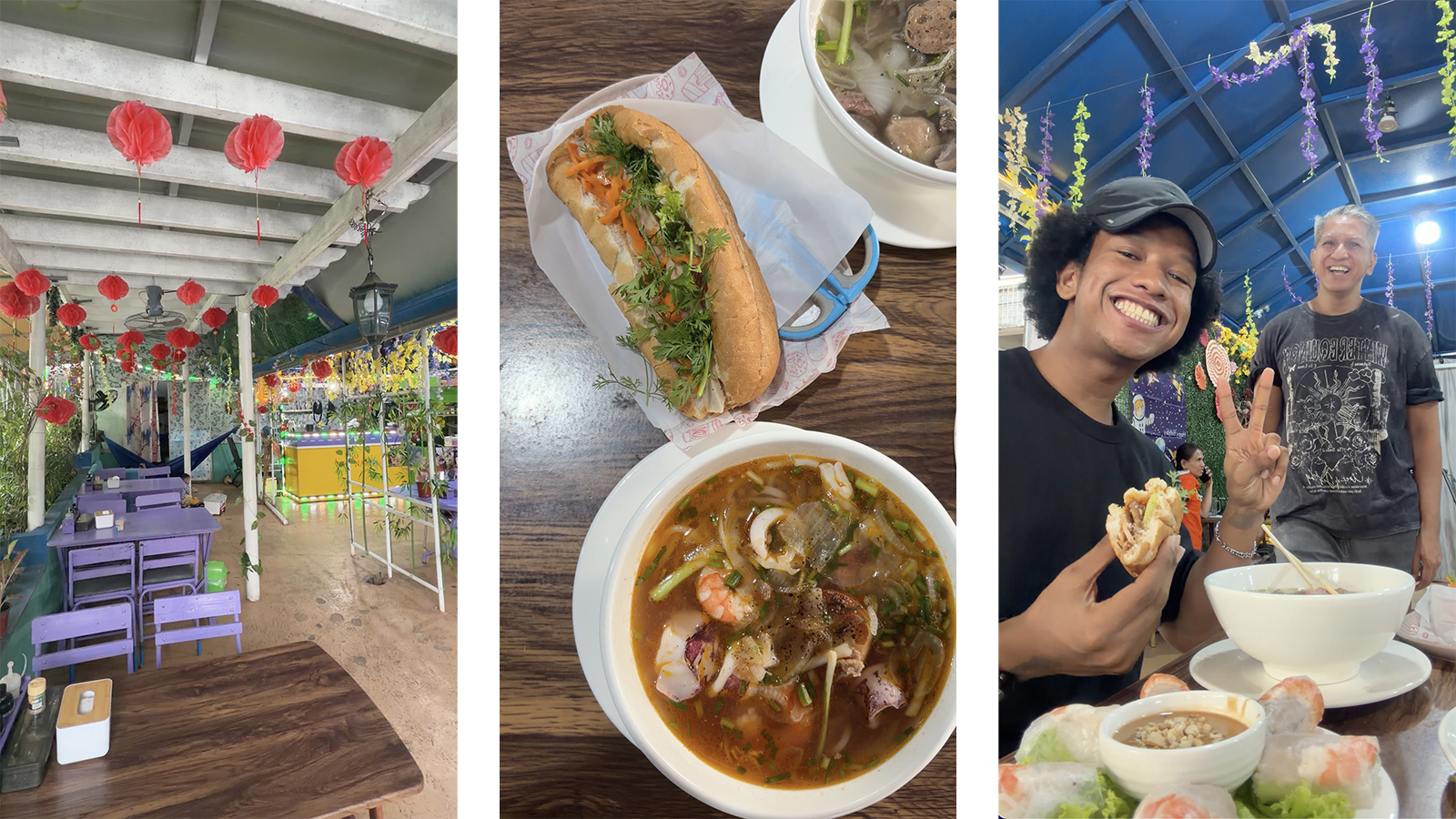
If you’ve been to Vietnam, you’d know that some of the best places to eat at are in those neighborhood eateries; their versions of karinderya, in a manner of speaking, where locals prep good lutong-bahay Vietnamese offerings sans the classy places of expensive restos. Here, the focus is always the food, never the blings.
So when we came across Facebook posts on Pho Viet Nam, located somewhere in San Pablo City in the Province of Laguna, we sort of expected to encounter what was experienced in Vietnam.
@outragemag Looking for #Vietnam food while in #SanPabloCity in #Laguna? We #LGBT checked #PhoVietNam ♬ original sound – Outrage Magazine
Una, this is not the most accessible place even for those with vehicles from Metro Manila. This is because you still have to travel for over an hour (if you’re lucky traffic-wise), and spend on your gas and the toll and so on.
Note that when you’re also along Apolinario Mabini Street, the resto isn’t apparent. It is located at the back of another resto (Joy), so it is very easy to miss. There is, BTW, a small entry at the side of the resto, which leads to an outdoor parking space.
Ikalawa, the actual resto is cheap-looking – e.g. plastic décor, running lights here and there, and so on. Very karinderya; cheap karinderya, for that matter.
Ikatlo, the servers were okay naman; they knew what was on the menu, and – after making quick recommendations – kept you undisturbed to enjoy what you ordered. The orders took some time to be prepped, however; I was even able to order bad-tasting fries from the other resto due to the waiting time.
Ika-apat, how was the food?
Both the ₱245 Beef Noodle Soup and the ₱245 Seafood Noodle Soup weren’t bad naman; but they weren’t good either. You get enough properly-cooked meats, the noodles are sufficient, and so on. Taste-wise, though, they were bland, and no amount of the prepared condiments helped in changing the flavor.
The ₱190 Rice Paper Roll sufficed even if, by and large, it was tasteless. The saving grace: the satay dip since it was rich and nutty and all that.
The ₱160 Meatloaf and Egg Sandwich (the banh mi kep thit va trung) had enough meat naman… and yet was also bland.
Considering the asking prices of this place, you sort of expect a lot, too. Add to that the popularity of the place – e.g. look at all those who dine there, kinukuyog. Alas, the realities when already there are harsher.
Heading to San Pablo to check this place led us to the nearby Dagatan Blvd. surrounding Sampaloc Lake, a must-check place in these parts. So we sort of do not regret heading to San Pablo.
But buod: No, Pho Viet Nam is not worth the dayo; not worth for you to intentionally seek this place out. The food wasn’t bad. But it’s not great, or even good either. It just suffices. And so, particularly for non-locals, the additional expenses for the gas, toll, et cetera make going there not worth it… sorry.
But off we go for more LGBTQIA+ rampa…
Pho Viet Nam is located at 130 Apolinario Mabini Street, San Pablo City, 4000 Laguna.
Destinations
Heading to Pila, Laguna? Check out La Cosina Antonio
We found our #LGBT selves in #Pila, #Laguna, where we ended up checking La Cosina Antonio.
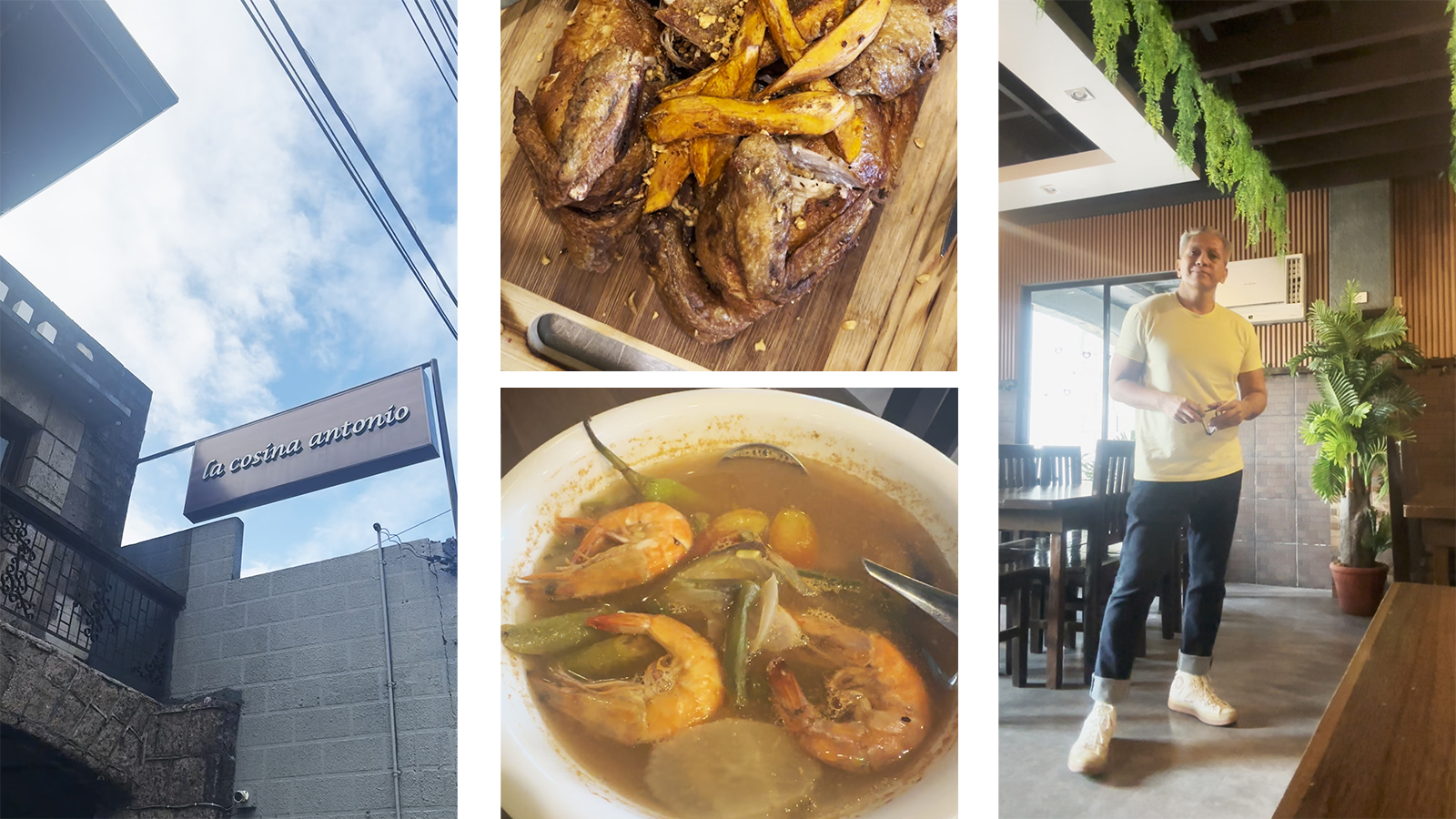
While traveling from Batangas City on the way to Paete, Laguna after an Intersex 101 training workshop, intersex activist Jeff Cagandahan worried where he’d feed us. And then, after a quick discussion with his wife, he suggested La Cosina Antonio, which is apparently a must-check resto in the Municipality of Pila in the province of Laguna.
So we went there, and… how was it for us?
@outragemag #LGBT wandering in #Pila, #Laguna? You may as well try #LaCosinaAntonio ♬ original sound – Outrage Magazine
Una, this is really only convenient to access by locals, or those with private vehicles. Pila, if you must know, is one of the oldest settlements in the Philippines. It is, nonetheless, still largely provincial. And so this place is dadayuhin; you need to intentionally go there as it’s not on the way to major destinations.
Ikalawa, the actual venue is BIG. This one’s an old house converted into a resto with different parts – e.g. for dining, for drinking complete with a performance space for a band, venue spaces, and so on. La Cosina Antonio is, thankfully, well-kept, so that it’s clean, has updated furniture, and so on.
Ikatlo, the staff was okay naman when we were there, able to discuss what’s on the menu, make recommendations… and then prepare the orders and deliver them fast. Very home-y approach, actually, treating guests as regulars.
Ika-apat, how was the food?
The ₱375 Dinakdakan was actually good, the pork belly crispy, the chopped onions and green chilies fresh, and the calamansi-mayo dressing not overpowering.
The ₱390 Sinigang na Hipon was… so-so, not bad though not good either. Pampainit-tiyan. Though, this has to be said, at least di tinipid in the number of shrimps served.
The ₱560 Garlic Pepper Whole Chicken was good; the meat stayed juicy even if the skin was crunchy.
The ₱770 Crispy Pata was also good; crunchy skin and, yes, malamang pata. There are times when you get Crispy Pata that’s basically just skin and bone, no meat at all. Here, we got meat… thankfully.
This place is popular, true (check their Facebook page, LOL). I can be dismissive and say that because, if in Pila, it’s not like you have lots of choices. But truth be told, it’s also because La Cosina Antonio actually has not-bad stuffs to offer… including the okay venue, okay service, and okay food. So check out if you can… or just join us as we look for more LGBTQIA+ lafangan venues…
La Cosina Antonio is located along JP Rizal St., Barangay Sta. Clara Norte, Pila, Laguna.
Destinations
Pasalubong shopping in Davao via Aldevinco
#Pasalubong hunting in #Davao? Consider the new, pinasosyal #Aldevinco that may not have the grimy character of the old location but still is worth #LGBT visiting.
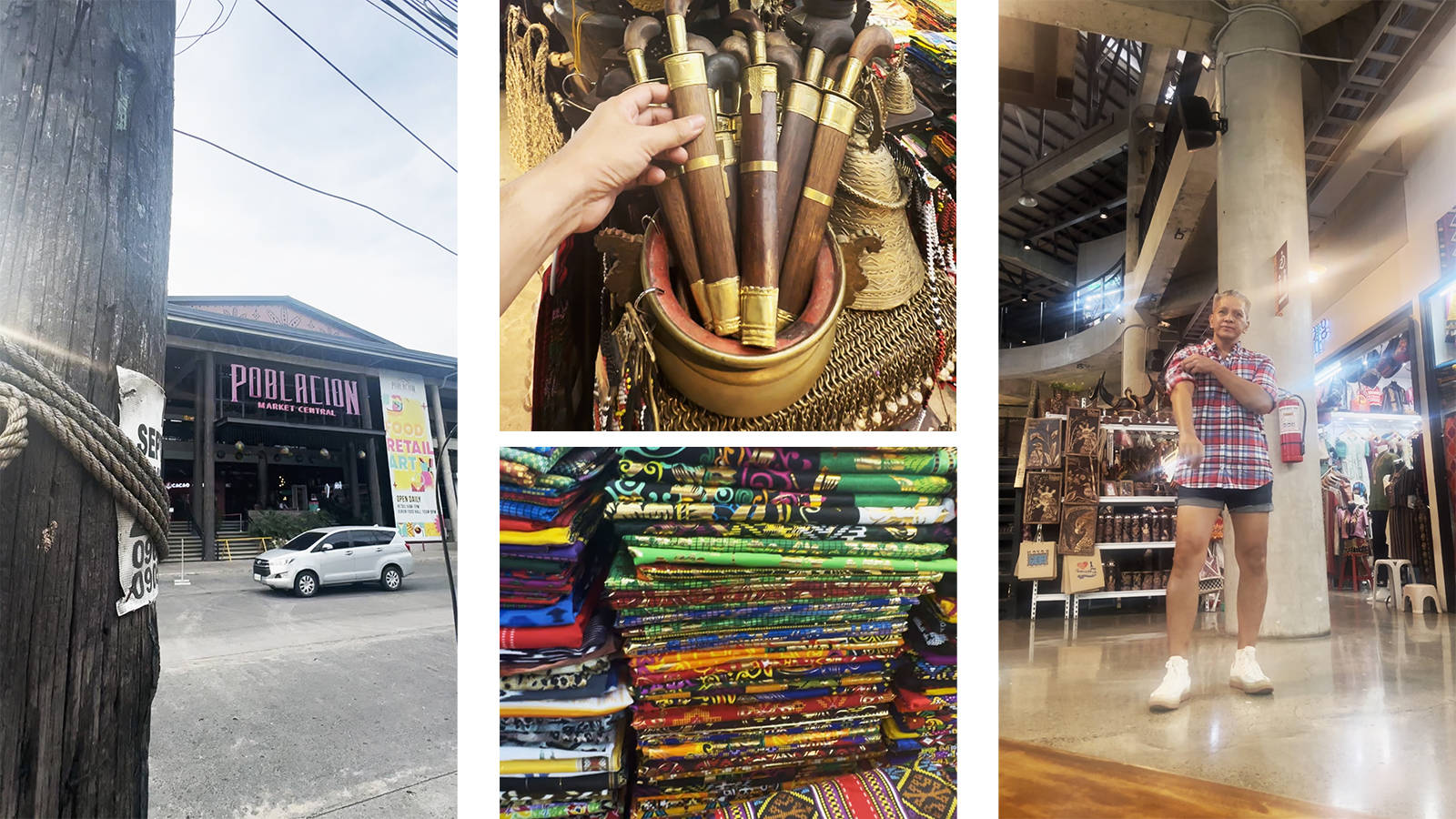
Davao-bound tourists know – or should know – of Aldevinco Shopping Center, the city’s one-stop-hub for everything Mindanao-related. You need malong or patadyong as pasalubong? You need a kulintang not just as a musical instrument, but as décor? You need batik, or T’boli ethnic apparel? You can find them all… and even more, in Aldevinco.
But here’s the thing, particularly for those who do not know yet: the old Aldevinco, which was located along C.M. Recto Street and Roxas Avenue in Davao City, is no more.
Now… enter the new Aldevinco, this time located at Poblacion Market Central on C. Bangoy Street (former Madrazo Fruit Stand)… which isn’t that far from the old place, actually.
We checked, and here are some things worth noting.
@outragemag #Pasalubong hunting in #Davao? Consider the new, pinasosyal #Aldevinco that may not have the grimy character of the old location but still is worth #LGBT ♬ original sound – Outrage Magazine
Una, this place looks and feels new. The old Aldevinco had a palengke feel, but this one has a mall feel. So you have a high-ceilinged venue with better-arranged stores that are air-conditioned, and so on. Pina-sosyal, in a manner of speaking.
Ikalawa, when there, the rules remain the same: haggle. The prices first quoted to you are not the actual prices the goods go for… unless you’re too moneyed and you don’t want to ask for discounts, though in that case, you shouldn’t even be in Aldevinco at all. The more you buy (i.e. bulk buying), the lower the prices, obviously. But always haggle… even if only for the fun of doing it.
Ikatlo, if you have time to spare, don’t auto-buy from the first store you check. Tour the area and compare prices. Often, the goods sold in one store will also be offered in a different store. So move around before making a final decision.
And ika-apat, Aldevinco may be popular as the go-to place for pasalubong, but in truth this isn’t the only one. Halimbawa, right across the old Aldevinco is a series of shops, some of them from the old Aldevinco. Because, at times, Aldevinco can feel like a tourist trap, and understandably, not everyone likes going into one. So consider your other options.
All the same, when in Davao, this is a place worth checking… if not for the shopping, then the food… or at least to check what happened to the tenants of the 60-year-old Aldevinco that was closed in December 2021, and is now being redeveloped into who-knows-what.
All part of rediscovery as we continue the LGBTQIA+ rampa wherever and everywhere…
Open from 9AM to 7PM (with the Kūkūñ Food Hall open from 10AM to 9 PM), Aldevinco Shopping Center is located at Poblacion Market Central, C. Bangoy Street, Davao City.

Men’s health expert issues warning to fans copying Mark Wahlberg’s early starts

Manulife broadens financial literacy, clean water programs in PH

Redefining aesthetics: From anti-aging to healthy aging

Visiting San Pablo City’s Pho Viet Nam

Four to six servings of wholegrain per day lowers risk factors for heart disease

Structured exercise linked to longer cancer survival and time free of disease

Heading to Pila, Laguna? Check out La Cosina Antonio

Pasalubong shopping in Davao via Aldevinco

The look and feel of your neighborhood may affect your sleep

Workout or nap? Either can help your sleepless brain, study finds
Redefining aesthetics: From anti-aging to healthy aging
Manulife broadens financial literacy, clean water programs in PH
Men’s health expert issues warning to fans copying Mark Wahlberg’s early starts