
Nutrition
Support immune health with 4 everyday habits
Start by talking with your health care provider about any concerns you may have then follow these lifestyle recommendations for natural immune system support.

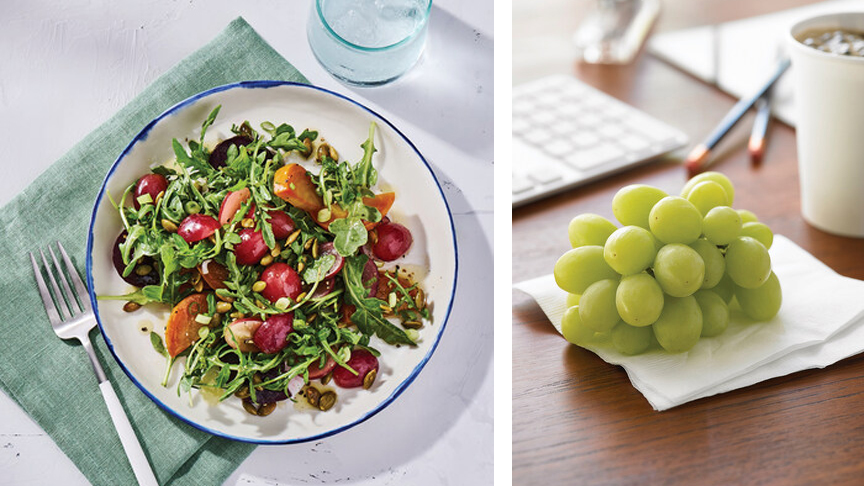
The coughing and sneezing you hear at home, in the office and at the gym means one thing: It’s cold and flu season. Although it’s impossible to guarantee you won’t get sick, adopting a few healthy habits can go a long way toward avoiding the sniffles and sneezes.
Start by talking with your health care provider about any concerns you may have then follow these lifestyle recommendations for natural immune system support.
Wash Your Hands: While it’s probably the first rule you learn about getting sick as a child, washing your hands remains a critical first line of defense. Use warm, soapy water and rub your hands together for at least 20 seconds. Don’t forget the backs of your hands, wrists and under your fingernails. Rinse off the soap then dry with a clean towel.
Commit to Healthier Eating: Foods like fruits, vegetables, nuts, seeds, legumes and whole grains are recommended by experts as essential foods for optimizing your immune system. Consider fresh grapes, a prime example of food that contains beneficial plant compounds linked to health benefits in humans.
Healthy cells are the foundation of good health, and the antioxidants and other polyphenols naturally found in grapes help protect the health and function of cells. The good news is that improving your diet doesn’t require a complete overhaul – small steps such as swapping in fresh California grapes for processed snacks or simply adding a handful of fresh grapes to your day will add these beneficial compounds to your daily routine.
Or, you can add grapes to recipes like this Lemony California Grape and Beet Salad, a vibrant and fresh melody of color and flavor. Roasted red and yellow beets meet sweet and juicy grapes, peppery arugula and pumpkin seeds all brought together with a zesty lemon vinaigrette.
Studies suggest some grape compounds may positively influence immune function, including resveratrol and certain flavonoids. Additional studies show adding heart-healthy grapes to your daily diet can help support brain, colon and skin health. Grapes are also a good source of vitamin K, which may help support lung health.
Avoid Others Who are Sick: Along with washing your hands frequently, steering clear of people who are ill may sound like a no-brainer, but sometimes it’s easier said than done. When loved ones, close friends or coworkers come down with a cold or flu, do your best to keep your distance and avoid touching items with which they came into contact. After bedtime routines with a sick child or afternoon meetings with an under-the-weather associate, thoroughly wash your hands and clean commonly used surfaces like doorknobs or conference room keyboards.
Prioritize Hydration: Even during cooler weather, staying hydrated remains important for immune health by keeping the body’s defenses functioning properly. Drink water throughout the day, and for an extra dose, increase hydration by eating foods with high water content like grapes, which contain about 82% water.
Find more health and nutrition information at GrapesFromCalifornia.com.
Lemony California Grape and Beet Salad
Servings: 6
1/4 cup, plus 1 tablespoon, extra-virgin olive oil, divided
3 tablespoons lemon juice
1 tablespoon honey
2 cups peeled and sliced (1/8-inch thick) raw red and yellow beets, cut into small half-moons or triangles
1/2 teaspoon sea salt
3 cups halved red Grapes from California
1/2 cup roasted salted pumpkin seeds
2 green onions, thinly sliced
4 cups (3 ounces) baby arugula
freshly ground pepper, to taste
Heat oven to 400 F and line baking sheet with parchment paper. In large bowl, whisk 1/4 cup olive oil, lemon juice and honey; set aside.
Place sliced beets on prepared baking sheet and drizzle with remaining oil. Add salt and toss well to coat. Spread in single layer and bake 25 minutes, or until tender; let cool.
Add grapes and pumpkin seeds to bowl with dressing and toss well to coat. Add cooled beets, green onions and arugula. Toss lightly; season with pepper, to taste.
Nutritional information per serving: 250 calories; 5 g protein; 25 g carbohydrates; 16 g fat (58% calories from fat); 2.5 g saturated fat (9% calories from saturated fat); 0 mg cholesterol; 320 mg sodium; 3 g fiber.






NewsMakers
Grape consumption linked to changes in gene expression and improved skin health
Clinical trials have shown that consumption of grapes can increase the resilience of skin to UV irradiation in about 30-50% of the subject population.
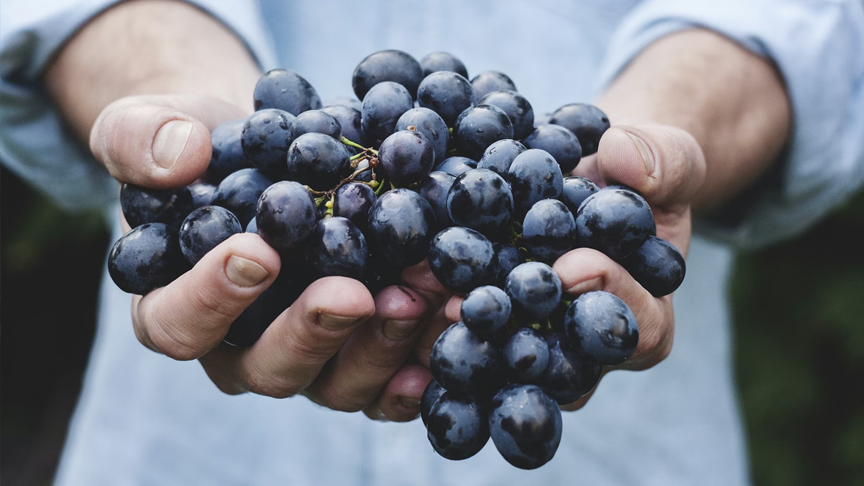
Clinical trials have shown that consumption of grapes can increase the resilience of skin to UV irradiation in about 30-50% of the subject population.
New studies published in the current issue of the journal ACS Nutrition Science suggest the effect of consuming grapes on human skin health is much broader – most likely affecting everyone.
The investigation was performed with human volunteers who consumed the equivalent of three servings of whole grapes each day for two weeks. Gene expression in skin was determined before and after grape consumption, with and without exposure of skin to low doses of UV irradiation.
The results demonstrated inter- and intraindividual differences of gene expression in the skin. In other words, from the outset, gene expression in the skin of each individual was different. The expression changed when the subjects consumed grapes or when exposed to UV irradiation, but still each individual was different from one another. Further unique changes were observed when UV irradiation was combined with grape consumption.
Consequently, while gene expression is different when comparing one person to another person, the gene expression of every person changed after consuming grapes.
When searching for a functional commonality resulting from these changes in gene expression after consuming grapes, the investigators were able to construe the myriads of data as being indicative of enhanced skin keratinization and cornification, which are known to create a barrier against environmental damage. This idea was reinforced by exposing skin to a low dose of UV irradiation and measuring the generation of malondialdehyde, a marker of oxidative stress, which was reduced when the subjects consumed grapes.
“We are now certain that grapes act as a superfood and mediate a nutrigenomic response in humans,” said John Pezzuto, Ph.D., Professor and Dean of the College of Pharmacy and Health Sciences at Western New England University.
“We observed this with the largest organ of the body, the skin. The changes in gene expression indicated improvements in skin health. But beyond skin, it is nearly certain that grape consumption affects gene expression in other somatic tissues of the body, such as liver, muscle, kidney and even brain. This helps us to understand how consumption of a whole food, in this case grapes, affects our overall health. It’s very exciting to be working in the post-genomics era where we can finally start to employ functional genomics and actually visualize complex matrices indicative of nutrigenomic responses.”
Nutrition
4 Tips to improve heart health (including a recipe to consider)
Taking steps to reduce your controllable risk factors – including poor diet, stress and inactivity – can set you on the right path.
A crucial component of overall well-being, heart health can be a barometer for living a long, healthy and happy life. Because heart disease is the leading cause of death in the US, according to the Centers for Disease Control and Prevention, taking steps to reduce your controllable risk factors – including poor diet, stress and inactivity – can set you on the right path.
From regular checkups and reducing stress to eating well – including heart-healthy snacks like grapes – and exercising regularly, these simple steps can help boost your heart health.
Know Your Numbers
Knowing key health metrics such as blood pressure, cholesterol levels, blood sugar levels and body mass index can help you and your health care provider identify potential risks early. Schedule annual checkups and discuss any concerns you may have about your heart health. Early detection and risk factor management can reduce the likelihood of developing heart disease.
Eat More Fruits and Vegetables
Incorporating a variety of colorful fruits and vegetables into your diet can ensure you get a broad range of vitamins, minerals, fiber and antioxidants, all of which contribute to a healthy cardiovascular system. For example, leafy greens like spinach and kale are high in potassium, which helps manage blood pressure. Fresh grapes contain 7% of the daily recommended intake of potassium, are a good source of vitamin K and are also a natural source of beneficial antioxidants and other polyphenols, including flavonoids, that can help relax blood vessels and promote healthy circulation. Some studies also suggest grapes have a beneficial impact on blood lipids and more.
In fact, one study found women who consumed 1 1/4 cups of grapes every day benefited from reduced blood triglyceride levels, LDL cholesterol levels, inflammatory proteins and other markers of heart disease.
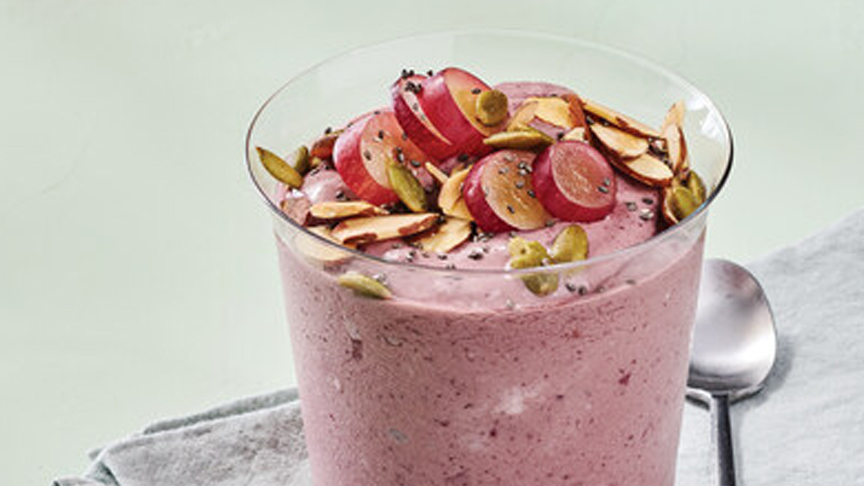
Bright, juicy and bursting with flavor, Grapes from California can be enjoyed by the handful or blended with rich bananas, tangy Greek yogurt and a hint of almond in The Great Grape-Acai Smoothie Bowl for a delicious blend of fruity flavors at breakfast, lunch or snack time – it not only tastes great, but supports a healthy heart.
Get Moving
Regular physical activity is one of the most effective ways to improve heart health. Exercise strengthens the heart muscle, improves blood circulation and helps maintain a healthy weight. Aim for at least 150 minutes of moderate-intensity aerobic exercise per week, as recommended by the American Heart Association, such as walking, jogging or swimming with strength training exercises like lifting weights or using resistance bands mixed in to help reduce the risk of heart disease and improve overall cardiovascular health.
Manage Stress
Consider your stress level: chronic stress can negatively impact heart health, increasing blood pressure and other risk factors for heart disease. Techniques such as deep breathing, meditation, yoga and regular physical activity can help manage stress levels and maintain a healthy heart. Additionally, taking time to engage in hobbies, spending time with loved ones and ensuring adequate sleep are stress-reducing activities that improve overall well-being and heart health.
To learn more about the heart-health benefits of grapes, and find additional heart-friendly recipes, visit GrapesFromCalifornia.com.
The Great Grape-Acai Smoothie Bowl
Servings: 1
1/2 cup red Grapes from California, fresh or frozen
1/2 banana
1 frozen acai fruit pack (3 1/2 ounces)
1/2 cup plain, nonfat Greek yogurt
1/4 teaspoon almond extract
Topping:
1/4 cup sliced red Grapes from California
1 tablespoon sliced, toasted almonds
1 tablespoon pepitas
1 teaspoon chia seeds
In small blender, combine grapes, banana, acai, yogurt and almond extract; process until smooth.
Pour into bowl and top with sliced grapes, sliced almonds, pepitas and chia seeds.
Nutritional information per serving: 420 calories; 19 g protein; 63 g carbohydrates; 12 g fat (26% calories from fat); 2.5 g saturated fat (5% calories from saturated fat); 5 mg cholesterol; 45 mg sodium; 8 g fiber.
Nutrition
Microwave frying can help lower oil content for healthier French fries
If you just use microwave frying, you get soggy food. To obtain a crispy texture and taste, you need conventional heating. Therefore, we propose combining the two approaches in the same unit. Conventional heating maintains the crispiness, while microwave heating lowers the oil intake.

Fried foods are popular with consumers, but their high fat content can contribute to health challenges like obesity and hypertension. If the food industry can offer lower-fat options of similar quality, people can more easily make health-conscious food choices.
Researchers at the University of Illinois Urbana-Champaign have explored microwave frying of French fries, providing insights that can help food manufacturers modify their production methods. They propose combining conventional frying with microwave frying to provide the desired crispiness and texture while reducing the cooking time and oil absorption.
“Consumers want healthy foods, but at the time of purchase, their cravings often take over. High oil content adds flavor, but it also contains a lot of energy and calories. My research team studies frying with the aim of obtaining lower fat content without significant differences in taste and texture,” said principal investigator Pawan Singh Takhar, professor of food engineering in the Department of Food Science and Human Nutrition, part of the College of Agricultural, Consumer and Environmental Sciences at U of I.
In two new publications, Takhar and Yash Shah, a doctoral student in FSHN, discussed their findings from studies exploring what happens during microwave frying of French fries.
For the first study, they collaborated with colleagues at Washington State University, who developed a special microwave fryer that could operate both at 2.45 gigahertz (similar to a regular microwave oven) and 5.8 gigahertz.
The sample potatoes were rinsed and peeled, then cut into strips, blanched, and salted. Batches of potato strips were then fried in soybean oil preheated to 180 degrees Celsius. The researchers measured temperature and pressure during and after frying, as well as volume, texture, moisture, and oil content of the fried samples.
The challenge is to keep the oil from entering the food during and after the cooking process, Takhar said.
In the beginning of the frying process, the potatoes’ pores are filled with water, so there is nowhere for the oil to go. But as frying progresses, the water starts evaporating, so pore spaces are opened and oil is sucked into the food through negative pressure.
“Think about a straw in a drink. If you push air into the straw, it creates positive pressure and any liquid will be pushed out. But if you suck on the straw, the liquid moves upward. Now imagine food materials have lots of tiny straws. When there is positive pressure, the oil stays out. But if there is negative pressure, the oil starts moving in,” Takhar explained.
Up to 90% of frying happens under negative pressure, so there is continuous suction potential. The goal is to keep the pressure positive longer and shorten the duration of negative pressure to prevent oil from entering the food.
“When we heat something in a conventional oven, the heat moves from outside to inside, but a microwave oven heats from the inside out, because the microwaves penetrate everywhere in the material. The microwaves oscillate water molecules, causing more vapor formation and thus shifting the pressure profile towards the positive side. The higher pressure in microwaves helps reduce oil penetration,” Takhar said.
In parallel with the lab experiments, the second paper complements the results through mathematical modeling, which allows for much more detailed exploration of a variety of factors in the frying process.
The researchers explored the effects of temperature, pressure, volume, texture, moisture, and oil at 2.45 GHz, 5.8 GHz, and conventional frying. Overall, they found that microwave frying resulted in faster moisture loss, shorter cooking time, and lower oil intake.
“However, if you just use microwave frying, you get soggy food. To obtain a crispy texture and taste, you need conventional heating. Therefore, we propose combining the two approaches in the same unit. Conventional heating maintains the crispiness, while microwave heating lowers the oil intake,” Takhar said.
Continuous fryers used for industrial-scale production of fried foods can be modified by incorporating microwave generators, which are inexpensive and readily available. Thus, this approach is likely to be economically feasible for industrial use, the researchers conclude.
The first paper, “The Effect of Conventional and Microwave Frying on the Quality Characteristics of French Fries,” is published in the Journal of Food Science. Authors are Yash Shah, Xu Zhou, Juming Tang, and Pawan Singh Takhar.
The second paper “Predicting the quality changes during microwave frying of food biopolymers by solving the hybrid mixture theory-based unsaturated transport, and electromagnetics equations,” was published in Current Research in Food Science.

Fullerton Health celebrates two years of advancing preventive healthcare in PH

New IKEA PS Collection brings playful functionality into your home

Manulife China Bank Life expands access to cancer care solutions

Tips for smooth travel with pets

A guide to asking the right flooring questions

Support immune health with 4 everyday habits

Poor-quality sleep involves different parts of the brain, depending on age

Century Tuna Superbods 2026 announces ‘Superbod Era’ finalists

Superbod Movement goes beyond the stage

‘Drunk riding’ behind almost half of fatal electric scooter crashes

Enjoying nature via trail hiking in Wales

Finding beauty, and not just of faith, at the Bangor Cathedral

Why taking a sick day depends on more than being sick

Checking Llanfair PG, the town that’s long in name and not much else

For every parent who wants to be present: AXA reinforces importance of early health preparedness
‘Drunk riding’ behind almost half of fatal electric scooter crashes

Treacherous beauty: Hiking at South Stack Lighthouse in Wales

Move to quit: Exercise boosts smoking quit rates
Superbod Movement goes beyond the stage

Omega Healthcare recognized

-
 Travel2 weeks ago
Enjoying nature via trail hiking in Wales
-
 Destinations3 weeks ago
Finding beauty, and not just of faith, at the Bangor Cathedral
-
 NewsMakers2 weeks ago
Why taking a sick day depends on more than being sick
-
 Destinations3 weeks ago
Checking Llanfair PG, the town that’s long in name and not much else
-
 Product Showcase2 weeks ago
For every parent who wants to be present: AXA reinforces importance of early health preparedness
-
 NewsMakers2 weeks ago
‘Drunk riding’ behind almost half of fatal electric scooter crashes
-
 Travel2 weeks ago
Treacherous beauty: Hiking at South Stack Lighthouse in Wales
-
 NewsMakers2 weeks ago
Move to quit: Exercise boosts smoking quit rates