
Travel
3 Ways to save Nemo and Dory
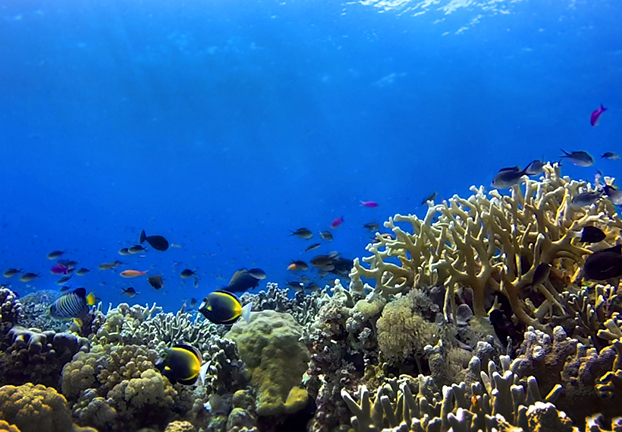
With the release of Finding Dory this 17 June, a global spike in marine aquarium fish demand is expected. The Philippines and Indonesia are the world’s top exporters of wild-caught marine fish, supplying 85% of the trade – so Pinoy fishers will soon be scouring reefs for Nemo, Dory and all their finned friends. What can we do to protect them?

By Gregg Yan
Best Alternatives Campaign
Sure, Finding Nemo was an awesome movie, inspiring a generation of people to love clownfish, now colloquially called Nemos. Its intended message was to keep fish in the sea, where they belong.
But did you know that after the movie, millions of clownfish were plucked from coral reefs and plunged into aquaria? Everyone wanted to keep Nemo! Global clownfish sales jumped 40% and many reefs were left without the happily-dancing orange fish. Sadly, many died at the hands of well-meaning but inexperienced aquarists – because those pretty marine fish are also pretty hard to keep!
The Best Alternatives Campaign estimates that in the Philippines, about nine out of ten wild-caught marine aquarium fish die within a year of capture. Only the hardiest fish or those lucky enough to be bought by experienced aquarists survive.
With the release of Finding Dory this 17 June, a global spike in marine aquarium fish demand is expected. The Philippines and Indonesia are the world’s top exporters of wild-caught marine fish, supplying 85% of the trade – so Pinoy fishers will soon be scouring reefs for Nemo, Dory and all their finned friends. What can we do to protect them?
Choose freshwater fish – Goldfish, guppies, tetras and many freshwater fish are bred by the billions and are well-adapted to aquarium life. Farm-raised fish are cheaper, hardier and environmentally-sound options to marine fish. Since raising aquarium fish can be 250 times more profitable than raising Tilapia, it can be a sunrise industry for the Philippines.
Freshwater fish are our best alternatives to marine fish because only 10% of them are still caught from the wild, like African Rift Lake cichlids or angelfish from the Amazon River. Innovations in breeding might soon end the need to catch them in rivers and lakes while still supplying aquarists with the living jewels they love.
Choose tough marine fish – Marine fish are hard to keep because 95% of them are taken from the most stable environment on Earth – the ocean. Most can’t adapt to life in the average home aquarium, where water parameters fluctuate daily. Many are still caught with cyanide, which stuns hard-to-catch fish but kills up to 75% of them. Popular fish like angelfish, butterflyfish and Moorish idols are specialized feeders which feed on coral, sponges and other tasty treats the average hobbyist probably won’t be able to provide. This is why so few fish survive beyond a year.
Still, a few marine fish species can be kept in aquaria. Hardy and brightly-colored damselfish, gobies and blennies are good choices. Clownfish are the most popular, accounting for 40% of the trade. There are actually 30 clownfish species and Nemo is a Common Clownfish (Amphiprion ocellaris). Clownfish are relatively hardy and can be commercially-bred – but 75% of them still come from the wild.
Dory is another story. First, she’s not related to the Cream Dory we to eat. Second, she’s very, very hard to keep. Dory’s a Regal Tang (Paracanthus hepatus) and feeds almost exclusively on algae and seaweed. She’s prone to parasites and gets sick easily. Most importantly, the technology to breed her kind is still years off – so every single Dory you’ll see will have been plucked from the sea! If you really want to keep marine fish, then consult veteran hobbyists and forums like the Philippine Marine and Reef Aquarium Society (PMRAS), which encourages responsible fishkeeping. Get fish from reputable dealers like RVS Fishworld, which only sells cyanide-free fish caught by hand nets.
See them in the wild where they belong – Fortunately, the Philippines is part of the Coral Triangle and is among the richest countries in terms of marine life (this is why we export so much marine fish anyway). Diving or snorkelling here is way cheaper than in any other country. Wherever you are, there’ll be a reef nearby: Manila has the rich reefs of Anilao in Batangas, Cebu has Moalboal, Davao has Samal Island – even mountainous Baguio has La Union!

So what might happen if we don’t heed these three steps? Let’s look at another marine fish, the Banggai cardinalfish (Pterapogon kauderni), found only in Indonesia. According to conservation group Fondation Franz Weber and scientist Dr. Alejandro Vagelli, from a global population of about 20 million in 1995, only about 1.4 million of them are left – and up to 500,000 are still caught annually to supply the aquarium trade. This means that without immediate conservation measures, they’ll be functionally extinct in just a few years. The European Union has now submitted a proposal to control the trade in the species. A hobby should cultivate love – and fish enthusiasts would be the last to want to lose beauties like the Banggai cardinalfish.
To spread the word on the web, Best Alternatives is launching the #DEFENDDORY campaign by calling on netizens to change their profile photos from now to July. “Instead of wanting to possess fish, let Finding Dory inspire us all to see them in their home – the big blue, where Nemo, Dory and all their friends belong,” concludes Best Alternatives Campaign Leader Gregg Yan.
Best Alternatives allies for this campaign include Bates CHI & Partners Manila, Centre for Sustainability, ComCo Southeast Asia, Conservation International Philippines, Fondation Franz Weber, Greenpeace Philippines, Muni PH, RVS Fishworld, Marine Wildlife Watch of the Philippines, Philippine Marine and Reef Aquarium Society, plus Save Philippine Seas.






Destinations
Heading to Pila, Laguna? Check out La Cosina Antonio
We found our #LGBT selves in #Pila, #Laguna, where we ended up checking La Cosina Antonio.

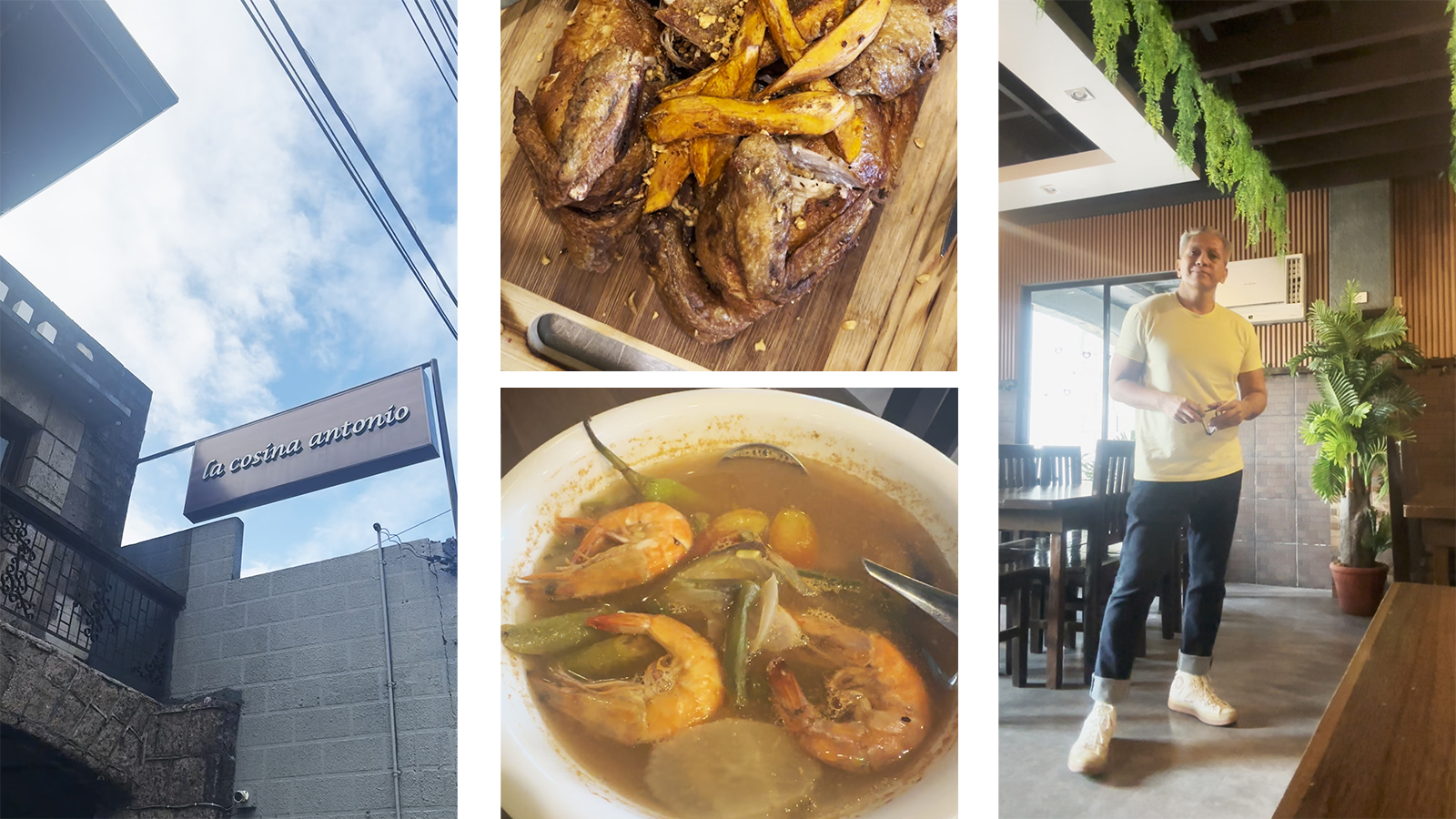
While traveling from Batangas City on the way to Paete, Laguna after an Intersex 101 training workshop, intersex activist Jeff Cagandahan worried where he’d feed us. And then, after a quick discussion with his wife, he suggested La Cosina Antonio, which is apparently a must-check resto in the Municipality of Pila in the province of Laguna.
So we went there, and… how was it for us?
@outragemag #LGBT wandering in #Pila, #Laguna? You may as well try #LaCosinaAntonio ♬ original sound – Outrage Magazine
Una, this is really only convenient to access by locals, or those with private vehicles. Pila, if you must know, is one of the oldest settlements in the Philippines. It is, nonetheless, still largely provincial. And so this place is dadayuhin; you need to intentionally go there as it’s not on the way to major destinations.
Ikalawa, the actual venue is BIG. This one’s an old house converted into a resto with different parts – e.g. for dining, for drinking complete with a performance space for a band, venue spaces, and so on. La Cosina Antonio is, thankfully, well-kept, so that it’s clean, has updated furniture, and so on.
Ikatlo, the staff was okay naman when we were there, able to discuss what’s on the menu, make recommendations… and then prepare the orders and deliver them fast. Very home-y approach, actually, treating guests as regulars.
Ika-apat, how was the food?
The ₱375 Dinakdakan was actually good, the pork belly crispy, the chopped onions and green chilies fresh, and the calamansi-mayo dressing not overpowering.
The ₱390 Sinigang na Hipon was… so-so, not bad though not good either. Pampainit-tiyan. Though, this has to be said, at least di tinipid in the number of shrimps served.
The ₱560 Garlic Pepper Whole Chicken was good; the meat stayed juicy even if the skin was crunchy.
The ₱770 Crispy Pata was also good; crunchy skin and, yes, malamang pata. There are times when you get Crispy Pata that’s basically just skin and bone, no meat at all. Here, we got meat… thankfully.
This place is popular, true (check their Facebook page, LOL). I can be dismissive and say that because, if in Pila, it’s not like you have lots of choices. But truth be told, it’s also because La Cosina Antonio actually has not-bad stuffs to offer… including the okay venue, okay service, and okay food. So check out if you can… or just join us as we look for more LGBTQIA+ lafangan venues…
La Cosina Antonio is located along JP Rizal St., Barangay Sta. Clara Norte, Pila, Laguna.
Destinations
Pasalubong shopping in Davao via Aldevinco
#Pasalubong hunting in #Davao? Consider the new, pinasosyal #Aldevinco that may not have the grimy character of the old location but still is worth #LGBT visiting.
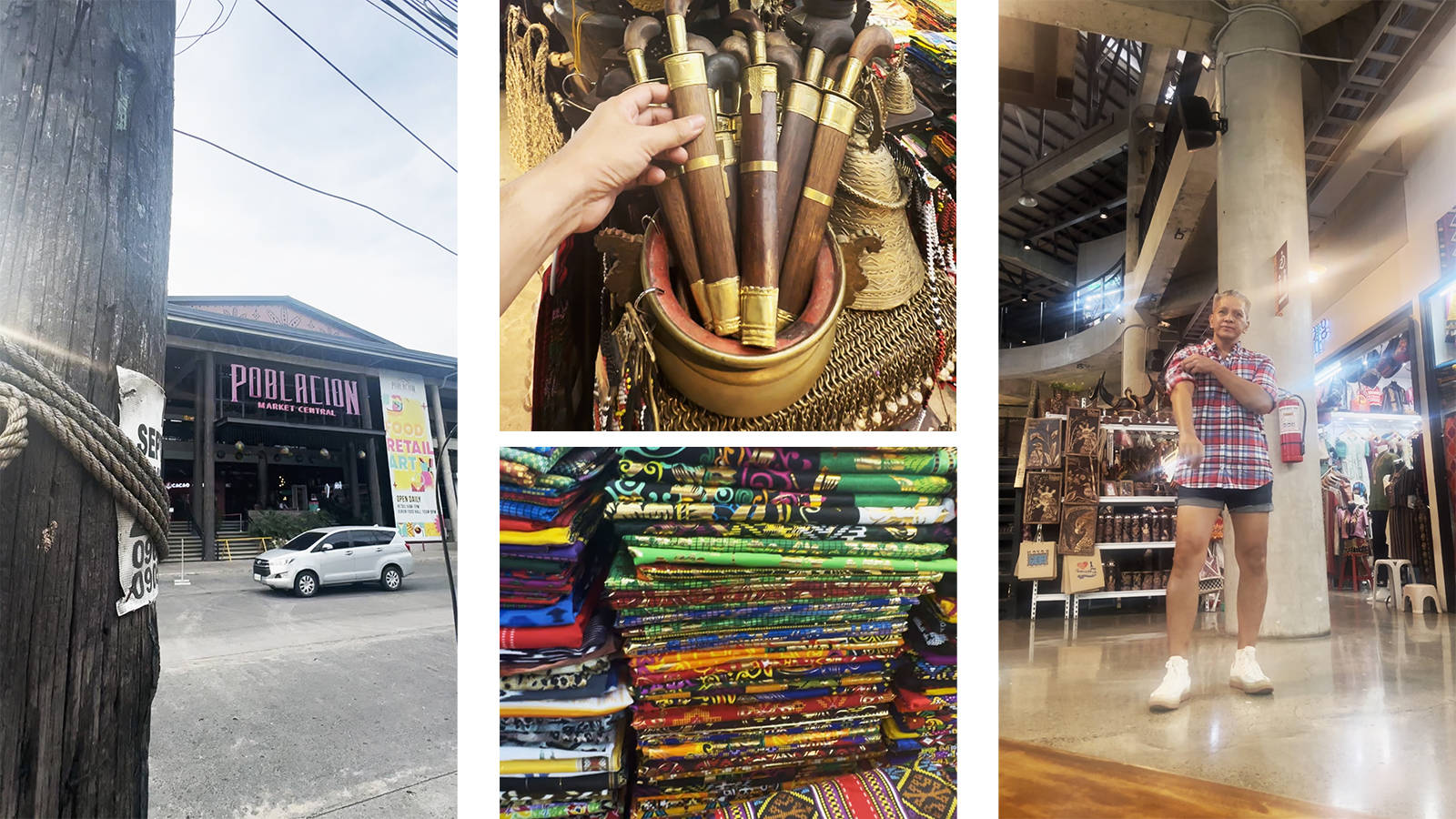
Davao-bound tourists know – or should know – of Aldevinco Shopping Center, the city’s one-stop-hub for everything Mindanao-related. You need malong or patadyong as pasalubong? You need a kulintang not just as a musical instrument, but as décor? You need batik, or T’boli ethnic apparel? You can find them all… and even more, in Aldevinco.
But here’s the thing, particularly for those who do not know yet: the old Aldevinco, which was located along C.M. Recto Street and Roxas Avenue in Davao City, is no more.
Now… enter the new Aldevinco, this time located at Poblacion Market Central on C. Bangoy Street (former Madrazo Fruit Stand)… which isn’t that far from the old place, actually.
We checked, and here are some things worth noting.
@outragemag #Pasalubong hunting in #Davao? Consider the new, pinasosyal #Aldevinco that may not have the grimy character of the old location but still is worth #LGBT ♬ original sound – Outrage Magazine
Una, this place looks and feels new. The old Aldevinco had a palengke feel, but this one has a mall feel. So you have a high-ceilinged venue with better-arranged stores that are air-conditioned, and so on. Pina-sosyal, in a manner of speaking.
Ikalawa, when there, the rules remain the same: haggle. The prices first quoted to you are not the actual prices the goods go for… unless you’re too moneyed and you don’t want to ask for discounts, though in that case, you shouldn’t even be in Aldevinco at all. The more you buy (i.e. bulk buying), the lower the prices, obviously. But always haggle… even if only for the fun of doing it.
Ikatlo, if you have time to spare, don’t auto-buy from the first store you check. Tour the area and compare prices. Often, the goods sold in one store will also be offered in a different store. So move around before making a final decision.
And ika-apat, Aldevinco may be popular as the go-to place for pasalubong, but in truth this isn’t the only one. Halimbawa, right across the old Aldevinco is a series of shops, some of them from the old Aldevinco. Because, at times, Aldevinco can feel like a tourist trap, and understandably, not everyone likes going into one. So consider your other options.
All the same, when in Davao, this is a place worth checking… if not for the shopping, then the food… or at least to check what happened to the tenants of the 60-year-old Aldevinco that was closed in December 2021, and is now being redeveloped into who-knows-what.
All part of rediscovery as we continue the LGBTQIA+ rampa wherever and everywhere…
Open from 9AM to 7PM (with the Kūkūñ Food Hall open from 10AM to 9 PM), Aldevinco Shopping Center is located at Poblacion Market Central, C. Bangoy Street, Davao City.
Destinations
Enjoying the grilling at Mandaue City’s Matias BBQ
#Mandaue City’s #MatiasBBQ is worth checking as your #LGBT alternative to dining in the open in #Cebu.
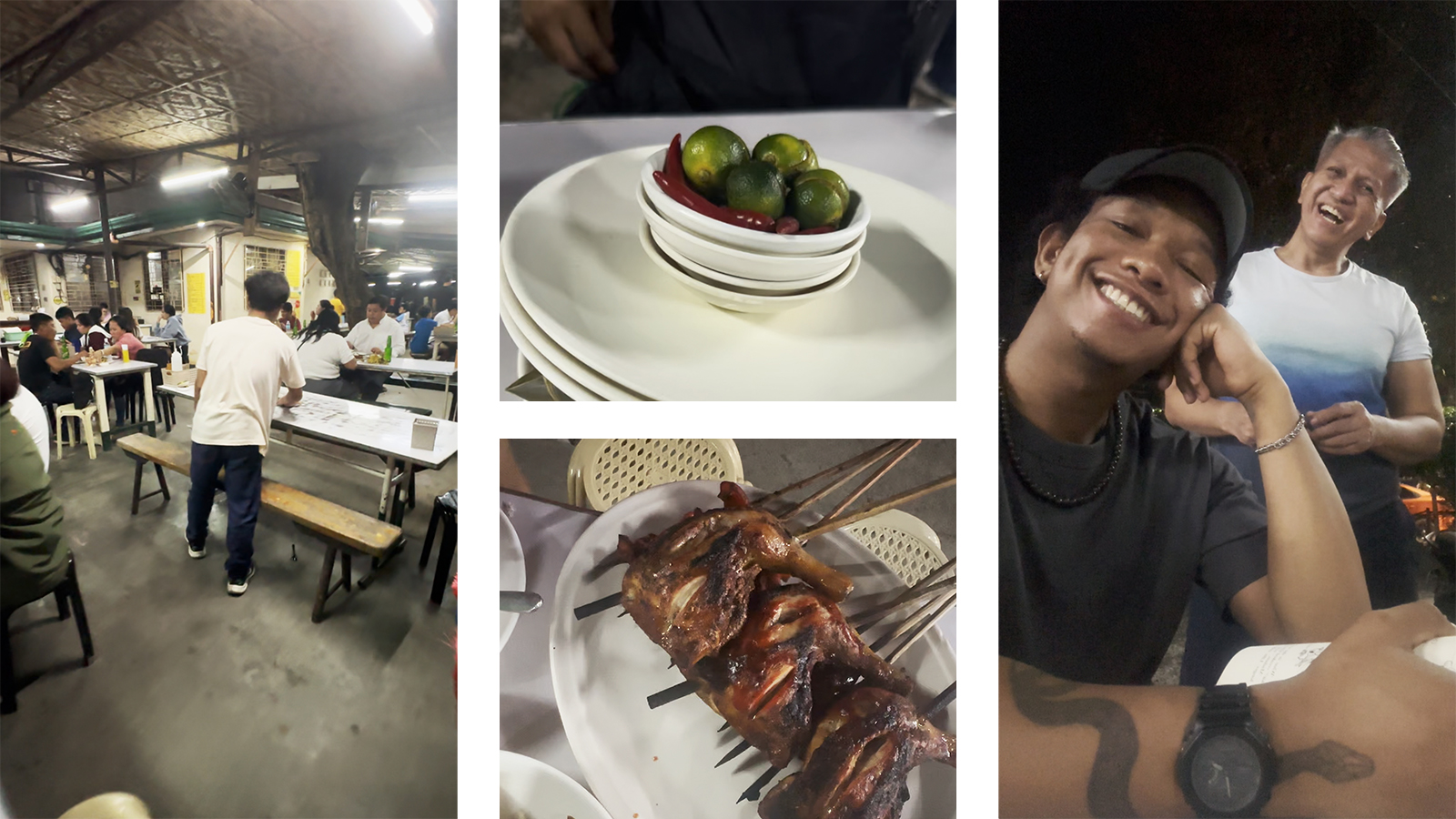
Seriously considering Larsian to try grilled goods in Cebu City, a friend recommended for us to try, instead, Matias BBQ. “It’s cleaner,” she said, adding: “And yummier, of course.”
So we checked… and how was the visit to Matias BBQ for us?
@outragemag #Mandaue City’s #MatiasBBQ is worth checking as your #LGBT alternative to dining in the open in #Cebu ♬ original sound – Outrage Magazine
Una, the place is NOT in Cebu City. It’s in nearby Mandaue City. We didn’t check where the BBQ place is, exactly; we just took a Grab and pinned the address. We just noted that the travel took a while, and yes, the fare wasn’t cheap (LOL).
Ikalawa, this is an open-air venue, similar to Larsian, though the difference is, here, there’s just one vendor (Matias BBQ). Maarte people beware: this isn’t for you.
Ikatlo, the servers were friendly… a pleasant surprise considering the number of people they had to serve. They knew what to recommend, and quickly dealt with some concerns (e.g. replace what was deemed stale rice).
Ika-apat, how was the food naman?
- The chicken – including the ₱85 pecho and ₱95 paa – were well-seasoned and well-cooked, remaining moist and not dry. Lasa-wise, they were smoky and sweetish.
- The ₱16 chorizos were actually good, properly cooked so that we were still able to taste the meat and accompanying sahog of garlic and the likes. This made us realize that when deciding to cook longganisa from Cebu, consider grilling instead of frying in oil. It just tastes better that way.
- The ₱165 balbacua (beef rind and oxtail soup) served to us was already cold, so was already greasy. The collagen-rich cuts were soft, and there were okay-tasting veggies, but the broth was already slimy from being oily.
- The ₱12 pusô was inconsistent; some were already stale (perhaps old stocks), and the others fresh. It’s hard to ascertain which is which since you’d be served with a lot. Order freshly-cooked rice if apprehensive… though this takes away from the overall experience of eating in a place like this.
Here’s the thing: our total bill was cheaper than the fare we paid to Grab to go there.
And so, for us, if this is accessible to you, consider this an alternative to, say, the likes of Larsian. That the food is good has to be emphasized, done in an outdoor setting that’d remind you of eating in the probinsiya.
But off we go again, in search of more LGBTQIA+ lagangan venues…
Open from 11.30AM to 8.00PM, Matias BBQ is located along A.S. Fortuna St., Banilad, Mandaue City.

Heading to Pila, Laguna? Check out La Cosina Antonio

Pasalubong shopping in Davao via Aldevinco

The look and feel of your neighborhood may affect your sleep

Workout or nap? Either can help your sleepless brain, study finds

Study links coffee consumption to metabolic health and sex hormones

Manulife Investments Philippines leads UITF rankings across equity and fixed income funds

Scheduling dental care during prenatal visits boosts oral health care during pregnancy

Enjoying the grilling at Mandaue City’s Matias BBQ

Dogs can distinguish between human fear and sadness

Pet dog microbiota may protect young children from respiratory tract infections and reduce the need for antibiotic courses
Scheduling dental care during prenatal visits boosts oral health care during pregnancy
Pasalubong shopping in Davao via Aldevinco
Study links coffee consumption to metabolic health and sex hormones
Manulife Investments Philippines leads UITF rankings across equity and fixed income funds
The look and feel of your neighborhood may affect your sleep
Workout or nap? Either can help your sleepless brain, study finds
Heading to Pila, Laguna? Check out La Cosina Antonio

-
 NewsMakers4 weeks ago
Scheduling dental care during prenatal visits boosts oral health care during pregnancy
-
 Destinations2 weeks ago
Pasalubong shopping in Davao via Aldevinco
-
 NewsMakers4 weeks ago
Study links coffee consumption to metabolic health and sex hormones
-
 Product Showcase4 weeks ago
Manulife Investments Philippines leads UITF rankings across equity and fixed income funds
-
 NewsMakers3 weeks ago
The look and feel of your neighborhood may affect your sleep
-
 NewsMakers3 weeks ago
Workout or nap? Either can help your sleepless brain, study finds
-
 Destinations1 week ago
Heading to Pila, Laguna? Check out La Cosina Antonio