
Destinations
Trapped by a flash flood in Mindoro
I urge you to help re-equip Mindoro’s Tamaraw rangers with GPS units, spotting scopes, binoculars, laptops and field uniforms by contacting the Tamaraw Conservation Programme at +63977 809 1498.


By Gregg Yan
We were trapped.
A sudden downpour engorged Occidental Mindoro’s mountain rivers an hour ago. The small stream we forded three days ago was now a raging torrent of churning, life-taking brown water.
Fording was suicide. The only crossing was through a bamboo ‘monkey bridge’ made of two slippery poles – a rotting base pole and a flimsy handrail. Which of course, was broken. Like in the movies.
Beside me sat an old Taw’buid woman, shivering and sheltered by a flimsy banana leaf. As an anthropologist, I knew that a Siganon or lowlander like me cannot touch a female Taw’buid tribeswoman even for warmth. I gave her an umbrella and dropped my pack.
When the going gets tough, the tough get going.
Ploughing forward to repair the bridge, I tied myself to a branch with thick vines – a trick I learned from jungle survival school. White-knuckling the broken bamboo rail, I took a step. Another. Knew I should’ve dieted more. Suddenly I felt the rotting bamboo pole give way. Craaaaack!
THE WILD, WILD MOUNTAINS OF MINDORO
The Iglit-Baco Natural Park in Mindoro spans 75,445 hectares and is dominated by Mt. Baco (2488m) and Mt. Iglit (2364m). Eight major river systems wend through its grassy peaks. When I first visited at the height of the monsoon season of 2012, we crossed a total of 42 rivers and streams. My ankles were leech magnets.
The park is famed for hosting the best-protected population of Tamaraw (Bubalus mindorensis), Earth’s most endangered buffalo species. Droves of mountain climbers and birdwatchers visit – intent on seeing flying jewels like the Mindoro Hornbill (Penelopides mindorensis) and Mindoro Bleeding Heart (Gallicolumba platenae).
The park is also home to the reclusive Taw’buid, largest of the eight tribes collectively called Mangyan – the others being the Alangan, Bangon, Buhid, Hanunuo, Iraya, Ratagnon and Tadyawan. Last time I visited was when the World Wide Fund for Nature (WWF), Tamaraw Conservation Programme (TCP) and National Geographic gave the tribe a shipment of solar lamps. The Taw’buid holds a special place in my heart.
This year I was invited by the United Nations Development Programme (UNDP) to join the second Bio-Camp, an annual move to enhance public support for Tamaraw conservation. UNDP’s Biodiversity Finance Initiative (BIOFIN) works to mobilize resources to finance nature and sustainable development, deliver more efficient outcomes, improve spending efficiency and choose current investments which can save money in the future. BIOFIN helps close the funding gap to implement critically-important biodiversity conservation projects.
Led by TCP Coordinator June Pineda, participants Bibiana Aguha, Jes Aznar, Mitch De Juan, Kim Lim, Nella Lomotan, Bernard Magcarang, Gab Mejia, Maricor Montalbo, Celine Murillo, Angie Ogena, Kamille Rosales, Mitch Tuyan, Derald Umali and Gab Visenio all summited Mt. Magawang, saw Tamaraw in the wild and had lively discussions on how best to help rangers – the real heroes of the Iglit-Baco Natural Park.
RANGERS ON PATROL
“If the rangers disappear, the Tamaraw disappear. The Taw’buid believe that if the Tamaraw disappears, their people will too. We can thus say our Tamaraw Rangers are key to sustaining the natural habitat of the Tamaraw within the Iglit-Baco Natural Park,” says TCP Coordinator June Pineda.
We were accompanied by three kinds of rangers: Park rangers safeguard the park against poachers, tamaraw rangers lead expeditions and protect Tamaraw wherever they may be, while wardens are rangers-in-training.
“Tamaraw patrols are sent out once or twice weekly and last about three days each,” explains TCP Field Operations Officer Ed Bata. “Last August we found a Tamaraw skull and the lower left jawbone of a Philippine Deer – probably shot for meat by hunters. Poachers come at night, flashlights rigged under the barrels of illegally-acquired long-arms like M14s.”
As I found in Borneo for another wildlife adventure years back, many wild animals stop and stare at bright lights at night, their eyes glowing a freaky red.
“Our equipment is old. Our last computer broke down recently. Though we badly need new gear, our rangers will keep going,” promises Pineda. “It is from them that I draw strength.”
JUNGLE ENGINEERS
Back at the river I hop back before the bamboo pole completely collapses. I gaze at the shivering Taw’buid woman on the riverbank and curse myself for not being able to do more for her. Eventually the rain eases up, the river becomes calmer – and help arrives.
The first of our team’s Taw’buid and Buhid porters arrive to assess the situation. Rapidly they string more vines around the battered bridge while a lithe scout crosses with a fisho, a long Taw’buid blade – emerging minutes later with two fresh bamboo poles. As we sweat, grunt and try to avoid falling in the river, the bridge takes form.
BIOFIN’s Kamille Rosales hands the Taw’buid woman a dry shirt, warming her. After a half-hour, the bridge is up and the column trudges once more for civilization.
As we crossed that rickety bridge, I realized how the brave, resourceful rangers of TCP and the Iglit-Baco Natural Park surmounted these obstacles all the time – fording swollen rivers, patrolling against heavily-armed poachers, dismantling dangerous spring-loaded spike traps set illegally within the park’s core zone. Building bridges and keeping a lifeline to the lowlands open has kept the park and its endangered animals alive and thriving. This year, the park’s Tamaraw numbers swelled to 523, the highest recorded since conservation efforts began.
“We rangers have dodged bullets and charging Tamaraw. Once I slid down a mountain for we were patrolling without lights,” remembers Ranger Team Leader Ronnie Estrella. “We even chased off a dozen poachers with kwitis or fireworks because we had no guns! This has become much more than a job for us. This is where many of us have devoted our lives.”
Making do with equipment which have seen better days, the plucky rangers are every bit as tough as the Tamaraw they protect.
I urge you to help re-equip Mindoro’s Tamaraw rangers with GPS units, spotting scopes, binoculars, laptops and field uniforms by contacting the Tamaraw Conservation Programme at +63977 809 1498. As I found while repairing that rickety bridge, help goes a long way.





Destinations
Heading to Pila, Laguna? Check out La Cosina Antonio
We found our #LGBT selves in #Pila, #Laguna, where we ended up checking La Cosina Antonio.

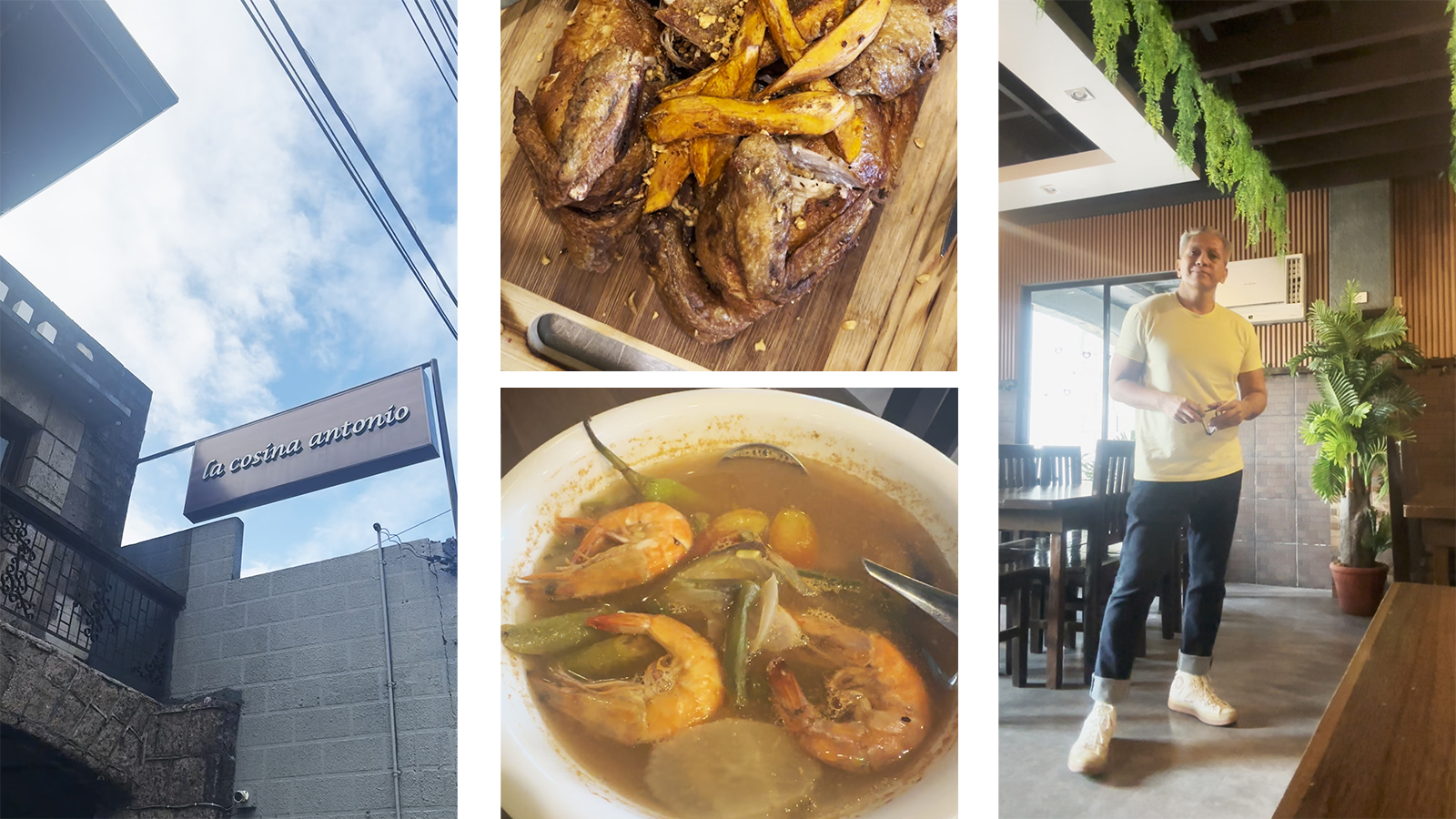
While traveling from Batangas City on the way to Paete, Laguna after an Intersex 101 training workshop, intersex activist Jeff Cagandahan worried where he’d feed us. And then, after a quick discussion with his wife, he suggested La Cosina Antonio, which is apparently a must-check resto in the Municipality of Pila in the province of Laguna.
So we went there, and… how was it for us?
@outragemag #LGBT wandering in #Pila, #Laguna? You may as well try #LaCosinaAntonio ♬ original sound – Outrage Magazine
Una, this is really only convenient to access by locals, or those with private vehicles. Pila, if you must know, is one of the oldest settlements in the Philippines. It is, nonetheless, still largely provincial. And so this place is dadayuhin; you need to intentionally go there as it’s not on the way to major destinations.
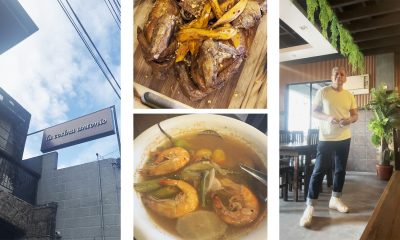
Ikalawa, the actual venue is BIG. This one’s an old house converted into a resto with different parts – e.g. for dining, for drinking complete with a performance space for a band, venue spaces, and so on. La Cosina Antonio is, thankfully, well-kept, so that it’s clean, has updated furniture, and so on.
Ikatlo, the staff was okay naman when we were there, able to discuss what’s on the menu, make recommendations… and then prepare the orders and deliver them fast. Very home-y approach, actually, treating guests as regulars.
Ika-apat, how was the food?
The ₱375 Dinakdakan was actually good, the pork belly crispy, the chopped onions and green chilies fresh, and the calamansi-mayo dressing not overpowering.
The ₱390 Sinigang na Hipon was… so-so, not bad though not good either. Pampainit-tiyan. Though, this has to be said, at least di tinipid in the number of shrimps served.
The ₱560 Garlic Pepper Whole Chicken was good; the meat stayed juicy even if the skin was crunchy.
The ₱770 Crispy Pata was also good; crunchy skin and, yes, malamang pata. There are times when you get Crispy Pata that’s basically just skin and bone, no meat at all. Here, we got meat… thankfully.
This place is popular, true (check their Facebook page, LOL). I can be dismissive and say that because, if in Pila, it’s not like you have lots of choices. But truth be told, it’s also because La Cosina Antonio actually has not-bad stuffs to offer… including the okay venue, okay service, and okay food. So check out if you can… or just join us as we look for more LGBTQIA+ lafangan venues…
La Cosina Antonio is located along JP Rizal St., Barangay Sta. Clara Norte, Pila, Laguna.
Destinations
Pasalubong shopping in Davao via Aldevinco
#Pasalubong hunting in #Davao? Consider the new, pinasosyal #Aldevinco that may not have the grimy character of the old location but still is worth #LGBT visiting.
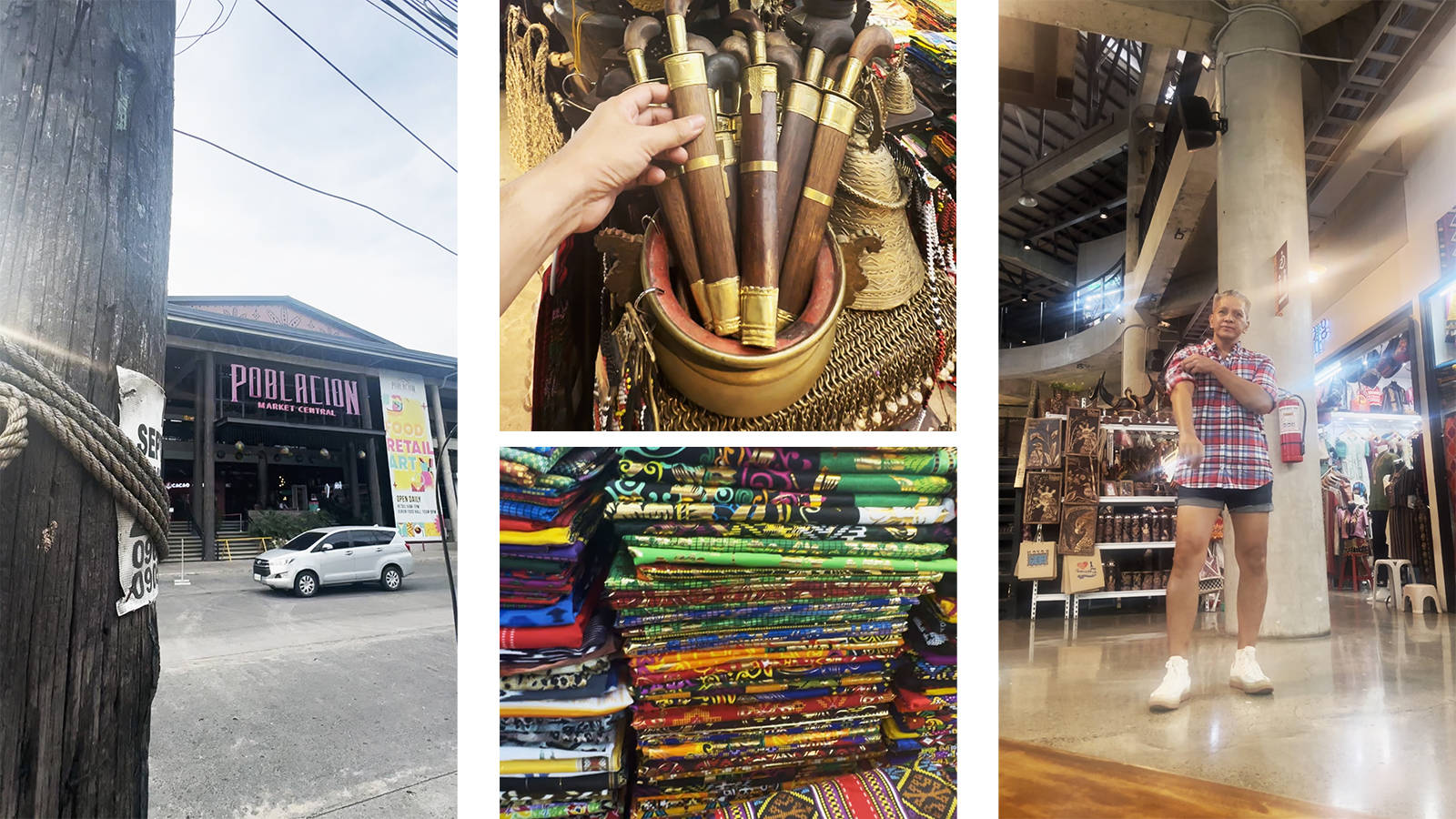
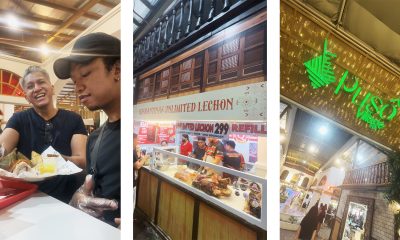
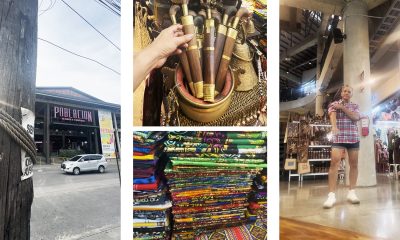
Davao-bound tourists know – or should know – of Aldevinco Shopping Center, the city’s one-stop-hub for everything Mindanao-related. You need malong or patadyong as pasalubong? You need a kulintang not just as a musical instrument, but as décor? You need batik, or T’boli ethnic apparel? You can find them all… and even more, in Aldevinco.
But here’s the thing, particularly for those who do not know yet: the old Aldevinco, which was located along C.M. Recto Street and Roxas Avenue in Davao City, is no more.
Now… enter the new Aldevinco, this time located at Poblacion Market Central on C. Bangoy Street (former Madrazo Fruit Stand)… which isn’t that far from the old place, actually.
We checked, and here are some things worth noting.
@outragemag #Pasalubong hunting in #Davao? Consider the new, pinasosyal #Aldevinco that may not have the grimy character of the old location but still is worth #LGBT ♬ original sound – Outrage Magazine
Una, this place looks and feels new. The old Aldevinco had a palengke feel, but this one has a mall feel. So you have a high-ceilinged venue with better-arranged stores that are air-conditioned, and so on. Pina-sosyal, in a manner of speaking.
Ikalawa, when there, the rules remain the same: haggle. The prices first quoted to you are not the actual prices the goods go for… unless you’re too moneyed and you don’t want to ask for discounts, though in that case, you shouldn’t even be in Aldevinco at all. The more you buy (i.e. bulk buying), the lower the prices, obviously. But always haggle… even if only for the fun of doing it.
Ikatlo, if you have time to spare, don’t auto-buy from the first store you check. Tour the area and compare prices. Often, the goods sold in one store will also be offered in a different store. So move around before making a final decision.
And ika-apat, Aldevinco may be popular as the go-to place for pasalubong, but in truth this isn’t the only one. Halimbawa, right across the old Aldevinco is a series of shops, some of them from the old Aldevinco. Because, at times, Aldevinco can feel like a tourist trap, and understandably, not everyone likes going into one. So consider your other options.
All the same, when in Davao, this is a place worth checking… if not for the shopping, then the food… or at least to check what happened to the tenants of the 60-year-old Aldevinco that was closed in December 2021, and is now being redeveloped into who-knows-what.
All part of rediscovery as we continue the LGBTQIA+ rampa wherever and everywhere…
Open from 9AM to 7PM (with the Kūkūñ Food Hall open from 10AM to 9 PM), Aldevinco Shopping Center is located at Poblacion Market Central, C. Bangoy Street, Davao City.
Destinations
Enjoying the grilling at Mandaue City’s Matias BBQ
#Mandaue City’s #MatiasBBQ is worth checking as your #LGBT alternative to dining in the open in #Cebu.
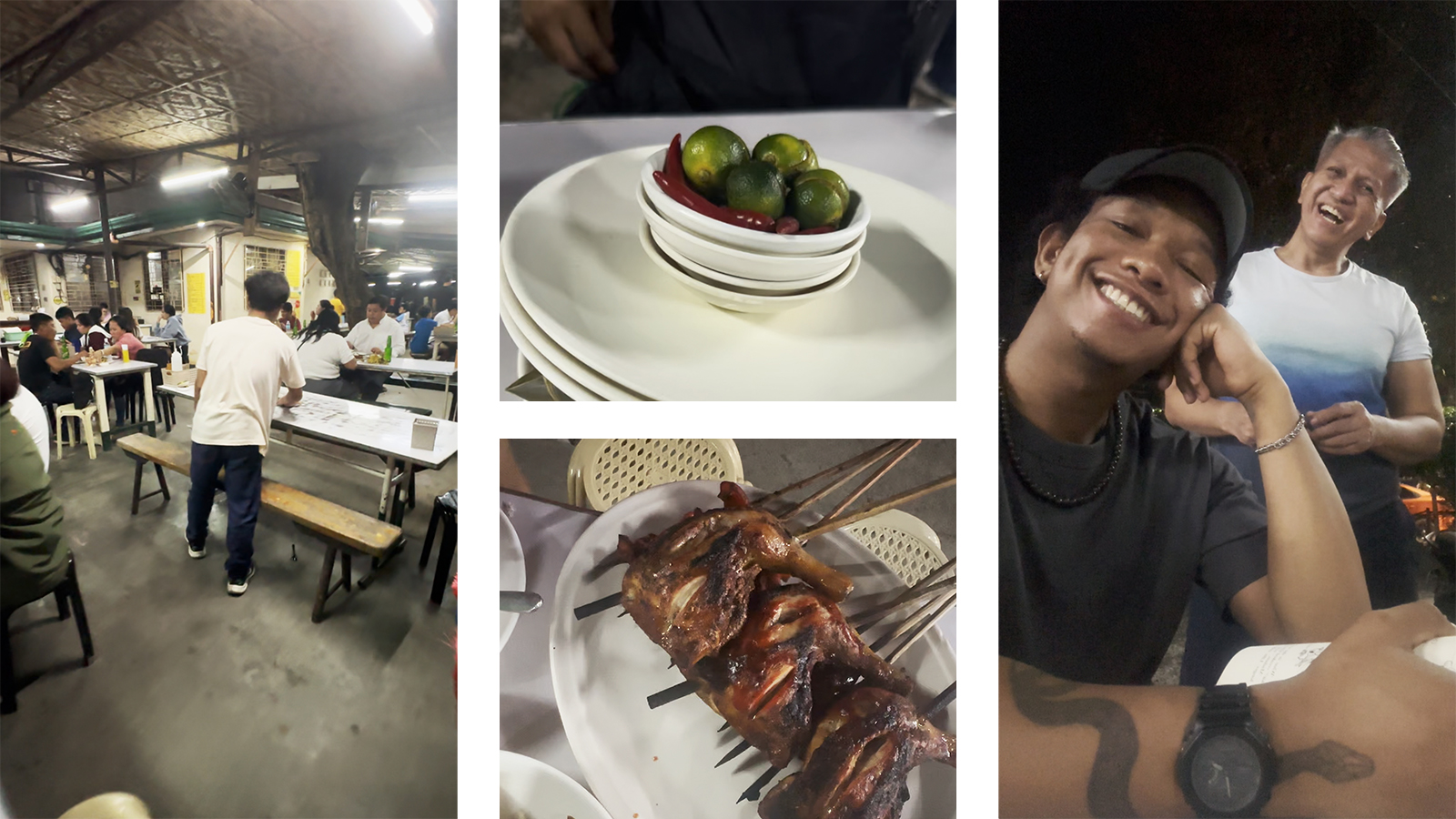
Seriously considering Larsian to try grilled goods in Cebu City, a friend recommended for us to try, instead, Matias BBQ. “It’s cleaner,” she said, adding: “And yummier, of course.”
So we checked… and how was the visit to Matias BBQ for us?
@outragemag #Mandaue City’s #MatiasBBQ is worth checking as your #LGBT alternative to dining in the open in #Cebu ♬ original sound – Outrage Magazine
Una, the place is NOT in Cebu City. It’s in nearby Mandaue City. We didn’t check where the BBQ place is, exactly; we just took a Grab and pinned the address. We just noted that the travel took a while, and yes, the fare wasn’t cheap (LOL).
Ikalawa, this is an open-air venue, similar to Larsian, though the difference is, here, there’s just one vendor (Matias BBQ). Maarte people beware: this isn’t for you.
Ikatlo, the servers were friendly… a pleasant surprise considering the number of people they had to serve. They knew what to recommend, and quickly dealt with some concerns (e.g. replace what was deemed stale rice).
Ika-apat, how was the food naman?
- The chicken – including the ₱85 pecho and ₱95 paa – were well-seasoned and well-cooked, remaining moist and not dry. Lasa-wise, they were smoky and sweetish.
- The ₱16 chorizos were actually good, properly cooked so that we were still able to taste the meat and accompanying sahog of garlic and the likes. This made us realize that when deciding to cook longganisa from Cebu, consider grilling instead of frying in oil. It just tastes better that way.
- The ₱165 balbacua (beef rind and oxtail soup) served to us was already cold, so was already greasy. The collagen-rich cuts were soft, and there were okay-tasting veggies, but the broth was already slimy from being oily.
- The ₱12 pusô was inconsistent; some were already stale (perhaps old stocks), and the others fresh. It’s hard to ascertain which is which since you’d be served with a lot. Order freshly-cooked rice if apprehensive… though this takes away from the overall experience of eating in a place like this.
Here’s the thing: our total bill was cheaper than the fare we paid to Grab to go there.
And so, for us, if this is accessible to you, consider this an alternative to, say, the likes of Larsian. That the food is good has to be emphasized, done in an outdoor setting that’d remind you of eating in the probinsiya.
But off we go again, in search of more LGBTQIA+ lagangan venues…
Open from 11.30AM to 8.00PM, Matias BBQ is located along A.S. Fortuna St., Banilad, Mandaue City.

Heading to Pila, Laguna? Check out La Cosina Antonio

Pasalubong shopping in Davao via Aldevinco

The look and feel of your neighborhood may affect your sleep

Workout or nap? Either can help your sleepless brain, study finds

Study links coffee consumption to metabolic health and sex hormones

Manulife Investments Philippines leads UITF rankings across equity and fixed income funds

Scheduling dental care during prenatal visits boosts oral health care during pregnancy

Enjoying the grilling at Mandaue City’s Matias BBQ

Dogs can distinguish between human fear and sadness

Pet dog microbiota may protect young children from respiratory tract infections and reduce the need for antibiotic courses
Scheduling dental care during prenatal visits boosts oral health care during pregnancy
Enjoying the grilling at Mandaue City’s Matias BBQ
Study links coffee consumption to metabolic health and sex hormones
Dogs can distinguish between human fear and sadness
Manulife Investments Philippines leads UITF rankings across equity and fixed income funds
The look and feel of your neighborhood may affect your sleep
Pasalubong shopping in Davao via Aldevinco
Workout or nap? Either can help your sleepless brain, study finds
Heading to Pila, Laguna? Check out La Cosina Antonio

-
 NewsMakers3 weeks ago
Scheduling dental care during prenatal visits boosts oral health care during pregnancy
-
 Destinations3 weeks ago
Enjoying the grilling at Mandaue City’s Matias BBQ
-
 NewsMakers3 weeks ago
Study links coffee consumption to metabolic health and sex hormones
-
 Pet Care3 weeks ago
Dogs can distinguish between human fear and sadness
-
 Product Showcase3 weeks ago
Manulife Investments Philippines leads UITF rankings across equity and fixed income funds
-
 NewsMakers1 week ago
The look and feel of your neighborhood may affect your sleep
-
 Destinations4 days ago
Pasalubong shopping in Davao via Aldevinco
-
 NewsMakers1 week ago
Workout or nap? Either can help your sleepless brain, study finds