
Destinations
Exploring the largest cave system in the Philippines
Caves are underground chambers, usually situated in mountains, hills or cliffs. Generations of imaginative fear-mongers have made them the home of everything from treasure-hoarding dragons to a whip-wielding Balrog. In reality, caves are special ecosystems which need our protection, particularly from unscrupulous miners who would break apart tons of rock for a handful of precious stones.


By Gregg Yan
The Philippines has over 3100 known caves. Featuring 12 chambers over its seven kilometer span, the Langun-Gobingob Cave in Samar is the king of them all. Discovered by Italian Guido Rossi in 1987, it was opened to the public in 1990.
We recently explored it to celebrate the Year of the Protected Areas or YOPA, which aims not just to convince people to conserve the country’s 246 protected areas, but to encourage them to visit the sites themselves.
Caves are underground chambers, usually situated in mountains, hills or cliffs. Generations of imaginative fear-mongers have made them the home of everything from treasure-hoarding dragons to a whip-wielding Balrog. In reality, caves are special ecosystems which need our protection, particularly from unscrupulous miners who would break apart tons of rock for a handful of precious stones.
Unique But Threatened Biodiversity
Samar Island, overshadowed by more popular places like Palawan and Boracay, isn’t usually considered a top tourist destination, owing to its long history as a hotbed for insurgencies and a punching bag for typhoons. Though the Philippines’ thirdlargest island exudes rugged beauty, its real value as an ecotourism destination lies beneath the earth.
“Samar is unique because it is a karst landscape made primarily of limestone. Millions of years of weathering has created numerous caves and sinkholes on the island,” explains Anson Tagtag, head of the Caves, Wetlands and Other Ecosystems Division of the DENR. “Caves are special ecosystems which harbor highly-evolved fauna, most of which have adapted to darkness.”
Birds, bats, spiders, snakes, crickets and even blind cave fish thrive inside the Langun-Gobingob Cave. The lack of light confines plants to entrances, but mushrooms and other types of fungi cling to life as discreet denizens of the dark.
“The speleothems or rocks in caves are in a very real sense ‘alive’ – they just grow and move at timescales difficult for people to comprehend,” explains Dr. Allan Gil Fernando, a professor at the National Institute of Geological Sciences in UP Diliman. “The constant dripping of water for instance leaves minute traces of minerals like calcite. Over time these traces pile up to form hanging stalactites and their inverted kin, stalagmites. It takes about a century for a stalactite or stalagmite to grow one inch.”
It is because of their surreal beauty that many caves are sundered.
“People used to enter the Langun-Gobingob Cave to break apart and mine stalagmites plus white calcite rocks for collectors,” says Samar Island Natural Park (SINP) Assistant Superintendent Eires Mate. Our guide Alvin confirms this. “Locals used to mine the cave for Taiwanese businessmen, who paid a paltry PHP7 for a kilogram of rock. Balinsasayao or swiftlet nests were plucked out too, to be shipped to Chinese markets.”
The cave was finally declared a protected area in 1997. “Thank God for legal protection. Mining was effectively stopped,” says Eires. The Langun-Gobingob Cave is just one of many natural systems benefiting from the country’s protected area system.

“Declaring key biodiversity sites as protected areas is one of the best ways to ensure that future generations can continue enjoying their beauty,” says United Nations Development Programme Biodiversity Finance Initiative (UNDP-BIOFIN) Manager Anabelle Plantilla. “Visitors should positively support local communities but be mindful of the environmental impacts of their travels. They should for instance, avoid taking wild plants or leaving trash in tourist sites.”
Year of the Protected Areas
Launched in May of 2022, YOPA hopes to generate funds from tourists to ensure the continued management of protected areas hard-hit by COVID-19 budget cuts.
The Langun-Gobingob Cave is part of the Samar Island Natural Park (SINP), one of YOPA’s six highlighted parks, the others being the Bongsanglay Natural Park in Masbate, Apo Reef Natural Park in Occidental Mindoro, Balinsasayao Twin Lakes Natural Park in Negros Oriental, Mt. Hamiguitan Range Wildlife Sanctuary in Davao Oriental, and Mt. Timpoong Hibok-Hibok Natural Monument in Camiguin.
The country’s caves are now open for tourism, but visitors should know what not to do inside them. “Cave tourism should be well managed and there are cave do’s and don’ts,” says Buddy Acenas from the GAIA Exploration Club, a Manila-based caving and exploration group. “A comprehensive assessment should be conducted before a cave is opened for tourism. Trained guides and set trails should be used to minimize human impacts. Like so many of our fragile wilderness areas, caves must be stewarded by those visiting them.”

For its part, the Philippine government is doing what it can to promote responsible tourism. “Our caves, mountains, beaches and other protected areas are now open for tourism. We invite both Filipinos and foreigners to come and visit, but to do so in an environmentally-responsible manner,” adds DENR-BMB Director Natividad Bernardino. “By practicing responsible and regenerative tourism in PAs, we’re helping our national parks flourish and recover from the economic blow they suffered from the COVID-19 pandemic.”







Destinations
Checking the charm of Baguio City’s Café by the Ruins
Googling eating venues in Baguio City will give you a lot of must-check places. And among those that, consistently, enter lists of recommended restaurants is Café by the Ruins. We #LGBT checked to see why.


Here’s an interesting thing with Baguio City: the city approved the cutting of actual trees to allow the building of a car park (we remember, SM), but too many of its local restaurants now build forests within its venues. Oh My Gulay! comes to mind, though also Café by the Ruins, this famed restaurant that occupies the lot containing the ruins of the Garden Theater outdoor cinema that was built in 1912 by Hubert Phelps Whitmarsh.
We dropped by for a quick meal… and here are some observations from us.
@outragemag Why is #CafebytheRuins in #Baguio still popular (even if it can be pricey)? We #LGBT ♬ original sound – Outrage Magazine
Una, this place is easy to find. Yeah, you can take a taxi and tell the driver the place’s name; everyone knows where it is, so your driver could not possibly get lost. But you can also just choose to walk there. It is not too far from Burnham Park, and right beside the city hall of Baguio.
Ikalawa, not much has changed design-wise for the restaurant; meaning, if you’ve been there before, it looks – basically – the same now. You enter a wooden gate, traverse those hanging plants, and then enter a largely wooden two-floor venue. Welcoming you would be the famed breadshop, and then there are tables and seats for those who’d want to dine.
Ikatlo, slight slow ang service. Though that may just be because this place is always busy. But at least our servers did know their products. And they’re honest, too (e.g. “The Thai Beef Salad you want can be offered without some of the key ingredients, so I won’t recommend it.”).
Ika-apat, how was their food?
- We wanted to “wash away” the taste of the steaks we had at Sizzling Plate, so we ordered the Filet Mignon (thick slice of beef tenderloin wrapped in bacon, and then served with salad and marble potatoes, ₱520). Properly cooked so it remained juicy, this one didn’t disappoint.
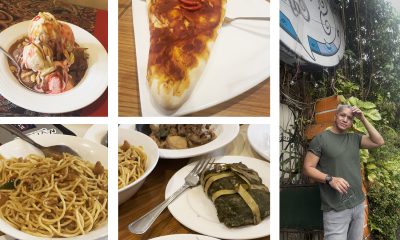
- The Creole Pasta (pasta with shrimp and mushroom cream sauce with paprika, ₱380) was okay naman, though they didn’t have chili flakes (only Tabasco sauce), thus limiting our desire to make this spicier. It was filling… even if the portion was on the smaller side.
This restaurant is one of those with too many items in the menu, so – yeah – you’re bound to find something you’d like. Note that some of the goods here are costly – e.g. Breads sell from ₱60-₱180, Banana Turon for ₱120, Suman at Tsokolate for ₱210, and Dinuguan with Puto for ₱240. But these are among those that helped make this restaurant known.
Googling eating venues in Baguio City will give you a lot of must-check places. And among those that, consistently, enter lists of recommended restaurants is Café by the Ruins. This is not surprising, really, because this place can be described as largely consistent. So, yeah, while the breads there remain too expensive, everything else is… generally… okay, considering they taste better-than-okay anyway.
Go check… or just join us, as we look for more lafangan venues…
Café by the Ruins is located at 25 Shuntug Rd., Baguio City. For more information, contact 0966 528 9072 or email cafebytheruins@gmail.com.
Destinations
Checking the artsy offerings of Baguio’s Tsokolateria Artisanal Café
Tsokolateria Artisanal Café is this artsy resto in Baguio City, offering artisanal offerings. We #LGBT checked to see if it’s worth visiting.
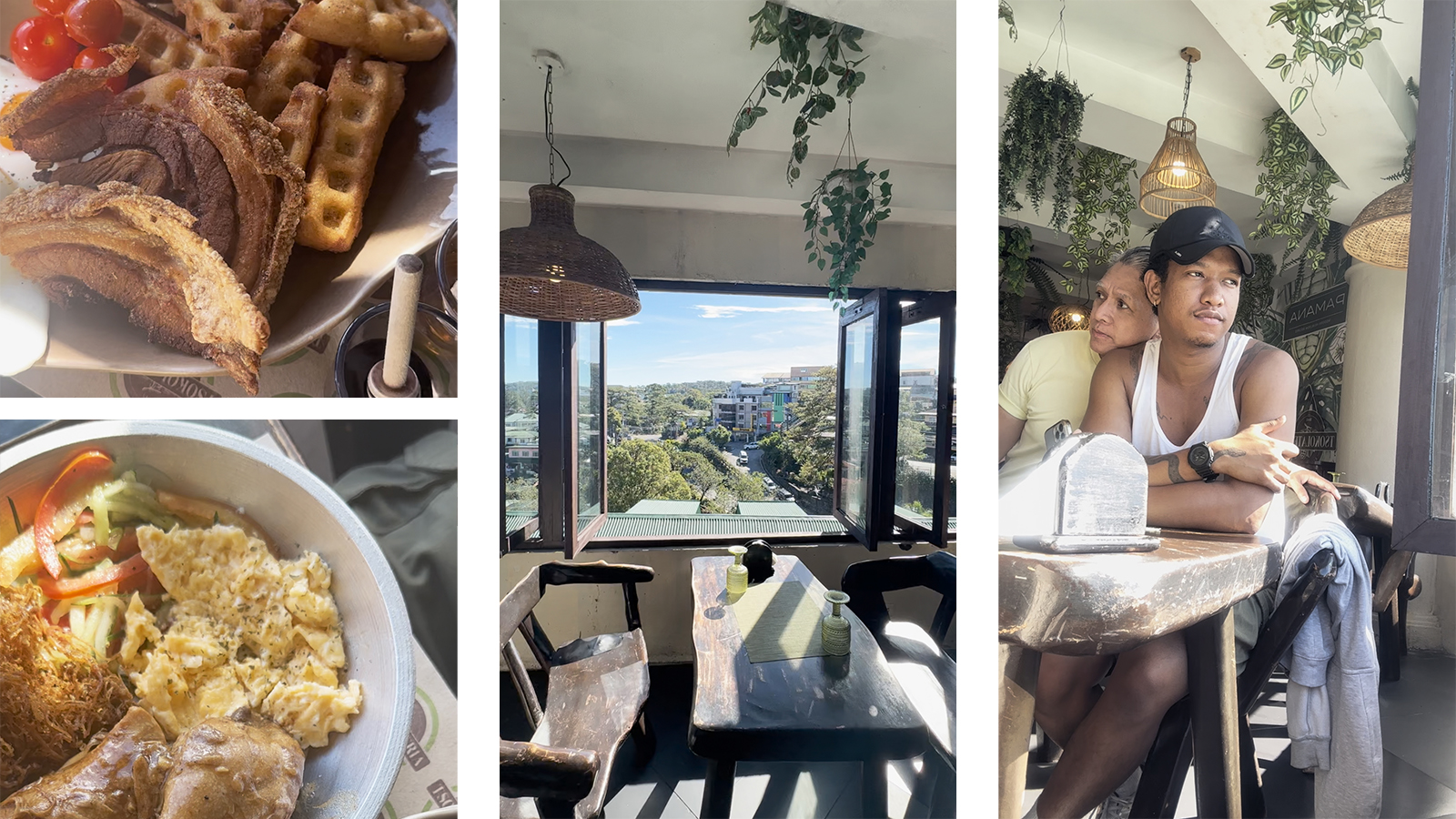
We were looking for breakfast in Baguio City, and, while Googling, among the most recommended was Tsokolateria Artisanal Café… which we decided to check since too many of the other options were still closed (some opened from 9.00AM onwards, which was entering brunch hours already).
Now… how was this place for us?
@outragemag #LGBT checking the artsy but pricey #artisanal food of #tsokolateriabaguio Tsokolateria Artisanal Café in #Baguio ♬ original sound – Outrage Magazine
Una, the place isn’t hard to find naman. Coming from the marketplace in Baguio, you – basically – just walk along Session Road, lampas ng SM Baguio and The Baguio Cathedral of Our Lady of the Atonement. It could be tedious particularly for the non-fans of walking (reminds you of the hilly roads of San Francisco), but… you can just consider this as your exercise, too.
Ikalawa, the actual place is okay naman. The place, which combines two venues – Tsokolateria and Pamana – is non-airconditioned yet well-ventilated, with lots of seating available. There are elements that may not be to everyone’s liking – e.g. those scary statues in front of the restaurant (particularly the ones seating on the stairs, which could be mistaken for real people), as well as those cheap-looking plastic plants hanging on the ceiling of the venue.
Ikatlo, the workers were okay naman. They were able to explain what’s on the menus (and how Tsokolateria differed from Pamana), and they weren’t intrusive at all (they let you be, as needed).
Ika-apat, how was the food?
- The Adobo Overload (chicken adobo topped with roasted cacao garlic and crispy adobo flakes, ₱535) was not maalat/salty, and so okay. But – even with the add-on well-seasoned veggies as side dish, as well as the black rice – you really don’t get much. So you’re basically paying for a deconstructed version of adobosilog for over ₱500.
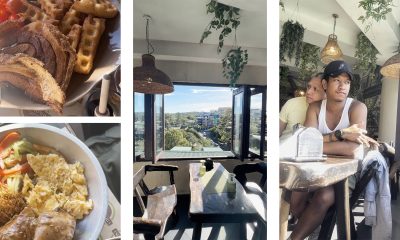
- The House Waffle, Bacon Belly Arugula & Eggs (₱485) was interesting – e.g. the waffles were fried (this one’s yummy); those cherry tomatoes were fresh (another plus); the eggs, although small, were well done; and that meat was… bagnet-like.
Don’t get us wrong: This place is not bad at all. But – considering its asking prices – it’s not great, either. This is an okay-to-consider venue if you’re willing to cough up more than you should, more than is deserved so you can try food repackaged to be artsy.
Try lang… or discover others… as we do as we search for more lafangan venues.
Tsokolateria Artisanal Café is located at Igorot Stairs, Upper Session Rd., Baguio City. For more information, contact 0927 323 6513 or email inquiry@happyconceptgroup.com.
Destinations
Revisiting Sizzling Plate along Session Road in Baguio City
We checked (for the second time) one of Baguio City’s popular steakhouses: Sizzling Plate.
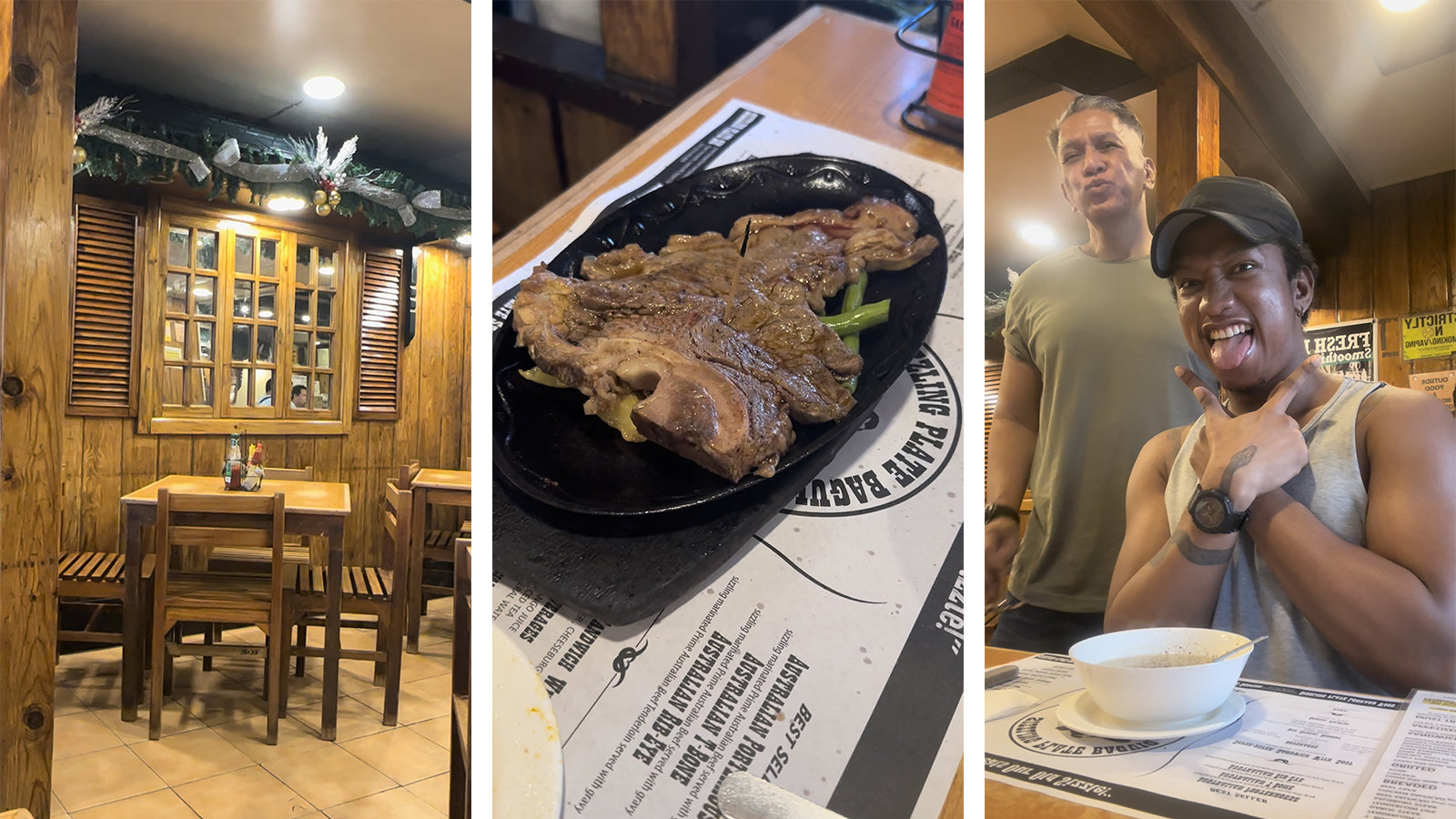
Truth: The first time we visited Sizzling Plate along Session Road in Baguio City, we were surprised. For a not-classy (and some may even say shabby and karinderya-looking) steakhouse, what the place offered were actually better-than-okay food – e.g. the steaks were properly cooked, the fries crunchy, the soup not runny, and so on.
@outragemag Looking for cheap #steaks in #Baguio? We #LGBT ♬ original sound – Outrage Magazine
Truth: Sometimes, for good memories to stay good, don’t revisit to recreate them… which we unfortunately did by revisiting Sizzling Plate during a recent Baguio City trip.
And, sadly, the second time was such a letdown we wondered why we even liked it when we visited it for the first time.
Harsh? Perhaps… but let us explain why…
Una, this place – which was established in 1978 by couple Mike and Edna Anton – is very easy to find, as it sits right in the middle of Session Road, which is in the very center of Baguio City’s commercial area.
Ikalawa, décor-wise, the place looks rustic… like a Filipinized version of some rancher’s diner filled with wooden chairs and wooden tables and so on. Let it be said, however, that this place could use an upgrade – e.g. it looks dated (the “before” if this is to be renovated by Chef Gordon Ramsay in Kitchen Nightmare), has dated stuff (like those flimsy cutlery), and so on.
Ikatlo, the workers are still nice. We remembered some of them from our past visit, and while they – understandably – couldn’t remember all their diners, they were still pleasant while serving (e.g. could explain what’s on the menu, delivered the correct orders, and so on).
Ika-apat, how was the food?
- Y’all get free mushroom soup… which is, basically, a watery concoction that tasted like it was made from powder mix. Particularly when Baguio City gets cold, this should suffice to warm you while waiting for your food.
- All steak meals came with fries (stuffed under the slab of meat, so that when they reached us, we just got burnt potato slices that were too soggy to be called fries); veggies (though we really just got a few Baguio beans); and Java rice.
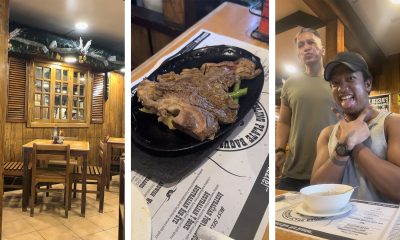
- The Australian Porterhouse (₱460) was smaller albeit thicker. Meanwhile, the T-bone Steak (₱420) was bigger-looking and yet thinner. Always remember that with sizzling steaks, the meat gets overcooked – i.e. we ordered medium rare, but by the time we ate, the meats were already well done. Also, both steaks served to us tasted too margarine-y… and too chewy to be enjoyable at all.
In truth, Sizzling Plate continues to be really popular. Understandably so because of: 1. it is historic; 2. it’s location (right in the middle of Session Road in the middle of Baguio City); and 3. cheap goods. But – for us – Baguio City actually has more to offer that should be checked, including alternatives to this venue (e.g. the fillet mignon of Café by the Ruins is same-priced, but way, WAY better). So, puwede magtiis here, or go discover is the advice.
And so off we go as we search for more lafangan venues…
Sizzling Plate is located at 86 Session Rd., Baguio City.

Common drug class may increase risk of heart disease

Mindfulness practices found to significantly reduce depression symptoms, especially for those with early-life adversity

Exercise to treat depression yields similar results to therapy

Aerobic exercise may be most effective for relieving depression/anxiety symptoms

High-fiber diet linked to reduced risk of heart disease in night shift workers

Two types of underconfidence linked to anxiety and gender

Checking the charm of Baguio City’s Café by the Ruins

Sleeping in on weekends may help boost teens’ mental health

Breastfeeding may lower mums’ later life depression/anxiety risks for up to 10 years after pregnancy

Creativity feels great — until tomorrow
Creativity feels great — until tomorrow
Sleeping in on weekends may help boost teens’ mental health
High-fiber diet linked to reduced risk of heart disease in night shift workers
Exercise to treat depression yields similar results to therapy
Checking the charm of Baguio City’s Café by the Ruins
Two types of underconfidence linked to anxiety and gender
Aerobic exercise may be most effective for relieving depression/anxiety symptoms
Mindfulness practices found to significantly reduce depression symptoms, especially for those with early-life adversity
Breastfeeding may lower mums’ later life depression/anxiety risks for up to 10 years after pregnancy
Common drug class may increase risk of heart disease

-
 NewsMakers3 weeks ago
Creativity feels great — until tomorrow
-
 NewsMakers3 weeks ago
Sleeping in on weekends may help boost teens’ mental health
-
 NewsMakers3 weeks ago
High-fiber diet linked to reduced risk of heart disease in night shift workers
-
 Wellness3 weeks ago
Exercise to treat depression yields similar results to therapy
-
 Destinations3 weeks ago
Checking the charm of Baguio City’s Café by the Ruins
-
 NewsMakers3 weeks ago
Two types of underconfidence linked to anxiety and gender
-
 Wellness3 weeks ago
Aerobic exercise may be most effective for relieving depression/anxiety symptoms
-
 NewsMakers2 weeks ago
Mindfulness practices found to significantly reduce depression symptoms, especially for those with early-life adversity