
NewsMakers
MMM initiative to teach people about proper method of taking blood pressure readings
The MMM initiative has screened about 5-million people in 100 countries. It also aims to screen more Filipinos across more municipalities nationwide with the support of local health organizations and volunteers.


Hypertension is the leading contributing factor for global death. An estimated 10-million lives are lost each year due to elevated blood pressure which increases the risk of heart, brain, kidney, and other diseases. In the Philippines, the incidence of hypertension alone, which remains a leading cause of death, continues to rise, with deaths linked to it hitting 34,500 in 2020. According to World Health Organization (WHO), cardiovascular diseases account for a third of deaths in the country.
Unfortunately, the number of Filipinos afflicted with hypertension continues to increase as many of them are unaware that they have raised blood pressure. Some of them only find out they are hypertensive after they had a stroke or heart attack, and other cardiovascular complications. However, the rising number of hypertensive Filipinos and deaths are actually preventable. Awareness about elevated blood pressure and its dangers, and improved health practices are necessary to prevent hypertension.
This year, the Philippine Society of Hypertension (PSH), alongside OMRON Healthcare, Servier, and the Department of Health (DOH), spearheaded the May Measure Month (MMM) campaign which encouraged individuals to have their blood pressure screened with OMRON’s clinically validating blood pressure monitoring available in select locations from May 17 (World Hypertension Day) to July 31, 2023. PSH will offer free blood pressure screenings and further raise awareness about the risks posed by hypertension.
The MMM initiative has screened about 5-million people in 100 countries. It also aims to screen more Filipinos across more municipalities nationwide with the support of local health organizations and volunteers.
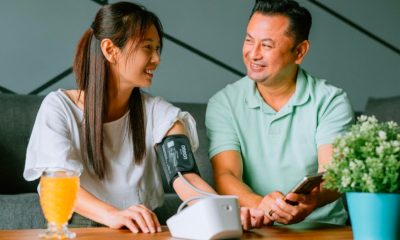
This year’s campaign will also teach people about the proper method of taking blood pressure readings to enable them to monitor their blood pressure accurately in the comfort of their homes. This goal of raising awareness about proper blood monitoring and promoting better health has been the core of the MMM campaign since it started in 2017. Besides, given the opportunities of the hybrid setup, the campaign empowered people to measure their blood pressure through home blood pressure monitoring (HBPM), and doctors present at the event demonstrated the proper positioning on how to get accurate blood pressure measurement.
“May Measure Month is an opportunity and a reminder for Filipinos to take charge of their health not just this summer but every day. We also hope it will encourage more Filipinos to learn more about the risks associated with hypertension. We want to raise awareness and promote new methods to spread awareness about this silent killer and help people make lifestyle changes that can lead to better heart health,” said Dr. Dolores Bonzon, PSH president.
The data collected from the blood pressure monitoring devices across the different screening sites can be submitted and collected in three ways: 1) physical/ printed forms provided in screening sites, 2) Google forms made by the PSH which can be accomplished online by a volunteer healthcare professional or by the participants themselves, or 3) the patients themselves logging in their measured data at the MMM official website or the MMM mobile app. The PSH encourages the use of the first two methods to allow them to keep track of data submitted from the Philippines. These data are used to gather scientific knowledge to help influence worldwide blood pressure screening policies and make screening more widely available globally.
To offer trusted and clinically validated HBPM, OMRON Healthcare’s recently clinically validated HEM 7120 and HEM 7121 are equipped with a cuff wrapping guide to assist the user in properly fitting the arm cuff for an accurate and reliable blood pressure measurement. The products’ IntelliSense Technology automatically inflates the cuff to the optimal amount to provide precise results while still being comfortable. If the measured systolic or diastolic pressure is outside the standard range, the Hypertension Indicator feature sends a signal. These features are very important for obtaining reliable readings when blood pressure fluctuates.
“OMRON Healthcare remains committed to improving lives and contributing to a better society, especially since we have reached the 50th anniversary milestone of OMRON’s blood pressure monitors. OMRON has also transformed the way people measure blood pressure, making it simple and accurate for anybody, wherever in the world. Now more than ever, we have to be conscious of our general physical health. This year’s MMM will not just encourage Filipinos to integrate blood pressure monitoring in their lives to detect early signs of hypertension but also inspire them to make the necessary lifestyle changes to achieve better health,” said Yusuke Kato, general manager for OMRON Asia Pacific Pte. Ltd – Philippine Branch (Healthcare Division).
The MMM campaign is a call to action for all Filipinos to take control of their health and work toward a healthier future for themselves and their families. As the world shifts to the new normal, OMRON Healthcare will continue to work with other organizations to promote hypertension awareness and empower Filipinos to achieve better health and an improved quality of life.




NewsMakers
‘Drunk riding’ behind almost half of fatal electric scooter crashes
Tatal crashes occur mainly in the evenings or through the night, and in all cases, no helmet has been worn.


In almost half of all fatal electric scooter crashes in Sweden, the rider has been under the influence of alcohol. These fatal crashes occur mainly in the evenings or through the night, and in all cases, no helmet has been worn. This is shown by a new study from Chalmers University of Technology, in Sweden, and the Swedish Transport Administration. The study also states that most fatal crashes occur with private electric scooters, rather than rentals.
The researchers have analysed all fatal crashes involving electric scooters, electric bicycles and conventional bicycles in Sweden between 2016 and 2024.
Alcohol is often a factor in fatal crashes occurring with all three of these vehicle types – but the figures for electric scooters stand out. Of the fatal e-scooter crashes, 44 per cent of the riders were under the influence of alcohol, compared to 27 per cent among e-bike riders and 13 per cent among cyclists.
More specifically the levels of alcohol in the blood have been shown to be high across all three groups. Of the e-scooter riders that were under the influence of alcohol, the median blood alcohol content was 1.8 per mille. This can be compared to the legal limit of alcohol content in the blood for driving a car in Sweden, which is 0.2 per mille, above which it is considered drunk driving, and 1.0 per mille in the blood which is considered aggravated drunk driving.
“Alcohol intoxication is a common issue among all road users, but it appears to be particularly severe among riders of electric scooters. Not only were many fatally injured e‑scooter riders intoxicated, but their levels of intoxication were also extremely high,” says Marco Dozza, Professor of Active Safety and Road User Behaviour at Chalmers University of Technology, and senior researcher in the study.
Lack of helmets worn in those killed
The study also showed that helmet use in fatal crashes was very low. Of those fatally injured riding an e-scooter, none were wearing a helmet. And for those killed riding an e-bike or a bicycle, only about 25 per cent were wearing a helmet.
Head injuries were the most common cause of death in all groups.
“The numbers speak for themselves. Since the head is the area of the body that is most affected by a fatal injury and almost no one wears a helmet, we have a clear opportunity to save lives. A helmet is not a guarantee but improves the chances dramatically, so we should do everything we can to encourage helmet use,” says Rahul Rajendra Pai, doctoral student at Chalmers and first author of the study.
“I think many people don’t understand the danger of using an electric scooter under the influence of alcohol, and think that the vehicle doesn’t go that fast,” says Marco Dozza. “But it is enough hitting a stone on the road or a small hole in the ground to lose balance, especially when intoxicated, because alcohol slows down cognition and reactions. If you don’t wear a helmet, it may end up even worse”.
Different crash patterns for different vehicles
The study included 204 deaths, and the researchers saw clear differences between the three vehicle types in terms of rider and crash patterns.
In fatal crashes involving ordinary bicycles, the median age of the cyclist was 71 years old. The crashes often occurred on weekdays and usually involved collisions with motor vehicles.
Fatal e-scooter crashes looked different. The riders had a median age of 47.5 years old, and most of the crashes were single vehicle crashes that occurred at weekends, evenings and nights.
According to the researchers, the results indicate the need for measures and regulations to be adapted to the different types of vehicles.
“The typical fatal bicycle crash, with an elderly cyclist being hit by a motor vehicle in daylight, may require completely different countermeasures than the typical fatal electric scooter crash, where a younger rider crashes alone at night while intoxicated,” says Marco Dozza.
Fatal crashes most common with private electric scooters
Almost nine out of ten alcohol-related e-scooter deaths occurred with privately owned vehicles. Public debate and regulations have largely focused on rented electric scooters, and operators have introduced measures such as speed limits and night restrictions. However, these measures do not affect privately owned electric scooters.
According to the researchers, rules and measures can to some extent counteract crashes with electric scooters. Marco Dozza, for example, is leading an ongoing study on how today’s sensor technology in rented electric scooters can make it possible to detect impaired riding ability in real time.
“If a vehicle can identify that its rider is not in control, it is possible to take various measures before a crash occurs. That kind of intelligent intervention can save lives, and is within reach,” he says.
At the same time, he emphasises that neither rules nor sensor technology alone can solve the problem.
“The big challenge with electric scooter riding is social norms and rider behaviour, and this does not disappear with regulations. Training is an important key to understanding how the vehicle should be handled and what you can, and cannot, do.
Rikard Fredriksson, Senior Advisor in Vehicle Safety at the Swedish Transport Administration and co-author of the study, agrees:
“Alcohol is still a major problem for road safety in Sweden. Alcohol is involved in about 20 per cent of all fatal road crashes. This study shows that the number of alcohol-related fatalities involving electric scooters is more than twice as high, at 44 per cent. We are committed to the development of technology to counteract electric scooter driving under the influence of alcohol. It is also important to always wear a helmet, and to use only a vehicle that cannot exceed legal speed,” he says.
The study, “Three modes, three profiles: Characterizing fatal crashes on e-scooters, e-bikes and conventional bicycles in Sweden”, has been published in the Journal of Safety Research. The authors are Rahul Rajendra Pai and Marco Dozza at Chalmers University of Technology, Sweden, as well as Rikard Fredriksson at the Swedish Transport Administration and Chalmers University of Technology.
NewsMakers
Move to quit: Exercise boosts smoking quit rates
Researchers found that people taking part in exercise programs were 15% more likely to achieve continuous abstinence and 21% more likely to report not smoking over a seven-day period, compared with control groups.

A pack-a-day smoker can spend around $14,000 a year on cigarettes, yet despite the financial and health costs, quitting remains one of the most difficult changes many people will ever attempt.
Now, new research from Adelaide University shows that exercise can help people quit smoking by reducing cigarette consumption, easing cravings and improving their chances of quitting.
Researchers found that people taking part in exercise programs were 15% more likely to achieve continuous abstinence and 21% more likely to report not smoking over a seven-day period, compared with control groups.
They also found that exercise could reduce cigarette consumption by two cigarettes per day, and that a single bout of exercise immediately reduced cigarette cravings for up to 30 minutes after exercise.
The systematic review and meta-analysis examined 59 randomised controlled trials involving more than 9000 participants, exploring the effects of both single bouts of exercise and long-term exercise programs on smoking cessation, cravings, withdrawal symptoms and mood.
Globally, tobacco smoking remains the leading preventable cause of premature morbidity and mortality, accounting for about 7 million deaths, including an estimated 1.6 million non-smokers who are exposed to second-hand smoke.
Around the world, e-cigarette use has now reached more than 100 million people.
The researchers say exercise should be viewed as an additional tool that can be used alongside established smoking cessation support.
Lead researcher, Dr Ben Singh said the findings provide smokers with a practical, low-cost tool that can support their quitting journey.
“Quitting smoking is one of the best things a person can do for their health, but it’s also one of the hardest,” Dr Singh said.
“Many smokers want to quit, but the current approaches don’t work for everyone. That’s why we need more strategies that people can incorporate into their daily lives at little or no cost.
“Something as simple as regular exercise can make a meaningful difference to people trying to quit, helping them manage cravings, smoke less and improve their chances of quitting.”
While smoking rates have reduced over the past two decades, demand for e-cigarettes and heated-tobacco products have risen, targeting the younger generation.
Today, 80% of the 1.3 billion tobacco users worldwide live in low- and middle-income countries, yet in contrast, vaping has risen across many OECD countries.
Senior researcher Adelaide University’s Professor Carol Maher said exercise could be used strategically to ward off tobacco cravings.
“Quitting smoking does not have to begin and end with willpower alone,” Prof Maher said.
“Cravings can be difficult to manage, but they often pass. Our review found that even a single bout of exercise can reduce cravings for up to 30 minutes, which may help people get through some of the hardest moments of a quit attempt.
“Exercise should not replace evidence-based quit supports such as counselling and smoking cessation medication, but it may be a practical, low-cost strategy that people can use alongside them.”
The researchers say the next step is to test how exercise can be built into real-world quit programs, including digital, community and clinical services, and to examine whether it can also support people trying to quit vaping, where evidence is currently lacking.
NewsMakers
Why taking a sick day depends on more than being sick
The study revealed a clear divide: workers in casual and fixed term jobs take only around one day of sick leave a year on average, compared with about four days for permanent employees.

As winter illness spreads and households face cost-of-living pressure, many Australians cannot treat a sick day as a simple health decision. They may be too sick to work – but their job is too insecure to stay home.
New research led by the University of Technology Sydney (UTS) shows the decision is heavily influenced by pay, job security and gender. The study, published in Applied Economics, examines how workers’ health and economic circumstances dictate how many sick days they actually take.
“Employers and policymakers often focus on reducing absence, but workers who attend while unwell may recover more slowly, spread infection to colleagues, and be less productive,” said lead researcher Dr Nancy Kong, a Senior Research Fellow at the UTS Centre for Health Economics Research & Evaluation.
Drawing on data from the Household, Income and Labour Dynamics in Australia (HILDA) survey from more than 15,000 Australians between 2005 and 2016, Dr Kong and her co-authors, Dr David Rowell from the University of Queensland and Professor Peter Zweifel from the University of Zurich, examined patterns of sick leave across the workforce.
“We focused on this period to avoid the COVID years, when major changes in public health rules, workplace practices and leave policies occurred at the same time, and could have blurred the relationship between job conditions and sick leave,” said Dr Kong.
The study revealed a clear divide: workers in casual and fixed term jobs take only around one day of sick leave a year on average, compared with about four days for permanent employees.
Even accounting for variables such as occupation, job satisfaction, household circumstances, living arrangements, marital status, education and place of residence, non-permanent workers still take around three fewer sick days each year.
“This does not necessarily mean casual and fixed-term workers are healthier,” said Dr Kong.
“A more likely explanation is that taking time off is riskier when work is insecure. Non-permanent workers may have less access to paid sick leave. They may also worry that saying no to work, even when ill, could affect future hours or their chances of keeping their job.”
“For a permanent employee, staying home with influenza might be inconvenient; but for a casual worker it may trigger financial stress.”
The study also found that economic insecurity plays a role, with workers living in areas with higher unemployment tending to take less sick leave.
For instance, when the local unemployment rate rises by five percentage points, sick leave drops. While this amounts to a fraction of a day per individual, across a standard team this adds up to significant forgone recovery time.
This pattern is consistent with a simple concern: when jobs feel harder to replace, workers may be less willing to take time off.
“They may worry that being absent could make them seem less reliable or increase the risk of losing work,” said Dr Kong.
The effect of wages proved more nuanced. Higher wages alone did not consistently dictate leave behaviour. However, among workers in poorer health, higher wages were strongly associated with taking more sick leave, suggesting higher income earners possess a financial buffer.
“Higher-paid workers generally have workplace support and leave entitlements that mean they are supported to take time off when they are unwell without fear of a potential financial penalty,” said Dr Kong.
The most consistent finding was a distinct gender gap. Across every analysis, men take fewer sick days than women, averaging about half a day less per year (a 23% difference), even when matching with similar health and job circumstances.
“This may reflect differences in health needs, caring responsibilities or how likely people are to seek medical care,” Dr Kong said.
“But it also points to workplace cultures and gender expectations about ‘toughness’, reliability and working through illness.”
Ultimately, the study highlights that sick leave rates are not simply a reflection of physical health. For employers, low sick leave rates should not be automatically viewed as a sign of success; they may also indicate a culture of fear.
“Workplace cultures should not reward people for attending when unwell or treat legitimate sick leave as a lack of commitment,” said Dr Kong.
“Reducing stigma is also particularly important in addressing the gender gap.”
Dr Kong said for policymakers, the study points to the importance of secure work, accessible paid leave and workplace practices that support people to recover when unwell.
This is particularly relevant during periods of increased cost-of-living pressure, workforce shortages and seasonal illness.
“A fair and effective sick leave system should support productivity while ensuring workers do not have to choose between protecting their health and protecting their income.”

‘Drunk riding’ behind almost half of fatal electric scooter crashes

Move to quit: Exercise boosts smoking quit rates

Why taking a sick day depends on more than being sick

Treacherous beauty: Hiking at South Stack Lighthouse in Wales

Omega Healthcare recognized

For every parent who wants to be present: AXA reinforces importance of early health preparedness

Enjoying nature via trail hiking in Wales

Finding beauty, and not just of faith, at the Bangor Cathedral

Checking Llanfair PG, the town that’s long in name and not much else

Underground discovery: From Heathrow, commute using the Underground to reach central London
Underground discovery: From Heathrow, commute using the Underground to reach central London

Sun Life appoints Bianca Ilibasic as Managing Director, Sun Life Global Solutions

Living with cats does not worsen asthma in children, suggests study
Finding beauty, and not just of faith, at the Bangor Cathedral
Enjoying nature via trail hiking in Wales
For every parent who wants to be present: AXA reinforces importance of early health preparedness
Checking Llanfair PG, the town that’s long in name and not much else
Omega Healthcare recognized
Move to quit: Exercise boosts smoking quit rates
‘Drunk riding’ behind almost half of fatal electric scooter crashes

-
 Destinations3 weeks ago
Underground discovery: From Heathrow, commute using the Underground to reach central London
-
 Product Showcase4 weeks ago
Sun Life appoints Bianca Ilibasic as Managing Director, Sun Life Global Solutions
-
 Pet Care4 weeks ago
Living with cats does not worsen asthma in children, suggests study
-
 Destinations2 weeks ago
Finding beauty, and not just of faith, at the Bangor Cathedral
-
 Travel1 week ago
Enjoying nature via trail hiking in Wales
-
 Product Showcase1 week ago
For every parent who wants to be present: AXA reinforces importance of early health preparedness
-
 Destinations2 weeks ago
Checking Llanfair PG, the town that’s long in name and not much else
-
 Product Showcase1 week ago
Omega Healthcare recognized