
Spotlight
Color your kitchen
An easy way to give your kitchen an instant upgrade is by adding color in places that complement the decor of the room. Elements such as cabinetry, sinks and appliances are good places to start the facelift process while also adding more functionality.


While the kitchen is often the busiest room in the house, it is also one of the most important rooms when it comes to renovations. An upgraded, vibrant kitchen that incorporates elements of personal style can make the room more attractive while increasing the home’s overall value.
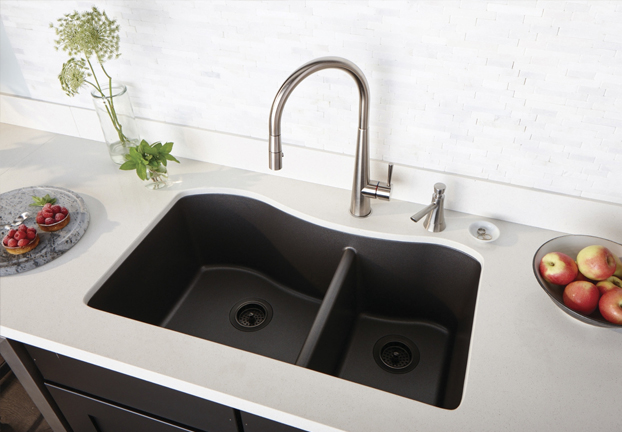
Photo courtesy of Elkay
An easy way to give your kitchen an instant upgrade is by adding color in places that complement the decor of the room. Elements such as cabinetry, sinks and appliances are good places to start the facelift process while also adding more functionality.
Consider cabinets
Not only can new cabinets provide the benefit of more storage space, they also present an opportunity to incorporate some colorful style into the kitchen. Make your splash with vibrant color on the cabinets themselves, or pair softer hues with muted contrasts to create an eye-pleasing backdrop for bold color appliances and vibrant accents and accessories. If you opt for a more traditional finish such as cherry, black, walnut, white or maple, you can still add visual interest to your kitchen design by contrasting the upper and lower cabinetry or creating a standout island in a different tone. Simply updating the hardware with a colorful twist can be an inexpensive alternative for adding color as well.
Think about sinks
Once overlooked as an option for introducing style in the kitchen, today’s kitchen sinks accommodate a wide range of designs and preferences. Both function and aesthetics – including unexpected, vibrant color – are important when replacing your sink. An option such as the Elkay Quartz Luxe collection comes in six bold colors and three mount styles with a variety of bowl options and add-on accessories. The collection combines the highest-quality quartz with a high-performance, UV-stable acrylic resin for a durable sink that is easy to maintain, fade-resistant, vibrant in color and stain- and odor-resistant.
For added convenience, Elkay’s unique quartz finishing process delivers a satin-smooth, non-porous surface that prevents foods, liquids and bacteria from sticking to it. Because natural quartz is four times harder than granite, it has the ability to resist scratches, smudges, heavy impact and heat up to 535 F, making it both a practical and attractive option. Explore a variety of models that can help make your renovation complete at elkay.com/quartz.
Add stylish appliances
A complete set of matching appliances makes for a modern and inviting appearance. Popular finish options include smudge-proof stainless steel, chrome, black or white, but if you’re really looking to brighten the room, some lines are available in colors such as red, blue, orange or green. Although the visual impact is important, remember to keep practical considerations in mind and look for the features – such as side-by-side versus drawered refrigerators, for example – that work best for your space and lifestyle.
Find your ideal sink
A successful kitchen renovation captures every element of the space – including the kitchen sink. Select the right type, features and material to suit your family’s needs with four easy steps from the experts at Elkay:
- Choose your sink material and color. Color, texture and sheen all provide ways for you to express your style. Stainless steel, copper, fine fireclay and colored quartz all offer unique benefits and aesthetics.
- Choose your sink type. Whether top mount with a finished rim, undermount to create a seamless appearance, universal mount which can be installed either above or below your countertop or an exposed apron front mount that extends out slightly further than the cabinet below it, your new sink needs to be in sync with your chosen countertop material. Whether or not you plan to replace your countertops will also affect your options.
- Choose your sink features. Select the number of bowls based on how you work. Single bowls can accommodate larger cooking sheets while double bowls allow for a quick wash/rinse sequence. Depth is an important consideration, too.
- Choose your sink size and accessories. The size of your new sink is dependent upon the size of the cabinet it is installed in. Sink-base cabinets can be created specially to fit an installed sink. Also, look for accessories that work with your sink to save space and add convenience in the kitchen. Options include cutting boards, rinsing baskets, colanders, bottom grids and drains, among others.






NewsMakers
Study links coffee consumption to metabolic health and sex hormones
Despite having a similar body mass index (BMI), individuals with higher coffee consumption had lower total and visceral fat and greater skeletal muscle mass than those who consumed less coffee.
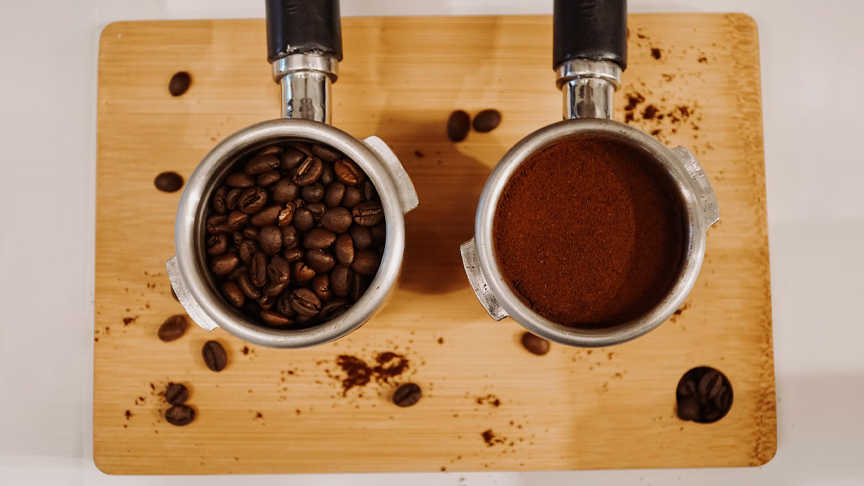
Coffee is one of the world’s most widely consumed beverages, and previous research has linked its consumption to a lower risk of conditions such as type 2 diabetes and cardiovascular disease. However, the biological mechanisms behind these benefits remain unclear. A new Finnish study links habitual coffee consumption to healthier body composition and metabolic markers, while revealing distinct associations with sex hormones in men and women.
The study, conducted at the University of Oulu, analysed data from 2,264 participants aged 46 in the Northern Finland Birth Cohort 1966. Researchers examined how habitual coffee consumption was associated with circulating metabolites, cardiometabolic risk markers and sex hormones.
Despite having a similar body mass index (BMI), individuals with higher coffee consumption had lower total and visceral fat and greater skeletal muscle mass than those who consumed less coffee.
In both men and women, higher coffee consumption was correlated with lower circulating levels of branched-chain amino acids, biomarkers that have previously been linked to insulin resistance and an increased risk of type 2 diabetes when chronically elevated.
The strongest sex-specific associations were observed in men. Higher coffee consumption was linked to a more favourable glucose–insulin profile, higher concentrations of total and bioavailable testosterone, and increased levels of sex hormone-binding globulin (SHBG). At the same time, free testosterone and the free androgen index were modestly lower. In women, hormonal associations were more limited and were primarily characterised by higher SHBG and lower measures of free androgens.
“Coffee is consumed by millions of people every day, yet we still know surprisingly little about how it relates to our metabolism and hormones. What stood out in our findings was a distinct hormonal signature that didn’t disappear even after we took into account BMI and lifestyle factors, with several of these associations differing between men and women,” says Luca Verroest, lead author of the study and Doctoral Researcher at the University of Oulu.
The results suggest that hormonal pathways may partly explain the relationship between coffee consumption and metabolic health. However, as this was an observational study, the findings demonstrate associations rather than cause-and-effect relationships.
The study is particularly relevant in Finland, one of the world’s highest coffee-consuming countries, where annual consumption averages around 11.8 kilograms per person.
The researchers say the findings provide a foundation for future studies aimed at determining whether coffee itself drives these biological changes and identifying the compounds responsible. These questions are currently being investigated in animal models, with the long-term goal of progressing to human intervention studies. Further research will be needed before the findings could inform dietary recommendations.
The study, Associations of habitual coffee intake with testosterone and cardiometabolic markers: the Northern Finland Birth Cohort 1966 study, has been published in the European Journal of Nutrition.
NewsMakers
Forget materialism, a simple life is happier: research
The commitment to simple living, or ‘voluntary simplicity’ as it is formally known, leads to wellbeing through providing more opportunities for personal interaction and social connection than conventional contexts of exchange, such as community gardens, sharing resources, and peer-to-peer lending platforms.

In an age where billionaires and conspicuous consumption are increasingly on display, new Otago-led research shows a simple life really is a happier life.
The study led by University of Otago – Ōtākou Whakaihu Waka Department of Marketing researchers has recently been published in the Journal of Macromarketing.
After setting out to understand the relationship between consumption and wellbeing, the researchers found people are happier and more satisfied when adopting sustainable lifestyles and resisting the temptations of consumerism.
They analysed data from a representative sample of more than 1000 New Zealanders, made up of 51 per cent men and 49 per cent women, with a median age of 45 and a median annual household income of $50,000.
They found the commitment to simple living, or ‘voluntary simplicity’ as it is formally known, leads to wellbeing through providing more opportunities for personal interaction and social connection than conventional contexts of exchange, such as community gardens, sharing resources, and peer-to-peer lending platforms.
Women are more likely to adopt a simple life than men, although more research is needed to understand why.
Co-author Associate Professor Leah Watkins says consumer culture promotes happiness as being typically associated with high levels of income and the capability it affords to acquire and accumulate material possessions.
“However, research is clear that attitudes to, and experiences of, materialistic approaches to life do not lead to increases in happiness or wellbeing. Nor do they lead to sustainable consumption necessary for planetary health.”
Between 2000 and 2019, global domestic material consumption increased by 66 per cent, tripling since the 1970s to reach 95.1 billion metric tons.
Growing consumer affluence and higher living standards have resulted in warnings of alarming trends of environmental degradation from human consumption.
This, coupled with global warming and post-pandemic health and financial anxieties, has led researchers and policymakers to call for a better understanding of the links between simple consumer lifestyles and wellbeing.
But co-author Professor Rob Aitken says this isn’t a case of just throwing out all your worldly possessions.
“It’s not directly the commitment to material simplicity that leads to wellbeing, but the psychological and emotional need fulfilment that derives from relationships, social connection, community involvement and a sense of living a purposeful and meaningful life.
“In a world where billionaire weddings are treated like state occasions and private yachts are the new status symbols, voluntary simplicity offers a quiet, powerful counter-narrative — one that values enough over excess, connection over consumption, and meaning over materialism.”
NewsMakers
Too much for some, just right for me – The truth about dating while plus-size
What is dating like for a plus-size woman? We don’t get the fairytale, the montage-worthy meet-cute in the bookstore, or the sweet swipe-rights with guys who use words like “connection” and “vibes.” What we get is a mixed bag of awkward encounters, accidental comedy, the occasional ghosting, and sometimes, someone who sees us as the whole damn package.

By: A Curvy Queen Who’s Seen It All
Let me be real with you: dating as a plus-size woman isn’t for the faint of heart. We don’t get the fairytale, the montage-worthy meet-cute in the bookstore, or the sweet swipe-rights with guys who use words like “connection” and “vibes.” What we get is a mixed bag of awkward encounters, accidental comedy, the occasional ghosting, and sometimes, someone who sees us as the whole damn package—not just the size of it.

I’m 33, a size 20, and I live in a city where everyone seems to be on a green juice cleanse or training for a marathon. My idea of a perfect day includes a cheese board, a crime documentary, and wearing something soft and oversized. I’ve been dating online for years now—Tinder, Bumble, Hinge, OkCupid, even a brief stint on Bigger Lover (don’t judge). I’ve had first dates that turned into second dates, and others that ended before the appetizer even came. But through it all, I’ve learned some hard truths about dating while plus-size.
The Fetish Factor
Let’s start with the obvious: there are guys out there who fetishize plus-size women. They love our bodies—but only in private. They send you those thirsty DMs like, “I’ve always had a thing for thick girls.”
I used to think that was a compliment. But it’s not, not when it’s the first thing they lead with, not when you realize they don’t care about your name, your career, or your sense of humor. Just your body.
I once met a guy off Tinder who spent our entire date talking about how much he “loved curves” and how he’d “never dated a big girl before.” He kept asking if I was into feederism (I had to Google it when I got home). I never heard from him again, which was fine—I didn’t need to be someone’s body experiment.
The Grateful Gambit
Then there’s this weird idea that plus-size women are supposed to be grateful for attention, as if someone choosing to date us is some charitable act. It’s subtle sometimes, but oh, it’s there.
I had a guy once tell me, over drinks, “I like girls who are a little bigger. They try harder, you know? They’re just more appreciative.”
I blinked. Tried harder at what? Breathing through my rage?
I wanted to ask him if he’d ever considered that maybe I’m not grateful to be on a date with him either. But instead, I left.
Online Dating – A Love-Hate Situation
The apps are their own beast. My profile is cute, funny, and unapologetically me. I mention that I love bookstores, brunch, and body positivity. I always include full-body pics, because I refuse to trick anyone—but I also refuse to hide.
And still, I get messages like: “You’re actually really pretty for a big girl.”
Sir, would you be willing to grow a personality for someone you really liked?
But it’s not all trash. I’ve had some sweet, genuine conversations and some fun dates. Not every guy is clueless. Some are kind, open, and emotionally intelligent.
The good, the bad, and the big truth
Dating while fat is exhausting. You have to weed through people who want to fix you, people who want to hide you, people who only want to sleep with you, and people who see you as their emotional support girlfriend.
But I’ve also never been more sure of who I am. I’ve learned to ask better questions, to take up space, and to walk away when someone doesn’t see my worth.
I’ve cried after bad dates, yes. I’ve called friends from bathroom stalls and whispered, “Why is this so hard?” But I’ve also danced in my kitchen with someone who made me feel radiant, kissed under streetlights, and been told, with complete sincerity, “You’re the most beautiful woman I’ve ever met.”
The truth is, being plus-size in the dating world means you see people for who they really are, faster. It forces you to develop an inner filter. You learn to walk away without guilt. And when you do meet someone who loves you not in spite of your size but as a part of your magic? It’s that much sweeter.
So to every plus-size woman out there who’s ever felt invisible, unworthy, or too much: you’re not too much. You might just be too real for the wrong person.
Keep showing up. Keep swiping. And keep loving yourself like you deserve to be loved—because trust me, you absolutely do.

Men’s health expert issues warning to fans copying Mark Wahlberg’s early starts

Manulife broadens financial literacy, clean water programs in PH

Redefining aesthetics: From anti-aging to healthy aging

Visiting San Pablo City’s Pho Viet Nam

Four to six servings of wholegrain per day lowers risk factors for heart disease

Structured exercise linked to longer cancer survival and time free of disease

Heading to Pila, Laguna? Check out La Cosina Antonio

Pasalubong shopping in Davao via Aldevinco

The look and feel of your neighborhood may affect your sleep

Workout or nap? Either can help your sleepless brain, study finds
Redefining aesthetics: From anti-aging to healthy aging
Manulife broadens financial literacy, clean water programs in PH
Men’s health expert issues warning to fans copying Mark Wahlberg’s early starts

