
Wellness
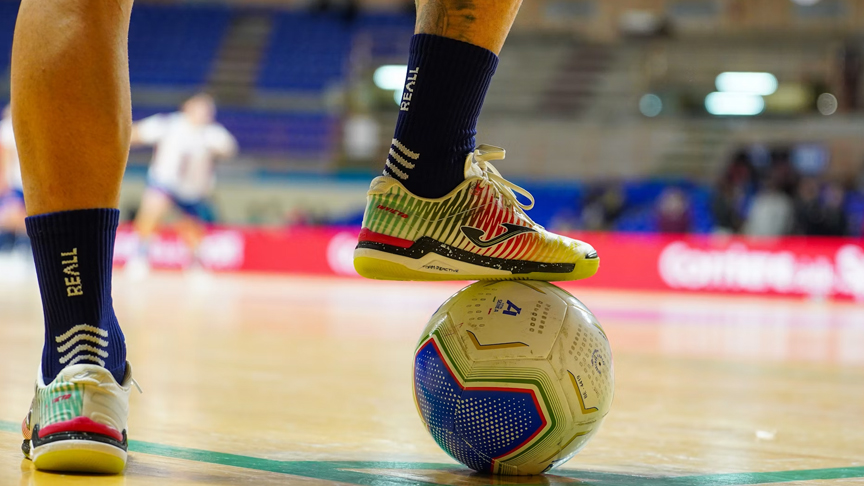
Walking and weight training alone are not enough for strong bones – football and handball may be more effective
Bone formation was stimulated most effectively by activities involving explosive movements, rapid changes of direction, and turning. The findings could help improve exercise programs designed to maintain bone health and prevent osteoporosis.

When it comes to maintaining healthy bones, how intensely we exercise may matter more than how much we exercise, according to researchers at Semmelweis University.
Their study, published in Sports Medicine – Open, found that bone formation was stimulated most effectively by activities involving explosive movements, rapid changes of direction, and turning. The findings could help improve exercise programs designed to maintain bone health and prevent osteoporosis.
Researchers at Semmelweis University analyzed the results of 24 clinical studies involving a total of 1,238 healthy adult participants. Rather than tracking changes in bone mineral density, the studies measured substances in the blood that indicate whether the body is actively building new bone tissue. These so-called biomarkers can reflect the effects of exercise within just a few weeks, providing feedback much earlier than bone density measurements.
“What makes our study unique is that we examined not only the type of exercise – whether endurance, resistance, or combined training – but also exercise intensity, frequency, and duration. Our goal was to determine which forms of exercise stimulate bone metabolism most effectively and which appear to be less beneficial from this perspective,” said dr. Péter Ferdinandy, Vice-Rector for Science and Innovations at Semmelweis University and senior author of the study.
The most effective activities were high-intensity sports involving frequent explosive movements, rapid changes of direction, and turning. Recreational football and handball, for example, were associated with increases of up to 45–46 percent in the levels of substances linked to bone formation. In contrast, walking, step aerobics, and traditional gym-based resistance exercises were generally less effective.
What should you keep in mind?
It is important not to start a high-intensity exercise program suddenly or without proper preparation. This is particularly true for people with cardiovascular, musculoskeletal, or metabolic diseases, as well as those living with osteoporosis. Before beginning a new type of exercise or a more demanding training program, they should consult their treating physician, general practitioner, or a sports medicine specialist to ensure that the activity and its intensity are appropriate for their individual health status.
“The most surprising finding was that resistance training did not produce a significant effect on markers of bone metabolism, even though several professional guidelines recommend this type of exercise for maintaining bone health. Likewise, low- or moderate-intensity endurance exercise, such as walking or jogging, showed no meaningful long-term effect,” explained Viktória Barna, PhD student at Semmelweis University and first author of the study.
This, of course, does not mean that walking or lower-intensity physical activity is without health benefits. However, if the goal is to keep bones strong and healthy for as long as possible, they appear to require a greater mechanical stimulus.
“According to the World Health Organization, regular physical activity offers numerous health benefits. However, our findings suggest that low-intensity exercise alone is not sufficient to stimulate bone metabolism. High-intensity exercise may trigger early beneficial changes in bone formation, potentially helping to slow bone loss and support healthy ageing,” summarized dr. Nóra Sydó, clinical specialist and co-author of the study.
According to the researchers, these findings could contribute to the development of evidence-based exercise programs aimed at maintaining bone health and preventing osteoporosis.








Wellness
Going to the park at least once a week can improve children’s mental health
Children who were taken to the park at least once a week from birth to 11 years old scored, on average, 16.5 per cent better on their mental health assessments compared to those who visited less than once a week over the same period.


Children who visit parks and playgrounds at least once a week may have better mental health and social development as they grow up.
That’s according to a new study by the University of Exeter, published in Epidemiology and Community Health and funded by the UK Medical Research Council and the National Institute for Health and Care Research (NIHR). The research looked at children aged between four and 11, using data from the Children of the 90s study – which follows the same children over many years and helps researchers see how changes in their lives relate to their later health.
Researchers found children who were taken to the park at least once a week from birth to 11 years old scored, on average, 16.5 per cent better on their mental health assessments compared to those who visited less than once a week over the same period. The study also considered and controlled for confounding factors such as socioeconomic status and family adversity.
Lead researcher Mark Ferguson of the University of Exeter said: “Our research suggests encouraging children to visit parks and playgrounds at least once a week could be a practical way to support their emotional wellbeing, social skills and mental health. But for this to work fairly, communities need good-quality parks that are safe, accessible and welcoming to families from all backgrounds.
“Parks give children space to be physically active, which is known to support mental and physical health, as well as helping adventurous and imaginative play to build confidence and independence. We believe parks could be more than places to play, but an important resource for children’s healthy development.”
The study included 4,219 participants and focused on social-emotional development – the skills children need to understand and manage their feelings, get along with others, build relationships, behave appropriately, and cope with everyday challenges. Good social-emotional development is an important foundation for good mental health in childhood and later life.
Researchers found children tended to show better social-emotional development during periods when they went to parks more often. They also found children who visited parks more frequently overall tended to have better social-emotional development than those who went less often.
The study also looked at whether park visits and social-emotional development varied by family background. Children from more advantaged families appeared to go to parks more often when they were younger, but as children got older this pattern changed with some children from less advantaged families visiting parks more often.
This matters because parks are often free or low-cost spaces. The study suggests parks and playgrounds could help reduce inequalities in children’s development – but only if good-quality options are available, safe, welcoming and easy for all families to use.
The data comes from a particular long-running UK study, and researchers say more work is needed to understand whether the findings apply to children in other areas with more diverse communities.
The paper titled ‘Park Visits and Social-Emotional Development throughout Childhood: A Longitudinal Analysis of ALSPAC’ is published in Epidemiology and Community Health.
The Children of the 90s study, also known as the Avon Longitudinal Study of Parents and Children (ALSPAC), is funded by the UK Medical Research Council and Wellcome and supported by the University of Bristol.
NewsMakers
Dance training influences how the brain processes facial emotions
Dance expertise shapes both the visual and embodied perception of emotions, providing new evidence of how specialised motor and artistic training can influence human perception.

Dance training can influence how we perceive not only movement but also everyday emotional expressions, according to new research from the Centre for Cognition and Neuroscience at City St George’s, University of London.
The study, published in the journal Cerebral Cortex, found that dance expertise influences the brain’s early visual and somatosensory responses when observing emotional facial expressions.
The findings build on Professor Beatriz Calvo-Merino’s previous research, which showed for the first time that motor training, such as dance expertise, can modulate how we perceive actions. This latest study broadens that understanding, suggesting that the effects of dance training extend beyond familiar, dance-specific movements to influence the perception of emotions in other people’s faces.
Professor Calvo-Merino, Professor of Cognitive Neuroscience at City St George’s, said: “The impact of dance expertise goes beyond movement and taps into social perception mechanisms, such as face processing and emotions. This is fascinating as it provides direct evidence for the impact of the arts on social cognition.”
To investigate the relationship between dance expertise and emotion processing, the researchers recruited 26 professional or trainee ballet dancers from dance schools across London, alongside 26 people without dance experience.
The team, formed by Dr Vasiliki Meletaki, Professor Bettina Forster and Professor Calvo-Merino, recorded participants’ brain activity using specialised equipment as they completed a task involving the identification of emotions and whether faces were perceived as male or female. Participants were shown images of happy, afraid and neutral facial expressions.
Professor Forster developed the EEG analysis approach used to examine when and where brain responses to emotional expressions differed between dancers and non-dancers, allowing the researchers to investigate how dance expertise influences both visual and somatosensory processing.
The results revealed distinct patterns of brain activity between dancers and non-dancers, indicating that dance expertise influences how emotional expressions are processed through both visual and somatosensory systems.
In particular, dancers showed early differences in their brain responses to neutral and emotional faces, suggesting a distinctive way of processing emotional expressions. They also demonstrated early somatosensory responses to facial emotions, particularly neutral and afraid faces.
By contrast, non-dancers showed emotional effects primarily at later stages of emotional processing compared to dancers.
As a result, the findings suggest that dance expertise shapes both the visual and embodied perception of emotions, providing new evidence of how specialised motor and artistic training can influence human perception.
Professor Bettina Forster said: “What is particularly interesting is that dance expertise appears to influence how the somatosensory cortex responds to emotions expressed by others. This suggests that our own bodily experiences can shape how the brain processes other people’s emotions, providing further evidence for the embodied nature of emotion perception.”
Dr Vasiliki Meletaki added: “It was exciting for us to find empirical evidence for the profound impact professional dance training has on how dancers perceive not only their bodies and dance movements but also other people’s emotional expressions.”
Wellness
Men’s health expert issues warning to fans copying Mark Wahlberg’s early starts
Getting up at 3 a.m. might look like a head start in a social media morning routine. But for men tempted to copy it, there is an important question to answer before setting the alarm: what time will you actually be asleep?

A men’s health expert explains why copying an early alarm without changing your bedtime could leave you tired, unfocused and less productive
Getting up at 3 a.m. might look like a head start in a social media morning routine. But for men tempted to copy it, there is an important question to answer before setting the alarm: what time will you actually be asleep?
Anneliese Cadena, a board-certified nurse practitioner and clinical consultant at Feel30, is encouraging men to protect their sleep when adopting an earlier routine. Moving the alarm forward without bringing bedtime forward can reduce the rest needed to function well during the day.
“If you normally wake up at 7 a.m., suddenly setting your alarm for 3 a.m. while keeping the same bedtime cuts four hours from your opportunity to sleep. That can leave you feeling worse during the day, even if you manage to get out of bed.”
The consequences can undermine the very reason for getting up early. According to the National Heart, Lung, and Blood Institute, insufficient sleep can affect concentration, decision-making and reaction times, leaving people taking longer to finish tasks and making more mistakes.
For someone who needs eight hours of sleep, a 3 a.m. alarm means being asleep by 7 p.m. the previous evening. That also requires time beforehand to wind down and fall asleep.
Start with a smaller change
For men who want an earlier start, a more manageable approach is to adjust the evening routine gradually.
Cleveland Clinic recommends moving bedtime earlier by 15 or 20 minutes for a few days, then making another small adjustment. Its guidance advises seven to nine hours of sleep each night.
Someone who usually wakes at 7 a.m. could start by working toward 6:45 a.m., alongside an earlier bedtime. Further changes should leave enough time for sleep. Moving the alarm forward by a full hour every day can quickly eat into rest if bedtime does not keep pace.
If falling asleep earlier proves difficult, or daytime sleepiness increases, pause further changes and reconsider whether the target wake-up time fits your needs.
Anneliese adds:
“Choose a wake-up time that fits your responsibilities and still gives you enough sleep. Getting up at 6 a.m. and feeling rested may serve you much better than forcing a 3 a.m. start that leaves you struggling through the afternoon.”
An earlier morning starts the evening before
Changing the alarm may also mean reconsidering an afternoon coffee or a late evening spent scrolling.
The NHLBI recommends keeping a consistent sleep schedule and using the hour before bed for quiet time, while avoiding bright artificial light. It also notes that caffeine’s effects can last up to eight hours, which matters when bedtime moves earlier.
Morning daylight can help support an earlier sleep schedule. Spending time outside once it is light is one practical step, although people differ in when they naturally feel sleepy and alert.
What does sleep loss mean for testosterone?
Testosterone is one area researchers have investigated, although the findings do not justify claiming that a 3 a.m. alarm causes low testosterone.
A small University of Chicago study published in 2011, involving 10 healthy young men, found daytime testosterone levels were approximately 10% to 15% lower after about a week of sleep restricted to five hours a night, compared with a longer sleep condition.
However, two randomized studies published together in 2019 did not find an adverse effect on testosterone under the sleep-restriction conditions they tested. The studies used different schedules and measurements, and neither paper tested the social media trend itself.
The evidence supports taking sleep seriously without assuming that tiredness automatically signals a hormone problem.
Wyoming, Alaska and Montana lead searches for testosterone therapy
Separately, Feel30’s analysis of 312 testosterone replacement therapy (TRT) search terms recorded a combined estimated U.S. search volume of 3.37 million between September 2025 and August 2026.
Wyoming had the highest estimated search rate relative to population, followed by Alaska and Montana.
| Rank | State | Estimated annual searches per 100,000 residents |
| 1 | Wyoming | 3,093.0 |
| 2 | Alaska | 2,575.7 |
| 3 | Montana | 2,336.9 |
| 4 | North Dakota | 2,298.1 |
| 5 | Hawaii | 2,174.0 |
| 6 | South Dakota | 2,091.8 |
| 7 | Delaware | 2,056.7 |
| 8 | New Hampshire | 2,041.2 |
| 9 | Vermont | 2,029.0 |
| 10 | Rhode Island | 2,011.6 |
Rates use total state populations. Figures estimate searches, not individual searchers, patients or diagnoses.
Wyoming’s rate was almost three times California’s 1,045.7 searches per 100,000 residents. California recorded the largest total estimated volume, at 411,520, but ranked 41st once population was taken into account.
The rankings show geographic differences in search activity. They do not identify the states with the lowest testosterone, and the analysis did not measure sleep habits or establish any connection with early waking.
When tiredness needs checking
Persistent tiredness deserves a medical assessment, especially alongside loud snoring, gasping during sleep or breathing that stops and starts. These can be signs of sleep apnea.
Tiredness alone cannot diagnose low testosterone. The Endocrine Society recommends diagnosis only when compatible symptoms and signs are accompanied by consistently low testosterone levels, confirmed through repeat morning fasting blood tests. Treatment decisions require an appropriate clinical assessment.

Stress more strongly linked to poorer quality of life among adults with multiple chronic conditions

Neighborhood ties and social connections are linked to high recycling participation

Going to the park at least once a week can improve children’s mental health

A longevity diet is not just about eating less—it is what, when, and for whom

Dance training influences how the brain processes facial emotions

Study reveals how gut antibodies protect against colon cancer

Jolting awake often is associated with poorer sleep and higher anxiety, survey finds

Curiosity and fearlessness apparent in German Shepherd genes

Could an erratic sleep schedule be harming your mental health?

High-fat diet may increase colon cancer risk by changing intestinal stem cells

Dogs and owners disturb each other in the night, but still get pretty good sleep

Can pistachios support sleep? Here’s what a new scientific review found

For weight loss, where food comes from may matter as much as how it is processed

Mindfulness and self-compassion can alleviate premenstrual symptoms

Music can enhance the flavor of your food
Curiosity and fearlessness apparent in German Shepherd genes

Epigenetic clocks reveal why larger dogs age faster
Study reveals how gut antibodies protect against colon cancer
Stress more strongly linked to poorer quality of life among adults with multiple chronic conditions
Jolting awake often is associated with poorer sleep and higher anxiety, survey finds

-
 Pet Care3 weeks ago
Dogs and owners disturb each other in the night, but still get pretty good sleep
-
 Nutrition3 weeks ago
Can pistachios support sleep? Here’s what a new scientific review found
-
 NewsMakers3 weeks ago
For weight loss, where food comes from may matter as much as how it is processed
-
 NewsMakers3 weeks ago
Mindfulness and self-compassion can alleviate premenstrual symptoms
-
 NewsMakers3 weeks ago
Music can enhance the flavor of your food
-
 Pet Care4 days ago
Curiosity and fearlessness apparent in German Shepherd genes
-
 Pet Care3 weeks ago
Epigenetic clocks reveal why larger dogs age faster
-
 NewsMakers4 days ago
Study reveals how gut antibodies protect against colon cancer