
Destinations
El Nido, Palawan: Postcard Perfect
The appeal of the province of Palawan may be mainly its being a largely untouched place. But as M.D. dela Cruz Tan discovers, there’s more to this place than meets the eye.


PHOTO BY O. ROMERO, COURTESY OF JINGJING ROMERO
The first time Australian D.J.M. Winters stepped on the shores of Miniloc Island, in El Nido, north of Palawan, to visit the country’s “Last Environmental Frontier,” as well as “check out what business ventures may be there,” he noted that “it was like stepping on a photograph come to life,” he says. “Everything seemed too good to be true. Palawan is almost surreal for its beauty.”
Winters’ amazement is understandable, what with Palawan long considered a land of clichés, at least as far as the image of a stereotypical tropical paradise is concerned. Sandy white beaches stretching for miles, incessantly kissed by the crystal clear waters that mirror the blue sky, or reflect rolling clouds as they pass, seemingly lovingly blown by the whistling wind, just as they make the tall palm trees by the beaches bend, dancing to a tune only they can hear – all of them are in Palawan. And so much more, actually.
“It most certainly is full of surprises,” Winters says.
RICH HISTORY
Not largely known is the province’s rich history, best exemplified by the antiquities that abound there. Underwater or on the ground, however, Palawan has something to offer everyone.
Named after the nests of swiftlets (the main ingredient in the world-famous Nido Soup), El Nido (Spanish for the nest) is a 50,000 hectare-town of 18 barangays populated by some 27,000 people “very overprotective about their settlement,” notes Winters. “Rightly so, though, what with the place’s ecological treasures – all deserving of superlatives, but all fragile, and seemingly always in threat.”
Among Winters’ “favorite occurrences that are bound to be reminisced time and again” include kayaking from island to island, “my concentration broken only by the flapping wings of sea hawks, sighting unseen preys as they circle limestone cliffs formed millions of years ago;” bird watching, especially since El Nido’s forests are home to over 100 species of birds, many of them endemic to Palawan; stargazing, “realizing how small we are in the scheme of things;” island hopping to “see that here, seeing beauty never stops;” and simply admiring nature, such as “observing the peculiar looking pitcher plants that, to better their chances of survival, evolved to hang ever so low, almost touching the waters as they dangle from the rocky cliffs, waiting for whatever it is that will get trapped in their cavernous carafes to sustain them,” Winters says. “Nature 101.”
Amazement is, indeed, everywhere in Palawan.
In Miniloc Island, right off the pier is a rich marine world teeming with life, so that those snorkeling are literally inundated by swimming groupers, fusiliers, parrot fish, and other fish species that are normally only seen in, say, Animal Planet. In Lagen Island, mangrove tours, especially before at the break of dawn, right before the sun starts bathing with golden color everything under it, wild birds, many of them migratory, fly from their nests, their graceful motions mirrored by the waters under them.
In Matinloc Island, there’s the not-so-secret Secret Beach, worth visiting for a “glimpse of the sense of total seclusion,” Winters says, even if it is only accessible by snorkeling through a small crack in the limestone walls that envelope it.
And then there are the Big and Small Lagoons, both welcome retreats, with their pristine waters seemingly contradicting the roughness of their source, the “unruly sea” right outside their confines. There, it’s a different world altogether, filled with rock formations that resemble elephant tusks, a praying Virgin Mary, the caped crusader Batman hiding behind some rocks, phallic idols – “whatever,” Winters says. “It’s more like a cloud, actually, wherein you see them as what you want them to be. Like a fantasy, you can tailor-fit it to suit what you want. El Nido’s cliffs are like that, too. A hark back to the times when nature was magical.”
LAND OF BOUNTY
No wonder, thus, that “I’m looking at staying here for good,” Winters says with a laugh. The same appeal has actually already made ”regular inhabitants out of many who visited Palawan,” says Mickey Castaño of Belcas Realty Corp., which “recognizes the place’s great potential.”
Enterprise Magazine earlier reported (Paradise Found, March 2006) that there are opportunities to buy beachfront properties, or even entire islands, in the various towns of Palawan – and all at very affordable prices. In El Nido, for example, lots sell for about P1,500 per square meter, while small islands can be bought for as low as P200 to P300 per square meter. Adds the online publication Offshore and Real Estate Quarterly (escapeartist.com), beachfront properties with a frontage of approximately 300 feet (90 meters), and a total area of under two hectares cost less than P175 per square foot – roughly equal to 20 US cents, or less than $2.25 per square meter.
“This makes it an ideal time to invest,” says Castaño, who stressed that there is, however, “an urgency in investing since local officials (recognize) that in order to preserve Palawan’s beauty, over-development should be avoided, (and so) only a limited number of developments are allowed.”
Again in El Nido, only 32 resort developments are allowed, “making it good for those who invest in the place, what with less competition, but, more importantly, preserving the place’s appeal, which is its largely untouched beauty,” Castaño says.
On the bangka (dinghy) that carried him from Miniloc Island to the pier right by the local airport, where some brightly-clad locals were singing farewell songs in the local Cuyunin language, Winters was already “in a nostalgic mood,” he says. “You just want the experience to last.”
As if catching himself from turning mawkish, he laughs. Palawan, Winters says with a hearty laugh, is cliché personified. “It’s almost poetic, I tell you. And even that (claim) is admittedly cliché, too. Just as I tell you you’ll keep coming back here once you’ve already been here.”
*First published in Outrage Magazine in January 2009; reprinted with permission.








Destinations
Enjoying the grilling at Mandaue City’s Matias BBQ
#Mandaue City’s #MatiasBBQ is worth checking as your #LGBT alternative to dining in the open in #Cebu.
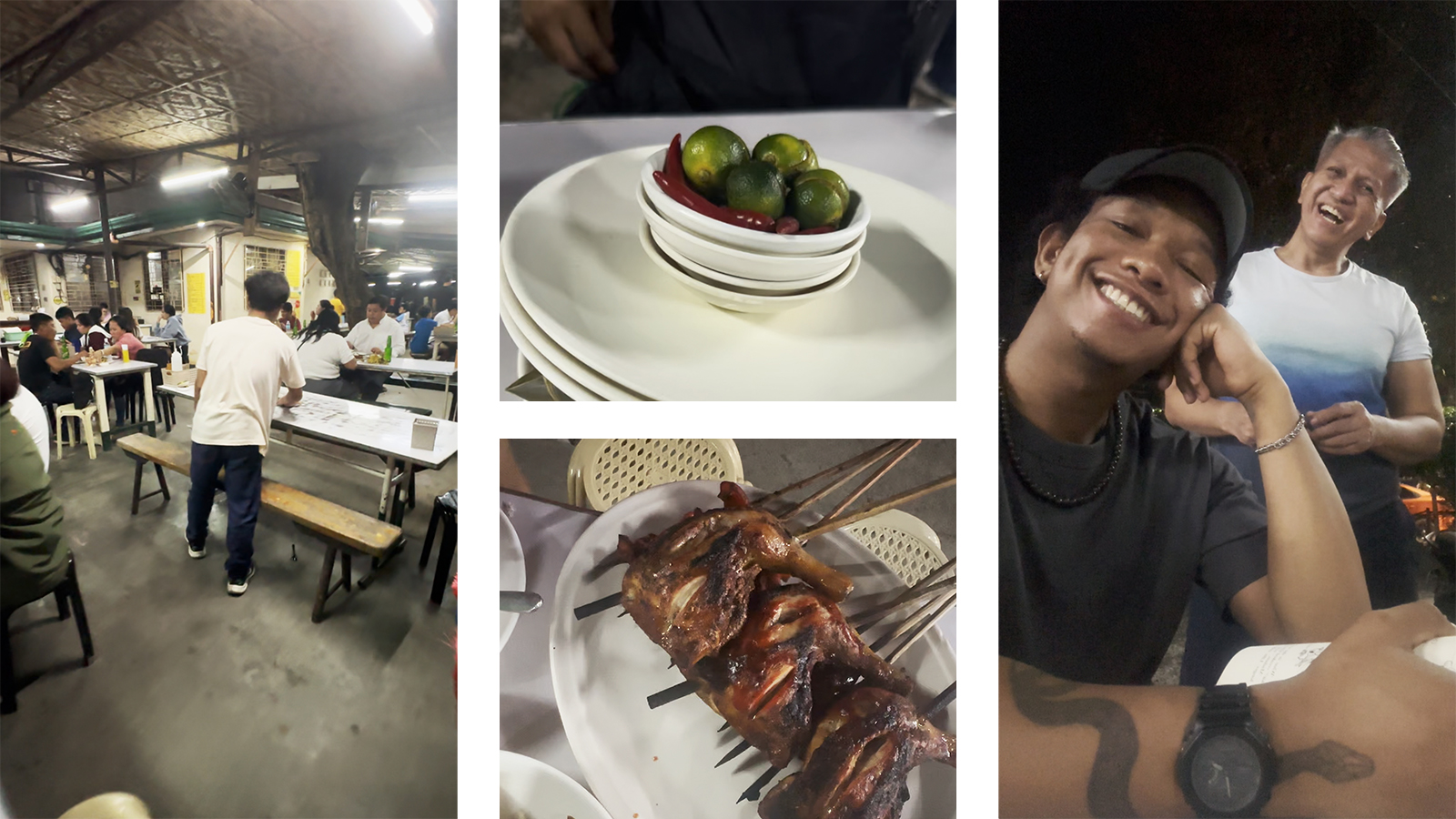
Seriously considering Larsian to try grilled goods in Cebu City, a friend recommended for us to try, instead, Matias BBQ. “It’s cleaner,” she said, adding: “And yummier, of course.”
So we checked… and how was the visit to Matias BBQ for us?
@outragemag #Mandaue City’s #MatiasBBQ is worth checking as your #LGBT alternative to dining in the open in #Cebu ♬ original sound – Outrage Magazine
Una, the place is NOT in Cebu City. It’s in nearby Mandaue City. We didn’t check where the BBQ place is, exactly; we just took a Grab and pinned the address. We just noted that the travel took a while, and yes, the fare wasn’t cheap (LOL).
Ikalawa, this is an open-air venue, similar to Larsian, though the difference is, here, there’s just one vendor (Matias BBQ). Maarte people beware: this isn’t for you.
Ikatlo, the servers were friendly… a pleasant surprise considering the number of people they had to serve. They knew what to recommend, and quickly dealt with some concerns (e.g. replace what was deemed stale rice).
Ika-apat, how was the food naman?
- The chicken – including the ₱85 pecho and ₱95 paa – were well-seasoned and well-cooked, remaining moist and not dry. Lasa-wise, they were smoky and sweetish.
- The ₱16 chorizos were actually good, properly cooked so that we were still able to taste the meat and accompanying sahog of garlic and the likes. This made us realize that when deciding to cook longganisa from Cebu, consider grilling instead of frying in oil. It just tastes better that way.
- The ₱165 balbacua (beef rind and oxtail soup) served to us was already cold, so was already greasy. The collagen-rich cuts were soft, and there were okay-tasting veggies, but the broth was already slimy from being oily.
- The ₱12 pusô was inconsistent; some were already stale (perhaps old stocks), and the others fresh. It’s hard to ascertain which is which since you’d be served with a lot. Order freshly-cooked rice if apprehensive… though this takes away from the overall experience of eating in a place like this.
Here’s the thing: our total bill was cheaper than the fare we paid to Grab to go there.
And so, for us, if this is accessible to you, consider this an alternative to, say, the likes of Larsian. That the food is good has to be emphasized, done in an outdoor setting that’d remind you of eating in the probinsiya.
But off we go again, in search of more LGBTQIA+ lagangan venues…
Open from 11.30AM to 8.00PM, Matias BBQ is located along A.S. Fortuna St., Banilad, Mandaue City.
Destinations
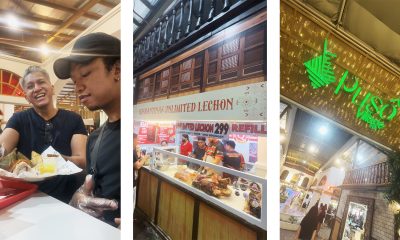
Eating out in Cebu in one place via Pusô Village
Checking out #Cebu’s all-in-one dining location, the Pusô Village that may simplify eating out but seems to forget our desire to see diverse #foodie hubs.
In the past, if you wanted to grab some of the food associated with Cebu, you headed to – among others – Larsian, this place not too far from Fuente Osmeña Circle. It wasn’t necessarily popular with the locals who saw (and still see) it as unhygienic, but it’s this easy-to-access BBQ place that’s open 24/7.
Starting 2025, however, a new place was opened to serve as the one-stop culinary and cultural hub of Cebu City: the Pusô Village.
@outragemag Checking out #Cebu's all-in-one dining location, the Pusô Village (#pusovillage) that may simplify eating out but seems to forget our desire to see diverse #foodie ♬ original sound – Outrage Magazine
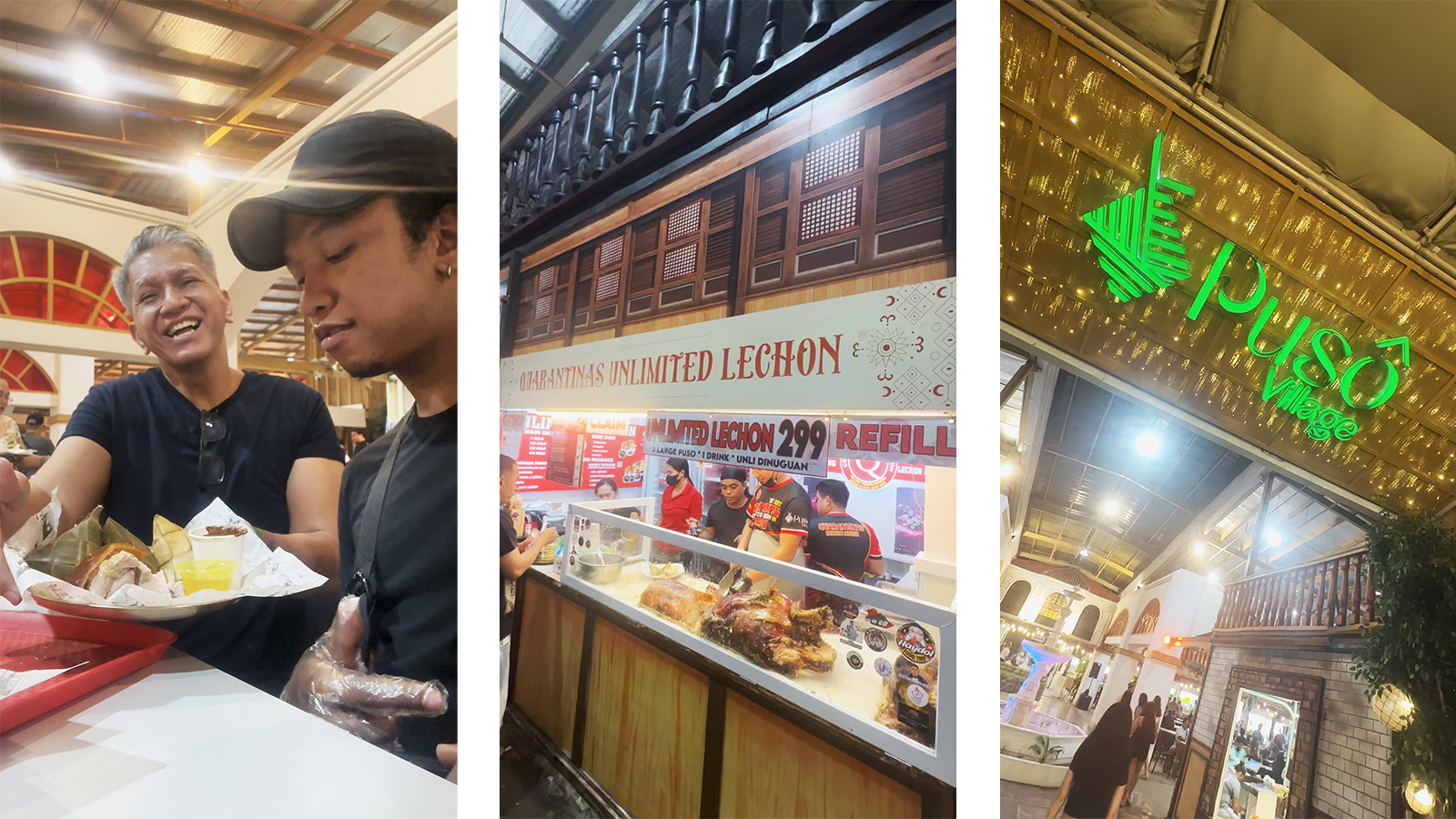
Una, developed by Cebu2World/Megawide as part of the Carbon Market modernization, this place’s name drew inspiration from the pusô rice cake that’s served when you have meals in Cebu. There are, therefore, design elements that’d remind you of the pusô – e.g. those octahedral shapes on the entrance. Inside, there are attempts to beautify by borrowing elements from Bahay na bato Philippine architectural style; most are fake, though, such as those painted-on verandahs you’d see when you look up.
Ikalawa, there are over 100 food stalls and retail outlets here… though more of the former than the latter. They’ve been “properly” structured, so that the lechon vendors are on one side, seafood sellers on another side, and so on.
Ikatlo, we tried some of the offerings to ascertain how good they are.
The unlimited lechon is popular, providing an opportunity particularly for non-locals to cheaply enjoy this Cebuano treat. Taste-wise, the lechons vary little, some saltier than the others. The “approach” in serving is similar, though. You get an okay portion when first served, and the portion gets smaller the more you return. Noticeably, by the third refill, the vendors become grumpier when serving you, some even ignoring you, or stuffing fatty parts on your plate. Business greed in action.
Though cooked the same way (i.e. buttered), the seafood platters are inconsistent. You could get some shrimps or crabs now and then, though most times, you’d just get mussels.
Then there’s the tuslob-buwa, pig’s brain cooked under maximum heat to then become dip for pusô. We’d say this is acquired taste… but there’s not much to taste. So this is a costly to-try food.
Only open until 10.00PM, Pusô Village offers those in Cebu a venue to try as many of the local goods as possible. For that, alone, this is a must-check. You are sure to find a few stuffs you’d like.
But the city still has a lot of venues offering local culinary and cultural goods, and they deserve to be also checked. And so off we go for more LGBTQIA+ rampa…
Pusô Village is located at M.L Quezon Blvd., Sto. Nino, Cebu City.
Destinations
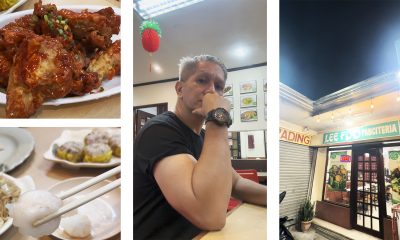
Going Chinese in Pulilan, Bulacan
Craving for #chinesefood in #Bulacan? We tried the offerings of Lee Foo Panciteria #Pulilan, and we’re on the fence here (yes if no choice, no if you can go elsewhere).
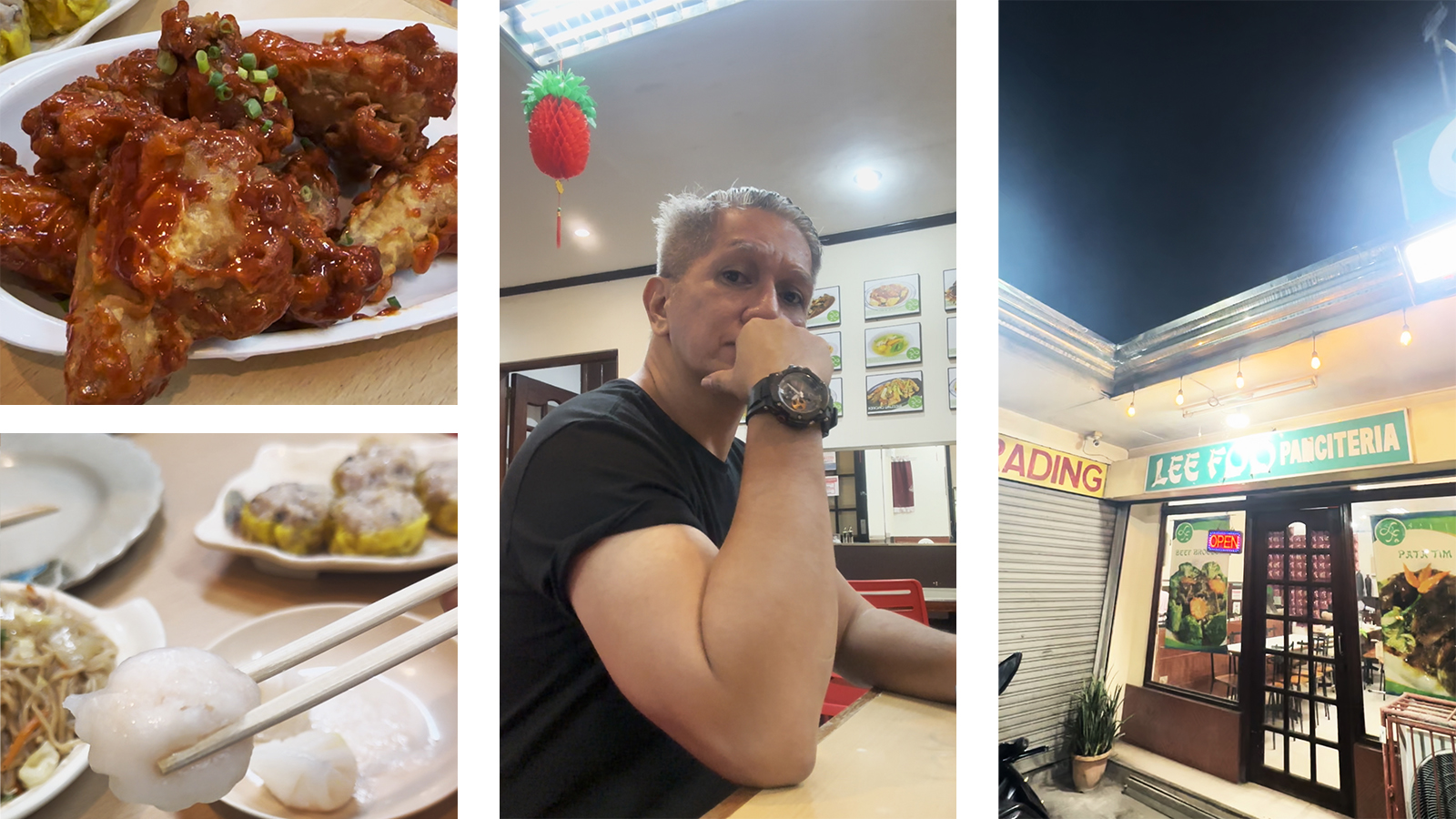
We happened to be in Pulilan in Bulacan, and I had pancit craving. As if on cue, we passed by Lee Foo Panciteria Pulilan, which – after we Google-checked – is supposedly one of the more frequently-visited Chinese restos in these parts of the province, so… of course we checked.
@outragemag Craving for #chinesefood in #Bulacan? We tried the offerings of Lee Foo Panciteria #Pulilan ♬ original sound – Outrage Magazine
Una, this place is really, REALLY easy to find. Located along the Pulilan Regional Road in Barangay Cut-cot in Pulilan, this is right in the middle of the municipality.
Ikalawa, the resto is actually divided into three parts: one side is for those with reservations, another part is for walk-in diners, and another part is for events. If/when the resto isn’t full, only the main part (middle one) is kept open.
No, this isn’t some fancy resto. More like an airconditioned karinderya, complete with wooden tables and plastic chairs. Look-wise, it wasn’t dirty naman when we were there, so that’s a plus.
Ikatlo, the workers were friendly naman… and they moved fast – e.g. while waiting for our orders, we were given must-check peanuts, and since we finished what we got fast, our waitress was more than happy to accommodate us.
Ika-apat, now… how was the food?
The house specialty, the Lee Foo Chicken (₱265 for half, ₱495 for whole), looked like fried chicken with ketchup. Okay… the breading was okay since it didn’t overpower the meat. The chicken, too, was properly cooked, and it wasn’t dry. But it was tasteless overall; so the ketchup taste is what stays with you.
The Pancit Canton Bihon (₱255) had thin pancit noodles, almost as thin as the bihon. It didn’t have lots of sahog; instead, you’d notice the extenders (like kikiam, and so on). I like good pancit, I swear… but this isn’t one of them, sorry.
The weirdly-wrapped Hakaw (₱155) was small, so it was bitin.
And then there’s the Siomai Steam (₱155), which was, in a word, weird. The size was good, similar to those ₱10 siomais. But the way this was prepared was weird for us – e.g. like the meat was overwatered, and having a hard time staying solid, so that it was smudgy, and disintegrated in the mouth even without chewing. I suppose that, at least, it wasn’t disgusting taste-wise.
Lee Foo Panciteria Pulilan is, we believe, popular. Like President in Chinatown, or a branch of David’s in some mall. To each his or her own nga naman. But for us, we’re off to look for other Chinese restos na muna as we head out in search of more lafangan venues.
Lee Foo Panciteria Pulilan is located at 159 Barangay Cut-cot, Pulilan, 3005 Bulacan Province. For more information, contact 0925 800 0168, or email leefoopanciteria@yahoo.com.

Study links coffee consumption to metabolic health and sex hormones

Manulife Investments Philippines leads UITF rankings across equity and fixed income funds

Scheduling dental care during prenatal visits boosts oral health care during pregnancy

Enjoying the grilling at Mandaue City’s Matias BBQ

Dogs can distinguish between human fear and sadness

Pet dog microbiota may protect young children from respiratory tract infections and reduce the need for antibiotic courses

Walking and weight training alone are not enough for strong bones – football and handball may be more effective

Keeping kitty indoors is not the cat-astrophe that owners fear

Why a UTI hurts — and why that might be a good thing

Pregnancy complications can signal heart disease risk years before traditional screening, study finds

Filipinos prioritize independence as legacy for longer lives

Coffee and heart health: How many cups of caffeinated coffee are safe to drink each day?

Going Chinese in Pulilan, Bulacan

Eating out in Cebu in one place via Pusô Village
Pregnancy complications can signal heart disease risk years before traditional screening, study finds
Why a UTI hurts — and why that might be a good thing

Posture can influence your mood and behavior, study suggests
Walking and weight training alone are not enough for strong bones – football and handball may be more effective
Pet dog microbiota may protect young children from respiratory tract infections and reduce the need for antibiotic courses
Dogs can distinguish between human fear and sadness

-
 NewsMakers3 weeks ago
Filipinos prioritize independence as legacy for longer lives
-
 NewsMakers3 weeks ago
Coffee and heart health: How many cups of caffeinated coffee are safe to drink each day?
-
 Destinations3 weeks ago
Going Chinese in Pulilan, Bulacan
-
 Destinations2 weeks ago
Eating out in Cebu in one place via Pusô Village
-
 NewsMakers2 weeks ago
Pregnancy complications can signal heart disease risk years before traditional screening, study finds
-
 NewsMakers2 weeks ago
Why a UTI hurts — and why that might be a good thing
-
 NewsMakers2 weeks ago
Posture can influence your mood and behavior, study suggests
-
 Wellness2 weeks ago
Walking and weight training alone are not enough for strong bones – football and handball may be more effective