
Destinations
Waiting for tuna in Albay
Today, about 52% of the country’s fish exports come from tuna, which buoys the lives and livelihoods of millions of Filipinos. WWF’s Global Oceans Campaign, Sustain Our Seas, builds on decades of work to rekindle the health and productivity of the Earth’s oceans.


By Gregg Yan

A little boy admires his family boat’s sigil – a jumping Bankulis or Yellowfin Tuna. The boy’s future might very well depend on whether these oceanic giants keep on jumping.
PHOTO COURTESY OF WWF-PHILIPPINES
Late afternoon and we’re holed up in a hut along the coast of Tiwi in Albay, trading fish tales and waiting for fishermen to return. Sitting around us are their wives, mending nets and eyeing the swelling crowd of kids cajoling in the surf. It is June, the season for yellowfin tuna.
The first of the bancas arrive, unloading a decent haul of pundahan or skipjack – small, striped tuna which have proven surprisingly resilient to commercial fishing. Bancas two and three return empty-handed while a fourth disgorges a tub of galunggong or scad. Just one bankulis or yellowfin tuna has been landed, hours earlier. She tipped the scales at 39 kilograms, golden sickle-fins resplendent even in death. We wait until the sun dips into the sea, but no more tuna come.
“The Lagonoy Gulf is the Bicol region’s richest tuna site – but it is heavily overfished,” explains BFAR National Stock Assessment project head Virginia Olaño. “Two decades ago, fishers regularly caught large yellowfin. In 1998, a fisherman landed a 196 kilogram giant, long as a car and fat as a drum. Now yields are waning and yellowfin average just 18 to 35 kilograms – meaning juveniles have replaced adults.”
Though yellowfin tuna are highly-prized, they are far more than mere seafood. Top predators in the marine food chain, they maintain the balance between oceanic predators and prey. “Today the Lagonoy Gulf’s most common fish are anchovies,” warns Olaño. “There aren’t enough predators to eat them – because we’ve eaten most of their predators.”
To stop overfishing and help manage existing tuna stocks in Bicol, the World Wide Fund for Nature (WWF), Bureau of Fisheries and Aquatic Resources (BFAR), plus the Philippine Council for Agriculture and Fisheries (PCAF) convened the first meeting of the Gulf of Lagonoy Tuna Fishers Federation (GLTFF), comprised of the coastal municipalities ringing the Lagonoy Gulf – 3070-square kilometers of sea separating the Bicol mainland from the storm-swept island of Catanduanes. Over 500 people attended Bicol’s first large-scale gathering of fishers, held at the Lagman Auditorium of Bicol University’s Tabaco Campus.
“We’ve waited three years to formalize this federation, which covers 2000 tuna fishers in the Lagonoy Gulf,” says BFAR Assistant Regional Director Marjurie Grutas. “GLTFF aims to synergize fisheries management while optimizing cooperation, knowledge-sharing and enforcement. We aim to eliminate illegal fishing, minimize the capture of juvenile tuna and drive commercial fishers away from municipal waters – the three leading causes of overfishing.”
Since 2011, WWF has been working to enhance yellowfin tuna management practices for 5000 fishers in 112 tuna fishing villages around the Lagonoy Gulf and the coast of Occidental Mindoro.
WWF’s Public Private Partnership Programme Towards Sustainable Tuna (PPTST) has since organized tuna fishing associations in all 15 municipalities in the Lagonoy Gulf, plus six LGUs in the Mindoro Strait. It spearheaded the registration and licensing of tuna fishers, vessels and gear to minimize bycatch and illegal fishing, deployed 1000 plastic tuna tags to make the fishery traceable, and completed a series of training sessions on proper tuna handling to ensure that exported tuna continually meet international quality standards.
PPTST harnesses market power and consumer demand to promote sustainably-caught tuna and support low-impact fishing methods like artisanal fishing with hand-line reels – better alternatives to commercial tuna long-lines, which stretch up to 80 kilometers and are rigged with up to 3000 baited hooks.
Funded by Coop, Bell Seafood, Seafresh and the German Investment and Development Corporation, PPTST involves European seafood companies plus their local suppliers, BFAR, local government units in the Bicol Region and Mindoro, the WWF Coral Triangle Program, WWF-Germany plus WWF-Philippines.
Today, about 52% of the country’s fish exports come from tuna, which buoys the lives and livelihoods of millions of Filipinos. WWF’s Global Oceans Campaign, Sustain Our Seas, builds on decades of work to rekindle the health and productivity of the Earth’s oceans.
“Federations like GLTFF are the resource management systems of the future,” concludes WWF-Philippines president and CEO Joel Palma while sampling maguro sashimi (thinly-cut tuna slices) sourced from the sole 39 kilogram yellowfin landed in Tiwi.
Savoring sashimi, I hope that by working to conserve their shared resource, Lagonoy Gulf’s fishers might someday herald the return of the giant bankulis. Now that fish tale should be worth the wait.

A fisherman shows off a colorful squid lure, used to entice large pelagic predators to bite.
A plethora of makeshift items – from dyed feathers and rubber squid to shredded plastic bags – are used to attract and catch tuna, billfish and mackerel.
Each fisher has his own formula: “I use a combination of rubber squid and shredded plastic lures, but my real secret is squid ink, which I tie-off in tiny plastic bags. As the lure moves, the squid ink squirts out. Fish find this irresistible,” shares Miguel Borres, a grizzled veteran.
Though gear has evolved, many fishers still rely on age-old techniques to collect their quarry.
PHOTO COURTESY OF WWF-PHILIPPINES

Yellowfin Tuna are so-named because of their canary yellow fins and finlets.
The torpedo-shaped fish have clocked in speeds of 75 kilometers per hour – almost TWICE the speed of the world’s fastest person, Usain Bolt!
PHOTO COURTESY OF WWF-PHILIPPINES

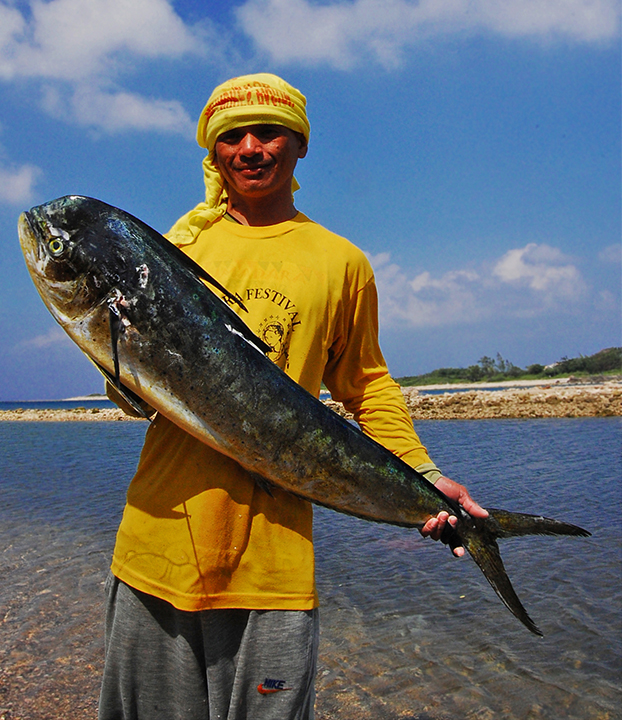
The most sought-after fish in Bicol’s Lagonoy Gulf is the Yellowfin Tuna. A fisher shows off a handsome 39-kilogramme fish.
Two decades ago, fishers caught a 196-kilogramme Yellowfin – the largest caught in the Gulf.
Classified by the International Union for the Conservation of Nature (IUCN) as near threatened, Yellowfin Tuna sport metallic blue backs, golden flanks and a silver belly. Sickle-shaped dorsal and anal fins, hued bright yellow, grant them their name.
They form schools with other tuna species and sometimes with dolphins. While most fish have white flesh, tuna tissue hosts loads of myoglobin, which efficiently oxygenates their systems to give tuna meat a distinctive red hue and mouth-watering texture. This is why they’re so highly sought after.
WWF works to conserve tuna stocks in the Philippines through its Partnership Programme Towards Sustainable Tuna (PPTST) project.
PHOTO COURTESY OF WWF-PHILIPPINES

Smaller fish such as scad and mackerel comprise the majority of fishers’ subsistence hauls.
PHOTO COURTESY OF WWF-PHILIPPINES
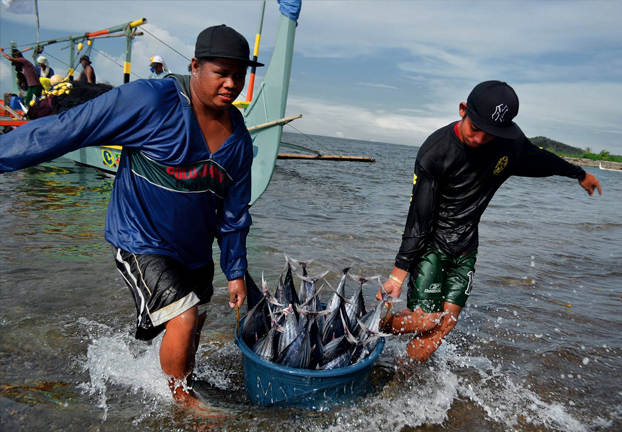
A fisherman rests after unloading his craft’s catch.
Thousands fish under the shadow of Mayon Volcano, whose rich volcanic nutrients fuel blooms of plankton – the essential base of the marine food pyramid.
PHOTO COURTESY OF WWF-PHILIPPINES




Destinations
Revisiting Sizzling Plate along Session Road in Baguio City
We checked (for the second time) one of Baguio City’s popular steakhouses: Sizzling Plate.

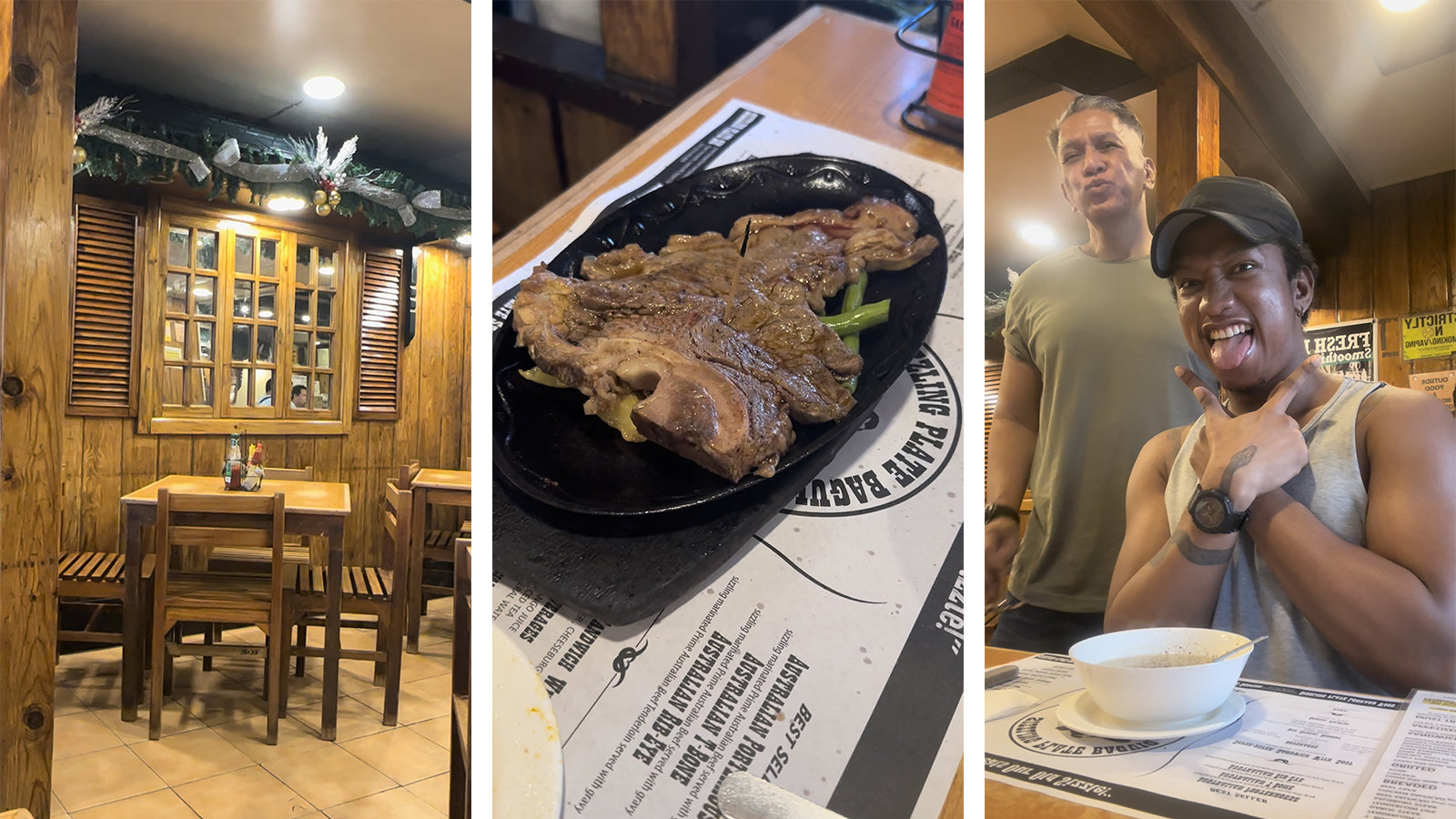
Truth: The first time we visited Sizzling Plate along Session Road in Baguio City, we were surprised. For a not-classy (and some may even say shabby and karinderya-looking) steakhouse, what the place offered were actually better-than-okay food – e.g. the steaks were properly cooked, the fries crunchy, the soup not runny, and so on.
@outragemag Looking for cheap #steaks in #Baguio? We #LGBT ♬ original sound – Outrage Magazine
Truth: Sometimes, for good memories to stay good, don’t revisit to recreate them… which we unfortunately did by revisiting Sizzling Plate during a recent Baguio City trip.
And, sadly, the second time was such a letdown we wondered why we even liked it when we visited it for the first time.
Harsh? Perhaps… but let us explain why…
Una, this place – which was established in 1978 by couple Mike and Edna Anton – is very easy to find, as it sits right in the middle of Session Road, which is in the very center of Baguio City’s commercial area.
Ikalawa, décor-wise, the place looks rustic… like a Filipinized version of some rancher’s diner filled with wooden chairs and wooden tables and so on. Let it be said, however, that this place could use an upgrade – e.g. it looks dated (the “before” if this is to be renovated by Chef Gordon Ramsay in Kitchen Nightmare), has dated stuff (like those flimsy cutlery), and so on.
Ikatlo, the workers are still nice. We remembered some of them from our past visit, and while they – understandably – couldn’t remember all their diners, they were still pleasant while serving (e.g. could explain what’s on the menu, delivered the correct orders, and so on).
Ika-apat, how was the food?
- Y’all get free mushroom soup… which is, basically, a watery concoction that tasted like it was made from powder mix. Particularly when Baguio City gets cold, this should suffice to warm you while waiting for your food.
- All steak meals came with fries (stuffed under the slab of meat, so that when they reached us, we just got burnt potato slices that were too soggy to be called fries); veggies (though we really just got a few Baguio beans); and Java rice.
- The Australian Porterhouse (₱460) was smaller albeit thicker. Meanwhile, the T-bone Steak (₱420) was bigger-looking and yet thinner. Always remember that with sizzling steaks, the meat gets overcooked – i.e. we ordered medium rare, but by the time we ate, the meats were already well done. Also, both steaks served to us tasted too margarine-y… and too chewy to be enjoyable at all.
In truth, Sizzling Plate continues to be really popular. Understandably so because of: 1. it is historic; 2. it’s location (right in the middle of Session Road in the middle of Baguio City); and 3. cheap goods. But – for us – Baguio City actually has more to offer that should be checked, including alternatives to this venue (e.g. the fillet mignon of Café by the Ruins is same-priced, but way, WAY better). So, puwede magtiis here, or go discover is the advice.
And so off we go as we search for more lafangan venues…
Sizzling Plate is located at 86 Session Rd., Baguio City.
Destinations
Taste of Thai in Tanay, Rizal
Diluting of flavors is common among Thai restaurants in many parts of the Philippines. So the discovery of Kamala Café in Tanay, Rizal was, admittedly, a pleasant surprise because this one’s serious in offering goodies from Thailand.

For those heading to Thailand, I always recommend eating local. That is, to avoid eating in restaurants – fancy or not – and try grabbing Pad Thai, for example, from some Thai karinderya or those street vendors in Silom or Chatuchak or wherever. Tourist-centric venues tend to dilute their flavors to accommodate non-Thai taste buds. But Thai cuisine is very distinct, and toning down these flavors remove their being Thai food in the first place.
@outragemag Looking for #thailand #Thai cuisine in #Tanay, #Rizal? We #LGBT checked #KamalaCafe ♬ original sound Outrage Magazine
This diluting of flavors is what’s common when you find Thai restaurants in many parts of the Philippines. And so the discovery of Kamala Café in Tanay in the province of Rizal was… admittedly, a pleasant surprise.
Una, going to the place is challenging for those who do not have private vehicle/s. It isn’t exactly near Metro Manila, and public transportation is hard to come by there.
Ikalawa, make use of the guides in front of the venue. This is essential because this is in some compound, and you may find yourself in the neighboring seafood restaurant instead. This is also important because the narrow path leading to the restaurant can get slippery when wet. You’d need someone to tell you to go slow, go slow…
Ikatlo, the restaurant itself is… modern rustic. You get open-air seating with not-bad views of the largely untouched mountain ranges. But be warned that the place can get cold, and – when raining – water just pours in.
Ika-apat, the people working there were better-than-okay naman, not just knowledgeable about the restaurant and its offerings, but provided requested services (e.g. move the food to another table for the shoots).
Ikalima, how was the food?
- The Som Tam (₱235) was, actually, Thai-tasting: fresh veggies used, better-than-okay dressing, and so on. If there’s an issue – a very tiny one – it’s the puwede pa to add more oomph by adding more palm sugar and fish sauce. But, yeah, we’d take this over all the papaya salads we’ve so far tried…
- The Pad Thai (₱325) was a win for me. It’s hard to find one that tastes like those offered in the streets of, say, Bangkok, and this one’s almost there.
- The not-skinny slices of Satay Chicken (₱365) were properly cooked naman, so that’s good. An issue, for Arthur, is that this is “nothing special”. BBQ chicken lang siya.
- Tom Yum (₱475) was – indeed – spicy and tangy, but it was also runny.
- The drinks were the disappointment – e.g. selling for ₱185, the Hot Koko tasted like Ovaltine lang.
Tanay isn’t exactly easily accessible to all, so if you decide to eat at Kamala Café at all, you have to be willing to allocate time, money, et cetera, which everyone is not willing to do. But yeah… this one’s a better-than-okay choice, indeed, for a Thai restaurant. So check out if able to.
But off we go to search for more lafangan venues…
Kamala Café is located at KM54 Marilaque Highway, Brgy. Cuyambay, Marikina-Infanta Highway, Tanay, Rizal.
Destinations
A taste of Bicol via Small Talk Café
In #LegazpiCity for this #LGBT wandering, checking out what #Bicol has to offer via Small Talk Café.

Not all provinces in the Philippines have memorable local cuisines. Some that stand out are Kapampangan, Cebuano, and… yep, Bicolano. We all know, for instance, that gata or coconut milk is widely used in usually-spicy Bicolano food. That’s because many of us have tasted at least some of their offerings, no matter where we may be in the country.
@outragemag In #legazpialbay for this #LGBT wandering, checking out what #Bicol ♬ original sound – Outrage Magazine
And so – while in Legazpi City – we headed to Small Talk Café, this known restaurant offering supposedly authentic and deconstructed delicacies from the Bicol region.
How was Small Talk Café naman?
Una, the restaurant is easy to find. It helps that people know of it, so you can take public transport and – yep – you will be taken there.
Ikalawa, the actual restaurant is… antiquated. It actually looks like someone’s provincial house that’s been converted into a dining place, so don’t expect much design-wise. But at least you get ample seating in a not-that-tight space.
Ikatlo, most of the people working there are women who know the venue’s offerings. There are some half-truths given (e.g. their version of the sili ice cream not properly explained), but overall, they were helpful naman.
Ika-apat, how was the food?
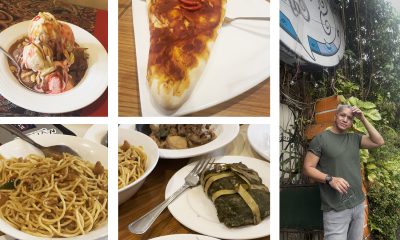
- The Pinangat/Laing (₱110) was properly cooked, with melt-in-your mouth taro leaves blending well with the coconut milk.
- The Pasta Mayon (₱275) reminded me of spicy pansit in some Chinese restaurant. Not to everyone’s liking, but, even if sauce-less, it was okay naman for me.
- The Kandingga or Albay Bopis (₱225) was good naman, but not extraordinary. If you order bopis in some karinderya in Mandaluyong or in Kidapawan or in Vigan, the taste would still be the same.
- The same can be said about the Sinigang (₱365), which was almost tasteless.
- The chicken offerings were sorta dry, including the fried chicken (₱200 per piece, or ₱630 per medium serving), and the Adobong Manok sa Gata (₱320). Truth: these weren’t bad naman, but what I remember ay ang dryness of the chicken.
- Must try for me ay ang Mayon Stuffed Pizza (₱500), which is, basically, calzone with spicy meat filling. If you’re not into spicy food, ignore those sili on top of the pizza; they’re there only as decoration. Filled with cheesy meat, this is very tasty, with the spice level making you want to eat more. This is, definitely, way, way better than the Bicolano (₱475) pizza that, really, is just laing on dough.
- For dessert, their version of the “sili ice cream” is… deceptive. Red Hot Lava (₱380) is, basically, scoops of vanilla, chocolate and strawberry ice cream topped with pili nuts and slivers of sili. You can make this at home, truth be told.
If you want to eat local in Legazpi City, try looking for some karinderya… or try the likes of Small Talk Café. You may have issues – as I did – with some of what’s there, but it does give you a sense of Bicolano food. No hotel food, I say.
But off we go in search of more lafangan venues…
Small Talk Café is located at 51 Dona Aurora St., Legazpi City. For more information, call 0917 624 9279 or email smoltok_cafe@yahoo.com.

Revisiting Sizzling Plate along Session Road in Baguio City

Taste of Thai in Tanay, Rizal

A taste of Bicol via Small Talk Café

Headed to Boracay? Here are quick tips for DIY travelers

Checking history and culinary delights in Camiña Balay nga Bato in Iloilo

Gum disease may be linked to plaque buildup in arteries, higher risk of major CVD events

Curious about the ‘best siopao in Iloilo City’? We tried Roberto’s

Night waking impacts cognitive performance regardless of sleep duration

Trying Iloilo City’s original batchoy

Bypass surgery may offer greater long-term benefits compared with stents for women
Night waking impacts cognitive performance regardless of sleep duration
Curious about the ‘best siopao in Iloilo City’? We tried Roberto’s
Trying Iloilo City’s original batchoy
Gum disease may be linked to plaque buildup in arteries, higher risk of major CVD events
Checking history and culinary delights in Camiña Balay nga Bato in Iloilo
Headed to Boracay? Here are quick tips for DIY travelers
A taste of Bicol via Small Talk Café
Taste of Thai in Tanay, Rizal
Revisiting Sizzling Plate along Session Road in Baguio City

-
 NewsMakers4 weeks ago
Night waking impacts cognitive performance regardless of sleep duration
-
 Destinations4 weeks ago
Curious about the ‘best siopao in Iloilo City’? We tried Roberto’s
-
 Destinations4 weeks ago
Trying Iloilo City’s original batchoy
-
 NewsMakers4 weeks ago
Gum disease may be linked to plaque buildup in arteries, higher risk of major CVD events
-
 Destinations3 weeks ago
Checking history and culinary delights in Camiña Balay nga Bato in Iloilo
-
 Destinations3 weeks ago
Headed to Boracay? Here are quick tips for DIY travelers
-
 Destinations2 weeks ago
A taste of Bicol via Small Talk Café
-
 Destinations2 weeks ago
Taste of Thai in Tanay, Rizal