
Product Showcase
Lhoopa disrupts real estate norms with 2.5x growth in affordable home sales
Lhoopa’s end-to-end model combines AI-powered land assessment and real-time supply-demand matching tools together with a growing network of decentralized partner contractors, brokers, and agents working on-ground.


For millions of Filipino families, the aspiration to own a home feels out of reach. Proptech company Lhoopa is fundamentally reshaping this reality, reporting 2.5x more homes sold in the first half of 2025 compared to the same period last year. This surge reflects the company’s growing momentum, helping almost 7,000 low- to middle-income Filipinos across 64 cities secure their own homes through its proprietary AI-enabled technology. 75% of these homeowners had no other option before discovering Lhoopa.
Making Homeownership Accessible at Scale
Lhoopa was founded in 2018 with a clear and vital mission: to streamline through technology the entire property journey, from acquisition to move-in, so homeownership becomes accessible to underserved communities at scale. “This mission guides our work every day, as we address the core challenges faced by aspiring homeowners,” said CEO and Co-Founder Marco Caillot.
Lhoopa’s end-to-end model combines AI-powered land assessment and real-time supply-demand matching tools together with a growing network of decentralized partner contractors, brokers, and agents working on-ground. Through Lhoopa’s mobile applications, partners can access a suite of features to easily track and manage property listings, oversee construction progress, and monitor legal documentation and payments, just to name a few. Upon purchase, buyers are also assisted with their loan applications, closing the loop on an innovative system that drives efficiency while enabling scale where it’s needed most: affordable housing.
“Our technology and network bring together available properties, accessible financing options, and user-friendly tools that simplify each step of the homeownership process,” Caillot added. “People need a straightforward and practical way to buy a home that doesn’t leave them guessing or overwhelmed. Lhoopa is here to support them through this journey from start to finish.”
Building an Inclusive Housing Ecosystem
The average Lhoopa homebuyer has a monthly income of PHP 20,000 (about USD 350), a segment not fully served by traditional real estate systems. Lhoopa’s impact is best seen in people like Mario and Yhang, both visually impaired massage therapists who recently bought their first home in Laguna, and Jennifer, a church caretaker who now lives with her family in their Cabanatuan home. “Malaking bagay yun samin na magkaroon ng sariling bahay [It’s a big deal for us to own a home],” Jennifer shared. “Talagang masasabi mong maiinvest mo sa pamilya mo, mabibigay mo sa anak mo [This is an investment for your family, something you can pass on to your children].” These are just some of the stories that reflect Lhoopa’s firm commitment to homeownership for the underserved.
“We’re committed to building a more inclusive housing ecosystem, where more families can say, ‘This home is ours’,” Caillot highlighted. “Our focus now is to scale: continue enhancing our platform and expanding our network of local partners to further bridge the housing backlog, while helping more and more families access safe, quality, and affordable homeownership.”


Product Showcase
Manulife broadens financial literacy, clean water programs in PH
The latest initiatives include the expansion of Peso Smart, Manulife Philippines’ flagship financial literacy program for public school students, and the launch of MGS’ three-year partnership with Waves for Water Philippines, which aims to improve access to clean water, sanitation, and hygiene in underserved communities.

Manulife Philippines, the local arm of leading international financial services firm Manulife, and Manulife Global Solutions (MGS), the company’s global solutions hub serving customers and colleagues across international markets, are advancing their commitment to supporting financial resilience and prioritizing health and well-being through expanded community investment initiatives focused on financial literacy and access to safe water.
The latest initiatives include the expansion of Peso Smart, Manulife Philippines’ flagship financial literacy program for public school students, and the launch of MGS’ three-year partnership with Waves for Water Philippines, which aims to improve access to clean water, sanitation, and hygiene in underserved communities.
Supporting financial resilience at an early age with Manulife Peso Smart
For School Year 2026-2027, Peso Smart has expanded to 26 public schools nationwide, broadening the program’s reach with a target of educating 2,700 learners within the school communities. Designed to help Filipinos build practical money management skills, the program introduces concepts such as budgeting, saving, responsible spending, and goal setting through engaging and age-appropriate learning activities.
“Financial resilience is one of the foundations of a longer and more secure life,” said Rahul Hora, President and Chief Executive Officer, Manulife Philippines. “Through Peso Smart, we’re helping young Filipinos build the knowledge, confidence, and habits to make informed financial decisions early. As we expand to more public schools and farm schools in Negros Occidental, bringing practical life skills to more learners in ways that can shape their opportunities and well-being for years to come.”
Beginning August 2026, Peso Smart was also introduced in three farm schools in Negros Occidental through a partnership among Manulife Philippines, the Schools Division Office of Negros Occidental, and the Corazon Sanchez Atayde Memorial Foundation (CSAMF). The pilot schools are Cansilayan Farm School in Murcia, Manghanoy Farm School in La Castellana, and Eva J. Montilla Farm School in Cauayan, extending the program’s reach to learners in agricultural communities and helping make financial education more accessible to diverse student populations.
Building on the program’s growing momentum, Manulife Philippines used this year’s launch to recognize its top-performing Peso Smart schools from School Year 2025-2026: Ilugin Elementary School in Pasig City, Guadalupe Elementary School in Cebu City, and Cabantian Elementary School in Davao City—each awarded with laptop computers for advancing financial literacy among students and teachers.
Prioritizing health and well-being with access to clean water and sanitation
MGS’ (formerly known as Manulife Business Processing Services), newly launched partnership with Waves for Water Philippines kicked off in July through a series of community activities in Barangays San Rafael in Rodriguez, Rizal, Maly in San Mateo, Rizal, and Bankal in Lapu-Lapu City, Cebu.
The partnership launches a three-year Water, Sanitation, and Hygiene (WaSH) program to improve access to safe water and promote healthier living in vulnerable communities. Over three years, Manulife and Waves for Water Philippines aim to deliver at least 450 water filtration kits, six rainwater catchment facilities, 26 water-efficient toilets with septic tanks, 60 standalone handwashing stations, along with hygiene promotion, river rehabilitation, and environmental stewardship initiatives—collectively benefiting more than 20,000 Filipinos.
“Good health starts with access to life’s essentials, and clean water is among the most fundamental,” said Mark Woolfrey, Head of Global Shared Services, Manulife Global Solutions. “Through our partnership with Waves for Water Philippines, we’re helping communities address critical water challenges while supporting healthier and more resilient futures. This collaboration reflects Manulife’s commitment to advancing health and wellbeing through practical, community-based solutions that create lasting impact.”
The program’s initial phase has delivered 184 water filtration kits and three rainwater catchment facilities to more than 1,400 households—including the Dumagat indigenous community in Rizal, families in Cebu, and those relying on improvised water systems in vulnerable areas.
The launch events also gave communities practical training to support long-term use of the systems. Beneficiaries joined sanitation and hygiene orientations, filtration demonstrations, and hands-on assembly with Manulife colleague-volunteers, learning how to operate and maintain the systems while reinforcing the importance of safe water.
Patrick Manuel, Country Director, Waves for Water Philippines shared: “Manulife has been an invaluable partner in helping us push Waves for Water’s mission forward. Our work also aligns closely with Manulife’s vision of longevity: helping people live longer, healthier, and more financially secure lives.”
The initiatives support the objectives of the Manulife Longevity Institute, which brings together research, thought leadership, innovation, advocacy, and community partnerships, to drive action to help people live longer, healthier, and more financially secure lives.
Product Showcase
Manulife Investments Philippines leads UITF rankings across equity and fixed income funds
Manulife Investments Philippines delivered its strongest showing in the equity feeder fund category, where three of its funds secured the top three spots based on year-to-date returns:
Manulife Investment Management and Trust Corporation (Manulife Investments Philippines), the local asset management arm of leading international financial services provider Manulife, topped the latest Philippine unit investment trust fund (UITF) rankings across growth-oriented equity and equity feeder funds and steadier fixed income funds for the period January 1 to June 30, 2026.
Manulife Investments Philippines delivered its strongest showing in the equity feeder fund category, where three of its funds secured the top three spots based on year-to-date returns:
- Introduced in November 2025, Manulife Global Semiconductor Opportunities Equity Feeder Fund delivered a 105.71% return, investing in leading semiconductor companies that power artificial intelligence, data centers, and everyday devices.
- Manulife Global Clean Energy Equity Feeder Fund posted a 40.67% return, investing across renewable power, electric vehicles, and the technology and infrastructure supporting the clean energy transition. This fund ranked no. 5 in the second half of 2025 with 20.53% year-to-date returns.
- Manulife Global Technology Equity Feeder Fund recorded a 37.06% return, investing in diverse technology subsectors positioned to benefit from the continued growth and everyday use of technology. This fund ranked no. 12 in the second half of 2025 with 15.49% year-to-date returns.
The results underscore the strength of Manulife’s globally diversified, theme-based investment approach, with funds focused on long-term structural trends such as artificial intelligence, clean energy, and technology adoption.
Manulife Investments Philippines also led the equity fund category. Manulife Asia Best Select Equity Fund secured the top spot, with its PHP Unhedged Class A ranking second with a 37.31% return.
Manulife’s strong performance extended to fixed income. In the fixed income feeder fund category, which is designed for investors seeking steadier returns and lower risk, the Manulife Asia Short Duration Bond Feeder Fund took the top spot, with two more Manulife funds also ranking among the category leaders.
These categories serve different investor needs. Equity funds, such as Manulife’s Global Semiconductor, Global Clean Energy, Global Technology and Asia Best Select, provide access to fast-moving global sectors with higher growth potential. Fixed income funds are designed for investors who prefer greater stability and a smoother investment journey. Together, these funds give Filipinos more choices aligned with their goals, risk appetite, and investment horizon.
“Investing is not one-size fits all. Some investors seek long-term growth, while others prioritize income or stability.That is why we offer a diverse range of UITFs designed to help investors pursue their financial goals based on their unique objectives and risk preferences. As Filipinos live longer, disciplined investing becomes even more important. According to the United Nations World Population Prospects, life expectancy at birth in the Philippines is projected to rise to around 73 years by 2050, making long-term financial planning and investing essential for building lasting financial security,” said Aira Gaspar, President and Chief Executive Officer, Manulife Investments Philippines.
Gaspar added, “Through our UITFs, investors gain convenient access to powerful long-term themes shaping the future, includingartificial intelligence, technology, and clean energy. These strong results reflect the strength of our research-driven investment approach, global investment capabilities, and local market expertise, helping investors navigate changing markets with confidence and achieve better financial outcomes.”
These funds are part of Manulife’s growing suite of UITFs, designed to match different goals and levels of risk tolerance. Investors can open an account online through Manulife iFUNDS, a secure digital platform for managing UITF investments.
For more information, contact a Manulife Wealth Specialist or visit manulife.com/ph.
NewsMakers
Filipinos prioritize independence as legacy for longer lives
Independence and financial freedom are viewed as the inheritance they want to leave their families, according to 88% of respondents. It rises to 95% among Filipinos aged 25 to 34, highlighting a growing shift toward self-sufficiency and long-term financial planning.


Filipinos are shifting how they view legacy, prioritizing independence, financial freedom, and self-reliance as they plan for longer lifespans.
This is according to the Manulife Asia Care Survey 2026: Independence as the New Legacy, which gathered insights from more than 9,000 respondents across Asia, including 1,000 in the Philippines. The study explores shifting attitudes toward longevity, health, caregiving, retirement preparedness, and overall financial well-being.
It was found out in the survey that independence and financial freedom are viewed as the inheritance they want to leave their families, according to 88% of respondents. It rises to 95% among Filipinos aged 25 to 34, highlighting a growing shift toward self-sufficiency and long-term financial planning.
It was also revealed in the survey that Filipinos are increasingly associating independence with maintaining good health to avoid becoming a burden to loved ones, and having access to quality healthcare. Fifty six percent of those who prioritize independence as a legacy cited health and quality of life as their key concerns, while 53% identified unexpected expenses later in life as a major challenge.
To stay independent as you age, you need good physical and mental health, as 92% of respondents agree that preventive care and self-care habits can help extend years of self-reliance. Popular wellness practices include spending time with family and friends (52%), maintaining a balanced diet (50%), and exercising regularly (48%). However, fewer Filipinos are taking proactive steps such as preventive health screenings (26%) or building social networks to combat isolation (29%).
Pressures faced by the country’s “sandwich generation,” or individuals supporting both parents and children, were also highlighted in the survey results. Sixty seven percent of respondents provide care to a family member, averaging 32 hours per week, while 68% offer financial support to relatives, allocating nearly half of their monthly income to these responsibilities.
These caregiving and financial commitments are affecting long-term planning. Among respondents, 74% said family obligations hinder their ability to build self-reliance, while 71% reported delaying their own medical care due to caregiving and financial pressures.
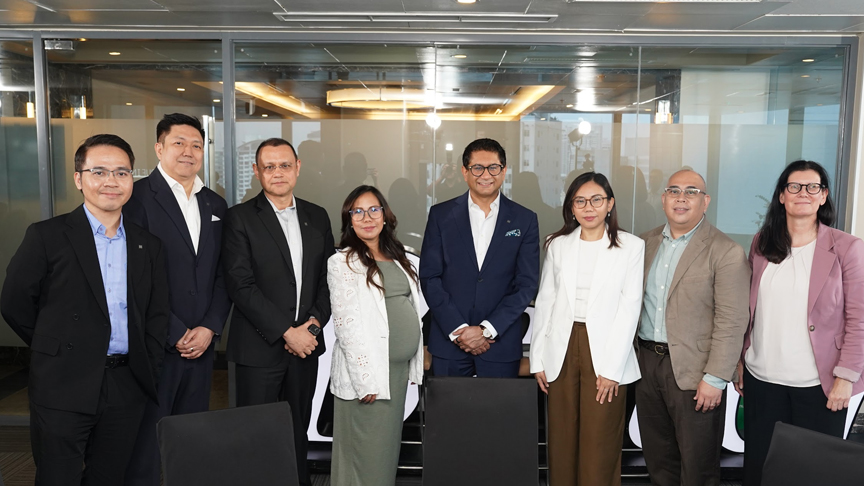
With increasing spending remains a concern, 82% of Filipinos are worried about the cost of future care, significantly higher than the regional average of 66%. It was estimated that respondents would need approximately PhP34,485 per month to cover future care-related expenses. Most plan to rely on personal savings (87%) and investments (59%), while only 21% expect financial support from their children.
The survey relayed that Fiipinos are becoming more proactive in preparing for longevity, with many planning to shift toward income-generating investments, diversify their portfolios, and seek professional financial advice to strengthen retirement readiness and long-term financial security.

Manulife broadens financial literacy, clean water programs in PH

Redefining aesthetics: From anti-aging to healthy aging

Visiting San Pablo City’s Pho Viet Nam

Four to six servings of wholegrain per day lowers risk factors for heart disease

Structured exercise linked to longer cancer survival and time free of disease

Heading to Pila, Laguna? Check out La Cosina Antonio

Pasalubong shopping in Davao via Aldevinco

The look and feel of your neighborhood may affect your sleep

Workout or nap? Either can help your sleepless brain, study finds

Study links coffee consumption to metabolic health and sex hormones
Structured exercise linked to longer cancer survival and time free of disease
Four to six servings of wholegrain per day lowers risk factors for heart disease
Visiting San Pablo City’s Pho Viet Nam
Redefining aesthetics: From anti-aging to healthy aging
Manulife broadens financial literacy, clean water programs in PH

-
 Wellness4 weeks ago
Structured exercise linked to longer cancer survival and time free of disease
-
 Nutrition4 weeks ago
Four to six servings of wholegrain per day lowers risk factors for heart disease
-
 Destinations4 weeks ago
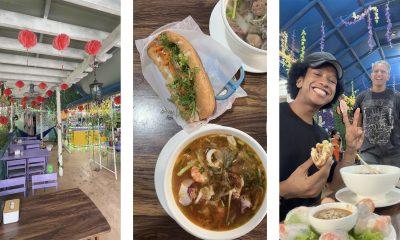
Visiting San Pablo City’s Pho Viet Nam
-
 Beauty & Fashion3 weeks ago
Redefining aesthetics: From anti-aging to healthy aging
-
 Product Showcase4 days ago
Manulife broadens financial literacy, clean water programs in PH