
Nutrition
Family meals cooked with convenience in mind
From a tangy twist on traditional tacos to a favorite to-go flavor in the comfort of your own kitchen, the options are nearly endless when you use versatile, ready-to-use ingredients.


Part of the fun of family meals is finding inspiration in the variety of dinner ideas you can create together. From a tangy twist on traditional tacos to a favorite to-go flavor in the comfort of your own kitchen, the options are nearly endless when you use versatile, ready-to-use ingredients.
When you include protein that’s prepared, seasoned and precooked, you can cut down on time in the kitchen, while adding precious seconds to spend with loved ones. For example, Chef’s Craft Gourmet Chicken offers a line of gluten-free, preservative-free, all-natural chicken skillfully crafted by experts and perfectly suited for culinary creations. The varieties are always fresh and perfect for preparing in 30 minutes or less. They can be enjoyed on their own or in an array of family dishes.
Consider these Barbecue Ranch Breaded Chicken Tacos to call loved ones to the table with chunks of tender chicken piled high with homemade spicy vinegar slaw, fried onions and avocado drizzled with barbecue sauce and ranch dressing.
Or, for a taste of takeout you can make in your own home, turn to Honey Soy Chicken Stir-Fry. If you don’t own a wok, don’t fret – this dish can easily be made in a skillet. Just be sure to give the veggies enough room as a crowded skillet is likely to result in steamed veggies.
Find more quick, convenient family meal ideas at chefscraftgourmet.com.
Barbecue Ranch Breaded Chicken Tacos
Servings: 4
| Spicy Vinegar Slaw: | |
| 2 1/2 | cups shredded purple cabbage |
| 1/2 | cup shredded carrot |
| 2 | jalapenos, thinly sliced |
| 1 1/2 | tablespoons canola or vegetable oil |
| 2 | tablespoons apple cider vinegar |
| 1 | teaspoon sugar |
| kosher salt | |
| freshly ground black pepper |
| Fried Onions: | |
| canola or vegetable oil, for frying | |
| 1/2 | cup all-purpose flour |
| kosher salt | |
| freshly ground black pepper | |
| 1 | yellow or Vidalia onion, cut into 1/4-inch slices |
| 8 | taco-sized flour tortillas, warmed |
| 1 | package Chef’s Craft® Breaded Chicken Chunks, cooked according to package directions |
| spicy vinegar slaw | |
| 1 | avocado, chopped |
| fried onions | |
| 1/2 | cup barbecue sauce |
| 1/2 | cup ranch dressing |
| chopped cilantro (optional) |
To make spicy vinegar slaw: In medium mixing bowl, combine cabbage, carrot and jalapenos.
In separate small bowl, whisk oil, vinegar and sugar; season generously with salt and pepper.
Drizzle over coleslaw mix and stir to combine. Let sit at least 10 minutes before serving.
To make fried onions: In small skillet over medium-high heat, heat 1/2 inch oil.
In small bowl, season flour well with salt and pepper. Coat onion slices in flour mixture and shake to remove excess flour.
Fry in batches until golden brown and crisp, about 30-45 seconds per batch. Remove to paper towel-lined plate and immediately sprinkle with salt.
Top each tortilla with cooked breaded chicken chunks, spicy vinegar slaw, chopped avocado, fried onions, barbecue sauce and ranch dressing. Garnish with cilantro, if desired.
Honey Soy Chicken Stir-Fry
Prep time: 15 minutes
Cook time: 15 minutes
Total time: 30 minutes
Serves: 4
| Honey Soy Glaze: | |
| 1/2 | cup chicken broth |
| 1/2 | cup soy sauce |
| 6 | tablespoons honey |
| 1/2 | teaspoon granulated garlic |
| 1/2 | teaspoon dried ground ginger |
| 4 | teaspoons cornstarch |
| 3 | teaspoons water |
| 2 | tablespoons canola or vegetable oil |
| 1 | large yellow onion, sliced |
| 3 | bell peppers, sliced |
| 1 | large zucchini, sliced |
| 4 | ounces snow peas |
| 10 | ounces sliced mushrooms |
| 2-3 | cups broccoli florets, steamed to tender crisp |
| 1 | package Chef’s Craft® Chicken Breast Fillets, cooked according to package directions, sliced |
| sesame seeds, for garnish |
To make honey soy glaze: In small saucepan over medium heat, combine chicken broth, soy sauce, honey, garlic and ginger. Bring to simmer. In small bowl, combine cornstarch and water; stir into honey soy sauce and let cook approximately 1 minute, stirring occasionally, until sauce thickens.
In large skillet or wok over medium-high heat, heat oil. Add onion, pepper and zucchini; cook 2-3 minutes. Add snow peas and mushrooms; cook 2 minutes until vegetables are crisp tender but maintain texture.
Add broccoli and chicken to pan; stir all but 3 tablespoons sauce; cook 1 minute, stirring frequently. Drizzle with remaining sauce and garnish with sesame seeds.






NewsMakers
Grape consumption linked to changes in gene expression and improved skin health
Clinical trials have shown that consumption of grapes can increase the resilience of skin to UV irradiation in about 30-50% of the subject population.
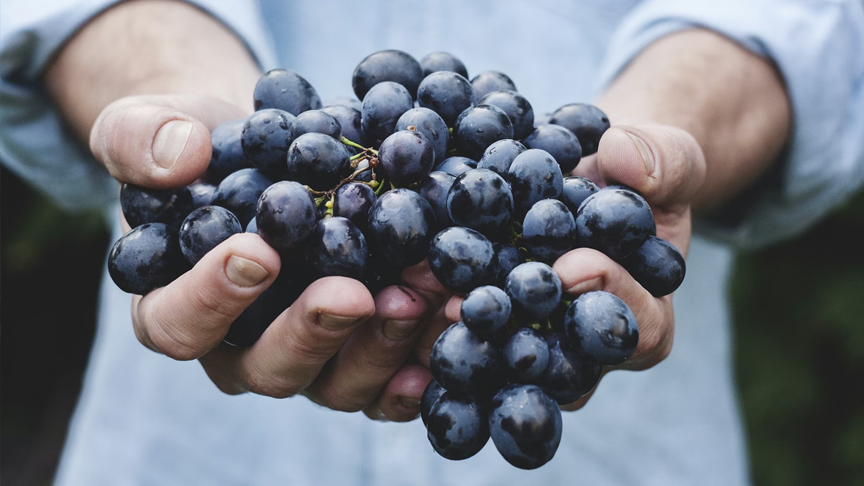
Clinical trials have shown that consumption of grapes can increase the resilience of skin to UV irradiation in about 30-50% of the subject population.
New studies published in the current issue of the journal ACS Nutrition Science suggest the effect of consuming grapes on human skin health is much broader – most likely affecting everyone.
The investigation was performed with human volunteers who consumed the equivalent of three servings of whole grapes each day for two weeks. Gene expression in skin was determined before and after grape consumption, with and without exposure of skin to low doses of UV irradiation.
The results demonstrated inter- and intraindividual differences of gene expression in the skin. In other words, from the outset, gene expression in the skin of each individual was different. The expression changed when the subjects consumed grapes or when exposed to UV irradiation, but still each individual was different from one another. Further unique changes were observed when UV irradiation was combined with grape consumption.
Consequently, while gene expression is different when comparing one person to another person, the gene expression of every person changed after consuming grapes.
When searching for a functional commonality resulting from these changes in gene expression after consuming grapes, the investigators were able to construe the myriads of data as being indicative of enhanced skin keratinization and cornification, which are known to create a barrier against environmental damage. This idea was reinforced by exposing skin to a low dose of UV irradiation and measuring the generation of malondialdehyde, a marker of oxidative stress, which was reduced when the subjects consumed grapes.
“We are now certain that grapes act as a superfood and mediate a nutrigenomic response in humans,” said John Pezzuto, Ph.D., Professor and Dean of the College of Pharmacy and Health Sciences at Western New England University.
“We observed this with the largest organ of the body, the skin. The changes in gene expression indicated improvements in skin health. But beyond skin, it is nearly certain that grape consumption affects gene expression in other somatic tissues of the body, such as liver, muscle, kidney and even brain. This helps us to understand how consumption of a whole food, in this case grapes, affects our overall health. It’s very exciting to be working in the post-genomics era where we can finally start to employ functional genomics and actually visualize complex matrices indicative of nutrigenomic responses.”
Nutrition
4 Tips to improve heart health (including a recipe to consider)
Taking steps to reduce your controllable risk factors – including poor diet, stress and inactivity – can set you on the right path.
A crucial component of overall well-being, heart health can be a barometer for living a long, healthy and happy life. Because heart disease is the leading cause of death in the US, according to the Centers for Disease Control and Prevention, taking steps to reduce your controllable risk factors – including poor diet, stress and inactivity – can set you on the right path.
From regular checkups and reducing stress to eating well – including heart-healthy snacks like grapes – and exercising regularly, these simple steps can help boost your heart health.
Know Your Numbers
Knowing key health metrics such as blood pressure, cholesterol levels, blood sugar levels and body mass index can help you and your health care provider identify potential risks early. Schedule annual checkups and discuss any concerns you may have about your heart health. Early detection and risk factor management can reduce the likelihood of developing heart disease.
Eat More Fruits and Vegetables
Incorporating a variety of colorful fruits and vegetables into your diet can ensure you get a broad range of vitamins, minerals, fiber and antioxidants, all of which contribute to a healthy cardiovascular system. For example, leafy greens like spinach and kale are high in potassium, which helps manage blood pressure. Fresh grapes contain 7% of the daily recommended intake of potassium, are a good source of vitamin K and are also a natural source of beneficial antioxidants and other polyphenols, including flavonoids, that can help relax blood vessels and promote healthy circulation. Some studies also suggest grapes have a beneficial impact on blood lipids and more.
In fact, one study found women who consumed 1 1/4 cups of grapes every day benefited from reduced blood triglyceride levels, LDL cholesterol levels, inflammatory proteins and other markers of heart disease.
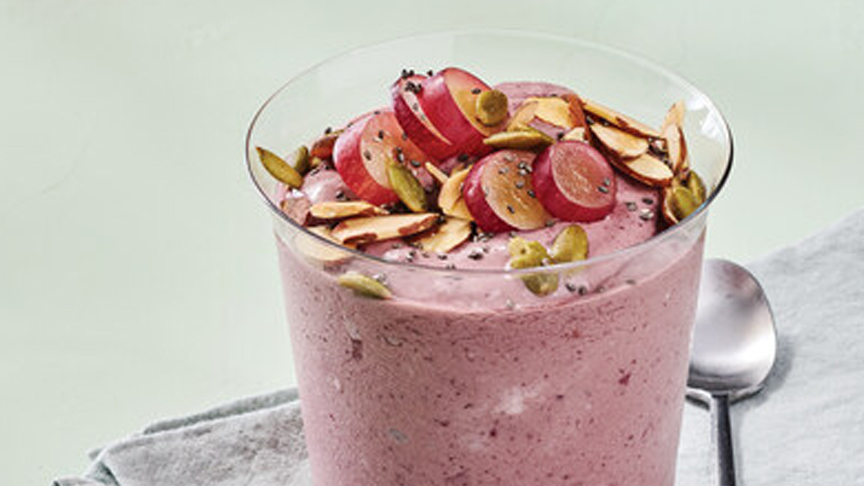
Bright, juicy and bursting with flavor, Grapes from California can be enjoyed by the handful or blended with rich bananas, tangy Greek yogurt and a hint of almond in The Great Grape-Acai Smoothie Bowl for a delicious blend of fruity flavors at breakfast, lunch or snack time – it not only tastes great, but supports a healthy heart.
Get Moving
Regular physical activity is one of the most effective ways to improve heart health. Exercise strengthens the heart muscle, improves blood circulation and helps maintain a healthy weight. Aim for at least 150 minutes of moderate-intensity aerobic exercise per week, as recommended by the American Heart Association, such as walking, jogging or swimming with strength training exercises like lifting weights or using resistance bands mixed in to help reduce the risk of heart disease and improve overall cardiovascular health.
Manage Stress
Consider your stress level: chronic stress can negatively impact heart health, increasing blood pressure and other risk factors for heart disease. Techniques such as deep breathing, meditation, yoga and regular physical activity can help manage stress levels and maintain a healthy heart. Additionally, taking time to engage in hobbies, spending time with loved ones and ensuring adequate sleep are stress-reducing activities that improve overall well-being and heart health.
To learn more about the heart-health benefits of grapes, and find additional heart-friendly recipes, visit GrapesFromCalifornia.com.
The Great Grape-Acai Smoothie Bowl
Servings: 1
1/2 cup red Grapes from California, fresh or frozen
1/2 banana
1 frozen acai fruit pack (3 1/2 ounces)
1/2 cup plain, nonfat Greek yogurt
1/4 teaspoon almond extract
Topping:
1/4 cup sliced red Grapes from California
1 tablespoon sliced, toasted almonds
1 tablespoon pepitas
1 teaspoon chia seeds
In small blender, combine grapes, banana, acai, yogurt and almond extract; process until smooth.
Pour into bowl and top with sliced grapes, sliced almonds, pepitas and chia seeds.
Nutritional information per serving: 420 calories; 19 g protein; 63 g carbohydrates; 12 g fat (26% calories from fat); 2.5 g saturated fat (5% calories from saturated fat); 5 mg cholesterol; 45 mg sodium; 8 g fiber.
Nutrition
Microwave frying can help lower oil content for healthier French fries
If you just use microwave frying, you get soggy food. To obtain a crispy texture and taste, you need conventional heating. Therefore, we propose combining the two approaches in the same unit. Conventional heating maintains the crispiness, while microwave heating lowers the oil intake.

Fried foods are popular with consumers, but their high fat content can contribute to health challenges like obesity and hypertension. If the food industry can offer lower-fat options of similar quality, people can more easily make health-conscious food choices.
Researchers at the University of Illinois Urbana-Champaign have explored microwave frying of French fries, providing insights that can help food manufacturers modify their production methods. They propose combining conventional frying with microwave frying to provide the desired crispiness and texture while reducing the cooking time and oil absorption.
“Consumers want healthy foods, but at the time of purchase, their cravings often take over. High oil content adds flavor, but it also contains a lot of energy and calories. My research team studies frying with the aim of obtaining lower fat content without significant differences in taste and texture,” said principal investigator Pawan Singh Takhar, professor of food engineering in the Department of Food Science and Human Nutrition, part of the College of Agricultural, Consumer and Environmental Sciences at U of I.
In two new publications, Takhar and Yash Shah, a doctoral student in FSHN, discussed their findings from studies exploring what happens during microwave frying of French fries.
For the first study, they collaborated with colleagues at Washington State University, who developed a special microwave fryer that could operate both at 2.45 gigahertz (similar to a regular microwave oven) and 5.8 gigahertz.
The sample potatoes were rinsed and peeled, then cut into strips, blanched, and salted. Batches of potato strips were then fried in soybean oil preheated to 180 degrees Celsius. The researchers measured temperature and pressure during and after frying, as well as volume, texture, moisture, and oil content of the fried samples.
The challenge is to keep the oil from entering the food during and after the cooking process, Takhar said.
In the beginning of the frying process, the potatoes’ pores are filled with water, so there is nowhere for the oil to go. But as frying progresses, the water starts evaporating, so pore spaces are opened and oil is sucked into the food through negative pressure.
“Think about a straw in a drink. If you push air into the straw, it creates positive pressure and any liquid will be pushed out. But if you suck on the straw, the liquid moves upward. Now imagine food materials have lots of tiny straws. When there is positive pressure, the oil stays out. But if there is negative pressure, the oil starts moving in,” Takhar explained.
Up to 90% of frying happens under negative pressure, so there is continuous suction potential. The goal is to keep the pressure positive longer and shorten the duration of negative pressure to prevent oil from entering the food.
“When we heat something in a conventional oven, the heat moves from outside to inside, but a microwave oven heats from the inside out, because the microwaves penetrate everywhere in the material. The microwaves oscillate water molecules, causing more vapor formation and thus shifting the pressure profile towards the positive side. The higher pressure in microwaves helps reduce oil penetration,” Takhar said.
In parallel with the lab experiments, the second paper complements the results through mathematical modeling, which allows for much more detailed exploration of a variety of factors in the frying process.
The researchers explored the effects of temperature, pressure, volume, texture, moisture, and oil at 2.45 GHz, 5.8 GHz, and conventional frying. Overall, they found that microwave frying resulted in faster moisture loss, shorter cooking time, and lower oil intake.
“However, if you just use microwave frying, you get soggy food. To obtain a crispy texture and taste, you need conventional heating. Therefore, we propose combining the two approaches in the same unit. Conventional heating maintains the crispiness, while microwave heating lowers the oil intake,” Takhar said.
Continuous fryers used for industrial-scale production of fried foods can be modified by incorporating microwave generators, which are inexpensive and readily available. Thus, this approach is likely to be economically feasible for industrial use, the researchers conclude.
The first paper, “The Effect of Conventional and Microwave Frying on the Quality Characteristics of French Fries,” is published in the Journal of Food Science. Authors are Yash Shah, Xu Zhou, Juming Tang, and Pawan Singh Takhar.
The second paper “Predicting the quality changes during microwave frying of food biopolymers by solving the hybrid mixture theory-based unsaturated transport, and electromagnetics equations,” was published in Current Research in Food Science.

Manulife launches GoalReady health solutions

Investing in employee health leads into a stronger, more productive workplace

Checking the wind turbines of Pililla… since there’s not much else being offered

Bell-bottoms today, miniskirts tomorrow: Revealing fashion’s 20-year cycle

Heart disease risk may start in the womb, study finds

Viagra could hold key to halting Peyronie’s disease

Healthier brains may be more resilient to early Alzheimer’s disease

Grape consumption linked to changes in gene expression and improved skin health

Is ‘yo‑yo dieting’ really harmful? New analysis challenges long‑standing assumptions about weight cycling

Osteoporosis could prove deadly in postmenopausal women
Healthier brains may be more resilient to early Alzheimer’s disease

Study: Egg consumption is associated with a lower risk of Alzheimer’s Disease
Is ‘yo‑yo dieting’ really harmful? New analysis challenges long‑standing assumptions about weight cycling
Grape consumption linked to changes in gene expression and improved skin health
Viagra could hold key to halting Peyronie’s disease

Checking the café vibe of Filipino-ish Yellow Bird resto
Heart disease risk may start in the womb, study finds

Study finds low-dose eye drops successful in managing adult myopia for 24 hours
Bell-bottoms today, miniskirts tomorrow: Revealing fashion’s 20-year cycle
Osteoporosis could prove deadly in postmenopausal women

-
 NewsMakers1 week ago
Healthier brains may be more resilient to early Alzheimer’s disease
-
 NewsMakers3 weeks ago
Study: Egg consumption is associated with a lower risk of Alzheimer’s Disease
-
 NewsMakers1 week ago
Is ‘yo‑yo dieting’ really harmful? New analysis challenges long‑standing assumptions about weight cycling
-
 NewsMakers1 week ago
Grape consumption linked to changes in gene expression and improved skin health
-
 NewsMakers1 week ago
Viagra could hold key to halting Peyronie’s disease
-
 Destinations2 weeks ago
Checking the café vibe of Filipino-ish Yellow Bird resto
-
 NewsMakers1 week ago
Heart disease risk may start in the womb, study finds
-
 NewsMakers3 weeks ago
Study finds low-dose eye drops successful in managing adult myopia for 24 hours