
Beauty & Fashion
Bell-bottoms today, miniskirts tomorrow: Revealing fashion’s 20-year cycle
While fashion evolves gradually over time, the rise and fall of styles follows a repeating wave that peaks roughly every two decades. One of the clearest patterns involves hemline length.

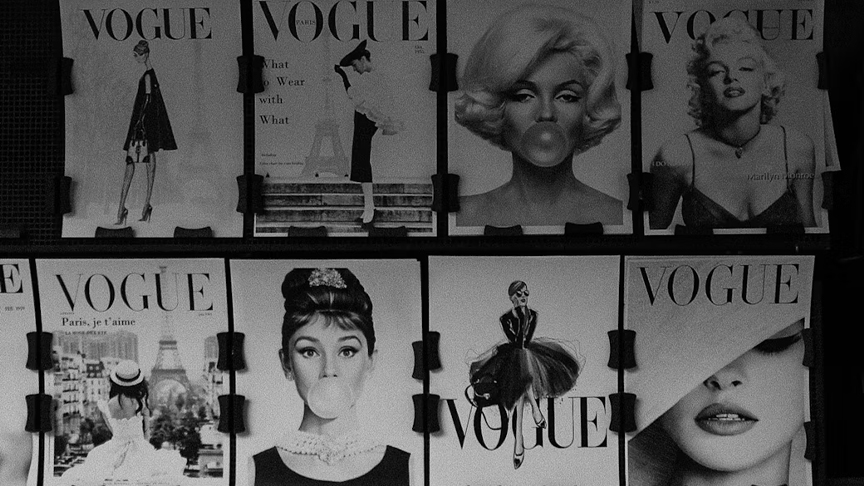
Fashion insiders and beauty magazines have long cited the “20-year-rule” — the idea that clothing trends often resurface every two decades.
According to Northwestern University scientists, that observation isn’t just anecdotal. It’s a mathematical reality.
In a new study, the Northwestern team developed a new mathematical model showing that fashion trends tend to cycle roughly every 20 years. By analyzing roughly 37,000 images of women’s clothing spanning from 1869 to today, the team found that styles rise in popularity, fall out of favor and then eventually experience renewal.
Along with supporting common perceptions about the life cycles of fads, the researchers say these results could help explain how new ideas spread in society.
The study’s lead author Emma Zajdela will present these findings at 4:30 p.m. MDT on Tuesday, March 17 at the American Physical Society (APS) Global Physics Summit in Denver. Her talk, “Back in Fashion: Modeling the Cyclical Dynamics of Trends,” is part of the session “Statistical Physics of Networks and Complex Society Systems.”
Complimentary registration is available for members of the media. Press should contact the APS media teamfor more information.
“To our knowledge, this is the first time that someone developed such an extensive and precise database of fashion measures across more than a century,” Zajdela said. “We have some very interesting results, including that the cycle we uncovered in the data (20 years) matches industry knowledge. Historically, the lack of data posed a barrier to explicit quantitative study of this system.”
When this work was conducted, Zajdela was a Ph.D. candidate at Northwestern’s McCormick School of Engineering, where she was advised by Daniel Abrams, a professor of engineering sciences and applied mathematics at McCormick and co-director of the Northwestern Institute on Complex Systems. Now, Zajdela is a postdoctoral fellow at Princeton University and a research fellow at the Santa Fe Institute.
Zajdela and Abrams coauthored the study with Alicia Caticha, an assistant professor of art history at Northwestern’s Weinberg College of Arts and Sciences, and Jeremy White and Emily Kohlberg, who were both members of Abrams’ research group.
To conduct the study, the researchers compiled one of the most comprehensive quantitative datasets of fashion ever assembled. Drawing from historical sewing patterns from the Commercial Pattern Archive at the University of Rhode Island and runway collections, the team analyzed tens of thousands of garments dating back to the late 1800s.
Using custom tools, they measured key features of dresses — hemline, neckline and waistline positions — turning clothing designs into numerical data that could be measured and tracked across decades. To analyze the data, researchers built a mathematical model based on a simple idea: the tension between wanting to stand out while still fitting in. Once a style becomes too common, designers move away from it — but not so far that the clothes become unwearable.
“Over time, this constant push to be different from the recent past causes styles to swing back and forth,” Abrams said. “The system intrinsically wants to oscillate, and we see those cycles in the data.”
The results revealed a striking pattern. While fashion evolves gradually over time, the rise and fall of styles follows a repeating wave that peaks roughly every two decades. One of the clearest patterns involves hemline length. Over the past century, skirt lengths have repeatedly shortened and lengthened — from shorter flapper dresses in the 1920s to longer, more conservative styles in the 1950s and then to miniskirts of the late 1960s.
But this pattern loses its clarity in recent decades. Starting in the 1980s, the data show a wider range of skirt lengths appearing at the same time, suggesting that fashion trends are becoming more fragmented. Rather than one dominant trend, niches emerge, reflecting more diversity in fashion.
“In the past, there were two options — short dresses and long dresses,” Zajdela said. “In more recent years, there are more options: really short dresses, floor-length dresses and midi dresses. There is an increase in variance over time and less conformity.”





Beauty & Fashion
niko and … brings Evangelion Collection to the PH, plans to expand its operations
The Evangelion collection is available starting December 12 at the niko and … where it is transformed into an Evangelion-themed space with curated displays, and anniversary elements, allowing fans and new audiences to experience the world of Evangelion.

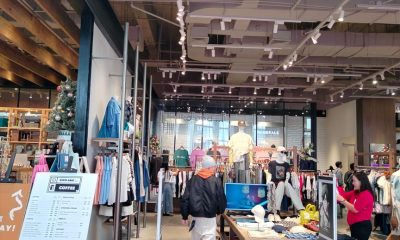
Lifestyle brand niko and … brought the Evangelion brand to Manila just in time for the celebration of anime Neon Genesis Evangelion’s 30th anniversary, with collection available for a limited time only. Launched at SM Mall of Asia, the limited edition collection showcases style, nostalgia, and Japanese creativity and contents that fit the taste of the Filipino consumers.

“Filipino consumers value design, story, and creativity,” says Daisuke Fujii, president and CEO of Adastria. “We see strong interest in Japanese culture and the ideas behind it. This collaboration is our way of celebrating Evangelion’s legacy while showing what we hope to build here. We want to grow with the market and bring more of our brands and experiences to the Philippines.”
The Evangelion collection is available starting December 12 at the niko and … where it is transformed into an Evangelion-themed space with curated displays, and anniversary elements, allowing fans and new audiences to experience the world of Evangelion.
The brand’s collection reflects Japanese craftsmanship, attention to detail, and an ability to translate cultural ideas into modern lifestyle item. This gives customers access to the latest trends from Japan through apparel, accessories, room items, and collaborative lines that bend creativity with everyday function.
Although it just recently started in the Philippines, Fujii said the brand is looking to expand its local operations by opening more stores and introducing other products or brands in the Philippines.
Banking on the strength of the collaboration and the Japanese creativity to grow its business, Fujii noted that he wants the SM MOA branch to cover a lot of animes and other contents. “We want to bring contents that fit the taste of Filipino consumers. Next year, we will expand by opening new stores. We are now talking to SM, Ayala Malls, and looking for other good locations.”
When Fujii was asked how the Evangelion collaboration influence the lifestyle and fashion trends in the Philippines. He replied, “The collaboration is one way to introduce the Japanese culture to the Philippines. Animes make Filipino consumers know more about Japan and its culture. We want them to understand Japanese culture through fashion trends.”
Fujii also clarified that not all products are manufactured in Japan because they have factories across the world that produce other products but “of course, it is of Japanese quality.”
Beauty & Fashion
Renting clothes for sustainable fashion – niche markets work best
The best chance of success is for a rental company to provide clothing within a niche market, such as specific sportswear, and to work closely with the suppliers and clothing manufacturers.

Renting clothes can reduce the fashion industry’s enormous environmental impact, but so far, the business models have not worked very well. The best chance of success is for a rental company to provide clothing within a niche market, such as specific sportswear, and to work closely with the suppliers and clothing manufacturers. This is shown by a study led by researchers at Chalmers University of Technology, Sweden, which highlights the measures that can make clothing rental a success.
The fashion industry is one of the most polluting industries and can account for up to ten percent of global greenhouse gas emissions, worldwide. In Sweden, over 90 percent of the clothes’ climate impact is linked to the purchase of newly produced goods. Therefore, researchers at Chalmers University of Technology, the University of Borås and the research institute Rise have examined alternative, more sustainable business models for the clothing industry.
“Many people have clothes hanging in the closet that are rarely or never used. Renting clothes can extend the use of each garment and thus contribute to more sustainable consumption,” says Frida Lind, Professor at Chalmers and one of the researchers behind the study.
In the study, the researchers analysed nine Swedish companies that have either tried and failed, or are ongoing in the process of creating a sustainable and desirable clothes rental company. From this analysis, the researchers identified three main business models for renting out clothes:
1. Membership model: customers become members and can then borrow clothes for a certain period of time, similar to a library. This model often had an enthusiast as its founder, with a focus on sustainable consumption.
2. Subscription model: customers pay a monthly fee to rent a certain number of garments. These startups worked on scaling up operations and attracting venture capital.
3. Individual rental model: the company would provide specific types of clothing to rent out, often in combination with other equipment, such as outdoor clothing paired with ski equipment.
Difficult to achieve profitability
By interviewing founders, managers and other key people from the nine Swedish companies, the researchers gained an understanding of each company’s situation.
“What struck us was that it seemed so difficult for them to make their business profitable. Several had had to end their investments for various reasons,” she says.
The researchers noted that although there was a willing customer base for renting clothing in this way, they observed several other challenges that made it difficult for companies to achieve profitability.
“Renting out clothes involves many steps where each item of clothing needs to be handled and inspected before it can be rented out again, which takes time. Companies also struggled with high costs for warehousing, logistics and laundry, for example. Especially for the subscription models, there were also difficulties in obtaining venture capital to be able to survive financially through the first phase of building the company. All this shows that these business models need time to establish themselves in the market,” she says.
Specific markets performed best
At the same time, some of the business models worked better than others. Companies that focused on a specific market, such as outdoor clothing, were more successful and sustainable. Especially if they also had a local connection to an outdoor recreational area.
“They seem to have found their niche and seen that there is a specific need that the customer is willing to pay for each time they need to use that type of clothing,” says Frida Lind.
The researchers also examined how the companies created value in collaboration with different stakeholders and concluded that certain collaborations were particularly valuable.
“Rental companies that worked closely with clothing manufacturers and suppliers, such as designers with a sustainability profile, benefited greatly from this as they were able to quickly get feedback on which types of clothing were most popular. They also gained valuable information about the quality of the garments, for example if there was something that often broke,” she says.
Initiatives for change important
In the current study, the researchers have not investigated the environmental and climate impact of the business models specifically, but in general, the environmental effects of our clothes have already been well mapped. For example, previous research from Chalmers has shown that the actual production of garments accounts for 70 percent of the climate impact of Swedes’ clothes throughout their life cycle, and 22 percent of the climate impact is caused by customers’ shopping trips. In the European Union, five million tonnes of clothing are discarded each year – around 12 kilos per person, and in the USA, the average American generates 37 kilos of textile waste each year.
Frida Lind believes that there is a great deal of room for environmental benefits through reduced clothing purchases and extended use of existing garments – especially if it can be done without extra car journeys for consumers.
She emphasises that even if some of the companies and services in the study have not survived, all initiatives that can contribute to the sustainability transition are important. Not least because they help to change attitudes about clothing consumption and increase knowledge about what can and cannot work.
“Our study can be an important contribution to the fashion industry’s sustainability transition, as it shows the possibilities of new business models in this industry. We hope that it can have an impact on decision-makers who need a basis for establishing incentives and financial motivation for a more sustainable fashion industry. Because we see that new and more sustainable business models require time and a long-term perspective to be able to establish themselves,” she says.
Recommendations for the industry
Based on the study’s results, the researchers give a number of recommendations to those who intend to try renting clothes as a business model:
- Focus on niche markets based on target group and product type where the need is clear
- Develop partnerships with suppliers to improve products based on rental experiences.
- Think about logistics and transport in the rental model right from the start to be able to get the model scalable.
More about the research
The scientific article “Exploring renting models for clothing items – resource interaction for value creation” was published in the Journal of Business & Industrial Marketing. The authors are Frida Lind, Chalmers University of Technology, Agnes Andersson Wänström and Daniel Hjelmgren, University of Borås, and Maria Landqvist, Rise. The study has been financed with funds from the Swedish Energy Agency.
Facts and advice about textile consumption
- In the European Union, five million tonnes of clothing are discarded each year – around 12 kilos per person, and in the USA, the average American generates 37 kilos of textile waste each year.
- Over 90 percent of the total climate impact from Swedish clothing consumption is linked to the purchase of newly produced clothes, and 80 percent of our clothes’ climate impact occurs during the production phase.
- It also plays a big role how customers get to the stores. If they walk or cycle instead of driving, they reduce their climate impact by over 10 percent.
- The most important thing that consumers can do is to extend the use of the garments that have already been produced. A t-shirt, for example, is used an average of 30 times. If it is instead used 60 times before it is replaced by a newly produced t-shirt, the climate impact can be halved.
- Extended use can mean that one owner uses the garment for longer, or that several users share ownership. In addition to renting or borrowing clothes, this can be done, for example, by shopping and selling second-hand, arranging clothes swap days or giving away clothes to someone who continues to use them.
- A previous Chalmers study has shown that the actual production of garments accounts for 70 percent of the climate impact of Swedes’ clothes throughout their life cycle. 22 per cent of the climate impact is caused by customers’ shopping trips, 4 per cent by distribution to customers and 3 per cent by washing and drying clothes.
Beauty & Fashion
Sassa opens standalone store in Festival Mall
Compared to traditional department store counters, the standalone store provides more space, better privacy, and a more relaxed shopping experience. Customers can now enjoy a wide selection of styles, with more options to mix and match. The open layout also makes it easier to try on pieces and do personal styling sessions with comfort and convenience.

Located on the Upper Ground Floor of Festival Mall’s West Wing the store features a vibrant, modern space that showcases Sassa’s full lifestyle range—from swimwear and activewear to intimate wear. With bold blue accents, clean lighting, and organized display zones, the store offers a fresh, inviting atmosphere for every Sassa Girl.
Compared to traditional department store counters, the standalone store provides more space, better privacy, and a more relaxed shopping experience. Customers can now enjoy a wide selection of styles, with more options to mix and match. The open layout also makes it easier to try on pieces and do personal styling sessions with comfort and convenience.
For the first time, Sassa brings together all its core collections in one space—designed not just for shopping, but to create a closer, more meaningful connection with the women it was made for.
A Strategic Step Closer to Every Filipina
Recognizing the need to connect more closely with its growing community, Sassa opened its very first standalone store as a way to bring the brand experience directly to its customers—outside the usual department store setup.
“This store is more than just a physical space—it’s a statement of who we are and how far we’ve come,” shares Raiza Limpiada, Marketing & Ecommerce Manager of Sassa. “After more than two decades of being mainly found in department stores, we wanted to create a space that brings us closer to the Filipina—somewhere she can truly feel what Sassa is all about. We’re not just a local brand anymore—we’re becoming a true lifestyle partner.”
After a remarkably strong year of double-digit growth, Sassa is excited about what’s ahead with the opening of its Festival Mall store. The brand is aiming for a 40-50% boost in sales compared to its usual numbers. More importantly, it looks forward to seeing customers spend more time exploring the space, discovering new favorites, and enjoying a more personal shopping experience—all part of Sassa’s journey to grow and connect more deeply with Filipinas in the local fashion scene.
“Our goal is simple,” Raiza adds. “We want to build real relationships, make every visit memorable, and grow alongside our customers. This store is just the beginning.”
Unveiling the Latest Retail Experience
To celebrate this milestone, Sassa hosted a grand opening event attended by brand executives and loyal fans. The festivities included a ribbon-cutting ceremony, store tours, and exclusive first-day offers—creating a memorable experience for early shoppers.
Guests enjoyed limited-time promos, gift-with-purchase deals, and a sneak peek at exclusive styles available only at the Festival Mall store—highlighting the brand’s move toward a more stylish, personalized approach.
With more standalone locations planned, Sassa Festival Mall is just the start. As the brand grows alongside its community, it remains committed to helping every Filipina feel confident and stylish—wherever they go, whatever they do, and in every aspect of their lifestyle.
Experience the Sassa difference for yourself—visit our new Festival Mall store today! Follow @sassa_ph on Instagram and @sassa.ph on Facebook and TikTok for updates.

Visiting San Pablo City’s Pho Viet Nam

Four to six servings of wholegrain per day lowers risk factors for heart disease

Structured exercise linked to longer cancer survival and time free of disease

Heading to Pila, Laguna? Check out La Cosina Antonio

Pasalubong shopping in Davao via Aldevinco

The look and feel of your neighborhood may affect your sleep

Workout or nap? Either can help your sleepless brain, study finds

Study links coffee consumption to metabolic health and sex hormones

Manulife Investments Philippines leads UITF rankings across equity and fixed income funds

Scheduling dental care during prenatal visits boosts oral health care during pregnancy
Pasalubong shopping in Davao via Aldevinco
Structured exercise linked to longer cancer survival and time free of disease
Heading to Pila, Laguna? Check out La Cosina Antonio
Four to six servings of wholegrain per day lowers risk factors for heart disease
Visiting San Pablo City’s Pho Viet Nam

-
 Destinations4 weeks ago
Pasalubong shopping in Davao via Aldevinco
-
 Wellness1 week ago
Structured exercise linked to longer cancer survival and time free of disease
-
 Destinations3 weeks ago
Heading to Pila, Laguna? Check out La Cosina Antonio
-
 Nutrition1 week ago
Four to six servings of wholegrain per day lowers risk factors for heart disease
-
 Destinations1 week ago
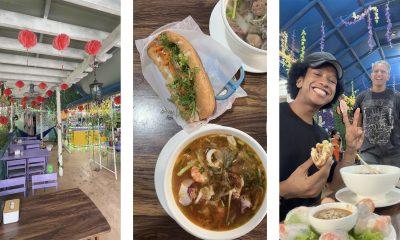
Visiting San Pablo City’s Pho Viet Nam