
Nutrition
Delightful dining that honors Italian heritage
Celebrate the best of Italy in your own kitchen by incorporating Italian artisan-inspired dishes ideal for memorable moments with loved ones.


Italy is one of the world’s great food nations, and many dishes have Italian roots. In honor of Italian heritage, light up the dinner table and impress your friends and family with sophisticated, traditional Italian recipes.
Creating a true taste of Italy means including an abundance of smooth, high-quality extra-virgin olive oil.
The ease and simplicity of shared dishes like Marinated Roasted Portobello Mushrooms with Olive Oil Agrodolce – a traditional Italian sweet and sour sauce – focuses on quality ingredients inspiring quality memories. The artistry behind the olive oil shines in Creamy Potato Leek Soup with Olive Oil Pistou and Sicilian Lamb Meatballs with Whipped Feta-Olive Oil Spread, each recipe celebrating the embodiment of Italian cuisine.
Celebrate the best of Italy in your own kitchen by incorporating Italian artisan-inspired dishes ideal for memorable moments with loved ones.
Sicilian Lamb Meatballs with Whipped Feta-Olive Oil Sauce
Prep time: 15 minutes
Cook time: 15 minutes
Servings: 4
Sicilian Lamb Meatballs:
1 pound ground lamb
1 tablespoon Carapelli Unfiltered Extra Virgin Olive Oil
1/3 cup panko breadcrumbs
3 tablespoons pine nuts
2 tablespoons golden raisins
1 large egg, lightly beaten
3/4 teaspoon kosher salt
1/2 teaspoon ground black pepper
Feta-Olive Oil Sauce:
1/2 pound feta cheese, crumbled
2 tablespoons Carapelli Unfiltered Extra Virgin Olive Oil
2 tablespoons plain Greek yogurt
To make Lamb Meatballs: Heat oven to 375 F. Line large rimmed baking sheet with parchment paper.
In large bowl, mix lamb, olive oil, panko bread crumbs, pine nuts, raisins, egg, salt and pepper. Use hands to mix all ingredients together.
Roll mixture into approximately 36 meatballs about 1 inch in diameter and place on baking sheet.
Bake 15 minutes until sizzling and golden brown.
To make Feta-Olive Oil Spread: In food processor, blend feta cheese, olive oil and yogurt 30-45 seconds until creamy.
Serve Lamb Meatballs with Feta-Olive Oil Sauce for dipping or scooping.
Marinated Roasted Portobello Mushrooms with Olive Oil Agrodolce
Prep time: 10 minutes
Cook time: 30 minutes
Servings: 4
Roasted Mushrooms:
2 pounds Portobello mushrooms
1/2 cup Carapelli Organic Extra Virgin Olive Oil
2 teaspoons fresh sage, minced
2 teaspoons fresh rosemary, minced
kosher salt, to taste
freshly ground black pepper, to taste
Agrodolce:
1/2 cup red wine vinegar
2 tablespoons honey
Carapelli Organic Extra Virgin Olive Oil
To make Roasted Mushrooms: Clean and destem mushrooms, cutting large mushroom caps in half.
In large bowl, toss mushrooms with olive oil, fresh sage and fresh rosemary. Let mushrooms marinate 1 hour, tossing occasionally to absorb oil.
Heat oven to 400 F. Line two large baking sheets with parchment paper.
Spread marinated mushrooms on baking sheets, making sure mushrooms are in single layer and not crowded. Sprinkle lightly with salt and pepper.
Roast 30 minutes until mushrooms are crisped and golden brown at edges.
To make Agrodolce: In small saucepan over medium-low heat, bring vinegar and honey to simmer, stirring occasionally until honey dissolves.
Continue simmering 15-20 minutes until vinegar is reduced by half and is thick and syrupy.
To serve, place roasted mushrooms on platter and drizzle generously with Agrodolce and olive oil. Serve with choice of side.
Rustic Tuscan Potato Leek Soup with Olive Oil Pesto
Prep time: 15 minutes
Cook time: 50 minutes
Servings: 6
Potato Leek Soup:
3 medium-large leeks
2 tablespoons Carapelli Unfiltered Extra Virgin Olive Oil
1 large garlic clove, coarsely chopped
1/2 teaspoon kosher salt, plus additional, to taste (optional)
2 pounds Yukon gold potatoes, peeled and diced into 2-inch cubes
6 cups chicken or vegetable broth
Pesto:
1 packed cup fresh basil
1 packed cup flat-leaf parsley
1 medium-large garlic clove, roughly chopped
3 tablespoons pine nuts or 1/4 cup walnuts
1/2 teaspoon kosher salt
1/4 cup Carapelli Unfiltered Extra Virgin Olive Oil
To make Potato Leek Soup: Trim bulb ends and tough, dark green stems off leeks. Slice tender white and light green stems in half lengthwise then soak in cold water 10-15 minutes to remove dirt. Drain leeks, rinse well and slice into thick half-moons.
In large Dutch oven or stockpot over medium-low heat, heat olive oil. Add leeks, garlic and salt. Cook, stirring occasionally, until leeks are soft, about 10 minutes.
Add potatoes and broth. Cover and increase heat to medium. Bring soup to simmer then uncover and continue cooking 30 minutes.
Using immersion blender, puree soup until smooth, or carefully ladle into standing blender to puree in batches. Taste and add more salt, if desired.
To make Pesto: In food processor, pulse basil, parsley, garlic, pine nuts, salt and olive oil to make chunky herb sauce.
To serve, ladle soup into bowls and spoon Pesto on top of each serving.
Find more Italian flavors and recipes at carapelliusa.com.



NewsMakers
Grape consumption linked to changes in gene expression and improved skin health
Clinical trials have shown that consumption of grapes can increase the resilience of skin to UV irradiation in about 30-50% of the subject population.
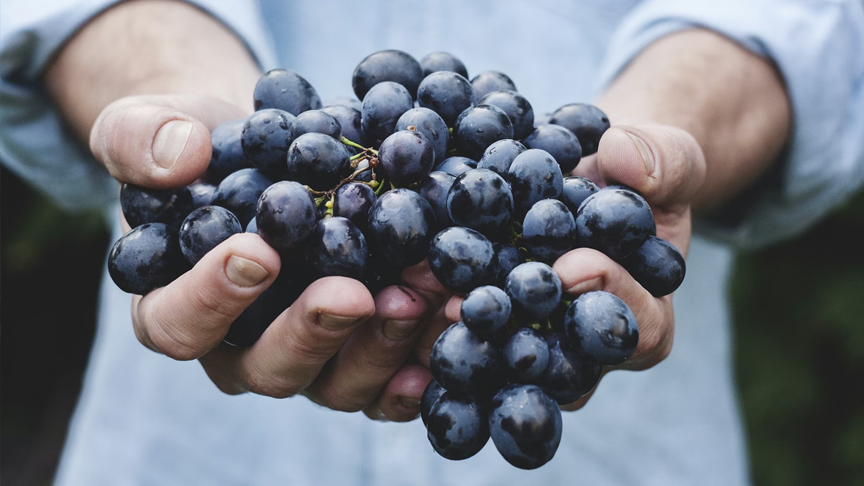
Clinical trials have shown that consumption of grapes can increase the resilience of skin to UV irradiation in about 30-50% of the subject population.
New studies published in the current issue of the journal ACS Nutrition Science suggest the effect of consuming grapes on human skin health is much broader – most likely affecting everyone.
The investigation was performed with human volunteers who consumed the equivalent of three servings of whole grapes each day for two weeks. Gene expression in skin was determined before and after grape consumption, with and without exposure of skin to low doses of UV irradiation.
The results demonstrated inter- and intraindividual differences of gene expression in the skin. In other words, from the outset, gene expression in the skin of each individual was different. The expression changed when the subjects consumed grapes or when exposed to UV irradiation, but still each individual was different from one another. Further unique changes were observed when UV irradiation was combined with grape consumption.
Consequently, while gene expression is different when comparing one person to another person, the gene expression of every person changed after consuming grapes.
When searching for a functional commonality resulting from these changes in gene expression after consuming grapes, the investigators were able to construe the myriads of data as being indicative of enhanced skin keratinization and cornification, which are known to create a barrier against environmental damage. This idea was reinforced by exposing skin to a low dose of UV irradiation and measuring the generation of malondialdehyde, a marker of oxidative stress, which was reduced when the subjects consumed grapes.
“We are now certain that grapes act as a superfood and mediate a nutrigenomic response in humans,” said John Pezzuto, Ph.D., Professor and Dean of the College of Pharmacy and Health Sciences at Western New England University.
“We observed this with the largest organ of the body, the skin. The changes in gene expression indicated improvements in skin health. But beyond skin, it is nearly certain that grape consumption affects gene expression in other somatic tissues of the body, such as liver, muscle, kidney and even brain. This helps us to understand how consumption of a whole food, in this case grapes, affects our overall health. It’s very exciting to be working in the post-genomics era where we can finally start to employ functional genomics and actually visualize complex matrices indicative of nutrigenomic responses.”
Nutrition
4 Tips to improve heart health (including a recipe to consider)
Taking steps to reduce your controllable risk factors – including poor diet, stress and inactivity – can set you on the right path.
A crucial component of overall well-being, heart health can be a barometer for living a long, healthy and happy life. Because heart disease is the leading cause of death in the US, according to the Centers for Disease Control and Prevention, taking steps to reduce your controllable risk factors – including poor diet, stress and inactivity – can set you on the right path.
From regular checkups and reducing stress to eating well – including heart-healthy snacks like grapes – and exercising regularly, these simple steps can help boost your heart health.
Know Your Numbers
Knowing key health metrics such as blood pressure, cholesterol levels, blood sugar levels and body mass index can help you and your health care provider identify potential risks early. Schedule annual checkups and discuss any concerns you may have about your heart health. Early detection and risk factor management can reduce the likelihood of developing heart disease.
Eat More Fruits and Vegetables
Incorporating a variety of colorful fruits and vegetables into your diet can ensure you get a broad range of vitamins, minerals, fiber and antioxidants, all of which contribute to a healthy cardiovascular system. For example, leafy greens like spinach and kale are high in potassium, which helps manage blood pressure. Fresh grapes contain 7% of the daily recommended intake of potassium, are a good source of vitamin K and are also a natural source of beneficial antioxidants and other polyphenols, including flavonoids, that can help relax blood vessels and promote healthy circulation. Some studies also suggest grapes have a beneficial impact on blood lipids and more.
In fact, one study found women who consumed 1 1/4 cups of grapes every day benefited from reduced blood triglyceride levels, LDL cholesterol levels, inflammatory proteins and other markers of heart disease.
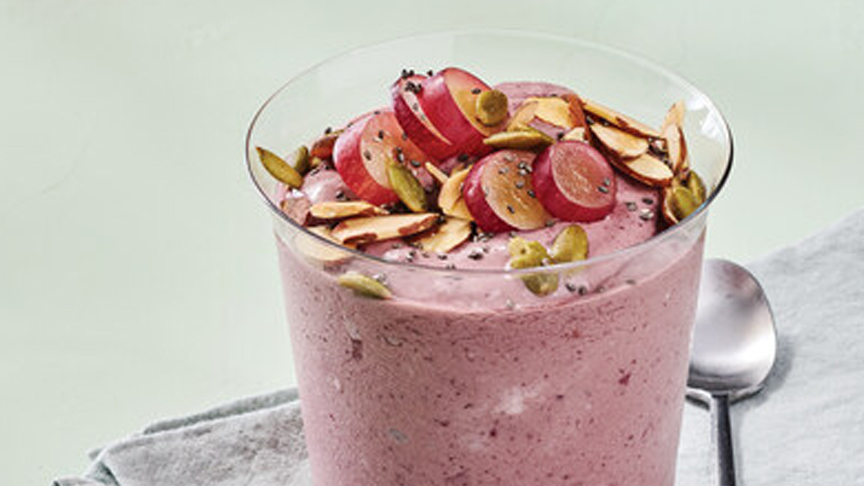
Bright, juicy and bursting with flavor, Grapes from California can be enjoyed by the handful or blended with rich bananas, tangy Greek yogurt and a hint of almond in The Great Grape-Acai Smoothie Bowl for a delicious blend of fruity flavors at breakfast, lunch or snack time – it not only tastes great, but supports a healthy heart.
Get Moving
Regular physical activity is one of the most effective ways to improve heart health. Exercise strengthens the heart muscle, improves blood circulation and helps maintain a healthy weight. Aim for at least 150 minutes of moderate-intensity aerobic exercise per week, as recommended by the American Heart Association, such as walking, jogging or swimming with strength training exercises like lifting weights or using resistance bands mixed in to help reduce the risk of heart disease and improve overall cardiovascular health.
Manage Stress
Consider your stress level: chronic stress can negatively impact heart health, increasing blood pressure and other risk factors for heart disease. Techniques such as deep breathing, meditation, yoga and regular physical activity can help manage stress levels and maintain a healthy heart. Additionally, taking time to engage in hobbies, spending time with loved ones and ensuring adequate sleep are stress-reducing activities that improve overall well-being and heart health.
To learn more about the heart-health benefits of grapes, and find additional heart-friendly recipes, visit GrapesFromCalifornia.com.
The Great Grape-Acai Smoothie Bowl
Servings: 1
1/2 cup red Grapes from California, fresh or frozen
1/2 banana
1 frozen acai fruit pack (3 1/2 ounces)
1/2 cup plain, nonfat Greek yogurt
1/4 teaspoon almond extract
Topping:
1/4 cup sliced red Grapes from California
1 tablespoon sliced, toasted almonds
1 tablespoon pepitas
1 teaspoon chia seeds
In small blender, combine grapes, banana, acai, yogurt and almond extract; process until smooth.
Pour into bowl and top with sliced grapes, sliced almonds, pepitas and chia seeds.
Nutritional information per serving: 420 calories; 19 g protein; 63 g carbohydrates; 12 g fat (26% calories from fat); 2.5 g saturated fat (5% calories from saturated fat); 5 mg cholesterol; 45 mg sodium; 8 g fiber.
Nutrition
Microwave frying can help lower oil content for healthier French fries
If you just use microwave frying, you get soggy food. To obtain a crispy texture and taste, you need conventional heating. Therefore, we propose combining the two approaches in the same unit. Conventional heating maintains the crispiness, while microwave heating lowers the oil intake.

Fried foods are popular with consumers, but their high fat content can contribute to health challenges like obesity and hypertension. If the food industry can offer lower-fat options of similar quality, people can more easily make health-conscious food choices.
Researchers at the University of Illinois Urbana-Champaign have explored microwave frying of French fries, providing insights that can help food manufacturers modify their production methods. They propose combining conventional frying with microwave frying to provide the desired crispiness and texture while reducing the cooking time and oil absorption.
“Consumers want healthy foods, but at the time of purchase, their cravings often take over. High oil content adds flavor, but it also contains a lot of energy and calories. My research team studies frying with the aim of obtaining lower fat content without significant differences in taste and texture,” said principal investigator Pawan Singh Takhar, professor of food engineering in the Department of Food Science and Human Nutrition, part of the College of Agricultural, Consumer and Environmental Sciences at U of I.
In two new publications, Takhar and Yash Shah, a doctoral student in FSHN, discussed their findings from studies exploring what happens during microwave frying of French fries.
For the first study, they collaborated with colleagues at Washington State University, who developed a special microwave fryer that could operate both at 2.45 gigahertz (similar to a regular microwave oven) and 5.8 gigahertz.
The sample potatoes were rinsed and peeled, then cut into strips, blanched, and salted. Batches of potato strips were then fried in soybean oil preheated to 180 degrees Celsius. The researchers measured temperature and pressure during and after frying, as well as volume, texture, moisture, and oil content of the fried samples.
The challenge is to keep the oil from entering the food during and after the cooking process, Takhar said.
In the beginning of the frying process, the potatoes’ pores are filled with water, so there is nowhere for the oil to go. But as frying progresses, the water starts evaporating, so pore spaces are opened and oil is sucked into the food through negative pressure.
“Think about a straw in a drink. If you push air into the straw, it creates positive pressure and any liquid will be pushed out. But if you suck on the straw, the liquid moves upward. Now imagine food materials have lots of tiny straws. When there is positive pressure, the oil stays out. But if there is negative pressure, the oil starts moving in,” Takhar explained.
Up to 90% of frying happens under negative pressure, so there is continuous suction potential. The goal is to keep the pressure positive longer and shorten the duration of negative pressure to prevent oil from entering the food.
“When we heat something in a conventional oven, the heat moves from outside to inside, but a microwave oven heats from the inside out, because the microwaves penetrate everywhere in the material. The microwaves oscillate water molecules, causing more vapor formation and thus shifting the pressure profile towards the positive side. The higher pressure in microwaves helps reduce oil penetration,” Takhar said.
In parallel with the lab experiments, the second paper complements the results through mathematical modeling, which allows for much more detailed exploration of a variety of factors in the frying process.
The researchers explored the effects of temperature, pressure, volume, texture, moisture, and oil at 2.45 GHz, 5.8 GHz, and conventional frying. Overall, they found that microwave frying resulted in faster moisture loss, shorter cooking time, and lower oil intake.
“However, if you just use microwave frying, you get soggy food. To obtain a crispy texture and taste, you need conventional heating. Therefore, we propose combining the two approaches in the same unit. Conventional heating maintains the crispiness, while microwave heating lowers the oil intake,” Takhar said.
Continuous fryers used for industrial-scale production of fried foods can be modified by incorporating microwave generators, which are inexpensive and readily available. Thus, this approach is likely to be economically feasible for industrial use, the researchers conclude.
The first paper, “The Effect of Conventional and Microwave Frying on the Quality Characteristics of French Fries,” is published in the Journal of Food Science. Authors are Yash Shah, Xu Zhou, Juming Tang, and Pawan Singh Takhar.
The second paper “Predicting the quality changes during microwave frying of food biopolymers by solving the hybrid mixture theory-based unsaturated transport, and electromagnetics equations,” was published in Current Research in Food Science.

Maintaining a healthy heart may require regular doses of positivity

Checking the historic Charlie wanton resto in Mandaluyong

Manulife launches GoalReady health solutions

Investing in employee health leads into a stronger, more productive workplace

Checking the wind turbines of Pililla… since there’s not much else being offered

Bell-bottoms today, miniskirts tomorrow: Revealing fashion’s 20-year cycle

Heart disease risk may start in the womb, study finds

Viagra could hold key to halting Peyronie’s disease

Healthier brains may be more resilient to early Alzheimer’s disease

Grape consumption linked to changes in gene expression and improved skin health
Healthier brains may be more resilient to early Alzheimer’s disease

Study: Egg consumption is associated with a lower risk of Alzheimer’s Disease
Grape consumption linked to changes in gene expression and improved skin health

Is ‘yo‑yo dieting’ really harmful? New analysis challenges long‑standing assumptions about weight cycling
Viagra could hold key to halting Peyronie’s disease
Heart disease risk may start in the womb, study finds

Checking the café vibe of Filipino-ish Yellow Bird resto

Study finds low-dose eye drops successful in managing adult myopia for 24 hours
Manulife launches GoalReady health solutions
Bell-bottoms today, miniskirts tomorrow: Revealing fashion’s 20-year cycle

-
 NewsMakers2 weeks ago
Healthier brains may be more resilient to early Alzheimer’s disease
-
 NewsMakers4 weeks ago
Study: Egg consumption is associated with a lower risk of Alzheimer’s Disease
-
 NewsMakers2 weeks ago
Grape consumption linked to changes in gene expression and improved skin health
-
 NewsMakers2 weeks ago
Is ‘yo‑yo dieting’ really harmful? New analysis challenges long‑standing assumptions about weight cycling
-
 NewsMakers2 weeks ago
Viagra could hold key to halting Peyronie’s disease
-
 NewsMakers2 weeks ago
Heart disease risk may start in the womb, study finds
-
 Destinations2 weeks ago
Checking the café vibe of Filipino-ish Yellow Bird resto
-
 NewsMakers4 weeks ago
Study finds low-dose eye drops successful in managing adult myopia for 24 hours