
Nutrition
Perfect pantry pastas
Keep your home stocked with necessities to simplify dinner prep with dishes made using common household staples.


Constantly seeking out recipe-specific ingredients that may only be used once or twice can be a burden. Instead, keep your home stocked with necessities to simplify dinner prep with dishes made using common household staples.
One perfect example: pastas. These recipes for Minestrone Pasta Saute with Ricotta, Creamy One-Pot Spaghetti and Pasta in a Pinch include easily recognizable seasonings and canned goods for simple dinner solutions. Plus, they all include dairy, an irreplaceable part of a balanced diet as a source of essential nutrients.
Another way to scale back on unnecessary grocery purchases is to give yourself permission to modify. Many recipes can be tweaked for personal preferences, such as using black beans rather than kidney beans or adjusting the amount of a spice used based on your family’s tastes.
Stock your pantry and refrigerator with versatile ingredients like these:
- Canned tomatoes
- Canned beans
- Quick-cook rice
- Small whole-grain pasta
- Stock, like vegetable, chicken or beef
- Fluid milk
- Shredded cheese
- Plain Greek yogurt
Minestrone Pasta Saute with Ricotta
Recipe courtesy of Lori Yates of “Foxes Love Lemons” on behalf of Milk Means More
Prep time: 15 minutes
Cook time: 15 minutes
Servings: 4
8 ounces ditalini pasta
1 1/2 tablespoons extra-virgin olive oil
3 carrots, finely diced
3 cloves garlic, minced
1/2 medium onion, chopped
1/2 bunch kale, thinly sliced
1/2 pound green beans, trimmed and halved
1/4 cup dry white wine
1/2 pound lean ground beef (optional)
1 can (15 ounces) kidney beans, rinsed and drained
1 jar (24 ounces) marinara sauce
1/2 teaspoon kosher salt
1/4 teaspoon ground black pepper
1 cup Ricotta cheese
1/4 cup grated Parmesan cheese
In large pot of boiling salted water, cook pasta according to package instructions. Reserve 1/4 cup pasta cooking water then drain pasta.
In large skillet over medium-high heat, heat oil. Add carrots, garlic and onion; cook 3 minutes, or until vegetables start to soften, stirring occasionally. Add kale and green beans; cook 3 minutes, or until green beans are tender-crisp, stirring occasionally.
Add wine to skillet; cook 2 minutes, or until most liquid has evaporated. Transfer vegetables to medium bowl. If including meat, return skillet to medium-high heat. Add ground beef; cook 6-8 minutes, or until meat is cooked through, breaking up with side of spoon. Spoon off excess fat.
Reduce heat to medium-low. Add kidney beans, marinara sauce, salt, pepper, pasta, reserved pasta cooking water and cooked vegetable mixture to skillet with beef, if using. Cook 2 minutes, or until warmed through, stirring occasionally. Divide pasta between four pasta bowls or plates and top with Ricotta and Parmesan cheeses.
Pasta in a Pinch
Recipe courtesy of Jenn Fillenworth, MS, RDN, of “Jenny With the Good Eats” on behalf of Milk Means More
Prep time: 5 minutes
Cook time: 15 minutes
Servings: 6
8 ounces uncooked penne pasta
2 1/2 cups water
1/4 teaspoon salt
1/4 teaspoon black pepper
1/2 teaspoon dried basil
1/2 teaspoon garlic powder
1/2 cup milk
2 cups mozzarella cheese, grated
1 can (15 ounces) cannellini beans, rinsed and drained
1 can (14 1/2 ounces) diced tomatoes, drained
1/4 cup Parmesan cheese
freshly chopped herbs, for garnish (optional)
In large microwavable bowl, place uncooked penne pasta and pour water over top to cover. With food-safe plastic wrap, cover bowl, leaving small section to vent as it cooks. Cook 3 minutes longer than package directs, approximately 13 minutes.
Once pasta has cooked, drain into colander then place back in bowl. Add salt, pepper, basil, garlic powder and milk; stir to combine. Begin to stir in cheese a little at a time. Microwave 1 minute. Remove from microwave and stir again.
Add cannellini beans and diced tomatoes; stir. Microwave 1 minute. Remove from microwave and stir. Assess if ingredients are hot and cheese is melted. If not, microwave 1-2 minutes. Top with Parmesan cheese and garnish with fresh herbs, if desired.
Creamy One-Pot Spaghetti
Recipe courtesy of Marcia Stanley, MS, RDN, on behalf of Milk Means More
Prep time: 20 minutes
Cook time: 10 minutes
Servings: 8
1 tablespoon vegetable oil
1 pound lean ground turkey or lean ground beef
1/2 cup chopped onion
2 1/2 cups reduced-sodium chicken broth or reduced-sodium beef broth
2 cups marinara sauce
1/2 teaspoon crushed fennel seeds
1/8 teaspoon ground cayenne pepper
8 ounces spaghetti noodles, broken into 3-4-inch pieces
1 package (8 ounces) reduced-fat cream cheese, cubed
1 1/3 cups shredded cheddar cheese, divided
chopped fresh basil or parsley (optional)
Using saute function of pressure cooker, heat oil until hot. Add meat and onion. Cook, uncovered, about 5 minutes, or until meat is browned, stirring to break up. Press cancel.
Stir broth, marinara sauce, fennel seeds and cayenne pepper into meat. Stir in spaghetti, making sure noodle pieces are covered by liquid. Secure lid and set pressure release to sealing function. Select high pressure and cook 5 minutes. Press cancel.
Allow pressure to release naturally 2 minutes. Move pressure release to venting function to release remaining steam. Remove lid.
Stir spaghetti mixture. Stir in cream cheese and 1 cup cheddar cheese until melted. Ladle into bowls to serve. Sprinkle with remaining cheddar cheese. Garnish with chopped fresh basil or parsley, if desired.
For more ideas to simplify family meals, visit milkmeansmore.org.







NewsMakers
Regular coffee consumption affects how our digestive system functions
Frequent coffee drinkers had a greater diversity of microorganisms in their gut than those who drank coffee less often.

If you drink coffee regularly, it appears to alter not only your gut bacteria but also the physiology of the gut itself. That is the conclusion of a study from the University of Copenhagen, which may help point the way towards better treatments for constipation.
It may be a slightly awkward topic, but many of us know the feeling: that cup of coffee that gets things moving. Research now suggests that regular coffee consumption affects how our digestive system functions.
A research team from the University of Copenhagen asked a group of Danish participants to swallow a small electronic capsule. As it travelled through the digestive tract, the capsule measured, among other things, transit time through the gastrointestinal system, temperature, pH levels and intestinal contractions.
The participants were categorised into frequent coffee drinkers, defined as consuming between one and five cups a day on more than three of the eight study days, and those who drank coffee less often.
The results first and foremost confirmed that coffee affects the composition of gut bacteria, as previous studies have suggested. Frequent coffee drinkers had a greater diversity of microorganisms in their gut than those who drank coffee less often.
“But perhaps more importantly, frequent coffee consumption appears to affect the physiology of the gut itself, in other words how the gut functions,” says first author Francesca Bucci, a PhD student at the Department of Nutrition, Exercise and Sports at the University of Copenhagen.
It is already well established that moderate coffee consumption is associated with a reduced risk of cardiovascular disease, diabetes, depression and several types of cancer. However, much less is known about how habitual coffee consumption relates to physiological conditions within the gut.
Stimulates contractions in the gut
The researchers found that frequent coffee drinkers had a significantly lower pH in the small intestine than those who drank coffee less often. They also observed that higher coffee consumption was associated with more contractions in the colon.
So are these physiological differences beneficial or not?
“Contractions in the gut can support healthy digestion, help prevent constipation and keep the intestinal muscles in good condition,” says Francesca Bucci.
The researchers cannot yet determine whether the lower pH is beneficial or harmful to health. However, the pH level in the small intestine plays an important role in the activity of digestive enzymes and in how food is broken down.
The researchers also stress that the study cannot establish whether the differences are caused solely by coffee consumption. Nevertheless, senior author Henrik Munch Roager believes there is good reason to think coffee plays a key role.
“For example, we already know from other studies that coffee can influence a range of processes in the digestive system, including acid secretion in the stomach. So there are good reasons to believe that what we are seeing is not merely coincidence. Anecdotally, many people also report that coffee affects their digestion,” says Henrik Munch Roager, Associate Professor and Research Group Leader at the Department of Nutrition, Exercise and Sports.
Calls for further studies
According to Roager, the natural next step would be an intervention study in which researchers control how much coffee participants drink and examine what happens to gut physiology during periods of high coffee consumption compared with periods without coffee.
The researchers hope that these and future findings can help address a widespread problem.
” A great many people struggle with constipation and irregular bowel movements. If we can understand how coffee affects digestion and intestinal contractions, it may be possible to use that knowledge to stimulate gut motility in a natural way. That would be extremely valuable,” says Henrik Munch Roager.
Nutrition
Can pistachios support sleep? Here’s what a new scientific review found
Pistachios could represent a promising wholefood intervention for improving sleep due to their unique combination of nutrients and bioactives, and map a clear path to additional research needed.

Nearly one-third of adults report sleeping less than seven hours a night, below the minimum amount recommended for most adults, while nearly one in five has trouble staying asleep most days or every day. At the same time, nearly one-third of people say they are seeking improved sleep from foods, beverages or nutrients.
Pistachios have attracted researchers’ attention because they naturally bring together several nutrients and plant compounds connected to sleep. Now, a new narrative review published in Nutrition Research Reviews identifies pistachios as a promising whole food for sleep research and explores how their nutrient profile may influence processes related to sleep quality, falling asleep, staying asleep and regulation of the sleep–wake cycle.
Three reasons pistachios are intriguing to sleep researchers and clinicians
- Supporting the body’s production of melatonin: Pistachios provide tryptophan, vitamin B6 and magnesium, which the body uses in the production of serotonin and melatonin. Serotonin is involved in sleep regulation and is also used to make melatonin, the hormone that helps regulate the sleep–wake cycle. Pistachios also contain phytomelatonin, the form of melatonin produced by plants, although its absorption and effects from eating pistachios have not been established in people.
- Supporting calming signals in the brain: Pistachios provide vitamin B6 and magnesium, which are involved in the production and function of gamma-aminobutyric acid (GABA), a brain chemical that helps quiet nerve activity and plays a role in regulating sleep.
- Connecting the gut and sleep: Pistachios provide fiber and polyphenols that gut microbes can break down into compounds that may influence communication between the gut and brain, including signaling involved in sleep regulation. Researchers are exploring whether these interactions could be another way pistachios influence sleep.
How much tryptophan do pistachios provide?
A one-ounce serving of pistachios provides about 71 milligrams of tryptophan, roughly 20% of the daily amount recommended for a 154-pound adult. Tryptophan is an essential amino acid the body uses to make serotonin, a brain chemical involved in sleep regulation, and melatonin, the hormone that helps regulate the sleep–wake cycle.
Pistachios also provide vitamin B6 and magnesium, which help the body convert tryptophan along the pathway to serotonin and melatonin. Together, this combination is one reason researchers are interested in studying whole pistachios and sleep.
Why the whole pistachio matters
Most nutrition-and-sleep research has examined individual nutrients, extracts or supplements. Pistachios bring several of these components together naturally in one food, creating an opportunity to study how they may work together rather than in isolation. This natural structure, how nutrients and plant compounds are packaged together and interact within a food, is known as the food matrix, and in this context – the pistachio food matrix.
“Pistachios are compelling for sleep research because they bring together several nutrients and plant compounds connected to sleep physiology within one whole food,” said Marie-Pierre St-Onge, PhD, the review’s senior and corresponding author and director of the Center of Excellence for Sleep and Circadian Research at Columbia University Irving Medical Center. “Rather than focusing on a single ‘sleep nutrient,’ this review provides a rationale for studying how the complete pistachio food matrix may affect sleep-related pathways.”
As part of the review, researchers assessed laboratory studies that simulated digestion and fermentation of pistachios to explore how the pistachio food matrix may also influence how and when pistachio components become available to the body. Findings demonstrated that gut microbes can ferment pistachio fiber, transform its polyphenols and contribute to a longer release of phytomelatonin from pistachios.
These findings suggest that researchers should study whole pistachios rather than nutrients or supplements in isolation, because nutrients may behave differently when consumed as part of the pistachio food matrix.
Do pistachios improve sleep?
The authors of this review concluded that pistachios could represent a promising wholefood intervention for improving sleep due to their unique combination of nutrients and bioactives, and map a clear path to additional research needed.
The authors call for randomized controlled trials examining whole-pistachio consumption, dose–response relationships, melatonin levels, sleep outcomes and the bioavailability of key compounds. They also recommend investigating whether pistachio variety, growing conditions and processing influence the nutrient and bioactive content of pistachios.
“Well-designed human trials can help us determine whether the unique combination of nutrients and bioactive compounds in the pistachio food matrix produces measurable changes in melatonin, sleep quality, sleep duration or other sleep outcomes,” explains Dr. St-Onge.
That next phase of research is already underway. American Pistachio Growers is supporting several university-led human clinical studies examining pistachios and sleep. Results are not yet available, but the studies represent an important next step from biological rationale to direct human evidence.
Nutrition
Four to six servings of wholegrain per day lowers risk factors for heart disease
Most benefits occur at intakes of approximately 60 to 100 grams per day, toward the upper end of current dietary recommendations.
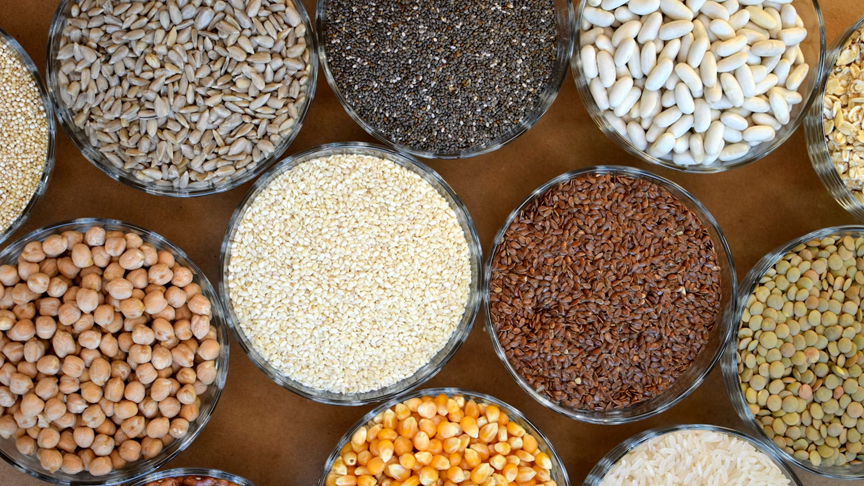
Eating four to six servings of wholegrain each day reduces several major risk factors for cardiovascular disease, according to a new study published in the European Heart Journal.
The study is a systematic review and meta-analysis, meaning it brings together the results of all existing research in this area. It includes data from 87 clinical trials that tested the effects of eating wholegrain food on risk factors for cardiovascular disease.
It shows that eating a diet rich in wholegrain food is likely to prevent heart disease by reducing body weight, blood pressure and the levels of cholesterol and glucose in the blood.
The research was led by Dr Helda Tutunchi from Tabriz University of Medical Sciences, Iran.
She said: “Although higher wholegrain intake has long been linked to better heart health in population studies, clinical trials have produced mixed findings. This left an important practical question unanswered: how much whole grain should people eat to meaningfully improve cardiovascular health? To address this, we systematically combined and analysed all available randomised controlled trials to identify the amount of whole grain associated with the greatest benefits.”
The analysis included more than 6,500 people from trials conducted across Asia, Europe, the United States, Canada, Australia, and Brazil It showed that eating more wholegrain reduced people’s body weight, waist circumference and blood pressure, as well as reducing the levels of total cholesterol and low-density lipoprotein cholesterol (LDL or ‘bad’ cholesterol), triglycerides, glucose and interleukin-6 (a sign of inflammation) in people’s blood.
These benefits could be seen in people eating 30 to 40 grams of wholegrain per day (dry weight), but the greatest benefits were found in people eating 60 to 100 grams per day. This corresponds to four to six servings of wholegrain daily, for example, a bowl of oatmeal, a sandwich made with wholegrain bread, and a serving of brown rice.
Dr Tutunchi said: “This is the largest and most comprehensive meta-analysis of randomised controlled trials on wholegrain intake and cardiovascular risk factors. Unlike previous reviews, we looked specifically at how much wholegrain people need to eat to get the greatest benefits. We also evaluated the certainty of the evidence and found high-certainty evidence for improvements in several outcomes, including body weight, waist circumference and total cholesterol.
“However, most of the trials we included were relatively short, with an average duration of about eight weeks. As a result, we cannot determine whether these benefits are maintained over the long term. In addition, relatively few studies evaluated very high wholegrain intakes, above 140 grams per day, so the effects at those intake levels remain uncertain.
“Our findings provide a practical indication of the amount of wholegrain that may be needed to achieve meaningful improvements in cardiovascular risk factors. Increasing wholegrain intake is a relatively simple, accessible and affordable dietary strategy that can complement other lifestyle and medical interventions.
“We found that most benefits occur at intakes of approximately 60 to 100 grams per day, toward the upper end of current dietary recommendations. These findings do not necessarily call for major changes to existing guidelines, but they support public health strategies that help people increase their whole-grain intake and move toward the higher end of current targets.
“One important finding is that whole grains may benefit cardiovascular health through several modest improvements acting together, rather than through one large effect on a single risk factor. We observed improvements across multiple pathways, including blood lipids, blood pressure, glucose regulation, body fat and some markers of inflammation. Although the change in each individual risk factor was generally modest, improving several risk factors simultaneously could contribute to a greater reduction in long-term cardiovascular risk. However, the included trials did not assess cardiovascular events directly, so longer-term studies are needed to confirm this.”
In an accompanying editorial [2] Dr Cecilie Kyrø from the Danish Cancer Institute, Copenhagen, and colleagues said: “More than half a century ago, Sir Denis Burkitt and colleagues proposed that the refining of staple carbohydrates, with the accompanying removal of cereal fibre (i.e. from whole to refined grains), underpinned a broad spectrum of ‘Western’ diseases via effects on stool bulk, transit time, and the colonic milieu. Whole grains refer to cereal grains where the three main parts— bran, germ, and endosperm—are all retained in the same proportions as in the intact kernel, whether consumed as whole kernels, flakes, or milled into flour and used in bread and other foods.
“A meta-analysis of trials investigating the effect of whole grains on cardiometabolic risk markers by Naghshi et al. is published in this issue of the European Heart Journal and includes 87 trials of 6529 study participants in total. The meta-analysis shows high-certainty evidence for reductions in body weight, waist circumference, total cholesterol. and interleukin-6 (IL-6), and moderate-certainty evidence for improvements in LDL cholesterol, triglycerides, systolic blood pressure, fasting plasma glucose, and insulin resistance (HOMA-IR).
“Importantly, the meta-analysis includes dose–response analyses, addressing differences in whole-grain intake between trials and providing quantitative evidence to inform food-based dietary guidelines. Overall, intakes of 60–100 g/day dry weight (∼4–6 servings) were found to be clearly related to relevant cardiometabolic improvements.
“For clinicians, the message from Naghshi et al. is reassuringly simple: encouraging patients to replace refined grain foods with minimally processed whole grains is likely to yield modest but meaningful improvements in body weight, waist circumference, and blood lipids, perhaps particularly in individuals with type 2 diabetes. At the population level, even small shifts in these markers can translate into substantial reductions in cardiometabolic events. Adding evidence from research into other disease endpoints indicates that the beneficial effects of whole- grains foods even go substantially beyond cardiometabolic disease.
“The dose–response analyses by Naghshi et al. suggest that intakes of around 60–100 g/day whole grains (∼4–6 servings) are needed to achieve measurable cardiometabolic benefits. Current US dietary guidelines recommend 2–4 servings of whole grains per day within an overall pattern that emphasizes ‘real food’ and reduced intake of ultra-processed products. While this is an important step in the right direction, the trial evidence indicates that higher whole-grain intakes than presently recommended in some guidelines may be optimal for cardiometabolic health.
“From a policy perspective, the challenge is to make minimally processed whole-grain staples accessible, affordable, and culturally acceptable, while avoiding a drift towards ultra-processed products that merely add whole grains to otherwise highly processed formulations.”

Checking Aling Lucing, where sisig was invented

Satisfying you craving for unli chicken in Pasig City

Stress more strongly linked to poorer quality of life among adults with multiple chronic conditions

Neighborhood ties and social connections are linked to high recycling participation

Going to the park at least once a week can improve children’s mental health

A longevity diet is not just about eating less—it is what, when, and for whom

Dance training influences how the brain processes facial emotions

Study reveals how gut antibodies protect against colon cancer

Jolting awake often is associated with poorer sleep and higher anxiety, survey finds

Curiosity and fearlessness apparent in German Shepherd genes

Can pistachios support sleep? Here’s what a new scientific review found

Dogs and owners disturb each other in the night, but still get pretty good sleep

For weight loss, where food comes from may matter as much as how it is processed
Curiosity and fearlessness apparent in German Shepherd genes

Mindfulness and self-compassion can alleviate premenstrual symptoms

Music can enhance the flavor of your food

Epigenetic clocks reveal why larger dogs age faster
Study reveals how gut antibodies protect against colon cancer
A longevity diet is not just about eating less—it is what, when, and for whom
Stress more strongly linked to poorer quality of life among adults with multiple chronic conditions

-
 Nutrition4 weeks ago
Can pistachios support sleep? Here’s what a new scientific review found
-
 Pet Care4 weeks ago
Dogs and owners disturb each other in the night, but still get pretty good sleep
-
 NewsMakers4 weeks ago
For weight loss, where food comes from may matter as much as how it is processed
-
 Pet Care2 weeks ago
Curiosity and fearlessness apparent in German Shepherd genes
-
 NewsMakers4 weeks ago
Mindfulness and self-compassion can alleviate premenstrual symptoms
-
 NewsMakers4 weeks ago
Music can enhance the flavor of your food
-
 Pet Care4 weeks ago
Epigenetic clocks reveal why larger dogs age faster
-
 NewsMakers2 weeks ago
Study reveals how gut antibodies protect against colon cancer