
NewsMakers
Health tips can help Filipinos live their best life this 2023
If you are one of those looking to have an unstoppable year full of adventures, consider these four easy health tips.


One in five Filipinos has already booked international trips this 2023. Not only that, but 44% of Filipinos are planning to travel two to four times this year.[1] At the same time, the Department of Tourism (DOT) is targeting to have 4.8 million tourist arrivals in the country this year, twice the number of visitors in 2022.[2]
This means a lot of people will be going in and out of the country. We can expect more crowds and busier streets, especially during summer, which is one of the best times to travel because of the holidays and school vacations. If you are one of those looking to have an unstoppable year full of adventures, consider these four easy health tips:
Drink vitamins
Taking vitamins regularly can supplement a healthy diet and lifestyle.[3] This is especially true for people going on vacation, who need to boost their immunity before and during their trip. Immune-boosting supplements like vitamins C and D, zinc, and probiotics can be taken three to five days before a trip and during[4] to help travelers stay in tip-top shape.
Stay hydrated
Staying hydrated is important all year round. Getting enough water prevents infections, brings nutrients to cells, and ensures that organs are working optimally. Aside from these benefits, drinking the recommended amount of water each day is good for cognition, sleep quality, and mood.[5] The amount of water needed per day varies per individual, but for the healthy ones, the recommended amount of water that men should drink daily is 15.5 cups, and 11.5 cups for women.[6]
Drinking enough water before travel is recommended because flying can be dehydrating.[7] Airplanes are kept at 10 to 20% humidity, a lower rate compared to normal environments that range from 35 to 65%. Lower humidity leads to dehydration.[8]
Sleep well
Good sleep leads to improved health, mood, immune system, and brain performance.[9] Seven to nine hours of continuous sleep is needed to feel refreshed.[10] Maintain good sleep habits days before a flight to have enough energy for the trip.
Flying to countries with the same time zone or with just an hour or two difference is easy. When traveling across the world, it’s important to adjust to the day-night cycle at the destination.[11] Stay up with the locals when the arrival time is during the day and sleep at night.
Get vaccinated
Vacations expose travelers to diseases, so timely immunizations through vaccinations are crucial. The flu is one of the most common infectious diseases and it is contagious. Each infected person can spread the disease to one or two more people.[12]
Preventive healthcare is still the best protection since people can catch the flu at any time of the year.It’s also important to get a shot annually since flu vaccines change each year to match the current viruses.
Most of all, you wouldn’t want to miss all the fun you have planned for your trip if you get sick. Take it from GlaxoSmithKline Philippines’ (GSK) latest flu disease awareness jingle, “But I Got the Flu .” It’s a call to everyone to get your flu shots as soon as possible so you can be unstoppable – whether in having your best summer vacation yet, spending quality time with loved ones, or pursuing other passions in life – don’t let the flu stop you. All you need to do is consult your doctor to ensure that you’re in the right condition to do so.
“People are excited to make up for all the things that they missed at the height of the pandemic. Now that travel restrictions are looser and we can enjoy the best holiday destinations, it’s important to not let our guard down. We recommend that travelers take preventive measures so they can be unstoppable and enjoy their trips worry-free,” says Dr. Kevin Bautista, GSK Medical Affairs Manager.
[1] Revenge travel is real: 1 in 5 Filipinos have already booked an international holiday in 2023. (2022, Dec 20). Philstar Life, https://philstarlife.com/living/288666-2022-travel-trends-philippines. Accessed 08 Mar 2023.
[2] DOT raises 2023 target to 4.8 million visitors from abroad. Philippine Daily Inquirer. (2022, Dec 20). https://newsinfo.inquirer.net/1707629/dot-targets-4-8-million-international-visitors-for-2023. Accessed 23 Jun 2023.
[3] The Truth About Supplements: 5 Things You Should Know. (2022, Mar 31). Penn Medicine, https://www.pennmedicine.org/updates/blogs/health-and-wellness/2020/february/the-truth-about-supplements. Accessed 08 Mar 2023.
[4] 5 Things You Should Do for Your Health Before Every Trip, According to a Doctor. (2022, Oct 13). Travel + Leisure, https://www.travelandleisure.com/health-tips-before-travel-according-to-a-doctor-6750420. Accessed 08 Mar 2023.
[5] The importance of hydration. (2017, Sep 28). Harvard T.H. Chan School of Public Health (HSPH), https://www.hsph.harvard.edu/news/hsph-in-the-news/the-importance-of-hydration/. Accessed 07 Mar 2023.
[6] How Much Water Should You Drink? (2023, May 22). Harvard Health Publishing. https://www.health.harvard.edu/staying-healthy/how-much-water-should-you-drink. Accessed 23 Jun 2023.
[7] 5 Things You Should Do for Your Health Before Every Trip, According to a Doctor. (2022, Oct 13). Travel + Leisure, https://www.travelandleisure.com/health-tips-before-travel-according-to-a-doctor-6750420. Accessed 07 Mar 2023.
[8] Why Flying Makes You So Dehydrated. (2018, Dec 14). Center for Family Medicine, https://centerforfamilymedicine.com/general-health/why-flying-makes-you-so-dehydrated. Accessed 08 Mar 2023.
[9] Good Sleep for Good Health. (2021, Apr). National Institutes of Health, https://newsinhealth.nih.gov/2021/04/good-sleep-good-health. Accessed 08 Mar 2023.
[10] What Is Healthy Sleep? (2022, Apr 29). Sleep Foundation, https://www.sleepfoundation.org/sleep-hygiene/what-is-healthy-sleep. Accessed 08 Mar 2023.
[11] Jet Lag and Sleep. (2022, Nov 3). Sleep Foundation, https://www.sleepfoundation.org/travel-and-sleep/jet-lag. Accessed 08 Mar 2023.
[12] Flu (Influenza). (2022, Oct 11). Cleveland Clinic, https://my.clevelandclinic.org/health/diseases/4335-influenza-flu. Accessed 08 Mar 2023.





NewsMakers
The look and feel of your neighborhood may affect your sleep
Those living in neighborhoods rated as having a stronger sense of safety tended to sleep longer, and that this rating appeared to be shaped by the streetscape.

Your neighborhood’s “streetscape”—the physical environment of your street—is something that you have probably never consciously thought about, despite seeing it every day. But what if the streetscape was affecting you on a subconscious level and disrupting your sleep?
This intriguing question is posed by the findings of a study led by Professor Daisuke Matsushita of the Graduate School of Human Life and Ecology at Osaka Metropolitan University. The research team used AI to analyze more than 200,000 Google Street View images to identify visual neighborhood characteristics. They then linked these characteristics to the self-reported sleep of 1,089 working adults living on the lower floors of apartments in Tokyo, who were most likely to be affected by the streetscape.
They found that those living in neighborhoods rated as having a stronger sense of safety tended to sleep longer, and that this rating appeared to be shaped by the streetscape. Generally, people slept longer in areas with lots of greenery, such as leafy trees, on the street. Similarly, high “enclosure”—meaning many tall vertical buildings and few wide-open spaces—was also associated with longer sleep and fewer insomnia symptoms.
However, the study also made a surprising finding. The researchers found that highly walkable streetscapes, such as those with more sidewalks and traffic signs, were associated with a lowered sense of safety and shortened sleep duration.
This suggests that walkability does not always represent a reassuring environment. Instead, a possible explanation is that streets with extensive pedestrian infrastructure are often busier, more crowded, and used by more strangers, which may be perceived as less safe or less relaxing than quieter residential streets.
“This study demonstrates the potential for evaluating streetscape characteristics across large geographic areas in a cost-effective manner,” Dr. Matsushita said. “Based on the technique used in this study, cities could potentially measure perceived safety, beauty, liveliness, and enclosure as well as pollution and noise.”
“We hope that opening up this new perspective creates further possibilities for designing healthier neighborhoods,” he concludes.
The findings were published in Building and Environment.
NewsMakers
Workout or nap? Either can help your sleepless brain, study finds
People who either completed 20 minutes of moderate-to-vigorous exercise or took a 90-minute nap performed about 22 per cent better on memory tests after 30 hours without sleep than those who did neither.

A short workout or a nap can help protect memory after a sleepless night, a McGill University-led study has found.
Researchers found people who either completed 20 minutes of moderate-to-vigorous exercise or took a 90-minute nap performed about 22 per cent better on memory tests after 30 hours without sleep than those who did neither. The findings, published in Proceedings of the National Academy of Sciences (PNAS), point to practical ways to counter the effects of sleep deprivation.
“Sleep loss affects nearly every aspect of how we think and function, but many people can’t simply stop what they’re doing and get more sleep,” said senior author Marc Roig, Professor in McGill’s School of Physical and Occupational Therapy. “Our findings show that even a brief bout of exercise may help preserve one of our most important cognitive abilities.”
The study involved 54 healthy young adults who stayed awake for 30 consecutive hours under lab supervision. Participants were then assigned to one of three groups: a 20-minute cycling session, a 90-minute nap or a control condition. Three days later, researchers tested their memory for images they had viewed immediately after the intervention. Those who exercised or napped remembered significantly more images than participants who did neither.
Same result, different pathways
While the memory benefits were nearly identical, brain recordings revealed that exercise and napping helped in different ways.
Napping appeared to help the brain recharge, making it easier to take in and remember new information. Exercise, by contrast, helped the brain use its remaining resources more efficiently, without making participants feel more tired.
The findings could eventually inform fatigue-management strategies in workplaces where sleep loss is common and mistakes can have serious consequences, such as health care, transportation and emergency response.
“A nap isn’t always possible in the middle of a shift,” said first author Madhura Lotlikar, a doctoral candidate in McGill’s Department of Neurology and Neurosurgery. “Exercise is accessible, inexpensive and easy to implement. That makes it a promising tool to help people stay cognitively sharp when sleep is limited.”
The researchers emphasize that exercise cannot replace sleep, but it may help people function better when getting enough rest isn’t possible.
About the study
“Protecting episodic memory after sleep loss: Similar benefits of exercise and naps via distinct neural contributions” by Madhura Lotlikar and Marc Roig et al., was published in Proceedings of the National Academy of Sciences of the United States of America.
NewsMakers
Study links coffee consumption to metabolic health and sex hormones
Despite having a similar body mass index (BMI), individuals with higher coffee consumption had lower total and visceral fat and greater skeletal muscle mass than those who consumed less coffee.
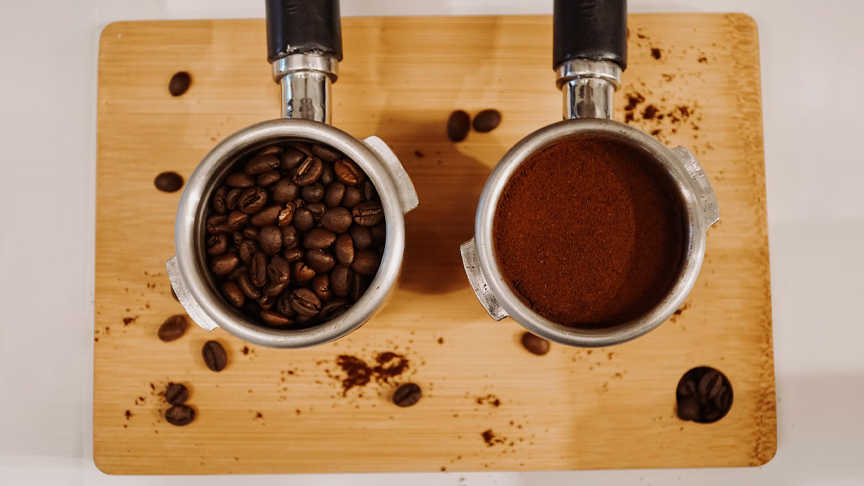
Coffee is one of the world’s most widely consumed beverages, and previous research has linked its consumption to a lower risk of conditions such as type 2 diabetes and cardiovascular disease. However, the biological mechanisms behind these benefits remain unclear. A new Finnish study links habitual coffee consumption to healthier body composition and metabolic markers, while revealing distinct associations with sex hormones in men and women.
The study, conducted at the University of Oulu, analysed data from 2,264 participants aged 46 in the Northern Finland Birth Cohort 1966. Researchers examined how habitual coffee consumption was associated with circulating metabolites, cardiometabolic risk markers and sex hormones.
Despite having a similar body mass index (BMI), individuals with higher coffee consumption had lower total and visceral fat and greater skeletal muscle mass than those who consumed less coffee.
In both men and women, higher coffee consumption was correlated with lower circulating levels of branched-chain amino acids, biomarkers that have previously been linked to insulin resistance and an increased risk of type 2 diabetes when chronically elevated.
The strongest sex-specific associations were observed in men. Higher coffee consumption was linked to a more favourable glucose–insulin profile, higher concentrations of total and bioavailable testosterone, and increased levels of sex hormone-binding globulin (SHBG). At the same time, free testosterone and the free androgen index were modestly lower. In women, hormonal associations were more limited and were primarily characterised by higher SHBG and lower measures of free androgens.
“Coffee is consumed by millions of people every day, yet we still know surprisingly little about how it relates to our metabolism and hormones. What stood out in our findings was a distinct hormonal signature that didn’t disappear even after we took into account BMI and lifestyle factors, with several of these associations differing between men and women,” says Luca Verroest, lead author of the study and Doctoral Researcher at the University of Oulu.
The results suggest that hormonal pathways may partly explain the relationship between coffee consumption and metabolic health. However, as this was an observational study, the findings demonstrate associations rather than cause-and-effect relationships.
The study is particularly relevant in Finland, one of the world’s highest coffee-consuming countries, where annual consumption averages around 11.8 kilograms per person.
The researchers say the findings provide a foundation for future studies aimed at determining whether coffee itself drives these biological changes and identifying the compounds responsible. These questions are currently being investigated in animal models, with the long-term goal of progressing to human intervention studies. Further research will be needed before the findings could inform dietary recommendations.
The study, Associations of habitual coffee intake with testosterone and cardiometabolic markers: the Northern Finland Birth Cohort 1966 study, has been published in the European Journal of Nutrition.

Visiting San Pablo City’s Pho Viet Nam

Four to six servings of wholegrain per day lowers risk factors for heart disease

Structured exercise linked to longer cancer survival and time free of disease

Heading to Pila, Laguna? Check out La Cosina Antonio

Pasalubong shopping in Davao via Aldevinco

The look and feel of your neighborhood may affect your sleep

Workout or nap? Either can help your sleepless brain, study finds

Study links coffee consumption to metabolic health and sex hormones

Manulife Investments Philippines leads UITF rankings across equity and fixed income funds

Scheduling dental care during prenatal visits boosts oral health care during pregnancy
Pasalubong shopping in Davao via Aldevinco
Structured exercise linked to longer cancer survival and time free of disease
Heading to Pila, Laguna? Check out La Cosina Antonio
Four to six servings of wholegrain per day lowers risk factors for heart disease
Visiting San Pablo City’s Pho Viet Nam

-
 Destinations4 weeks ago
Pasalubong shopping in Davao via Aldevinco
-
 Wellness1 week ago
Structured exercise linked to longer cancer survival and time free of disease
-
 Destinations3 weeks ago
Heading to Pila, Laguna? Check out La Cosina Antonio
-
 Nutrition1 week ago
Four to six servings of wholegrain per day lowers risk factors for heart disease
-
 Destinations1 week ago
Visiting San Pablo City’s Pho Viet Nam