
Pet Care
Keeping kitty indoors is not the cat-astrophe that owners fear
Owners often need reassurance that the behaviours they see during the transition are temporary and that there are practical strategies – such as providing climbing spaces, scratching posts, toys and opportunities for play – that can help cats adapt successfully.


Moving a pet cat from an outdoor lifestyle to living indoors is easier than many owners expect, according to new research that could help improve feline welfare, protect wildlife, and ease concerns about keeping cats contained.
Australian and New Zealand researchers surveyed 87 cat owners, revealing that most who transitioned their pets to indoor living reported the change was ultimately worthwhile, with the benefits to both cats and owners outweighing the challenges.
The study, published in Applied Animal Behaviour Science, found that while owners initially worried about their cat’s happiness and behaviour, more than two-thirds said the process was easier than expected.
Lead author Dr Julia Henning, from Adelaide University’s School of Animal and Veterinary Sciences, said the findings challenge the perception that cats cannot adapt to an indoor lifestyle.
“Many people worry that keeping a cat indoors will be stressful for their cat, but our findings suggest that the transition was often easier than expected,” Dr Henning said.
“Owners certainly faced some challenges during the transition, particularly in the first few weeks, but most found these were temporary and that the long-term benefits far outweighed the difficulties.”
The research found cat safety was the strongest motivation for moving cats indoors, with owners concerned about road traffic, attacks by other animals, disease, parasites, poisoning and cats’ threats to local wildlife, particularly birds. After the transition, these same issues were overwhelmingly cited as the greatest benefits, alongside improved peace of mind.
Owners also reported being better able to monitor their cat’s health, spending more quality time with their pet and, in many cases, experiencing closer bonds with their cats.
The study found approximately half of the cats adjusted to indoor living within a matter of weeks, while younger cats generally adapted more quickly than older animals.
However, the research also identified several common challenges. Cats were more vocal, scratched at doors and windows, or appeared frustrated during the adjustment period. Owners also reported concerns about providing enough environmental enrichment, maintaining litter trays and preventing weight gain.
Moving cats indoors increased some costs (including food, litter and household modifications), however veterinary costs reduced over time because their cats faced fewer injuries and health risks associated with roaming.
Many owners described feelings of guilt about restricting their cat’s freedom, despite believing they were making the safest decision for their pet. Others worried their cat might become bored or unhappy indoors.
Senior author Dr Susan Hazel, from Adelaide University, said these findings highlight the importance of supporting both pets and their owners.
“Keeping cats indoors offers significant benefits for their safety and welfare, but successful transitions depend on supporting owners as much as their cats,” Dr Hazel said.
“Our research shows that owners often need reassurance that the behaviours they see during the transition are temporary and that there are practical strategies – such as providing climbing spaces, scratching posts, toys and opportunities for play – that can help cats adapt successfully.”
The study also found that transitioning cats indoors was often prompted by unexpected events, including injuries, illness, moving house or sudden safety concerns. More than one-third of owners reported having little or no time to prepare, while almost half made no preparations before the transition.
Despite this, most owners still described the experience as easier than anticipated.
Researchers say the findings highlight the need for readily accessible information and practical resources to help owners make the transition successfully, particularly when circumstances change unexpectedly.
‘Owner-reported experiences of transitioning cats from outdoor to indoor living’ is published in Applied Animal Behaviour Science. The authors are from Adelaide University, Companion Animals New Zealand, EthicoNZ Ltd and Navigate Welfare.




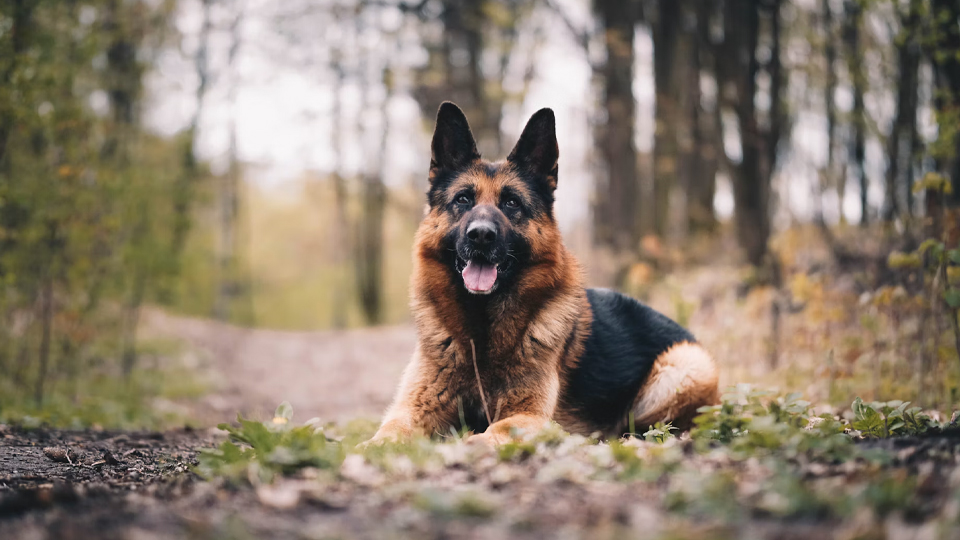
German Shepherd dogs bred for working are more curious and less neurotic than German Shepherds bred for show. A study from Uppsala University and the Swedish University of Agricultural Sciences has shown that the differences are not only apparent in the dogs’ behaviour, but also in their genes. In previous studies, similar genes in humans have been associated with neuroticism.
A German Shepherd dog’s behaviour is very important because they are used as working dogs, for example in the police force or in the defence forces. Breeding dogs with the right traits can be difficult and costly. But with a better understanding of the genetics underlying such traits, breeding can be improved.
In a new study, ethologists and geneticists worked together to investigate how the behaviour of German Shepherd dogs is reflected in their genes. They have shown that the German Shepherd population in Sweden is comprised of two groups: one bred primarily for their appearance and the other bred for functional roles as working dogs.
“Breeders of working dogs have selected and bred the ones that really enjoy working; it’s a bit like a game for them. It’s interesting that we can now see that this selective breeding has indeed led to differences between working dogs and show dogs among German Shepherds – differences that can be seen at both the behavioural and genetic levels,” says Kerstin Lindblad-Toh, Professor of Comparative Genomics at Uppsala University and one of the study’s leaders.
Investigated German Shepherd behaviour and genetics
To measure behaviour in German Shepherd dogs, a standardised behaviour test called the Dog Mentality Assessment (DMA) was used where the dogs were confronted with a variety of situations. The DMA tests how dogs react to an invitation to play, threatening ghost-like figures, and being handled by a stranger. Today, the majority of German Shepherds in Sweden are tested using the DMA. In the study, the researchers looked at data from around 23,000 German Shepherd dogs.
“We could see that, on average, the working dogs showed less fear, more curiosity and were able to socialise well with humans. This shows how important it is to select for behaviour when selecting dogs for breeding for important functional roles in our community,” says Åke Hedhammar, Professor Emeritus at the Swedish University of Agricultural Sciences.
The researchers then took blood samples from 373 German Shepherd dogs who had undergone the DMA to be able to map their genomes.
“We could then see that there were areas in the genome where differences could be seen in the dogs depending on how curious or playful they were, for example. That meant that we were able to identify some of the genes in working dogs that are linked to curiosity and playfulness,” says Kerstin Lindblad-Toh.
In humans too, researchers have also found links between genes and behaviour. Some of the genes that have now been linked to the behaviour of German Shepherd dogs have been associated in previous studies with neuroticism in humans.
“It’s interesting that several of the genes that we identified as influencing behaviour in German Shepherds are also linked to that behaviour in humans. So we now have an example of how we might also acquire more knowledge about different behaviours in people with help of dogs in the long term,” says Kerstin Lindblad-Toh.
Bigger studies in the pipeline with the Swedish Armed Forces
Behaviour is not just controlled by individual genes: it is a complex interaction between many different genes. In collaboration with the Swedish Armed Forces, the researchers are now going to proceed with bigger studies in order to better map the genetics of behaviour.
“That would ultimately mean that these findings could be used to select which dogs have the best prospects of becoming good working dogs and which could be used in breeding. But we are not there yet. This study is just a first step and shows that there are actually clear differences in behaviour between working German Shepherd dogs and German Shepherd show dogs,” Åke Hedhammar says.
Pet Care
Dogs and owners disturb each other in the night, but still get pretty good sleep
Nighttime activity was strongly correlated, with humans and their dogs commonly becoming active around the same time in the night, but more often than not the humans began moving before the dogs did, suggesting that owners are disturbing their dog’s sleep more than the other way around.

Sleeping alongside your dog probably doesn’t disrupt your sleep as much as you might think, according to a study published in the open access journal PLOS One by Ming Fei Li of the University of Toronto, Canada, Lavania Nagendran of the University of Toronto Mississauga, Canada, and colleagues.
It is intuitive to think that humans and their dogs affect each other’s sleep schedules, but little research has been done in this area and with conflicting results. In this study, Li, Nagendran and colleagues examined the nighttime activity of 25 humans and their 38 dogs to investigate how they impacted each other’s nighttime experience for better or worse.
Over a period of four weeks, results from activity monitors – worn on the wrist for humans and on the collar for dogs – found that sharing the bed with a dog did not significantly impact sleep duration or sleep quality, even in cases where owners reported feeling like their dogs were disturbing their sleep.
Nighttime activity was strongly correlated, with humans and their dogs commonly becoming active around the same time in the night, but more often than not the humans began moving before the dogs did, suggesting that owners are disturbing their dog’s sleep more than the other way around.
Thus, the answer to the question of “who is disturbing whom” seem to be a bit of both. These results align with some previous research on the benefits and drawbacks of co-sleeping with dogs, but the authors note that this study includes a limited sample and no dog-less control group. Therefore, future studies will be needed to include more data on dogs of different ages and breeds.
The authors add: “Our findings suggest that nighttime activity in humans and dogs is closely coupled and there may be discrepancies between objective and subjective sleep measures.”
Pet Care
Epigenetic clocks reveal why larger dogs age faster
Larger and male dogs undergo accelerated molecular aging, with pronounced DNA methylation (DNAm) on the X chromosome and at transposable elements (TEs).

Why do large dogs tend to live shorter lives than their smaller counterparts? According to a study of nearly 900 dogs, the answer may be written into their epigenome. The findings reveal that larger and male dogs undergo accelerated molecular aging, with pronounced DNA methylation (DNAm) on the X chromosome and at transposable elements (TEs).
Aging is a universal process, but its pace and biological mechanisms substantially differ between individuals and species. Domestic dogs offer a particularly useful model for understanding the biology of aging because their lifespans vary dramatically with body size.
For example, smaller breeds can live nearly twice as long as larger breeds. Moreover, companion dogs also live in human environments, consume commercial diets, and receive routine medical care, making them a relevant translational model for studying how genetic background and environmental exposures shape aging.
However, how intrinsic factors such as size and biological sex influence variation in dog aging and lifespan remains unclear. Previous research has demonstrated that DNAm is a useful indicator of biological aging, with “epigenetic clocks” offering a way to understand the factors that accelerate or decelerate biological aging.
Blaise Mariner and colleagues generated 1,640 methylomes from a cohort of 894 dogs in the Dog Aging Project. They combined these molecular data with detailed genetic and demographic data.
Mariner et al. found that molecular aging occurs most rapidly early in a dog’s life. What’s more, larger and male dogs – both of which have shorter lifespans than their respective counterparts – age more quickly at the molecular level.
The authors identified different epigenetic patterns underlying these effects. According to the findings, sex-related changes were concentrated on the X chromosome, while body-size-related changes were especially prominent in TEs, stretches of DNA that can influence genome stability and gene regulation.

Stress more strongly linked to poorer quality of life among adults with multiple chronic conditions

Neighborhood ties and social connections are linked to high recycling participation

Going to the park at least once a week can improve children’s mental health

A longevity diet is not just about eating less—it is what, when, and for whom

Dance training influences how the brain processes facial emotions

Study reveals how gut antibodies protect against colon cancer

Jolting awake often is associated with poorer sleep and higher anxiety, survey finds

Curiosity and fearlessness apparent in German Shepherd genes

Could an erratic sleep schedule be harming your mental health?

High-fat diet may increase colon cancer risk by changing intestinal stem cells

Dogs and owners disturb each other in the night, but still get pretty good sleep

Can pistachios support sleep? Here’s what a new scientific review found

For weight loss, where food comes from may matter as much as how it is processed

Mindfulness and self-compassion can alleviate premenstrual symptoms

Music can enhance the flavor of your food

Epigenetic clocks reveal why larger dogs age faster
Study reveals how gut antibodies protect against colon cancer
Curiosity and fearlessness apparent in German Shepherd genes
Stress more strongly linked to poorer quality of life among adults with multiple chronic conditions
High-fat diet may increase colon cancer risk by changing intestinal stem cells

-
 Pet Care3 weeks ago
Dogs and owners disturb each other in the night, but still get pretty good sleep
-
 Nutrition3 weeks ago
Can pistachios support sleep? Here’s what a new scientific review found
-
 NewsMakers3 weeks ago
For weight loss, where food comes from may matter as much as how it is processed
-
 NewsMakers3 weeks ago
Mindfulness and self-compassion can alleviate premenstrual symptoms
-
 NewsMakers3 weeks ago
Music can enhance the flavor of your food
-
 Pet Care3 weeks ago
Epigenetic clocks reveal why larger dogs age faster
-
 NewsMakers3 days ago
Study reveals how gut antibodies protect against colon cancer
-
 Pet Care3 days ago
Curiosity and fearlessness apparent in German Shepherd genes