
Wellness
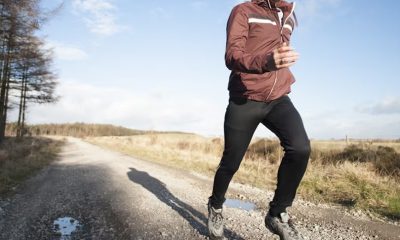
Running under a four-minute mile could be the key to a long and healthy life
Elite runners live on average almost five years longer than the general population.


The more – and faster – you run, the better for your health?
A study released to mark the 70th anniversary of Sir Roger Bannister’s sub-four-minute mile record revealed the first 200 runners to follow in his footsteps also share another remarkable trait. More particularly: the study from investigators in Australia and Canada found the 200 elite runners live on average almost five years longer than the general population.
The study, published in the British Journal of Sports Medicine, demonstrate the vital importance of aerobic fitness.
According to Professor Mark Haykowsky: “Breaking the four-minute mile was an extraordinary achievement 70 years ago and revealed just what the human body can achieve. It set off a wave of runners following in Sir Roger’s mighty footsteps.
“Remarkably we found that like Sir Roger, who lived to the ripe old age of 88, most of the first runners also lived well into their 70s, 80s and a majority are alive and healthy today.”
The multi-national team tracked down the health records of the first 200 people to complete the sub-four-minute mile. This included runners from the UK, Australia, France, New Zealand, and the United States who were born between 1928 to 1955. All 200 runners are men, and a majority were still alive.
Professor Andre La Gerche, a sports cardiologist who heads the HEART Laboratory supported by St Vincent’s Institute of Medical Research and the Victor Chang Cardiac Research Institute in Australia, says: “Our study set out to see how exercise affected elite athletes over the long term. We know that elite athletes have bigger hearts due to their sustained aerobic output and there was some belief that this could affect their health and longevity, but we found the opposite.
“Five years of extra life compared to average is very significant, especially when we found that many of these runners not only enjoyed long lives but were also healthy too.
“Not everyone needs to be able to run a sub-four-minute mile to enjoy good health long into old age, but they need to exercise regularly and push themselves aerobically.”
The world record for the mile now stands at 3.43 and is held by Hicham El Guerrouj of Morocco. Ollie Hoare is the fastest Australian (3.47.48) and Kevin Sullivan holds the Canadian record (3.50.26) both of which were set at the Bislett Games in Oslo, Norway. No female runner has yet broken the four-minute barrier. The women’s world record is currently at 4:07.64, set by Faith Kipyegon of Kenya in 2023.




Wellness
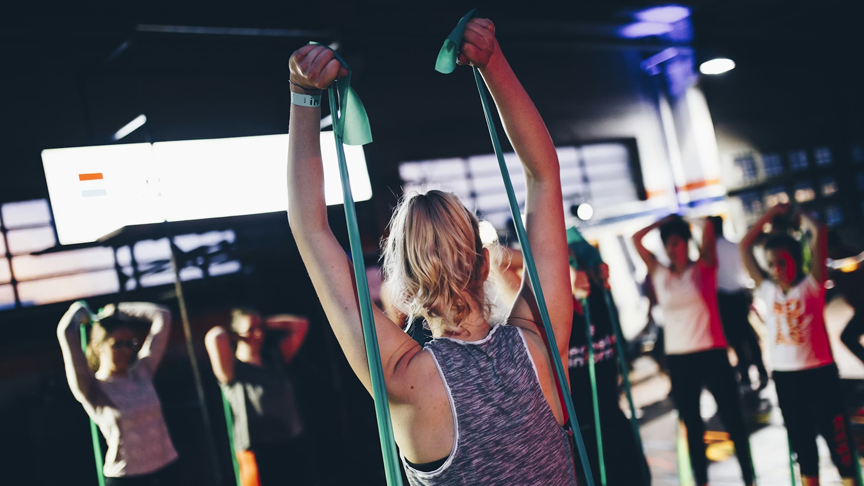
Adding resistance training improves strength and aerobic fitness, better for heart health
Aerobic training and resistance training independently improve aerobic fitness, walking distance, muscle strength, and HRQoL.

Heart failure affects more than 64 million people worldwide (1%–3% in the general adult population) and its prevalence is projected to increase. This condition is commonly categorized into 2 main types: heart failure with reduced ejection fraction (HFrEF; where the heart is too weak to pump enough blood to meet the body’s needs) and heart failure with preserved ejection fraction (HFpEF; where the heart becomes stiff and cannot relax sufficiently to fill with enough blood).
Regardless of type, heart failure is a life-threatening condition characterized by low exercise tolerance, progressive functional decline, reduced health-related quality of life (HRQoL), and a high risk of hospitalizations, morbidity, and mortality. The study led by Tasuku Terada was published in the Journal of Sport and Health Science.
Previous studies have shown that aerobic training and resistance training independently improve aerobic fitness, walking distance, muscle strength, and HRQoL. Some studies have also demonstrated superior benefits of high-intensity interval training (HIIT) on aerobic fitness and cardiac function in patients with heart failure when compared to traditionally used moderate-intensity continuous training.
However, despite the well-established benefits of each exercise modality, the effects of combining aerobic training and muscle strength training (i.e., combined training) compared to the routinely recommended aerobic training alone were not clear in patients with heart failure. In this study, the researchers compared the effects of combined training and aerobic training alone on aerobic fitness, muscle strength, and HRQoL in patients with heart failure. These comparisons were made while accounting for heart failure classifications (i.e., HFrEF or HFpEF), total exercise duration (i.e., matched or unmatched exercise session duration between combined and aerobic training alone), and exercise type (e.g., HIIT).
The researchers systematically searched databases for studies directly comparing the effects of combined training and aerobic training alone on aerobic fitness, walk test distance, muscle strength, and HRQoL in patients with heart failure. Of 13,965 studies they screened, 15 studies were included (466 patients with HFrEF (89%) and 60 with HFpEF (11%); 17% female).
Pooled analyses showed that, in HFrEF, combined training increased aerobic fitness, walk test distance, and upper body muscle strength more than aerobic training alone. The superior effects of combined training on aerobic fitness and walking distance were retained when exercise session duration was matched between the two exercise modalities, indicating that combined training has a greater impact on these measures independent of total exercise duration. HIIT combined with muscle strength training also increased aerobic fitness more than HIIT alone.
No differences were found between combined and aerobic training alone in lower body muscle strength or HRQoL. Overall adherence to combined training was high or comparable to that of aerobic training alone.
Similarly, dropout rates in the combined training group were comparable to those in aerobic training alone, and no notable differences in the risk of adverse events were observed.
To summarise, in predominantly male patients with HFrEF, combined training yielded greater improvements in aerobic fitness, walking distance, and upper body muscle strength than aerobic training alone. These results highlight that, when prescribing exercise for a fixed time frame, allocating time to both aerobic training and muscle strength training may be a more effective strategy for improving aerobic fitness in patients with HFrEF.
Additionally, because HIIT may improve aerobic fitness more effectively while requiring less time than moderate-intensity continuous training, combining HIIT with muscle strength training may offer a time-efficient approach to improve aerobic fitness in patients with HFrEF.
Considering the absence of notable differences in adherence or adverse events, these findings support that replacing part of aerobic training with muscle strength training may be an effective strategy for patients with HFrEF to increase aerobic fitness, walking distance, and muscle strength, all of which are important predictors of better prognosis in patients with heart failure. Further evidence is needed to clarify the effects of combined training in HFpEF.
Wellness
Physical activity and appropriate sleep linked to subsequent lower dementia risk
Rgular physical activity, less sedentary time, and appropriate nightly sleep (7–8 h) were associated with a lower subsequent risk of dementia. Regular physical activity was associated with an average 25% lower risk of dementia among the 49 studies analyzed; however, the researchers note that there was considerable heterogeneity between the studies.

Regular physical activity and getting the recommended amount of sleep may reduce dementia risk later in life, according to a study by Akinkunle Oye-Somefun and colleagues, published in the open-access journal PLOS One.
An estimated 55 million people live with dementia worldwide, and both its prevalence and cost are expected to increase, with global costs projected to reach $2 trillion dollars by 2030. Current treatments for preventing or treating dementia have limited efficacy; therefore, public health efforts have also aimed at healthy lifestyle factors to reduce the risk of dementia before symptoms occur. Healthy behaviors such as regular physical activity and good sleep hygiene are known to support cognitive health; however, there remains a need to better understand their relationship to dementia.
In this systematic review and meta-analysis, researchers analyzed data from 69 prospective cohort studies representing millions of community-dwelling adults aged 35+, to see if there was a link between the development of dementia and three lifestyle behaviors: physical activity, sedentary behavior, and sleep duration. Each of the observational studies recorded behaviors of cognitively healthy participants, then followed up at a later timepoint to report subsequent rates of dementia.
Overall, the meta-analysis found that regular physical activity, less sedentary time, and appropriate nightly sleep (7–8 h) were associated with a lower subsequent risk of dementia. Regular physical activity was associated with an average 25% lower risk of dementia among the 49 studies analyzed; however, the researchers note that there was considerable heterogeneity between the studies.
Too little sleep (<7 h) or too much sleep (>8 h) was associated with an 18% and 28% higher subsequent risk of dementia, respectively, compared to optimal nightly sleep of 7-8 hours, though there was again considerable heterogeneity among the 17 studies analyzed. Prolonged sitting (>8 hours per day) was associated with a 27% higher risk of dementia among the 3 relevant studies analyzed.
The study is consistent with and expands on previous research, using a large, diverse population with long follow-up times. While the study design cannot show any causative link between physical activity, sleep and dementia, the findings suggest an association between adherence to recommended physical activity and sleep levels in middle- and older-age adults and lowered dementia risk later in life.
The authors add: “Dementia develops over decades, and our findings suggest that everyday behaviours such as physical activity, time spent sitting, and sleep duration may be linked to dementia risk. Understanding how each of these behaviours relates to risk over time may help researchers identify opportunities to support brain health across the life course.”
“Separately, one aspect I personally found most interesting while conducting the study was the relatively limited evidence base on sedentary behaviour. Despite growing recognition that prolonged sitting is distinct from physical inactivity, we found only a small number of cohort studies examining its relationship with dementia risk. This highlights an important gap for future research.”
Wellness
Exercise to treat depression yields similar results to therapy
Depression is a leading cause of ill health and disability, affecting over 280 million people worldwide. Exercise is low-cost, widely available, and comes with additional health benefits, making it an attractive option for patients and healthcare providers.

Exercise may reduce symptoms of depression to a similar extent as psychological therapy, according to an updated Cochrane review. When compared with antidepressant medication, exercise also showed a similar effect, but the evidence was of low certainty.
Depression is a leading cause of ill health and disability, affecting over 280 million people worldwide. Exercise is low-cost, widely available, and comes with additional health benefits, making it an attractive option for patients and healthcare providers.
The review, conducted by researchers from the University of Lancashire, examined 73 randomized controlled trials including nearly 5,000 adults with depression. The studies compared exercise with no treatment or control interventions, as well as with psychological therapies and antidepressant medications.
The results show that exercising can have a moderate benefit on reducing depressive symptoms, compared with no treatment or a control intervention. When compared with psychological therapy, exercise had a similar effect on depressive symptoms, based on moderate-certainty evidence from ten trials. Comparisons with antidepressant medication also suggested a similar effect, but the evidence is limited and of low certainty. Long-term effects are unclear as few studies followed participants after treatment.
Side effects were rare, including occasional musculoskeletal injuries for those exercising and typical medication-related effects for those taking antidepressants, such as fatigue and gastrointestinal problems.
“Our findings suggest that exercise appears to be a safe and accessible option for helping to manage symptoms of depression,” said Professor Andrew Clegg, lead author of the review. “This suggests that exercise works well for some people, but not for everyone, and finding approaches that individuals are willing and able to maintain is important.”
The review found that light to moderate intensity exercise may be more beneficial than vigorous exercise, and that completing between 13 and 36 exercise sessions was associated with greater improvements in depressive symptoms.
No single type of exercise was clearly superior, although mixed exercise programmes and resistance training appeared more effective than aerobic exercise alone. Some forms of exercise, such as yoga, qigong and stretching, were not included in the analysis and represent areas for future research. Long-term effects are unclear as few studies followed participants after treatment.
This update adds 35 new trials to previous versions published in 2008 and 2013. Despite the additional evidence, the overall conclusions remain largely unchanged. This is because the majority of trials were small, with fewer than 100 participants, making it difficult to draw firm conclusions.
“Although we’ve added more trials in this update, the findings are similar,” said Professor Clegg. “Exercise can help people with depression, but if we want to find which types work best, for who and whether the benefits last over time, we still need larger, high-quality studies. One large, well-conducted trial is much better than numerous poor quality small trials with limited numbers of participants in each.”

Reduce your home’s vulnerabilities to wildfire

4 Tips to improve heart health (including a recipe to consider)

Stress, BMI, and hormones linked to earlier puberty in girls

Adding resistance training improves strength and aerobic fitness, better for heart health

Coffee-craving with rice meals on the side at Foam Coffee

Physical activity and appropriate sleep linked to subsequent lower dementia risk

Cancer risk is significantly higher for adults who never married, large study finds

Social support, sleep, pain management linked to mental health in later life

Healthier plant-based diet associated with lower risk of Alzheimer’s, other dementias

Feeling unfulfilled could lead to riskier, heavier alcohol use

Faith, fanaticism, and everything in between in Manaoag
Feeling unfulfilled could lead to riskier, heavier alcohol use
Cancer risk is significantly higher for adults who never married, large study finds
Adding resistance training improves strength and aerobic fitness, better for heart health
Physical activity and appropriate sleep linked to subsequent lower dementia risk
Healthier plant-based diet associated with lower risk of Alzheimer’s, other dementias
Social support, sleep, pain management linked to mental health in later life
Coffee-craving with rice meals on the side at Foam Coffee
Reduce your home’s vulnerabilities to wildfire
4 Tips to improve heart health (including a recipe to consider)

-
 Destinations3 weeks ago
Faith, fanaticism, and everything in between in Manaoag
-
 NewsMakers2 weeks ago
Feeling unfulfilled could lead to riskier, heavier alcohol use
-
 NewsMakers2 weeks ago
Cancer risk is significantly higher for adults who never married, large study finds
-
 Wellness1 week ago
Adding resistance training improves strength and aerobic fitness, better for heart health
-
 Wellness2 weeks ago
Physical activity and appropriate sleep linked to subsequent lower dementia risk
-
 NewsMakers2 weeks ago
Healthier plant-based diet associated with lower risk of Alzheimer’s, other dementias
-
 NewsMakers2 weeks ago
Social support, sleep, pain management linked to mental health in later life
-
 Destinations2 weeks ago
Coffee-craving with rice meals on the side at Foam Coffee