
NewsMakers
Bookshelf PH announces book collections from diverse genres
Publishing house Bookshelf PH, with its collection of books from diverse genres, has heart-swooning reads that touch all five love languages.

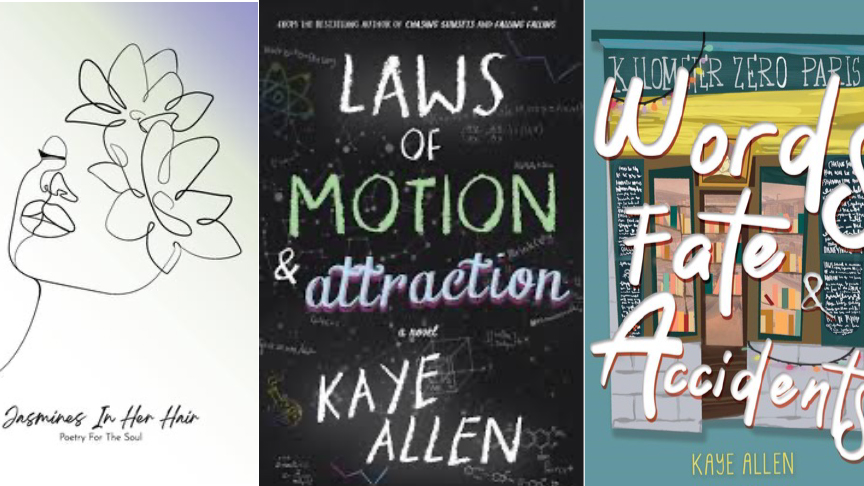
Love is given, felt, and explored in ways we never expect.
We’re no strangers to the concept of feeling kilig, an emotion that makes hearts swoon and flutter whenever we give or receive love. Speaking of giving and receiving love, we might prefer one over the other but overall, these five love languages create a holistic relationship with our loved ones whether that’s through physical touch, words of affirmation, quality time, gift-giving, or acts of service.
Publishing house Bookshelf PH, with its collection of books from diverse genres, has heart-swooning reads that touch all five love languages. From affirming poems to small acts of service, here are five books that explore love’s different manifestations, each with stories to tell of how we can give and receive love in ways we prefer the most.
1. Jasmines in Her Hair – Words of Affirmation
Love is expressed through the gentle whisper of words. ”Jasmines in Her Hair” by Kalpesh Desai is a poetry collection that features the themes and facets of love. From tender beginnings of infatuation to depths of enduring connection, each poem will captivate readers to immerse themselves in passionate sensibilities found in delight, sorrow, grief, acceptance, and resilience, capturing the essence of the heart’s universal experiences.
Poetic words are as powerful as daily communication and this book might be the perfect bond for lovers. If you love compliments, notes, or sweet whispers, then words of affirmation may be your cup of love language. It’s not too old-school to write personal notes inspired by these poems to show appreciation to your Lovey-dovey.
2. Laws of Motions and Attraction – Physical Touch
“Alex never believed in love at first sight. But right then she realized, maybe she had loved him all along. It had been a long time coming, but it turned out ‘maybe someday’ was worth the wait, after all..”
Missing those back hugs and forehead kisses? How about those tender traces of his fingertips to your cheeks? Just when you know that physical touch becomes a language of its own, it speaks volume where words fall short. This is your sign to reminisce about the past and reflect if he is worth the second chance.
Gravitate your senses
with Kaye Allen’s contemporary romance novel, “Laws of Motions and
Attraction” as it brings you the story of Alex, a driven student who finds
herself captivated by the most ideal suitor on campus only to discover that
destiny has other plans. In this enthralling examination of love, accompany
Alex on a journey fraught with twists and turns, and let her story touch your
heart brimming every moment with sweet affection.
3. Warm Blankets in Cold Midnights – Gift-Giving
Who says love month is over? February may have passed but it’s never late to surprise someone with a thoughtful present. Let your cozy affection be felt by giving Warm Blankets in Cold Midnights to express the language of gift-giving!
Share the warmth with your loved one as you immerse in Janella Ventura’s short story collection, “Warm Blankets in Cold Midnights,” featuring 23 heartwarming love stories to uplift your spirits and 18 tear-jerking tales that will leave you deeply moved. From handmade treasures to heartfelt gestures, Warm Blankets in Cold Midnights reminds readers that the true value of a gift lies not in its material worth, but in the love and care with which it is given.
4. Words, Fate, and Accidents – Quality Time
“…We may not know each other well but sometimes people could find comfort in the most unlikely places. Be it in a good book, a playlist with all favorite songs, or even in a foreign country, standing beside a stranger you met by accident.”
Another heart-touching craft from Kaye Allen is her “Words, Fate, and Accidents”, which is a story of connection and companionship. In a world where time is fleeting and fate is unpredictable, two strangers found solace in each other’s company, forging bonds that withstand the test of time. If you value quality time for your loved ones, then this book might remind you that time isn’t measured in minutes or hours, but in the profound moments shared between kindred spirits.
5. Lost You, Found Me – Acts of Service
“Lost is a state we will perpetually be in and the life is best approached by embracing it as it is.”
Picture this: late-night study sessions, surprise coffee deliveries, and shoulder-to-cry-on moments. Everyone has been through the rough stage between college and adulting where those small acts of service matter most in times when we feel most alone. You’re not lost sweetie, because a story that resonates has found its way to you!
Testament to the power of selfless devotion, Zara Carbonell’s “Lost You, Found Me” takes readers into the tumultuous journey of love, loss, and self-discovery—a celebration of love through acts of sacrifice. Set against the backdrop of the exhilarating transition from college into the unknowns of adulthood, Lost You, Found Me offers a unique perspective on the exploration of life’s nitty-gritty.
Each of these books provides a fresh view on the languages of love and illustrates the diverse ways we communicate and receive affection. Whether through verbal affection, intimate gestures, shared warmth of hugs, or acts of selflessness, these authors capture the universality of love–transcending barriers and resonating deeply within our beings.
Thrilled to grab a copy of one of these books that pulsates your love language?
Visit Bookshelf PH and discover the perfect read for you.





NewsMakers
Common drug class may increase risk of heart disease
The risk of cardiovascular disease increased in line with how much anticholinergic medication the participants used each year. Those with the highest exposure had a 71 per cent higher risk of a cardiovascular event than people who did not use anticholinergic medication at all.

People who use drugs with anticholinergic effects, including certain antidepressants, drugs for urinary incontinence and common antihistamines, are at higher risk of developing cardiovascular disease.
This is shown in a study from Karolinska Institutet published in BMC Medicine.
Anticholinergic drugs reduce the effect of the neurotransmitter acetylcholine and are commonly prescribed to middle-aged and older people. This large group of drugs includes antihistamines used for allergic conditions, anxiety or insomnia, drugs for urinary incontinence, and certain antidepressants, where tricyclic antidepressants have a strong anticholinergic effect, whereas SSRIs have a weaker effect. A high cumulative use of these drugs, referred to as anticholinergic burden (see fact box), has previously been linked to impaired cognitive ability.
May affect heart regulation
The new study suggests that the drugs may also affect the parasympathetic nervous system and thereby the regulation of the cardiovascular system. The results show that it may be important to monitor the total drug burden in everyday clinical practice.
The study included more than 500,000 people in Stockholm, Sweden, who were 45 years of age or older and had no prior cardiovascular disease, except for hypertension, at the start of the study. The researchers followed the participants for up to 14 years and analysed how the use of anticholinergic drugs was associated with the development of cardiovascular disease.
“Many of these drugs are used by older people and by people with multiple medical conditions. We wanted to investigate whether the total exposure had any significance for the risk of developing cardiovascular disease over time,” says Nanbo Zhu, postdoctoral researcher at the Department of Neurobiology, Care Sciences and Society, Karolinska Institutet.
71 per cent higher cardiac risk
The study showed that the risk of cardiovascular disease increased in line with how much anticholinergic medication the participants used each year. Those with the highest exposure had a 71 per cent higher risk of a cardiovascular event than people who did not use anticholinergic medication at all. The association was seen for all types of cardiovascular disease but was particularly clear for heart failure and various forms of arrhythmia.
“Our results indicate that the cumulative drug burden can affect heart regulation, not only in the short term but also over the long term. This does not mean that the drugs should always be avoided, but that exposure should be monitored carefully,” says Hong Xu, assistant professor at the Department of Neurobiology, Care Sciences and Society.
The researchers point out that the study is observational, meaning it cannot establish a causal relationship. Other factors, such as underlying diseases, may also influence the associations.
The work was carried out within the Stockholm CREAtinine Measurements project in collaboration between several research groups at Karolinska Institutet and Region Stockholm. The study was funded by the Swedish Research Council, the Center for Innovative Medicine Foundation, and other foundations. Some researchers report assignments for the pharmaceutical industry, which are disclosed in the scientific publication.
NewsMakers
Mindfulness practices found to significantly reduce depression symptoms, especially for those with early-life adversity
Mindfulness interventions help by regulating our emotions better when different challenges come up. For someone who has experienced childhood neglect or abuse, mindfulness training can help us make sense of that and respond skillfully to this moment in time.

A new study reveals that mindfulness practices may significantly reduce depression symptoms, particularly in people who have experienced early-life adversity, such as childhood abuse and neglect.
Led by Eric Loucks, professor of medicine, epidemiology, and of behavioral and social sciences and director of the Mindfulness Center at Brown, the study enrolled 201 participants, 101 of whom were randomized into the Mindfulness-Based Blood Pressure Reduction Program, while 100 were randomized into an enhanced usual care control, which included home blood-pressure monitors, physician access and health-education materials. Researchers also had a measure of participants’ early-life adversity, particularly their exposure to abuse or neglect.
Loucks and his team followed participants for six months to assess changes in blood pressure, health behaviors and mental health, finding that those in the mindfulness program showed significant improvements in their depression symptoms. Additionally, participants who experienced childhood neglect showed greater improvements in depression symptoms than those who had not. A similar, though less pronounced, trend was observed among people with a history of childhood abuse.
“In this program, that was primarily designed to lower blood pressure while addressing whole-person health, we also saw that mental well-being, particularly around depression symptoms, improved in participants that went through the program,” Loucks said. “The findings suggest that cultivating mindful self-regulation skills–such such as self-awareness, attention control and emotion regulation–may help interrupt maladaptive patterns shaped by past experiences.”
Over the last 15 years, Loucks has been studying social determinants of health such as early-life adversity and its impacts on cardiovascular health, body mass index and blood pressure. “I came to a point where I wanted to not just document it, but do something about it, and I wondered if mindfulness training might help,” he said. “I’d gone through a lot of mindfulness training myself outside of work and started to get trained up in mindfulness programs that are specific to health contexts.”
Loucks began to study the Mindfulness-Based Stress Reduction program, running it through two clinical trials that were funded by the NIH and finding that it reduced blood pressure in both trials. He also wanted to look at the intervention from a whole-person perspective.
“If we look at everyday folks out in the world, those that had exposure to early life adversity, like abuse and neglect, tend to have worse mental health and also worse cardiovascular health,” Loucks said. “Mindfulness interventions help by regulating our emotions better when different challenges come up. For someone who has experienced childhood neglect or abuse, mindfulness training can help us make sense of that and respond skillfully to this moment in time.”
Loucks discussed this work during a keynote address at the U.S. DOHaD Society this year. “It felt like a coming-home moment to see that this intervention, originally developed to address psychosocial factors that influence health, had even stronger effects among people with early-life adversity, particularly on depression,” he said. “It’s been about a 15-year arc of research that culminated in these findings.”
NewsMakers
High-fiber diet linked to reduced risk of heart disease in night shift workers
A moderate intake of about 19 grams of fibre per day was linked to a lower risk for those who worked night shifts regularly. For those who worked night shifts sporadically, about 15 grams was enough. The current recommendation for adults is about 25 grams of dietary fibre per day.

People who work at night have a higher risk of coronary artery disease, a type of heart disease. A new study suggests that a higher fibre intake in the diet may help reduce this risk. The study included over 220,000 adults in the UK and is published in the European Journal of Epidemiology.
The human body is built to sleep at night. This means that working during the night goes against this natural pattern, and can place additional strain on the body, including the heart. Previous research has linked night work to an increased risk of coronary artery disease. Since night work is often unavoidable, the researchers wanted to investigate whether certain dietary habits might have a protective effect.
More fibre associated with lower risk
The researchers used data from 220,000 adults in the UK Biobank (2006–2010) and divided the participants into three groups:
- Day workers
- Shift workers who worked night shifts sporadically
- Regular night shift workers
The participants had completed a detailed questionnaire about their dietary habits. During a follow-up after about 12 years, it was found that night shift workers who consumed little fibre in their diet had a higher risk of coronary artery disease than those who consumed more fibre.
“A moderate intake of about 19 grams of fibre per day was linked to a lower risk for those who worked night shifts regularly. For those who worked night shifts sporadically, about 15 grams was enough. The current recommendation for adults is about 25 grams of dietary fibre per day,” says Diana Nôga, lead author and researcher at Uppsala University.
The researchers stress that the figures from the study are not official dietary recommendations. But they do show a pattern in this UK study: a higher dietary fibre intake was linked to a lower risk of heart disease among night shift workers.
“The link between fibre and a lower risk of heart disease is not just because those who eat more fibre generally have a healthier lifestyle. We know this because we adjusted for various lifestyle factors in the analysis. One possible explanation, supported by previous research, is that fibre in the diet can improve intestinal flora and also reduce lipids, which can be particularly good for the heart in people who work at night,” says Christian Benedict, senior author of the study and Professor of Pharmacology at Uppsala University.
Dietary fibre can support heart health
According to the researchers, an increased intake of fibre-rich foods such as whole grains, vegetables, fruit, legumes and lentils may be a simple way to improve heart health for night shift workers. However, this requires that you do not have any medical obstacles to doing this, such as chronic gastrointestinal diseases.
“Dietary changes should be seen as a complement to, not a substitute for, other heart health-promoting habits such as not smoking, remaining physically active, and getting enough sleep,” says Diana Nôga.

Common drug class may increase risk of heart disease

Mindfulness practices found to significantly reduce depression symptoms, especially for those with early-life adversity

Exercise to treat depression yields similar results to therapy

Aerobic exercise may be most effective for relieving depression/anxiety symptoms

High-fiber diet linked to reduced risk of heart disease in night shift workers

Two types of underconfidence linked to anxiety and gender

Checking the charm of Baguio City’s Café by the Ruins

Sleeping in on weekends may help boost teens’ mental health

Breastfeeding may lower mums’ later life depression/anxiety risks for up to 10 years after pregnancy

Creativity feels great — until tomorrow
Creativity feels great — until tomorrow
High-fiber diet linked to reduced risk of heart disease in night shift workers
Sleeping in on weekends may help boost teens’ mental health
Exercise to treat depression yields similar results to therapy
Checking the charm of Baguio City’s Café by the Ruins
Two types of underconfidence linked to anxiety and gender
Aerobic exercise may be most effective for relieving depression/anxiety symptoms
Mindfulness practices found to significantly reduce depression symptoms, especially for those with early-life adversity
Breastfeeding may lower mums’ later life depression/anxiety risks for up to 10 years after pregnancy
Common drug class may increase risk of heart disease

-
 NewsMakers3 weeks ago
Creativity feels great — until tomorrow
-
 NewsMakers3 weeks ago
High-fiber diet linked to reduced risk of heart disease in night shift workers
-
 NewsMakers3 weeks ago
Sleeping in on weekends may help boost teens’ mental health
-
 Wellness3 weeks ago
Exercise to treat depression yields similar results to therapy
-
 Destinations3 weeks ago
Checking the charm of Baguio City’s Café by the Ruins
-
 NewsMakers3 weeks ago
Two types of underconfidence linked to anxiety and gender
-
 Wellness3 weeks ago
Aerobic exercise may be most effective for relieving depression/anxiety symptoms
-
 NewsMakers2 weeks ago
Mindfulness practices found to significantly reduce depression symptoms, especially for those with early-life adversity