
Beauty & Fashion
Second Look at Leather
Many call for the non-use of leather because it isn’t exactly green. An alternative perspective is forwarded, however – i.e. seeing leather as a by-product that will just go to waste if not used.


By PePe Castro

 By-products. That, says Filipino shoe manufacturer and retailer giant Manels owner Manuel Siggaoat, are what they are. He is talking about leather, of course.
“This (industry) makes use of by-products that (if not used, will) just go to waste,” he says. That, by the way, is not an excuse – Siggaoat is, actually, being truthful.
Leather is a material created through the tanning of hides and skins of animals, primarily cattlehide, uses raw materials that are by-products of the meat industry, with the meat having higher value than the skin. Leather – like fur – is actually a sore point for many, err, (non-consumers of meat) animal lovers, largely because it necessitates the slaughter of a living being in order to produce it. The People for the Ethical Treatment of Animals (PETA), an animal rights activist group, among others, consider the use of “all leather items (from animal hides) is unnecessary and cruel in today’s society.”
And so the debate continues on the pros and cons of leather, and leather use.
FASH ITEMS
Manels, of course, has been a leading player in the local leathergoods market since 1964. Manels – a play at the names of owners Manuel and Nelia Siggaoat – started out as a small shoe store near the Philippine Women’s University, where Nelia worked, soon proving to be lucrative so that the husband and wife tandem decided to leave their careers to focus on their new business. Nelia’s artistic vision found a medium in the design and manufacture of these shoes and bags. Manuel, on the other hand, focused on building the business side.
Over 40 years later, Manels has diversified – in 2004, Siggaoat’s son, Mark Siggaoat, spearheaded the establishment of LapDance (lapdancebag.com), a company supplying laptop (and similar gadgets) casings.
“It’s a niche market,” the younger Siggaoat says, adding that, initially, “it was a hard (market to break into) when we started.”
Not, worth noting, because of anti-leather sentiments.
The sales picked up, though, and have been up since 2006.
Early in 2009, LapDance started selling products using ostrich leather.
In an interview, the older Siggaoat notes how, in the case of ostriches in particular, “ostriches are now grown locally (aside from getting imported) for their meat,” he says. Interestingly, in many cases, only ostrich meat is harvested – in fact, in the Philippines, tanning ostrich skin is not practiced.
There, therefore, is produced “waste” – effectively turned into leather.
LapDance currently usually comes out with eight to 10 new designs per season, the products costing from P1,800 to over P3,000 apiece.
And, oh, the leather is but a component of the design – other materials used are fibers, among others, just as the company is also studying the use of faux (fake) leather to “make the products more marketable.”
GOING ALL-NATURAL
For those opposing the use of leather, it isn’t just the slaughter of animals (a living thing) that ruffles their feathers, so to speak – it is also how the tanning process that the hide has to go through which, it is worth noting, can be harmful to the environment. Tanning, the process that makes the leather (which does not easily decompose) from the skins of animals (or rawhide, which decomposes easily) after permanently altering its protein structure, often makes use of such chemicals as: sodium sulfide, sodium hydroxide, sodium hydrosulfite, arsenic sulfide, calcium hydrosulfide, dimethyl amine, sodium sulphydrate, and, yes, tannin – all of them, aside from emitting toxic fumes, may (if/when not properly disposed of) contaminating air and water.
In theory, choosing not to use (not just buy) leather products should be easy – after all, the alternatives now abound. Among others, there are the artificial leather (fabric with leather finish, popularly used as upholstery), synthetic leather or pleather (this one, however, is also hotly discussed, since it is often made from plastic, another hot point for environmentalists), vegan leather (made from fibers that are animal-friendly – though even this uses some PVC, deemed harmful to the environment).
A bigger issue is in the availability of the products – in the Philippines, for example, alternatives are not as widely available.
REALISTIC APPROACH
Michael Bloch, editor of greenlivingtips.com, has a more realistic approach.
“What’s a leather lover to do? Firstly, we need to look at our consumption – do we really need 10 pairs of leather shoes, five wallets or eight handbags? Every leather item you don’t buy mean less toxic waste entering into the environment and, perhaps, an animal not killed – you’ll save some cash as well,” Bloch says.
Yet another way to approach the issue is to “reduce our associated impact by asking companies where they source their leather – if it’s outside ‘developed’ countries, assume the worst,” Bloch adds.
For the moneyed, though, opting to buy only the green should always be considered – if not locally available, the order from overseas.
But for now, on leather, pleather, vegan leather, imitation leather, or… whatever? The choice remains yours – choose wisely.





Beauty & Fashion
Redefining aesthetics: From anti-aging to healthy aging
Growing attention is now being given to healthy aging, understanding how the entire face changes over time, preserving facial harmony, and helping people continue to look like themselves.


For decades, “anti-aging” has defined the beauty and aesthetics conversation, promising to erase wrinkles and reverse the signs of time. Today, that conversation is shifting.
Aging is no longer just about looking younger. Growing attention is now being given to healthy aging, understanding how the entire face changes over time, preserving facial harmony, and helping people continue to look like themselves.
A review published in Facial Plastic Surgery, The Anatomy of the Aging Face: A Review, describes aging as changes across bone, ligaments, muscles, fat, and skin. Another review in Aesthetic Surgery Journal, The Facial Aging Process From the “Inside Out”, explains how changes beneath the surface eventually become visible on top.
Studies in Plastic and Reconstructive Surgery show facial fat is organized into distinct anatomical compartments that can lose volume and shift position over time, altering facial shape and balance.
For multi-awarded aesthetic physician Dr. James Co, founder of Cosma Institute and Architect of Aesthetic Confidence, these findings are the reason aesthetic care must start with understanding, not just treating.
“Aging is not a disease we need to cure,” Co said. “It is a biological process. As physicians, our role is to understand what is changing beneath the surface, how those changes differ from person to person, and whether intervention is appropriate in the first place.”
“When you only look at the wrinkle, you are looking at the surface of a much bigger anatomical process,” he added. “The face ages as a system. Good assessment means understanding what is happening underneath before deciding what should be done on the surface.”
Part of that understanding is recognizing that no two faces age the same way. Two people can be the same age and experience aging very differently. Genetics, skeletal structure, fat distribution, skin characteristics, sun exposure, lifestyle, and environmental factors all influence how aging presents.
“Two patients can be the same age and come to me with completely different anatomy, lifestyles, concerns, and goals,” Co said. “Why would we expect their treatment plans to look exactly the same?”
This is where healthy aging broadens the conversation — from fixing isolated signs to looking at the face as a whole and listening to what the individual actually wants.
“Someone can want to look refreshed without wanting to look 20 years younger,” Co said. “Those are completely different goals.”
Rather than trying to freeze one version of the face forever, healthy aging acknowledges that the face will continue to change. As different structures change at different rates, the relationship between features evolves. Facial harmony is therefore not fixed.
“You cannot freeze one version of your face forever,” Co said. “But you can understand how the face is changing and make decisions that respect its natural proportions and your identity.”
In the age of social media, where aesthetic treatments are highly visible, Co cautions against self-diagnosis.
“Patients should not have to diagnose themselves from social media,” he said. “You might recognize a concern, but deciding why it is happening and what should be done about it requires proper assessment.”
The shift is also about how people feel, not just how they look. A 2022 review on minimally invasive facial aesthetic procedures found studies are increasingly looking beyond physical changes to include satisfaction with appearance and aspects of psychological and social well-being, while noting that evidence still needs careful interpretation.
For Co, this reinforces that success is not always about looking dramatically younger.
“We need to ask whether the result makes sense for the patient, whether expectations were met, and whether we preserved the things that make that person recognizable,” he said. “I would rather someone tell my patient, ‘You look well,’ than immediately ask, ‘What did you have done?'”
At Cosma Institute, Co applies this consultation-led philosophy through individualized assessment, facial harmony, medical judgment, and patient education. Having trained aesthetic practitioners across Southeast Asia and Europe, he advocates for natural-looking outcomes that respect the characteristics already present in each face — an approach that recently earned him two awards at the Merz Aesthetics Tala Awards.
For Co, the evolution of aesthetic medicine is not about having more tools, but knowing when to use them — and when not to.
“Aging cannot be stopped, and I don’t think that should be the promise,” he said. “What we can do is understand it better. We can look at the science, understand the anatomy, listen to the patient, and make decisions that allow them to age while still looking recognizably like themselves.”
For Co, healthy aging begins not with fighting age, but with understanding it.
Beauty & Fashion
Bell-bottoms today, miniskirts tomorrow: Revealing fashion’s 20-year cycle
While fashion evolves gradually over time, the rise and fall of styles follows a repeating wave that peaks roughly every two decades. One of the clearest patterns involves hemline length.

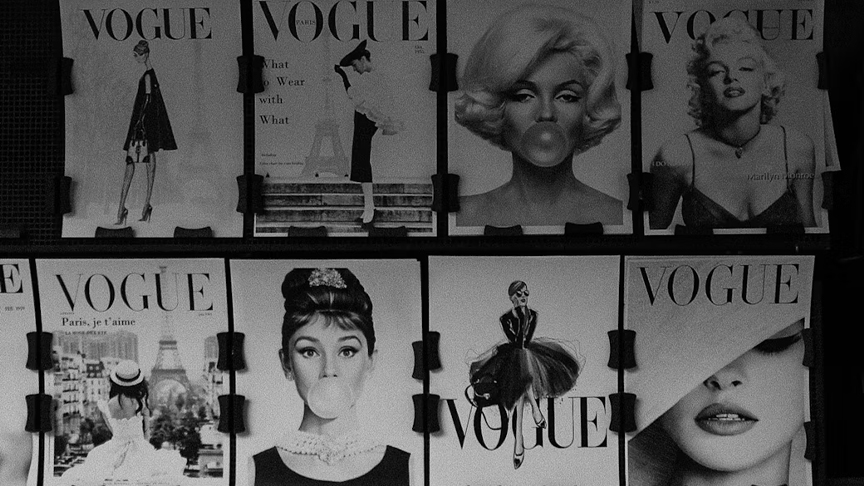
Fashion insiders and beauty magazines have long cited the “20-year-rule” — the idea that clothing trends often resurface every two decades.
According to Northwestern University scientists, that observation isn’t just anecdotal. It’s a mathematical reality.
In a new study, the Northwestern team developed a new mathematical model showing that fashion trends tend to cycle roughly every 20 years. By analyzing roughly 37,000 images of women’s clothing spanning from 1869 to today, the team found that styles rise in popularity, fall out of favor and then eventually experience renewal.
Along with supporting common perceptions about the life cycles of fads, the researchers say these results could help explain how new ideas spread in society.
The study’s lead author Emma Zajdela will present these findings at 4:30 p.m. MDT on Tuesday, March 17 at the American Physical Society (APS) Global Physics Summit in Denver. Her talk, “Back in Fashion: Modeling the Cyclical Dynamics of Trends,” is part of the session “Statistical Physics of Networks and Complex Society Systems.”
Complimentary registration is available for members of the media. Press should contact the APS media teamfor more information.
“To our knowledge, this is the first time that someone developed such an extensive and precise database of fashion measures across more than a century,” Zajdela said. “We have some very interesting results, including that the cycle we uncovered in the data (20 years) matches industry knowledge. Historically, the lack of data posed a barrier to explicit quantitative study of this system.”
When this work was conducted, Zajdela was a Ph.D. candidate at Northwestern’s McCormick School of Engineering, where she was advised by Daniel Abrams, a professor of engineering sciences and applied mathematics at McCormick and co-director of the Northwestern Institute on Complex Systems. Now, Zajdela is a postdoctoral fellow at Princeton University and a research fellow at the Santa Fe Institute.
Zajdela and Abrams coauthored the study with Alicia Caticha, an assistant professor of art history at Northwestern’s Weinberg College of Arts and Sciences, and Jeremy White and Emily Kohlberg, who were both members of Abrams’ research group.
To conduct the study, the researchers compiled one of the most comprehensive quantitative datasets of fashion ever assembled. Drawing from historical sewing patterns from the Commercial Pattern Archive at the University of Rhode Island and runway collections, the team analyzed tens of thousands of garments dating back to the late 1800s.
Using custom tools, they measured key features of dresses — hemline, neckline and waistline positions — turning clothing designs into numerical data that could be measured and tracked across decades. To analyze the data, researchers built a mathematical model based on a simple idea: the tension between wanting to stand out while still fitting in. Once a style becomes too common, designers move away from it — but not so far that the clothes become unwearable.
“Over time, this constant push to be different from the recent past causes styles to swing back and forth,” Abrams said. “The system intrinsically wants to oscillate, and we see those cycles in the data.”
The results revealed a striking pattern. While fashion evolves gradually over time, the rise and fall of styles follows a repeating wave that peaks roughly every two decades. One of the clearest patterns involves hemline length. Over the past century, skirt lengths have repeatedly shortened and lengthened — from shorter flapper dresses in the 1920s to longer, more conservative styles in the 1950s and then to miniskirts of the late 1960s.
But this pattern loses its clarity in recent decades. Starting in the 1980s, the data show a wider range of skirt lengths appearing at the same time, suggesting that fashion trends are becoming more fragmented. Rather than one dominant trend, niches emerge, reflecting more diversity in fashion.
“In the past, there were two options — short dresses and long dresses,” Zajdela said. “In more recent years, there are more options: really short dresses, floor-length dresses and midi dresses. There is an increase in variance over time and less conformity.”
Beauty & Fashion
niko and … brings Evangelion Collection to the PH, plans to expand its operations
The Evangelion collection is available starting December 12 at the niko and … where it is transformed into an Evangelion-themed space with curated displays, and anniversary elements, allowing fans and new audiences to experience the world of Evangelion.
Lifestyle brand niko and … brought the Evangelion brand to Manila just in time for the celebration of anime Neon Genesis Evangelion’s 30th anniversary, with collection available for a limited time only. Launched at SM Mall of Asia, the limited edition collection showcases style, nostalgia, and Japanese creativity and contents that fit the taste of the Filipino consumers.

“Filipino consumers value design, story, and creativity,” says Daisuke Fujii, president and CEO of Adastria. “We see strong interest in Japanese culture and the ideas behind it. This collaboration is our way of celebrating Evangelion’s legacy while showing what we hope to build here. We want to grow with the market and bring more of our brands and experiences to the Philippines.”
The Evangelion collection is available starting December 12 at the niko and … where it is transformed into an Evangelion-themed space with curated displays, and anniversary elements, allowing fans and new audiences to experience the world of Evangelion.
The brand’s collection reflects Japanese craftsmanship, attention to detail, and an ability to translate cultural ideas into modern lifestyle item. This gives customers access to the latest trends from Japan through apparel, accessories, room items, and collaborative lines that bend creativity with everyday function.
Although it just recently started in the Philippines, Fujii said the brand is looking to expand its local operations by opening more stores and introducing other products or brands in the Philippines.
Banking on the strength of the collaboration and the Japanese creativity to grow its business, Fujii noted that he wants the SM MOA branch to cover a lot of animes and other contents. “We want to bring contents that fit the taste of Filipino consumers. Next year, we will expand by opening new stores. We are now talking to SM, Ayala Malls, and looking for other good locations.”
When Fujii was asked how the Evangelion collaboration influence the lifestyle and fashion trends in the Philippines. He replied, “The collaboration is one way to introduce the Japanese culture to the Philippines. Animes make Filipino consumers know more about Japan and its culture. We want them to understand Japanese culture through fashion trends.”
Fujii also clarified that not all products are manufactured in Japan because they have factories across the world that produce other products but “of course, it is of Japanese quality.”

Redefining aesthetics: From anti-aging to healthy aging

Visiting San Pablo City’s Pho Viet Nam

Four to six servings of wholegrain per day lowers risk factors for heart disease

Structured exercise linked to longer cancer survival and time free of disease

Heading to Pila, Laguna? Check out La Cosina Antonio

Pasalubong shopping in Davao via Aldevinco

The look and feel of your neighborhood may affect your sleep

Workout or nap? Either can help your sleepless brain, study finds

Study links coffee consumption to metabolic health and sex hormones

Manulife Investments Philippines leads UITF rankings across equity and fixed income funds
Pasalubong shopping in Davao via Aldevinco
Structured exercise linked to longer cancer survival and time free of disease
Heading to Pila, Laguna? Check out La Cosina Antonio
Four to six servings of wholegrain per day lowers risk factors for heart disease
Visiting San Pablo City’s Pho Viet Nam
Redefining aesthetics: From anti-aging to healthy aging

-
 Destinations4 weeks ago
Pasalubong shopping in Davao via Aldevinco
-
 Wellness2 weeks ago
Structured exercise linked to longer cancer survival and time free of disease
-
 Destinations3 weeks ago
Heading to Pila, Laguna? Check out La Cosina Antonio
-
 Nutrition2 weeks ago
Four to six servings of wholegrain per day lowers risk factors for heart disease
-
 Destinations1 week ago
Visiting San Pablo City’s Pho Viet Nam
-
 Beauty & Fashion4 days ago
Redefining aesthetics: From anti-aging to healthy aging