
NewsMakers
Red Bull Dance Your Style Philippines heading to National Finals after Luzon Leg
The competition showcased Luzon’s top dance talents. With the conclusion of the series of qualifiers, the country eagerly awaits the grand showdown where finalists will battle it out for the coveted title and the chance to represent Philippines in the Red Bull Dance Your Style World Finals.


Another epic dance battle took place at the Red Bull Dance Your Style Manila Qualifiers, held last July 27 at Octopus in Makati. The competition showcased Luzon’s top dance talents. With the conclusion of the series of qualifiers, the country eagerly awaits the grand showdown where finalists will battle it out for the coveted title and the chance to represent Philippines in the Red Bull Dance Your Style World Finals.
The unique global street dance competition swept the nation with the regional qualifiers, challenging dancers from Cebu, Davao, and Manila to show off their talent as they freestyle to a random selection of songs. Each city hosted fierce battles, with dancers from across the country pushing their limits and captivating audiences with their unique styles and high-energy performances. Each of them were vying for a spot in the Red Bull Dance Your Style National Finals.
Manila witnessed an exceptional level of competition. The competition concluded with an unforgettable performance by Klockwise (Kenneth Martinez), who emerged victorious with his flawless moves and undeniable charisma. Reflecting on his Red Bull Dance Your Style journey, Klockwise said, “I’ve only (followed) Red Bull Dance Your Style via social media, then when it came to the Philippines, I went over to watch it live (and) the (following) year as well. When I was in the audience, I had a vision of myself performing on stage. That’s when I made it my goal that one day I would dance, perform, and show my skills.”
“It’s super unexpected,” Klockwise said of his win. “I just wanted to enjoy, to show what I enjoy doing.” He shared that his preparation for the qualifiers involved listening to a lot of music and freestyling to it. He also said he will do much of the same leading up to the National Finals. “I’ll prepare highlights and ground moves, create new patterns of my locking, and of course, listen to new music.”
Kid Magnus (Flourence Lavesores) who won first runner up, shared that the event felt less like a competition. He said, “I really just enjoyed it. The crowd was so energetic and happy, which made me feel that I was just dancing, enjoying the music, dancing to the beat. I was a bit pressured because (my fellow) competitors (are) well known, but all of them were very nice.”
Tatai, a Japanese dancer who made it to the top 4, expressed her joy and enthusiasm at being able to join the competition. “It’s about letting your mind go crazy, expressing your love for dance, and enjoying music,” said Tatai about her experience. “I want to practice more, perfect my favorite dance, and give it my all on the next stage.”
Klockwise, along with Kid Magnus, Tatai, and Q, also secured their spots for the National Finals, joining R3DMAN (Edrian Alcaria) and MSTR PIECE (Regie Harris Lavestre), the winner and first runner-up of the Davao qualifier. Included in the finalists are Nemesis (Sam Rivera) and Khlai (Khlai Vargaso Batula), the winner and first runner-up of the Cebu qualifier, to complete 8 finalists from the qualifiers. The remaining slots for the National Finals will be given to wildcard picks.
Red Bull Dance Your Style dance consultants, Vince Mendoza and Lema Diaz of the Philippine All-Stars, expressed their excitement for the upcoming National Finals especially after seeing the talents from the qualifiers in Manila, Cebu, and Davao. “There were so many unforgettable moments,” remarked Lema Diaz. “You could tell that everybody brought their A-game and did not hold back. Everybody really wanted to have the top spot to participate in the National Finals.”
On what he looks forward to seeing in the National finals, Vince Mendoza said, “I want to see more identity, creativity, performance, and maturity of the dancers, understanding the message of the music and the crowd. That’s really hard to achieve as a dancer, but for the young generation, they’re really fast at learning and adapting.”
“Listen to new music, different styles, and different genres. Enjoy the music; don’t force yourself to train,” Vince Mendoza offered as his advice for dancers as they gear up for the National Finals. “It’s not about winning or losing; it’s about transformation. Accept your identity, accept your uniqueness, and showcase that uniqueness. Don’t be afraid and believe in yourself.”
Lema Diaz added, “All you have to do is be yourself, show everybody what you’ve got. What makes you different from the rest is your own experience, your own flavor, where you come from. Carry that with you and let the crowd decide who moves on to the next (stage).”
As the Red Bull Dance Your Style Philippines National Finals draw near, the anticipation is reaching fever pitch. Crowds from across the country eagerly await for what is set to be an electrifying and intense competition. The National Finals promises to be a spectacular celebration of street culture, featuring thrilling dance battles, stunning choreography, and a showcase of the nation’s best talent.
Mark your calendars! Don’t miss the chance to be part of this incredible competition and support your favorite dancers as they compete for glory. Catch the Red Bull Dance Your Style Philippines National Finals live on September 28 and keep an eye out for more details. Get ready to witness the ultimate street dance showdown! Follow the Red Bull Dance Your Style Philippines journey to the World Finals in India on November 9, 2024.







NewsMakers
The look and feel of your neighborhood may affect your sleep
Those living in neighborhoods rated as having a stronger sense of safety tended to sleep longer, and that this rating appeared to be shaped by the streetscape.

Your neighborhood’s “streetscape”—the physical environment of your street—is something that you have probably never consciously thought about, despite seeing it every day. But what if the streetscape was affecting you on a subconscious level and disrupting your sleep?
This intriguing question is posed by the findings of a study led by Professor Daisuke Matsushita of the Graduate School of Human Life and Ecology at Osaka Metropolitan University. The research team used AI to analyze more than 200,000 Google Street View images to identify visual neighborhood characteristics. They then linked these characteristics to the self-reported sleep of 1,089 working adults living on the lower floors of apartments in Tokyo, who were most likely to be affected by the streetscape.
They found that those living in neighborhoods rated as having a stronger sense of safety tended to sleep longer, and that this rating appeared to be shaped by the streetscape. Generally, people slept longer in areas with lots of greenery, such as leafy trees, on the street. Similarly, high “enclosure”—meaning many tall vertical buildings and few wide-open spaces—was also associated with longer sleep and fewer insomnia symptoms.
However, the study also made a surprising finding. The researchers found that highly walkable streetscapes, such as those with more sidewalks and traffic signs, were associated with a lowered sense of safety and shortened sleep duration.
This suggests that walkability does not always represent a reassuring environment. Instead, a possible explanation is that streets with extensive pedestrian infrastructure are often busier, more crowded, and used by more strangers, which may be perceived as less safe or less relaxing than quieter residential streets.
“This study demonstrates the potential for evaluating streetscape characteristics across large geographic areas in a cost-effective manner,” Dr. Matsushita said. “Based on the technique used in this study, cities could potentially measure perceived safety, beauty, liveliness, and enclosure as well as pollution and noise.”
“We hope that opening up this new perspective creates further possibilities for designing healthier neighborhoods,” he concludes.
The findings were published in Building and Environment.
NewsMakers
Workout or nap? Either can help your sleepless brain, study finds
People who either completed 20 minutes of moderate-to-vigorous exercise or took a 90-minute nap performed about 22 per cent better on memory tests after 30 hours without sleep than those who did neither.

A short workout or a nap can help protect memory after a sleepless night, a McGill University-led study has found.
Researchers found people who either completed 20 minutes of moderate-to-vigorous exercise or took a 90-minute nap performed about 22 per cent better on memory tests after 30 hours without sleep than those who did neither. The findings, published in Proceedings of the National Academy of Sciences (PNAS), point to practical ways to counter the effects of sleep deprivation.
“Sleep loss affects nearly every aspect of how we think and function, but many people can’t simply stop what they’re doing and get more sleep,” said senior author Marc Roig, Professor in McGill’s School of Physical and Occupational Therapy. “Our findings show that even a brief bout of exercise may help preserve one of our most important cognitive abilities.”
The study involved 54 healthy young adults who stayed awake for 30 consecutive hours under lab supervision. Participants were then assigned to one of three groups: a 20-minute cycling session, a 90-minute nap or a control condition. Three days later, researchers tested their memory for images they had viewed immediately after the intervention. Those who exercised or napped remembered significantly more images than participants who did neither.
Same result, different pathways
While the memory benefits were nearly identical, brain recordings revealed that exercise and napping helped in different ways.
Napping appeared to help the brain recharge, making it easier to take in and remember new information. Exercise, by contrast, helped the brain use its remaining resources more efficiently, without making participants feel more tired.
The findings could eventually inform fatigue-management strategies in workplaces where sleep loss is common and mistakes can have serious consequences, such as health care, transportation and emergency response.
“A nap isn’t always possible in the middle of a shift,” said first author Madhura Lotlikar, a doctoral candidate in McGill’s Department of Neurology and Neurosurgery. “Exercise is accessible, inexpensive and easy to implement. That makes it a promising tool to help people stay cognitively sharp when sleep is limited.”
The researchers emphasize that exercise cannot replace sleep, but it may help people function better when getting enough rest isn’t possible.
About the study
“Protecting episodic memory after sleep loss: Similar benefits of exercise and naps via distinct neural contributions” by Madhura Lotlikar and Marc Roig et al., was published in Proceedings of the National Academy of Sciences of the United States of America.
NewsMakers
Study links coffee consumption to metabolic health and sex hormones
Despite having a similar body mass index (BMI), individuals with higher coffee consumption had lower total and visceral fat and greater skeletal muscle mass than those who consumed less coffee.
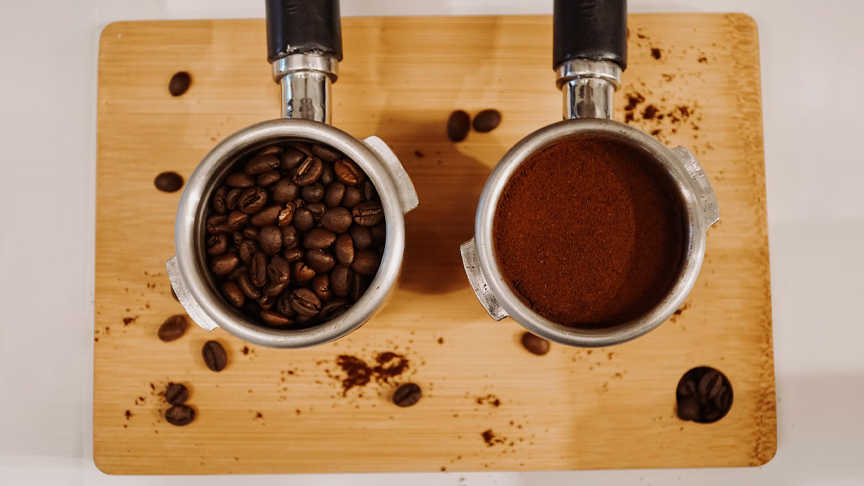
Coffee is one of the world’s most widely consumed beverages, and previous research has linked its consumption to a lower risk of conditions such as type 2 diabetes and cardiovascular disease. However, the biological mechanisms behind these benefits remain unclear. A new Finnish study links habitual coffee consumption to healthier body composition and metabolic markers, while revealing distinct associations with sex hormones in men and women.
The study, conducted at the University of Oulu, analysed data from 2,264 participants aged 46 in the Northern Finland Birth Cohort 1966. Researchers examined how habitual coffee consumption was associated with circulating metabolites, cardiometabolic risk markers and sex hormones.
Despite having a similar body mass index (BMI), individuals with higher coffee consumption had lower total and visceral fat and greater skeletal muscle mass than those who consumed less coffee.
In both men and women, higher coffee consumption was correlated with lower circulating levels of branched-chain amino acids, biomarkers that have previously been linked to insulin resistance and an increased risk of type 2 diabetes when chronically elevated.
The strongest sex-specific associations were observed in men. Higher coffee consumption was linked to a more favourable glucose–insulin profile, higher concentrations of total and bioavailable testosterone, and increased levels of sex hormone-binding globulin (SHBG). At the same time, free testosterone and the free androgen index were modestly lower. In women, hormonal associations were more limited and were primarily characterised by higher SHBG and lower measures of free androgens.
“Coffee is consumed by millions of people every day, yet we still know surprisingly little about how it relates to our metabolism and hormones. What stood out in our findings was a distinct hormonal signature that didn’t disappear even after we took into account BMI and lifestyle factors, with several of these associations differing between men and women,” says Luca Verroest, lead author of the study and Doctoral Researcher at the University of Oulu.
The results suggest that hormonal pathways may partly explain the relationship between coffee consumption and metabolic health. However, as this was an observational study, the findings demonstrate associations rather than cause-and-effect relationships.
The study is particularly relevant in Finland, one of the world’s highest coffee-consuming countries, where annual consumption averages around 11.8 kilograms per person.
The researchers say the findings provide a foundation for future studies aimed at determining whether coffee itself drives these biological changes and identifying the compounds responsible. These questions are currently being investigated in animal models, with the long-term goal of progressing to human intervention studies. Further research will be needed before the findings could inform dietary recommendations.
The study, Associations of habitual coffee intake with testosterone and cardiometabolic markers: the Northern Finland Birth Cohort 1966 study, has been published in the European Journal of Nutrition.

Visiting San Pablo City’s Pho Viet Nam

Four to six servings of wholegrain per day lowers risk factors for heart disease

Structured exercise linked to longer cancer survival and time free of disease

Heading to Pila, Laguna? Check out La Cosina Antonio

Pasalubong shopping in Davao via Aldevinco

The look and feel of your neighborhood may affect your sleep

Workout or nap? Either can help your sleepless brain, study finds

Study links coffee consumption to metabolic health and sex hormones

Manulife Investments Philippines leads UITF rankings across equity and fixed income funds

Scheduling dental care during prenatal visits boosts oral health care during pregnancy
Pasalubong shopping in Davao via Aldevinco
Structured exercise linked to longer cancer survival and time free of disease
Heading to Pila, Laguna? Check out La Cosina Antonio
Four to six servings of wholegrain per day lowers risk factors for heart disease
Visiting San Pablo City’s Pho Viet Nam

-
 Destinations4 weeks ago
Pasalubong shopping in Davao via Aldevinco
-
 Wellness1 week ago
Structured exercise linked to longer cancer survival and time free of disease
-
 Destinations3 weeks ago
Heading to Pila, Laguna? Check out La Cosina Antonio
-
 Nutrition1 week ago
Four to six servings of wholegrain per day lowers risk factors for heart disease
-
 Destinations1 week ago
Visiting San Pablo City’s Pho Viet Nam