
Travel
Pure Oceans: Protecting our seas from plastic
Around 30 people from the local barangays of Tingloy, plus a contingent from the Philippine Coast Guard, have gathered along the shores of Barangay Marikaban to retrieve sachets, plastic bottles, bottle caps, ropes and anything that doesn’t naturally belong here.


Tingloy, Batangas – This beach is pretty remote, but somehow, it’s still covered in trash.
Mixed in with the usual influx of driftwood and seaweed are countless sachets, plastic bottles and toys – ranging from lightsabers to creepy doll heads.
“We’ll conduct a closed loop cleanup today,” Tak Vergara of Pure Oceans explains to gathered volunteers. “You’ll each be given a mesh sack, to be filled with just one type of trash. Once done, we’ll send our sacks to proper endpoints like junkshops and recyclers. Let’s please move before the morning sun gets too hot.”
Around 30 people from the local barangays of Tingloy, plus a contingent from the Philippine Coast Guard, have gathered along the shores of Barangay Marikaban to retrieve sachets, plastic bottles, bottle caps, ropes and anything that doesn’t naturally belong here.
Like everyone, I’ve been given a red mesh sack and assigned to pick up every plastic or foil sachet I see. I don’t have to look hard – the little suckers are literally coating every meter of this beach.

The Problem of Plastic
Plastics revolutionized the world: they’re inexpensive, durable, nonporous, lightweight and have a million uses. They’re so tough that most will never be fully broken down by nature. Instead, they’ll photodegrade into tiny particles called microplastics. It takes some 400 years – around 13 human generations – for this to happen.
The problem is that too many plastics are designed to be used only once. Many of the world’s third-world economies are built on a tingi-tingi culture where daily needs are bought on daily wages.
Single-use plastics like sachets, sando bags, straws, diapers and bottles account for half the plastics made today.
A report from the Global Alliance for Incinerator Alternatives (GAIA) released in 2019 revealed that Pinoys used 163 million plastic sachets, 48 million sando bags and 45 million labo bags daily. The World Bank in turn estimated that the country generated 2.7 million tons of plastic waste yearly, 20% of which ends up in our oceans.

Global studies about plastics gauged that humanity has produced 8.3 billion metric tons of plastic, 75% or 6.3 billion metric tons of which have become plastic waste. There’s so much of it that scientists have proposed this era to officially be termed the Anthropocene, a slice of time marked on the fossil record not by fossilized bones, but nonbiodegradable plastic.
Our oceans can only absorb so much. Sea turtles and whales now mistake translucent plastic bags for jellyfish, while pelagic fish swallow gleaming microplastics mistaken for plankton. Distant islands – from icebergs in the Arctic to uninhabited sandbars in the Pacific – are plastic-ridden. Even the most remote part of our planet, the Mariana Trench at over 10 kilometers deep, is littered with yesteryear’s grocery bags.
“We cannot keep ignoring the plastic problem, especially here in Tingloy,” says Pia Roxas Ocampo, founder of Pure Oceans, a marine conservation social enterprise. The Philippines is part of the Coral Triangle, where marine diversity levels are unparalleled. The Verde Island Passage, which includes Tingloy, has long been hailed as the epicenter for marine shorefish diversity.

Threat to Marine Biodiversity
Since 2018, Pure Oceans has been working with local communities in Tingloy to recover plastic profitably. “In truth, coastal cleanups like this aren’t long-term solutions,” adds Pia, picking up trash along with everyone. “These are simply emergency measures to protect the coral reefs that surround this island. These reefs aren’t just great dive sites – they sustain the livelihoods of people here.”
Plastics, whether whole or broken down into microplastics, threaten marine diversity. It’s not uncommon to see old fishing nets snagged onto coral heads, or undigested plastic in the guts of the seafood we eat.
“Microplastics concentrate and encapsulate pollutants. They’re dangerous when ingested by fish or other animals,” explains Dr. Wilfredo Licuanan, a coral expert and University Fellow at De La Salle University. “Plastics don’t just smother corals either. They can cause injuries, which increases the likelihood of corals getting sick.”
For the past seven years, Pure Oceans has been working with public and private sector partners – from the municipal government to corporations and local communities – to develop practical ways to collect and divert plastic away from coral reefs.
“We’re known as the MRF Angels because we buy hand-washed plastic and foil strips from selected participants at PHP20 per kilogram,” shares Princess Aldovino, busily filling up her sack with little plastic bottle-caps. “Tons of plastic and foil have been brought to our MRF or Materials Recovery Facility and they are used as ‘pluffing’ or ‘plastic-stuffing’ for various products locally made in Tingloy. We support several senior citizens who help convert trash into useful raw materials.”
After an hour’s work and with my mesh bag finally bursting with sachets (my wife Ngoc collected even more sachets than me), I trudge back to our collection point. Tak and Lai Manalo from Pure Oceans measure the morning’s haul: nearly 175 kilos of plastic waste, among them a cellphone, a syringe, a rubber duckie, gambling dice and some truly scary plastic dolls.

Soon we visit Caban Cove, a popular dive site. Diving here decades ago, I vividly recall having lunch in a spotless white sand beach. Now, it is covered end-to-end with broken branches, coconut husks and you guessed it, plastic. Pia and I carefully examine the debris.
“Coastal cleanups help, but each day will deposit a brand-new layer of trash. With the local community of Tingloy, we’ve developed and tested solutions to help other islands address the plastic problem,” she explains.
“We’re working on all aspects of the garbage lifecycle – from implementing corporations’ extender producer responsibility, CSR projects, developing waste management systems with local governments, environmental education for schools, plus physical cleanups along our coasts. After seven years of learning, we’re ready to replicate our solutions nationwide – but we need more partners.”
We pick through more layers of refuse. I dig out a twisted piece of seaglass, keeping it as a reminder that some things just don’t belong in the big blue. “For many Pinoys, conserving the oceans starts at home. Thinking before buying and properly segregating our waste might just prevent trash from ending up here,” gestures Pia.
We leave the area after a day’s work. Though spiritually satisfied, we barely made a dent in the tidal wave of plastics assailing the quiet island paradise. Despite this, it’s still rung with corals, still teeming with fish.
Two hundred million metric tons of single-use plastics will be produced this year, equivalent to 10 million fully-loaded dump trucks.
How many tons will end up at sea? How many new layers of trash will be added to the beaches of Tingloy and the world’s other islands?





Destinations
Visiting San Pablo City’s Pho Viet Nam
When we came across Facebook posts on Pho Viet Nam in San Pablo City in Laguna, we expected to encounter what was experienced in Vietnam (i.e. good food over so-so venue). We expected too much…

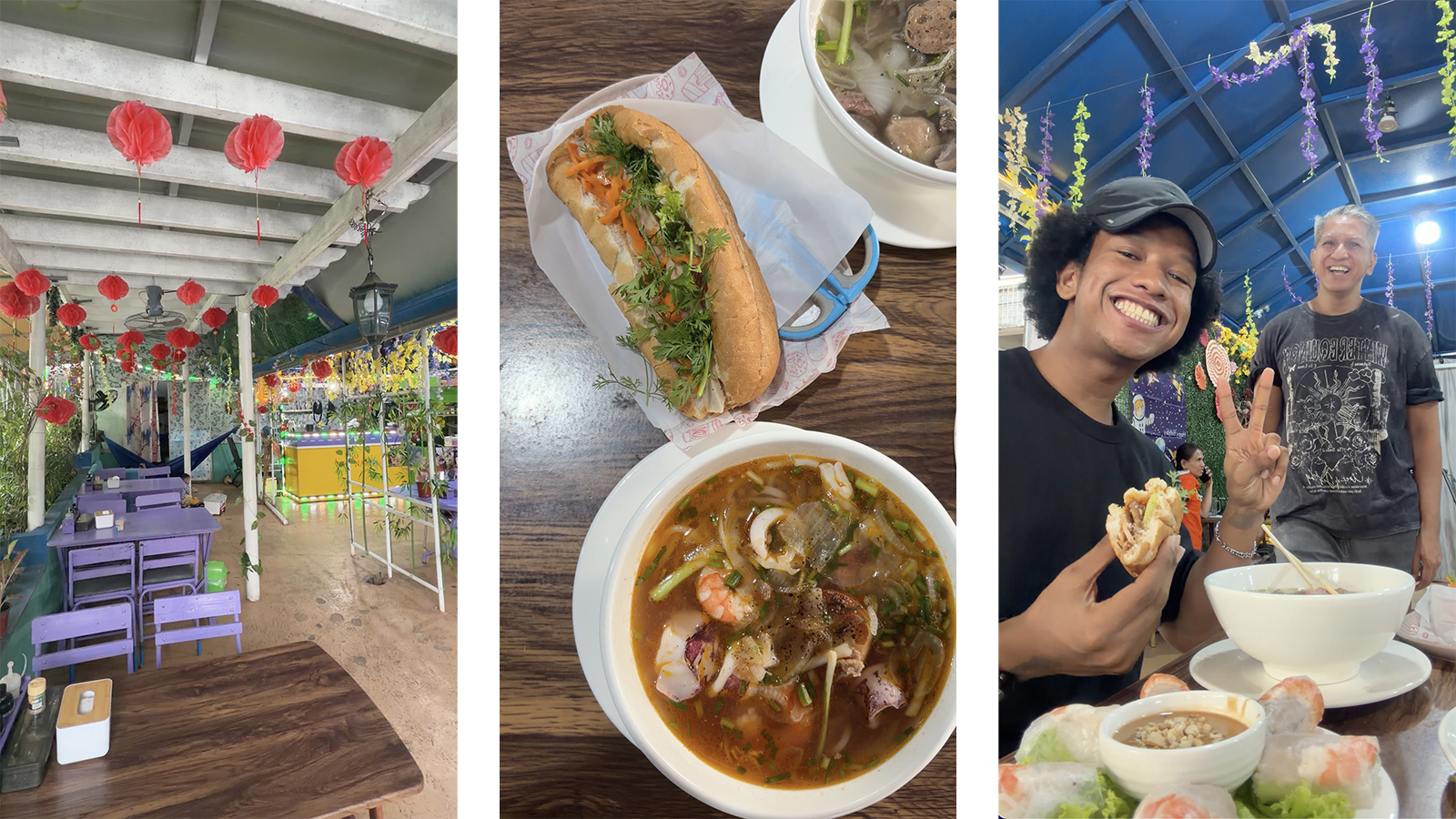
If you’ve been to Vietnam, you’d know that some of the best places to eat at are in those neighborhood eateries; their versions of karinderya, in a manner of speaking, where locals prep good lutong-bahay Vietnamese offerings sans the classy places of expensive restos. Here, the focus is always the food, never the blings.
So when we came across Facebook posts on Pho Viet Nam, located somewhere in San Pablo City in the Province of Laguna, we sort of expected to encounter what was experienced in Vietnam.
@outragemag Looking for #Vietnam food while in #SanPabloCity in #Laguna? We #LGBT checked #PhoVietNam ♬ original sound – Outrage Magazine
Una, this is not the most accessible place even for those with vehicles from Metro Manila. This is because you still have to travel for over an hour (if you’re lucky traffic-wise), and spend on your gas and the toll and so on.
Note that when you’re also along Apolinario Mabini Street, the resto isn’t apparent. It is located at the back of another resto (Joy), so it is very easy to miss. There is, BTW, a small entry at the side of the resto, which leads to an outdoor parking space.
Ikalawa, the actual resto is cheap-looking – e.g. plastic décor, running lights here and there, and so on. Very karinderya; cheap karinderya, for that matter.
Ikatlo, the servers were okay naman; they knew what was on the menu, and – after making quick recommendations – kept you undisturbed to enjoy what you ordered. The orders took some time to be prepped, however; I was even able to order bad-tasting fries from the other resto due to the waiting time.
Ika-apat, how was the food?
Both the ₱245 Beef Noodle Soup and the ₱245 Seafood Noodle Soup weren’t bad naman; but they weren’t good either. You get enough properly-cooked meats, the noodles are sufficient, and so on. Taste-wise, though, they were bland, and no amount of the prepared condiments helped in changing the flavor.
The ₱190 Rice Paper Roll sufficed even if, by and large, it was tasteless. The saving grace: the satay dip since it was rich and nutty and all that.
The ₱160 Meatloaf and Egg Sandwich (the banh mi kep thit va trung) had enough meat naman… and yet was also bland.
Considering the asking prices of this place, you sort of expect a lot, too. Add to that the popularity of the place – e.g. look at all those who dine there, kinukuyog. Alas, the realities when already there are harsher.
Heading to San Pablo to check this place led us to the nearby Dagatan Blvd. surrounding Sampaloc Lake, a must-check place in these parts. So we sort of do not regret heading to San Pablo.
But buod: No, Pho Viet Nam is not worth the dayo; not worth for you to intentionally seek this place out. The food wasn’t bad. But it’s not great, or even good either. It just suffices. And so, particularly for non-locals, the additional expenses for the gas, toll, et cetera make going there not worth it… sorry.
But off we go for more LGBTQIA+ rampa…
Pho Viet Nam is located at 130 Apolinario Mabini Street, San Pablo City, 4000 Laguna.
Destinations
Heading to Pila, Laguna? Check out La Cosina Antonio
We found our #LGBT selves in #Pila, #Laguna, where we ended up checking La Cosina Antonio.
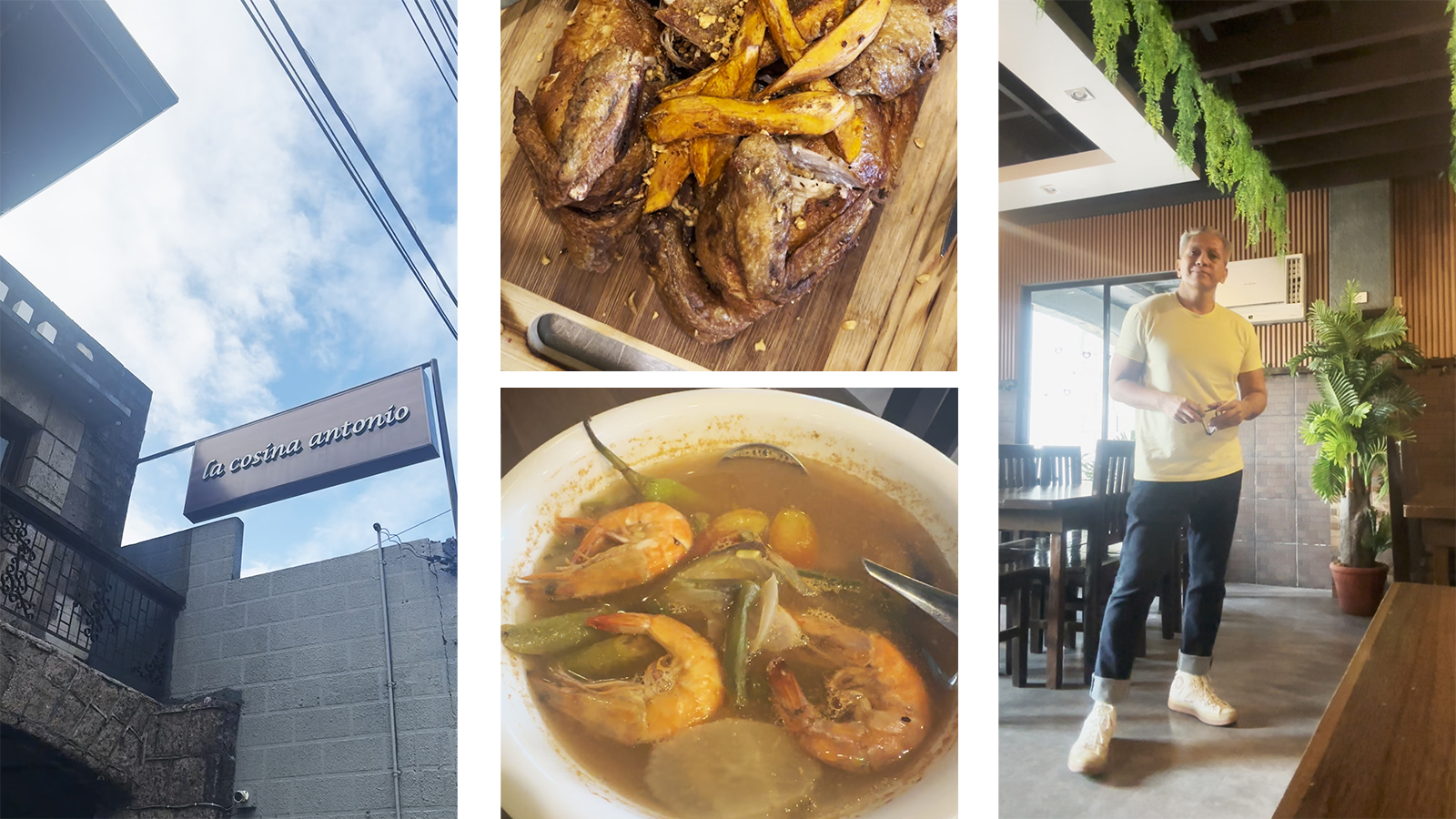
While traveling from Batangas City on the way to Paete, Laguna after an Intersex 101 training workshop, intersex activist Jeff Cagandahan worried where he’d feed us. And then, after a quick discussion with his wife, he suggested La Cosina Antonio, which is apparently a must-check resto in the Municipality of Pila in the province of Laguna.
So we went there, and… how was it for us?
@outragemag #LGBT wandering in #Pila, #Laguna? You may as well try #LaCosinaAntonio ♬ original sound – Outrage Magazine
Una, this is really only convenient to access by locals, or those with private vehicles. Pila, if you must know, is one of the oldest settlements in the Philippines. It is, nonetheless, still largely provincial. And so this place is dadayuhin; you need to intentionally go there as it’s not on the way to major destinations.
Ikalawa, the actual venue is BIG. This one’s an old house converted into a resto with different parts – e.g. for dining, for drinking complete with a performance space for a band, venue spaces, and so on. La Cosina Antonio is, thankfully, well-kept, so that it’s clean, has updated furniture, and so on.
Ikatlo, the staff was okay naman when we were there, able to discuss what’s on the menu, make recommendations… and then prepare the orders and deliver them fast. Very home-y approach, actually, treating guests as regulars.
Ika-apat, how was the food?
The ₱375 Dinakdakan was actually good, the pork belly crispy, the chopped onions and green chilies fresh, and the calamansi-mayo dressing not overpowering.
The ₱390 Sinigang na Hipon was… so-so, not bad though not good either. Pampainit-tiyan. Though, this has to be said, at least di tinipid in the number of shrimps served.
The ₱560 Garlic Pepper Whole Chicken was good; the meat stayed juicy even if the skin was crunchy.
The ₱770 Crispy Pata was also good; crunchy skin and, yes, malamang pata. There are times when you get Crispy Pata that’s basically just skin and bone, no meat at all. Here, we got meat… thankfully.
This place is popular, true (check their Facebook page, LOL). I can be dismissive and say that because, if in Pila, it’s not like you have lots of choices. But truth be told, it’s also because La Cosina Antonio actually has not-bad stuffs to offer… including the okay venue, okay service, and okay food. So check out if you can… or just join us as we look for more LGBTQIA+ lafangan venues…
La Cosina Antonio is located along JP Rizal St., Barangay Sta. Clara Norte, Pila, Laguna.
Destinations
Pasalubong shopping in Davao via Aldevinco
#Pasalubong hunting in #Davao? Consider the new, pinasosyal #Aldevinco that may not have the grimy character of the old location but still is worth #LGBT visiting.
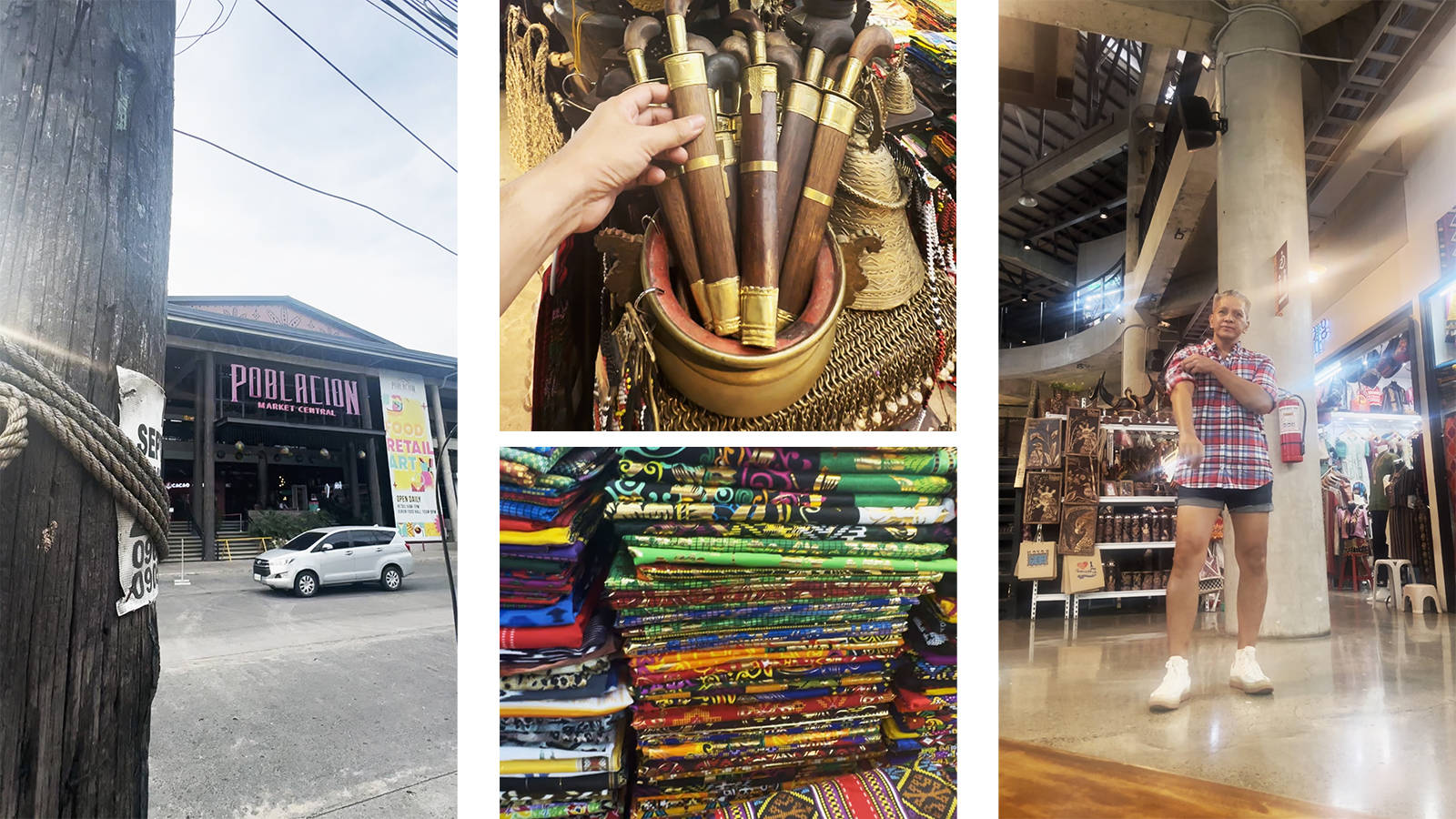
Davao-bound tourists know – or should know – of Aldevinco Shopping Center, the city’s one-stop-hub for everything Mindanao-related. You need malong or patadyong as pasalubong? You need a kulintang not just as a musical instrument, but as décor? You need batik, or T’boli ethnic apparel? You can find them all… and even more, in Aldevinco.
But here’s the thing, particularly for those who do not know yet: the old Aldevinco, which was located along C.M. Recto Street and Roxas Avenue in Davao City, is no more.
Now… enter the new Aldevinco, this time located at Poblacion Market Central on C. Bangoy Street (former Madrazo Fruit Stand)… which isn’t that far from the old place, actually.
We checked, and here are some things worth noting.
@outragemag #Pasalubong hunting in #Davao? Consider the new, pinasosyal #Aldevinco that may not have the grimy character of the old location but still is worth #LGBT ♬ original sound – Outrage Magazine
Una, this place looks and feels new. The old Aldevinco had a palengke feel, but this one has a mall feel. So you have a high-ceilinged venue with better-arranged stores that are air-conditioned, and so on. Pina-sosyal, in a manner of speaking.
Ikalawa, when there, the rules remain the same: haggle. The prices first quoted to you are not the actual prices the goods go for… unless you’re too moneyed and you don’t want to ask for discounts, though in that case, you shouldn’t even be in Aldevinco at all. The more you buy (i.e. bulk buying), the lower the prices, obviously. But always haggle… even if only for the fun of doing it.
Ikatlo, if you have time to spare, don’t auto-buy from the first store you check. Tour the area and compare prices. Often, the goods sold in one store will also be offered in a different store. So move around before making a final decision.
And ika-apat, Aldevinco may be popular as the go-to place for pasalubong, but in truth this isn’t the only one. Halimbawa, right across the old Aldevinco is a series of shops, some of them from the old Aldevinco. Because, at times, Aldevinco can feel like a tourist trap, and understandably, not everyone likes going into one. So consider your other options.
All the same, when in Davao, this is a place worth checking… if not for the shopping, then the food… or at least to check what happened to the tenants of the 60-year-old Aldevinco that was closed in December 2021, and is now being redeveloped into who-knows-what.
All part of rediscovery as we continue the LGBTQIA+ rampa wherever and everywhere…
Open from 9AM to 7PM (with the Kūkūñ Food Hall open from 10AM to 9 PM), Aldevinco Shopping Center is located at Poblacion Market Central, C. Bangoy Street, Davao City.

Visiting San Pablo City’s Pho Viet Nam

Four to six servings of wholegrain per day lowers risk factors for heart disease

Structured exercise linked to longer cancer survival and time free of disease

Heading to Pila, Laguna? Check out La Cosina Antonio

Pasalubong shopping in Davao via Aldevinco

The look and feel of your neighborhood may affect your sleep

Workout or nap? Either can help your sleepless brain, study finds

Study links coffee consumption to metabolic health and sex hormones

Manulife Investments Philippines leads UITF rankings across equity and fixed income funds

Scheduling dental care during prenatal visits boosts oral health care during pregnancy
Pasalubong shopping in Davao via Aldevinco
Structured exercise linked to longer cancer survival and time free of disease
Heading to Pila, Laguna? Check out La Cosina Antonio
Four to six servings of wholegrain per day lowers risk factors for heart disease
Visiting San Pablo City’s Pho Viet Nam

-
 Destinations4 weeks ago
Pasalubong shopping in Davao via Aldevinco
-
 Wellness1 week ago
Structured exercise linked to longer cancer survival and time free of disease
-
 Destinations3 weeks ago
Heading to Pila, Laguna? Check out La Cosina Antonio
-
 Nutrition1 week ago
Four to six servings of wholegrain per day lowers risk factors for heart disease
-
 Destinations1 week ago
Visiting San Pablo City’s Pho Viet Nam