
Destinations
Loggers become river tour guides in Samar
Revenge Tourism is a social phenomenon where people who have been stuck at home, often for months at a time, rush to tourist sites to appease their lockdown fatigue. With easing lockdown and flight restrictions, more and more tourist destinations are experiencing waves of visitors out to re-experience paradise – but what about the people who guide them? The people who themselves work in paradise?


We’re shooting through a wild, wild washing machine: paddling, cursing, laughing and getting absolutely drenched inside a torpedo-shaped canoe.
We’re in the Ulot River, a 92-kilometer waterway which snakes east to west across Samar. The third largest island in the Philippines, Samar is rough country, hewn from limestone which over millennia formed some of the most dramatic rock formations and cave systems in the Philippines, such as the Langun-Gobingob Complex.
Revenge Tourism is a social phenomenon where people who have been stuck at home, often for months at a time, rush to tourist sites to appease their lockdown fatigue. With easing lockdown and flight restrictions, more and more tourist destinations are experiencing waves of visitors out to re-experience paradise – but what about the people who guide them? The people who themselves work in paradise?
“I used to help cut and transport logs illegally,” reveals Epifanio ‘Panying’ Obidos, our boat guide. “For generations, we used traditional torpedo shaped canoes called balugo to transport timber. We would get orders to cut down hardwood trees like banuyo, narra or kamagong. One balugo can transport over 100 board feet of wood.”
Samar is among the poorest provinces in the country. In 2015, the Philippine Statistics Authority revealed that 45% or nearly half of all families in Samar lived below the poverty line. “The hardest part was that even when we’d risk run-ins with the law by transporting illegally-cut timber, we’d still have barely enough cash to survive. Often we’d borrow money from financiers to buy gas and other provisions to transport the logs they ordered. Even after getting paid, we’d still be in debt,” recalls Panying.


Things have steadily improved. Samar’s poverty incidence dropped to 30% by 2018, mostly because of small businesses, one of which is the Ulot River Torpedo Extreme Boat Adventure, where boats go bow-to-bow with raging rapids.
“In 2008, to veer away from illegal activities, we started using our torpedo-shaped balugo for tourism to showcase the natural beauty of Samar. We mostly employed locals who formerly worked as illegal loggers or log haulers,” explains Panying. “Back then we only had 12 people and a few old boats – but traversing rivers was a way of life for us, since we’ve been using it for transportation long before Samar’s road network was developed.”
Each torpedo boat has a three-man crew, comprised of a boat operator, tour guide and a point man, who sits at the bow or front of a boat, deftly using a paddle or pole to keep rocks at bay.
“Now our once-small operation has over 20 boats and employs 70 local people,” beams Panying. In 2018, their group, Tour Guides and Boat Operators for River Protection and Environmental Development Organization (TORPEDO), was recognized by the Department of Tourism for its responsible, community-based operations.
The Ulot River is part of the Samar Island Natural Park (SINP), the country’s largest land-based Protected Area (PA). “The Philippines hosts 247 PAs and practically all of them give locals employment,” explains Department of Environment and Natural Resources Biodiversity Management Bureau (DENR-BMB) director Natividad Bernardino. The stories of many of these PAs are similar to Panying’s – of loggers turned into tour guides, hunters turned into rangers, blast fishers transformed into dive guides.
“For all this to continue, there must be a steady stream of clients,” notes SINP superintendent Eires Mate. “The COVID-19 lockdowns hit the world’s PAs hard, generating all-time visitor revenue lows. Many people were laid off and operations were drastically scaled-down. With our parks again open for business, we invite adventurers to visit the Ulot River and our country’s other beautiful PAs.”
Launched in May of 2022, the Year of the Protected Areas or YOPA aims not just to educate people on the need to conserve PAs, but to encourage them to visit the sites themselves. YOPA hopes to generate funds from tourists to ensure continued management for areas hard-hit by COVID-19 budget cuts.
Declaring natural sites as PAs is among the best ways to protect natural capital. “The jobs generated by sustainable and ethical tourism activities act as economic and social safety nets for locals who might otherwise turn to illegal means to support their families,” says United Nations Development Programme (UNDP) resident representative Selva Ramachandran.
* * *
Back in the Ulot River, the going is wet and wild. Our balugo, which traveled easily downstream, is now battling against the current in what locals jokingly call the ‘Salmon Run’ – akin to the epic upriver journeys undertaken by salmon in colder climes. Chilly geysers of water splash into the boat as our engines go full-throttle.
Just as soon as we’re sopping wet, the river calms down, the ride turning tranquil. Like the turbulent COVID-19 era, raging waters and rough times too, shall pass.
I glance ahead and notice what’s written on one of the guides’ shirts: #MAYFORRIVER, a play on #MayForever, the hope that some things really can endure the test of time.
With illegal activities, nothing is certain – but with legal, safe and sustainable tourism, then there truly might be forever.
“You know, if not for ecotourism, I would most probably be dead,” reflects Panying as we quietly glide back to shore. “The authorities would have definitely caught me, like they caught others. I might have starved to death, been shot by the cops or been hauled off to jail.”
He looks up, just a bit teary-eyed.
“In a very real way, ecotourism saved my life.”






Destinations
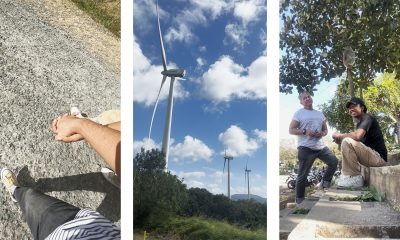
Checking the wind turbines of Pililla… since there’s not much else being offered
The Municipality of #Pililla promotes #pilillawindfarm #windturbines as tourist attractions… and nothing else, becoming a #touristtrap as checked during this #LGBT visit.

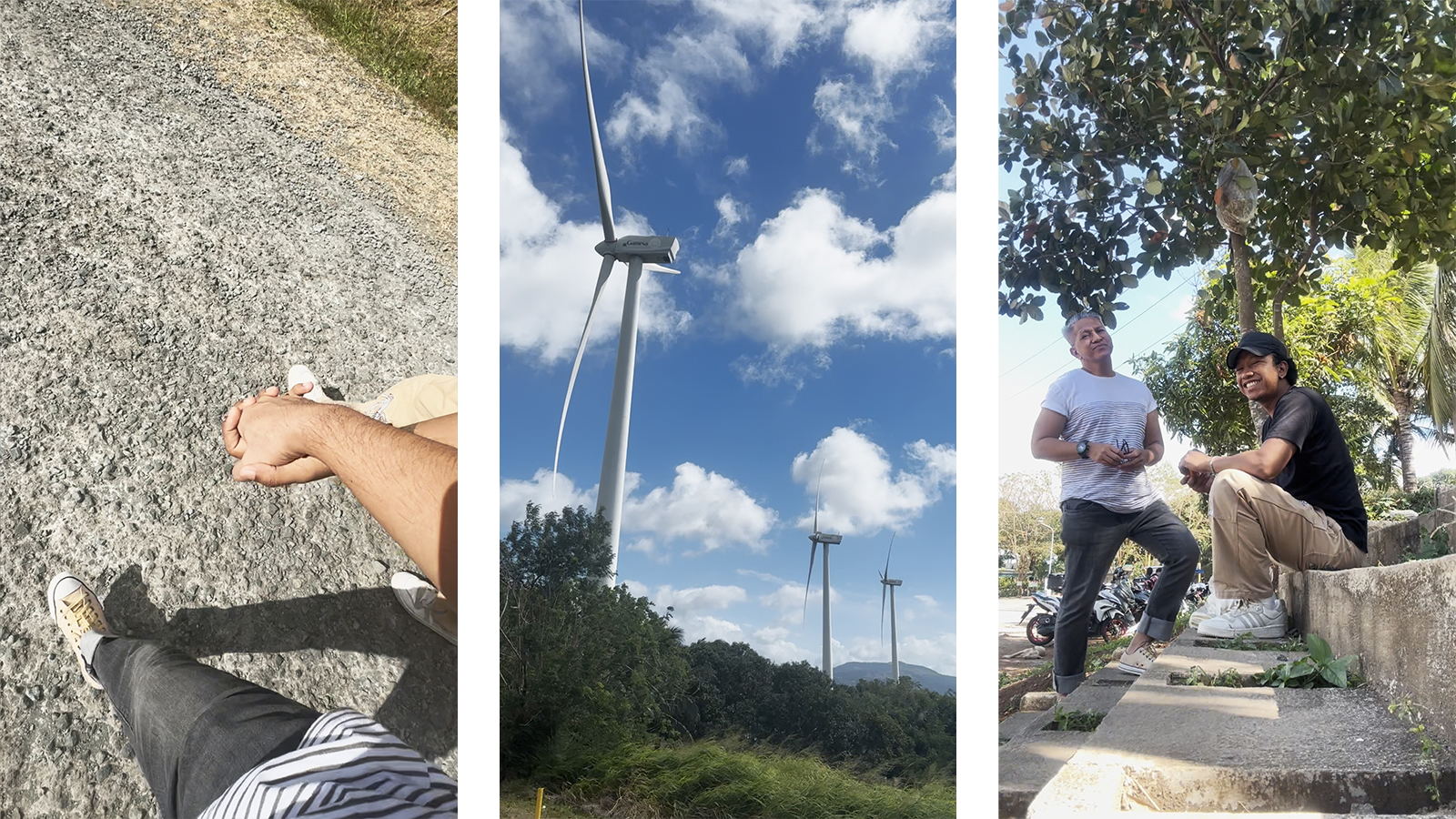
As a tourist, there are two ways to look at the Pililla Wind Farm. On one hand, you head there to see how we’re making use of nature to propel progress. But on the other hand, you go there because… there’s nothing else worth checking out in the area; we are so tourist site-deprived that we end up glorifying not-even-pretty gigantic turbines.
Anyway, we headed there, yes, and here are some observations.
@outragemag Municipality of #Pililla promotes #pilillawindfarm #windturbines as #tourism… and nothing else, becoming a #touristtrap as checked during this #LGBT ♬ original sound – Outrage Magazine
Una, the place is really only accessible for those with private vehicles. If you’re commuting, you can take a tricycle to and from the nearby Tanay Public Market. But don’t expect to be able to just hail sasakyan while there.
Ikalawa, open from 7AM to 6PM every day, you’d see 27 wind turbines operated by Alternergy Philippine Holdings Corporation there.
Standing atop hills at 300 meters above sea level, overlooking Laguna de Bay, each turbine can produce 2MW, with the entire farm generating almost 150 Gigawatt hours of electricity per year. To put this in perspective lang, ha, it could provide power for approximately 90,000 to 100,000 households… assuming, of course, na what’s produced is provided cheaply to the people.
But yes, you’d see “science in action” here… in a very, VERY limited way, of course.
Ikatlo, even if the Pililla Wind Farm doesn’t charge fees, everything is still for profit here – e.g. parking, stuff you can use while walking (like umbrellas), access to some viewing areas, and so on. The greed is most apparent in the access to toilets; here, all the shops have “PAY CR” since Pililla Wind Farm itself doesn’t have similar publicly-available facilities.
So… should you visit? If you have a car, daan lang siguro, quickly drop by. Or just enjoy those windmills from afar siguro. Because either/or, there’s not much to gain while at the Pililla Wind Farm – e.g. no people to discuss with you how farming the wind works, no glimpses of how this particular wind farm actually works, no picnic areas to stay at while enjoying the views, and so on.
Of course, if you really just want to take pics din, then yeah… head there. Pero kami, off we go for more LGBTQIA+ discoveries…
The Pililla Wind Farm is located at F8CX+VJW, Manila E Rd., Pililla, Rizal Province.
Destinations
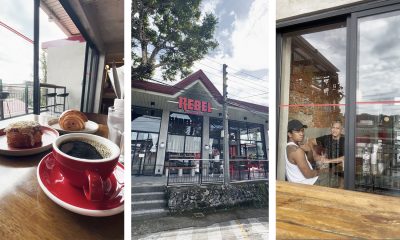
Checking the café vibe of Filipino-ish Yellow Bird resto
#Breakfast-hunting in #Antipolo led us to #YellowBird #restaurant that offers #Filipinofood, Italian dishes, #cafe goodies, atbp. But… is it worth checking out?
Antipolo has, particularly lately, been trying to make a name as a must-check place for foodies. If most places in Metro Manila close at night, Antipolo has 24-hour venues that boast not just not-bad food, but views of cities of Metro Manila as they succumb to darkness.
So one morning, after a night shift, we decided to grab something at any of their breakfast nooks… which was how we ended up at Yellow Bird Café X Kitchen.
@outragemag #Breakfast-hunting in #Antipolo led us to #YellowBird #restaurant that offers #Filipinofood, Italian dishes, #cafe ♬ original sound – Outrage Magazine
Una, the place isn’t hard to find for those with private vehicles; Google Maps or Waze will lead you there easily. But noticeably, we didn’t notice public transportation during our visit.
Ikalawa, the actual place was… airy, thanks to the glass walls/windows. But while this may also be a steakhouse/Filipino restaurant/Italian-ish restaurant/and so on, look-wise, it’s more a café that happens to serve some food. Rustic also came to mind, thanks to those dried flowers everywhere…
Ikatlo, the staff’s deadma; no one was friendly enough to stick to mind. They just tell you where to sit, take your order, deliver your food or drinks, then… kebs na. No small chitchats on what’s good or not, or whatever.
Ika-apat, how was the food?
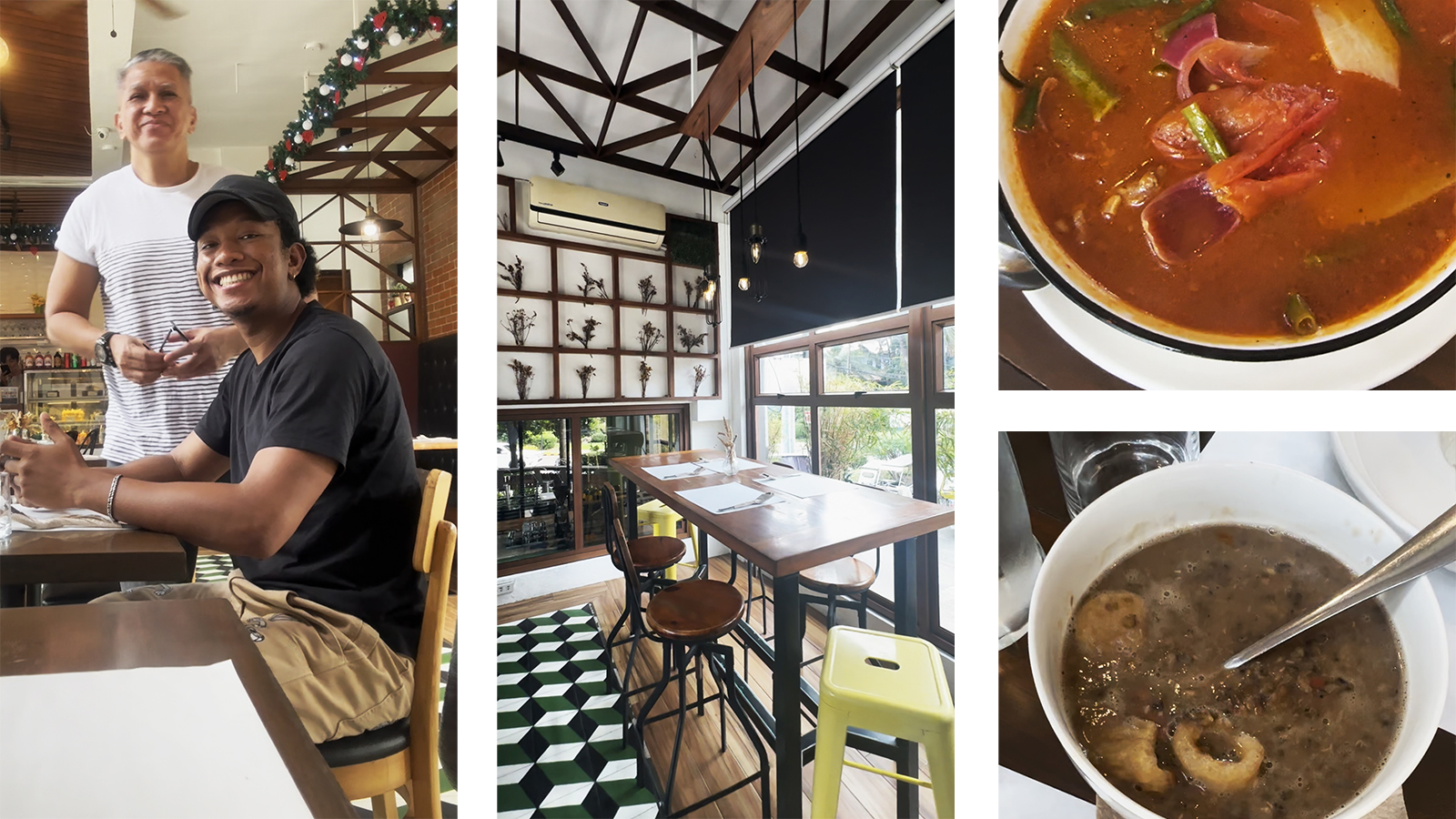
- The ₱140 Americano was… forgettable. Mag-tubig ka na lang while waiting for your food.
- The Sinigang na Baka (₱525) was actually a surprise – that is, this isn’t your typical sinigang, Using kamatis (tomato) instead of bayabas (guava) or sampalok (tamarind) or miso, the broth was tasty without being overpowering. Yes, the meat could have been softer/more tender, but at least it wasn’t chewy. And the serving could have been bigger, considering the asking price. But yes, this one’s worth checking out.
- The Munggo & Chicharon (₱295) wasn’t bad at all… but there’s nothing special about this as it’s no different from the munggo (beans) that you’d get from some carinderia.
That sinigang may have been a pleasant surprise (and this is even if the meat needed more time to boil), but I doubt that’s enough to lure us to head back anytime soon. This isn’t a bad place at all, but when in Antipolo, a place that has more food venues to discover, we – or you – may as well check others…
So off we go, as we search for more lafangan venues.
Yellow Bird Café X Kitchen is located at Blk 2, Mission Hills Blvd, Antipolo, 1870 Rizal Province.
Destinations
Checking Cavite’s Lolo Claro’s
It claims to sell over 400 pieces of #friedchicken per day, so Lolo Claro’s must be good, no? We checked the former mami house turned restaurant in #Cavite during a quick #LGBT wandering.
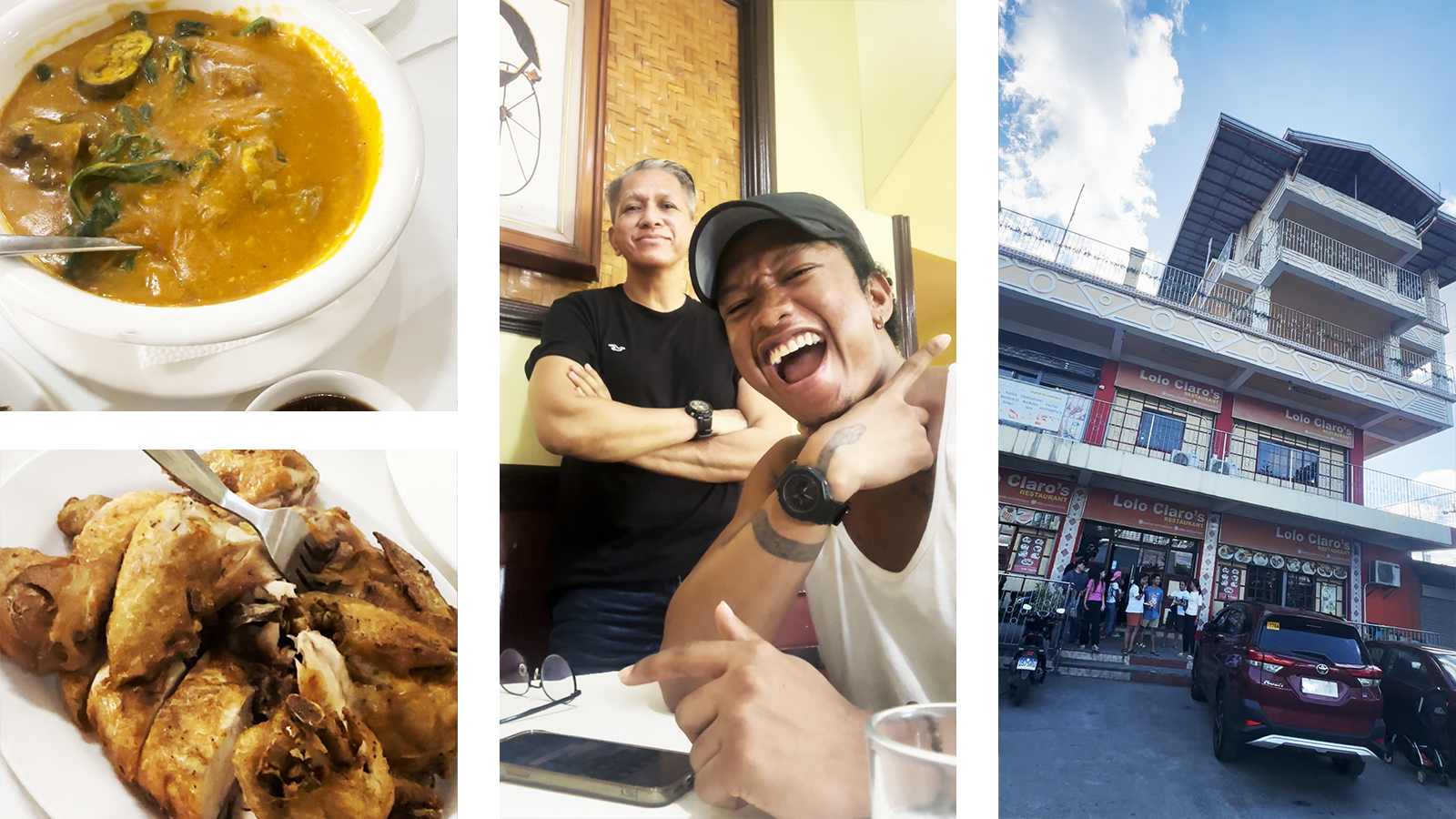
So… if a resto claims to sell as many as 400 fried chickens a day, you’re bound to think that what they have may be really good. So we checked Lolo Claro’s Restaurant in Cavite City, one of those restos that can claim that it was built by, yep, friend chicken.
How was Lolo Claro’s Restaurant for us?
@outragemag It claims to sell over 400 pcs of #friedchicken per day, so #LoloClaros in #Cavite must be good, no? We #LGBT checked this former #mami house turned #restaurant ♬ original sound – Outrage Magazine
Una, as background, this place is somewhat historical. Started over 25 years ago by Bernie Ilagan in honor of his late kutsero (horse carriage driver) grandfather, it used to just be a food stall that sold mami, among others, but eventually grew to have multiple branches.
Ikalawa, the branch we visited was easy to find, as it’s along a major road in Cavite City. Yeah, public transport passed the area. And there’s ample open-air parking for those with private vehicles.
Ikatlo, the resto is luma (antiquated). This should also serve as a warning since there, tabletops are peeling, corners are soiled, walls have who-knows-what prints, and so on. The squeamish may say it borders on… dirty, and they won’t be completely wrong.
Ika-apat, the staff was perfunctory – e.g. you have to pester them to clean a table for you, or follow-up an order, et cetera.
Ikalima, how were the offerings?
- Claro’s Fried Chicken (₱275 for half, ₱475 for whole) was similar to Max’s chicken – e.g. not that big and not over-fried, but not that tasty and quite dry.
- The chopsuey (₱290) was… peculiar. Think deconstructed, and you’d have an idea of their version – i.e. the veggies were steamed or boiled, and the sauce was just poured on top before serving. Good for those who just like steamed veggies; but for those who want chopsuey the traditional way, this isn’t gonna please you.
- The kare-kare (₱360) needed more oomph; kulang sa lasa. But at least you get enough laman, from the meat slices to the veggies. And yeah, the bagoong (shrimp paste) was good… even if they didn’t serve a lot.
Lolo Claro’s Restaurant was packed when we visited; we actually had to wait for a table to be vacated before we could eat. So this is a popular resto, indeed. I can’t, and won’t, justify this; to each his own. But we have reservations… with the venue, the staff, the food… And so off we go in search of more lafangan venues…
Lolo Claro’s Restaurant is located at Governor’s Drive corner Naic Indang Road, Cavite City.

Manulife launches GoalReady health solutions

Investing in employee health leads into a stronger, more productive workplace

Checking the wind turbines of Pililla… since there’s not much else being offered

Bell-bottoms today, miniskirts tomorrow: Revealing fashion’s 20-year cycle

Heart disease risk may start in the womb, study finds

Viagra could hold key to halting Peyronie’s disease

Healthier brains may be more resilient to early Alzheimer’s disease

Grape consumption linked to changes in gene expression and improved skin health

Is ‘yo‑yo dieting’ really harmful? New analysis challenges long‑standing assumptions about weight cycling

Osteoporosis could prove deadly in postmenopausal women
Healthier brains may be more resilient to early Alzheimer’s disease

Study: Egg consumption is associated with a lower risk of Alzheimer’s Disease
Is ‘yo‑yo dieting’ really harmful? New analysis challenges long‑standing assumptions about weight cycling
Grape consumption linked to changes in gene expression and improved skin health
Viagra could hold key to halting Peyronie’s disease

Checking the café vibe of Filipino-ish Yellow Bird resto
Heart disease risk may start in the womb, study finds

Study finds low-dose eye drops successful in managing adult myopia for 24 hours
Bell-bottoms today, miniskirts tomorrow: Revealing fashion’s 20-year cycle
Osteoporosis could prove deadly in postmenopausal women

-
 NewsMakers1 week ago
Healthier brains may be more resilient to early Alzheimer’s disease
-
 NewsMakers3 weeks ago
Study: Egg consumption is associated with a lower risk of Alzheimer’s Disease
-
 NewsMakers1 week ago
Is ‘yo‑yo dieting’ really harmful? New analysis challenges long‑standing assumptions about weight cycling
-
 NewsMakers1 week ago
Grape consumption linked to changes in gene expression and improved skin health
-
 NewsMakers1 week ago
Viagra could hold key to halting Peyronie’s disease
-
 Destinations2 weeks ago
Checking the café vibe of Filipino-ish Yellow Bird resto
-
 NewsMakers1 week ago
Heart disease risk may start in the womb, study finds
-
 NewsMakers3 weeks ago
Study finds low-dose eye drops successful in managing adult myopia for 24 hours