
NewsMakers
Drinking any amount of alcohol likely increases dementia risk
Even light drinking—generally thought to be protective, based on observational studies—is unlikely to lower the risk, which rises in tandem with the quantity of alcohol consumed.

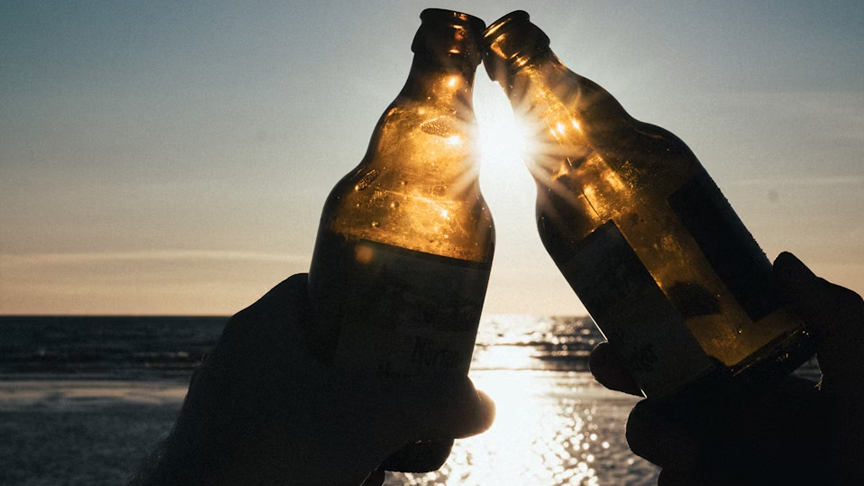
Drinking any amount of alcohol likely increases the risk of dementia, suggests the largest combined observational and genetic study to date, published online in BMJ Evidence Based Medicine.
Even light drinking—generally thought to be protective, based on observational studies—is unlikely to lower the risk, which rises in tandem with the quantity of alcohol consumed, the research indicates.
Current thinking suggests that there might be an ‘optimal dose’ of alcohol for brain health, but most of these studies have focused on older people and/or didn’t differentiate between former and lifelong non-drinkers, complicating efforts to infer causality, note the researchers.
To try and circumnavigate these issues and strengthen the evidence base, the researchers drew on observational data and genetic methods (Mendelian randomisation) from two large biological databanks for the entire ‘dose’ range of alcohol consumption.
These were the US Million Veteran Program (MVP), which includes people of European, African, and Latin American ancestry, and the UK Biobank (UKB), which includes people of predominantly European ancestry.
Participants who were aged 56–72 at baseline, were monitored from recruitment until their first dementia diagnosis, death, or the date of last follow-up (December 2019 for MVP and January 2022 for UKB), whichever came first. The average monitoring period was 4 years for the US group, and 12 for the UK group.
Alcohol consumption was derived from questionnaire responses—over 90% of participants said they drank alcohol—and the Alcohol Use Disorders Identification Test (AUDIT-C) clinical screening tool. This screens for hazardous drinking patterns, including the frequency of binge drinking (6 or more drinks at a time).
In all, 559,559 participants from both groups were included in observational analyses, 14,540 of whom developed dementia of any type during the monitoring period:10,564 in the US group; and 3976 in the UK group. And 48,034 died: 28,738 in the US group and 19,296 in the UK group.
Observational analyses revealed U-shaped associations between alcohol and dementia risk: compared with light drinkers (fewer than 7 drinks a week) a 41% higher risk was observed among non-drinkers and heavy drinkers consuming 40 or more drinks a week, rising to a 51% higher risk among those who were alcohol dependent.
Mendelian randomisation genetic analyses drew on key data from multiple large individual genome-wide association studies (GWAS) of dementia, involving a total of 2.4 million participants to ascertain lifetime (rather than current) genetically predicted risks.
Mendelian randomisation leverages genetic data, minimising the impact of other potentially influential factors, to estimate causal effects: genomic risk for a trait (in this case, alcohol consumption) essentially stands in for the trait itself.
Three genetic measures related to alcohol use were used as different exposures, to study the impact on dementia risk of alcohol quantity, as well as problematic and dependent drinking.
These exposures were: self-reported weekly drinks (641 independent genetic variants); problematic ‘risky’ drinking (80 genetic variants); and alcohol dependency (66 genetic variants).
Higher genetic risk for all 3 exposure levels was associated with an increased risk of dementia, with a linear increase in dementia risk the higher the alcohol consumption.
For example, an extra 1-3 drinks a week was associated with a 15% higher risk. And a doubling in the genetic risk of alcohol dependency was associated with a 16% increase in dementia risk.
But no U-shaped association was found between alcohol intake and dementia, and no protective effects of low levels of alcohol intake were observed. Instead, dementia risk steadily increased with more genetically predicted drinking.
What’s more, those who went on to develop dementia typically drank less over time in the years preceding their diagnosis, suggesting that reverse causation—whereby early cognitive decline leads to reduced alcohol consumption—underlies the supposed protective effects of alcohol found in previous observational studies, say the researchers.
They acknowledge that a principal limitation of their findings is that the strongest statistical associations were found in people of European ancestry, because of the numbers of participants of this ethnic heritage studied. Mendelian randomisation also relies on assumptions that can’t be verified, they add.
Nevertheless, they suggest that their findings “challenge the notion that low levels of alcohol are neuroprotective.”
And they conclude: “Our study findings support a detrimental effect of all types of alcohol consumption on dementia risk, with no evidence supporting the previously suggested protective effect of moderate drinking.
“The pattern of reduced alcohol use before dementia diagnosis observed in our study underscores the complexity of inferring causality from observational data, especially in ageing populations.
“Our findings highlight the importance of considering reverse causation and residual confounding in studies of alcohol and dementia, and they suggest that reducing alcohol consumption may be an important strategy for dementia prevention.”


NewsMakers
Stress, BMI, and hormones linked to earlier puberty in girls
Higher levels of key steroid hormones—combined with elevated stress and body mass index (BMI)—are associated with earlier onset of puberty in girls.

Higher levels of key steroid hormones—combined with elevated stress and body mass index (BMI)—are associated with earlier onset of puberty in girls, according to a new study at Columbia University Mailman School of Public Health.
The findings are published in The Journal of Clinical Endocrinology & Metabolism.
Elevated prepuberty urinary levels of glucocorticoids, androgens, and progesterone were strongly linked to accelerated breast development (thelarche). Girls with high glucocorticoid levels alongside high BMI and stress entered puberty an average of seven months earlier than peers with lower levels.
“While stress and BMI have long been recognized as independent predictors of puberty, few studies have examined how they interact with a girl’s hormones,” said Lauren Houghton, PhD, assistant professor of Epidemiology at Columbia Mailman School, and first author. “Our findings challenge conventional research that has largely focused on estrogen and body size, highlighting instead the role of stress and androgens – typically thought of as male hormones– in shaping pubescent development.”
The strongest associations were observed for progesterone, androgens, and glucocorticoids, indicating that multiple hormonal pathways—not just estrogen—play a critical role in the timing of puberty.
For example:
- Higher glucocorticoid, androgen, and progesterone metabolites were associated with earlier onset of puberty
- Elevated androgens and progesterone were also linked to a longer duration of puberty
- Estrogen metabolites were associated with delayed onset, not acceleration
- The effects of hormones on puberty timing were significantly modified by BMI and stress levels.
Notably, the associations were consistent regardless of family history of breast cancer.
“Our objective was to identify the full set of hormonal patterns linked to accelerated puberty and test whether BMI and stress modify this relationship,” said Houghton, who is also assistant professor at the Herbert Irving Comprehensive Cancer Center at Columbia. “We predicted that girls with elevated BMI and stress would experience the earliest onset—and that the stress response shifts during this key time for girls.”
The researchers drew on data from the LEGACY Girls Study, a cohort of 1,040 girls ages 6 to 13 recruited across the U.S. States and Canada. Participants were followed every six months with clinical assessments, questionnaires, and biospecimen collection.
The analysis included 327 girls who were at the pre-puberty stage at baseline and provided urine samples at least one year before the onset of puberty. Houghton and colleagues measured a comprehensive panel of steroid metabolites using first-morning urine samples and tracked puberty development using validated clinical scales.
Mothers of the girls completed an Internalizing Composite Scale, which includes subscales for anxiety, depression, and other at-risk status. They also provided information on girls’ family history of all cancers as well as on pregnancy and infancy, including birth weight and their child’s race and ethnicity. Trained research staff measured height and weight twice every 6 months.
“Unlike prior research, this study simultaneously examined hormonal patterns, BMI, and psychosocial stress—captured through standardized behavioral assessments—within the same cohort,” said senior author Mary Beth Terry, PhD, professor of Epidemiology at Columbia Mailman School, and the Herbert Irving Cancer Center, and Silent Spring Institute. “Interestingly, we also learned that the associations were consistent regardless of family history of breast cancer.”
The findings may help explain the ongoing trend toward earlier puberty and point to actionable prevention strategies, observed the authors.
“Stress-reducing interventions and healthy lifestyle changes may help delay early puberty and improve long-term health outcomes,” said Houghton. ‘Because early puberty is linked to increased breast cancer risk later in life, the results have important implications for both pediatric care and public health.”
NewsMakers
Cancer risk is significantly higher for adults who never married, large study finds
Adults who were never married had substantially higher rates of developing cancer compared with those who were or had been married. For some cancers, the association was even stronger: adult men who were never married had approximately five times the rate of anal cancer compared with married men.

Adults who have never been married face a significantly higher risk of developing cancer than those who have been married, according to a study of more than 4 million cases.
The increased risk spans nearly every major cancer type and is especially pronounced for preventable cancers—those linked to infections, smoking and reproductive factors. Led by researchers at Sylvester Comprehensive Cancer Center, part of the University of Miami Miller School of Medicine, the study appears in the April 8 issue of Cancer Research Communications.
A link to the article is here.
“These findings suggest that social factors such as marital status may serve as important markers of cancer risk at the population level,” said Paulo Pinheiro, Ph.D., study co-author and a Sylvester physician-scientist whose lab conducts population-based cancer epidemiology.
The novel observation does not mean that getting married prevents cancer or that people need to get married.
“It means that if you’re not married, you should be paying extra attention to cancer risk factors, getting any screenings you may need, and staying up to date on health care,” said Frank Penedo, Ph.D., associate director for population sciences and director of the Sylvester Survivorship and Supportive Care Institute (SSCI).
“For prevention efforts, our findings point to the importance of targeting cancer risk awareness and prevention strategies with attention to marital status,” he added.
Marriage is already associated with earlier cancer diagnosis and better survival. Married individuals often, but not always, have stronger support systems, greater economic stability and are more likely to adhere to cancer treatment regimens.
But previous work on the links between marriage and cancer focused almost entirely on what happens at and after diagnosis. Only a few small, older studies explored whether marriage affects the odds of getting cancer in the first place.
“We wanted to know who is more likely to get cancer: married people or unmarried people?” Pinheiro said.
To find out, the researchers analyzed a large dataset covering 12 states that included demographic and cancer data from more than 4 million cancer cases in a population of more than 100 million people, collected between 2015 and 2022. They examined cases of malignant cancers diagnosed at age 30 or older and compared rates of various cancers by marital status, further broken down by sex and race and adjusted for age.
The researchers categorized marital status into two groups: those who were or had been married, including married, divorced and widowed individuals, and those who had never been married. The study began in 2015 because that year, the U.S. Supreme Court legalized gay marriage, allowing same-sex couples to be included in the married category. One in five adults in the study had never married.
Pinheiro expected to see some associations, given established relationships between marriage and lifestyle factors such as smoking, routine medical care and having children. But the strength of some findings surprised him.
Adults who were never married had substantially higher rates of developing cancer compared with those who were or had been married. For some cancers, the association was even stronger: adult men who were never married had approximately five times the rate of anal cancer compared with married men. Adult women who were never married had nearly three times the rate of cervical cancer compared with women who were or had been married.
Both anal and cervical cancers are strongly related to HPV infection, so these differences likely reflect variation in exposure, and for cervical cancer, also differences in screening and prevention. In contrast, for cancers such as endometrial and ovarian, differences by marital status may partly reflect the protective effect of parity, which is more common among married individuals.
“It’s a clear and powerful signal that some individuals are at a greater risk,” Penedo said.
Men and women showed slightly different patterns. Men who were never married were about 70% more likely to develop cancer than married men, while women who never married were about 85% more likely to develop cancer than women who were or had been married.
This represents a small but noteworthy reversal of a broader trend: Men often benefit more from marriage than women in terms of health and social factors. In this case, women appeared to benefit slightly more from marriage than men.
The strongest associations between marriage and cancer were seen for cancers related to infection, smoking or alcohol use, and, for women, cancers related to reproduction, such as ovarian and endometrial cancer.
The researchers found weaker associations for cancers with robust screening programs, including breast, thyroid and prostate cancers.
They also observed patterns across race and marital status. Black men who were never married had the highest overall cancer rates. However, married Black men had lower cancer rates than married White men, indicating a strong protective association with marriage in that group.
The study has limitations. People who smoke less, drink less, take better care of themselves and are more socially integrated may also be more likely to get married.
Still, the researchers found that associations between marriage and cancer were stronger in adults older than 50, suggesting that as people age and accumulate cancer risk exposures, the benefits associated with marriage may become more pronounced.
The study also excluded individuals who are unmarried but in committed partnerships. That group is likely small relative to the size of the dataset, Pinheiro said, but worth exploring in future research.
Future studies could further subdivide the married category into married, divorced and widowed individuals and follow people over decades to better understand how marital transitions affect cancer risk.
Overall, getting married does not magically prevent cancer, both authors stressed.
“But the association between marriage status and cancer risk is an interesting, new observation that deserves more research,” Pinheiro said.
NewsMakers
Social support, sleep, pain management linked to mental health in later life
Older people who are socially connected, physically healthy, and spiritually engaged are significantly more likely to experience complete mental health.

Older people who are socially connected, physically healthy, and spiritually engaged are significantly more likely to experience complete mental health.
This is according to a new study, “Flourishing older Canadians: What characteristics are associated with complete mental health?”, that was published in PLOS One.
Using data from 2,024 respondents in Statistics Canada’s 2022 Mental Health and Access to Care Survey (MHACS), researchers examined factors associated with both the absence of psychiatric disorder (APD) and complete mental health (CMH), a broader measure that combines freedom from mental illness with high emotional, psychological, and social well-being.
“Our findings shift the conversation away from mental illness alone and toward understanding what helps older adults truly flourish,” said first author Daniyal Rahim, PhD Candidate, Ontario Institute for Studies in Education, University of Toronto. “Complete mental health reflects not just the absence of disorders, but the presence of meaning, satisfaction, and strong social connections.”
The study found that older adults were more likely to experience APD and CMH if they were married or in a common-law relationship, had strong social support, rated their physical health as fair or better, and reported no chronic pain, sleep problems, or limitations in daily activities. Social support emerged as one of the strongest predictors, more than doubling the odds of achieving complete mental health.
“Social relationships appear to be a cornerstone of mental well-being in later life,” said coauthor Shannon Halls, Research Coordinator, Institute for Life Course & Aging, University of Toronto. “Having people to rely on during stressful times may buffer against psychological distress and promote resilience, happiness, and a sense of purpose.”
Spirituality was also strongly associated with mental well-being. Older adults who reported that religion or spirituality was important in their daily lives had significantly higher odds of both APD and CMH.
“Spiritual beliefs may help older adults cope with adversity by providing meaning, hope, and a sense of community,” said co-author Ying Jiang, a senior epidemiologist in the Applied Research Division, Centre for Surveillance and Applied Research, Public Health Agency of Canada. “These factors can be particularly relevant during periods of declining health or life transitions.”
Physical health factors played a critical role. Freedom from chronic pain, sleep problems, and limitations in instrumental activities of daily living was consistently associated with better mental health outcomes. Conversely, living in a large urban center was linked to lower odds of complete mental health compared to rural living.
“These findings underscore that mental health in aging is shaped by a complex interplay of social, physical, and environmental factors,” said senior author Esme Fuller-Thomson, Director, Institute for Life Course & Aging, University of Toronto, Factor-Inwentash Faculty of Social Work, University of Toronto. “Public health strategies that strengthen social support, address pain and sleep problems, and promote meaningful engagement could substantially improve well-being among older adults.”
The authors emphasize that many of the identified factors are modifiable, suggesting opportunities for targeted interventions, including social programming, pain management, sleep treatment, and community-based supports to help more older Canadians achieve complete mental health.

Reduce your home’s vulnerabilities to wildfire

4 Tips to improve heart health (including a recipe to consider)

Stress, BMI, and hormones linked to earlier puberty in girls

Adding resistance training improves strength and aerobic fitness, better for heart health

Coffee-craving with rice meals on the side at Foam Coffee

Physical activity and appropriate sleep linked to subsequent lower dementia risk

Cancer risk is significantly higher for adults who never married, large study finds

Social support, sleep, pain management linked to mental health in later life

Healthier plant-based diet associated with lower risk of Alzheimer’s, other dementias

Feeling unfulfilled could lead to riskier, heavier alcohol use

Faith, fanaticism, and everything in between in Manaoag
Feeling unfulfilled could lead to riskier, heavier alcohol use
Cancer risk is significantly higher for adults who never married, large study finds
Healthier plant-based diet associated with lower risk of Alzheimer’s, other dementias
Physical activity and appropriate sleep linked to subsequent lower dementia risk
Social support, sleep, pain management linked to mental health in later life
Adding resistance training improves strength and aerobic fitness, better for heart health
Coffee-craving with rice meals on the side at Foam Coffee
4 Tips to improve heart health (including a recipe to consider)
Reduce your home’s vulnerabilities to wildfire

-
 Destinations2 weeks ago
Faith, fanaticism, and everything in between in Manaoag
-
 NewsMakers2 weeks ago
Feeling unfulfilled could lead to riskier, heavier alcohol use
-
 NewsMakers2 weeks ago
Cancer risk is significantly higher for adults who never married, large study finds
-
 NewsMakers2 weeks ago
Healthier plant-based diet associated with lower risk of Alzheimer’s, other dementias
-
 Wellness2 weeks ago
Physical activity and appropriate sleep linked to subsequent lower dementia risk
-
 NewsMakers2 weeks ago
Social support, sleep, pain management linked to mental health in later life
-
 Wellness4 days ago
Adding resistance training improves strength and aerobic fitness, better for heart health
-
 Destinations1 week ago
Coffee-craving with rice meals on the side at Foam Coffee