
Destinations
Loggers become river tour guides in Samar
Revenge Tourism is a social phenomenon where people who have been stuck at home, often for months at a time, rush to tourist sites to appease their lockdown fatigue. With easing lockdown and flight restrictions, more and more tourist destinations are experiencing waves of visitors out to re-experience paradise – but what about the people who guide them? The people who themselves work in paradise?


We’re shooting through a wild, wild washing machine: paddling, cursing, laughing and getting absolutely drenched inside a torpedo-shaped canoe.
We’re in the Ulot River, a 92-kilometer waterway which snakes east to west across Samar. The third largest island in the Philippines, Samar is rough country, hewn from limestone which over millennia formed some of the most dramatic rock formations and cave systems in the Philippines, such as the Langun-Gobingob Complex.
Revenge Tourism is a social phenomenon where people who have been stuck at home, often for months at a time, rush to tourist sites to appease their lockdown fatigue. With easing lockdown and flight restrictions, more and more tourist destinations are experiencing waves of visitors out to re-experience paradise – but what about the people who guide them? The people who themselves work in paradise?
“I used to help cut and transport logs illegally,” reveals Epifanio ‘Panying’ Obidos, our boat guide. “For generations, we used traditional torpedo shaped canoes called balugo to transport timber. We would get orders to cut down hardwood trees like banuyo, narra or kamagong. One balugo can transport over 100 board feet of wood.”
Samar is among the poorest provinces in the country. In 2015, the Philippine Statistics Authority revealed that 45% or nearly half of all families in Samar lived below the poverty line. “The hardest part was that even when we’d risk run-ins with the law by transporting illegally-cut timber, we’d still have barely enough cash to survive. Often we’d borrow money from financiers to buy gas and other provisions to transport the logs they ordered. Even after getting paid, we’d still be in debt,” recalls Panying.


Things have steadily improved. Samar’s poverty incidence dropped to 30% by 2018, mostly because of small businesses, one of which is the Ulot River Torpedo Extreme Boat Adventure, where boats go bow-to-bow with raging rapids.
“In 2008, to veer away from illegal activities, we started using our torpedo-shaped balugo for tourism to showcase the natural beauty of Samar. We mostly employed locals who formerly worked as illegal loggers or log haulers,” explains Panying. “Back then we only had 12 people and a few old boats – but traversing rivers was a way of life for us, since we’ve been using it for transportation long before Samar’s road network was developed.”
Each torpedo boat has a three-man crew, comprised of a boat operator, tour guide and a point man, who sits at the bow or front of a boat, deftly using a paddle or pole to keep rocks at bay.
“Now our once-small operation has over 20 boats and employs 70 local people,” beams Panying. In 2018, their group, Tour Guides and Boat Operators for River Protection and Environmental Development Organization (TORPEDO), was recognized by the Department of Tourism for its responsible, community-based operations.
The Ulot River is part of the Samar Island Natural Park (SINP), the country’s largest land-based Protected Area (PA). “The Philippines hosts 247 PAs and practically all of them give locals employment,” explains Department of Environment and Natural Resources Biodiversity Management Bureau (DENR-BMB) director Natividad Bernardino. The stories of many of these PAs are similar to Panying’s – of loggers turned into tour guides, hunters turned into rangers, blast fishers transformed into dive guides.
“For all this to continue, there must be a steady stream of clients,” notes SINP superintendent Eires Mate. “The COVID-19 lockdowns hit the world’s PAs hard, generating all-time visitor revenue lows. Many people were laid off and operations were drastically scaled-down. With our parks again open for business, we invite adventurers to visit the Ulot River and our country’s other beautiful PAs.”
Launched in May of 2022, the Year of the Protected Areas or YOPA aims not just to educate people on the need to conserve PAs, but to encourage them to visit the sites themselves. YOPA hopes to generate funds from tourists to ensure continued management for areas hard-hit by COVID-19 budget cuts.
Declaring natural sites as PAs is among the best ways to protect natural capital. “The jobs generated by sustainable and ethical tourism activities act as economic and social safety nets for locals who might otherwise turn to illegal means to support their families,” says United Nations Development Programme (UNDP) resident representative Selva Ramachandran.
* * *
Back in the Ulot River, the going is wet and wild. Our balugo, which traveled easily downstream, is now battling against the current in what locals jokingly call the ‘Salmon Run’ – akin to the epic upriver journeys undertaken by salmon in colder climes. Chilly geysers of water splash into the boat as our engines go full-throttle.
Just as soon as we’re sopping wet, the river calms down, the ride turning tranquil. Like the turbulent COVID-19 era, raging waters and rough times too, shall pass.
I glance ahead and notice what’s written on one of the guides’ shirts: #MAYFORRIVER, a play on #MayForever, the hope that some things really can endure the test of time.
With illegal activities, nothing is certain – but with legal, safe and sustainable tourism, then there truly might be forever.
“You know, if not for ecotourism, I would most probably be dead,” reflects Panying as we quietly glide back to shore. “The authorities would have definitely caught me, like they caught others. I might have starved to death, been shot by the cops or been hauled off to jail.”
He looks up, just a bit teary-eyed.
“In a very real way, ecotourism saved my life.”





Destinations
Checking Llanfair PG, the town that’s long in name and not much else
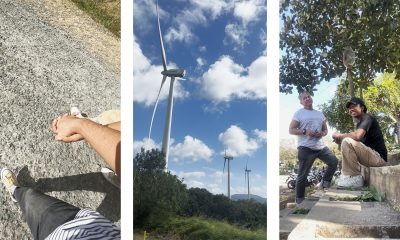
Introducing #llanfairpwllgwnyngyllgogerychwyrn or #llanfairpg, the town with the longest name in #Europe, as discovered during this #LGBT #Wales trip.


When in Wales, one of the must-check places – at least based on tourist recommendations – is this Anglesey town famous for its very long name:the Llanfairpwllgwyngyll, located across the Menai Strait, a short drive or train ride from Bangor.
How’s the place?
@outragemag Introducing #llanfairpwllgwnyngyllgogerychwyrn #llanfairpg, the town with the longest name in #Europe, as discovered during this #LGBT #Wales ♬ original sound – Outrage Magazine
Una, let’s get one thing out of the way: Don’t come here expecting to see or do much. People just come here to take pics of the town’s name… basically.
The name is the one, if not the only attraction.
As FYI: Even locals have a hard time pronouncing the name. We asked someone to do that for us. We were told, though, that there’s a shortened version, Llanfair PG… which isn’t a mouthful na.
Ikalawa, the name was popularized in the 19th century, mainly as a publicity stunt. The town, of course, supersedes this popularized name.
Ikatlo, the name is usually translated to: St. Mary’s Church in the hollow of the white hazel near a rapid whirlpool and the Church of St. Tysilio near the red cave.
The meaning actually revolves around local landmarks, including:
- St Mary’s church,
- the “Swellies” (the pool/hollow of the whirlpool in the Menai Strait)
- St Tysilio’s church
Ika-apat, in truth, this isn’t the longest name for any place. Even Bangkok’s ceremonial name is longer. Then there’s that town in New Zealand.
But this is commonly described as the longest one-word place name in Europe.
So… since the name was crafted for tourism, exactly how many tourists come over? Roughly 200,000 a year. Doesn’t seem much, really, but considering the “offerings” of the place, marami na.
Besides, compared to the tourist numbers under the Marcos administration, marami na yan (!).
But off we go for more LGBTQIA+ rampa…
Destinations
Underground discovery: From Heathrow, commute using the Underground to reach central London
You arrive in Heathrow, the main airport in London, and – like many tourists – you need to head to the center of London for your accommodation. You have many options, like catching a taxi. But you can just take the “regular” train, the so-called Underground.

So… you arrive in Heathrow, the main airport in London, and – like many tourists – you need to head to the center of London for your accommodation. There are, of course, a number of transportation options, from grabbing a cab to taking the express train.
There’s an option that isn’t always advertised: that is, for you to just take the “regular” train, the so-called Underground.
Special thanks to Ms Kayla Garcia for this tip, of course.
@outragemag New to #London and traveling from #Heathrow to the city center? No need to overspend via #taxi or #expresstrain; just take the #LGBT #Underground ♬ original sound – Outrage Magazine
Una, the underground is, as the name suggests, underground. From the arrival area, follow the signs leading to the “Underground”, which is around five minutes walk from where you’d exit after collecting your luggage.
Ikalawa, be careful: it’s basically on the same area as the Express trains, so if you erroneously entered their area, you’d be forced to spend more.
Ikatlo, yung bayad, nagbabago depending sa exact location you’re going to, and time, too. But naglalaro lang sa 6 pounds pababa… usually. Which is much cheaper than the Express trains by a lot. Add na lang to shopping ang natipid… unless anak ka ng politician na male-maletang pera ang dala mo while undergoing your tax-funded UK education…
And ika-apat, you may buy tickets from those machines at the entrance of the station. But this is London, cashless is usual. Pay using PayWave; tap mo lang credit or debit card mo, keri ka na.
Kung rich ka and money is not a problem… avail ka ng less local mode of transportation, kaya mo yan. But for those who believe commercialization of service sucks, and – in the case of transportation – bettering public transport makes better sense than shelling out cash to make rich people in the transportation industry even richer, then… here’s how many locals travel to and from Heathrow. Huwag na pretentious and avail na…
And off we go for more LGBTQIA+ rampa…
Destinations
Off to Bulacan only to be underwhelmed (and stressed) at The Beef Deli-Malolos
#LGBT checking #steakhouse The Beef Deli-Malolos in #Bulacan, only to be underwhelmed and stressed.
Now and then we head outside of Metro Manila to check some of the culinary offerings of wherever we end up at. This is why we know that Silang in Cavite has a LOT to offer (even if it may be considered provincial, and even more than, say, Las Piñas that is part of Metro Manila). And this is why we know that Antipolo has 24-hour venues even if Quezon City or the City of Manila “sleeps”.
The intent to discover affordable yet not-bad steaks – in particular – was what led us to The Beef Deli – Malolos, which claims to offer meats “from Australia to your plate” in Bulacan.
@outragemag #LGBT checking #steakhouse The Beef Deli-Malolos in #Bulacan ♬ original sound – Outrage Magazine
Una, the place is easy to find naman… particularly for those with private vehicles. It is at the vicinity of the entrance to NLEX lang din, so you can access it if you’re getting off or about to enter the expressway (as we did).
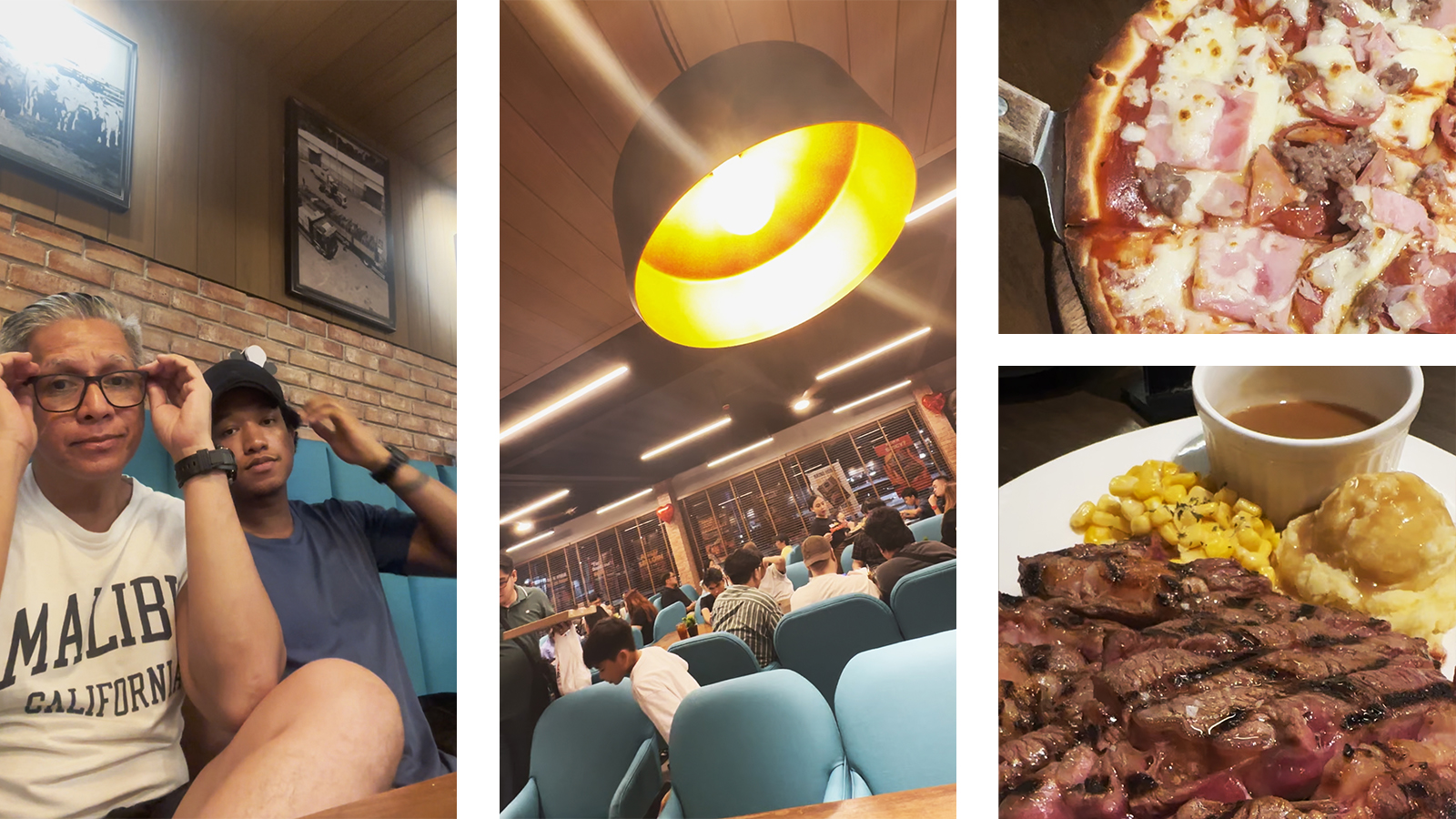
Ikalawa, the venue was masikip, tight. Largely, this was because of not-ideal lay-out that seemed to prioritize being able to accommodate more customers than customer comfort. While there, expect ingay, too; you’re seated too closely to other customers you can eavesdrop.
Ikatlo (and I took this down in my notes, too), the service was REALLY slow. We had to remind the waiters to: set our table (we were seated for a while already), provide us with cutlery, and give us some water. It didn’t help that the two servers who approached us did not know what’s in their menu.
Ika-apat, the food was… hit and miss, with more misses than hits.
The Sweet & Beefy Spaghetti (₱650) was… more sweet, less beefy. Imagine Jollibee’s spaghetti, now make it even sweeter, and you’d get an idea of what was given to us. Particularly since there’s less beef here, and more sausage slices. The accompanying bread also tasted burnt, not grilled.
The Absolutely Meatzza Pizza (₱550) was not just not as meaty (considering its name), but was also too sweet, with a tinapay-like dough.
For the steak, we got the two-for-the-price-of-one Premium Ribeye (₱1,560), cooked MR. Here’s the thing: the steak was okay naman, as it seemed properly seasoned and properly grilled. But when served to us, it was already cold, like it waited in the kitchen. So natulog na ang mantika when served, and slight kadiri na in the mouth.
We didn’t finish the food, so we had them wrapped.
Now, to add drama: when we arrived home, we found that the steak we asked to wrap wasn’t in the take-home bag. I, personally, was annoyed; we didn’t exactly have a good experience there, and then… they didn’t even pack what we already paid.
I contacted the number of the company that’s listed online, and – this is a great part – I received a proper response. I was told that, after some tracing, the leftover food was found. I was also told that, without charging me, they will have the leftover delivered to us the next day.
Yes, after reheating the leftover steak, they had it delivered to us… without charging us (as if I should be thankful for that, LOL). And NOT that I was expecting anything else, but the meat was all they sent; overcooked (due to reheating) stale steak that we didn’t get to enjoy anymore because of The Beef Deli – Malolos. No apology for the bad experience via some kind of compensation like… a serving of French fries man lang.
The place is okay-appearing naman, TBH. But Bulacan has a lot of venues to check, so we’re giving this a hard pass for revisiting na muna. And so off we go in search of more lafangan venues…
The Beef Deli – Malolos is located at G/F Unit 7-10, Andan Enterprises, Inc, 3598 MacArthur Hwy, Malolos, 3000 Bulacan Province. For more information, contact 0905 283 8461 or email beefdelimalolos@gmail.com.

Checking Llanfair PG, the town that’s long in name and not much else

Underground discovery: From Heathrow, commute using the Underground to reach central London

Sun Life appoints Bianca Ilibasic as Managing Director, Sun Life Global Solutions

Living with cats does not worsen asthma in children, suggests study

Off to Bulacan only to be underwhelmed (and stressed) at The Beef Deli-Malolos

Manulife continues legacy of service in PH with Impact Week 2026

Could your oral health be affecting fertility?

Maintaining a healthy heart may require regular doses of positivity

Checking the historic Charlie wanton resto in Mandaluyong

Manulife launches GoalReady health solutions
Off to Bulacan only to be underwhelmed (and stressed) at The Beef Deli-Malolos
Checking the historic Charlie wanton resto in Mandaluyong
Maintaining a healthy heart may require regular doses of positivity
Could your oral health be affecting fertility?
Manulife continues legacy of service in PH with Impact Week 2026
Underground discovery: From Heathrow, commute using the Underground to reach central London
Sun Life appoints Bianca Ilibasic as Managing Director, Sun Life Global Solutions
Living with cats does not worsen asthma in children, suggests study
Checking Llanfair PG, the town that’s long in name and not much else

-
 Destinations3 weeks ago
Off to Bulacan only to be underwhelmed (and stressed) at The Beef Deli-Malolos
-
 Destinations4 weeks ago
Checking the historic Charlie wanton resto in Mandaluyong
-
 NewsMakers4 weeks ago
Maintaining a healthy heart may require regular doses of positivity
-
 NewsMakers3 weeks ago
Could your oral health be affecting fertility?
-
 Product Showcase3 weeks ago
Manulife continues legacy of service in PH with Impact Week 2026
-
 Destinations2 weeks ago
Underground discovery: From Heathrow, commute using the Underground to reach central London
-
 Product Showcase2 weeks ago
Sun Life appoints Bianca Ilibasic as Managing Director, Sun Life Global Solutions
-
 Pet Care2 weeks ago
Living with cats does not worsen asthma in children, suggests study