
NewsMakers
Chopsticks undergo overhaul
Future Sticks are a safe, high tech, newly-patented version of the chopsticks. They have a traditional tapered end, but the real kicker is a newly patented eating end with teeth that increase the gripping power of the chopstick. This makes it possible for everyone to enjoy using chopsticks with ease and confidence.


The humble chopstick, used for over 5,000 years by billions of people the world over, just underwent a major overhaul. Future Sticks Inc. has introduced chopsticks with a revolutionary new twist (literally) that makes them more enjoyable and easy to use – even for children, rank beginners, and those with dexterity issues – while decreasing health risks and promoting sustainability.
Future Sticks are a safe, high tech, newly-patented version of the chopsticks. They have a traditional tapered end, but the real kicker is a newly patented eating end with teeth that increase the gripping power of the chopstick. This makes it possible for everyone to enjoy using chopsticks with ease and confidence.
Anyone who has sheepishly asked the waiter for a fork and knife while their dining companions used chopsticks like pros will welcome this innovation, as will those with arthritis, hand tremors and other dexterity challenges. “Children love Future Sticks too,” said Future Sticks CEO and founder Greg Resnick. “They let them eat with more confidence while they’re learning the skill of eating with chopsticks. And they’re fun while being functional.”
Resnick added that even for the most experienced chopstick user there are certain dishes that are difficult to eat, such as noodles and hard shelled seafood. “Future Sticks solve that problem. If they wish, experienced users can also flip the Future Sticks over and use the traditional side to eat with.”
Composed of a special transparent plastic polymer called ULTEM, a SABIC, USFDA certified food grade plastic, Future Sticks are capable of withstanding temperatures in excess of 338 F (170 C) with no damage, and are virtually unbreakable. “They can be used to pick up food from hot pans up to 400 F,” said Resnick.
Future Sticks also eliminate health risks that reusable or disposable chopsticks can pose. They are dishwasher safe and can even be sterilized in an autoclave. “The special polymer with which they’re made eliminates any health concerns associated with current alternatives,” said Resnick. “When heated, Future Sticks won’t release BPA, which has been linked to impaired thyroid function, decreased fertility, and even cancer.”
Resnick added that a large number of disposable chopsticks have been shown to contain either mold or bleach, which can easily leach into food. This isn’t a concern when using Future Sticks.
Sustainability is another issue that the makers of Future Sticks aim to meet head-on. “In China and Japan alone, more than 70 billion pairs of disposable chopsticks are used every year,” Resnick explains. “Their production is contributing to global deforestation, with more than 35 million trees cut down each year to make them. Further, there’s concern about the impact of disposable sticks on waste streams and disposal sites. The good news is that Future Sticks will last longer than any reusable chopsticks currently on the market. One pair of Future Sticks can easily replace a hundred or more disposable or even ‘reusable’ pairs.”
A major advantage of Future Sticks is that they can be carried to restaurants, so patrons are not forced to use either wooden disposables or previously used sticks that are hard to fully clean. Future Sticks are available in several sizes to accommodate individual users, and can even be purchased in portable individual sets with each set in its own carrying case. These portable sets make great giveaways and promotions, and when purchased in bulk, can be provided with custom labels.
Future Sticks Inc. is a privately funded start-up committed to using only American labor to create and market its products. The company is the sole patent holder in the US and China of these innovative chopsticks.
“One of our goals is to enable everyone to enjoy the experience and culture of Asian dining by offering a safe, high-tech version of the chopstick. Another major goal is to significantly decrease the use of disposable chopsticks by offering an environmentally friendly, reusable alternative. We also aim to promote the healthful benefits of using chopsticks: eating more slowly, eating less, and truly savoring the meal,” Resnick said.
It all adds up to a future – and a present – which everyone can embrace.
For more information about Future Sticks, Inc., visit www.FutureSticks.com.


NewsMakers
Common drug class may increase risk of heart disease
The risk of cardiovascular disease increased in line with how much anticholinergic medication the participants used each year. Those with the highest exposure had a 71 per cent higher risk of a cardiovascular event than people who did not use anticholinergic medication at all.

People who use drugs with anticholinergic effects, including certain antidepressants, drugs for urinary incontinence and common antihistamines, are at higher risk of developing cardiovascular disease.
This is shown in a study from Karolinska Institutet published in BMC Medicine.
Anticholinergic drugs reduce the effect of the neurotransmitter acetylcholine and are commonly prescribed to middle-aged and older people. This large group of drugs includes antihistamines used for allergic conditions, anxiety or insomnia, drugs for urinary incontinence, and certain antidepressants, where tricyclic antidepressants have a strong anticholinergic effect, whereas SSRIs have a weaker effect. A high cumulative use of these drugs, referred to as anticholinergic burden (see fact box), has previously been linked to impaired cognitive ability.
May affect heart regulation
The new study suggests that the drugs may also affect the parasympathetic nervous system and thereby the regulation of the cardiovascular system. The results show that it may be important to monitor the total drug burden in everyday clinical practice.
The study included more than 500,000 people in Stockholm, Sweden, who were 45 years of age or older and had no prior cardiovascular disease, except for hypertension, at the start of the study. The researchers followed the participants for up to 14 years and analysed how the use of anticholinergic drugs was associated with the development of cardiovascular disease.
“Many of these drugs are used by older people and by people with multiple medical conditions. We wanted to investigate whether the total exposure had any significance for the risk of developing cardiovascular disease over time,” says Nanbo Zhu, postdoctoral researcher at the Department of Neurobiology, Care Sciences and Society, Karolinska Institutet.
71 per cent higher cardiac risk
The study showed that the risk of cardiovascular disease increased in line with how much anticholinergic medication the participants used each year. Those with the highest exposure had a 71 per cent higher risk of a cardiovascular event than people who did not use anticholinergic medication at all. The association was seen for all types of cardiovascular disease but was particularly clear for heart failure and various forms of arrhythmia.
“Our results indicate that the cumulative drug burden can affect heart regulation, not only in the short term but also over the long term. This does not mean that the drugs should always be avoided, but that exposure should be monitored carefully,” says Hong Xu, assistant professor at the Department of Neurobiology, Care Sciences and Society.
The researchers point out that the study is observational, meaning it cannot establish a causal relationship. Other factors, such as underlying diseases, may also influence the associations.
The work was carried out within the Stockholm CREAtinine Measurements project in collaboration between several research groups at Karolinska Institutet and Region Stockholm. The study was funded by the Swedish Research Council, the Center for Innovative Medicine Foundation, and other foundations. Some researchers report assignments for the pharmaceutical industry, which are disclosed in the scientific publication.
NewsMakers
Mindfulness practices found to significantly reduce depression symptoms, especially for those with early-life adversity
Mindfulness interventions help by regulating our emotions better when different challenges come up. For someone who has experienced childhood neglect or abuse, mindfulness training can help us make sense of that and respond skillfully to this moment in time.

A new study reveals that mindfulness practices may significantly reduce depression symptoms, particularly in people who have experienced early-life adversity, such as childhood abuse and neglect.
Led by Eric Loucks, professor of medicine, epidemiology, and of behavioral and social sciences and director of the Mindfulness Center at Brown, the study enrolled 201 participants, 101 of whom were randomized into the Mindfulness-Based Blood Pressure Reduction Program, while 100 were randomized into an enhanced usual care control, which included home blood-pressure monitors, physician access and health-education materials. Researchers also had a measure of participants’ early-life adversity, particularly their exposure to abuse or neglect.
Loucks and his team followed participants for six months to assess changes in blood pressure, health behaviors and mental health, finding that those in the mindfulness program showed significant improvements in their depression symptoms. Additionally, participants who experienced childhood neglect showed greater improvements in depression symptoms than those who had not. A similar, though less pronounced, trend was observed among people with a history of childhood abuse.
“In this program, that was primarily designed to lower blood pressure while addressing whole-person health, we also saw that mental well-being, particularly around depression symptoms, improved in participants that went through the program,” Loucks said. “The findings suggest that cultivating mindful self-regulation skills–such such as self-awareness, attention control and emotion regulation–may help interrupt maladaptive patterns shaped by past experiences.”
Over the last 15 years, Loucks has been studying social determinants of health such as early-life adversity and its impacts on cardiovascular health, body mass index and blood pressure. “I came to a point where I wanted to not just document it, but do something about it, and I wondered if mindfulness training might help,” he said. “I’d gone through a lot of mindfulness training myself outside of work and started to get trained up in mindfulness programs that are specific to health contexts.”
Loucks began to study the Mindfulness-Based Stress Reduction program, running it through two clinical trials that were funded by the NIH and finding that it reduced blood pressure in both trials. He also wanted to look at the intervention from a whole-person perspective.
“If we look at everyday folks out in the world, those that had exposure to early life adversity, like abuse and neglect, tend to have worse mental health and also worse cardiovascular health,” Loucks said. “Mindfulness interventions help by regulating our emotions better when different challenges come up. For someone who has experienced childhood neglect or abuse, mindfulness training can help us make sense of that and respond skillfully to this moment in time.”
Loucks discussed this work during a keynote address at the U.S. DOHaD Society this year. “It felt like a coming-home moment to see that this intervention, originally developed to address psychosocial factors that influence health, had even stronger effects among people with early-life adversity, particularly on depression,” he said. “It’s been about a 15-year arc of research that culminated in these findings.”
NewsMakers
High-fiber diet linked to reduced risk of heart disease in night shift workers
A moderate intake of about 19 grams of fibre per day was linked to a lower risk for those who worked night shifts regularly. For those who worked night shifts sporadically, about 15 grams was enough. The current recommendation for adults is about 25 grams of dietary fibre per day.
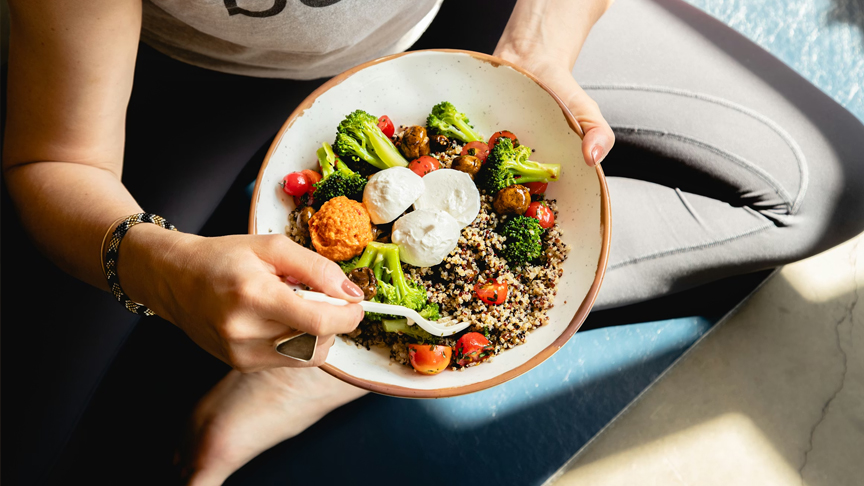
People who work at night have a higher risk of coronary artery disease, a type of heart disease. A new study suggests that a higher fibre intake in the diet may help reduce this risk. The study included over 220,000 adults in the UK and is published in the European Journal of Epidemiology.
The human body is built to sleep at night. This means that working during the night goes against this natural pattern, and can place additional strain on the body, including the heart. Previous research has linked night work to an increased risk of coronary artery disease. Since night work is often unavoidable, the researchers wanted to investigate whether certain dietary habits might have a protective effect.
More fibre associated with lower risk
The researchers used data from 220,000 adults in the UK Biobank (2006–2010) and divided the participants into three groups:
- Day workers
- Shift workers who worked night shifts sporadically
- Regular night shift workers
The participants had completed a detailed questionnaire about their dietary habits. During a follow-up after about 12 years, it was found that night shift workers who consumed little fibre in their diet had a higher risk of coronary artery disease than those who consumed more fibre.
“A moderate intake of about 19 grams of fibre per day was linked to a lower risk for those who worked night shifts regularly. For those who worked night shifts sporadically, about 15 grams was enough. The current recommendation for adults is about 25 grams of dietary fibre per day,” says Diana Nôga, lead author and researcher at Uppsala University.
The researchers stress that the figures from the study are not official dietary recommendations. But they do show a pattern in this UK study: a higher dietary fibre intake was linked to a lower risk of heart disease among night shift workers.
“The link between fibre and a lower risk of heart disease is not just because those who eat more fibre generally have a healthier lifestyle. We know this because we adjusted for various lifestyle factors in the analysis. One possible explanation, supported by previous research, is that fibre in the diet can improve intestinal flora and also reduce lipids, which can be particularly good for the heart in people who work at night,” says Christian Benedict, senior author of the study and Professor of Pharmacology at Uppsala University.
Dietary fibre can support heart health
According to the researchers, an increased intake of fibre-rich foods such as whole grains, vegetables, fruit, legumes and lentils may be a simple way to improve heart health for night shift workers. However, this requires that you do not have any medical obstacles to doing this, such as chronic gastrointestinal diseases.
“Dietary changes should be seen as a complement to, not a substitute for, other heart health-promoting habits such as not smoking, remaining physically active, and getting enough sleep,” says Diana Nôga.

Common drug class may increase risk of heart disease

Mindfulness practices found to significantly reduce depression symptoms, especially for those with early-life adversity

Exercise to treat depression yields similar results to therapy

Aerobic exercise may be most effective for relieving depression/anxiety symptoms

High-fiber diet linked to reduced risk of heart disease in night shift workers

Two types of underconfidence linked to anxiety and gender

Checking the charm of Baguio City’s Café by the Ruins

Sleeping in on weekends may help boost teens’ mental health

Breastfeeding may lower mums’ later life depression/anxiety risks for up to 10 years after pregnancy

Creativity feels great — until tomorrow
Creativity feels great — until tomorrow
High-fiber diet linked to reduced risk of heart disease in night shift workers
Sleeping in on weekends may help boost teens’ mental health
Exercise to treat depression yields similar results to therapy
Checking the charm of Baguio City’s Café by the Ruins
Two types of underconfidence linked to anxiety and gender
Aerobic exercise may be most effective for relieving depression/anxiety symptoms
Mindfulness practices found to significantly reduce depression symptoms, especially for those with early-life adversity
Breastfeeding may lower mums’ later life depression/anxiety risks for up to 10 years after pregnancy
Common drug class may increase risk of heart disease

-
 NewsMakers3 weeks ago
Creativity feels great — until tomorrow
-
 NewsMakers3 weeks ago
High-fiber diet linked to reduced risk of heart disease in night shift workers
-
 NewsMakers3 weeks ago
Sleeping in on weekends may help boost teens’ mental health
-
 Wellness3 weeks ago
Exercise to treat depression yields similar results to therapy
-
 Destinations3 weeks ago
Checking the charm of Baguio City’s Café by the Ruins
-
 NewsMakers3 weeks ago
Two types of underconfidence linked to anxiety and gender
-
 Wellness3 weeks ago
Aerobic exercise may be most effective for relieving depression/anxiety symptoms
-
 NewsMakers2 weeks ago
Mindfulness practices found to significantly reduce depression symptoms, especially for those with early-life adversity