
Pet Care
How to help manage pet separation anxiety
To help pet parents identify separation anxiety in their pets and embrace alone time, consider these tips from Dr. Crista Coppola, PetSmart’s consulting animal behaviorist and separation anxiety expert.


For more than a year, working from home and keeping social circles small due to COVID-19 has meant people have been able to spend more time with their pets. However, as more people are vaccinated and restrictions loosen across the country, it’s likely many are spending less time at home with their pets. As a result, pet parents should be prepared to spot the signs of separation anxiety and help their pets manage.
When left at home alone, pets can exhibit behaviors that could indicate they’re experiencing separation anxiety. It’s not a new problem, but it can become more pronounced as pet parents begin to spend less time at home, whether they’re returning to work full-time or just leaving the house more often. It may be especially challenging for pets that found their forever homes during the pandemic, as being alone may be a stark contrast to what they’ve become accustomed to. In these cases, pets may struggle to learn how to cope with being by themselves.
To help pet parents identify separation anxiety in their pets and embrace alone time, consider these tips from Dr. Crista Coppola, PetSmart’s consulting animal behaviorist and separation anxiety expert.
How to Identify Separation Anxiety
Changes in behavior are some of the most common indicators of separation anxiety. These behaviors are coping mechanisms and can include excessive barking or whining, destruction near exit points or windows, having accidents around the house, hyper salivating, pacing, decreased appetite and depression. To better understand what your pet is experiencing, consider setting up a video camera when you leave to see how he or she behaves when you’re not there.
Ways to Prepare Your Pet for Separation
Unpredictability has been shown to add stress for many animals, including dogs, Coppola said. Routines, however, can help many pets cope with stressful situations. Because a vacation or long weekend getaway involves a change in your pet’s routine, these seemingly small changes can make him or her susceptible to separation anxiety. If you know change is coming, slowly introduce your pet to the idea of being alone beforehand to help your four-legged friend prepare. Start by taking short trips outside your home without your pet – even if just for a few minutes – and consider leaving treats or toys to help make the alone time more enjoyable.
When you are ready to leave the house, set up a cozy, inviting space for your pet, where he or she can’t destroy items or get hurt trying to escape. Consider a non-carpeted area in case of accidents or install a doggie door to allow for going outside when necessary. Prior to any period of alone time, mentally and physically engaging your pet by going for a walk or run, or working on quick trick training, can make it more likely he or she spends at least some of the time you’re gone resting.
While you’re gone, Coppola recommends providing your pets with enrichment activities such as puzzles, chews and calming aids.
Solutions for Coping with Anxiety
If your pet is excessively barking or exhibiting destructive behaviors, never punish him or her and avoid expressing disappointment or frustration, Coppola said. It is understandable to feel this way, but it can upset your pet further and add to the stress he or she may already be feeling. Instead, spend time having fun together when you are home to help ease the transition by gradually introducing your pet to the amount of time left alone.
Learn more and find additional solutions to help deal with separation anxiety at petsmart.com/newnormal.







Pet Care
Living with cats does not worsen asthma in children, suggests study
Children living with a cat had similar asthma severity, exacerbation, asthma control, and lung function to children living without cats in the short term.

Asthma is the most common chronic disease and one of the main causes of hospitalization among children. The Global Asthma Network has estimated that its global prevalence is 9.1% for children and 11.0% for adolescents, but this percentage varies greatly between countries, regions, and environments. Worldwide, the highest prevalence of pediatric asthma (above 20%) occurs in the British Isles and in parts of Oceania and the Middle East. Known risk factors for developing asthma include exposure to air pollution and smoking, childhood viral infections, obesity, and pre-existing allergies like eczema or hay fever.
Patients anecdotally self-report that exposure to animal dander appears to trigger asthma attacks. However, clinical and epidemiological data on this is so far contradictory, coming mostly from small studies on subgroups that aren’t necessarily representative of the wider population. Now, researchers have demonstrated in Frontiers in Allergy that sharing a home with cats may not worsen the outcomes of children with asthma and allergies.
“Here we show in a… cohort of children in Sweden with asthma and allergies, that children living with a cat had similar asthma severity, exacerbation, asthma control, and lung function to children living without cats in the short term,” said corresponding author Dr Resthie R Putri, a postdoctoral fellow at Karolinska Institutet in Stockholm.
“We also did not see any differences in asthma outcomes related to the number of cats, the cat’s sex, or the cat’s age.”
Large pediatric sample
In 2023, Putri and colleagues began a study on a cohort of 30,277 children – between four and 17 years old at the time – born between 2006 and 2020 and diagnosed with asthma or an airway allergy. They followed these over 24 months until 2024 to track asthma outcomes, drawing records on diagnoses, emergency visits, prescribed medications, and asthma control test and spirometry tests from linked data in the Swedish National Patient Register, Prescribed Drug Register, and National Airway Register.
In Sweden, registration in the National Cat Register has been mandatory since 2023 for all pet cats born after 2008. For each child, the authors noted whether the parental household had at least one cat in 2023, as was true for 9.4% of the children.
Cats don’t worsen asthma in kids
The results showed that there was no significant association between exposure to pet cats and asthma outcomes. For example, moderate-to-severe asthma – based on prescribed asthma medications – occurred in 9.6% of the cat-exposed children and 10.1% of the non-exposed children. Asthma ‘exacerbation’ (also known as an attack or flare-up) occurred in 3.3% of the cat-exposed children and 3.5% of the non-exposed children.
Among a subset of 1,428 children for whom asthma control and lung spirometry data were available, 97 (6.8%) lived with cats. There were no significant differences between the two groups in two common measures of lung function.
“One possible explanation is that cat allergen exposure is very common, even outside the home. Children who do not have cats at home may still be exposed in shared environments such as schools or public transportation, which could explain why we didn’t see a difference,” said Putri.
“While these large-scale findings provide valuable insight, we lacked data on which allergens the children were sensitized to, and because the National Cat Register is relatively new, some children living with cats may have been misclassified as unexposed,” she cautioned.
Pet Care
Tips to keep pets safe and happy no matter the season
The American Veterinary Medical Association (AVMA) is reminding everyone to keep pets safe no matter the season, and to think twice before gifting a pet as a surprise.

Special occasions can be a magical time, but they can also present hidden pet hazards and difficult decisions for pet owners and gift-givers. The American Veterinary Medical Association (AVMA) is reminding everyone to keep pets safe no matter the season, and to think twice before gifting a pet as a surprise.
“Holiday celebrations often mean delicious foods, beautiful decorations, and friends and family, which can be wonderful for us but may pose unexpected risks to our pets,” says Dr. Michael Q. Bailey, president of the AVMA. “The best gift you can give your pet… is the gift of good health and safety, which means keeping seasonal hazards out of reach, providing a quiet space away from the hustle and bustle, and ensuring emergency plans are in place in case the unexpected happens.”
Common hazards for pets include chocolate, baked goods (especially those containing the sugar substitute xylitol), table scraps, and certain seasonal plants like lilies, holly, and mistletoe. Tinsel, candles, electrical cords, and trees can also lead to injuries or worse if pets decide to investigate too closely.
Thinking about gifting a pet? Think again.
While the idea of a new puppy or kitten under the tree may warm hearts, the AVMA cautions against surprising someone with a live animal. Pets are long-term commitments that require a significant amount of time, planning, financial resources, and emotional investment.
“Bringing a pet into someone’s life is a decision that should never be made impulsively, and never without the foreknowledge of the recipient,” says Dr. Bailey. “Pets can bring immense joy, but they also require daily care, training, veterinary visits, and love for many years. A better option might be wrapping up a collar, toy, or gift certificate, and involving the future pet owner in choosing their new companion when the time is right.”
Instead of gifting a live animal, the AVMA recommends more thoughtful alternatives, such as:
- A leash or collar with a note promising a trip to a shelter or reputable breeder
- Books on pet care or breed characteristics
- A donation in the recipient’s name to a local animal shelter
Healthy gift ideas for pets
If your own pets are on your holiday list, the AVMA suggests practical and healthy gifts, such as:
- A veterinary wellness exam
- Toys that encourage exercise and mental stimulation
- Nutritional treats made for pets
- Updated parasite prevention
- Pet insurance
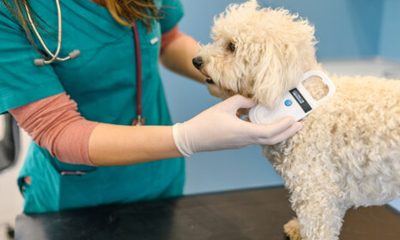
- A microchip (or updating existing chip info)
“Even something as simple as a microchip can be a lifesaving gift if your pet ever becomes lost,” adds Dr. Bailey. “It’s a gift that lasts a lifetime, and helps to ensure that you will be reunited if you and your pets become separated.”
For more holiday pet safety tips and resources, visit AVMA.org/holiday.
Pet Care
Plant-based dog foods are better for the environment than red meat options
Plant-based diets for pets had the lowest impact across all measures of environmental impact. This included the land needed to produce them, greenhouse gas emissions, the polluting effects of production on soil and water reservoirs, and freshwater withdrawal.

A study, led by experts at the University of Nottingham, has found that the production of meat-based pet foods has a much greater impact on the environment in comparison to plant-based alternatives.
The study, led by Rebecca Brociek from the School of Veterinary Medicine and Science, and published in Frontiers in Nutrition – Nutrition and Sustainable Diets, showed that plant-based diets for pets had the lowest impact across all measures of environmental impact. This included the land needed to produce them, greenhouse gas emissions, the polluting effects of production on soil and water reservoirs, and freshwater withdrawal.
Pet food production contributes substantially to global environmental issues, driven largely by animal-derived ingredients.
In this study, experts quantified the environmental impact of 31 commercially available dry dog foods purchased in the UK, categorised as plant-based, red-meat based and veterinary-renal diets.
The environmental metrics were estimated using life cycle assessment datasets and adjusted for ingredient makeup, energy density and differences in moisture content, which were mostly taken from the dog food packaging.
The results showed that plant-based diets had the lowest impact across all measures of environmental impact. Poultry-based and veterinary diets were intermediate, while beef and lamb-based foods had substantially higher impact compared to all other foods.
For example, over nine years of adult life, a 20kg dog fed a beef-based diet was estimated to require 57 football fields worth of land to grow their food (versus 1.4 fields for plant-based).
This latest study comes after a previous study where the team showed that plant-based pet food sold in the UK provided similar nutrition to meat-based food.
“Our findings show that there is a much greater environmental impact when producing meat-based pet food.
“We have already show in our previous work that plant-based diets at the point of purchase are roughly equivalent to others. This next paper is a case study of 31 supermarket-available dog foods, giving dog owners who factor sustainability into their purchases, guidance on how to also reduce their environmental pawprint,” says Rebecca, the lead author on the study.

Sun Life appoints Bianca Ilibasic as Managing Director, Sun Life Global Solutions

Living with cats does not worsen asthma in children, suggests study

Off to Bulacan only to be underwhelmed (and stressed) at The Beef Deli-Malolos

Manulife continues legacy of service in PH with Impact Week 2026

Could your oral health be affecting fertility?

Maintaining a healthy heart may require regular doses of positivity

Checking the historic Charlie wanton resto in Mandaluyong

Manulife launches GoalReady health solutions

Investing in employee health leads into a stronger, more productive workplace

Checking the wind turbines of Pililla… since there’s not much else being offered

Healthier brains may be more resilient to early Alzheimer’s disease

Checking the café vibe of Filipino-ish Yellow Bird resto

Grape consumption linked to changes in gene expression and improved skin health

Viagra could hold key to halting Peyronie’s disease

Heart disease risk may start in the womb, study finds

Is ‘yo‑yo dieting’ really harmful? New analysis challenges long‑standing assumptions about weight cycling
Manulife launches GoalReady health solutions
Off to Bulacan only to be underwhelmed (and stressed) at The Beef Deli-Malolos
Checking the historic Charlie wanton resto in Mandaluyong
Checking the wind turbines of Pililla… since there’s not much else being offered

-
 NewsMakers4 weeks ago
Healthier brains may be more resilient to early Alzheimer’s disease
-
 Destinations4 weeks ago
Checking the café vibe of Filipino-ish Yellow Bird resto
-
 NewsMakers4 weeks ago
Grape consumption linked to changes in gene expression and improved skin health
-
 NewsMakers4 weeks ago
Viagra could hold key to halting Peyronie’s disease
-
 NewsMakers4 weeks ago
Heart disease risk may start in the womb, study finds
-
 NewsMakers4 weeks ago
Is ‘yo‑yo dieting’ really harmful? New analysis challenges long‑standing assumptions about weight cycling
-
 Product Showcase3 weeks ago
Manulife launches GoalReady health solutions
-
 Destinations1 week ago
Off to Bulacan only to be underwhelmed (and stressed) at The Beef Deli-Malolos