
NewsMakers
FAQs on COVID-19 and chronic medical conditions
Serious complications from COVID-19 are most likely to develop in elderly people, as well as those who have weakened immune systems, or who are immunocompromised.


Serious complications from COVID-19 are most likely to develop in elderly people, as well as those who have weakened immune systems, or who are immunocompromised, says infectious disease specialist Alan Taege, M.D. from Cleveland Clinic in the U.S.
When people are immunocompromised, their body has a reduced ability to fight off and recover from infections. This could be because they have a certain chronic condition that affects the immune system, or because of certain medications they are taking. For example, some cancer treatments and medications used for autoimmune conditions weaken a person’s immune response, as do medicines that people take after having an organ transplant.
Unfortunately, there is not yet a vaccine that can prevent COVID-19, so we cannot prevent the disease, but there are many things you can do to minimize your risk such as social distancing, frequent handwashing and routinely disinfect surfaces in your home, such as doorknobs, faucet handles and cell phones.
It is especially important for older adults and those with underlying medical conditions to avoid being exposed to the virus in the first place. It’s spread by droplets that come out the nose and mouth of someone who’s infected when they cough or sneeze, so you can get COVID-19 from being in close contact (within about 2 metres) with an infected person who has these symptoms. You might also be able to get it from touching a surface that’s been contaminated with infected droplets.
It is also important to maintain healthy habits, like eating well, getting enough sleep and managing your stress levels, in order to keep your immune system as strong as it can be.
Dr. Taege has answered some of the most common questions about protecting the most vulnerable populations:
Q: Who is most at-risk for getting severely sick from the coronavirus?
A: The coronavirus that causes COVID-19 is new, so we don’t yet understand exactly how it impacts specific groups of high-risk people. But those who are thought to be most susceptible to serious complications of COVID-19 include people who are older than 65, or are taking medications that suppress the immune system or suffer from conditions such as cancer, hypertension. lung disease, diabetes, heart disease or other conditions that compromise the immune system.
Q: Why are people over the age of 65 more at risk?
A: Our immune system naturally becomes weaker as we age, which makes it harder for our bodies to fight off infections.
Q: Should someone who is immunocompromised still go to medical appointments?
A: Call your healthcare provider and ask. Some appointments might be able to be rescheduled, or handled by phone, or if available, virtually through a telemedicine visit or by phone. Healthcare facilities are taking special precautions to protect the health and safety of patients during this time.
Q: Should someone on immunosuppressing medications stop taking them?
A: Do not stop taking your medications without talking to your healthcare provider first. Just as there is risk associated with having a compromised immune system, there is also risk associated with stopping medication suddenly and potentially having disease flares. If you have questions or concerns, or if you become sick, talk with your doctor.
Q: In addition to the advice on hygiene, social distancing and all of the other precautions given to the general public, what extra steps could a vulnerable person take to prepare for a COVID-19 outbreak in the community?
A: Consider the following:
Ask your healthcare provider if it’s possible to get an advance supply of your medications, in case there is an outbreak in your community and you need to stay home for more than a few weeks. You can also ask your healthcare provider or pharmacy if ordering medications online and having them shipped to your home is an option.
Have enough groceries and household supplies on-hand so that you could comfortably stay home for a few weeks if you had to. Many grocers offer online ordering and delivery, which could also help you avoid having to go out.
Talk to your doctor to make sure you are up to date on your recommended vaccinations, such as the pneumonia and flu shots, which can help prevent those serious illnesses. These will not protect you against COVID-19, but they will protect you from other infections that could require you to seek medical care.
Make a plan for who will take care of you if you do get sick.
If you have a chronic condition and live alone, ask family members, friends or neighbors to check on you regularly during an outbreak. Ask them to call or contact you through email or social media.
Q: How can someone help a loved one who is in the high-risk category?
A: You can start by checking in on your love one’s well-being frequently via phone, email or social media. You might also consider:
Offering to pick up groceries or prescriptions and drop them off at your loved one’s doorstep so they do not have to go out.
Learning what medications your loved one is taking, and helping them get extra medication and supplies, if possible.
If your loved one is in a hospital or long-term care facility, check ahead of time to see if they have restrictions on visitation. And never visit when you’re sick.


NewsMakers
Telling people they might lose motivates more than telling them they might win, research shows
How managers choose to frame problems directly influences employees’ motivation to speak up at work. For managers, this is an insightful approach for building more open and collaborative teams.

Athletes say they hate to lose more than they love to win. New research finds the same sentiment is shared in organizations.
A Virginia Tech researcher and his colleagues discovered that when managers frame work problems as a potential loss, employees are more likely to take action than when those problems are framed as potential gains. The research also revealed that when the potential loss impacts a larger group, employees are more likely to take action in the form of speaking up to a supervisor in hopes of finding a solution. The findings were recently published in the Journal of Applied Psychology.
For managers, this research suggests that framing work problems as potential losses can influence employees to speak up more.
“Employee voice occurs when suggestions are made to improve organizational functioning,” said Phil Thompson, associate professor in the Pamplin College of Business Department of Management. “From an organizational perspective, the positive outcomes of employee voice include improved performance, effectiveness, and workplace safety. From an employee level, speaking up is positively related to creativity, innovation, engagement, and ethical behavior.”
At its core, this research shows that how managers choose to frame problems directly influences employees’ motivation to speak up at work. For managers, this is an insightful approach for building more open and collaborative teams.
“When managers say, ‘If we don’t get this done, not only will you lose the $5,000 bonus, but everybody in this work group is going to lose a $5,000 bonus,’ it magnifies an employee’s motivation to act in a proactive way,” said Thompson. “This suggests that framing work problems as what will be collectively lost – compared to what can be individually lost – makes employees want to speak up more.”
Thompson was part of a research team led by Jeffery Thomas and Jonathan Booth from The London School of Economics and Mark Bolino from Oklahoma University. Together they analyzed responses from nearly 2,000 full-time employees, MBA students, and employee-supervisor pairs for their experience in situations where work problems were framed as either a gain or a loss. Across three different studies, framing something as a loss yielded employees to voice a work suggestion more.
For example, a manager dealing with a reputational crisis of their team, such as a product quality issue, can frame the problem in a way to spark helpful employee suggestions on how to resolve the issue. For example, instead of saying “if this product has great quality, our company will look really good” a manager saying “if this product is not up to quality standards, our reputation will be damaged” carries more weight for the team. When this reputational risk is shared by everyone, employees are more willing to step forward to help the problem.
In the first study, participants were asked to think about a problem at work that was significant for them. From there, they were randomly assigned to write about the potential losses or gains from that problem. They were also asked to indicate how likely they were to talk about these problems to their supervisor. Participants who reflected on their potential losses showed a 16 percent higher willingness to speak up compared to those who focused on the potential gains.
When it came to the MBA students, they read a fictional performance review scenario where a workplace problem was described. They then rated how willing they would be to speak up about that scenario if they were in the situation. One example suggested that the entire team might fall short of its goals if an issue was not addressed. This specific scenario yielded the most likelihood of speaking up 35 percent more than the scenario’s suggesting that only they would miss their goal, supporting the research’s findings that an employee is more likely to speak up when the loss impacts more people.
The third study looked at employee-supervisor pairings to understand how these relationships play out in the real world. Using pairings from across three industries, employees reported a workplace problem they encountered and their supervisor rated how often that employee spoke up on the job. While the first two studies involved hypothetical scenarios, this real-world evidence showed that employees were 8-10 times more likely to speak up when issues were framed as a potential collective loss compared with a potential collective gain.
“This research is really geared toward managers so they can facilitate and understand how and why their employees will speak up,” said Thompson. “You can talk about the issue, but it always ends in terms of how we frame things.”
NewsMakers
Yoga practice could reduce blood pressure in people with obesity
People who practiced yoga had a significant decrease in blood pressure, with systolic blood pressure lowered by an average of 4.35 mmHg and diastolic blood pressure by 2.06 mmHg.

Practicing yoga could help people with overweight or obesity improve their cardiometabolic health, according to a study in the open-access journal PLOS Global Public Health by Widya Wasityastuti from the University of Edinburgh, Scotland, and colleagues.
Yoga is a popular form of exercise around the world, and is a gentle and accessible form of exercise for many people. To better understand the potential health benefits of yoga, the authors of this study performed a meta-analysis, examining 30 studies of yoga for its cardiometabolic benefits. They focused on studies which examined outcomes for blood pressure, lipid profiles, glucose homeostasis, markers of inflammation, and measures of antioxidants, and those which examined people with body-mass index over 23 for Asian countries, and 25 for other countries, indicating that participants had overweight or obesity. Of the 30 studies considered, 23 were conducted in Asian countries, while the remaining studies were from the United States, Germany, and Australia.
Across the 30 studies and a total of 2,689 participants, the authors found that people who practiced yoga had a significant decrease in blood pressure, with systolic blood pressure lowered by an average of 4.35 mmHg and diastolic blood pressure by 2.06 mmHg. They also found modest beneficial effects on low- and high-density lipoproteins, types of cholesterol that have been linked to an increased risk of stroke.
The authors note that the studies analyzed were not specifically recruiting people with obesity, and there was no dose-response measured, so it is unknown how much yoga is needed to produce these effects, though the studies they analyzed favored practice of at least 180 minutes per week.
The studies also focused heavily on Asian participants, and practitioners with comorbidities were excluded from analysis. Finally, it’s important to note that due to the nature of this study, causality cannot be confirmed here despite the correlations found.
Further studies will be needed to understand whether yoga can provide similar benefits to other populations, as well as people with co-morbidities such as diabetes or heart disease.
The authors suggest that while more high-quality trials are needed, the meta-analysis supports potential benefits of yoga for cardiometabolic health in people with overweight and obesity.
The authors summarize: “Our review suggests that yoga may offer a helpful additional option for improving some aspects of cardiometabolic health in adults with overweight or obesity, particularly blood pressure.”
They add: “Yoga is often seen mainly as a wellbeing practice, but our findings suggest it may also support certain cardiometabolic health outcomes in adults with overweight or obesity.”
NewsMakers
Stress, BMI, and hormones linked to earlier puberty in girls
Higher levels of key steroid hormones—combined with elevated stress and body mass index (BMI)—are associated with earlier onset of puberty in girls.

Higher levels of key steroid hormones—combined with elevated stress and body mass index (BMI)—are associated with earlier onset of puberty in girls, according to a new study at Columbia University Mailman School of Public Health.
The findings are published in The Journal of Clinical Endocrinology & Metabolism.
Elevated prepuberty urinary levels of glucocorticoids, androgens, and progesterone were strongly linked to accelerated breast development (thelarche). Girls with high glucocorticoid levels alongside high BMI and stress entered puberty an average of seven months earlier than peers with lower levels.
“While stress and BMI have long been recognized as independent predictors of puberty, few studies have examined how they interact with a girl’s hormones,” said Lauren Houghton, PhD, assistant professor of Epidemiology at Columbia Mailman School, and first author. “Our findings challenge conventional research that has largely focused on estrogen and body size, highlighting instead the role of stress and androgens – typically thought of as male hormones– in shaping pubescent development.”
The strongest associations were observed for progesterone, androgens, and glucocorticoids, indicating that multiple hormonal pathways—not just estrogen—play a critical role in the timing of puberty.
For example:
- Higher glucocorticoid, androgen, and progesterone metabolites were associated with earlier onset of puberty
- Elevated androgens and progesterone were also linked to a longer duration of puberty
- Estrogen metabolites were associated with delayed onset, not acceleration
- The effects of hormones on puberty timing were significantly modified by BMI and stress levels.
Notably, the associations were consistent regardless of family history of breast cancer.
“Our objective was to identify the full set of hormonal patterns linked to accelerated puberty and test whether BMI and stress modify this relationship,” said Houghton, who is also assistant professor at the Herbert Irving Comprehensive Cancer Center at Columbia. “We predicted that girls with elevated BMI and stress would experience the earliest onset—and that the stress response shifts during this key time for girls.”
The researchers drew on data from the LEGACY Girls Study, a cohort of 1,040 girls ages 6 to 13 recruited across the U.S. States and Canada. Participants were followed every six months with clinical assessments, questionnaires, and biospecimen collection.
The analysis included 327 girls who were at the pre-puberty stage at baseline and provided urine samples at least one year before the onset of puberty. Houghton and colleagues measured a comprehensive panel of steroid metabolites using first-morning urine samples and tracked puberty development using validated clinical scales.
Mothers of the girls completed an Internalizing Composite Scale, which includes subscales for anxiety, depression, and other at-risk status. They also provided information on girls’ family history of all cancers as well as on pregnancy and infancy, including birth weight and their child’s race and ethnicity. Trained research staff measured height and weight twice every 6 months.
“Unlike prior research, this study simultaneously examined hormonal patterns, BMI, and psychosocial stress—captured through standardized behavioral assessments—within the same cohort,” said senior author Mary Beth Terry, PhD, professor of Epidemiology at Columbia Mailman School, and the Herbert Irving Cancer Center, and Silent Spring Institute. “Interestingly, we also learned that the associations were consistent regardless of family history of breast cancer.”
The findings may help explain the ongoing trend toward earlier puberty and point to actionable prevention strategies, observed the authors.
“Stress-reducing interventions and healthy lifestyle changes may help delay early puberty and improve long-term health outcomes,” said Houghton. ‘Because early puberty is linked to increased breast cancer risk later in life, the results have important implications for both pediatric care and public health.”

Midlife fitness linked to longer, healthier lives

Telling people they might lose motivates more than telling them they might win, research shows

Yoga practice could reduce blood pressure in people with obesity

Checking Cavite’s Lolo Claro’s

Reduce your home’s vulnerabilities to wildfire

4 Tips to improve heart health (including a recipe to consider)

Stress, BMI, and hormones linked to earlier puberty in girls

Adding resistance training improves strength and aerobic fitness, better for heart health

Coffee-craving with rice meals on the side at Foam Coffee

Physical activity and appropriate sleep linked to subsequent lower dementia risk

Faith, fanaticism, and everything in between in Manaoag

Feeling unfulfilled could lead to riskier, heavier alcohol use

Cancer risk is significantly higher for adults who never married, large study finds
Coffee-craving with rice meals on the side at Foam Coffee
Adding resistance training improves strength and aerobic fitness, better for heart health

Social support, sleep, pain management linked to mental health in later life

Healthier plant-based diet associated with lower risk of Alzheimer’s, other dementias
Physical activity and appropriate sleep linked to subsequent lower dementia risk
Reduce your home’s vulnerabilities to wildfire
4 Tips to improve heart health (including a recipe to consider)

-
 Destinations4 weeks ago
Faith, fanaticism, and everything in between in Manaoag
-
 NewsMakers3 weeks ago
Feeling unfulfilled could lead to riskier, heavier alcohol use
-
 NewsMakers3 weeks ago
Cancer risk is significantly higher for adults who never married, large study finds
-
 Destinations2 weeks ago
Coffee-craving with rice meals on the side at Foam Coffee
-
 Wellness2 weeks ago
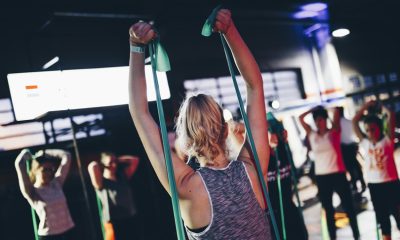
Adding resistance training improves strength and aerobic fitness, better for heart health
-
 NewsMakers3 weeks ago
Social support, sleep, pain management linked to mental health in later life
-
 NewsMakers3 weeks ago
Healthier plant-based diet associated with lower risk of Alzheimer’s, other dementias
-
 Wellness3 weeks ago
Physical activity and appropriate sleep linked to subsequent lower dementia risk