
Destinations
Trapped by a flash flood in Mindoro
I urge you to help re-equip Mindoro’s Tamaraw rangers with GPS units, spotting scopes, binoculars, laptops and field uniforms by contacting the Tamaraw Conservation Programme at +63977 809 1498.


By Gregg Yan
We were trapped.
A sudden downpour engorged Occidental Mindoro’s mountain rivers an hour ago. The small stream we forded three days ago was now a raging torrent of churning, life-taking brown water.
Fording was suicide. The only crossing was through a bamboo ‘monkey bridge’ made of two slippery poles – a rotting base pole and a flimsy handrail. Which of course, was broken. Like in the movies.
Beside me sat an old Taw’buid woman, shivering and sheltered by a flimsy banana leaf. As an anthropologist, I knew that a Siganon or lowlander like me cannot touch a female Taw’buid tribeswoman even for warmth. I gave her an umbrella and dropped my pack.
When the going gets tough, the tough get going.
Ploughing forward to repair the bridge, I tied myself to a branch with thick vines – a trick I learned from jungle survival school. White-knuckling the broken bamboo rail, I took a step. Another. Knew I should’ve dieted more. Suddenly I felt the rotting bamboo pole give way. Craaaaack!
THE WILD, WILD MOUNTAINS OF MINDORO
The Iglit-Baco Natural Park in Mindoro spans 75,445 hectares and is dominated by Mt. Baco (2488m) and Mt. Iglit (2364m). Eight major river systems wend through its grassy peaks. When I first visited at the height of the monsoon season of 2012, we crossed a total of 42 rivers and streams. My ankles were leech magnets.
The park is famed for hosting the best-protected population of Tamaraw (Bubalus mindorensis), Earth’s most endangered buffalo species. Droves of mountain climbers and birdwatchers visit – intent on seeing flying jewels like the Mindoro Hornbill (Penelopides mindorensis) and Mindoro Bleeding Heart (Gallicolumba platenae).
The park is also home to the reclusive Taw’buid, largest of the eight tribes collectively called Mangyan – the others being the Alangan, Bangon, Buhid, Hanunuo, Iraya, Ratagnon and Tadyawan. Last time I visited was when the World Wide Fund for Nature (WWF), Tamaraw Conservation Programme (TCP) and National Geographic gave the tribe a shipment of solar lamps. The Taw’buid holds a special place in my heart.
This year I was invited by the United Nations Development Programme (UNDP) to join the second Bio-Camp, an annual move to enhance public support for Tamaraw conservation. UNDP’s Biodiversity Finance Initiative (BIOFIN) works to mobilize resources to finance nature and sustainable development, deliver more efficient outcomes, improve spending efficiency and choose current investments which can save money in the future. BIOFIN helps close the funding gap to implement critically-important biodiversity conservation projects.
Led by TCP Coordinator June Pineda, participants Bibiana Aguha, Jes Aznar, Mitch De Juan, Kim Lim, Nella Lomotan, Bernard Magcarang, Gab Mejia, Maricor Montalbo, Celine Murillo, Angie Ogena, Kamille Rosales, Mitch Tuyan, Derald Umali and Gab Visenio all summited Mt. Magawang, saw Tamaraw in the wild and had lively discussions on how best to help rangers – the real heroes of the Iglit-Baco Natural Park.
RANGERS ON PATROL
“If the rangers disappear, the Tamaraw disappear. The Taw’buid believe that if the Tamaraw disappears, their people will too. We can thus say our Tamaraw Rangers are key to sustaining the natural habitat of the Tamaraw within the Iglit-Baco Natural Park,” says TCP Coordinator June Pineda.
We were accompanied by three kinds of rangers: Park rangers safeguard the park against poachers, tamaraw rangers lead expeditions and protect Tamaraw wherever they may be, while wardens are rangers-in-training.
“Tamaraw patrols are sent out once or twice weekly and last about three days each,” explains TCP Field Operations Officer Ed Bata. “Last August we found a Tamaraw skull and the lower left jawbone of a Philippine Deer – probably shot for meat by hunters. Poachers come at night, flashlights rigged under the barrels of illegally-acquired long-arms like M14s.”
As I found in Borneo for another wildlife adventure years back, many wild animals stop and stare at bright lights at night, their eyes glowing a freaky red.
“Our equipment is old. Our last computer broke down recently. Though we badly need new gear, our rangers will keep going,” promises Pineda. “It is from them that I draw strength.”
JUNGLE ENGINEERS
Back at the river I hop back before the bamboo pole completely collapses. I gaze at the shivering Taw’buid woman on the riverbank and curse myself for not being able to do more for her. Eventually the rain eases up, the river becomes calmer – and help arrives.
The first of our team’s Taw’buid and Buhid porters arrive to assess the situation. Rapidly they string more vines around the battered bridge while a lithe scout crosses with a fisho, a long Taw’buid blade – emerging minutes later with two fresh bamboo poles. As we sweat, grunt and try to avoid falling in the river, the bridge takes form.
BIOFIN’s Kamille Rosales hands the Taw’buid woman a dry shirt, warming her. After a half-hour, the bridge is up and the column trudges once more for civilization.
As we crossed that rickety bridge, I realized how the brave, resourceful rangers of TCP and the Iglit-Baco Natural Park surmounted these obstacles all the time – fording swollen rivers, patrolling against heavily-armed poachers, dismantling dangerous spring-loaded spike traps set illegally within the park’s core zone. Building bridges and keeping a lifeline to the lowlands open has kept the park and its endangered animals alive and thriving. This year, the park’s Tamaraw numbers swelled to 523, the highest recorded since conservation efforts began.
“We rangers have dodged bullets and charging Tamaraw. Once I slid down a mountain for we were patrolling without lights,” remembers Ranger Team Leader Ronnie Estrella. “We even chased off a dozen poachers with kwitis or fireworks because we had no guns! This has become much more than a job for us. This is where many of us have devoted our lives.”
Making do with equipment which have seen better days, the plucky rangers are every bit as tough as the Tamaraw they protect.
I urge you to help re-equip Mindoro’s Tamaraw rangers with GPS units, spotting scopes, binoculars, laptops and field uniforms by contacting the Tamaraw Conservation Programme at +63977 809 1498. As I found while repairing that rickety bridge, help goes a long way.





Destinations
Checking the historic Charlie wanton resto in Mandaluyong
For those craving noodle soups, tambak ang options in Metro Manila. But one of the old faves is Charlie Wanton Special in Mandaluyong City. We #LGBT checked if it’s worth visiting.


For those craving noodle soups, tambak ang options natin, truth be told. From David’s to Noodle Park to Wann Mann to Tim Ho Wan… the options are now endless. But – let this be said – the olden ones continue to charm. And among these is Charlie Wanton Special in Mandaluyong City.
When driving from Sta. Ana in the City of Manila to Greenhills in San Juan City, we always pass by this resto in Mandaluyong City that was established in 1958, though the original location was in Florentino Torres Street in Santa Cruz, Manila. That it is widely known is an understatement – e.g. good luck getting a table if you go there during rush hour (usually during lunch, or early dinner).
Anyway, we headed there when an opportunity presented itself. And… how was Charlie for us?
@outragemag #Wanton with nostalgia at #charliewantonspecial in #Mandaluyong during this #LGBT ♬ original sound – Outrage Magazine
Una, the place is in the middle of nowhere… in a manner of speaking. It is one of an extremely small number of restos in a long road that’s mostly residential, and there’s no public transportation there. But – exactly because the resto is known – it isn’t hard to find, as it’s very Google-able and Waze-able.
Ikalawa, the place is – in a word – unpretentious. Don’t expect fancy when there. The place is “divided” into sections – i.e. the glass-enclosed kitchen where the noodles are being made (you can watch the making, by the way); the dining area (which can accommodate over 70 pax); and the small events place. You get old wooden furniture, old cutlery, aged plates, and so on.
Ikatlo, the workers looked haggard when we were there… though this may be because they’re overwhelmed with the number of customers. I’d say don’t expect to be given special attention; this place is an order-eat-pay-go venue.
Ika-apat, how’s the food?
As served, the Chicken Mami (₱235) and the Beef Wanton Mami (₱305) looked abundant. We received extra bowls of sabaw, which were necessary because the noodles per bowl were a lot. Oh… the chicken sabaw was thicker, while the beef sabaw tasted like humba, complete with that star anise taste.
We had concerns taste-wise:
- the beef strips were soft, yes, but the mami with the beef didn’t taste beefy at all;
- the wanton in the same mami was okay-tasting, but didn’t taste fresh; and
- the chicken strips weren’t malansa, but the mami with the chicken was tasteless.
The Bola-bola Siopao (₱130 for special) was aesthetically nice to look at, mainly because of its size. Sadly, that’s that. Taste-wise, it was weird. The dough was dry, and the meat was, aside from also being dry, had a malansa taste. It was hard to finish, sorry.
For the Siomai (₱120), we got three gigantic pieces. It was forgettable, but – after the siopao – at least the meat used here didn’t taste malansa.
Many people come, and will continue to head to Charlie. No surprise there since this can be a comfort zone for some. Kami, however, we don’t believe nostalgia alone makes any place deserving of being blindly supported. And so off we go in search of more lafangan venues…
Charlie Wanton Special is located at 265 Haig St. Daang Bakal, Mandaluyong City, Metro Manila. For more information, contact (02) 7718 1880.
Destinations
Checking the wind turbines of Pililla… since there’s not much else being offered
The Municipality of #Pililla promotes #pilillawindfarm #windturbines as tourist attractions… and nothing else, becoming a #touristtrap as checked during this #LGBT visit.
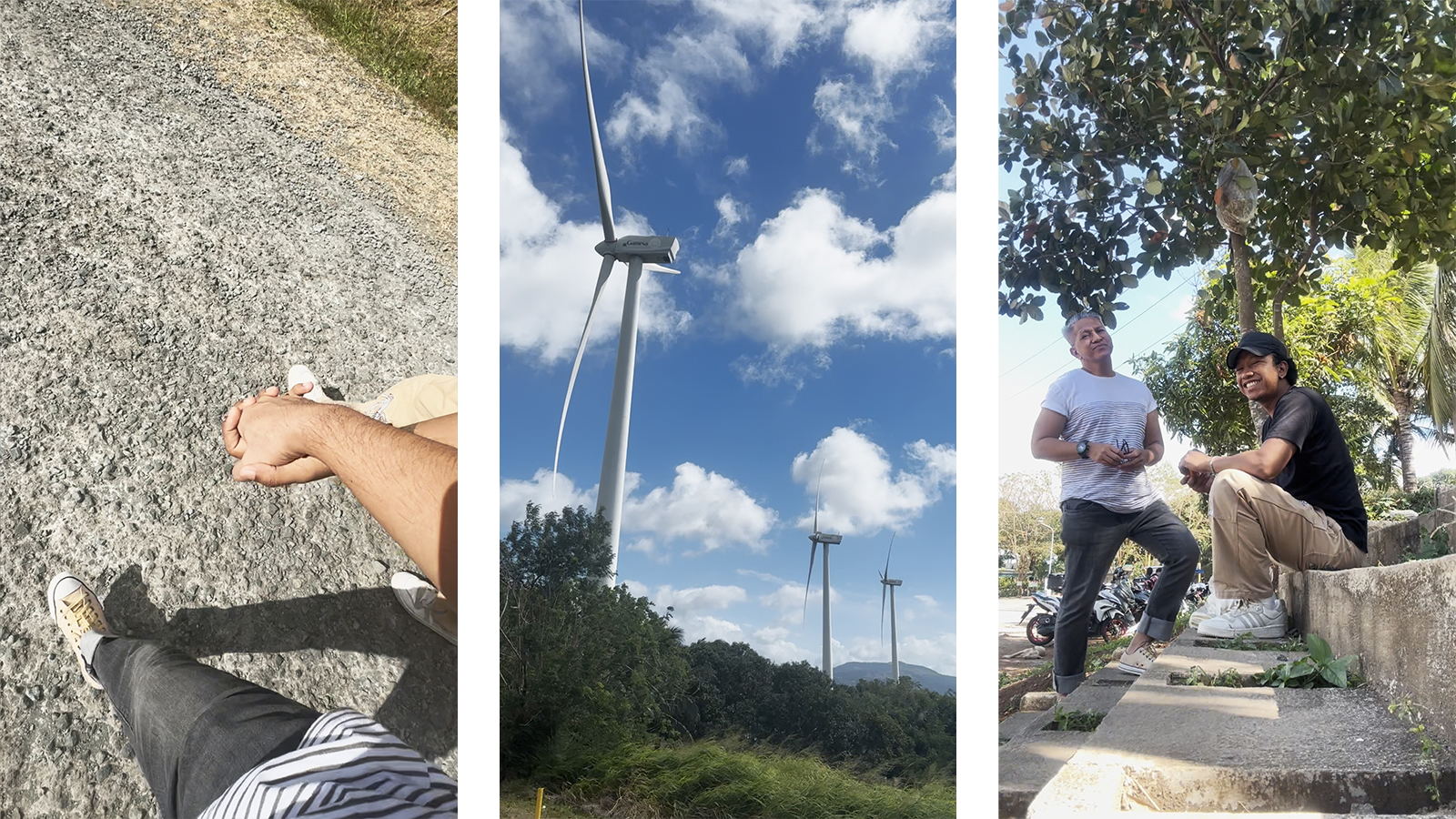
As a tourist, there are two ways to look at the Pililla Wind Farm. On one hand, you head there to see how we’re making use of nature to propel progress. But on the other hand, you go there because… there’s nothing else worth checking out in the area; we are so tourist site-deprived that we end up glorifying not-even-pretty gigantic turbines.
Anyway, we headed there, yes, and here are some observations.
@outragemag Municipality of #Pililla promotes #pilillawindfarm #windturbines as #tourism… and nothing else, becoming a #touristtrap as checked during this #LGBT ♬ original sound – Outrage Magazine
Una, the place is really only accessible for those with private vehicles. If you’re commuting, you can take a tricycle to and from the nearby Tanay Public Market. But don’t expect to be able to just hail sasakyan while there.
Ikalawa, open from 7AM to 6PM every day, you’d see 27 wind turbines operated by Alternergy Philippine Holdings Corporation there.
Standing atop hills at 300 meters above sea level, overlooking Laguna de Bay, each turbine can produce 2MW, with the entire farm generating almost 150 Gigawatt hours of electricity per year. To put this in perspective lang, ha, it could provide power for approximately 90,000 to 100,000 households… assuming, of course, na what’s produced is provided cheaply to the people.
But yes, you’d see “science in action” here… in a very, VERY limited way, of course.
Ikatlo, even if the Pililla Wind Farm doesn’t charge fees, everything is still for profit here – e.g. parking, stuff you can use while walking (like umbrellas), access to some viewing areas, and so on. The greed is most apparent in the access to toilets; here, all the shops have “PAY CR” since Pililla Wind Farm itself doesn’t have similar publicly-available facilities.
So… should you visit? If you have a car, daan lang siguro, quickly drop by. Or just enjoy those windmills from afar siguro. Because either/or, there’s not much to gain while at the Pililla Wind Farm – e.g. no people to discuss with you how farming the wind works, no glimpses of how this particular wind farm actually works, no picnic areas to stay at while enjoying the views, and so on.
Of course, if you really just want to take pics din, then yeah… head there. Pero kami, off we go for more LGBTQIA+ discoveries…
The Pililla Wind Farm is located at F8CX+VJW, Manila E Rd., Pililla, Rizal Province.
Destinations
Checking the café vibe of Filipino-ish Yellow Bird resto
#Breakfast-hunting in #Antipolo led us to #YellowBird #restaurant that offers #Filipinofood, Italian dishes, #cafe goodies, atbp. But… is it worth checking out?
Antipolo has, particularly lately, been trying to make a name as a must-check place for foodies. If most places in Metro Manila close at night, Antipolo has 24-hour venues that boast not just not-bad food, but views of cities of Metro Manila as they succumb to darkness.
So one morning, after a night shift, we decided to grab something at any of their breakfast nooks… which was how we ended up at Yellow Bird Café X Kitchen.
@outragemag #Breakfast-hunting in #Antipolo led us to #YellowBird #restaurant that offers #Filipinofood, Italian dishes, #cafe ♬ original sound – Outrage Magazine
Una, the place isn’t hard to find for those with private vehicles; Google Maps or Waze will lead you there easily. But noticeably, we didn’t notice public transportation during our visit.
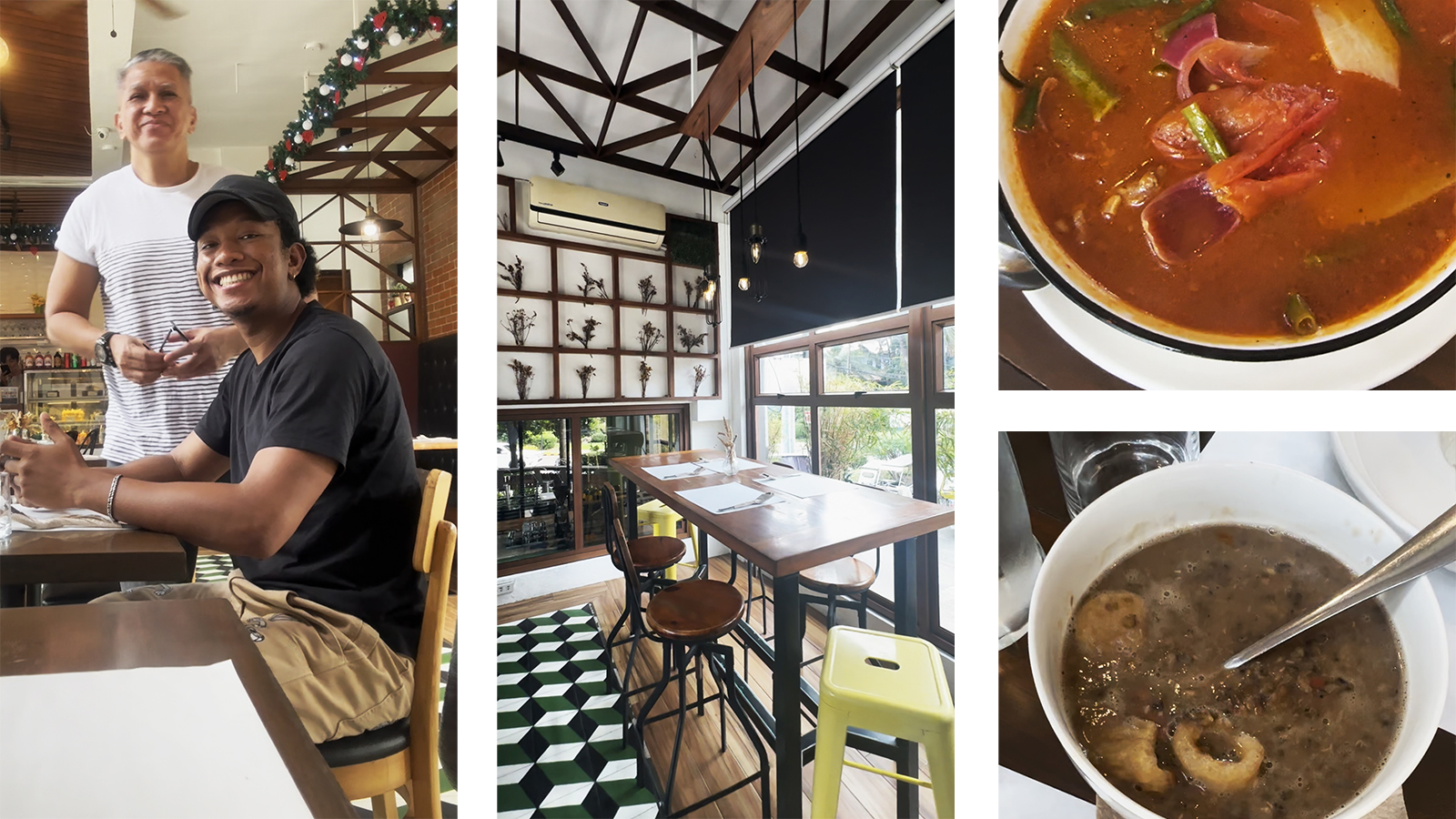
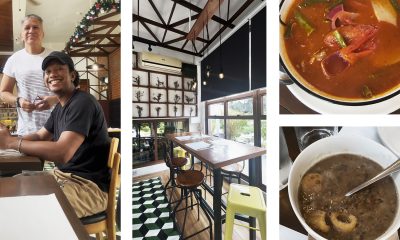
Ikalawa, the actual place was… airy, thanks to the glass walls/windows. But while this may also be a steakhouse/Filipino restaurant/Italian-ish restaurant/and so on, look-wise, it’s more a café that happens to serve some food. Rustic also came to mind, thanks to those dried flowers everywhere…
Ikatlo, the staff’s deadma; no one was friendly enough to stick to mind. They just tell you where to sit, take your order, deliver your food or drinks, then… kebs na. No small chitchats on what’s good or not, or whatever.
Ika-apat, how was the food?
- The ₱140 Americano was… forgettable. Mag-tubig ka na lang while waiting for your food.
- The Sinigang na Baka (₱525) was actually a surprise – that is, this isn’t your typical sinigang, Using kamatis (tomato) instead of bayabas (guava) or sampalok (tamarind) or miso, the broth was tasty without being overpowering. Yes, the meat could have been softer/more tender, but at least it wasn’t chewy. And the serving could have been bigger, considering the asking price. But yes, this one’s worth checking out.
- The Munggo & Chicharon (₱295) wasn’t bad at all… but there’s nothing special about this as it’s no different from the munggo (beans) that you’d get from some carinderia.
That sinigang may have been a pleasant surprise (and this is even if the meat needed more time to boil), but I doubt that’s enough to lure us to head back anytime soon. This isn’t a bad place at all, but when in Antipolo, a place that has more food venues to discover, we – or you – may as well check others…
So off we go, as we search for more lafangan venues.
Yellow Bird Café X Kitchen is located at Blk 2, Mission Hills Blvd, Antipolo, 1870 Rizal Province.

Manulife continues legacy of service in PH with Impact Week 2026

Could your oral health be affecting fertility?

Maintaining a healthy heart may require regular doses of positivity

Checking the historic Charlie wanton resto in Mandaluyong

Manulife launches GoalReady health solutions

Investing in employee health leads into a stronger, more productive workplace

Checking the wind turbines of Pililla… since there’s not much else being offered

Bell-bottoms today, miniskirts tomorrow: Revealing fashion’s 20-year cycle

Heart disease risk may start in the womb, study finds

Viagra could hold key to halting Peyronie’s disease

Healthier brains may be more resilient to early Alzheimer’s disease

Study: Egg consumption is associated with a lower risk of Alzheimer’s Disease

Grape consumption linked to changes in gene expression and improved skin health

Is ‘yo‑yo dieting’ really harmful? New analysis challenges long‑standing assumptions about weight cycling
Viagra could hold key to halting Peyronie’s disease
Heart disease risk may start in the womb, study finds

Checking the café vibe of Filipino-ish Yellow Bird resto

Study finds low-dose eye drops successful in managing adult myopia for 24 hours
Manulife launches GoalReady health solutions
Bell-bottoms today, miniskirts tomorrow: Revealing fashion’s 20-year cycle

-
 NewsMakers2 weeks ago
Healthier brains may be more resilient to early Alzheimer’s disease
-
 NewsMakers4 weeks ago
Study: Egg consumption is associated with a lower risk of Alzheimer’s Disease
-
 NewsMakers2 weeks ago
Grape consumption linked to changes in gene expression and improved skin health
-
 NewsMakers2 weeks ago
Is ‘yo‑yo dieting’ really harmful? New analysis challenges long‑standing assumptions about weight cycling
-
 NewsMakers2 weeks ago
Viagra could hold key to halting Peyronie’s disease
-
 NewsMakers2 weeks ago
Heart disease risk may start in the womb, study finds
-
 Destinations2 weeks ago
Checking the café vibe of Filipino-ish Yellow Bird resto
-
 NewsMakers4 weeks ago
Study finds low-dose eye drops successful in managing adult myopia for 24 hours