
Spotlight
Material matters
For many homeowners, aesthetics and function are the primary considerations of a kitchen renovation. However, before you lay out your space and start selecting colors, there is another essential factor to explore: the materials you will use for each feature.


For many homeowners, aesthetics and function are the primary considerations of a kitchen renovation. However, before you lay out your space and start selecting colors, there is another essential factor to explore: the materials you will use for each feature.

In fact, there are numerous factors to consider as you narrow down your options. Giving special attention to the material composition of your kitchen, particularly when it comes to the aspects that take the heaviest use – the floors, sink and countertops – can help ensure your renovation stands the test of time.
Flooring
Though often taken for granted, the floor is generally the kitchen feature that sustains the heaviest use over time. Whether your tastes tend toward tile, wood or another option altogether, there are still numerous variables to explore.
Tile is an excellent choice for the kitchen because it stands up well to the heavy traffic and spills common in that space. However, tile can also be slippery and can be uncomfortable if you spend long amounts of time on your feet in the kitchen. Ceramic tile is the easiest to install but not as resistant to damage as porcelain or stone tile. The latter options require more skilled installation, and stone especially tends to be more expensive. You’ll also need to pay attention to factors like water resistance and texture, both of which affect safety and how easily the floors can be cleaned.
When it comes to wood, one of the first decisions is whether you prefer engineered or solid hardwood. Engineered versions tend to offer greater durability and flexibility in installation while the texture and appearance of solid hardwood are its strongest appeals. Other variables include the wood type, which further affects the look and strength. Oak is most common, but other traditional selections include options like maple or cherry and specialty woods like teak or bamboo. Plank width influences overall aesthetic, with slimmer boards lending a more modern look. Color is also a consideration, as you’ll need to determine whether you want to match, complement or contrast your cabinetry.
If something a little less traditional is more your speed, an option like foot-friendly cork or a modern take on vinyl may be more to your liking.
Sink
Identifying the shape and size of the sink you need can help narrow down the options for this aspect of the renovation, but considering the abuse this vessel endures, this is one place the material is especially important.
Classic stainless steel is not only practical, it’s also extremely versatile. It complements any kitchen and is a favorite of enthusiastic cooks and designers alike. While stainless steel’s neutral color and sleek looks work with a wide range of kitchen styles, it’s most often found in contemporary, professional-style kitchens. This classic, durable material lives up to its name. Hot pans won’t hurt it, and it’s less likely than harder materials to damage delicate dishware that may slip from your grip.
If you’re looking to make a statement, an enameled cast iron sink may be the answer. These sinks withstand whatever your family dishes out, from heavy pots to searing skillets, and with a range of colors to choose from, you can go bold with deep hues, be subtle with pale tones or choose a finish that adds dimensional character.
When your kitchen requires both rich color and a rock solid design, a composite sink will deliver.
Countertops
In a bustling kitchen, hot pots, sharp edges and spills mean the counters can take a real beating. That’s what makes stone a favorite choice for this surface. Natural stone like granite or quartz is hardy, but engineered options offer even greater resilience. Options like marble or limestone deliver beauty similar to natural stone but these softer materials require more care and caution.
Concrete and wood are popular and stylish alternatives, but their susceptibility to stains and other imperfections may make them impractical for a busy family. For the budget-conscious renovation, there are ample options in laminate, which falls in the mid-range for durability, to achieve an eye-catching look for less.
Selecting a Sink
Materials aside, there are many factors to consider when choosing the right sink to complete your new kitchen.
Installation
- Top-mount sinks extend above the countertop surface. This type is the easiest to install and is often used with laminate counters.
- Under-mount sinks are mounted beneath the countertop, making it easy to sweep debris off the counter. They are most commonly used with solid-surface, stone and quartz countertops.
- Apron-front sinks, also known as farmhouse sinks, are notable for their attractive front panel or apron. This style can be mounted under or on top of the counter.
- A tile-in sink is specially designed for installation in a tile countertop and can be grouted as if it were another tile for a clean look similar to that of an under-mount sink.
Bowl Configuration
- Single-bowl sinks: Ideal for washing large pots and platters.
- Offset bowl sinks: Provide separation for washing and rinsing, typically with one large and one small bowl.
- Double-equal sinks: Separate bowls offer versatile workspace, with the option for extra-deep bowls.
- Smart Divide sinks: Available exclusively from Kohler, these sinks feature dividers half the height of conventional double-bowl sinks for the openness of a single bowl and the function of a double bowl.
Accessories
Sink accessories add another level of function and convenience. Choose from a wide range of practical options, such as sink racks, baskets, cutting boards, caddies and colanders. Other accessory selections such as soap dispensers and sponge holders aid in cleaning and organization.






NewsMakers
Forget materialism, a simple life is happier: research
The commitment to simple living, or ‘voluntary simplicity’ as it is formally known, leads to wellbeing through providing more opportunities for personal interaction and social connection than conventional contexts of exchange, such as community gardens, sharing resources, and peer-to-peer lending platforms.

In an age where billionaires and conspicuous consumption are increasingly on display, new Otago-led research shows a simple life really is a happier life.
The study led by University of Otago – Ōtākou Whakaihu Waka Department of Marketing researchers has recently been published in the Journal of Macromarketing.
After setting out to understand the relationship between consumption and wellbeing, the researchers found people are happier and more satisfied when adopting sustainable lifestyles and resisting the temptations of consumerism.
They analysed data from a representative sample of more than 1000 New Zealanders, made up of 51 per cent men and 49 per cent women, with a median age of 45 and a median annual household income of $50,000.
They found the commitment to simple living, or ‘voluntary simplicity’ as it is formally known, leads to wellbeing through providing more opportunities for personal interaction and social connection than conventional contexts of exchange, such as community gardens, sharing resources, and peer-to-peer lending platforms.
Women are more likely to adopt a simple life than men, although more research is needed to understand why.
Co-author Associate Professor Leah Watkins says consumer culture promotes happiness as being typically associated with high levels of income and the capability it affords to acquire and accumulate material possessions.
“However, research is clear that attitudes to, and experiences of, materialistic approaches to life do not lead to increases in happiness or wellbeing. Nor do they lead to sustainable consumption necessary for planetary health.”
Between 2000 and 2019, global domestic material consumption increased by 66 per cent, tripling since the 1970s to reach 95.1 billion metric tons.
Growing consumer affluence and higher living standards have resulted in warnings of alarming trends of environmental degradation from human consumption.
This, coupled with global warming and post-pandemic health and financial anxieties, has led researchers and policymakers to call for a better understanding of the links between simple consumer lifestyles and wellbeing.
But co-author Professor Rob Aitken says this isn’t a case of just throwing out all your worldly possessions.
“It’s not directly the commitment to material simplicity that leads to wellbeing, but the psychological and emotional need fulfilment that derives from relationships, social connection, community involvement and a sense of living a purposeful and meaningful life.
“In a world where billionaire weddings are treated like state occasions and private yachts are the new status symbols, voluntary simplicity offers a quiet, powerful counter-narrative — one that values enough over excess, connection over consumption, and meaning over materialism.”
NewsMakers
Too much for some, just right for me – The truth about dating while plus-size
What is dating like for a plus-size woman? We don’t get the fairytale, the montage-worthy meet-cute in the bookstore, or the sweet swipe-rights with guys who use words like “connection” and “vibes.” What we get is a mixed bag of awkward encounters, accidental comedy, the occasional ghosting, and sometimes, someone who sees us as the whole damn package.

By: A Curvy Queen Who’s Seen It All
Let me be real with you: dating as a plus-size woman isn’t for the faint of heart. We don’t get the fairytale, the montage-worthy meet-cute in the bookstore, or the sweet swipe-rights with guys who use words like “connection” and “vibes.” What we get is a mixed bag of awkward encounters, accidental comedy, the occasional ghosting, and sometimes, someone who sees us as the whole damn package—not just the size of it.

I’m 33, a size 20, and I live in a city where everyone seems to be on a green juice cleanse or training for a marathon. My idea of a perfect day includes a cheese board, a crime documentary, and wearing something soft and oversized. I’ve been dating online for years now—Tinder, Bumble, Hinge, OkCupid, even a brief stint on Bigger Lover (don’t judge). I’ve had first dates that turned into second dates, and others that ended before the appetizer even came. But through it all, I’ve learned some hard truths about dating while plus-size.
The Fetish Factor
Let’s start with the obvious: there are guys out there who fetishize plus-size women. They love our bodies—but only in private. They send you those thirsty DMs like, “I’ve always had a thing for thick girls.”
I used to think that was a compliment. But it’s not, not when it’s the first thing they lead with, not when you realize they don’t care about your name, your career, or your sense of humor. Just your body.
I once met a guy off Tinder who spent our entire date talking about how much he “loved curves” and how he’d “never dated a big girl before.” He kept asking if I was into feederism (I had to Google it when I got home). I never heard from him again, which was fine—I didn’t need to be someone’s body experiment.
The Grateful Gambit
Then there’s this weird idea that plus-size women are supposed to be grateful for attention, as if someone choosing to date us is some charitable act. It’s subtle sometimes, but oh, it’s there.
I had a guy once tell me, over drinks, “I like girls who are a little bigger. They try harder, you know? They’re just more appreciative.”
I blinked. Tried harder at what? Breathing through my rage?
I wanted to ask him if he’d ever considered that maybe I’m not grateful to be on a date with him either. But instead, I left.
Online Dating – A Love-Hate Situation
The apps are their own beast. My profile is cute, funny, and unapologetically me. I mention that I love bookstores, brunch, and body positivity. I always include full-body pics, because I refuse to trick anyone—but I also refuse to hide.
And still, I get messages like: “You’re actually really pretty for a big girl.”
Sir, would you be willing to grow a personality for someone you really liked?
But it’s not all trash. I’ve had some sweet, genuine conversations and some fun dates. Not every guy is clueless. Some are kind, open, and emotionally intelligent.
The good, the bad, and the big truth
Dating while fat is exhausting. You have to weed through people who want to fix you, people who want to hide you, people who only want to sleep with you, and people who see you as their emotional support girlfriend.
But I’ve also never been more sure of who I am. I’ve learned to ask better questions, to take up space, and to walk away when someone doesn’t see my worth.
I’ve cried after bad dates, yes. I’ve called friends from bathroom stalls and whispered, “Why is this so hard?” But I’ve also danced in my kitchen with someone who made me feel radiant, kissed under streetlights, and been told, with complete sincerity, “You’re the most beautiful woman I’ve ever met.”
The truth is, being plus-size in the dating world means you see people for who they really are, faster. It forces you to develop an inner filter. You learn to walk away without guilt. And when you do meet someone who loves you not in spite of your size but as a part of your magic? It’s that much sweeter.
So to every plus-size woman out there who’s ever felt invisible, unworthy, or too much: you’re not too much. You might just be too real for the wrong person.
Keep showing up. Keep swiping. And keep loving yourself like you deserve to be loved—because trust me, you absolutely do.
NewsMakers
Research suggests drinking coffee may reduce the risk of frailty
Habitual coffee consumption of 4-6 cups and over* (with one cup measuring at 125ml) per day is associated with a reduced risk of frailty.

A new study published in the European Journal of Nutrition has suggested that habitual coffee consumption of 4-6 cups and over* (with one cup measuring at 125ml) per day is associated with a reduced risk of frailty.
The study, funded by the Institute for Scientific Information on Coffee (ISIC) is the first to analyze the relationship between coffee consumption and the underlying components of frailty.
Coffee consumption has previously been linked to reducing the risk of some of the natural symptoms of ageing, such as improving cognitive function2 and mitigating against inflammatory related diseases. This latest research adds to the growing knowledge base within this area, exploring the benefits of regular coffee consumption over an extended period of time.
For this study, researchers conducted a detailed analysis over a long seven-year follow-up period, surveying 1,161 adults aged 55+ years through the Longitudinal Aging Study Amsterdam (LASA).
The relationship between coffee consumption and the presence and incidence of frailty was investigated. Frailty status was evaluated using Fried’s five-component frailty phenotype4,which is defined by the presence of three or more of the following symptoms: weight loss, weakness, exhaustion, slow gait (walking) speed, and low physical activity.
The results of this study indicate that higher habitual coffee consumption is associated with lower overall odds of frailty. These findings can be considered alongside the European Food Safety Authority’s (EFSA) scientific opinion that up to 400mg of caffeine (3-5 cups of coffee) per day is a moderate and safe amount5.
The researchers explain that coffee’s effect on reducing frailty can partly be attributed to the role of antioxidants in coffee, which may help to reduce inflammation, sarcopenia (muscle loss), and prevention of muscle damage. Coffee may also help to improve regulating insulin sensitivity and glucose uptake in older people.
The study’s lead author, Margreet R. Olthof, Associate Professor at the Amsterdam Public Health Research Institute, Vrije Universiteit Amsterdam, commented: “Drinking coffee is a key part of many people’s daily routine, and as people age they are constantly looking for ways to maintain their health. Our findings highlight the possible beneficial association between daily coffee consumption and reduced risk of frailty in later life in the older population. Coffee consumption may thus enhance healthy aging, but it is important we also explore further dietary interventions, to ensure older adults can continue to live fulfilling lives.”
* Moderate coffee consumption can be defined as 3–5 cups per day, based on the European Food Safety Authority’s review of caffeine safety.

Midlife fitness linked to longer, healthier lives

Telling people they might lose motivates more than telling them they might win, research shows

Yoga practice could reduce blood pressure in people with obesity

Checking Cavite’s Lolo Claro’s

Reduce your home’s vulnerabilities to wildfire

4 Tips to improve heart health (including a recipe to consider)

Stress, BMI, and hormones linked to earlier puberty in girls

Adding resistance training improves strength and aerobic fitness, better for heart health

Coffee-craving with rice meals on the side at Foam Coffee

Physical activity and appropriate sleep linked to subsequent lower dementia risk

Faith, fanaticism, and everything in between in Manaoag

Feeling unfulfilled could lead to riskier, heavier alcohol use

Cancer risk is significantly higher for adults who never married, large study finds
Coffee-craving with rice meals on the side at Foam Coffee

Social support, sleep, pain management linked to mental health in later life
Adding resistance training improves strength and aerobic fitness, better for heart health

Healthier plant-based diet associated with lower risk of Alzheimer’s, other dementias
Physical activity and appropriate sleep linked to subsequent lower dementia risk
Reduce your home’s vulnerabilities to wildfire
Midlife fitness linked to longer, healthier lives

-
 Destinations4 weeks ago
Faith, fanaticism, and everything in between in Manaoag
-
 NewsMakers3 weeks ago
Feeling unfulfilled could lead to riskier, heavier alcohol use
-
 NewsMakers3 weeks ago
Cancer risk is significantly higher for adults who never married, large study finds
-
 Destinations3 weeks ago
Coffee-craving with rice meals on the side at Foam Coffee
-
 NewsMakers3 weeks ago
Social support, sleep, pain management linked to mental health in later life
-
 Wellness2 weeks ago
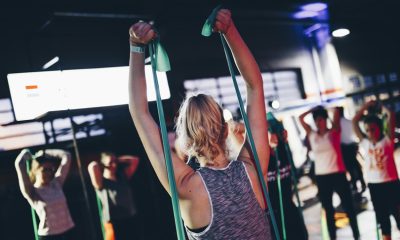
Adding resistance training improves strength and aerobic fitness, better for heart health
-
 NewsMakers3 weeks ago
Healthier plant-based diet associated with lower risk of Alzheimer’s, other dementias
-
 Wellness3 weeks ago
Physical activity and appropriate sleep linked to subsequent lower dementia risk