
Pet Care
Six in 10 pet owners reveal they prefer to spend time with their pets when feeling stressed
Majority of pet owners (58%) prefer to spend time with their pet when feeling stressed – more than those who say their partners (32%), family (23%), or even children or friends (both 18%). In fact, 83% of people surveyed believe their pet has positively impacted their mental wellbeing.


If you would rather hug your pet than talk to your partner after a stressful day then you’re not alone. A new global survey of over 30,000 pet owners, commissioned by Mars, the leading pet care business, and Calm, a leading mental health company, found that the majority of pet owners (58%) prefer to spend time with their pet when feeling stressed – more than those who say their partners (32%), family (23%), or even children or friends (both 18%). In fact, 83% of people surveyed believe their pet has positively impacted their mental wellbeing.
The global survey across 20 markets highlights the powerful ways our pets improve our mental health and wellbeing. From encouraging us to switch off in our day-to-day with breaks from screens, work and chores, to offering silent comfort when words feel too much, the findings paint a striking picture of how pets are helping millions of people around the world find peace in an always-on world.
Sometimes, it’s not what they do – it’s just that they are there. More than half of pet owners (56%) say their pets provide company without the need to talk during stressful times. While others find chatting to their pet a help – with nearly a quarter (23%) saying their pet provides a space for them to express worries or concerns without expecting a response. A huge 84% of pet owners say the simple presence of their pet is relaxing, offering a sense of calm that doesn’t require words or actions.
“While we love our pets, we often don’t realise how much they give back,” said Dr. Tammie King, a specialist in human-animal interaction and Senior Research Manager at the Waltham Petcare Science Institute. “Reframing your pet’s daily ‘interruptions’ as loving reminders to pause, breathe and be present can be a powerful wellness tool. Research shows that touch-based pet interactions can boost oxytocin levels in humans.(2) The findings of this survey will help more people reflect on and acknowledge the little wellbeing moments pets nudge us towards on a daily basis.”
A look, wag or a boop: the survey also reveals how our pets’ behaviours give us daily nudges towards better wellbeing habits:
- Stepping away from the daily grind: Almost eight in 10 (78%) say their pet reminds them to pause and take a break from work, chores or tasks, with 50% saying this happens daily – a gentle reminder to stop, breathe and reset
- Calming the mind: 73% of owners say their pet encourages them to stop overthinking or worrying – helping them feel calmer and more centred
- Time in the great outdoors: 73% of pet owners say their pet encourages them to spend time outside, turning walks with a pet into wellbeing
- Even screens take a backseat when pets are around: 77% say their pet encourages them to take a break away from screens – and for half (50%) it’s a daily reminder to unplug, a vital counter to constant scrolling and digital burnout
Dr. Chris Mosunic, Chief Clinical Officer at Calm said: “We know that small, intentional moments of calm can have a big impact on our overall wellbeing, and our pets have an incredible way of guiding us there. A quick dog walk, or cat cuddle at our desk when they stroll in front of the screen, can provide a simple moment to reset and recharge. We’re proud to partner with Mars and bring this data to the forefront to highlight the potential of our bond with pets and help more people discover the wonderful wellbeing benefits our relationship with pets can bring.”
The survey marks the launch of a first-of-its-kind partnership between Mars and Calm which aims to explore and celebrate the deep connection between people and pets as a force for everyday wellbeing. Turning insight into action, Mars and Calm have teamed up to create new content to help support wellbeing while nurturing the bond with your pet. The Mars x Calm content collection is a series of pet-inspired content to help you relax, reflect and recharge. This is Calm’s first collection created just for pet lovers and inspired by the mutual relationship between people and their pets.
To celebrate the partnership, Mars and Calm are launching a social search to find touching stories from pet owners of their pets that showcase the power of the human-animal bond. Pet owners have the chance for their pets’ story to become the inspiration for exclusive Calm content later this year.*
As part of this search, Mars and Calm are launching My Pet Guru – an interactive quiz available on Kinship. The tool identifies one of six pet wellbeing superpowers based on responses to five simple questions, designed to help pet owners recognise and celebrate the unique ways their pets support emotional and mental wellbeing.
For more information on the Mars x Calm partnership, visit: kinship.com/petsandwellbeing .


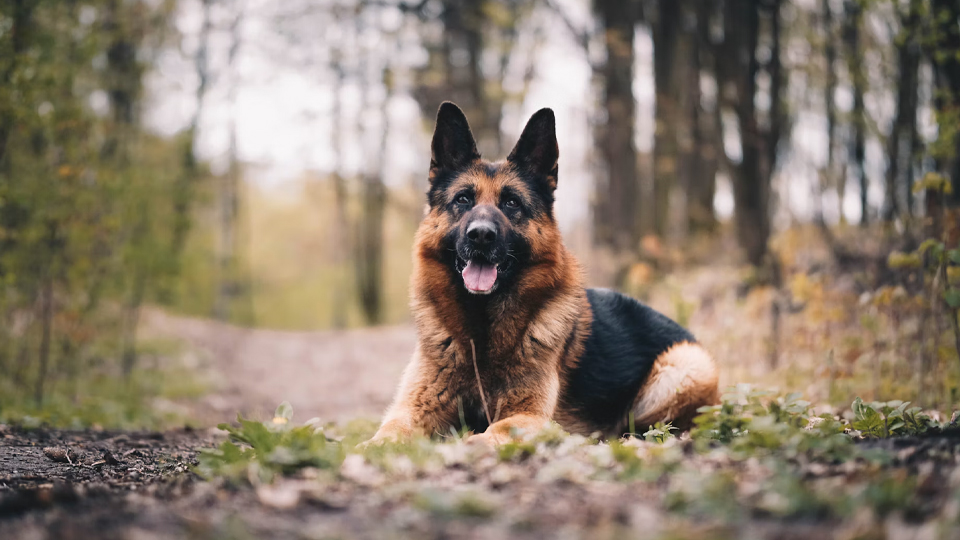
German Shepherd dogs bred for working are more curious and less neurotic than German Shepherds bred for show. A study from Uppsala University and the Swedish University of Agricultural Sciences has shown that the differences are not only apparent in the dogs’ behaviour, but also in their genes. In previous studies, similar genes in humans have been associated with neuroticism.
A German Shepherd dog’s behaviour is very important because they are used as working dogs, for example in the police force or in the defence forces. Breeding dogs with the right traits can be difficult and costly. But with a better understanding of the genetics underlying such traits, breeding can be improved.
In a new study, ethologists and geneticists worked together to investigate how the behaviour of German Shepherd dogs is reflected in their genes. They have shown that the German Shepherd population in Sweden is comprised of two groups: one bred primarily for their appearance and the other bred for functional roles as working dogs.
“Breeders of working dogs have selected and bred the ones that really enjoy working; it’s a bit like a game for them. It’s interesting that we can now see that this selective breeding has indeed led to differences between working dogs and show dogs among German Shepherds – differences that can be seen at both the behavioural and genetic levels,” says Kerstin Lindblad-Toh, Professor of Comparative Genomics at Uppsala University and one of the study’s leaders.
Investigated German Shepherd behaviour and genetics
To measure behaviour in German Shepherd dogs, a standardised behaviour test called the Dog Mentality Assessment (DMA) was used where the dogs were confronted with a variety of situations. The DMA tests how dogs react to an invitation to play, threatening ghost-like figures, and being handled by a stranger. Today, the majority of German Shepherds in Sweden are tested using the DMA. In the study, the researchers looked at data from around 23,000 German Shepherd dogs.
“We could see that, on average, the working dogs showed less fear, more curiosity and were able to socialise well with humans. This shows how important it is to select for behaviour when selecting dogs for breeding for important functional roles in our community,” says Åke Hedhammar, Professor Emeritus at the Swedish University of Agricultural Sciences.
The researchers then took blood samples from 373 German Shepherd dogs who had undergone the DMA to be able to map their genomes.
“We could then see that there were areas in the genome where differences could be seen in the dogs depending on how curious or playful they were, for example. That meant that we were able to identify some of the genes in working dogs that are linked to curiosity and playfulness,” says Kerstin Lindblad-Toh.
In humans too, researchers have also found links between genes and behaviour. Some of the genes that have now been linked to the behaviour of German Shepherd dogs have been associated in previous studies with neuroticism in humans.
“It’s interesting that several of the genes that we identified as influencing behaviour in German Shepherds are also linked to that behaviour in humans. So we now have an example of how we might also acquire more knowledge about different behaviours in people with help of dogs in the long term,” says Kerstin Lindblad-Toh.
Bigger studies in the pipeline with the Swedish Armed Forces
Behaviour is not just controlled by individual genes: it is a complex interaction between many different genes. In collaboration with the Swedish Armed Forces, the researchers are now going to proceed with bigger studies in order to better map the genetics of behaviour.
“That would ultimately mean that these findings could be used to select which dogs have the best prospects of becoming good working dogs and which could be used in breeding. But we are not there yet. This study is just a first step and shows that there are actually clear differences in behaviour between working German Shepherd dogs and German Shepherd show dogs,” Åke Hedhammar says.
Pet Care
Dogs and owners disturb each other in the night, but still get pretty good sleep
Nighttime activity was strongly correlated, with humans and their dogs commonly becoming active around the same time in the night, but more often than not the humans began moving before the dogs did, suggesting that owners are disturbing their dog’s sleep more than the other way around.

Sleeping alongside your dog probably doesn’t disrupt your sleep as much as you might think, according to a study published in the open access journal PLOS One by Ming Fei Li of the University of Toronto, Canada, Lavania Nagendran of the University of Toronto Mississauga, Canada, and colleagues.
It is intuitive to think that humans and their dogs affect each other’s sleep schedules, but little research has been done in this area and with conflicting results. In this study, Li, Nagendran and colleagues examined the nighttime activity of 25 humans and their 38 dogs to investigate how they impacted each other’s nighttime experience for better or worse.
Over a period of four weeks, results from activity monitors – worn on the wrist for humans and on the collar for dogs – found that sharing the bed with a dog did not significantly impact sleep duration or sleep quality, even in cases where owners reported feeling like their dogs were disturbing their sleep.
Nighttime activity was strongly correlated, with humans and their dogs commonly becoming active around the same time in the night, but more often than not the humans began moving before the dogs did, suggesting that owners are disturbing their dog’s sleep more than the other way around.
Thus, the answer to the question of “who is disturbing whom” seem to be a bit of both. These results align with some previous research on the benefits and drawbacks of co-sleeping with dogs, but the authors note that this study includes a limited sample and no dog-less control group. Therefore, future studies will be needed to include more data on dogs of different ages and breeds.
The authors add: “Our findings suggest that nighttime activity in humans and dogs is closely coupled and there may be discrepancies between objective and subjective sleep measures.”
Pet Care
Epigenetic clocks reveal why larger dogs age faster
Larger and male dogs undergo accelerated molecular aging, with pronounced DNA methylation (DNAm) on the X chromosome and at transposable elements (TEs).

Why do large dogs tend to live shorter lives than their smaller counterparts? According to a study of nearly 900 dogs, the answer may be written into their epigenome. The findings reveal that larger and male dogs undergo accelerated molecular aging, with pronounced DNA methylation (DNAm) on the X chromosome and at transposable elements (TEs).
Aging is a universal process, but its pace and biological mechanisms substantially differ between individuals and species. Domestic dogs offer a particularly useful model for understanding the biology of aging because their lifespans vary dramatically with body size.
For example, smaller breeds can live nearly twice as long as larger breeds. Moreover, companion dogs also live in human environments, consume commercial diets, and receive routine medical care, making them a relevant translational model for studying how genetic background and environmental exposures shape aging.
However, how intrinsic factors such as size and biological sex influence variation in dog aging and lifespan remains unclear. Previous research has demonstrated that DNAm is a useful indicator of biological aging, with “epigenetic clocks” offering a way to understand the factors that accelerate or decelerate biological aging.
Blaise Mariner and colleagues generated 1,640 methylomes from a cohort of 894 dogs in the Dog Aging Project. They combined these molecular data with detailed genetic and demographic data.
Mariner et al. found that molecular aging occurs most rapidly early in a dog’s life. What’s more, larger and male dogs – both of which have shorter lifespans than their respective counterparts – age more quickly at the molecular level.
The authors identified different epigenetic patterns underlying these effects. According to the findings, sex-related changes were concentrated on the X chromosome, while body-size-related changes were especially prominent in TEs, stretches of DNA that can influence genome stability and gene regulation.

Checking Aling Lucing, where sisig was invented

Satisfying you craving for unli chicken in Pasig City

Stress more strongly linked to poorer quality of life among adults with multiple chronic conditions

Neighborhood ties and social connections are linked to high recycling participation

Going to the park at least once a week can improve children’s mental health

A longevity diet is not just about eating less—it is what, when, and for whom

Dance training influences how the brain processes facial emotions

Study reveals how gut antibodies protect against colon cancer

Jolting awake often is associated with poorer sleep and higher anxiety, survey finds

Curiosity and fearlessness apparent in German Shepherd genes

Dogs and owners disturb each other in the night, but still get pretty good sleep

Can pistachios support sleep? Here’s what a new scientific review found

For weight loss, where food comes from may matter as much as how it is processed
Curiosity and fearlessness apparent in German Shepherd genes

Mindfulness and self-compassion can alleviate premenstrual symptoms

Music can enhance the flavor of your food

Epigenetic clocks reveal why larger dogs age faster
Study reveals how gut antibodies protect against colon cancer
Stress more strongly linked to poorer quality of life among adults with multiple chronic conditions
Jolting awake often is associated with poorer sleep and higher anxiety, survey finds

-
 Pet Care4 weeks ago
Dogs and owners disturb each other in the night, but still get pretty good sleep
-
 Nutrition4 weeks ago
Can pistachios support sleep? Here’s what a new scientific review found
-
 NewsMakers4 weeks ago
For weight loss, where food comes from may matter as much as how it is processed
-
 Pet Care1 week ago
Curiosity and fearlessness apparent in German Shepherd genes
-
 NewsMakers4 weeks ago
Mindfulness and self-compassion can alleviate premenstrual symptoms
-
 NewsMakers4 weeks ago
Music can enhance the flavor of your food
-
 Pet Care4 weeks ago
Epigenetic clocks reveal why larger dogs age faster
-
 NewsMakers1 week ago
Study reveals how gut antibodies protect against colon cancer