
Travel
Pure Oceans: Protecting our seas from plastic
Around 30 people from the local barangays of Tingloy, plus a contingent from the Philippine Coast Guard, have gathered along the shores of Barangay Marikaban to retrieve sachets, plastic bottles, bottle caps, ropes and anything that doesn’t naturally belong here.


Tingloy, Batangas – This beach is pretty remote, but somehow, it’s still covered in trash.
Mixed in with the usual influx of driftwood and seaweed are countless sachets, plastic bottles and toys – ranging from lightsabers to creepy doll heads.
“We’ll conduct a closed loop cleanup today,” Tak Vergara of Pure Oceans explains to gathered volunteers. “You’ll each be given a mesh sack, to be filled with just one type of trash. Once done, we’ll send our sacks to proper endpoints like junkshops and recyclers. Let’s please move before the morning sun gets too hot.”
Around 30 people from the local barangays of Tingloy, plus a contingent from the Philippine Coast Guard, have gathered along the shores of Barangay Marikaban to retrieve sachets, plastic bottles, bottle caps, ropes and anything that doesn’t naturally belong here.
Like everyone, I’ve been given a red mesh sack and assigned to pick up every plastic or foil sachet I see. I don’t have to look hard – the little suckers are literally coating every meter of this beach.

The Problem of Plastic
Plastics revolutionized the world: they’re inexpensive, durable, nonporous, lightweight and have a million uses. They’re so tough that most will never be fully broken down by nature. Instead, they’ll photodegrade into tiny particles called microplastics. It takes some 400 years – around 13 human generations – for this to happen.
The problem is that too many plastics are designed to be used only once. Many of the world’s third-world economies are built on a tingi-tingi culture where daily needs are bought on daily wages.
Single-use plastics like sachets, sando bags, straws, diapers and bottles account for half the plastics made today.
A report from the Global Alliance for Incinerator Alternatives (GAIA) released in 2019 revealed that Pinoys used 163 million plastic sachets, 48 million sando bags and 45 million labo bags daily. The World Bank in turn estimated that the country generated 2.7 million tons of plastic waste yearly, 20% of which ends up in our oceans.

Global studies about plastics gauged that humanity has produced 8.3 billion metric tons of plastic, 75% or 6.3 billion metric tons of which have become plastic waste. There’s so much of it that scientists have proposed this era to officially be termed the Anthropocene, a slice of time marked on the fossil record not by fossilized bones, but nonbiodegradable plastic.
Our oceans can only absorb so much. Sea turtles and whales now mistake translucent plastic bags for jellyfish, while pelagic fish swallow gleaming microplastics mistaken for plankton. Distant islands – from icebergs in the Arctic to uninhabited sandbars in the Pacific – are plastic-ridden. Even the most remote part of our planet, the Mariana Trench at over 10 kilometers deep, is littered with yesteryear’s grocery bags.
“We cannot keep ignoring the plastic problem, especially here in Tingloy,” says Pia Roxas Ocampo, founder of Pure Oceans, a marine conservation social enterprise. The Philippines is part of the Coral Triangle, where marine diversity levels are unparalleled. The Verde Island Passage, which includes Tingloy, has long been hailed as the epicenter for marine shorefish diversity.

Threat to Marine Biodiversity
Since 2018, Pure Oceans has been working with local communities in Tingloy to recover plastic profitably. “In truth, coastal cleanups like this aren’t long-term solutions,” adds Pia, picking up trash along with everyone. “These are simply emergency measures to protect the coral reefs that surround this island. These reefs aren’t just great dive sites – they sustain the livelihoods of people here.”
Plastics, whether whole or broken down into microplastics, threaten marine diversity. It’s not uncommon to see old fishing nets snagged onto coral heads, or undigested plastic in the guts of the seafood we eat.
“Microplastics concentrate and encapsulate pollutants. They’re dangerous when ingested by fish or other animals,” explains Dr. Wilfredo Licuanan, a coral expert and University Fellow at De La Salle University. “Plastics don’t just smother corals either. They can cause injuries, which increases the likelihood of corals getting sick.”
For the past seven years, Pure Oceans has been working with public and private sector partners – from the municipal government to corporations and local communities – to develop practical ways to collect and divert plastic away from coral reefs.
“We’re known as the MRF Angels because we buy hand-washed plastic and foil strips from selected participants at PHP20 per kilogram,” shares Princess Aldovino, busily filling up her sack with little plastic bottle-caps. “Tons of plastic and foil have been brought to our MRF or Materials Recovery Facility and they are used as ‘pluffing’ or ‘plastic-stuffing’ for various products locally made in Tingloy. We support several senior citizens who help convert trash into useful raw materials.”
After an hour’s work and with my mesh bag finally bursting with sachets (my wife Ngoc collected even more sachets than me), I trudge back to our collection point. Tak and Lai Manalo from Pure Oceans measure the morning’s haul: nearly 175 kilos of plastic waste, among them a cellphone, a syringe, a rubber duckie, gambling dice and some truly scary plastic dolls.

Soon we visit Caban Cove, a popular dive site. Diving here decades ago, I vividly recall having lunch in a spotless white sand beach. Now, it is covered end-to-end with broken branches, coconut husks and you guessed it, plastic. Pia and I carefully examine the debris.
“Coastal cleanups help, but each day will deposit a brand-new layer of trash. With the local community of Tingloy, we’ve developed and tested solutions to help other islands address the plastic problem,” she explains.
“We’re working on all aspects of the garbage lifecycle – from implementing corporations’ extender producer responsibility, CSR projects, developing waste management systems with local governments, environmental education for schools, plus physical cleanups along our coasts. After seven years of learning, we’re ready to replicate our solutions nationwide – but we need more partners.”
We pick through more layers of refuse. I dig out a twisted piece of seaglass, keeping it as a reminder that some things just don’t belong in the big blue. “For many Pinoys, conserving the oceans starts at home. Thinking before buying and properly segregating our waste might just prevent trash from ending up here,” gestures Pia.
We leave the area after a day’s work. Though spiritually satisfied, we barely made a dent in the tidal wave of plastics assailing the quiet island paradise. Despite this, it’s still rung with corals, still teeming with fish.
Two hundred million metric tons of single-use plastics will be produced this year, equivalent to 10 million fully-loaded dump trucks.
How many tons will end up at sea? How many new layers of trash will be added to the beaches of Tingloy and the world’s other islands?






Destinations
Checking the charm of Baguio City’s Café by the Ruins
Googling eating venues in Baguio City will give you a lot of must-check places. And among those that, consistently, enter lists of recommended restaurants is Café by the Ruins. We #LGBT checked to see why.


Here’s an interesting thing with Baguio City: the city approved the cutting of actual trees to allow the building of a car park (we remember, SM), but too many of its local restaurants now build forests within its venues. Oh My Gulay! comes to mind, though also Café by the Ruins, this famed restaurant that occupies the lot containing the ruins of the Garden Theater outdoor cinema that was built in 1912 by Hubert Phelps Whitmarsh.
We dropped by for a quick meal… and here are some observations from us.
@outragemag Why is #CafebytheRuins in #Baguio still popular (even if it can be pricey)? We #LGBT ♬ original sound – Outrage Magazine
Una, this place is easy to find. Yeah, you can take a taxi and tell the driver the place’s name; everyone knows where it is, so your driver could not possibly get lost. But you can also just choose to walk there. It is not too far from Burnham Park, and right beside the city hall of Baguio.
Ikalawa, not much has changed design-wise for the restaurant; meaning, if you’ve been there before, it looks – basically – the same now. You enter a wooden gate, traverse those hanging plants, and then enter a largely wooden two-floor venue. Welcoming you would be the famed breadshop, and then there are tables and seats for those who’d want to dine.
Ikatlo, slight slow ang service. Though that may just be because this place is always busy. But at least our servers did know their products. And they’re honest, too (e.g. “The Thai Beef Salad you want can be offered without some of the key ingredients, so I won’t recommend it.”).
Ika-apat, how was their food?
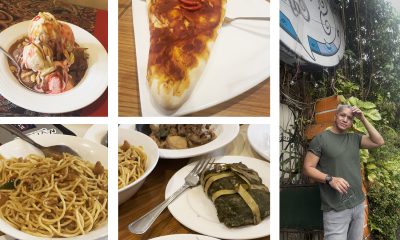
- We wanted to “wash away” the taste of the steaks we had at Sizzling Plate, so we ordered the Filet Mignon (thick slice of beef tenderloin wrapped in bacon, and then served with salad and marble potatoes, ₱520). Properly cooked so it remained juicy, this one didn’t disappoint.
- The Creole Pasta (pasta with shrimp and mushroom cream sauce with paprika, ₱380) was okay naman, though they didn’t have chili flakes (only Tabasco sauce), thus limiting our desire to make this spicier. It was filling… even if the portion was on the smaller side.
This restaurant is one of those with too many items in the menu, so – yeah – you’re bound to find something you’d like. Note that some of the goods here are costly – e.g. Breads sell from ₱60-₱180, Banana Turon for ₱120, Suman at Tsokolate for ₱210, and Dinuguan with Puto for ₱240. But these are among those that helped make this restaurant known.
Googling eating venues in Baguio City will give you a lot of must-check places. And among those that, consistently, enter lists of recommended restaurants is Café by the Ruins. This is not surprising, really, because this place can be described as largely consistent. So, yeah, while the breads there remain too expensive, everything else is… generally… okay, considering they taste better-than-okay anyway.
Go check… or just join us, as we look for more lafangan venues…
Café by the Ruins is located at 25 Shuntug Rd., Baguio City. For more information, contact 0966 528 9072 or email cafebytheruins@gmail.com.
Destinations
Checking the artsy offerings of Baguio’s Tsokolateria Artisanal Café
Tsokolateria Artisanal Café is this artsy resto in Baguio City, offering artisanal offerings. We #LGBT checked to see if it’s worth visiting.
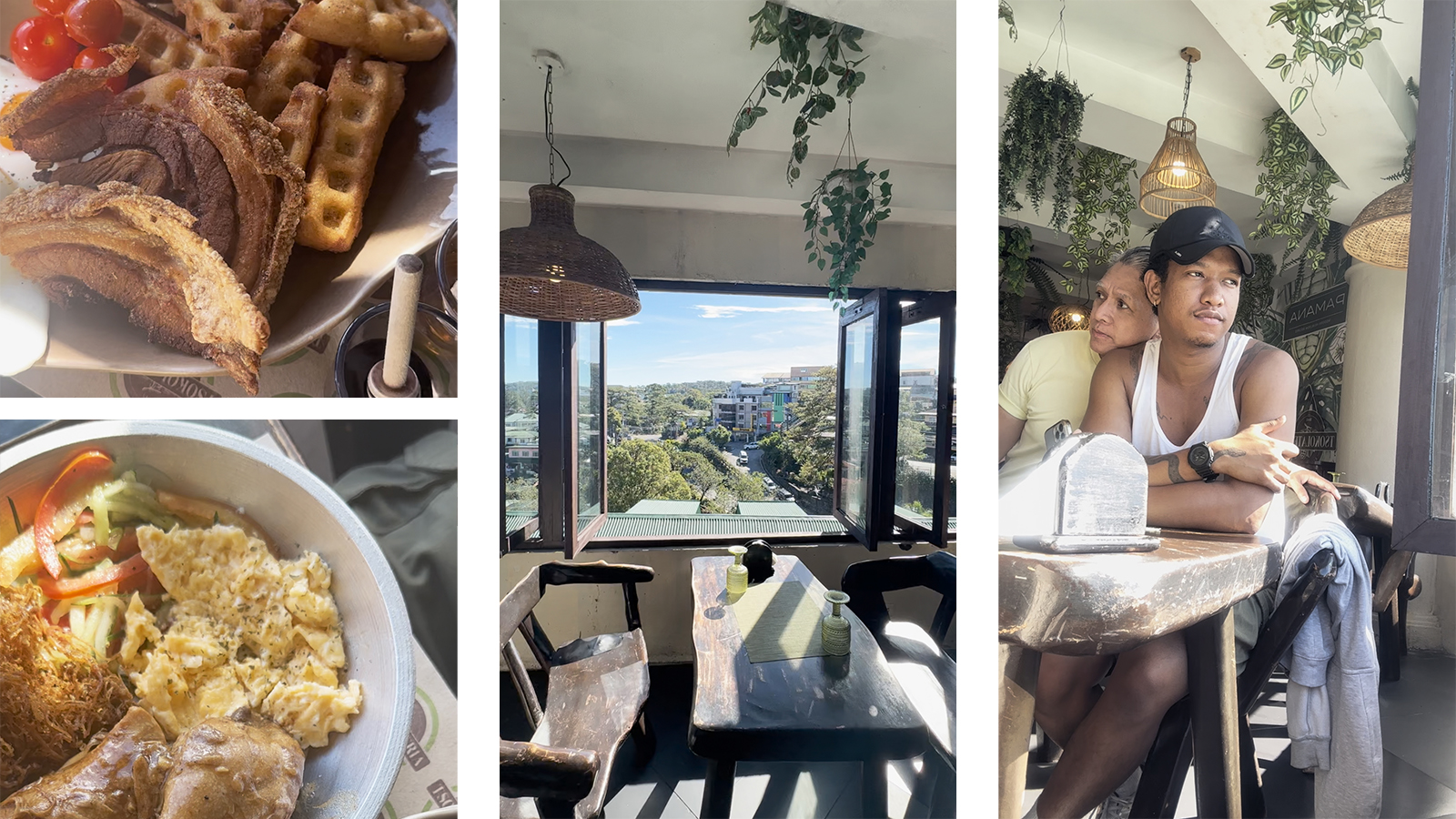
We were looking for breakfast in Baguio City, and, while Googling, among the most recommended was Tsokolateria Artisanal Café… which we decided to check since too many of the other options were still closed (some opened from 9.00AM onwards, which was entering brunch hours already).
Now… how was this place for us?
@outragemag #LGBT checking the artsy but pricey #artisanal food of #tsokolateriabaguio Tsokolateria Artisanal Café in #Baguio ♬ original sound – Outrage Magazine
Una, the place isn’t hard to find naman. Coming from the marketplace in Baguio, you – basically – just walk along Session Road, lampas ng SM Baguio and The Baguio Cathedral of Our Lady of the Atonement. It could be tedious particularly for the non-fans of walking (reminds you of the hilly roads of San Francisco), but… you can just consider this as your exercise, too.
Ikalawa, the actual place is okay naman. The place, which combines two venues – Tsokolateria and Pamana – is non-airconditioned yet well-ventilated, with lots of seating available. There are elements that may not be to everyone’s liking – e.g. those scary statues in front of the restaurant (particularly the ones seating on the stairs, which could be mistaken for real people), as well as those cheap-looking plastic plants hanging on the ceiling of the venue.
Ikatlo, the workers were okay naman. They were able to explain what’s on the menus (and how Tsokolateria differed from Pamana), and they weren’t intrusive at all (they let you be, as needed).
Ika-apat, how was the food?
- The Adobo Overload (chicken adobo topped with roasted cacao garlic and crispy adobo flakes, ₱535) was not maalat/salty, and so okay. But – even with the add-on well-seasoned veggies as side dish, as well as the black rice – you really don’t get much. So you’re basically paying for a deconstructed version of adobosilog for over ₱500.
- The House Waffle, Bacon Belly Arugula & Eggs (₱485) was interesting – e.g. the waffles were fried (this one’s yummy); those cherry tomatoes were fresh (another plus); the eggs, although small, were well done; and that meat was… bagnet-like.
Don’t get us wrong: This place is not bad at all. But – considering its asking prices – it’s not great, either. This is an okay-to-consider venue if you’re willing to cough up more than you should, more than is deserved so you can try food repackaged to be artsy.
Try lang… or discover others… as we do as we search for more lafangan venues.
Tsokolateria Artisanal Café is located at Igorot Stairs, Upper Session Rd., Baguio City. For more information, contact 0927 323 6513 or email inquiry@happyconceptgroup.com.
Destinations
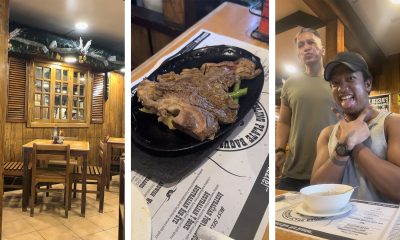
Revisiting Sizzling Plate along Session Road in Baguio City
We checked (for the second time) one of Baguio City’s popular steakhouses: Sizzling Plate.
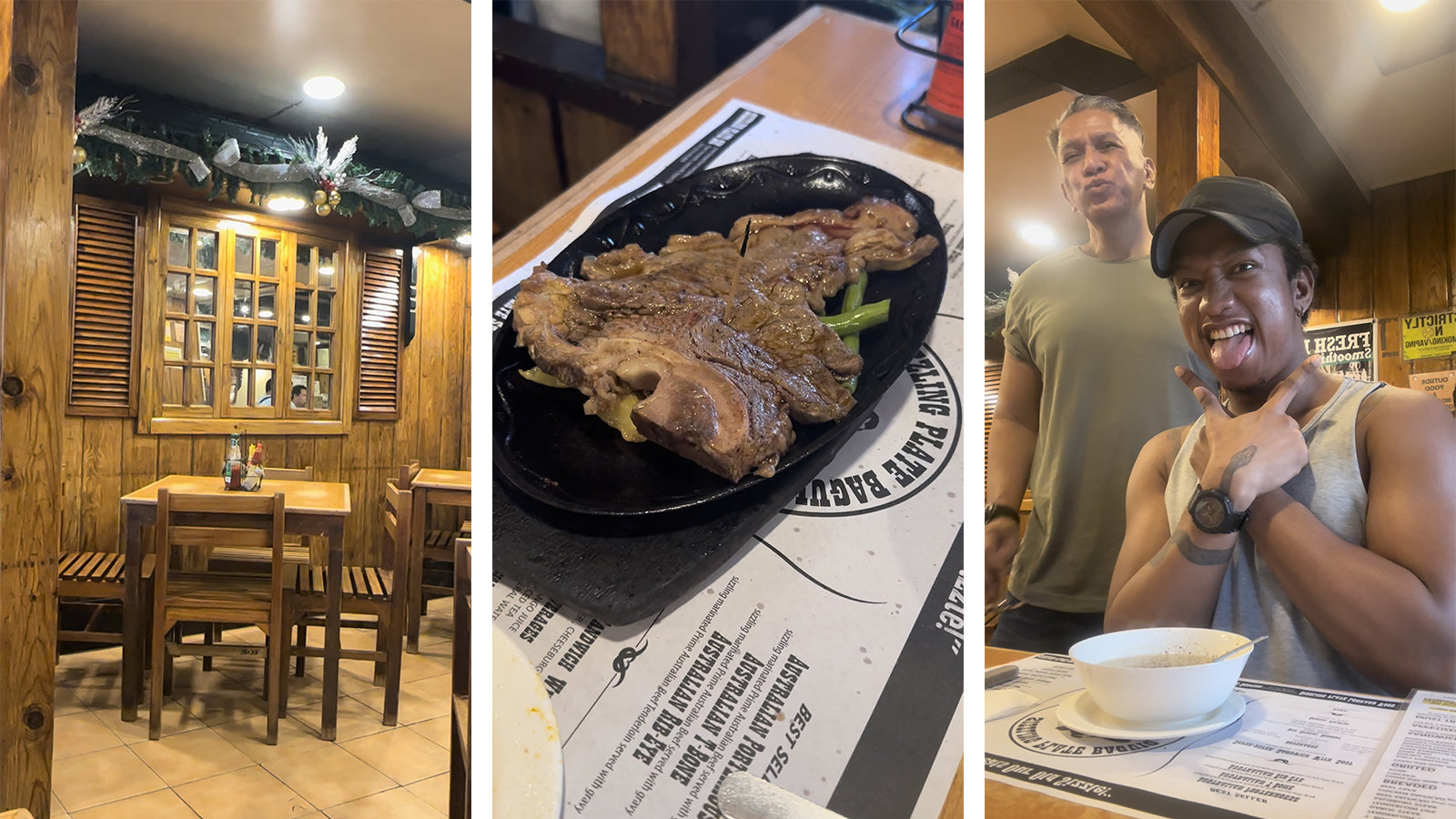
Truth: The first time we visited Sizzling Plate along Session Road in Baguio City, we were surprised. For a not-classy (and some may even say shabby and karinderya-looking) steakhouse, what the place offered were actually better-than-okay food – e.g. the steaks were properly cooked, the fries crunchy, the soup not runny, and so on.
@outragemag Looking for cheap #steaks in #Baguio? We #LGBT ♬ original sound – Outrage Magazine
Truth: Sometimes, for good memories to stay good, don’t revisit to recreate them… which we unfortunately did by revisiting Sizzling Plate during a recent Baguio City trip.
And, sadly, the second time was such a letdown we wondered why we even liked it when we visited it for the first time.
Harsh? Perhaps… but let us explain why…
Una, this place – which was established in 1978 by couple Mike and Edna Anton – is very easy to find, as it sits right in the middle of Session Road, which is in the very center of Baguio City’s commercial area.
Ikalawa, décor-wise, the place looks rustic… like a Filipinized version of some rancher’s diner filled with wooden chairs and wooden tables and so on. Let it be said, however, that this place could use an upgrade – e.g. it looks dated (the “before” if this is to be renovated by Chef Gordon Ramsay in Kitchen Nightmare), has dated stuff (like those flimsy cutlery), and so on.
Ikatlo, the workers are still nice. We remembered some of them from our past visit, and while they – understandably – couldn’t remember all their diners, they were still pleasant while serving (e.g. could explain what’s on the menu, delivered the correct orders, and so on).
Ika-apat, how was the food?
- Y’all get free mushroom soup… which is, basically, a watery concoction that tasted like it was made from powder mix. Particularly when Baguio City gets cold, this should suffice to warm you while waiting for your food.
- All steak meals came with fries (stuffed under the slab of meat, so that when they reached us, we just got burnt potato slices that were too soggy to be called fries); veggies (though we really just got a few Baguio beans); and Java rice.
- The Australian Porterhouse (₱460) was smaller albeit thicker. Meanwhile, the T-bone Steak (₱420) was bigger-looking and yet thinner. Always remember that with sizzling steaks, the meat gets overcooked – i.e. we ordered medium rare, but by the time we ate, the meats were already well done. Also, both steaks served to us tasted too margarine-y… and too chewy to be enjoyable at all.
In truth, Sizzling Plate continues to be really popular. Understandably so because of: 1. it is historic; 2. it’s location (right in the middle of Session Road in the middle of Baguio City); and 3. cheap goods. But – for us – Baguio City actually has more to offer that should be checked, including alternatives to this venue (e.g. the fillet mignon of Café by the Ruins is same-priced, but way, WAY better). So, puwede magtiis here, or go discover is the advice.
And so off we go as we search for more lafangan venues…
Sizzling Plate is located at 86 Session Rd., Baguio City.

Common drug class may increase risk of heart disease

Mindfulness practices found to significantly reduce depression symptoms, especially for those with early-life adversity

Exercise to treat depression yields similar results to therapy

Aerobic exercise may be most effective for relieving depression/anxiety symptoms

High-fiber diet linked to reduced risk of heart disease in night shift workers

Two types of underconfidence linked to anxiety and gender

Checking the charm of Baguio City’s Café by the Ruins

Sleeping in on weekends may help boost teens’ mental health

Breastfeeding may lower mums’ later life depression/anxiety risks for up to 10 years after pregnancy

Creativity feels great — until tomorrow

Valentine’s Day pressure and dating apps linked to higher depression risk; clinicians explain why

Checking the artsy offerings of Baguio’s Tsokolateria Artisanal Café
Creativity feels great — until tomorrow
High-fiber diet linked to reduced risk of heart disease in night shift workers
Sleeping in on weekends may help boost teens’ mental health
Exercise to treat depression yields similar results to therapy
Checking the charm of Baguio City’s Café by the Ruins
Two types of underconfidence linked to anxiety and gender
Aerobic exercise may be most effective for relieving depression/anxiety symptoms
Breastfeeding may lower mums’ later life depression/anxiety risks for up to 10 years after pregnancy

-
 NewsMakers4 weeks ago
Valentine’s Day pressure and dating apps linked to higher depression risk; clinicians explain why
-
 Destinations4 weeks ago
Checking the artsy offerings of Baguio’s Tsokolateria Artisanal Café
-
 NewsMakers2 weeks ago
Creativity feels great — until tomorrow
-
 NewsMakers2 weeks ago
High-fiber diet linked to reduced risk of heart disease in night shift workers
-
 NewsMakers2 weeks ago
Sleeping in on weekends may help boost teens’ mental health
-
 Wellness2 weeks ago
Exercise to treat depression yields similar results to therapy
-
 Destinations2 weeks ago
Checking the charm of Baguio City’s Café by the Ruins
-
 NewsMakers2 weeks ago
Two types of underconfidence linked to anxiety and gender