
Pet Care
Study reveals COVID-19 is fueling pet obesity
Surprisingly, the majority of pet parents (52%) think it is easy to help their dogs or cats lose weight, but veterinarians disagree, with 91% saying it’s harder than owners think. However, those with overweight pets (31% with overweight dogs and 24% with overweight cats) feel it’s harder to help their pet lose weight compared to before Covid-19, and 49% of veterinarians agree it’s harder for pet parents to keep their pets at a healthy weight during the pandemic than before.


While the Covid-19 pandemic has significantly impacted everyday life this year, it’s also taken a toll on our furry best friends’ eating habits, activity level and weight that could affect their quality of life.
Insights from a new survey from Hill’s Pet Nutrition, conducted in partnership with Kelton Global, reveal that while overweight pets and pet obesity has been on the rise for years, Covid-19 has intensified this issue. According to veterinarians, more than 71% of pet professionals say the pandemic has impacted the way pets eat.
OVERWEIGHT PETS: EVOLVING DURING COVID-19
Since the start of Covid-19, one third (33%) of pet parents with an overweight pet say their pet became overweight during the pandemic. While a majority of pet parents (73%) say they would feel confident in knowing their pet is overweight without professional guidance, veterinarians state that only 12% of pet parents proactively flag concerns with their pet’s weight. Moreover, nearly two in three veterinarians say pet parents act surprised (64%) or defensive (64%) upon learning about their pet’s weight issues.
IRONICALLY, TOO MUCH ‘TREAT LOVE’ DURING THESE DIFFICULT TIMES IS THE MAIN CULPRIT
With people spending more time at home over the last nine months, treats are often given as a form of love, with more than half (53%) of pet parents saying they’ve been giving their pets treats for no reason. Now with the holiday season in full swing, it’s likely going to get worse before it gets better, with nearly 64% of pet parents admitting they spoil their dog or cat during the holidays. As a result, six in ten veterinarians say they anticipate the dogs and cats they see in January are more likely to be overweight or obese.
HOLIDAY SEASON MAY MEAN MORE POUNDS
Knowing that pet parents admit to spoiling their pets around the holidays, making people more aware of this change in behavior could help to manage their pet’s weight problems. Approximately 36% of pet parents say their pet normally gains weight over Thanksgiving, Christmas, Hanukkah and New Year’s, and 44% say they expect their pet (and themselves!) to gain weight this season. Veterinarians admit that giving treats in moderation is not an issue, with 56% advising that the occasional treat is fine, however 91% recommend giving fewer table scraps.
MANAGING A PET’S WEIGHT IS HARDER NOW
Surprisingly, the majority of pet parents (52%) think it is easy to help their dogs or cats lose weight, but veterinarians disagree, with 91% saying it’s harder than owners think. However, those with overweight pets (31% with overweight dogs and 24% with overweight cats) feel it’s harder to help their pet lose weight compared to before Covid-19, and 49% of veterinarians agree it’s harder for pet parents to keep their pets at a healthy weight during the pandemic than before. Ultimately, veterinarians overwhelmingly recommend giving fewer treats (92%), more exercise (91%) and fewer table scraps (90%).
IT’S EASIER SAID THAN DONE TO CHANGE BEHAVIORS
Most pet parents know monitoring treats is a key way to help their pets lose weight. Nearly half (49%) say giving fewer treats would help their dog or cat lose weight, just ahead of exercising more (48%) and giving less food during meals (41%). Pet parents are even willing to make sacrifices themselves, or even give up things they really enjoy if it would help their pet lose weight, with nearly half (49%) saying they’d be willing to go on a diet to help their pet have a healthy weight. They are also willing to give up technology, with 31% saying that they would stop checking social media for a month to help their pet lose weight!
For more resources and education on pet weight management, and to view new animated mini-movies sharing the weight loss journey of ‘Poochini ‘and ‘Moto’, visit www.EndPetObesity.com.








Pet Care
Tips for smooth travel with pets
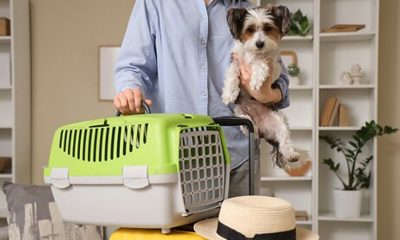
The American Veterinary Medical Association (AVMA) recommends planning ahead for calm, comfortable trips for you and your pets.
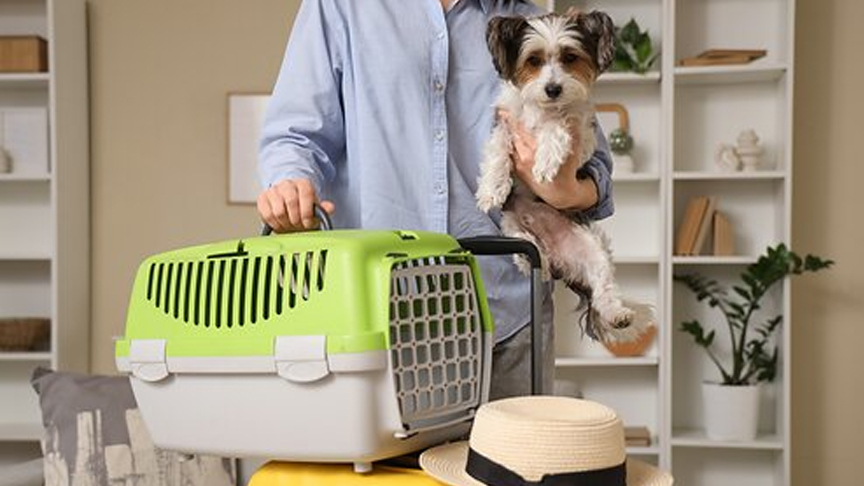
The American Veterinary Medical Association (AVMA) recommends planning ahead for calm, comfortable trips for you and your pets.
According to AVMA President, Dr. Michael Q. Bailey, visit your veterinarian to make sure your pet is current on all vaccinations and you have all the paperwork and medications necessary for your journey.
“Summer travel is exciting, but it comes with real responsibilities for pet owners that are easy to overlook,” said Dr. Bailey. “Before you head out, talk to your veterinarian. Whether your pet is coming along or staying behind, a little preparation can make all the difference.”
Bailey’s advice begins with considering whether travel is right for your pet, as some dogs, cats, and other animals may be uncomfortable with travel due to illness, injury or temperament. Consider a pet sitter or boarding your pet if there’s a chance they may not be comfortable traveling. If you’ve decided to bring your pet along, here are the AVMA’s top pet travel tips:
The Basics
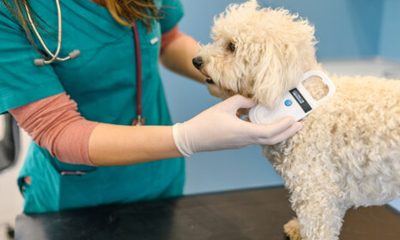
- Ensure your pet has up-to-date ID tags and a microchip.
- Introduce your pet to their carrier and travel harness before the trip. Placing a familiar toy or blanket in the carrier can help your pet feel more comfortable.
- Check your airline’s or carrier’s pet travel policies before you depart.
What to Bring
- Proof of vaccination, pet ID info, and a recent photograph.
- Leash, water dish, waste bags, blankets, treats, car carrier, toys and a pet first aid kit.
- Enough food to last the entire trip.
- Your pet’s medications and your veterinarian’s phone number.
For Added Comfort and Safety
- Research a list of veterinarians in your destination in case of emergency.
- Offer your pet water frequently, and take time for exercise and bathroom breaks.
- Never, ever leave your pet alone in a parked car.
- If you plan to stay in a hotel, motel, park, or campground, ask if there are any breed or size restrictions; if any paperwork is required; and what features they may offer to meet your pet’s needs.
For more information, visit www.avma.org.
Pet Care
Living with cats does not worsen asthma in children, suggests study
Children living with a cat had similar asthma severity, exacerbation, asthma control, and lung function to children living without cats in the short term.

Asthma is the most common chronic disease and one of the main causes of hospitalization among children. The Global Asthma Network has estimated that its global prevalence is 9.1% for children and 11.0% for adolescents, but this percentage varies greatly between countries, regions, and environments. Worldwide, the highest prevalence of pediatric asthma (above 20%) occurs in the British Isles and in parts of Oceania and the Middle East. Known risk factors for developing asthma include exposure to air pollution and smoking, childhood viral infections, obesity, and pre-existing allergies like eczema or hay fever.
Patients anecdotally self-report that exposure to animal dander appears to trigger asthma attacks. However, clinical and epidemiological data on this is so far contradictory, coming mostly from small studies on subgroups that aren’t necessarily representative of the wider population. Now, researchers have demonstrated in Frontiers in Allergy that sharing a home with cats may not worsen the outcomes of children with asthma and allergies.
“Here we show in a… cohort of children in Sweden with asthma and allergies, that children living with a cat had similar asthma severity, exacerbation, asthma control, and lung function to children living without cats in the short term,” said corresponding author Dr Resthie R Putri, a postdoctoral fellow at Karolinska Institutet in Stockholm.
“We also did not see any differences in asthma outcomes related to the number of cats, the cat’s sex, or the cat’s age.”
Large pediatric sample
In 2023, Putri and colleagues began a study on a cohort of 30,277 children – between four and 17 years old at the time – born between 2006 and 2020 and diagnosed with asthma or an airway allergy. They followed these over 24 months until 2024 to track asthma outcomes, drawing records on diagnoses, emergency visits, prescribed medications, and asthma control test and spirometry tests from linked data in the Swedish National Patient Register, Prescribed Drug Register, and National Airway Register.
In Sweden, registration in the National Cat Register has been mandatory since 2023 for all pet cats born after 2008. For each child, the authors noted whether the parental household had at least one cat in 2023, as was true for 9.4% of the children.
Cats don’t worsen asthma in kids
The results showed that there was no significant association between exposure to pet cats and asthma outcomes. For example, moderate-to-severe asthma – based on prescribed asthma medications – occurred in 9.6% of the cat-exposed children and 10.1% of the non-exposed children. Asthma ‘exacerbation’ (also known as an attack or flare-up) occurred in 3.3% of the cat-exposed children and 3.5% of the non-exposed children.
Among a subset of 1,428 children for whom asthma control and lung spirometry data were available, 97 (6.8%) lived with cats. There were no significant differences between the two groups in two common measures of lung function.
“One possible explanation is that cat allergen exposure is very common, even outside the home. Children who do not have cats at home may still be exposed in shared environments such as schools or public transportation, which could explain why we didn’t see a difference,” said Putri.
“While these large-scale findings provide valuable insight, we lacked data on which allergens the children were sensitized to, and because the National Cat Register is relatively new, some children living with cats may have been misclassified as unexposed,” she cautioned.
Pet Care
Tips to keep pets safe and happy no matter the season
The American Veterinary Medical Association (AVMA) is reminding everyone to keep pets safe no matter the season, and to think twice before gifting a pet as a surprise.

Special occasions can be a magical time, but they can also present hidden pet hazards and difficult decisions for pet owners and gift-givers. The American Veterinary Medical Association (AVMA) is reminding everyone to keep pets safe no matter the season, and to think twice before gifting a pet as a surprise.
“Holiday celebrations often mean delicious foods, beautiful decorations, and friends and family, which can be wonderful for us but may pose unexpected risks to our pets,” says Dr. Michael Q. Bailey, president of the AVMA. “The best gift you can give your pet… is the gift of good health and safety, which means keeping seasonal hazards out of reach, providing a quiet space away from the hustle and bustle, and ensuring emergency plans are in place in case the unexpected happens.”
Common hazards for pets include chocolate, baked goods (especially those containing the sugar substitute xylitol), table scraps, and certain seasonal plants like lilies, holly, and mistletoe. Tinsel, candles, electrical cords, and trees can also lead to injuries or worse if pets decide to investigate too closely.
Thinking about gifting a pet? Think again.
While the idea of a new puppy or kitten under the tree may warm hearts, the AVMA cautions against surprising someone with a live animal. Pets are long-term commitments that require a significant amount of time, planning, financial resources, and emotional investment.
“Bringing a pet into someone’s life is a decision that should never be made impulsively, and never without the foreknowledge of the recipient,” says Dr. Bailey. “Pets can bring immense joy, but they also require daily care, training, veterinary visits, and love for many years. A better option might be wrapping up a collar, toy, or gift certificate, and involving the future pet owner in choosing their new companion when the time is right.”
Instead of gifting a live animal, the AVMA recommends more thoughtful alternatives, such as:
- A leash or collar with a note promising a trip to a shelter or reputable breeder
- Books on pet care or breed characteristics
- A donation in the recipient’s name to a local animal shelter
Healthy gift ideas for pets
If your own pets are on your holiday list, the AVMA suggests practical and healthy gifts, such as:
- A veterinary wellness exam
- Toys that encourage exercise and mental stimulation
- Nutritional treats made for pets
- Updated parasite prevention
- Pet insurance
- A microchip (or updating existing chip info)
“Even something as simple as a microchip can be a lifesaving gift if your pet ever becomes lost,” adds Dr. Bailey. “It’s a gift that lasts a lifetime, and helps to ensure that you will be reunited if you and your pets become separated.”
For more holiday pet safety tips and resources, visit AVMA.org/holiday.

Coffee and heart health: How many cups of caffeinated coffee are safe to drink each day?

Loneliness strongly linked to poorer mental health and wellbeing, study finds

Weight loss drugs could help with binge eating disorder

How to prepare and protect homes from costly storm-related electrical damage

Fullerton Health celebrates two years of advancing preventive healthcare in PH

New IKEA PS Collection brings playful functionality into your home

Manulife China Bank Life expands access to cancer care solutions

Tips for smooth travel with pets

A guide to asking the right flooring questions

Support immune health with 4 everyday habits

Enjoying nature via trail hiking in Wales

Finding beauty, and not just of faith, at the Bangor Cathedral

Why taking a sick day depends on more than being sick

‘Drunk riding’ behind almost half of fatal electric scooter crashes

Move to quit: Exercise boosts smoking quit rates

Treacherous beauty: Hiking at South Stack Lighthouse in Wales

For every parent who wants to be present: AXA reinforces importance of early health preparedness

Superbod Movement goes beyond the stage

Omega Healthcare recognized

Poor-quality sleep involves different parts of the brain, depending on age

-
 Travel4 weeks ago
Enjoying nature via trail hiking in Wales
-
 Destinations4 weeks ago
Finding beauty, and not just of faith, at the Bangor Cathedral
-
 NewsMakers3 weeks ago
Why taking a sick day depends on more than being sick
-
 NewsMakers3 weeks ago
‘Drunk riding’ behind almost half of fatal electric scooter crashes
-
 NewsMakers3 weeks ago
Move to quit: Exercise boosts smoking quit rates
-
 Travel4 weeks ago
Treacherous beauty: Hiking at South Stack Lighthouse in Wales
-
 Product Showcase4 weeks ago
For every parent who wants to be present: AXA reinforces importance of early health preparedness
-
 Product Showcase2 weeks ago
Superbod Movement goes beyond the stage