
Product Showcase
A closer look at Suzuki’s Jimny
Zest Magazine takes a closer look at Suzuki Jimny JLX – MT.


Butch.
The one word to describe Suzuki Jimny. That was my first impression of it, that first time I saw a unit traversing the roads of Tagaytay, seemingly calling for attention as a somewhat masculine – albeit in a cute way – car a la Jeep Wrangler.
That word returned to me when the unit to test arrived in Las Piñas.

Look-wise (from outside), the Jimny is somewhat of an attention-grabber, with a rugged retro look that could easily remind one of the likes of the early Wranglers or early RAV4 or – perhaps also more aptly – those locally-made owner-type jeeps (particularly in provinces) that served as the very first vehicle driven by oh-so-so many. With fog lamps, hood scoop, roof rails, 15″ alloy wheels and “masculine” color options (i.e. Superior White, Silky Silver Metallic, Granite Grey, Bluish Black Pearl and Cool Khaki Pearl Metallic), this one’s somewhat of a hot item when seen.
Inside Jimny, though, it’s a different story. The word that comes to mind is… functional; in a tight (if not cluttered) space. The seats – which use synthetic leather upholstery – are stiff. The headrest for the front seats are awkwardly positioned, so that the user is forced to firmly sit; no slouching or even comfy napping/sleeping can be done here (this perky position can be good for the driver as it keeps one awake; but it can be tiring when doing long drives).
At the back, two passengers (as there are only two seatbelts there) will have to fight for space to be comfy, and forcing three can be a nightmare (if they fit at all, depending on the built and weight of the passengers; though small kids should do). The back seats can fold (for luggage), and truth be told, layout may have been better this way – i.e. turn it into a two-seater, or (if this isn’t an option at all) with the back passengers facing each other and the empty space in front of them serving as space for stuff/luggage (much like the owner type jeeps); at least if this is the layout, legroom may be bettered.
There are definitely numerous pluses – e.g. fully-trimmed (albeit plastic-looking/feeling) dashboard, well positioned meters (easy reading indeed), high seating position (oozes with sex appeal; aside from allowing you to actually see your hood, like some lord/lady overseeing his/her space), cool A/C (I suppose for the small space this isn’t surprising), dual front airbags, multiple storage spaces (the sides for the back passengers have the armrest, for instance), and 2WD/4WD/4WD-L options. And – this has to be stressed – HUGE windows that seem to place who’s inside the Jimny outside, too. It’s almost like being in a room with floor-to-ceiling windows.
Let me state, though, that perhaps because of its size, the Jimny is also seen as “cute”. I’ve lost count how many times the Jimny has been complimented as “way nice” – e.g. truck drivers in Agoncillo, Batangas; traffic enforcers in Lucban, Quezon; passersby in Balayan, Batangas; and even pedestrians in Bacoor, Cavite. If combining “cute” and “butch” is possible, then the Jimny’d be the exemplification of that…
The Jimny’s size bodes well in city driving (I have seen smaller cars in the streets of San Francisco; but this comes close). Squeezing in the unrealistically tight parking spaces of, say, Cybergate in Mandaluyong City (behind Robinson Forum) or Greenbelt is somewhat breezy.
But with the reservations re the Jimny’s compactness (here mainly because it really is TIGHT), how it performs matters big time.
And the Jimny has an all-aluminum engine, with the twincom 1,328cm3 powerplant spinning to high revs to provide lots of torque and instant response (e.g. traverse EDSA and fight for street space with the buses or truck there, and note the Jimny’s more than apt handling, braking and accelerating).


But of course this is also being sold as an all-terrain vehicle. Specifically:
- Press the 2WD button to disengage the front driveshaft and reduce noise and vibration;
- Press the 4WD button to engage the 4H setting, which is ideal for off-road surfaces; and
- Press the 4WD-L button, which engages the 4L setting, for even rougher terrain.
#1 was easy; that’s basically the “normal” driving with the Jimny – e.g. Coastal Road (from Baclaran to Las Piñas), where (true to form) noise and vibration were reduced.
I’d say fuel consumption for city driving wasn’t as good as other Suzuki offerings (at least in my experience, think Ciaz and Celerio), with a full tank covering approx. 300kms. This is no gas guzzler, yes; but seeing how fast that dial went down from “F” to “E” gave me (as always) that anxious feeling…
For #2 and #3, off we went to the south to try the Jimny. The off-road capabilities of the Jimny were tested at Naculo Falls, a somewhat hidden and not-that-often visited destination in Cavinti, Laguna (not too far from Pagsanjan). I didn’t know until late(r), but – as per local chika (storytelling) – the road wasn’t that good there that a van just stopped running; the same van is still there, left in the middle of (almost) nowhere. When there, the locals (they carry gravel from the area near the falls to the upper areas of Cavinti) just said the roads are “madulas (slippery)”. Only when we were trying to maneuver out of the “putik (mud)” did they say: “Puwedeng iwanan ang sasakyan sa taas (You can leave the car in the upper area).” But the Jimny held well; able to traverse the slippery slopes.
Perhaps worth noting was the benefit of the size of the Jimny in this situation. Because it was small-ish, the center of gravity was a-OK; and chances of turning over didn’t even occur to me. And then when there was an area where the Jimny could be turned around (instead of just attempting to get out of the literally sticky situation by reversing), the unit fitted the tight spot well.


But rough(er) roads weren’t the only contexts that used the 4WD and 4WD-L capabilities of the Jimny. From Cavinti back to Las Piñas, we traversed the less frequented roads that allow tourists (like moi!) to enjoy the small towns that thrive along Taal Lake – e.g. Laurel, Agoncillo and Nasugbu. There, the roads were, I’d say, almost pasted on irregularly shaped hills, so that driving meant needing power. Smaller inclines only needed 2WD; but 4WD (and at times 4WD-L) helped a lot for the sharper climbs.
Road surface-wise, I noted, too, how Jimny was “malikot (moved a lot)” on concrete road; but wasn’t on asphalt. Outside the city, fuel consumption got better. From full tank to nil, well over 400kms were covered.


I still think Jimny’s one butch/masculine car. Or perhaps that’s just because I’m nostalgic for a retro-looking offering (?). But looks – as we know – aren’t everything when buying cars. And here, Jimny can be said to be… lacking, e.g. the cramped space inside, ultra-basic offerings (I don’t know why but the AM/FM player reminds me of the tow vehicles in outback Australia), no accessories that should be (as we say in tech world) OOTB (“out of the box”; such as that much-needed USB outlet), not-that-comfy driving (check the aforementioned stiff seats and non-adjustable headrests), not even a driver’s seatbelt reminder lamp, singular inside light, no fuel consumption gauge, tunog lata sound system, et cetera.
Yes, it delivers on the 4×4 experience it promises – to an extent. And yes, it does have its pluses (also as earlier mentioned).
And so, I suppose, the Jimny’s appeal will be very… personal.
I’m trying to find a fitting analogy cum summation here…
So now let me put it this way: If, for instance, you are a bachelor only looking to drive a somewhat mean-looking car (with the 4WD promise to boot), then by all means, consider the Jimny.
But the moment you want to take someone home with you, and you’d already need that comfy passenger seat (as well as the other she-bangs) to accommodate the other party/parties, then the Jimny becomes a tricky proposition.
This may not be the coolest analogy/summation (I know, I know…), but you get the point…

Jimny comes in three variants: JX 1.3L – M/T (selling for P738,000); JLX 1.3L – M/T (P790,000); and JLX 1.3L – A/T (P845,000).






Product Showcase
Manulife Investments Philippines leads UITF rankings across equity and fixed income funds
Manulife Investments Philippines delivered its strongest showing in the equity feeder fund category, where three of its funds secured the top three spots based on year-to-date returns:


Manulife Investment Management and Trust Corporation (Manulife Investments Philippines), the local asset management arm of leading international financial services provider Manulife, topped the latest Philippine unit investment trust fund (UITF) rankings across growth-oriented equity and equity feeder funds and steadier fixed income funds for the period January 1 to June 30, 2026.
Manulife Investments Philippines delivered its strongest showing in the equity feeder fund category, where three of its funds secured the top three spots based on year-to-date returns:
- Introduced in November 2025, Manulife Global Semiconductor Opportunities Equity Feeder Fund delivered a 105.71% return, investing in leading semiconductor companies that power artificial intelligence, data centers, and everyday devices.
- Manulife Global Clean Energy Equity Feeder Fund posted a 40.67% return, investing across renewable power, electric vehicles, and the technology and infrastructure supporting the clean energy transition. This fund ranked no. 5 in the second half of 2025 with 20.53% year-to-date returns.
- Manulife Global Technology Equity Feeder Fund recorded a 37.06% return, investing in diverse technology subsectors positioned to benefit from the continued growth and everyday use of technology. This fund ranked no. 12 in the second half of 2025 with 15.49% year-to-date returns.
The results underscore the strength of Manulife’s globally diversified, theme-based investment approach, with funds focused on long-term structural trends such as artificial intelligence, clean energy, and technology adoption.
Manulife Investments Philippines also led the equity fund category. Manulife Asia Best Select Equity Fund secured the top spot, with its PHP Unhedged Class A ranking second with a 37.31% return.
Manulife’s strong performance extended to fixed income. In the fixed income feeder fund category, which is designed for investors seeking steadier returns and lower risk, the Manulife Asia Short Duration Bond Feeder Fund took the top spot, with two more Manulife funds also ranking among the category leaders.
These categories serve different investor needs. Equity funds, such as Manulife’s Global Semiconductor, Global Clean Energy, Global Technology and Asia Best Select, provide access to fast-moving global sectors with higher growth potential. Fixed income funds are designed for investors who prefer greater stability and a smoother investment journey. Together, these funds give Filipinos more choices aligned with their goals, risk appetite, and investment horizon.
“Investing is not one-size fits all. Some investors seek long-term growth, while others prioritize income or stability.That is why we offer a diverse range of UITFs designed to help investors pursue their financial goals based on their unique objectives and risk preferences. As Filipinos live longer, disciplined investing becomes even more important. According to the United Nations World Population Prospects, life expectancy at birth in the Philippines is projected to rise to around 73 years by 2050, making long-term financial planning and investing essential for building lasting financial security,” said Aira Gaspar, President and Chief Executive Officer, Manulife Investments Philippines.
Gaspar added, “Through our UITFs, investors gain convenient access to powerful long-term themes shaping the future, includingartificial intelligence, technology, and clean energy. These strong results reflect the strength of our research-driven investment approach, global investment capabilities, and local market expertise, helping investors navigate changing markets with confidence and achieve better financial outcomes.”
These funds are part of Manulife’s growing suite of UITFs, designed to match different goals and levels of risk tolerance. Investors can open an account online through Manulife iFUNDS, a secure digital platform for managing UITF investments.
For more information, contact a Manulife Wealth Specialist or visit manulife.com/ph.
NewsMakers
Filipinos prioritize independence as legacy for longer lives
Independence and financial freedom are viewed as the inheritance they want to leave their families, according to 88% of respondents. It rises to 95% among Filipinos aged 25 to 34, highlighting a growing shift toward self-sufficiency and long-term financial planning.


Filipinos are shifting how they view legacy, prioritizing independence, financial freedom, and self-reliance as they plan for longer lifespans.
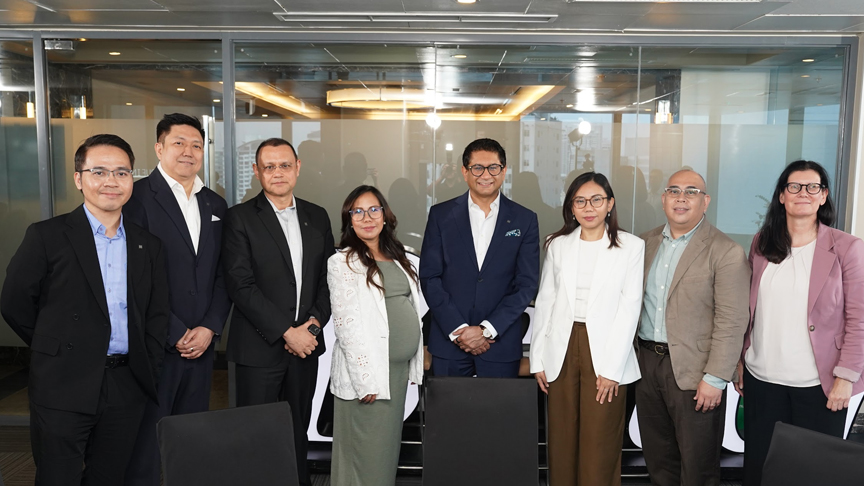
This is according to the Manulife Asia Care Survey 2026: Independence as the New Legacy, which gathered insights from more than 9,000 respondents across Asia, including 1,000 in the Philippines. The study explores shifting attitudes toward longevity, health, caregiving, retirement preparedness, and overall financial well-being.
It was found out in the survey that independence and financial freedom are viewed as the inheritance they want to leave their families, according to 88% of respondents. It rises to 95% among Filipinos aged 25 to 34, highlighting a growing shift toward self-sufficiency and long-term financial planning.
It was also revealed in the survey that Filipinos are increasingly associating independence with maintaining good health to avoid becoming a burden to loved ones, and having access to quality healthcare. Fifty six percent of those who prioritize independence as a legacy cited health and quality of life as their key concerns, while 53% identified unexpected expenses later in life as a major challenge.
To stay independent as you age, you need good physical and mental health, as 92% of respondents agree that preventive care and self-care habits can help extend years of self-reliance. Popular wellness practices include spending time with family and friends (52%), maintaining a balanced diet (50%), and exercising regularly (48%). However, fewer Filipinos are taking proactive steps such as preventive health screenings (26%) or building social networks to combat isolation (29%).
Pressures faced by the country’s “sandwich generation,” or individuals supporting both parents and children, were also highlighted in the survey results. Sixty seven percent of respondents provide care to a family member, averaging 32 hours per week, while 68% offer financial support to relatives, allocating nearly half of their monthly income to these responsibilities.
These caregiving and financial commitments are affecting long-term planning. Among respondents, 74% said family obligations hinder their ability to build self-reliance, while 71% reported delaying their own medical care due to caregiving and financial pressures.
With increasing spending remains a concern, 82% of Filipinos are worried about the cost of future care, significantly higher than the regional average of 66%. It was estimated that respondents would need approximately PhP34,485 per month to cover future care-related expenses. Most plan to rely on personal savings (87%) and investments (59%), while only 21% expect financial support from their children.
The survey relayed that Fiipinos are becoming more proactive in preparing for longevity, with many planning to shift toward income-generating investments, diversify their portfolios, and seek professional financial advice to strengthen retirement readiness and long-term financial security.
As more Filipino professionals navigate increasingly demanding careers and lifestyles, preventive healthcare is becoming less of an afterthought and more of a necessity.
From routine executive health screenings to proactive wellness programs, a growing number of business leaders, entrepreneurs, and working professionals are prioritizing early detection and long-term health management as part of their everyday lives. The shift reflects a broader understanding that staying productive, achieving personal goals, and maintaining overall well-being require more than treating illnesses when they arise—they require preventing them in the first place.
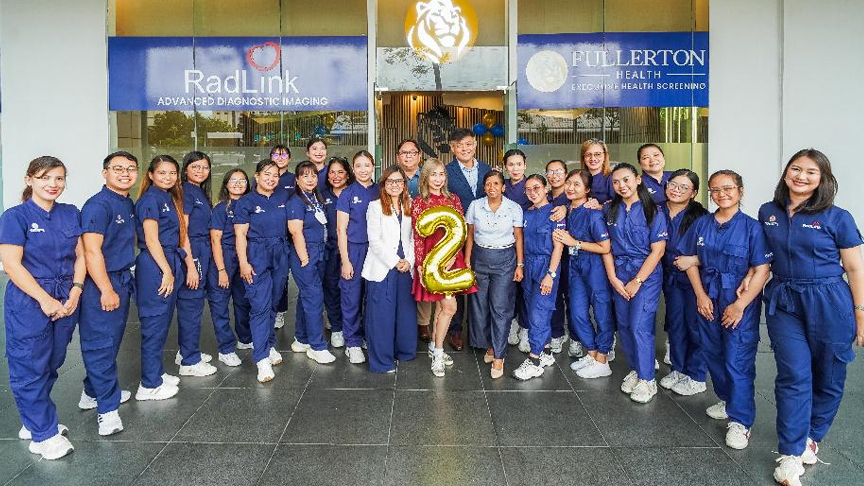
This evolving mindset is something Fullerton Health Philippines has witnessed firsthand.
Now celebrating their second anniversary, the organization continues to champion preventive healthcare as an essential part of modern living, helping more Filipinos take proactive steps toward better health through executive health screening, advanced diagnostics, and personalized wellness solutions.
“Our mission has always been to empower individuals to take control of their health before illnesses develop or progress. As we celebrate this milestone, we remain focused on helping more people live fuller, healthier lives through preventive care,” said Carmie de Leon, Country General Manager of Fullerton Health Philippines.
The growing emphasis on prevention has fueled Fullerton Health Philippines’ growth over the past two years. Since opening its doors, the organization has established itself as a trusted partner in executive health by combining advanced diagnostic capabilities, efficient patient experiences, and comprehensive health screening programs designed to offer efficient, fast, and seamless preventive healthcare experience.
A significant highlight in Fullerton Health Philippines’ journey this year was the recognition received at the Healthcare Asia Awards 2026, where they were honored as Specialty Clinic of the Year (Executive Health) – Philippines. The award recognizes the organization’s excellence in executive health screening, mainly in offering advanced diagnostic imaging technologies, evidence-based healthcare practices, and patient-centered care designed to support early detection and better health outcomes.
Fullerton Health Philippines has also expanded access through strategic partnerships with major HMO providers, healthcare organizations, and digital health platforms, making executive health screening more convenient for more Filipinos.
The company has also broadened its preventive health offerings through initiatives such as packages bundled with wellness perks that is also attractive for medical tourism, reflecting its belief that long-term well-being is supported by both preventive healthcare and holistic wellness experiences, as well as offering discounts in partnership with major payment networks to provide a more affordable option for Filipinos.
With this, Fullerton Health Philippines continues to receive consistent five-star reviews from clients. The strong satisfaction ratings reinforce the company’s position as a trusted partner in
preventive healthcare.
For Founder and Chairman of COL Financial Group, Inc., Edward K. Lee, preventive healthcare is an essential investment in maintaining both personal well-being and the ability to lead with confidence.
“Running a business means making decisions that prepare you for the future, and I believe the same mindset should apply to your health. Undergoing regular executive health screenings means I’m taking proactive steps to stay healthy for myself, my family, and the people who depend on me,” said Lee.
Similarly, President of Upgrade Energy Philippines Inc., Ruth Yu-Owen, who balances leadership responsibilities in the renewable energy sector while championing initiatives that create opportunities for Filipino women, sees preventive healthcare as an important part of sustaining both her personal well-being and professional pursuits.
“Being able to undergo a thorough health check-up provides me with the opportunity to improve my diet and make necessary lifestyle changes. Most importantly, it gives me peace of mind,” she shared.
These personal experiences reflect a broader shift toward proactive healthcare, where prevention becomes a cornerstone of long-term wellness rather than a response to illness.
Guided by its advocacy to help individuals to Live Fuller, Fullerton Health Philippines continues to champion a future where preventive healthcare is not just an option, but an integral part of everyday life.

Redefining aesthetics: From anti-aging to healthy aging

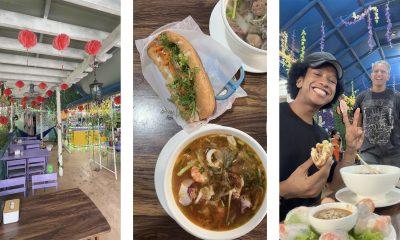
Visiting San Pablo City’s Pho Viet Nam

Four to six servings of wholegrain per day lowers risk factors for heart disease

Structured exercise linked to longer cancer survival and time free of disease

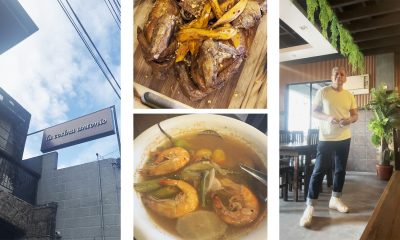
Heading to Pila, Laguna? Check out La Cosina Antonio

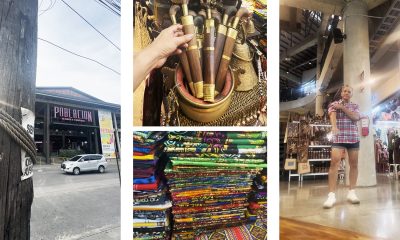
Pasalubong shopping in Davao via Aldevinco

The look and feel of your neighborhood may affect your sleep

Workout or nap? Either can help your sleepless brain, study finds

Study links coffee consumption to metabolic health and sex hormones

Manulife Investments Philippines leads UITF rankings across equity and fixed income funds
Pasalubong shopping in Davao via Aldevinco
Structured exercise linked to longer cancer survival and time free of disease
Heading to Pila, Laguna? Check out La Cosina Antonio
Four to six servings of wholegrain per day lowers risk factors for heart disease
Visiting San Pablo City’s Pho Viet Nam
Redefining aesthetics: From anti-aging to healthy aging

-
 Destinations4 weeks ago
Pasalubong shopping in Davao via Aldevinco
-
 Wellness1 week ago
Structured exercise linked to longer cancer survival and time free of disease
-
 Destinations3 weeks ago
Heading to Pila, Laguna? Check out La Cosina Antonio
-
 Nutrition1 week ago
Four to six servings of wholegrain per day lowers risk factors for heart disease
-
 Destinations1 week ago
Visiting San Pablo City’s Pho Viet Nam
-
 Beauty & Fashion3 days ago
Redefining aesthetics: From anti-aging to healthy aging