
Beauty & Fashion
UNIQLO launches 2022 Spring/Summer LifeWear Collection
The collection provides fresh, comfortable, functional, and stylish pieces perfect for the season, whether one is in the city, nature, at home, or the seaside.


Japanese global apparel retailer, UNIQLO, shows us the joys of clothing as it presents its Spring/Summer collection for 2022. The collection provides fresh, comfortable, functional, and stylish pieces perfect for the season, whether one is in the city, nature, at home, or the seaside.
THE JOYS OF CLOTHING
For this season, UNIQLO focuses on the simple joys that come to life when people and clothes find each other. In its latest lineup, there’s a blazer or dress that captures modern life in the city, a relaxing and roomy pair of shorts for that trip to the great outdoors, and breezy linens and madras shirts in lively colors that can be worn at the beach. UNIQLO presents four sub-themes this season and what ties all these together is that they bring happiness and comfort to its wearer during these sunny days.
The Joys of Skyline
City-dwellers enjoy the convenience of a cosmopolitan lifestyle: a neighborhood cafe with friendly baristas, a deli selling artisanal cheeses, restaurants serving farm-to-table food, or attending children’s ball games necessitating football mom shirts. This urban way of life needs contemporary and modern clothes that can be worn at work or off-duty.
The Joys of Landscape
Relish life off the grid, the rustling of the wind in the trees and the crunching of leaves under the shoes, with colors and textures that blend in with the scenery of nature.
The Joys of Imagination
Art and sophisticated designs stir the senses. Imaginations are supposed to wander and enter brilliant new worlds so UNIQLO found inspiration in vibrant and uplifting colors.
The Joys of Sun and Seaside
An afternoon by the beach while soaking in the sun and feeling the breeze calls for natural textures, linen fabric, and clothes that drape effortlessly over the body. These are comfortable to wear and more importantly, easy to shed off when it’s time for a dip.
UNIQLO U
This season’s collection for UNIQLO U aims to support the daily rhythm of all sorts of lifestyles. Artistic director Christophe Lemaire and the design team in Paris produced relaxed, loose-fitting, and clean silhouettes for the ultimate in comfort.
This is also reflected in the palette, featuring earth tones in brown, khaki, and olive. Warm, neutral colors, such as faded tones of orange and green, and military blue also make an appearance. A kids’ collection will be offered again this season.
UT
For this season, UNIQLO’s exciting range of t-shirts inspired by art, music, movies, manga, and other elements of culture, UT promises a diverse range of interests, including film, art, and photography.
A highlight this season is a line of monochromatic Mickey Mouse art by Joshua Vides. The artist is known for his immersive installations and products that embody the essence of pop art. Next is the collection in collaboration with Magnum Photos, a cooperative that has visually documented most of the world’s major events and personalities since the 1930s. The collection includes iconic photographs shot by Alec Soth, Eli Reed, Alessandra Sanguinetti, Gueorgui Pinkhassov, Elliott Erwitt, and Martin Parr.
These are accompanied by a collection that features Keith Haring’s debut exhibition at the Tony Shafrazi Gallery in New York City in 1982. Joining Haring are collections showcasing the art of Andy Warhol and Jean-Michel Basquiat.
COLLABORATIONS
Apart from the sub-themes, UNIQLO is offering collaborations that reflect different aesthetics, but are all grounded by joy:
Hana Tajima
Hana Tajima returns to create UNIQLO’s first collection dedicated to dresses. This season, the New York-based fashion designer created garments that are made to be lived in, with understated yet iconic styles.
The collection features deep greens and blues inspired by nature and flower patterns found in Tajima’s garden. These patterns can also be found on hand-drawn scarves.
Inès de la Fressange
Inès De la Fressange turns to the colorful Moroccan city of Marrakesh in creating this season’s collection. The designer crafted high-quality and elegant yet casual items that liberally use cotton, linen, and silk.
The womenswear lineup is infused with menswear elements in natural colors and warm accents in reds, oranges, and pinks. The collection stays true to de la Fressange’s DNA of effortless chic that is truly French, truly Inès.
JW Anderson
Jonathan Anderson, who is never far from the sea, was inspired by sailing and the culture of seaside towns and ports when developing this collection. The sapphire blues of the sea, the soft browns of seashores, and the calming beiges of chalk cliffs are combined with red, green, and blue elements, reminiscent of maritime signal flags.
The nautical narrative is expressed through rope details, performance fabrics, patchwork, and asymmetrical elements.
UNIQLO’s 2022 Spring/Summer collection will be available starting February in all stores nationwide.
For more updates, visit UNIQLO Philippines’ social media accounts, Facebook (facebook.com/uniqlo.ph), Twitter (twitter.com/uniqloph) and Instagram (instagram.com/uniqlophofficial) and UNIQLO Philippines’ website at uniqlo.com/ph, and download the UNIQLO App.






Beauty & Fashion
Redefining aesthetics: From anti-aging to healthy aging
Growing attention is now being given to healthy aging, understanding how the entire face changes over time, preserving facial harmony, and helping people continue to look like themselves.


For decades, “anti-aging” has defined the beauty and aesthetics conversation, promising to erase wrinkles and reverse the signs of time. Today, that conversation is shifting.
Aging is no longer just about looking younger. Growing attention is now being given to healthy aging, understanding how the entire face changes over time, preserving facial harmony, and helping people continue to look like themselves.
A review published in Facial Plastic Surgery, The Anatomy of the Aging Face: A Review, describes aging as changes across bone, ligaments, muscles, fat, and skin. Another review in Aesthetic Surgery Journal, The Facial Aging Process From the “Inside Out”, explains how changes beneath the surface eventually become visible on top.
Studies in Plastic and Reconstructive Surgery show facial fat is organized into distinct anatomical compartments that can lose volume and shift position over time, altering facial shape and balance.
For multi-awarded aesthetic physician Dr. James Co, founder of Cosma Institute and Architect of Aesthetic Confidence, these findings are the reason aesthetic care must start with understanding, not just treating.
“Aging is not a disease we need to cure,” Co said. “It is a biological process. As physicians, our role is to understand what is changing beneath the surface, how those changes differ from person to person, and whether intervention is appropriate in the first place.”
“When you only look at the wrinkle, you are looking at the surface of a much bigger anatomical process,” he added. “The face ages as a system. Good assessment means understanding what is happening underneath before deciding what should be done on the surface.”
Part of that understanding is recognizing that no two faces age the same way. Two people can be the same age and experience aging very differently. Genetics, skeletal structure, fat distribution, skin characteristics, sun exposure, lifestyle, and environmental factors all influence how aging presents.
“Two patients can be the same age and come to me with completely different anatomy, lifestyles, concerns, and goals,” Co said. “Why would we expect their treatment plans to look exactly the same?”
This is where healthy aging broadens the conversation — from fixing isolated signs to looking at the face as a whole and listening to what the individual actually wants.
“Someone can want to look refreshed without wanting to look 20 years younger,” Co said. “Those are completely different goals.”
Rather than trying to freeze one version of the face forever, healthy aging acknowledges that the face will continue to change. As different structures change at different rates, the relationship between features evolves. Facial harmony is therefore not fixed.
“You cannot freeze one version of your face forever,” Co said. “But you can understand how the face is changing and make decisions that respect its natural proportions and your identity.”
In the age of social media, where aesthetic treatments are highly visible, Co cautions against self-diagnosis.
“Patients should not have to diagnose themselves from social media,” he said. “You might recognize a concern, but deciding why it is happening and what should be done about it requires proper assessment.”
The shift is also about how people feel, not just how they look. A 2022 review on minimally invasive facial aesthetic procedures found studies are increasingly looking beyond physical changes to include satisfaction with appearance and aspects of psychological and social well-being, while noting that evidence still needs careful interpretation.
For Co, this reinforces that success is not always about looking dramatically younger.
“We need to ask whether the result makes sense for the patient, whether expectations were met, and whether we preserved the things that make that person recognizable,” he said. “I would rather someone tell my patient, ‘You look well,’ than immediately ask, ‘What did you have done?'”
At Cosma Institute, Co applies this consultation-led philosophy through individualized assessment, facial harmony, medical judgment, and patient education. Having trained aesthetic practitioners across Southeast Asia and Europe, he advocates for natural-looking outcomes that respect the characteristics already present in each face — an approach that recently earned him two awards at the Merz Aesthetics Tala Awards.
For Co, the evolution of aesthetic medicine is not about having more tools, but knowing when to use them — and when not to.
“Aging cannot be stopped, and I don’t think that should be the promise,” he said. “What we can do is understand it better. We can look at the science, understand the anatomy, listen to the patient, and make decisions that allow them to age while still looking recognizably like themselves.”
For Co, healthy aging begins not with fighting age, but with understanding it.
Beauty & Fashion
Bell-bottoms today, miniskirts tomorrow: Revealing fashion’s 20-year cycle
While fashion evolves gradually over time, the rise and fall of styles follows a repeating wave that peaks roughly every two decades. One of the clearest patterns involves hemline length.
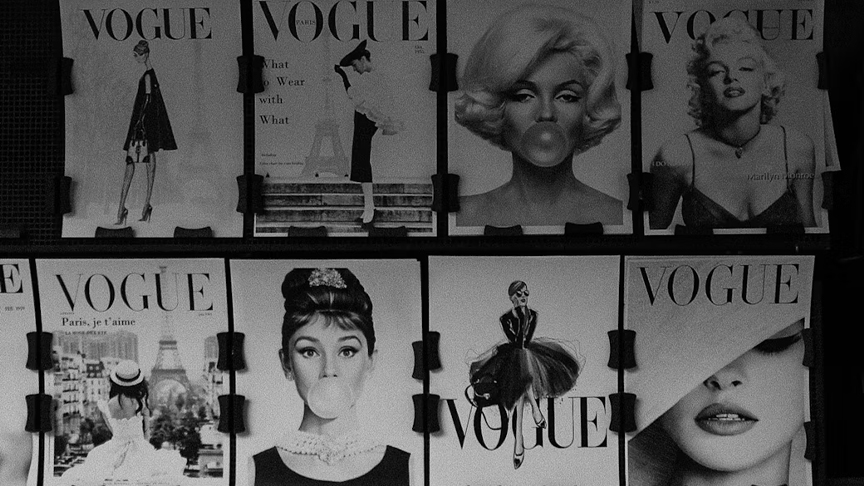
Fashion insiders and beauty magazines have long cited the “20-year-rule” — the idea that clothing trends often resurface every two decades.
According to Northwestern University scientists, that observation isn’t just anecdotal. It’s a mathematical reality.
In a new study, the Northwestern team developed a new mathematical model showing that fashion trends tend to cycle roughly every 20 years. By analyzing roughly 37,000 images of women’s clothing spanning from 1869 to today, the team found that styles rise in popularity, fall out of favor and then eventually experience renewal.
Along with supporting common perceptions about the life cycles of fads, the researchers say these results could help explain how new ideas spread in society.
The study’s lead author Emma Zajdela will present these findings at 4:30 p.m. MDT on Tuesday, March 17 at the American Physical Society (APS) Global Physics Summit in Denver. Her talk, “Back in Fashion: Modeling the Cyclical Dynamics of Trends,” is part of the session “Statistical Physics of Networks and Complex Society Systems.”
Complimentary registration is available for members of the media. Press should contact the APS media teamfor more information.
“To our knowledge, this is the first time that someone developed such an extensive and precise database of fashion measures across more than a century,” Zajdela said. “We have some very interesting results, including that the cycle we uncovered in the data (20 years) matches industry knowledge. Historically, the lack of data posed a barrier to explicit quantitative study of this system.”
When this work was conducted, Zajdela was a Ph.D. candidate at Northwestern’s McCormick School of Engineering, where she was advised by Daniel Abrams, a professor of engineering sciences and applied mathematics at McCormick and co-director of the Northwestern Institute on Complex Systems. Now, Zajdela is a postdoctoral fellow at Princeton University and a research fellow at the Santa Fe Institute.
Zajdela and Abrams coauthored the study with Alicia Caticha, an assistant professor of art history at Northwestern’s Weinberg College of Arts and Sciences, and Jeremy White and Emily Kohlberg, who were both members of Abrams’ research group.
To conduct the study, the researchers compiled one of the most comprehensive quantitative datasets of fashion ever assembled. Drawing from historical sewing patterns from the Commercial Pattern Archive at the University of Rhode Island and runway collections, the team analyzed tens of thousands of garments dating back to the late 1800s.
Using custom tools, they measured key features of dresses — hemline, neckline and waistline positions — turning clothing designs into numerical data that could be measured and tracked across decades. To analyze the data, researchers built a mathematical model based on a simple idea: the tension between wanting to stand out while still fitting in. Once a style becomes too common, designers move away from it — but not so far that the clothes become unwearable.
“Over time, this constant push to be different from the recent past causes styles to swing back and forth,” Abrams said. “The system intrinsically wants to oscillate, and we see those cycles in the data.”
The results revealed a striking pattern. While fashion evolves gradually over time, the rise and fall of styles follows a repeating wave that peaks roughly every two decades. One of the clearest patterns involves hemline length. Over the past century, skirt lengths have repeatedly shortened and lengthened — from shorter flapper dresses in the 1920s to longer, more conservative styles in the 1950s and then to miniskirts of the late 1960s.
But this pattern loses its clarity in recent decades. Starting in the 1980s, the data show a wider range of skirt lengths appearing at the same time, suggesting that fashion trends are becoming more fragmented. Rather than one dominant trend, niches emerge, reflecting more diversity in fashion.
“In the past, there were two options — short dresses and long dresses,” Zajdela said. “In more recent years, there are more options: really short dresses, floor-length dresses and midi dresses. There is an increase in variance over time and less conformity.”
Beauty & Fashion
niko and … brings Evangelion Collection to the PH, plans to expand its operations
The Evangelion collection is available starting December 12 at the niko and … where it is transformed into an Evangelion-themed space with curated displays, and anniversary elements, allowing fans and new audiences to experience the world of Evangelion.
Lifestyle brand niko and … brought the Evangelion brand to Manila just in time for the celebration of anime Neon Genesis Evangelion’s 30th anniversary, with collection available for a limited time only. Launched at SM Mall of Asia, the limited edition collection showcases style, nostalgia, and Japanese creativity and contents that fit the taste of the Filipino consumers.

“Filipino consumers value design, story, and creativity,” says Daisuke Fujii, president and CEO of Adastria. “We see strong interest in Japanese culture and the ideas behind it. This collaboration is our way of celebrating Evangelion’s legacy while showing what we hope to build here. We want to grow with the market and bring more of our brands and experiences to the Philippines.”
The Evangelion collection is available starting December 12 at the niko and … where it is transformed into an Evangelion-themed space with curated displays, and anniversary elements, allowing fans and new audiences to experience the world of Evangelion.
The brand’s collection reflects Japanese craftsmanship, attention to detail, and an ability to translate cultural ideas into modern lifestyle item. This gives customers access to the latest trends from Japan through apparel, accessories, room items, and collaborative lines that bend creativity with everyday function.
Although it just recently started in the Philippines, Fujii said the brand is looking to expand its local operations by opening more stores and introducing other products or brands in the Philippines.
Banking on the strength of the collaboration and the Japanese creativity to grow its business, Fujii noted that he wants the SM MOA branch to cover a lot of animes and other contents. “We want to bring contents that fit the taste of Filipino consumers. Next year, we will expand by opening new stores. We are now talking to SM, Ayala Malls, and looking for other good locations.”
When Fujii was asked how the Evangelion collaboration influence the lifestyle and fashion trends in the Philippines. He replied, “The collaboration is one way to introduce the Japanese culture to the Philippines. Animes make Filipino consumers know more about Japan and its culture. We want them to understand Japanese culture through fashion trends.”
Fujii also clarified that not all products are manufactured in Japan because they have factories across the world that produce other products but “of course, it is of Japanese quality.”

Men’s health expert issues warning to fans copying Mark Wahlberg’s early starts

Manulife broadens financial literacy, clean water programs in PH

Redefining aesthetics: From anti-aging to healthy aging

Visiting San Pablo City’s Pho Viet Nam

Four to six servings of wholegrain per day lowers risk factors for heart disease

Structured exercise linked to longer cancer survival and time free of disease

Heading to Pila, Laguna? Check out La Cosina Antonio

Pasalubong shopping in Davao via Aldevinco

The look and feel of your neighborhood may affect your sleep

Workout or nap? Either can help your sleepless brain, study finds
Manulife broadens financial literacy, clean water programs in PH
Men’s health expert issues warning to fans copying Mark Wahlberg’s early starts


