
Destinations
Inside Makati’s immersive book club
Perhaps the most compelling issue in modern Philippine literature is still the gap in representation. Although the country has a range of literary works, there’s still a need for more representation and depth in the books local publishers churn out.


With the hustle and bustle filling the avenues of Makati, it’s not wrong to assume that the city is a concrete corporate jungle. From high-rise buildings to industrialized stores, Makati is built on corporate ladders and elevator pitches. But explore a bit more and to the east side you’ll find Poblacion, a lively and hip contrast to what’s otherwise a commercial work mill for many.
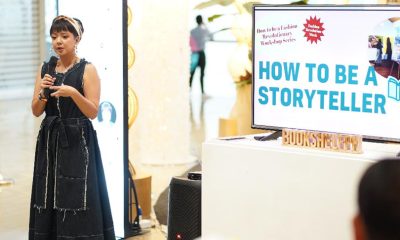
While the fun and drinks happen at night, The Astbury–a third space for creative human experiences stands in one of Poblacion’s nooks and crannies. There, an intimate and immersive book club called “The Write Side of Bookshelf” gathered to converse and breathe new ideas on how to be a Filipino author and the future of Philippine literature last June 20. This session called “The Journey of a Filipino Writer” was led by author and longtime writer Pancho Dizon, and is just the first of many book club sessions to inject creativity and build a new community at the heart of the Metro.
The gap in representation
Perhaps the most compelling issue in modern Philippine literature is still the gap in representation. Although the country has a range of literary works, there’s still a need for more representation and depth in the books local publishers churn out.
For Bookshelf PH, a digital publishing house born at the height of the pandemic, the gap was found in the lack of books that paint the Philippine business landscape and sharing local stories of business leaders. This need was only amplified when people started searching for side hustles and business ventures to cope at that time. Thus, Bookshelf PH started publishing business books like The 50, which featured 50 HR leaders around the country to share their experiences working in different industries.
“Interviewing these leaders over Zoom calls was a great opportunity for writers like myself to dig deeper into stories often overlooked,” Dizon said. “You’d be surprised how easy it is to talk to these leaders by simply asking them over an email or messaging them on social media.”
Another issue in representation is found in many Filipino readers’ patronage of Western literary works over local books, especially for teens and young adults. Fantasy, sci-fi and other young adult Western novels with fandoms and following tend to take center stage in many local bookstores and online reading platforms.
“When you see the youth reading more Western literature, it actually signals a need for more Filipino representation and local books that can narrate stories as grappling as theirs. We have no shortage of inspiring stories, but we really have to search for them and dig deeper.”, Dizon explained.
The best language for local content
When it comes to language, the Philippines has almost 200 different dialects. Filipino readers and authors alike would often postulate on which language should be used in writing modern Filipino literature. One would argue that the rising use of English in many Filipino literary pieces snatches away the Filipino-ness of these works and dilutes the essence of using our Filipino language to enrich our literature.
But for Monette Quiogue, founder and managing partner of Bookshelf PH, language is simply a tool to use in conveying what truly creates the Filipino-ness in a literary work–the message.
“I believe that the message we communicate to our readers is the essence of Philippine literature,” Quiogue explained. “Language should never be a barrier in enriching local literary works. But choosing which language to use, whether that’s English, Filipino or Ilocano, matters most depending on which audience you’d like to get your message across.”
Bookshelf PH’s wide collection of books are mostly written in English. From business books painting the Philippine business landscape to women’s books narrating stories of prominent Filipina figures, the preference for English over Filipino in writing these modern books have a much deeper purpose behind it.
“We choose to write most of our books in English simply because we want to share our local content to a global audience. From the outside looking in, we want other cultures and nationalities to appreciate Philippine literature and reach a wider audience to inspire and share our local stories with,” Quiogue added.
The deeper purpose for writing local stories
After writing so many articles and books, one would ask what’s the deeper purpose to continue honing their craft in storytelling. For Dizon, his passion for writing stems from the people he has encountered and worked with in his story developments.
Fearless Filipinas 2, an anthology featuring 24 inspiring Filipinas who made a big impact in their fields, was an avenue for Dizon to create a spotlight for the Philippine women’s football team. By interviewing and featuring international footballer Cam Rodriguez in the book, Dizon had the opportunity to sit on the bleachers of Rizal Memorial Stadium to watch the team win the AFF Championships last year.
“Moments like the women’s football team winning the championship inspire me to write stories that are often found on the sidelines,” Dizon said. “There’s a lot of work to be done, but telling our own stories lets us take control of the narrative and for once, put a spotlight on us Filipinos.”
Join the next literary movement, intimate conversations, and creative exchange at the Astbury on July 12, Wednesday, 6-8 pm featuring The Write Side of Bookshelf’s latest guest speaker Merlee Jayme, author of Chairmom.
To reserve a spot and learn more about this creative get-together and future events, sign up here – limited slots only!








Destinations
Visiting San Pablo City’s Pho Viet Nam
When we came across Facebook posts on Pho Viet Nam in San Pablo City in Laguna, we expected to encounter what was experienced in Vietnam (i.e. good food over so-so venue). We expected too much…

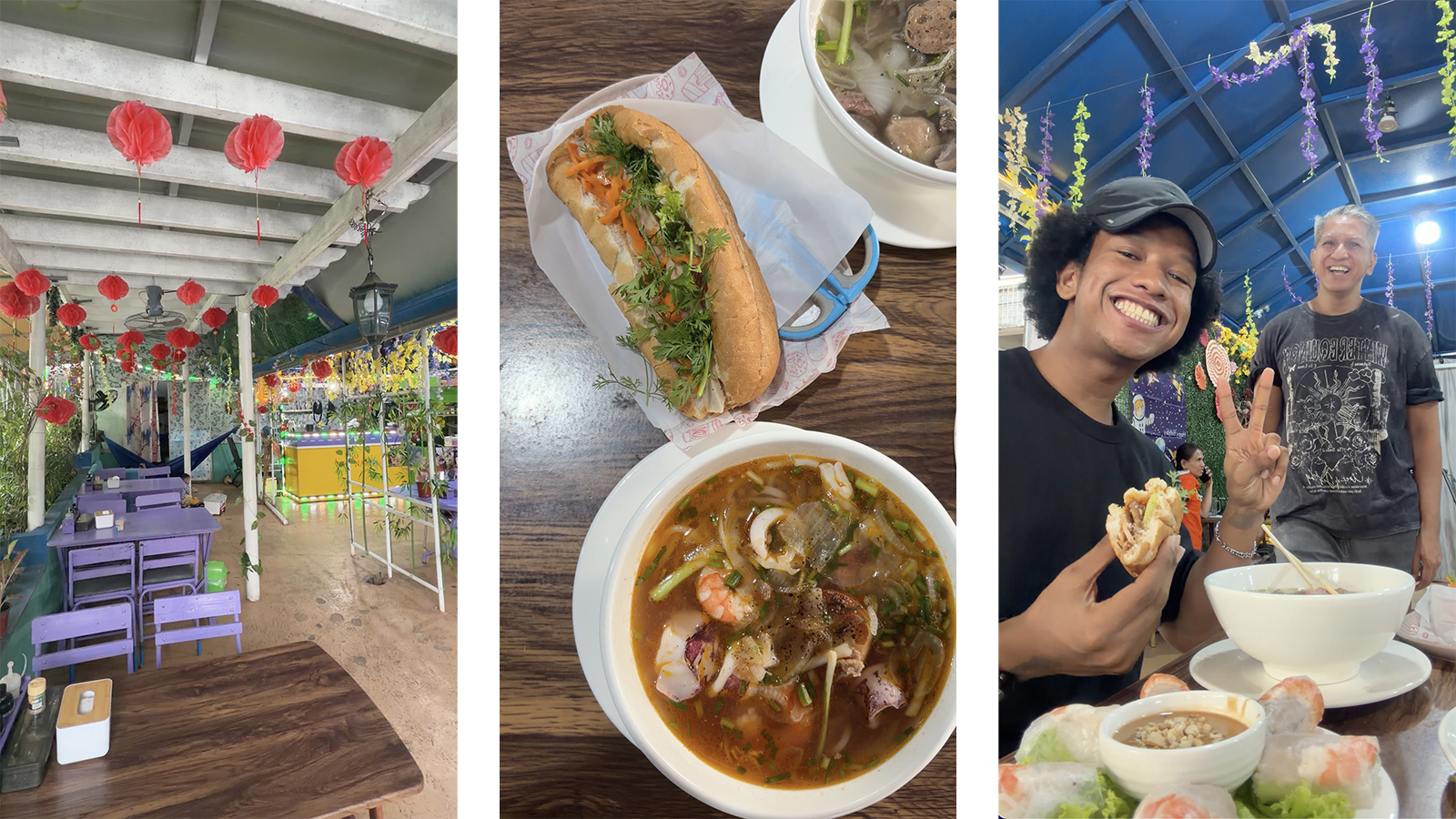
If you’ve been to Vietnam, you’d know that some of the best places to eat at are in those neighborhood eateries; their versions of karinderya, in a manner of speaking, where locals prep good lutong-bahay Vietnamese offerings sans the classy places of expensive restos. Here, the focus is always the food, never the blings.
So when we came across Facebook posts on Pho Viet Nam, located somewhere in San Pablo City in the Province of Laguna, we sort of expected to encounter what was experienced in Vietnam.
@outragemag Looking for #Vietnam food while in #SanPabloCity in #Laguna? We #LGBT checked #PhoVietNam ♬ original sound – Outrage Magazine
Una, this is not the most accessible place even for those with vehicles from Metro Manila. This is because you still have to travel for over an hour (if you’re lucky traffic-wise), and spend on your gas and the toll and so on.
Note that when you’re also along Apolinario Mabini Street, the resto isn’t apparent. It is located at the back of another resto (Joy), so it is very easy to miss. There is, BTW, a small entry at the side of the resto, which leads to an outdoor parking space.
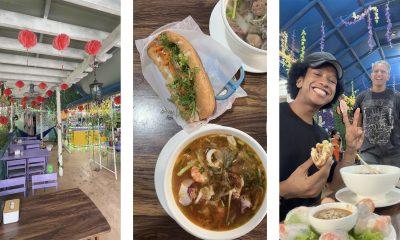
Ikalawa, the actual resto is cheap-looking – e.g. plastic décor, running lights here and there, and so on. Very karinderya; cheap karinderya, for that matter.
Ikatlo, the servers were okay naman; they knew what was on the menu, and – after making quick recommendations – kept you undisturbed to enjoy what you ordered. The orders took some time to be prepped, however; I was even able to order bad-tasting fries from the other resto due to the waiting time.
Ika-apat, how was the food?
Both the ₱245 Beef Noodle Soup and the ₱245 Seafood Noodle Soup weren’t bad naman; but they weren’t good either. You get enough properly-cooked meats, the noodles are sufficient, and so on. Taste-wise, though, they were bland, and no amount of the prepared condiments helped in changing the flavor.
The ₱190 Rice Paper Roll sufficed even if, by and large, it was tasteless. The saving grace: the satay dip since it was rich and nutty and all that.
The ₱160 Meatloaf and Egg Sandwich (the banh mi kep thit va trung) had enough meat naman… and yet was also bland.
Considering the asking prices of this place, you sort of expect a lot, too. Add to that the popularity of the place – e.g. look at all those who dine there, kinukuyog. Alas, the realities when already there are harsher.
Heading to San Pablo to check this place led us to the nearby Dagatan Blvd. surrounding Sampaloc Lake, a must-check place in these parts. So we sort of do not regret heading to San Pablo.
But buod: No, Pho Viet Nam is not worth the dayo; not worth for you to intentionally seek this place out. The food wasn’t bad. But it’s not great, or even good either. It just suffices. And so, particularly for non-locals, the additional expenses for the gas, toll, et cetera make going there not worth it… sorry.
But off we go for more LGBTQIA+ rampa…
Pho Viet Nam is located at 130 Apolinario Mabini Street, San Pablo City, 4000 Laguna.
Destinations
Heading to Pila, Laguna? Check out La Cosina Antonio
We found our #LGBT selves in #Pila, #Laguna, where we ended up checking La Cosina Antonio.
While traveling from Batangas City on the way to Paete, Laguna after an Intersex 101 training workshop, intersex activist Jeff Cagandahan worried where he’d feed us. And then, after a quick discussion with his wife, he suggested La Cosina Antonio, which is apparently a must-check resto in the Municipality of Pila in the province of Laguna.
So we went there, and… how was it for us?
@outragemag #LGBT wandering in #Pila, #Laguna? You may as well try #LaCosinaAntonio ♬ original sound – Outrage Magazine
Una, this is really only convenient to access by locals, or those with private vehicles. Pila, if you must know, is one of the oldest settlements in the Philippines. It is, nonetheless, still largely provincial. And so this place is dadayuhin; you need to intentionally go there as it’s not on the way to major destinations.
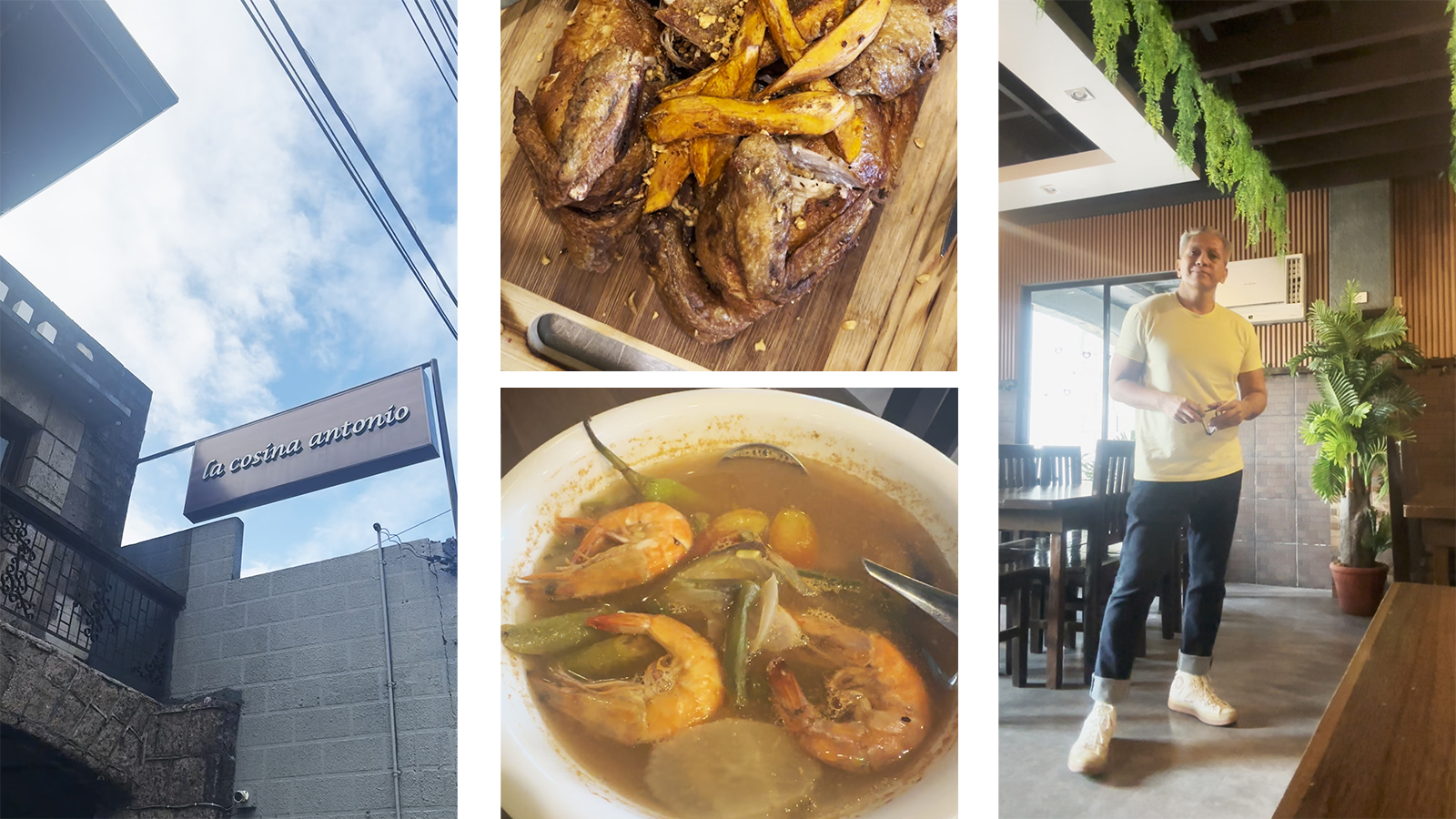
Ikalawa, the actual venue is BIG. This one’s an old house converted into a resto with different parts – e.g. for dining, for drinking complete with a performance space for a band, venue spaces, and so on. La Cosina Antonio is, thankfully, well-kept, so that it’s clean, has updated furniture, and so on.
Ikatlo, the staff was okay naman when we were there, able to discuss what’s on the menu, make recommendations… and then prepare the orders and deliver them fast. Very home-y approach, actually, treating guests as regulars.
Ika-apat, how was the food?
The ₱375 Dinakdakan was actually good, the pork belly crispy, the chopped onions and green chilies fresh, and the calamansi-mayo dressing not overpowering.
The ₱390 Sinigang na Hipon was… so-so, not bad though not good either. Pampainit-tiyan. Though, this has to be said, at least di tinipid in the number of shrimps served.
The ₱560 Garlic Pepper Whole Chicken was good; the meat stayed juicy even if the skin was crunchy.
The ₱770 Crispy Pata was also good; crunchy skin and, yes, malamang pata. There are times when you get Crispy Pata that’s basically just skin and bone, no meat at all. Here, we got meat… thankfully.
This place is popular, true (check their Facebook page, LOL). I can be dismissive and say that because, if in Pila, it’s not like you have lots of choices. But truth be told, it’s also because La Cosina Antonio actually has not-bad stuffs to offer… including the okay venue, okay service, and okay food. So check out if you can… or just join us as we look for more LGBTQIA+ lafangan venues…
La Cosina Antonio is located along JP Rizal St., Barangay Sta. Clara Norte, Pila, Laguna.
Destinations
Pasalubong shopping in Davao via Aldevinco
#Pasalubong hunting in #Davao? Consider the new, pinasosyal #Aldevinco that may not have the grimy character of the old location but still is worth #LGBT visiting.
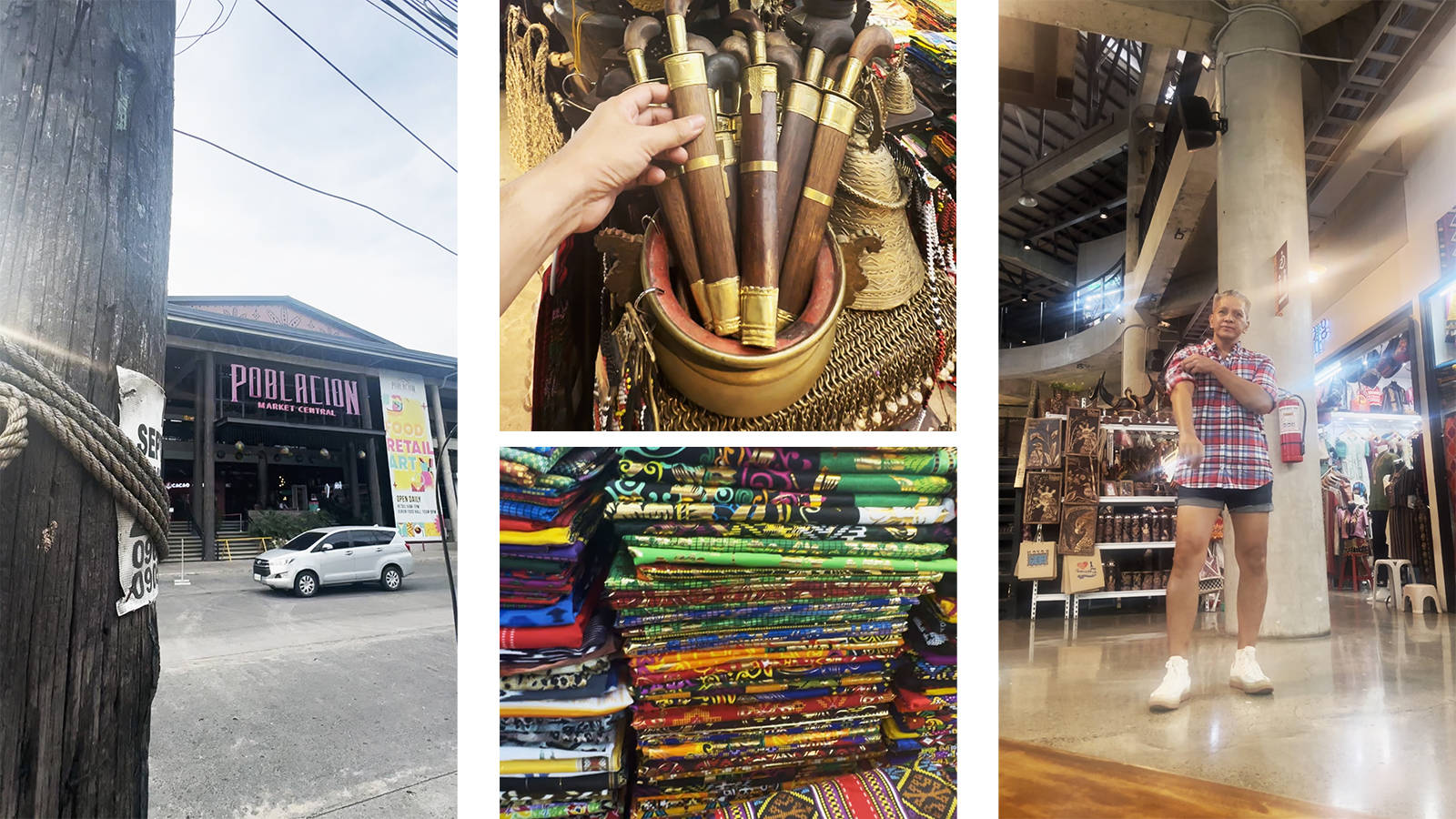
Davao-bound tourists know – or should know – of Aldevinco Shopping Center, the city’s one-stop-hub for everything Mindanao-related. You need malong or patadyong as pasalubong? You need a kulintang not just as a musical instrument, but as décor? You need batik, or T’boli ethnic apparel? You can find them all… and even more, in Aldevinco.
But here’s the thing, particularly for those who do not know yet: the old Aldevinco, which was located along C.M. Recto Street and Roxas Avenue in Davao City, is no more.
Now… enter the new Aldevinco, this time located at Poblacion Market Central on C. Bangoy Street (former Madrazo Fruit Stand)… which isn’t that far from the old place, actually.
We checked, and here are some things worth noting.
@outragemag #Pasalubong hunting in #Davao? Consider the new, pinasosyal #Aldevinco that may not have the grimy character of the old location but still is worth #LGBT ♬ original sound – Outrage Magazine
Una, this place looks and feels new. The old Aldevinco had a palengke feel, but this one has a mall feel. So you have a high-ceilinged venue with better-arranged stores that are air-conditioned, and so on. Pina-sosyal, in a manner of speaking.
Ikalawa, when there, the rules remain the same: haggle. The prices first quoted to you are not the actual prices the goods go for… unless you’re too moneyed and you don’t want to ask for discounts, though in that case, you shouldn’t even be in Aldevinco at all. The more you buy (i.e. bulk buying), the lower the prices, obviously. But always haggle… even if only for the fun of doing it.
Ikatlo, if you have time to spare, don’t auto-buy from the first store you check. Tour the area and compare prices. Often, the goods sold in one store will also be offered in a different store. So move around before making a final decision.
And ika-apat, Aldevinco may be popular as the go-to place for pasalubong, but in truth this isn’t the only one. Halimbawa, right across the old Aldevinco is a series of shops, some of them from the old Aldevinco. Because, at times, Aldevinco can feel like a tourist trap, and understandably, not everyone likes going into one. So consider your other options.
All the same, when in Davao, this is a place worth checking… if not for the shopping, then the food… or at least to check what happened to the tenants of the 60-year-old Aldevinco that was closed in December 2021, and is now being redeveloped into who-knows-what.
All part of rediscovery as we continue the LGBTQIA+ rampa wherever and everywhere…
Open from 9AM to 7PM (with the Kūkūñ Food Hall open from 10AM to 9 PM), Aldevinco Shopping Center is located at Poblacion Market Central, C. Bangoy Street, Davao City.

Redefining aesthetics: From anti-aging to healthy aging

Visiting San Pablo City’s Pho Viet Nam

Four to six servings of wholegrain per day lowers risk factors for heart disease

Structured exercise linked to longer cancer survival and time free of disease

Heading to Pila, Laguna? Check out La Cosina Antonio

Pasalubong shopping in Davao via Aldevinco

The look and feel of your neighborhood may affect your sleep

Workout or nap? Either can help your sleepless brain, study finds

Study links coffee consumption to metabolic health and sex hormones

Manulife Investments Philippines leads UITF rankings across equity and fixed income funds
Structured exercise linked to longer cancer survival and time free of disease
Four to six servings of wholegrain per day lowers risk factors for heart disease
Visiting San Pablo City’s Pho Viet Nam
Redefining aesthetics: From anti-aging to healthy aging

-
 Wellness3 weeks ago
Structured exercise linked to longer cancer survival and time free of disease
-
 Nutrition3 weeks ago
Four to six servings of wholegrain per day lowers risk factors for heart disease
-
 Destinations3 weeks ago
Visiting San Pablo City’s Pho Viet Nam
-
 Beauty & Fashion2 weeks ago
Redefining aesthetics: From anti-aging to healthy aging